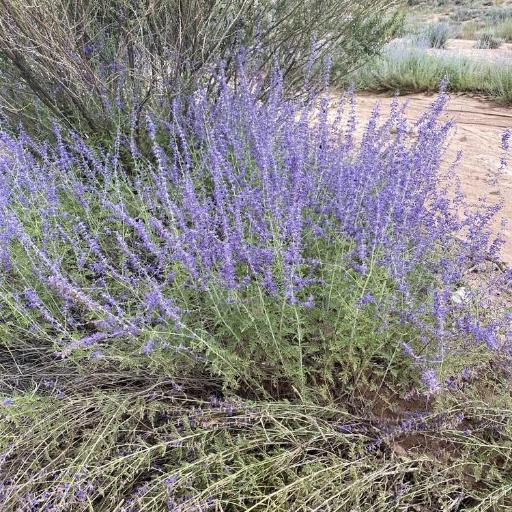
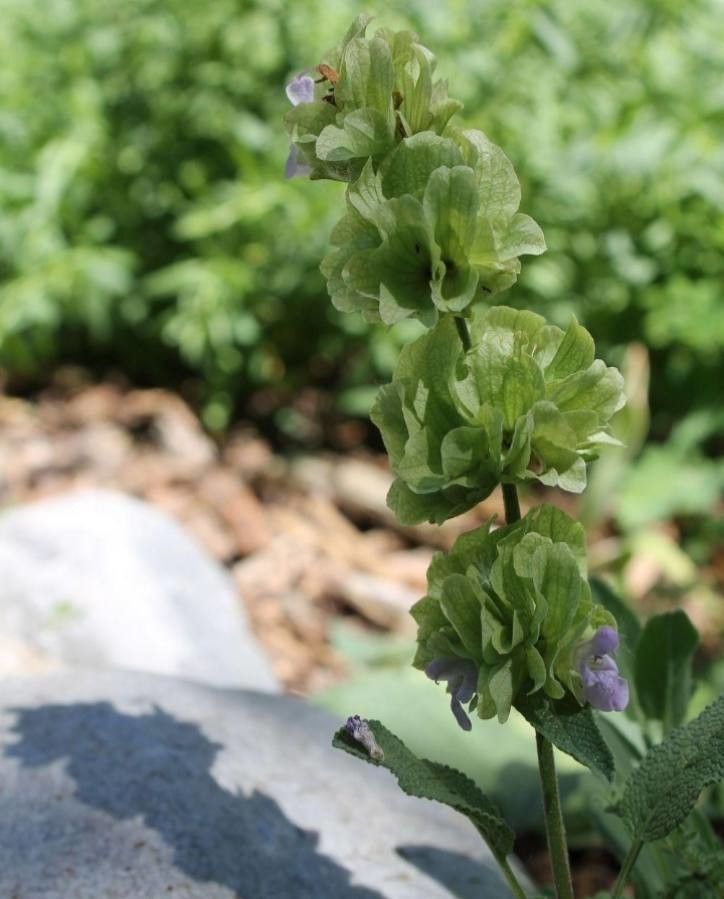
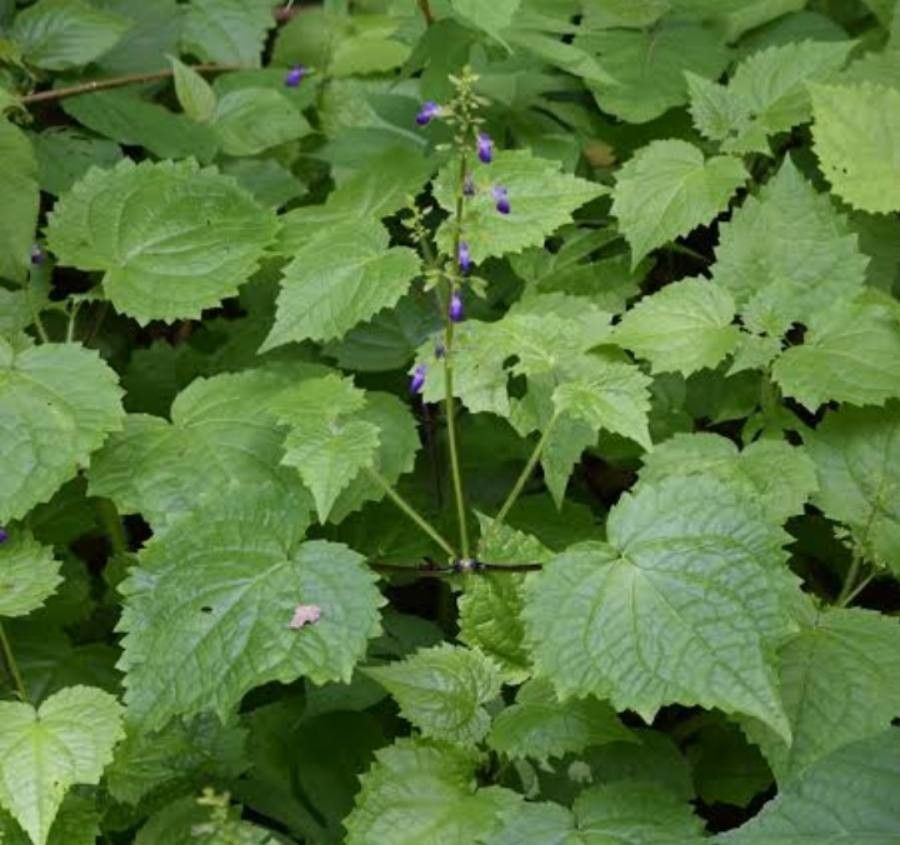
Salvia plebeia is an annual or biennial herb that is native to a wide region of Asia. It grows on hillsides, streamsides, and wet fields from sea level to 2,800 m (9,200 ft). S. plebeia grows on erect stems to a height of 15 to 90 cm (5.9 to 35.4 in) tall, with elliptic-ovate to elliptic-lanceolate leaves. Inflorescences are 6-flowered verticillasters in racemes or panicles, with a distinctly small corolla (4.5 mm (0.18 in)) that comes in a wide variety of colors: reddish, purplish, purple, blue-purple, to blue, and rarely white.
Plebeian sage has strong resistance to disease and is typically not prone to illnesses. Still, it can be vulnerable to pests and diseases present in its environment. These problems are generally mild. Regarding care, this plant requires a moderate level of upkeep. It should be pruned regularly to preserve an attractive appearance and encourage healthy growth. Applying fertilizer can also assist in enhancing flowering. Plebeian sage is appropriate for anyone who has outdoor space, like a garden or patio, and does not demand extensive gardening experience. It may need extra attention if cultivated indoors.
How to keep Salvia Plebeia.
Light
Plebeian sage flourishes in spots that receive abundant sunlight throughout the day. It can tolerate areas with some shade. According to its natural habitat, a high level of light is beneficial, while limited light can cause poor growth and health. The same lighting requirement is necessary at every stage of its growth.
Water
Plebeian sage thrives in environments with abundant moisture. To keep it healthy and maintain its vibrant foliage, ensure the soil stays consistently moist but not waterlogged. Water the plant weekly and maintain high humidity levels if you're growing it indoors.
Temperature
Plebeian sage is a widespread plant, well adapted to a warm temperature range of 68 to 95 °F (20 to 35 °C). It thrives in its native warm habitat. For optimal growth, keep these temperatures consistent year-round.
Fertilizer
Plebeian sage requires regular fertilization to encourage flowering but does not tolerate excessive amounts. It needs light doses of fertilizer applied frequently throughout its life cycle, especially during the peak period of active growth and while it is flowering. You should feed your Plebeian sage until it stops blooming.
Pruning
Plebeian sage is known for its aromatic leaves and delicate flowers. To encourage growth and remove any damaged stems, it is best to prune the plant from early to late spring. Additionally, trimming faded flowers can help extend the blooming period. When pruning, use clean, sharp tools and be careful not to cut more than one-third of the plant to maintain its health.
Pot & Repot
To thrive, plebeian sage needs excellent drainage in pots. This ensures proper aeration for root health and prevents waterlogging.
Botanical profile.
- Plant Type
- Herb
- Life Cycle
- Biennial, Annual
- Genus
- Salvia
- Family
- Lamiaceae
- Hardiness Zone
- 7-10
- Mature Height
- 15 cm to 91 cm
- Mature Spread
- 61 cm
- Leaf Color
- Green, Dark Green
- Leaf Type
- Semi-evergreen
- Flower Color
- Purple, Lavender
- Flower Size
- 10.16 cm to 25.40 cm
- Bloom Time
- Late spring, Early summer, Mid summer
- Planting Time
- Spring
- Harvest Time
- Mid summer, Late summer, Early fall
- Native Area
- Nepal, India, Malaysia, Philippines, Pakistan, China, Russia, Afghanistan, Indonesia, Vietnam, Myanmar, Japan, Koppen, Bhutan, Iran, South Korea, Thailand
Other names.
Reader questions.
What are the sunlight requirements for Plebeian sage?
Plebeian sage requires above 6 hours of sunlight daily to thrive, which is categorized as full sun exposure. It can tolerate about 3-6 hours of sunlight, known as partial sun, but its optimal growth occurs under abundant sunlight throughout the day. Locations with some shade might be tolerated, but excessive volume of light is beneficial for the plant, promoting better health and growth at all its stages.
What are the ideal growth conditions for Plebeian sage?
Plebeian sage thrives in warm climates, with optimal temperatures ranging from 68 to 95 °F (20 to 35 °C). It is naturally adapted to flourish in its native warm environments and maintains strong cold resistance, making special frost protection measures usually unnecessary. However, to ensure the best growth, these temperatures should be maintained consistently throughout the year. If winter temperatures are expected to fall below -15°C, it's important to protect the plant from cold by covering it with soil or straw and watering it abundantly before the first freeze to keep the soil moist. This helps prevent drought and water scarcity during winter and early spring.
How can artificial lighting be used for indoor Plebeian sage plants?
Indoor Plebeian sage plants require adequate lighting for optimal growth. When natural sunlight is insufficient, especially in winter or less sunny spaces, artificial lights such as LED lights can provide a vital solution. The right type of artificial light should be chosen, considering that full sun plants need 30-50W/sq ft, partial sun plants need 20-30W/sq ft, and full shade plants need 10-20W/sq ft of artificial light. The light source should be placed 12-36 inches above the plant to mimic natural sunlight and be kept on for 8-12 hours per day to mirror natural daylight hours, promoting faster, healthier growth.
How should Plebeian sage be cared for in low temperatures?
Plebeian sage is cold-tolerant, performing best when temperatures are above 20°C and should remain above 0°C during winter. In the case that temperatures dip below -15°C, there might be a decrease in sprouting or possibly no sprouting in spring. To manage this, any parts that have failed to sprout in spring should be removed. This proactive step ensures the health and continued growth of Plebeian sage despite the cold challenges.
What are the symptoms of inadequate light for Plebeian sage?
When Plebeian sage is grown indoors with inadequate light, it may show symptoms such as smaller new leaves, leggy or sparse growth, faster leaf drop, slower or no new growth, lighter-colored new leaves, chlorosis, sunscald, leaf curling, wilting, and leaf scorching. These symptoms indicate light deficiency or excessive sunlight, impacting the plant's ability to photosynthesize and maintain overall health.
What steps should be taken if Plebeian sage is exposed to high temperatures?
During the summer, it's crucial to ensure that Plebeian sage remains below 35°C. Exposure to temperatures above 41°C can cause the leaves to lighten in color, curl, become susceptible to sunburn, and in severe cases, the entire plant may wilt and dry out. To mitigate high temperature stress, trim away any sunburned and dried-up parts of the plant. Relocate the plant to a shaded location or use a shade cloth to protect it from the midday and afternoon sun. Additionally, water the plant in the morning and evening to maintain soil moisture and help the plant cope with the heat.
What solutions exist for Plebeian sage experiencing inadequate light?
To address light deficiencies for Plebeian sage, gradually moving plants to sunnier locations can help, aiming for at least 6 hours of direct sunlight daily. Using a south-facing window and keeping curtains open during the day maximizes sunlight exposure. If relocation or natural light is insufficient, consider supplementing with artificial light for at least 8 hours daily. Gradual adaptation is key to prevent sunburn. For outdoor plants, choose the best spot that ensures gradual light intensity increase. Pruning obstructions or transplanting smaller plants to brighter locations can significantly improve light access. Note that parts affected by insufficient sunlight may not recover, but new growth after adjusting light exposure will be healthy.