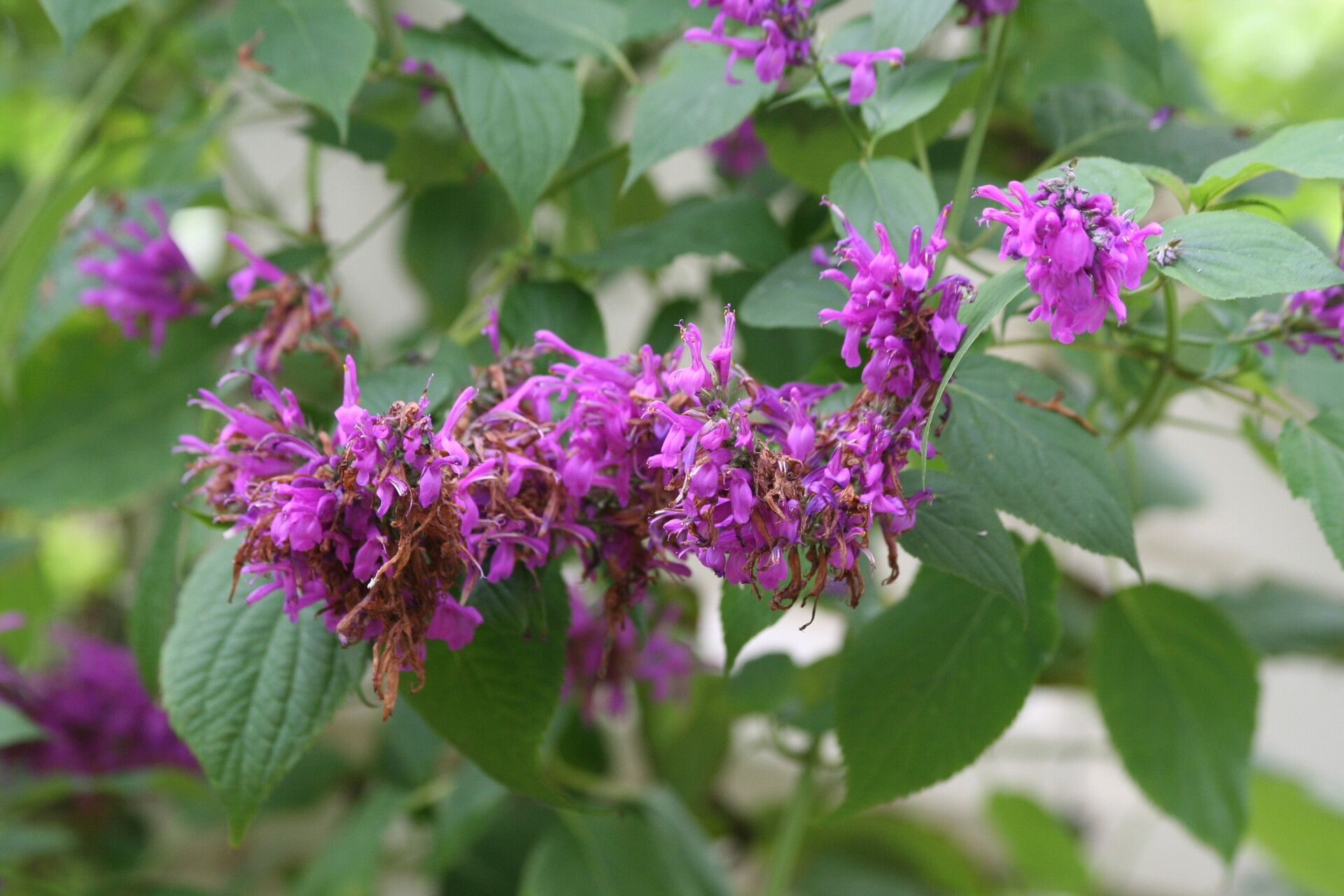
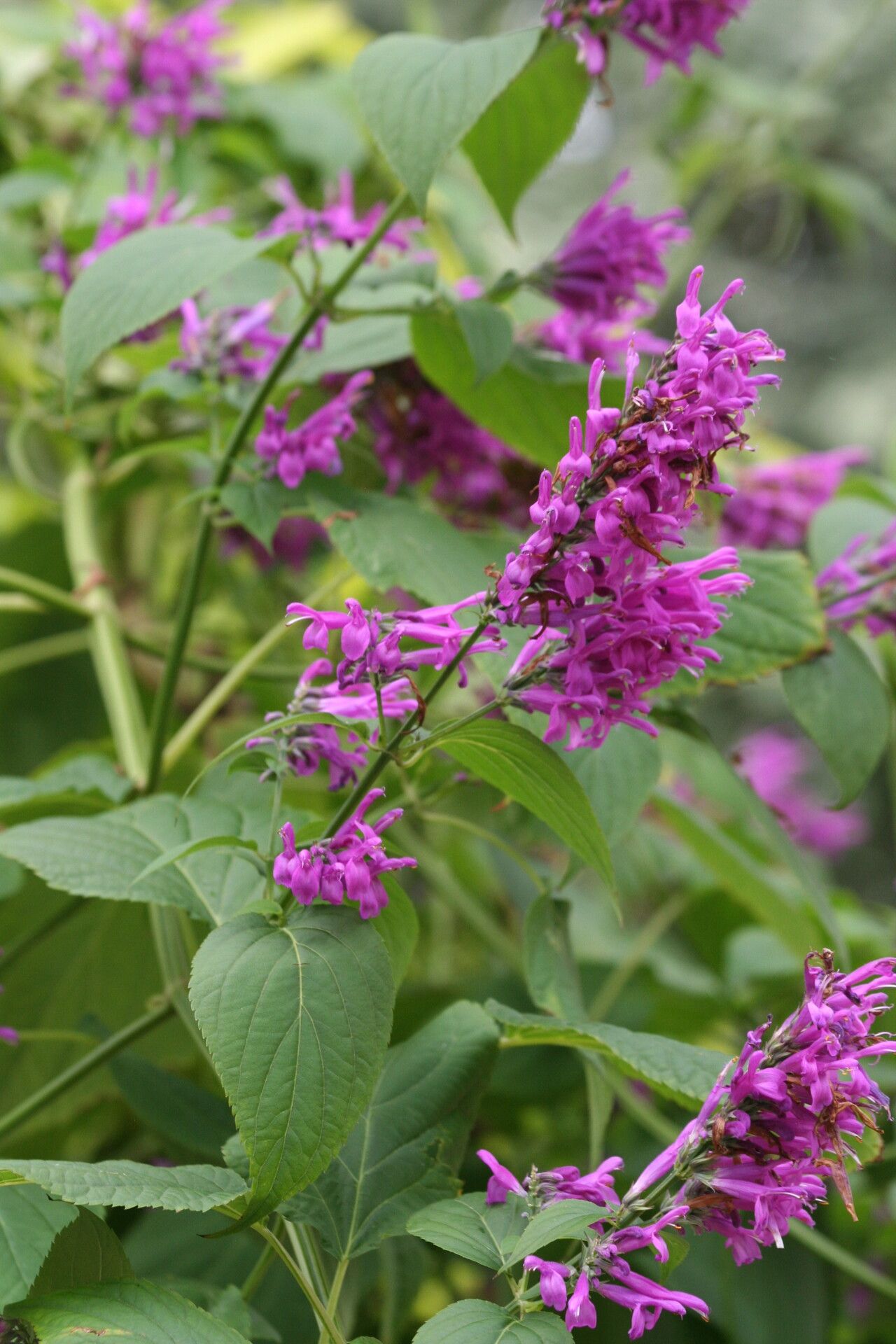
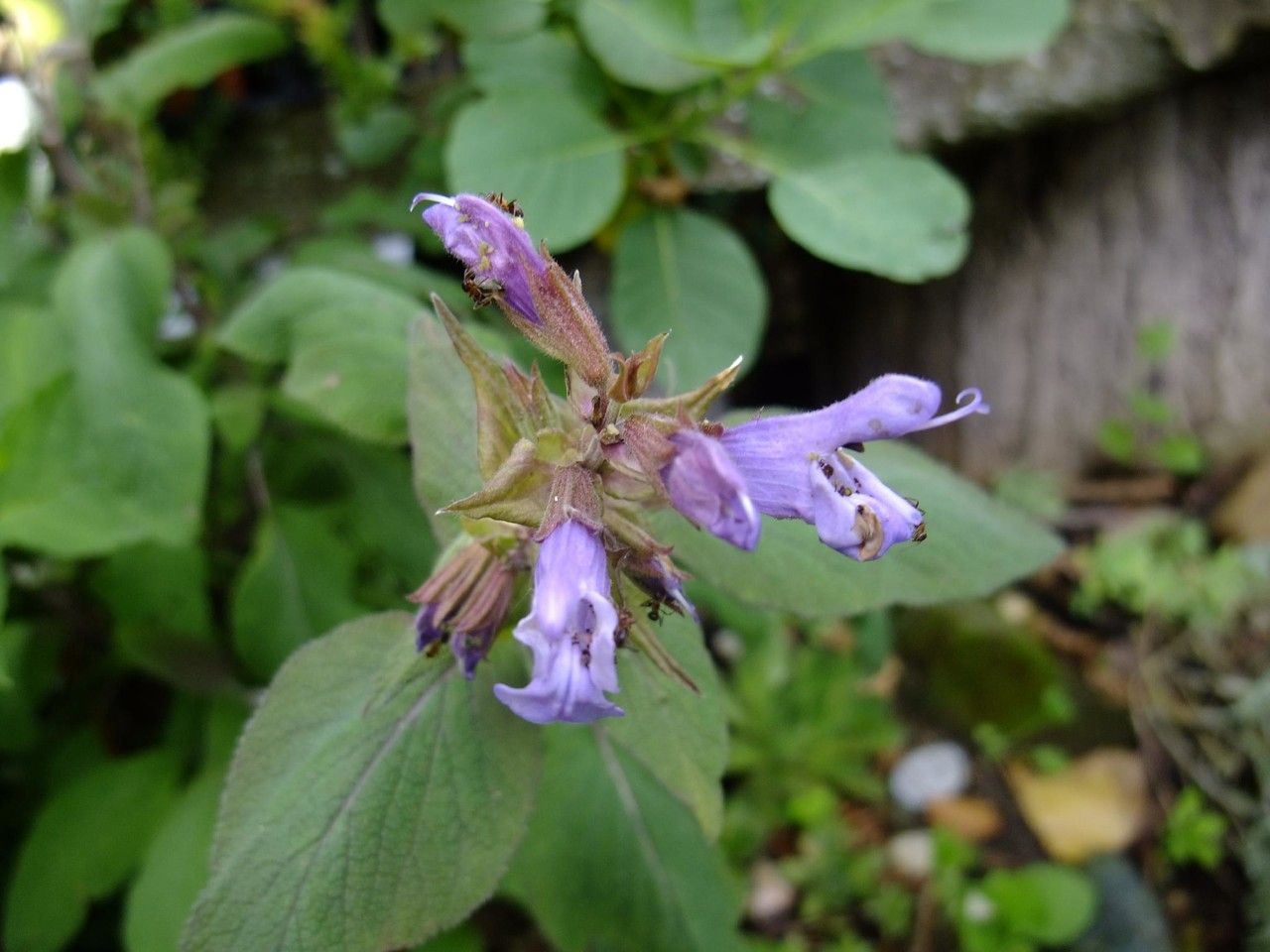
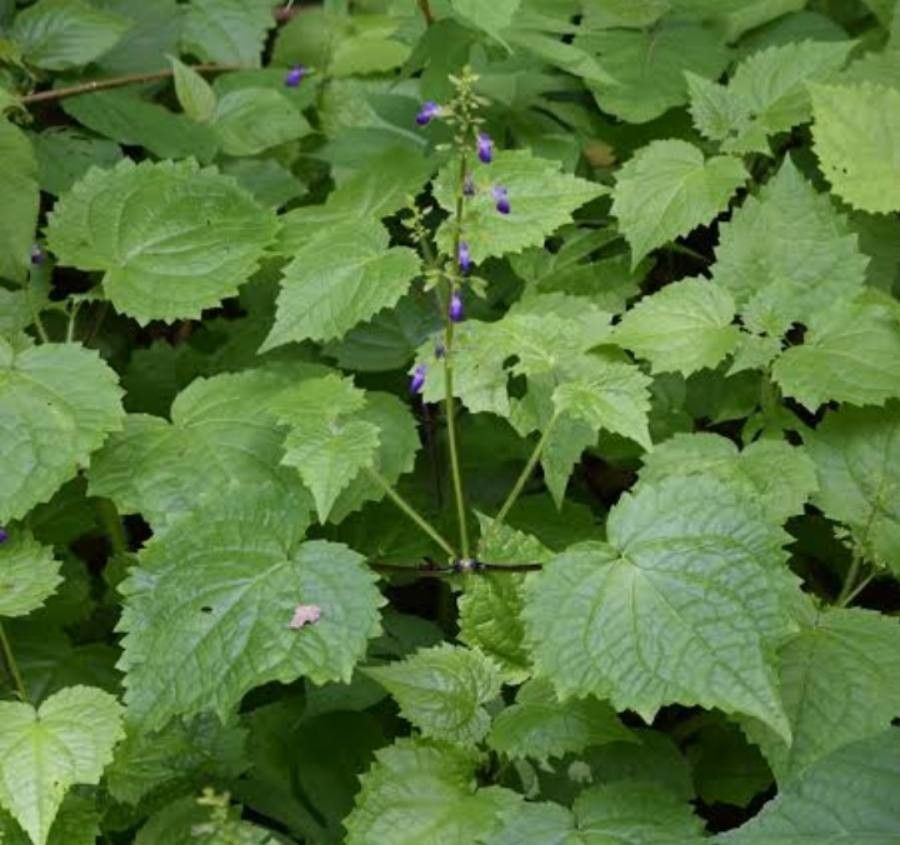
Salvia purpurea is a herbaceous perennial that is native to several Mexican states and south into Guatemala, El Salvador, and Honduras. It was first described by Antonio José Cavanilles in 1793, though its use in horticulture is only recent and it is rarely sold by nurseries.Salvia purpurea reaches up to 7 feet in height, less in width, with ovate yellow-green leaves that have serrated edges. Inflorescences begin appearing in mid-autumn, with the plant blooming into winter. The flowers are a pinkish purple-violet, in tight verticils that look like they are unbalanced on one side of the flower spike. The 0.75 inch flowers are tightly packed at the end of many flowering branches.
Salvia purpurea is fairly resistant to disease and typically does not suffer from many illnesses. Nonetheless, it can be vulnerable to pests and diseases present in its environment. Such infections are generally mild. Regarding care, the plant requires moderate maintenance. Regular pruning is needed to keep it looking neat and to support healthy growth. Fertilizing can also help encourage flowering. Salvia purpurea is well suited for anyone with an outdoor area, like a garden or patio, and does not demand extensive gardening experience. It may need more attention if grown indoors.
How to keep Salvia Purpurea.
Water
Drought-resistant varieties of Salvia purpurea require minimal watering during the summer, only needing attention during periods of drought. However, tender varieties and young plants need regular watering of about 1 inch (2.5 cm) every 7 to 10 days to prevent the soil from drying out completely.
Fertilizer
Salvia purpurea are regarded as heavy nutrient feeders. They need frequent, small doses of nitrogen and potassium fertilizers and periodic additions of phosphorus, micronutrients, sulfur, and magnesium to maintain strong growth and vivid coloration. Continuous fertilization throughout the growing season is required to prevent deficiency symptoms and preserve optimal growth.
Pruning
Salvia purpurea thrives with vibrant blooms and fragrant leaves when pruned from early to late spring. To encourage healthy growth, remove any dead or damaged wood and thin out dense areas to improve air circulation. Pruning helps develop a strong structure, enhances flowering, and assists in pest control. However, avoid heavy pruning during the growing season to minimize stress on the plant.
Botanical profile.
- Plant Type
- Herb
- Life Cycle
- Biennial
- Genus
- Salvia
- Family
- Lamiaceae
- Hardiness Zone
- 8-11
- Leaf Type
- Deciduous
- Native Area
- El Salvador, Honduras, Mexico, Costa Rica