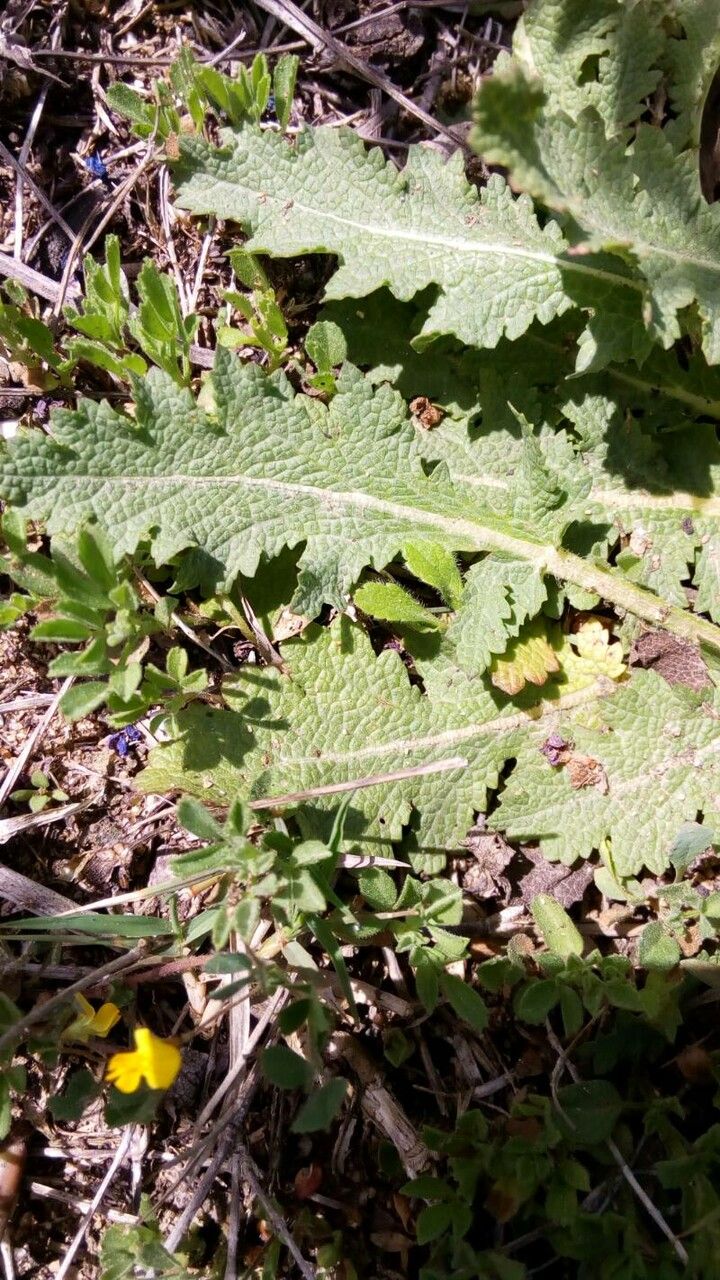
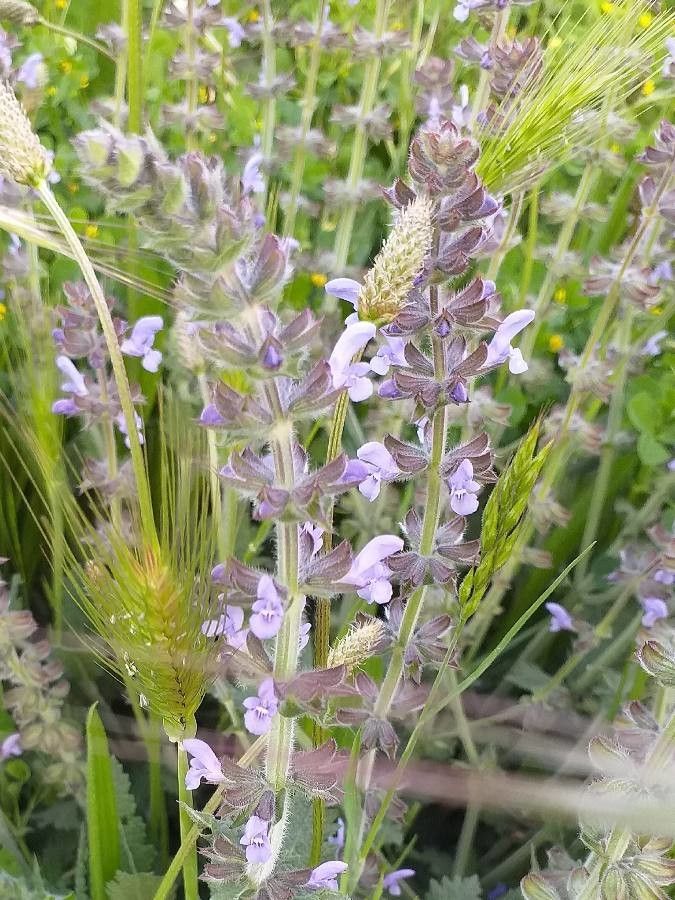
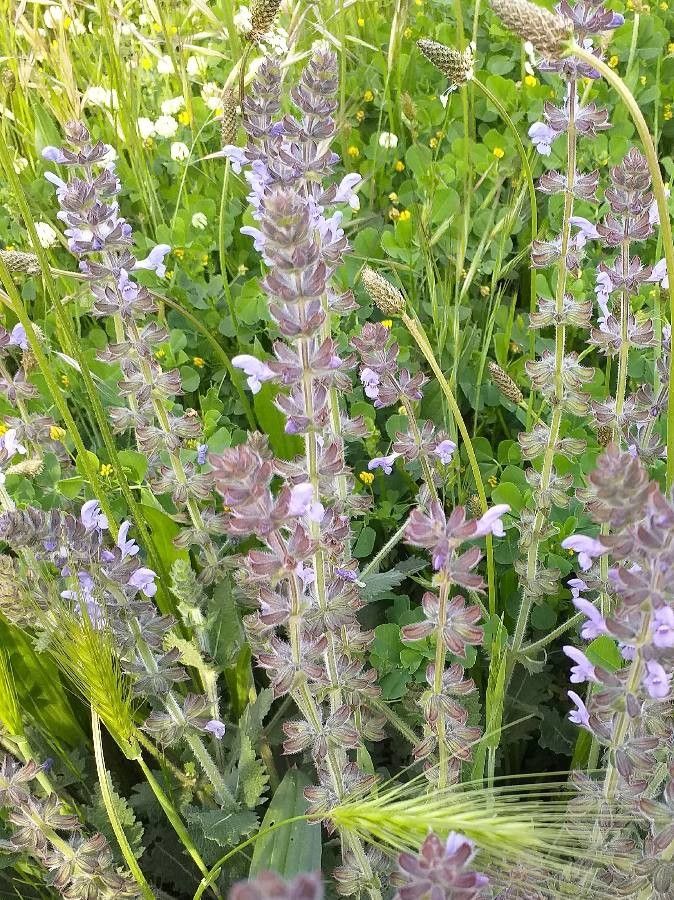
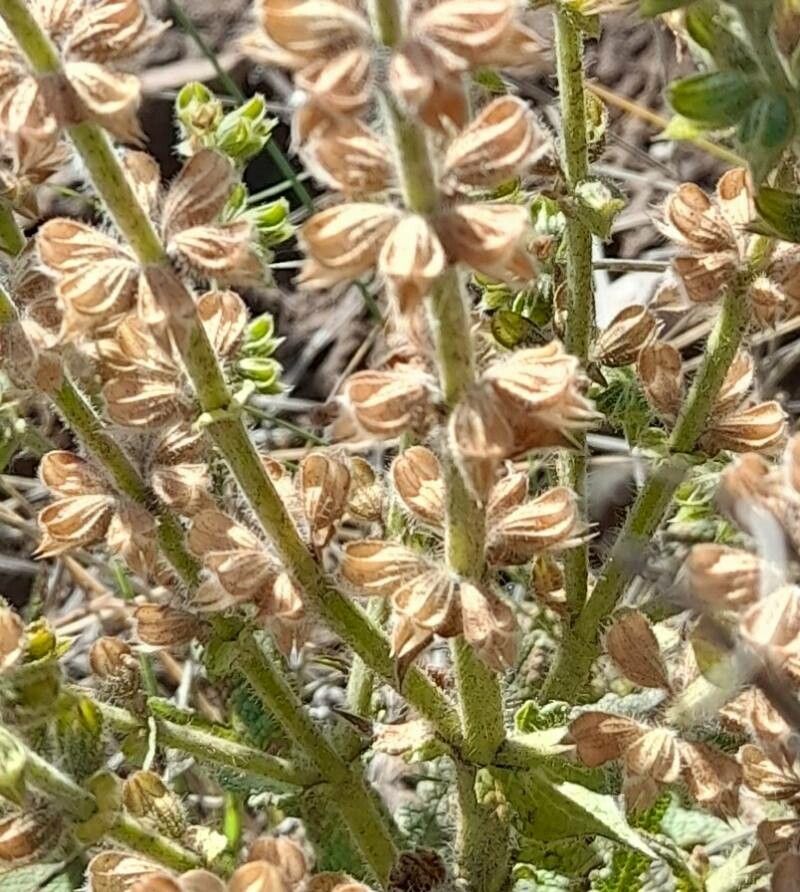
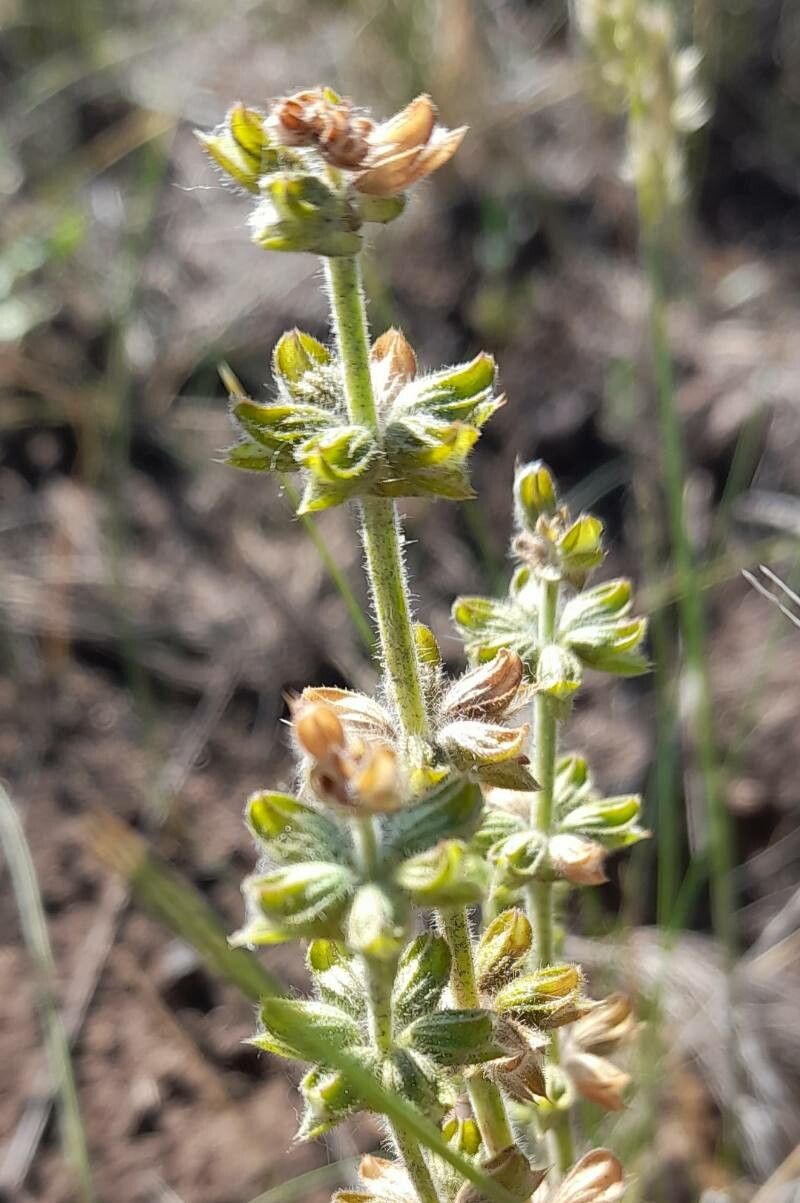
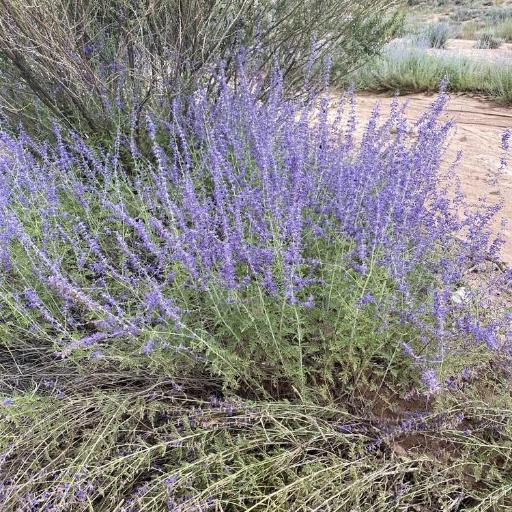
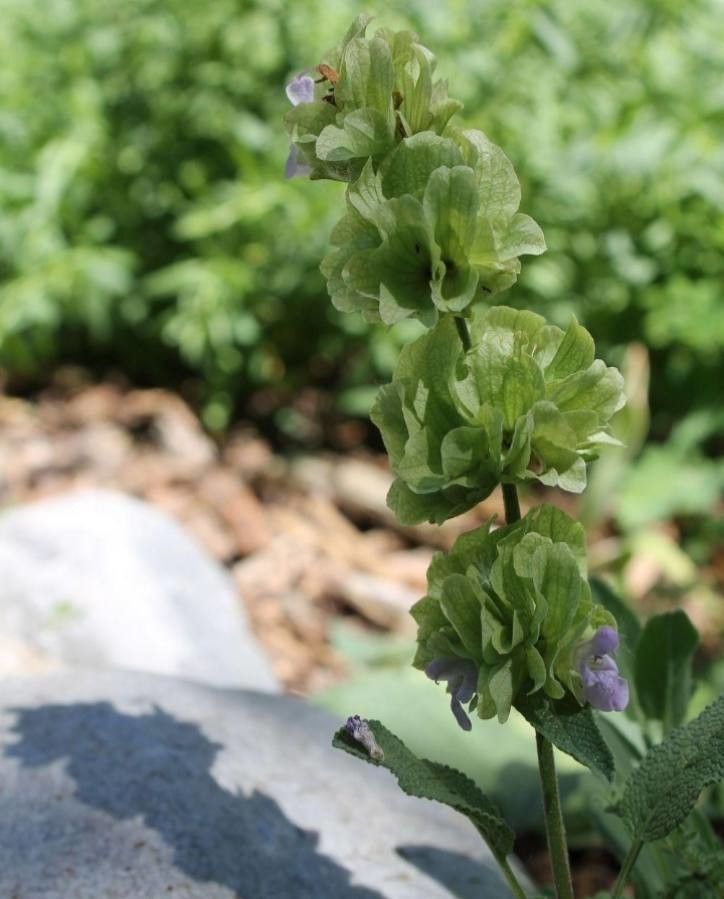
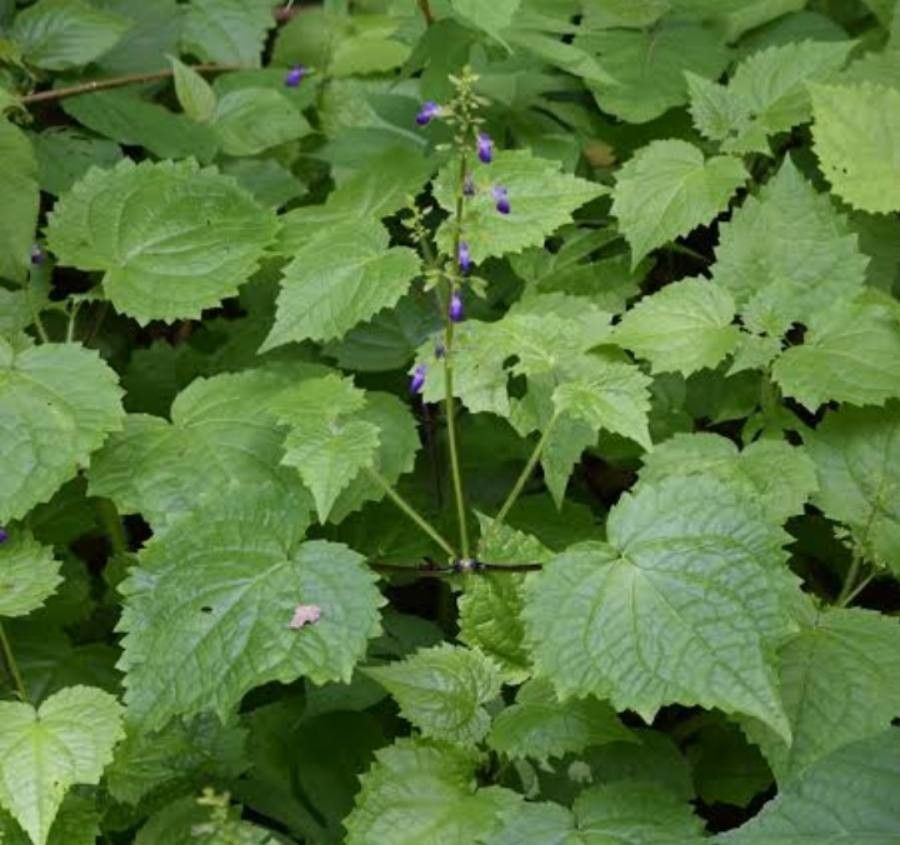
Salvia verbenaca, also known as wild clary or wild sage, is native to the British Isles, the Mediterranean region in Southern Europe, North Africa, and Near East, and in the Caucasus. It can be found as an introduced species that has naturalized in meadows in the Eastern United States. S. verbenaca is a tall perennial herb with hairy stems and branches that erectly sprawl out. Its leaves are basal and toothed that vary from 3 to 10 cm (1.2 to 3.9 in) long. It has soft purple to violet flowers in mid summer. It is in flower from June to September, and the seeds ripen from July to October. The flowers are bisexual and are pollinated by bees. Some are also cleistogamous and pollinate themselves. The plant is noted for attracting pollinators and wildlife. It prefers neutral and alkaline soils and needs full sun. This aromatic sage is used as a flavoring in foods and to make tea; the flowers can be added to salads.
Wild clary shows strong resistance to disease and is generally not prone to illnesses. Still, it can be affected by pests and diseases found nearby. Such infections are typically mild. Regarding care, this plant needs a moderate amount of attention. It should be trimmed on a regular basis to keep a tidy appearance and support healthy growth. Feeding it can also encourage flowering. Wild clary is appropriate for anyone with outdoor space, like a garden or patio, and does not demand extensive plant-care experience. It may need extra care when kept indoors.
How to keep Salvia Verbenaca.
Light
Wild clary flourishes in locations that receive unobstructed sunlight throughout the day. Its native habitat is naturally bright. In various stages of growth it requires ample sun exposure. Excessive shading can impede growth and overall health, while abundant sunshine is beneficial and not harmful.
Water
Wild clary is native to Mediterranean regions and thrives in well-drained soils with moderate humidity. To keep the soil moist without overwatering, it's best to water the plant once a week. Being drought-resistant, wild clary adapts its water needs according to the seasons, needing less water as temperatures fall and the plant enters dormancy.
Temperature
Wild clary is adapted to temperate regions where temperatures range from 41 to 95°F (5 to 35℃). It naturally prospers in these ambient temperatures. It is important to adjust temperatures, particularly during extreme seasons, to satisfy its needs.
Fertilizer
For Wild clary, the primary time to fertilize is in early spring when the flowers are forming. Using the appropriate fertilizer promotes better blooms and helps Wild clary produce attractive flowers. Fertilizing in early spring ensures strong flowering during the season and supplies energy for dormant growth phases.
Pruning
Wild clary benefits greatly from pruning, which should be done from early to late spring. This helps encourage bushy growth and removes any damaged stems. After the plant flowers, a light trim will help maintain its shape. Regular pruning is important as it increases air circulation and reduces the risk of disease. Always use clean, sharp tools, and avoid heavy pruning in late autumn to prevent frost damage.
Pot & Repot
Wild clary needs excellent drainage when grown in pots to thrive. Proper drainage prevents waterlogging and root rot, which are crucial for maintaining the plant's health and promoting optimal growth.
Toxicity
Salvia verbenaca has no toxic effects reported.
Further reading →
The toxicity and danger assessments provided are for reference only. We do not assure their accuracy, so it's crucial not to depend on them. Seek professional advice when necessary for accurate guidance.
Botanical profile.
- Plant Type
- Herb
- Life Cycle
- Perennial
- Genus
- Salvia
- Family
- Lamiaceae
- Hardiness Zone
- 5-9
- Mature Height
- 61 cm
- Mature Spread
- 46 cm
- Leaf Color
- Green, Gray
- Leaf Type
- Semi-evergreen, Deciduous
- Flower Color
- Purple, Violet
- Flower Size
- 0.76 cm to 1.27 cm
- Bloom Time
- Late spring, Early summer, Mid summer
- Planting Time
- Spring
- Harvest Time
- Mid summer
- Native Area
- Libya, Egypt, Turkey, Tunisia, Slovakia, Montenegro, Cyprus, Bulgaria, Greece, Croatia, Slovenia, Morocco, Lebanon, Russia, Serbia, Syria, Italy, Spain, France, Albania, Ireland, United Kingdom, Hungary, Algeria, Portugal
Other names.
Reader questions.
How should I water my Wild clary plant?
To properly water the Wild clary, it is best to use filtered water at room temperature. Tap water may contain harmful particles that can affect the plant's health. Additionally, the water should be at room temperature or slightly warmer since the Wild clary originates from a warm environment and cold water can be a shock to its system. It is recommended to avoid overhead watering as it can lead to leaf issues. Instead, gently apply filtered room temperature water directly to the soil until it is completely soaked. This method benefits the plant by providing moisture to the roots and supporting their spread through the soil to acquire necessary nutrients.
Why should I put fertilizer on my Wild clary plant?
The Wild clary relies heavily on its leaves, and fertilization is crucial for ensuring their appearance and functionality. Proper fertilization promotes consistent leaf color and a healthy texture. Additionally, fertilization strengthens the root system of the Wild clary, aiding in the growth of new roots and maintaining existing ones. This not only keeps the plant healthy presently but also improves its ability to absorb nutrients from the soil in the long run.
What are the sunlight requirements for Wild clary (Salvia verbenaca)?
Wild clary requires full sun, which means it needs to be in direct sunlight for more than 6 hours a day to thrive. It's essential to watch how sunlight moves through your garden and choose spots that offer a balance of light and shade, ensuring the plants' happiness. Wild clary's original habitat is very luminous, indicating its requirement for generous solar exposure throughout its growth stages. Too much shade can hinder its growth and health, while an abundance of sunlight benefits the plant without causing harm.
What is the ideal temperature range for wild clary?
Wild clary is well-suited for temperate climates, thriving in temperatures between 41 to 95°F (5 to 35°C). It is naturally adept at surviving in these ambient temperatures. It’s crucial, especially during the more extreme seasons, to adjust environmental conditions accordingly to meet wild clary's needs. The plant also exhibits strong cold resistance, generally not requiring special frost protection measures. However, in locations where winter temperatures are expected to plummet below -25°C, it's vital to implement cold protection by covering the plant with soil or straw. Additionally, watering the plant abundantly before the first freeze in autumn to keep the soil moist can help prevent drought and water scarcity issues during winter and early spring.
What should I do if I give my Wild clary too much water or too little?
Both overwatering and underwatering can harm the health of your Wild clary, but overwatering is more common and problematic. Overwatering can cause wilting, yellowing leaves, and potentially deadly diseases like root rot, mold, and mildew. While the Wild clary is reasonably drought-tolerant, underwatering is still possible, resulting in brittle, brown leaves. It is important to quickly recognize signs of overwatering to prevent irreversible damage. If you notice these signs, reduce watering immediately and consider replacing poorly draining soil. Conversely, if signs of underwatering are present, simply increase watering until the symptoms improve.
When should I put fertilizer on my Wild clary?
When you grow your Wild clary outdoors, it will produce new growth in early spring. This is a signal that it's time to start fertilizing the plant for the year. Usually, applying fertilizer once in the spring is enough for the Wild clary to thrive. However, if you want to encourage maximum growth, you can fertilize it several times from spring to early summer. In this case, you should feed your Wild clary approximately every month to a month and a half.
How can artificial lighting support Wild clary's growth indoors?
When natural sunlight is insufficient, especially in winter or less sunny spaces, indoor plants like Wild clary can benefit from artificial lighting. The right type of artificial light, such as LED lights, can provide specific wavelengths needed for optimal growth. For full sun plants, 30-50W/sq ft of artificial light is recommended, 20-30W/sq ft for partial sun plants, and 10-20W/sq ft for full shade plants. It's crucial to place the light source 12-36 inches above the plant and mimic natural daylight hours, typically providing 8-12 hours of light per day.
How does wild clary react to low temperatures?
Wild clary displays a remarkable tolerance to cold temperatures and prefers conditions above 5°C. Throughout the winter, ensuring the temperature stays above -20°C is essential for its well-being. Should temperatures dip below -25°C, the effects might not be immediately observable during the winter months. However, come spring, there could be a decrease in sprouting, or in some cases, no sprouting at all. A practical solution for affected plants in spring is to remove any parts that have failed to sprout, promoting healthier growth moving forward.
How often should I water my Wild clary?
If your Wild clary is in a pot, you can check if it needs water by sticking your finger in the soil. If the top two to three inches are dry, it's time to water it. If your Wild clary is growing outdoors, you can do the same test. When the top few inches of soil are dry, it's time to water it. Usually, during spring and early fall, watering once a week should be enough. But during very hot weather, you may need to water it twice a week or more. However, mature and well-established Wild clary plants can handle drought well.
When is the best time to not give fertilizer to my Wild clary plant?
During the late fall and winter, your Wild clary goes into a dormant phase and stops producing new growth. It's important to avoid fertilizing it during this time. In the spring and summer, if you choose to fertilize, gradually reduce the amount as summer comes, since the growth rate of your Wild clary will also decrease. It's generally not a good idea to fertilize when the weather is unusually hot or when the soil is extremely dry, as it can stress and harm your Wild clary.
What are the symptoms of light deficiency in Wild clary?
Wild clary shows various symptoms when exposed to inadequate lighting, including smaller new leaves compared to the older, mature ones, leggy or sparse growth, faster leaf drop, slower or halted new growth, and lighter-colored new leaves. Additional symptoms can include chlorosis, or yellowing of leaves due to chlorophyll breakdown from excessive sunlight, sunscald, leaf curling as a defense mechanism against excessive sunlight, wilting from water loss, and leaf scorching resulting from excessive sun exposure.
How should wild clary be cared for in high temperatures?
During the summer, it's important to keep wild clary's surrounding temperature below 35°C. Exposure to temperatures exceeding 38°C can lead to visible stress on the plant, including lighter-colored leaves prone to curling, susceptibility to sunburn, and in severe cases, wilting and drying out of the entire plant. To mitigate these effects, trim away sunburned and dried-up portions of the plant. Relocating the plant to a spot with shade, especially during the intense midday and afternoon sun, or employing a shade cloth can offer necessary protection. Additionally, watering the plant in the cooler hours of the morning and evening helps maintain soil moisture and assists in cooling the plant.