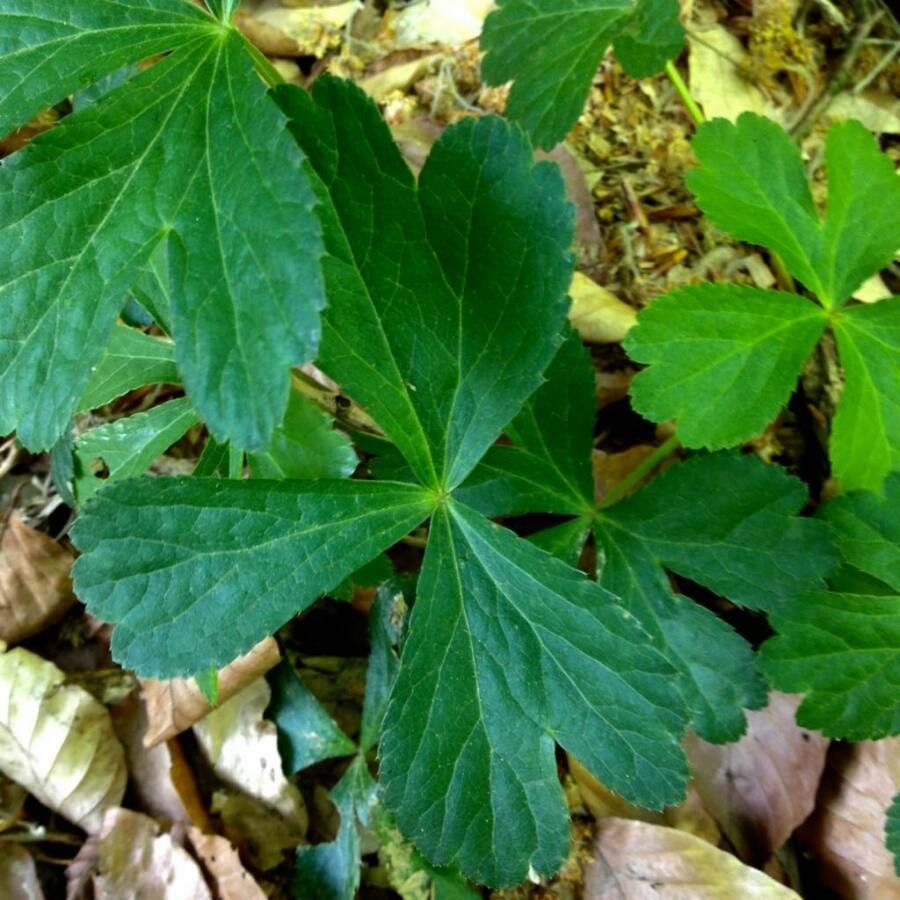
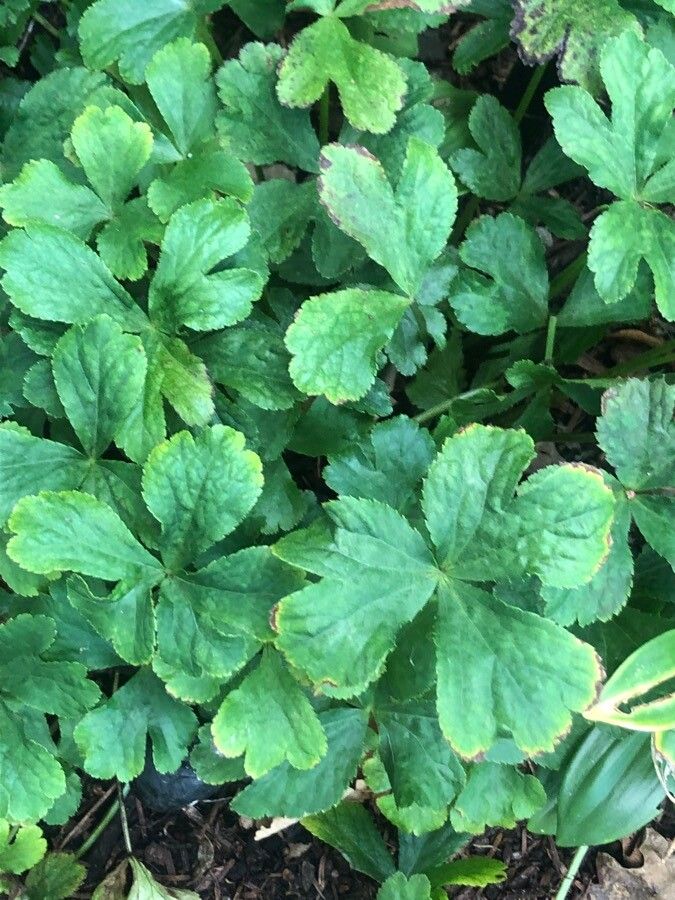
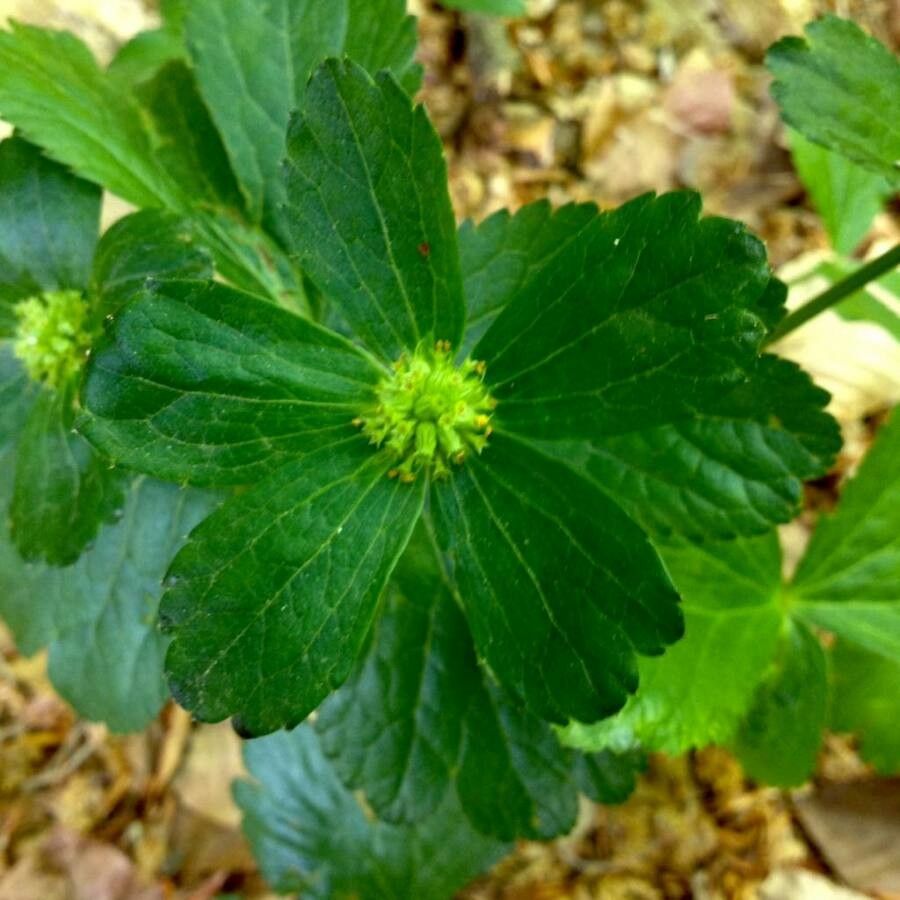
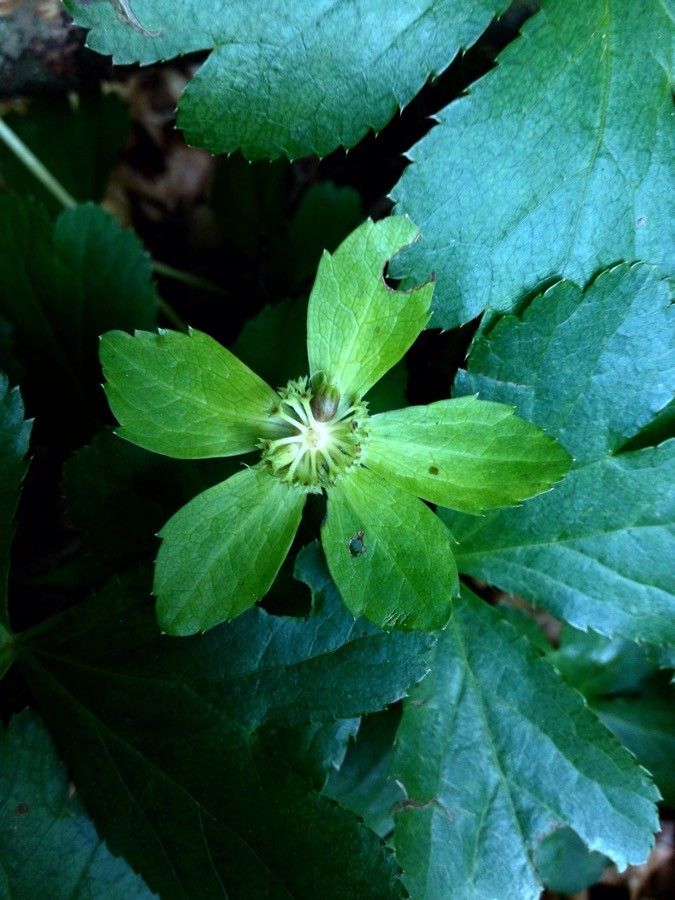
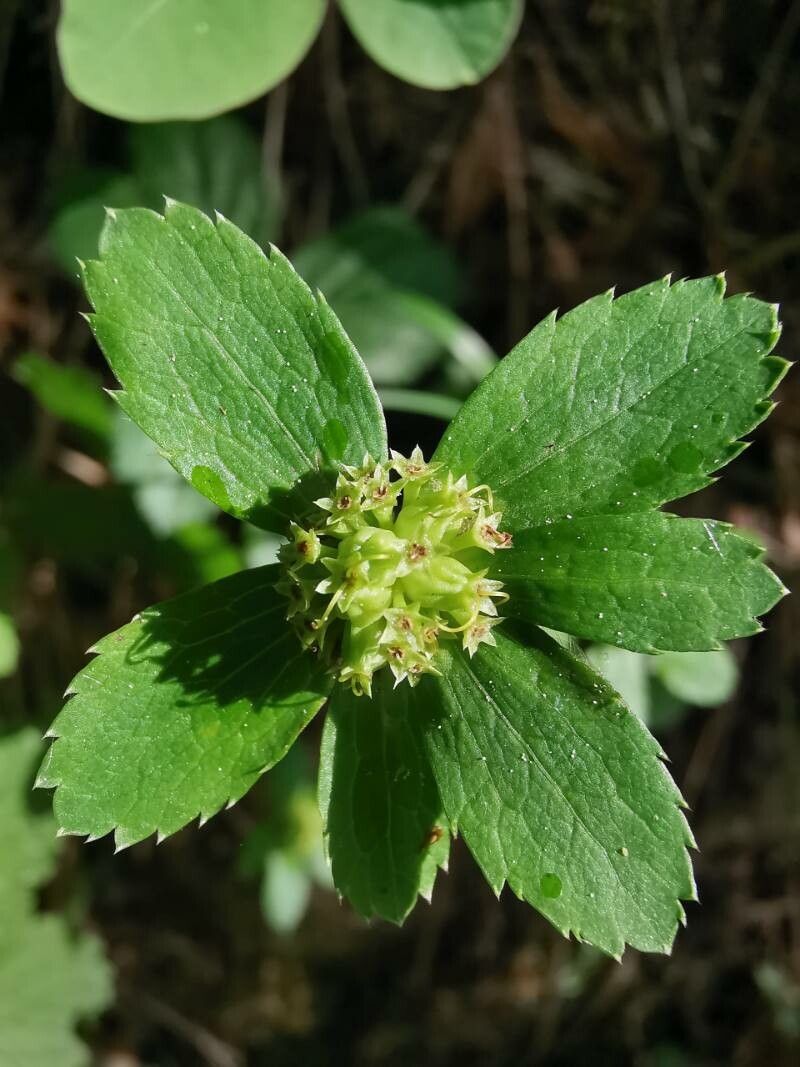
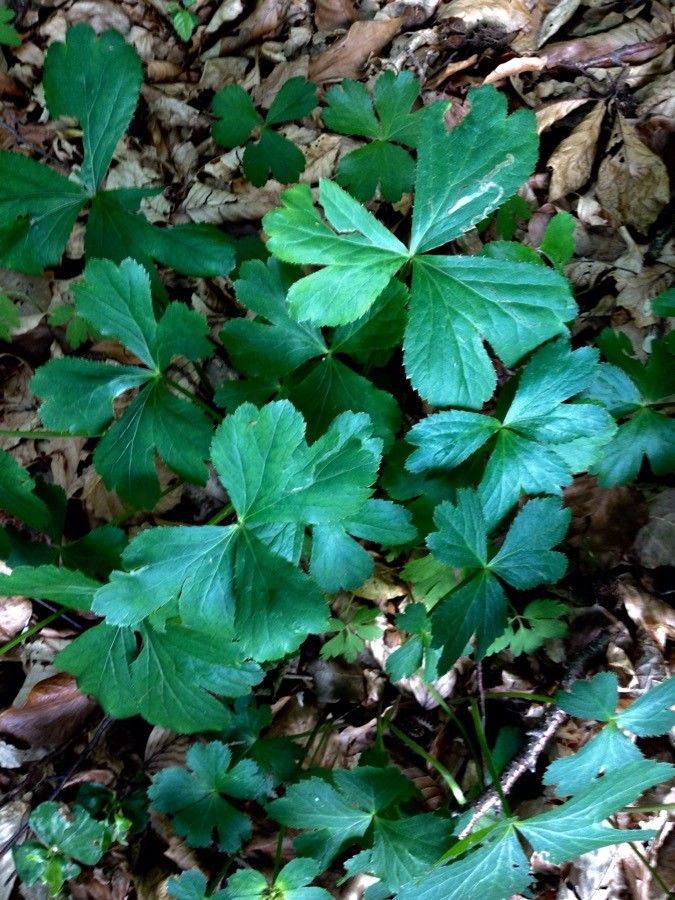
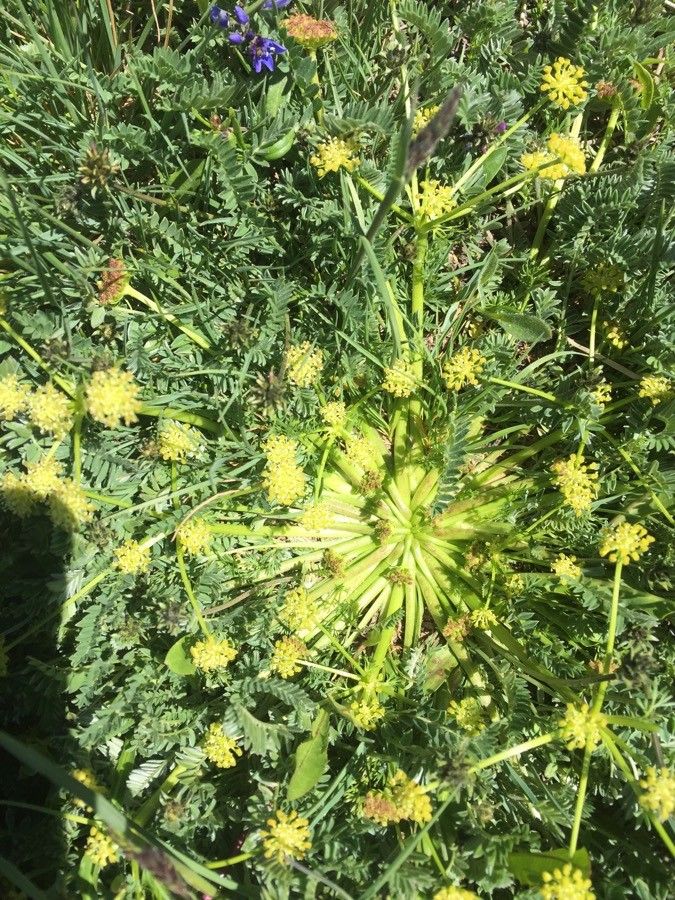
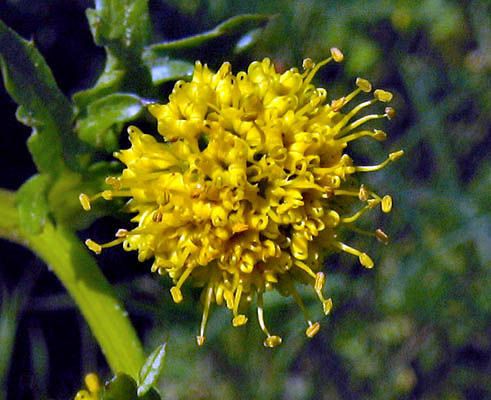
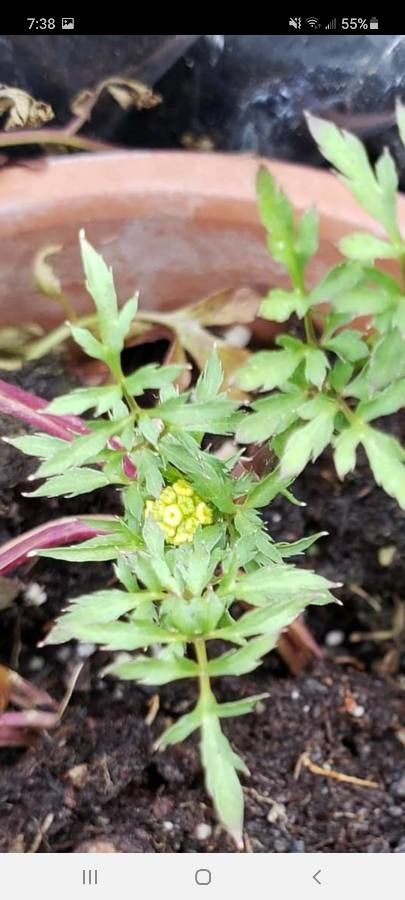
Hacquetia epipactis (syn. Dondia epipactis (Scop.) Spreng. or Sanicula epipactis Scop.) is a species of flowering plant of the family Apiaceae, native to moist, shady woodland habitats in Europe. The only species of its genus, it is a rhizomatous, clump-forming herbaceous perennial, growing to about 30 cm in height, with glossy green leaves which only fully develop after flowering. The flowers, appearing late winter and early spring, consist of multiple tiny yellow florets framed by lime green bracts, and carried in dense spherical umbels 4 cm in diameter. It is easy to cultivate in Plant Hardiness Zones 5 to 7 according to the United States Department of Agriculture (though it is hardier than indicated and can be grown easily down to at least Zone 3), and looks best in a woodland setting which imitates its native habitat. Under the synonym Sanicula epipactis this plant has gained the Royal Horticultural Society's Award of Garden Merit.Known cultivars include the variegated ‘Thor’. The specific name epipactis comes from a Greek word for plants thought to curdle milk.
Hacquetia is fairly disease-resistant and generally not prone to illnesses. However, it can be vulnerable to pests and diseases present in its environment. Such infections are typically mild. Regarding care, this plant needs moderate maintenance. It should be pruned regularly to maintain a good appearance and support healthy growth. Fertilizing can also help promote flowering. Hacquetia is suitable for anyone with an outdoor area, such as a garden or patio, and does not require extensive care experience. It may need extra attention when grown indoors.
How to keep Sanicula Epipactis.
Fertilizer
A single fertilizer application in spring is generally enough for Hacquetia, though multiple feedings can maximize its growth. Apply fertilizer every month to a month and a half. Fertilization improves leaf appearance and function, helping maintain consistent color and a healthy texture. It also encourages root growth and nutrient uptake, supporting the plant’s long-term health.
Pruning
Hacquetia is known for its beautiful spring blooms and lush foliage. To maintain the plant's health and manage its size, it's best to prune from early to late spring. During this time, remove any spent flowers and damaged leaves. Be sure to use clean, sharp tools for trimming, as this will help enhance the plant's health and improve its aesthetic appeal.
Botanical profile.
Other names.