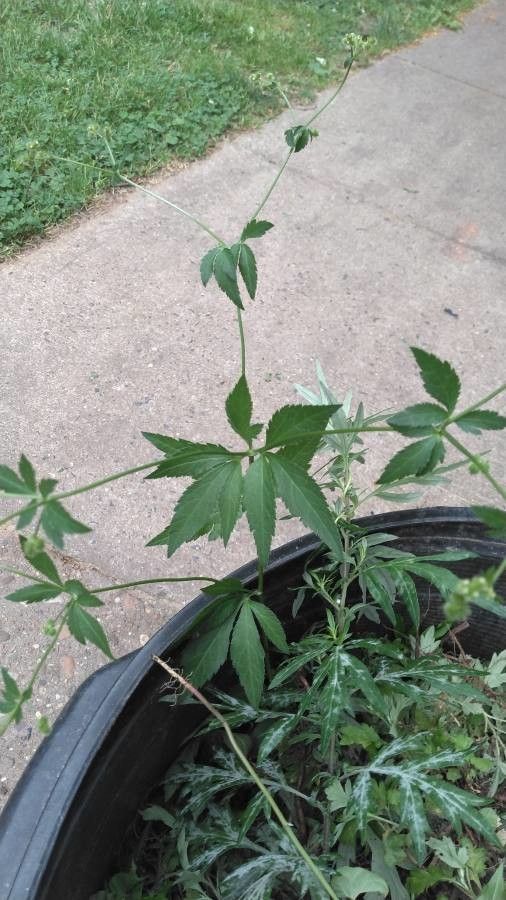
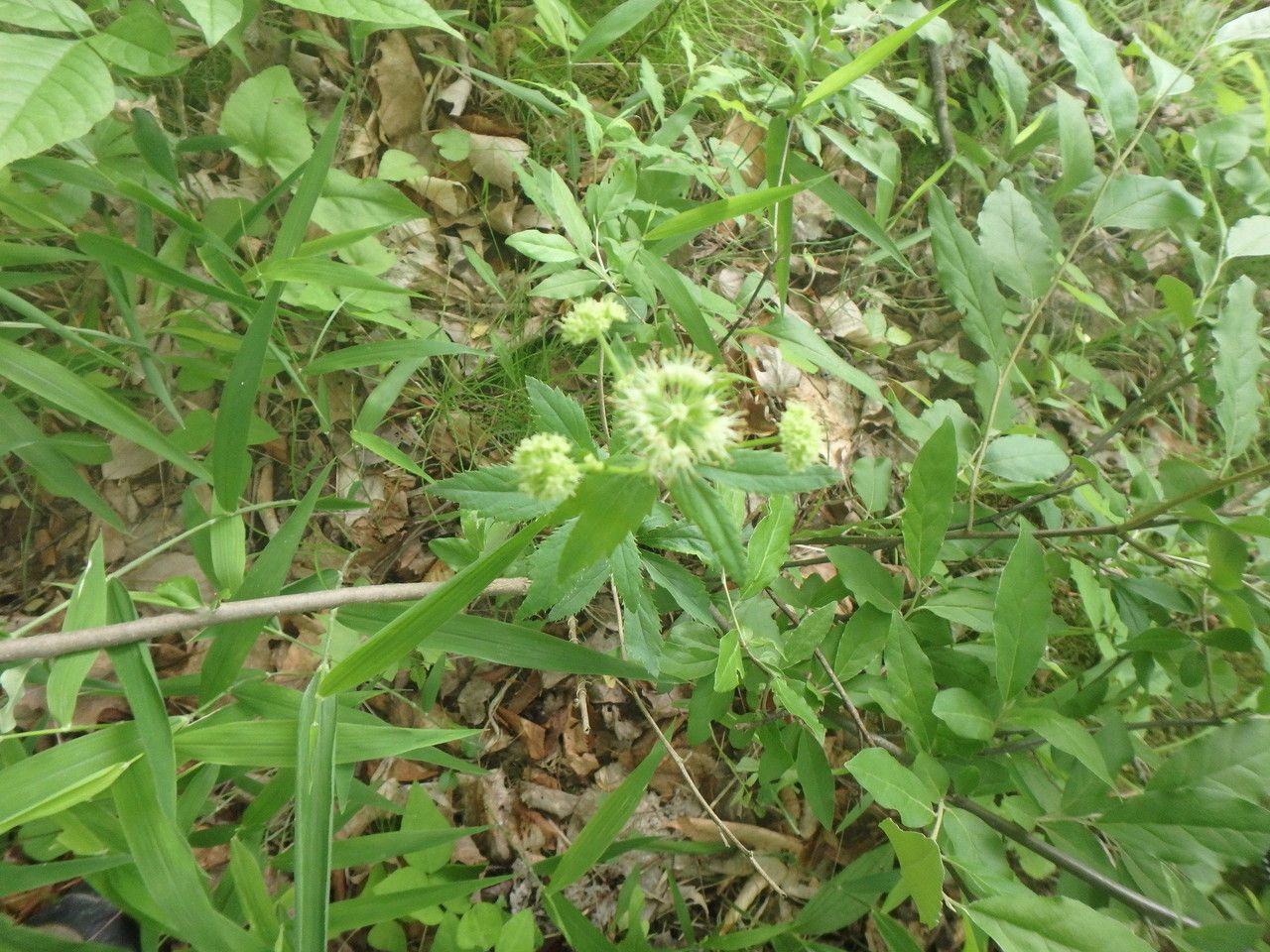
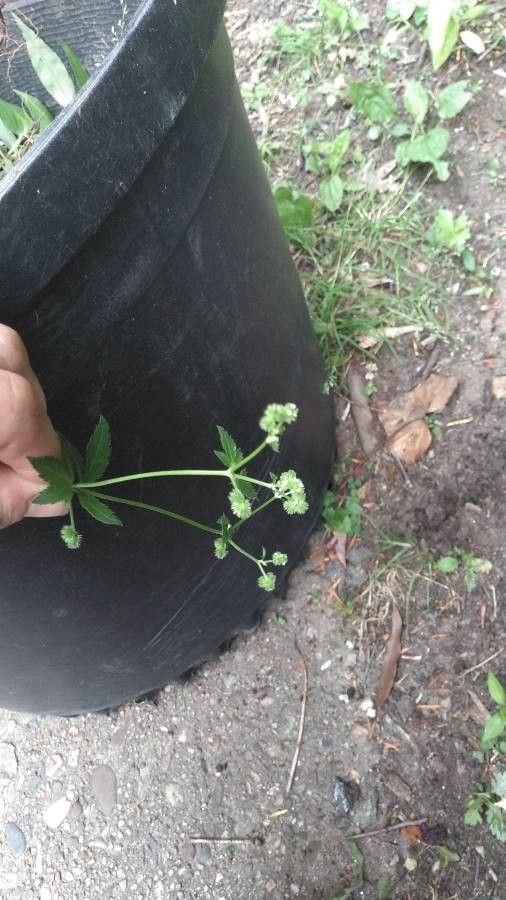
Sanicula marilandica, the Maryland sanicle or Maryland black snakeroot, is a flowering plant widespread in North America but rare along the Pacific coast of the continent and Texas. Sanicula marilandica is listed as Sensitive in Washington state. Leaves with deeply incised lobes radiating out from the same point. Every leaf has no set number of leaflets, but commonly will have 5–7. The plant is not tall, but the fruiting stalk will rise up to 2 feet, bearing tiny green flowers in the spring. In the fall, the fruit stalk carries dehiscent fruit which splits, bearing small spines.
Maryland sanicle has strong resistance to disease and typically does not suffer from illnesses. However, it can be vulnerable to pests and diseases present in its environment. Such infections are usually not serious. For care, this plant requires moderate maintenance. It should be pruned regularly to keep a good appearance and support healthy growth. Fertilizing can also encourage more flowering. Maryland sanicle is appropriate for anyone with an outdoor area, such as a garden or patio, and does not need extensive gardening experience. It may demand more care when grown indoors.
How to keep Sanicula Marilandica.
Light
Maryland sanicle occurs naturally in habitats like forest understories and rocky sites where it grows in natural shade. It prefers partial sun but can tolerate both full sun and full shade, reflecting its adaptable, hardy nature.
Water
Maryland sanicle thrives in consistently moist conditions, requiring weekly watering for optimal growth. This perennial herb has a moderate tolerance for drought and benefits from natural rainfall. Its water needs are highest during the active growing season, which is essential for maintaining its health and vigor.
Temperature
Maryland sanicle does best in cold climates and at high elevations. It prefers cool temperatures, plenty of airflow, and a moist environment. In summer, measures should be taken to keep it cool, because it is very sensitive to heat and can easily die from it. Dry conditions can also be harmful. In winter, no special cold protection is necessary, but soil moisture should be maintained.
Fertilizer
A single spring fertilization is typically enough for Maryland sanicle, though repeated feedings will maximize growth. Apply fertilizer every month to six weeks. Fertilizing improves the leaves’ appearance and function, encouraging even color and a healthy texture. It also promotes root development and nutrient uptake, supporting the plant’s long-term health.
Pruning
Maryland sanicle is a perennial herb with lobed leaves and small greenish-white flowers. For optimal growth and air circulation, it is important to prune the plant from early to late spring. During this time, remove any dead foliage and overgrown stems. Be sure to use clean, sharp tools to prevent infection. Proper timing and technique are key for achieving the best results.
Botanical profile.
Other names.
Reader questions.
What are the essential care tips for Maryland sanicle?
Maryland sanicle, or Sanicula marilandica, thrives best in cold regions and high-altitude areas, preferring cool temperatures, ample ventilation, and moist environments. During hot summers, it's crucial to implement cooling measures to protect the plant from heat, as it is highly sensitive and can easily succumb to high temperatures. Dry conditions are detrimental as well. In winter, the plant is cold-tolerant and doesn't require specific cold protection measures, but ensuring the soil stays moist is essential. It's recommended to water the plant generously before the first freeze in autumn to maintain soil moisture throughout the winter, aiding in drought prevention and ensuring a healthy plant during the colder months and early spring.
How does Maryland sanicle react to low temperatures?
Maryland sanicle is highly tolerant of cold conditions, capable of withstanding temperatures down to -25°C without the need for additional frost protection during winter. However, if temperatures dip below -25°C, the plant may experience issues with sprouting in the spring, potentially leading to decreased sprouting or a complete absence of new growth. If this occurs, the recommended action is to remove any parts of the plant that have failed to sprout in the spring, ensuring the plant remains healthy and able to grow.
What should I do if Maryland sanicle is exposed to high temperatures?
Maryland sanicle is not tolerant of high temperatures, and growth will halt if exposed to temperatures above 25°C, making the plant more prone to rot. To combat high temperature stress, it's advisable to trim away any sunburned or dried-up sections of the plant. Moving the plant to a shaded location or utilizing shade cloth to protect it from midday and afternoon sun can be beneficial. Additionally, watering the plant during the cooler morning and evening hours helps keep the soil moist and supports the plant's health under high temperature conditions.