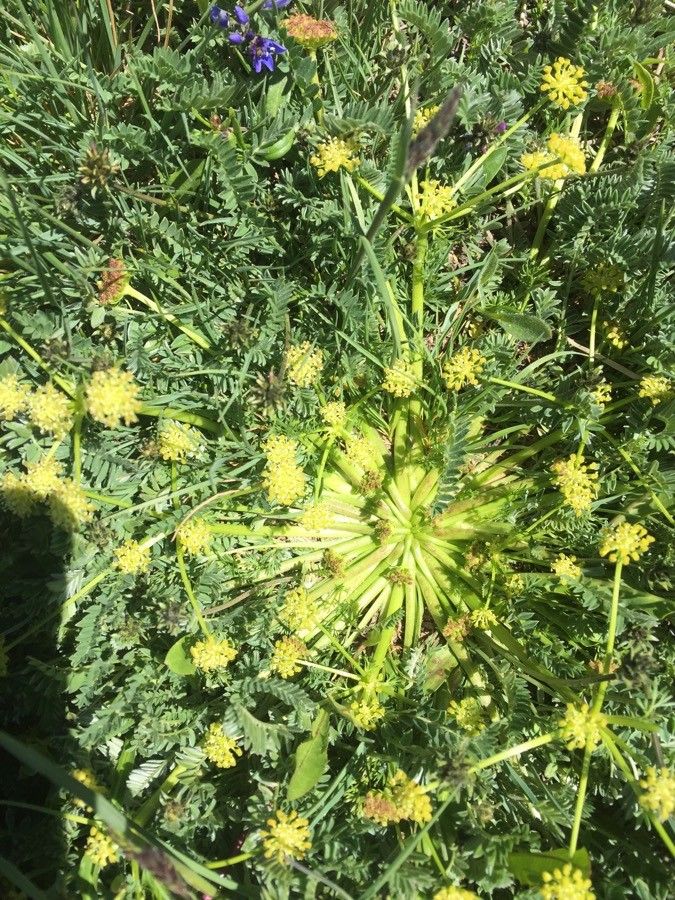
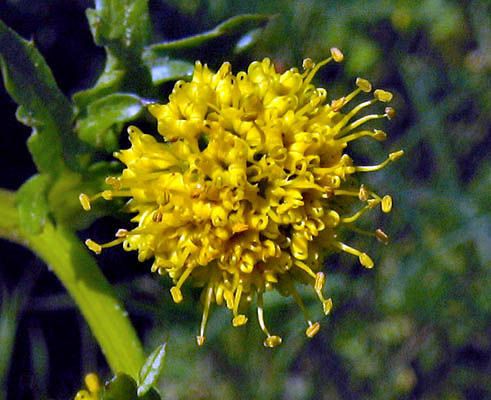
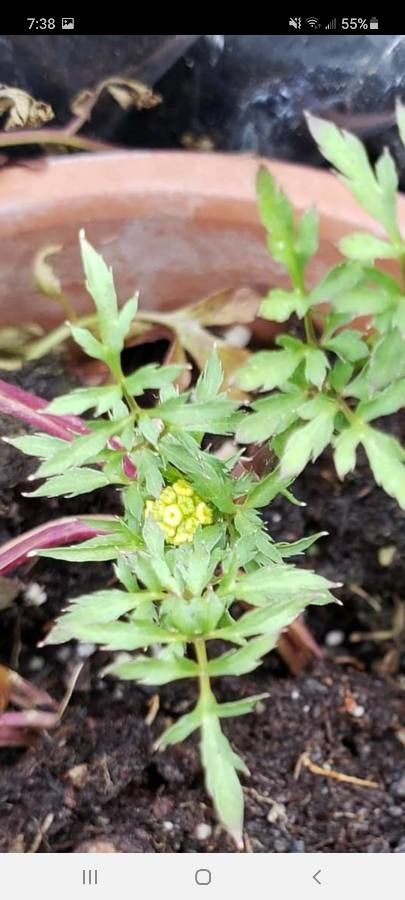
Sanicula tuberosa is a species of flowering plant in the parsley family known by the common name turkey pea. It is native to western North America from Oregon through California to Baja California, where it can be found in many types of habitat, including chaparral, forests, and woodlands. It is variable in appearance. In general, it is a perennial herb producing a slender stem up to 80 centimeters long from a small, spherical tuber no more than 2 centimeters wide. The leaves are compound, divided into usually three leaflets which are smooth or deeply cut into lobes. The herbage is green to purple in color. The inflorescence is made up of one or more heads of bisexual and male-only flowers with tiny, curving, yellow petals. The fruits are 1 or 2 millimeters long and covered in bumpy tubercles.
Turkey pea is fairly disease-resistant and usually not highly prone to illnesses. However, it can be vulnerable to pests and diseases present in its environment. These issues are typically mild. For care, the plant requires moderate maintenance. It should be pruned regularly to keep a neat appearance and support healthy growth. Fertilizing can also help encourage flowering. Turkey pea is suitable for anyone with outdoor space, such as a garden or patio, and does not demand extensive care experience. It may need more attention if grown indoors.
How to keep Sanicula Tuberosa.
Light
Turkey pea comes from habitats with filtered light, such as forest understories or rocky spots that give natural shade. It performs best in partial sun but can also tolerate full sun conditions.
Temperature
Turkey pea is native to habitats where temperatures fluctuate between 68 and 95 °F (20 and 35 °C). It favors warmer climates and must make small adjustments to its growth if temperatures drop below that range.
Fertilizer
Turkey pea are regarded as heavy feeders when it comes to nutrients. They need frequent, small doses of nitrogen and potassium fertilizers and periodic applications of phosphorus, micronutrients, sulfur, and magnesium to sustain good growth and bright coloration. Continuous fertilization throughout the growing season is necessary to prevent deficiency symptoms and maintain optimal growth.
Pruning
The Turkey pea plant is characterized by its tuberous roots and delicate flower clusters. It's important to prune these plants from early to late spring to remove any damaged stems and promote healthy growth. Always use clean, sharp tools to prevent disease. Proper pruning not only improves flowering and overall vitality but also helps maintain an attractive shape.
Botanical profile.
- Plant Type
- Herb
- Life Cycle
- Biennial, Perennial
- Genus
- Sanicula
- Family
- Apiaceae
- Hardiness Zone
- 9
- Mature Height
- 76 cm
- Mature Spread
- 10 cm to 20 cm
- Leaf Color
- Dark Green
- Leaf Type
- Deciduous
- Flower Color
- Yellow
- Flower Size
- 0.20 cm to 0.25 cm
- Bloom Time
- Early spring, Mid spring
- Planting Time
- Spring, Summer
- Harvest Time
- Late spring, Early summer
Other names.
Reader questions.
What is the native climate for Turkey Pea (Sanicula tuberosa)?
Turkey pea, known botanically as Sanicula tuberosa, thrives in environments where the temperature fluctuates between 68 to 95 °F (20 to 35 °C). It is native to warmer climates and has a certain level of adaptability if temperatures briefly fall below its preferred range. The plant does possess some cold tolerance, typically not requiring additional protective measures when temperatures are above 0°C. However, should temperatures be expected to drop below freezing, it's advisable to implement temporary cold protection strategies such as wrapping the plant with plastic film, fabric, or other insulating materials. These protections should be removed once temperatures rise to suitable levels again.
How does Turkey Pea react to low temperatures?
Turkey pea has a moderate tolerance to low temperatures, flourishing best when the temperature is maintained above 20°C. During winter months, it's important to ensure the temperature remains above 0°C to prevent frost damage. Exposure to temperatures below -5°C may result in drooping leaves; while they can recover in mild cases, severe cold may cause leaves to wilt and ultimately fall off. To mitigate frost damage, any frost-damaged parts should be trimmed away. To prepare for low temperatures, the plant can be wrapped in non-woven fabric or cloth, and a wind barrier may be constructed to shield it from cold winds.
How should Turkey Pea be cared for during high temperatures?
In the summer, it's crucial to keep Turkey pea's environment below 35°C to avoid heat stress. Temperatures that exceed 38°C can cause the leaves to lighten in color, dry and wither at the tips, curl, and increase susceptibility to sunburn. To care for a Turkey pea during high temperatures, remove any sunburned or dried parts of the plant. Relocate the plant to a shaded area during the peak sun hours or use a shade cloth to protect it from direct sun exposure. Additionally, watering the plant in the early morning and evening will help maintain soil moisture, further aiding in heat stress reduction.