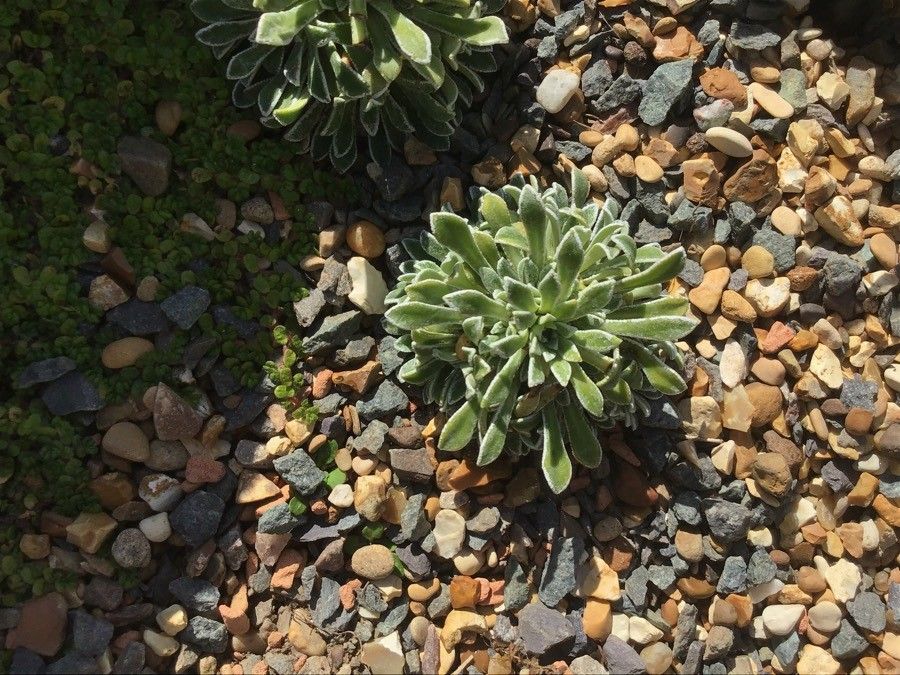
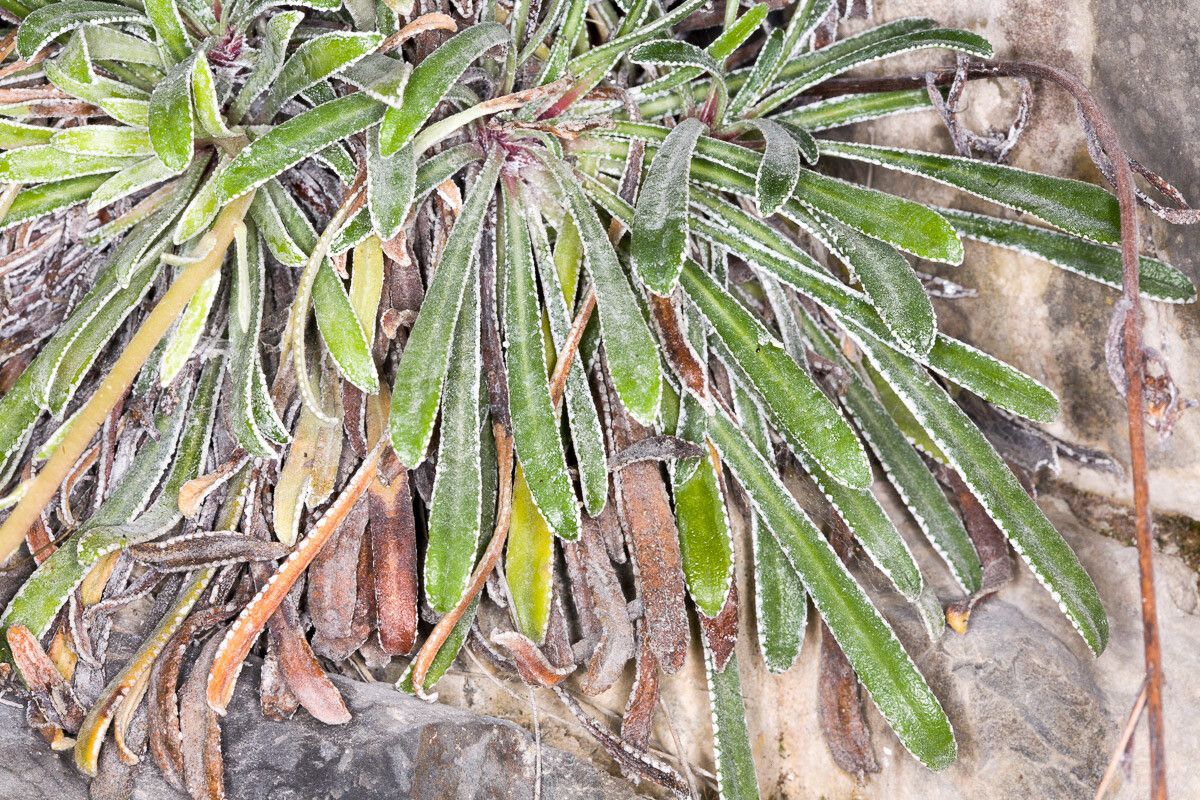
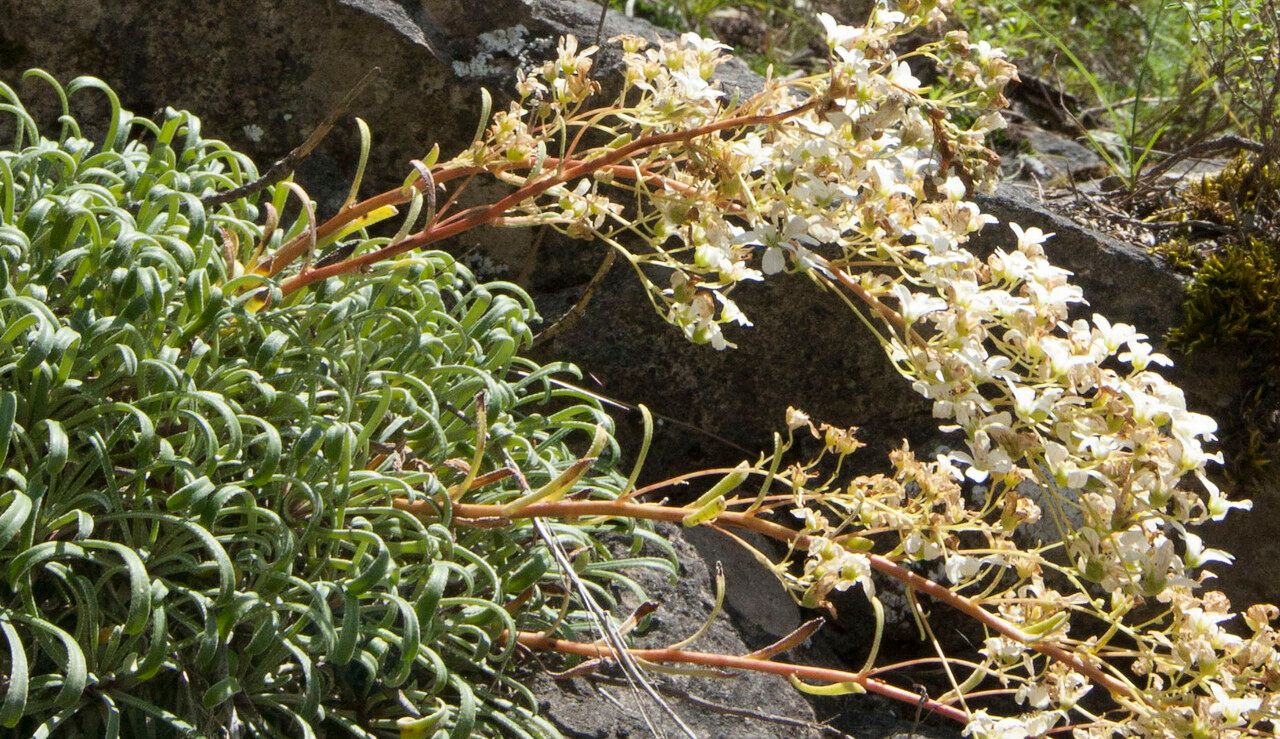
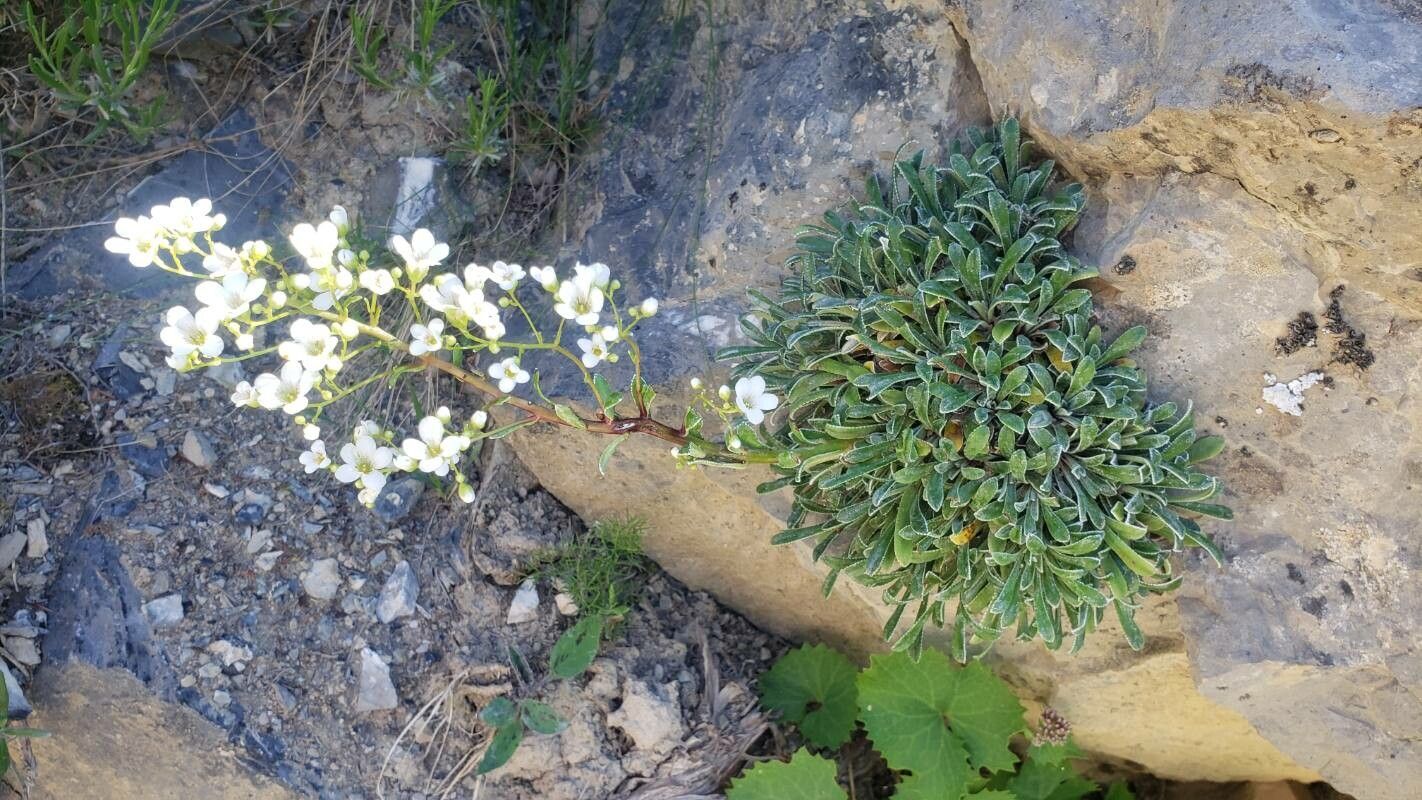
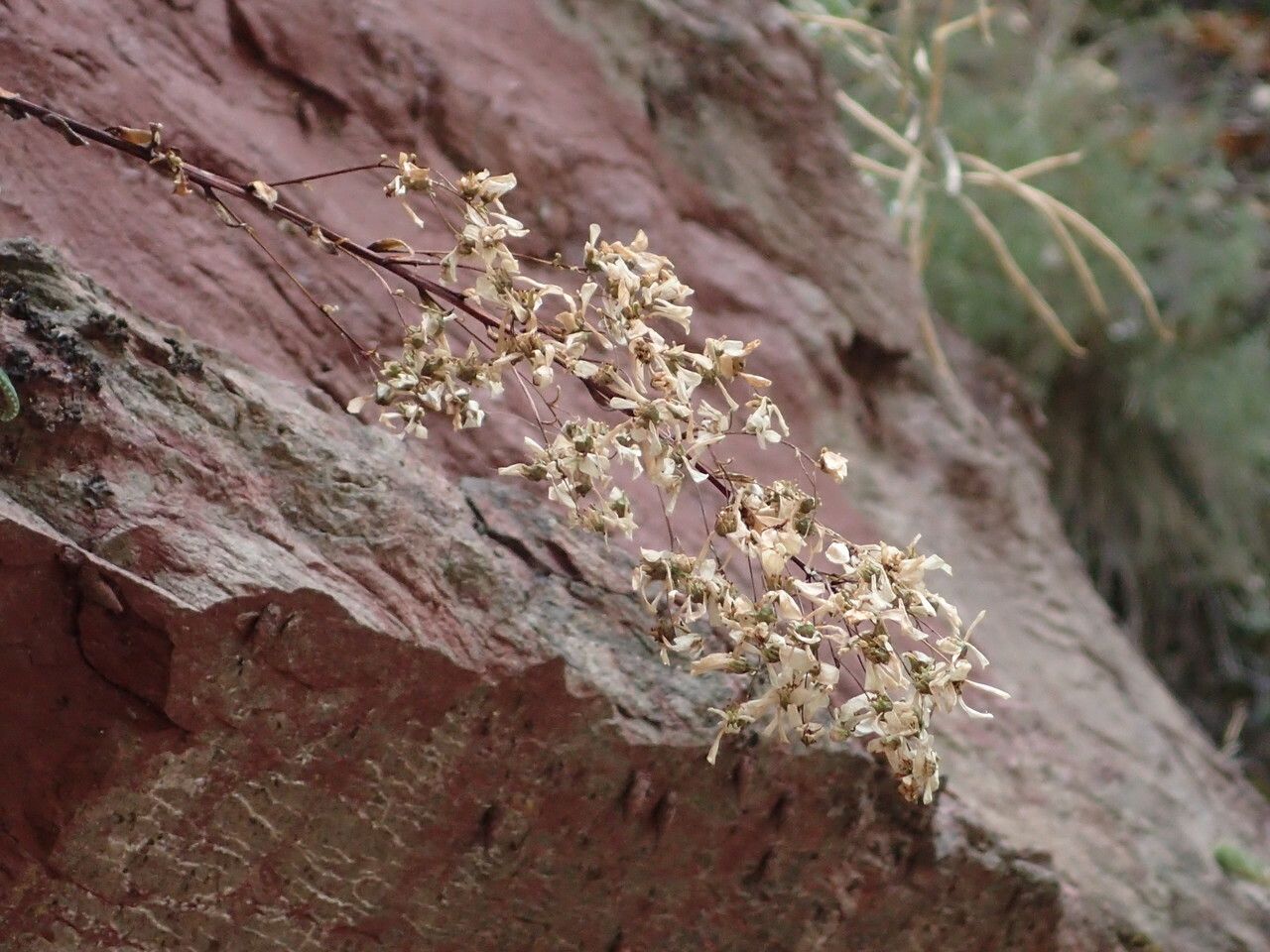
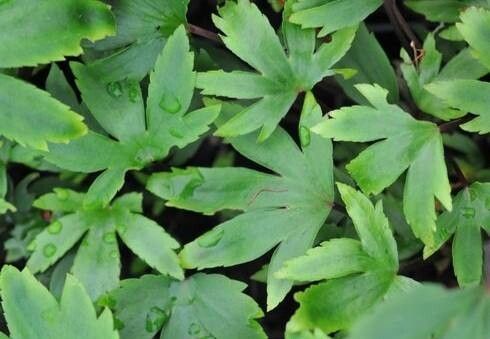
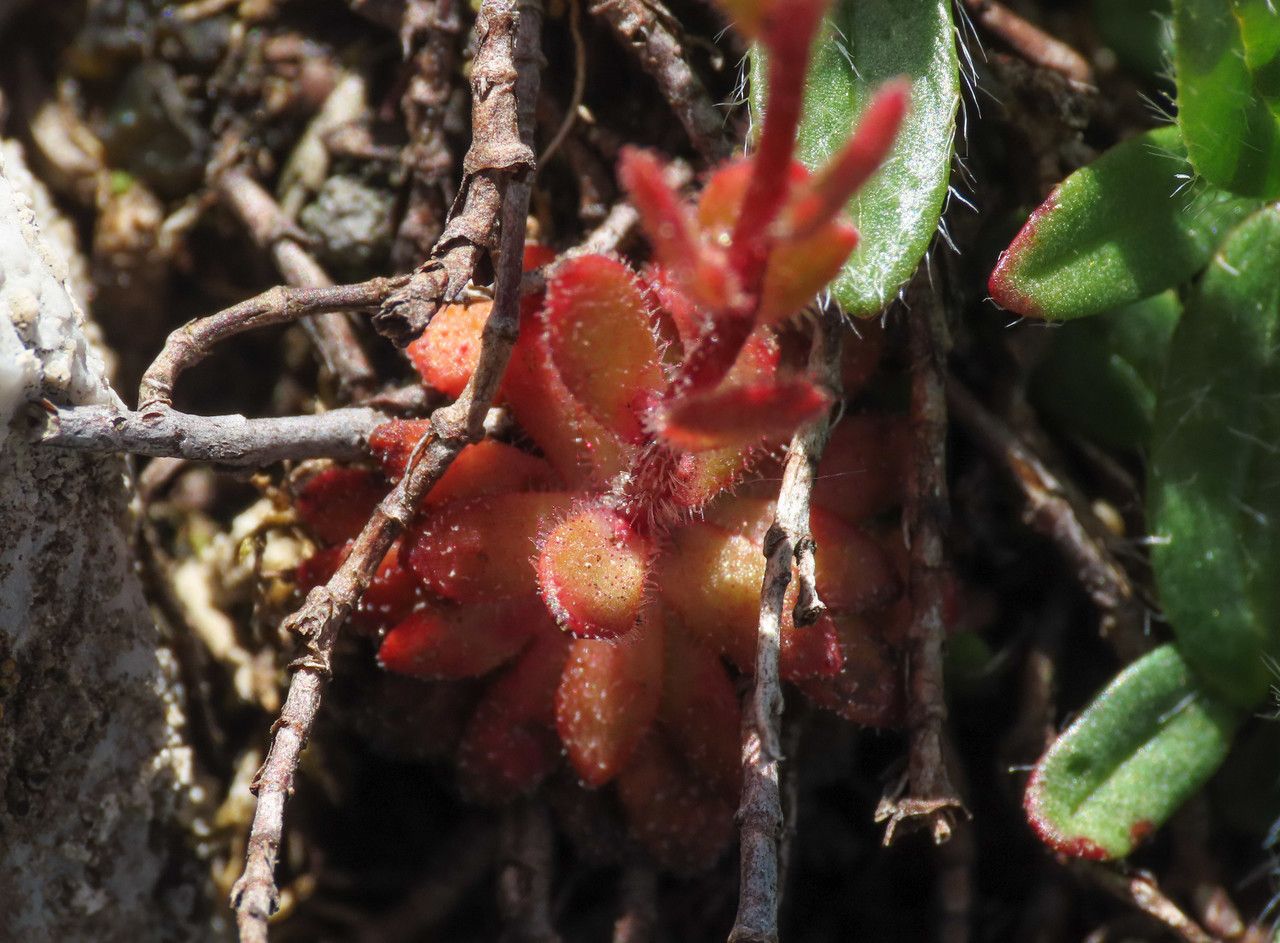
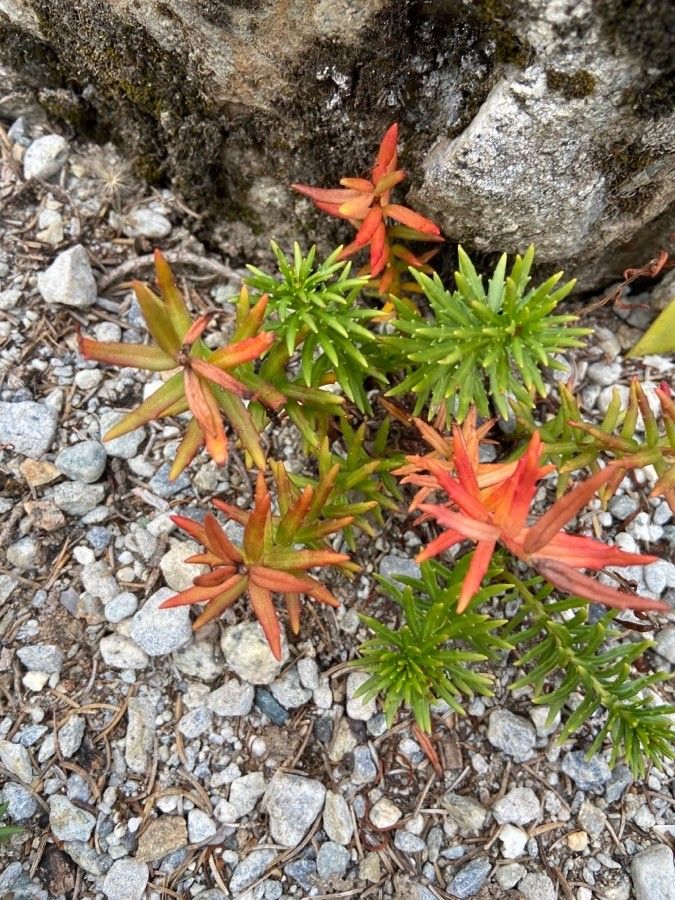
Saxifraga callosa, the limestone saxifrage, is a species of flowering plant in the family Saxifragaceae, that is native to maritime alpine habitats in Western Europe (Italy, France and Spain). Growing to 50 cm (20 in) tall by 100 cm (39 in) broad, it is a clump-forming evergreen perennial with rosettes of narrow grey-green leaves that are coated in lime. The starry, pure white flowers are borne in long panicles in spring. The Latin specific epithet callosa means “thick-skinned, with calluses”.
Limestone saxifrage has strong disease resistance and is typically not vulnerable to illnesses. Nevertheless, it can be affected by pests and diseases present in its surroundings. These infections are usually mild. In terms of care, this plant requires a moderate level of maintenance. It should be pruned regularly to preserve a neat appearance and support healthy growth. Fertilizing can also aid in encouraging flowering. Limestone saxifrage is suitable for anyone with outdoor space, such as a garden or patio, and does not need extensive gardening experience. When kept indoors, it may demand more care.
How to keep Saxifraga Callosa.
Light
Limestone saxifrage is native to habitats like forest understories and rocky areas, where it occurs in natural shade. It prefers partial sun but can tolerate both full sun and full shade, reflecting its versatile, hardy nature.
Water
Limestone saxifrage thrives in conditions of moderate moisture and balanced humidity, needing weekly watering for optimal growth. This hardy outdoor herbaceous plant can also be cultivated in containers, which allows for better water management, especially during the growing season when its hydration requirements are higher.
Fertilizer
For Limestone saxifrage, the primary time to apply fertilizer is in early spring as the flowers begin to form. Using the appropriate fertilizer promotes improved blooms and assists Limestone saxifrage in producing attractive flowers. Fertilizing in early spring guarantees strong flowering throughout the season and supplies energy for dormant growth phases.
Pruning
Limestone saxifrage is a plant characterized by its rosette-forming leaves and star-shaped flowers. It thrives in rocky habitats. For best results, prune the plant between late winter and early spring. During this time, remove dead leaves and spent flowers to encourage new growth and improve airflow. Always use clean tools to prevent the spread of disease, and avoid heavy pruning. Instead, focus on maintaining the plant's shape.
Pot & Repot
Repot limestone saxifrage every 2 to 3 years during the spring. Use a spacious pot with well-draining soil for best results. Water moderately and place the plant in a bright location to promote its low, mounding growth. This will help ensure a smooth transition after repotting.
Botanical profile.
- Plant Type
- Herb
- Life Cycle
- Perennial
- Genus
- Saxifraga
- Family
- Saxifragaceae
- Hardiness Zone
- 5-9
- Mature Height
- 20 cm
- Mature Spread
- 91 cm
- Leaf Color
- Gray, Silver
- Leaf Type
- Evergreen
- Flower Color
- White, Yellow, Green
- Flower Size
- 1.02 cm to 1.52 cm
- Bloom Time
- Late spring, Early summer
- Planting Time
- Spring, Summer, Autumn
- Harvest Time
- Mid summer, Late summer
Other names.
Reader questions.
What should I do if I give my Limestone saxifrage plant too much or too little water?
Overwatering is a common issue that can harm your Limestone saxifrage. Excess water can cause the stems and leaves to wilt and turn yellow, and may even lead to diseases like root rot, mold, and mildew that can be fatal. While underwatering is less likely, it can still happen, causing brittle and brown leaves. It's important to recognize the signs of overwatering early on to prevent irreversible damage. If you notice these signs, reduce your watering schedule and check the soil's drainage. If it drains poorly, replace it with a loose, well-draining potting mix. On the other hand, if you see signs of underwatering, increase your watering frequency until the signs improve.
Why should I put fertilizer on my Limestone saxifrage plant?
Fertilization plays a vital role in the growth of Limestone saxifrage and other plants. It provides essential nutrients for both above-ground and below-ground development. Although Limestone saxifrage has relatively low fertilization needs, it can still thrive without fertilization in some cases. However, annual fertilization is highly beneficial as it sustains the plant's life and promotes the production of longer-lasting, more beautiful flowers. Therefore, those who want their Limestone saxifrage to thrive should prioritize yearly fertilization.
What are the sunlight requirements for Limestone Saxifrage?
Limestone Saxifrage, or Saxifraga callosa, flourishes under specific light conditions. It requires partial sun, meaning it should receive about 3-6 hours of sunlight per day. For those areas receiving less sunlight, it's categorized under full shade, indicating less than 3 hours of sunlight is sufficient. It's essential to observe the sunlight's movement through your garden to find the ideal spots that offer a harmonious balance of light and shade, contributing to the well-being of your Limestone Saxifrage.
What is the common name of Saxifraga callosa?
The common name for Saxifraga callosa is Limestone saxifrage.
How frequently do I need to water my Limestone saxifrage plant?
If your Limestone saxifrage is in a pot, the best way to check if it needs water is to stick your finger in the soil. If the top two to three inches of soil feel dry, it's time to water it. If you have it planted in the ground outside, you can use the same method. When the top few inches of soil are dry, it's time to water. Usually, during spring and early fall, you'll need to water once a week. But during extremely hot weather, you may need to water twice a week or even more. However, mature, well-established Limestone saxifrage plants can tolerate drought well.
When should I fertilize my Limestone saxifrage for the best results?
The best time to fertilize a Limestone saxifrage is in the late winter to early spring. This is when the plant is transitioning from its dormant phase to active growth. Fertilizing during this time promotes healthy growth and sets the plant up for a successful season. While early spring is the most beneficial time to fertilize, fall is also acceptable. However, it's not recommended to fertilize during summer or winter.
What are the essentials for Limestone saxifrage care?
The essentials for caring for Limestone saxifrage have not been provided in the data.
How much water does my Limestone saxifrage plant require?
To ensure your Limestone saxifrage is properly watered, don't hold back on the amount of water you give. Wait until the top two to three inches of soil are dry, then give it a good, thorough watering. Make sure the water soaks the entire soil. You should add enough water so that it flows out of the drainage holes at the bottom of the pot. If you don't see excess water draining, you may not have given enough water. However, be careful not to let water accumulate in the soil, as this can harm the plant. On the other hand, if water isn't draining through the pot, it may indicate poorly draining soil, which is not good for the health of the plant. It's important to avoid this. If the plant is outside, receiving around 1 inch of rain per week should be enough.
When is it a bad idea to fertilize my Limestone saxifrage plant?
To properly care for your Limestone saxifrage, remember to only fertilize it in late winter or early spring. This plant has low fertilization needs, so one annual feeding is sufficient. Avoid fertilizing during the rest of the year, as it can lead to overfertilization and its complications. However, if you missed fertilizing in spring, you can feed the plant in the fall. Additionally, refrain from fertilizing during winter since the Limestone saxifrage goes into a dormant phase without new growth.
What are the symptoms of an unhealthy Limestone saxifrage?
There is no information provided on the symptoms of an unhealthy Limestone saxifrage.
How should I water my Limestone saxifrage as it grows?
The water needs of the Limestone saxifrage can vary with its growth stages. In the first few years or after transplanting, extra water is necessary as the plant focuses on sprouting new roots. These roots require more moisture for optimal growth. However, as the Limestone saxifrage matures, it will require less water. Additionally, during the bloom period, when the plant is developing flowers, more water may be needed to support this process.
What kind of fertilizer does my Limestone saxifrage need?
Choosing a general-purpose fertilizer for Limestone saxifrage is usually effective. However, there are nutrient blends that may be even more beneficial. Many gardeners prefer higher phosphorus levels for stronger roots and better flowers, making a phosphorus-rich fertilizer a good choice for this flowering plant. Granular or liquid fertilizers with abundant nutrients will work. Additionally, organic options like compost and manure can greatly improve the soil for Limestone saxifrage's healthy growth.