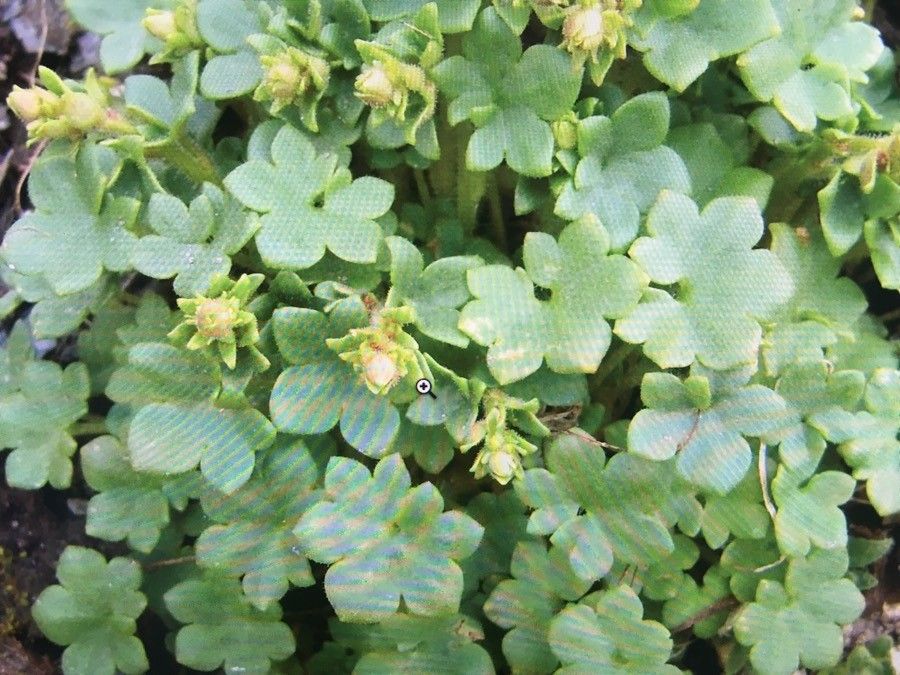
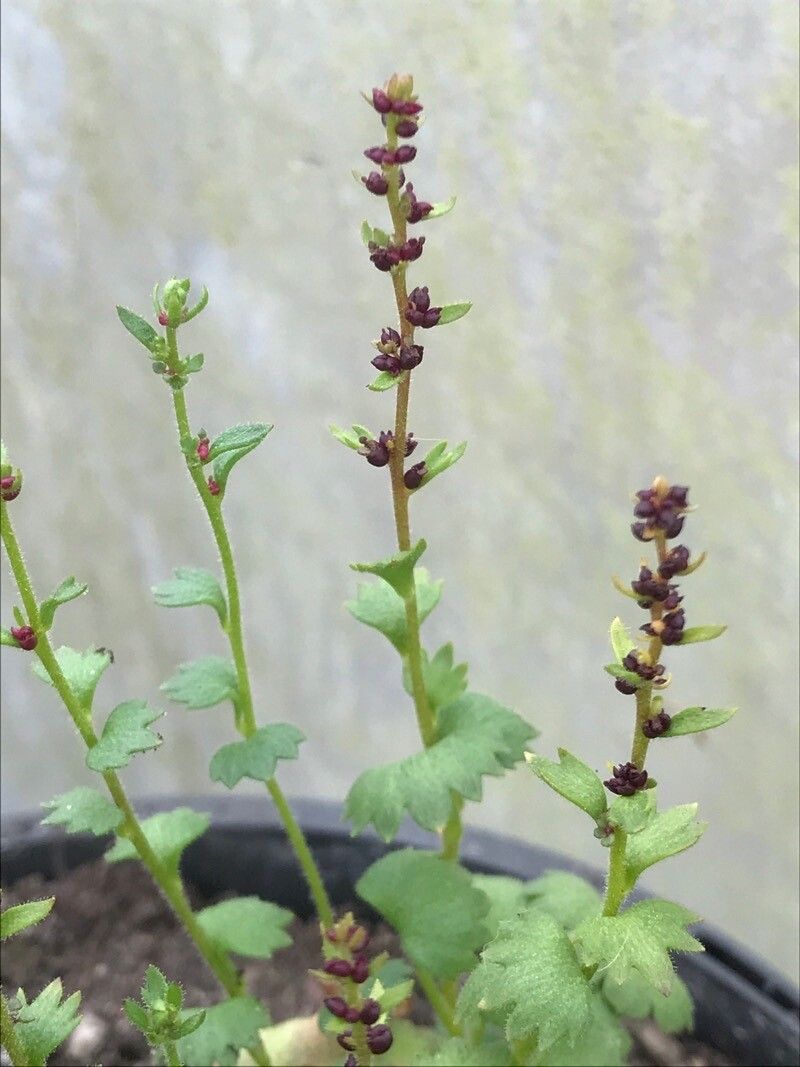
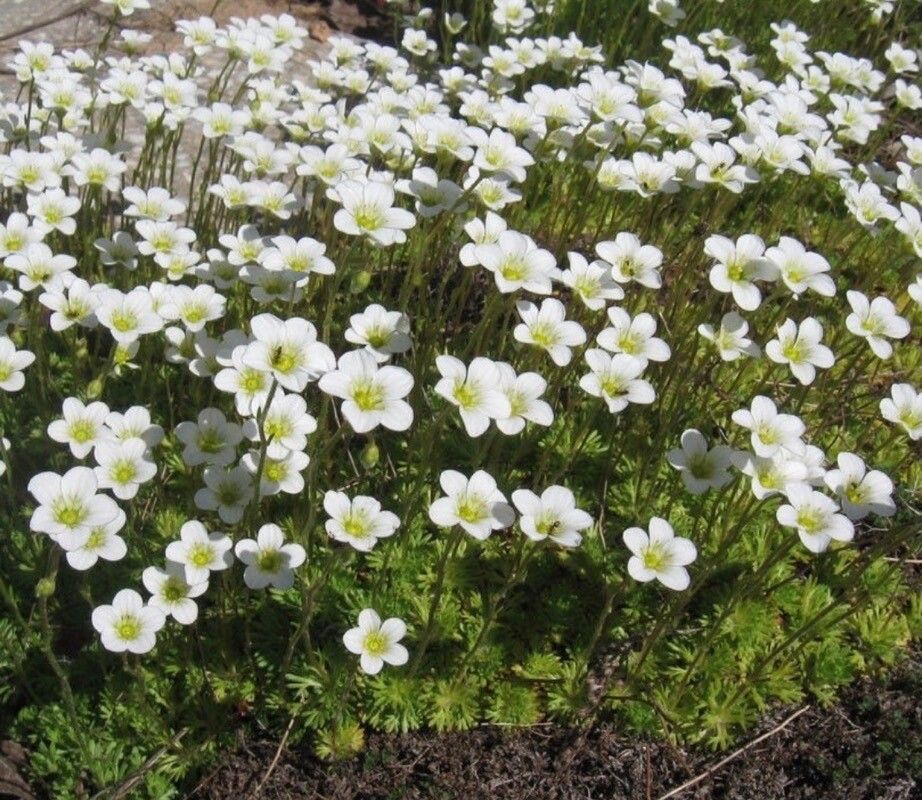
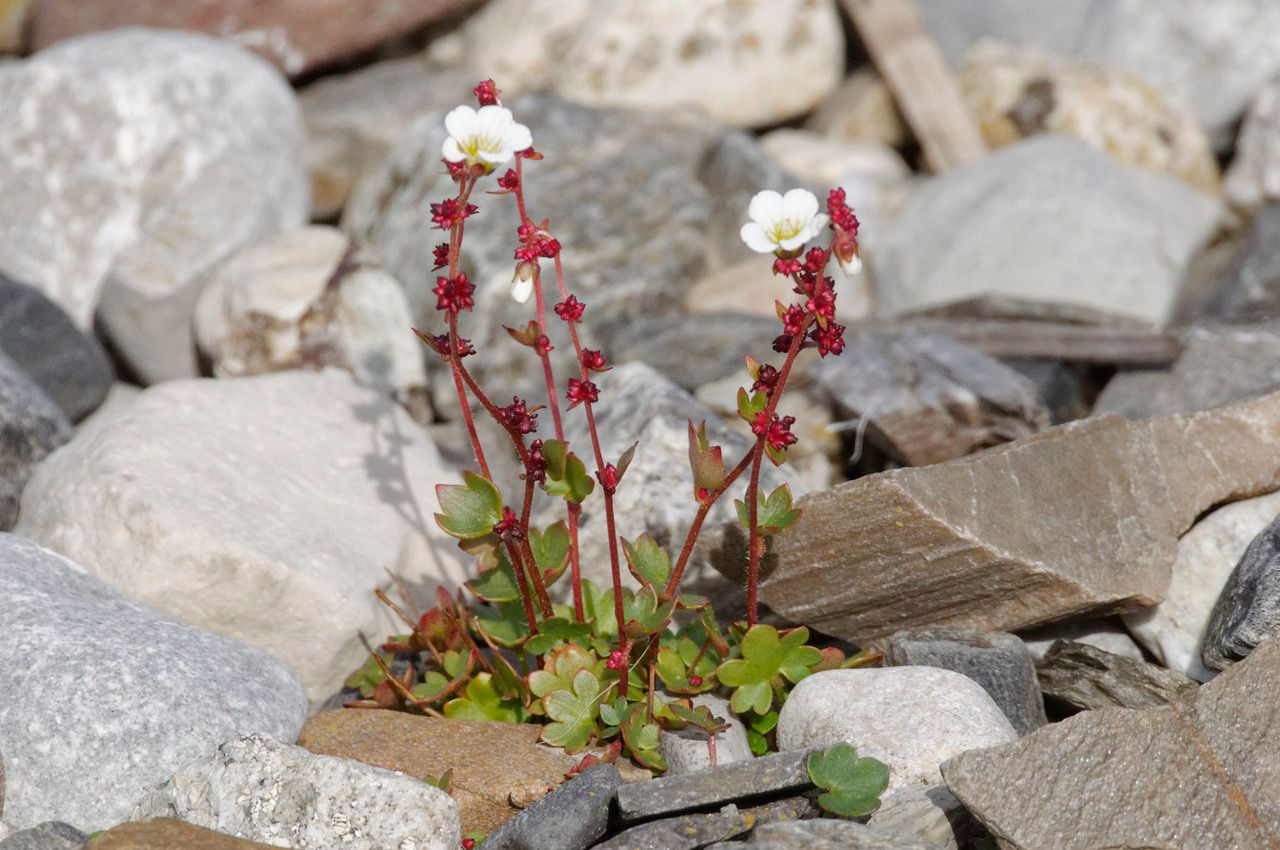
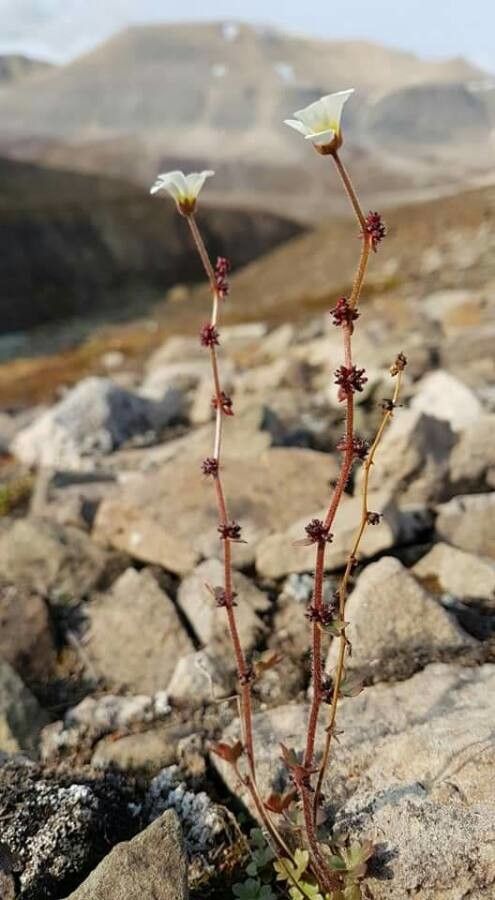
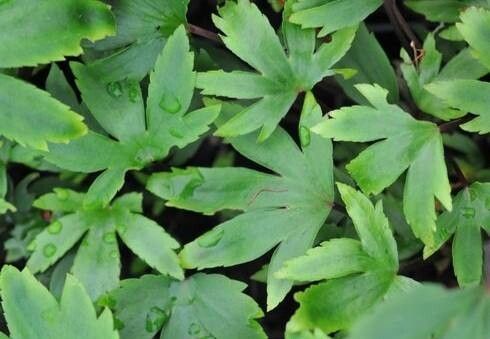
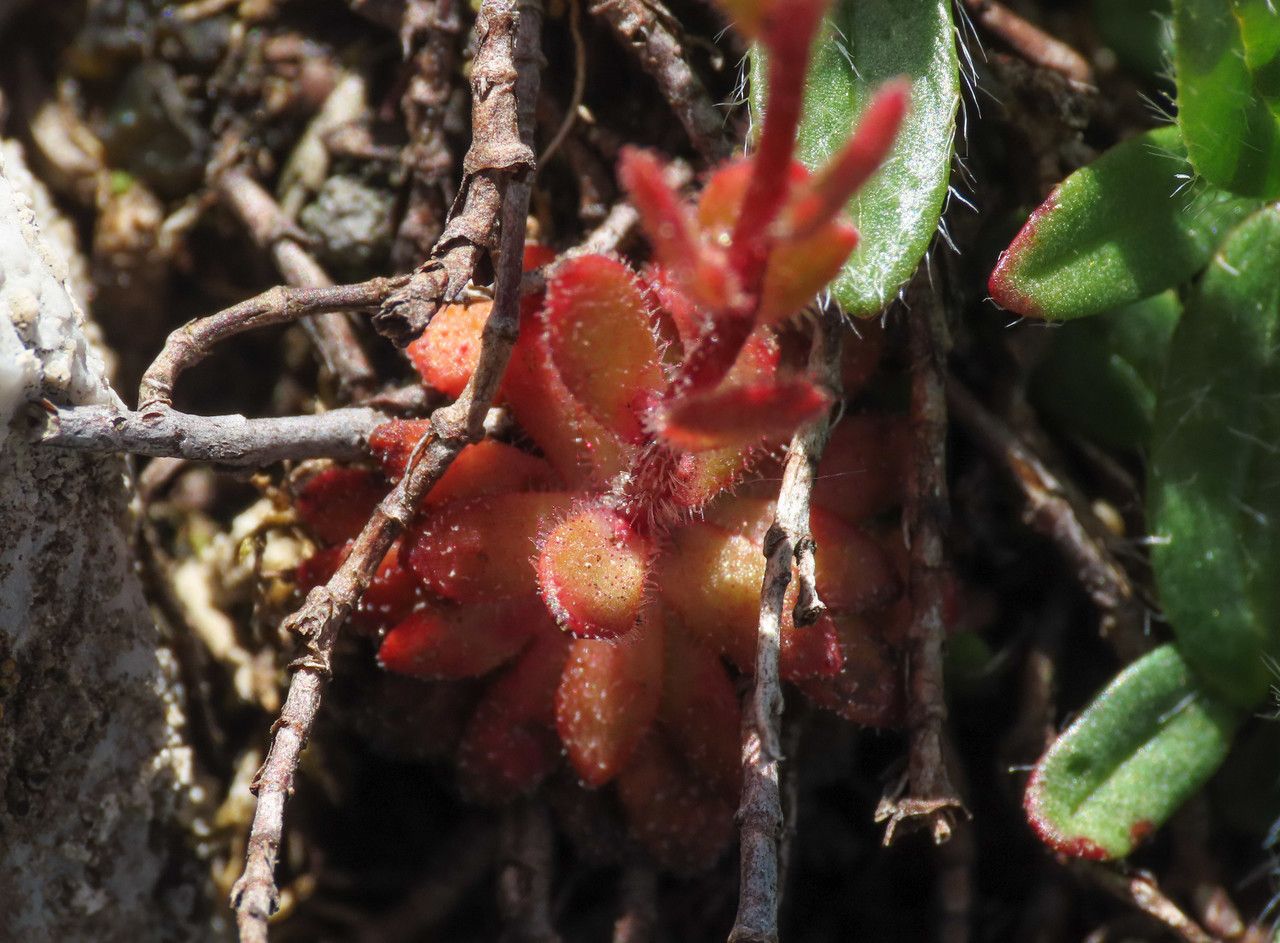
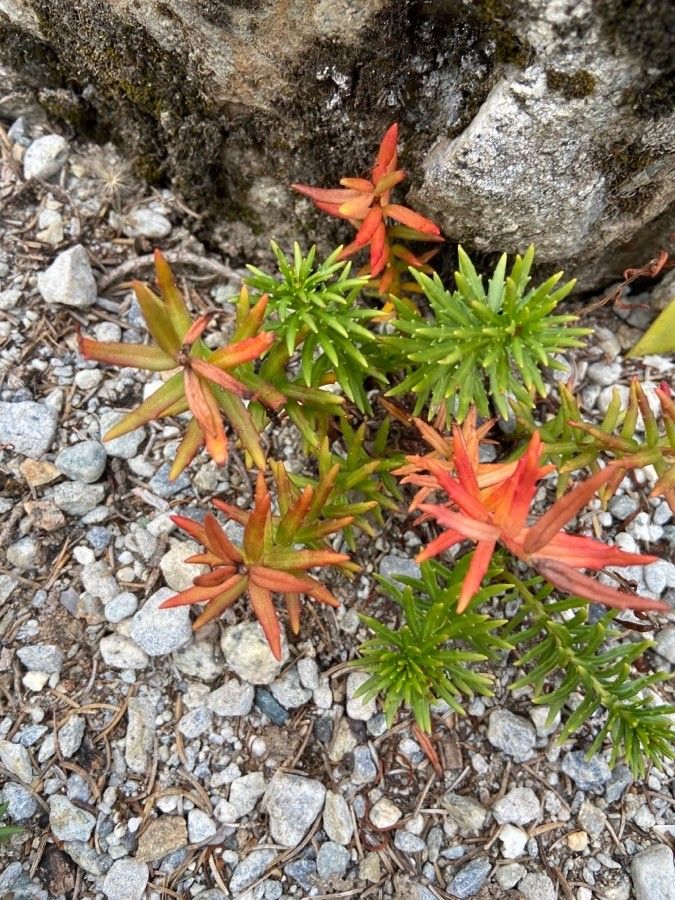
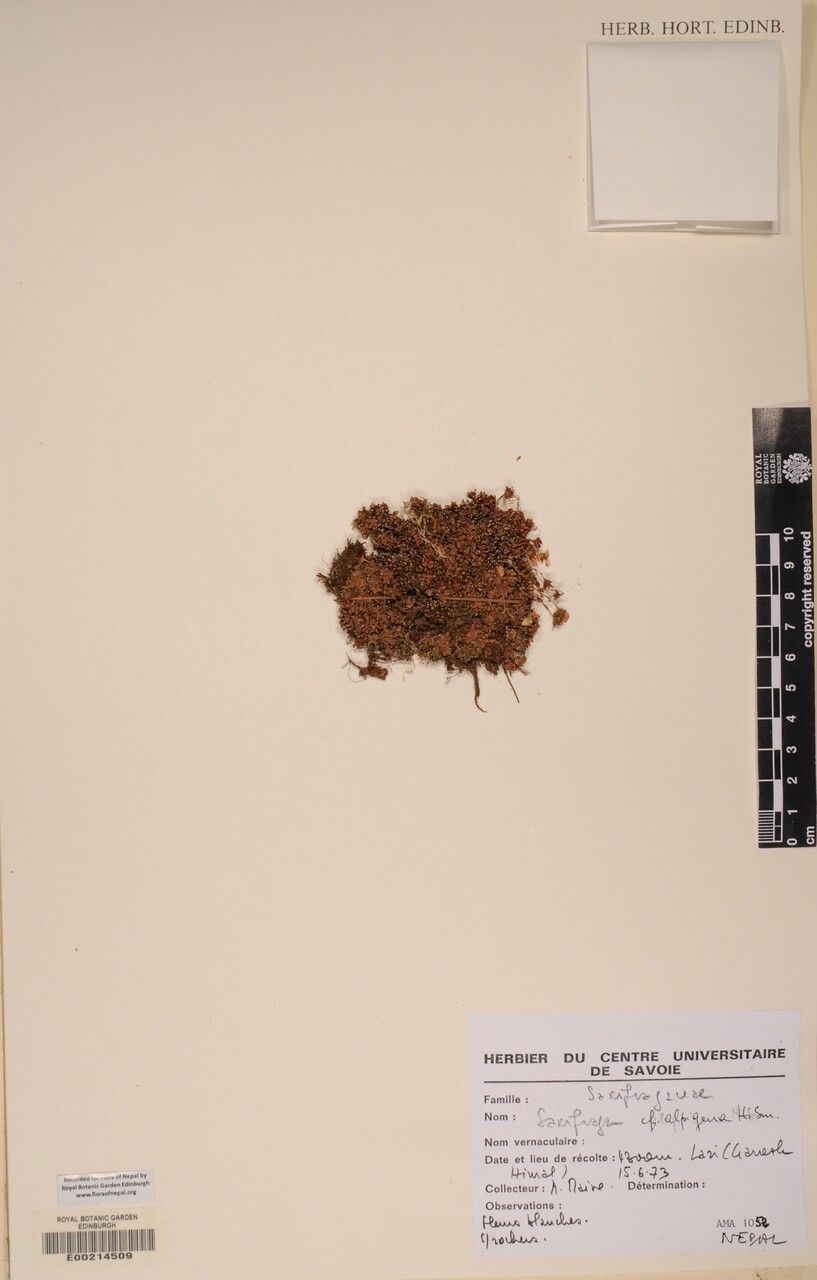
Saxifraga cernua, the drooping saxifrage, nodding saxifrage or bulblet saxifrage, is a flower common all over the High Arctic. It stretches further south in mountainous areas of the Alps, Norway, Iceland, Siberia and Alaska. It grows to 10–20 cm tall and the stem has 3–7 leaves. The basal and lower stern leaves are kidney-shaped, 3–5 lobed on long petioles. The flowers are mostly single and terminal. Petals are white and are much longer than the sepals. The plant reproduces by means of brownish-red bulbils in the axils of the upper stem leaves. Flowers bloom June to August.This plant grows in moist sandy and mossy places, on ledges and in snow beds.It became a protected species in the UK in 1975 under the Conservation of Wild Creatures and Wild Plants Act.
Meadow saxifrage is fairly disease-resistant and generally does not suffer from illnesses. Nevertheless, it can be affected by pests and diseases present in its environment. These issues tend to be mild. Regarding care, this plant needs moderate maintenance. It should be pruned regularly to preserve a neat appearance and encourage healthy growth. Feeding the plant can also support better flowering. Meadow saxifrage works well for anyone with outdoor space, such as a garden or patio, and does not demand extensive gardening experience. It may need more attentive care if kept indoors.
How to keep Saxifraga Cernua.
Light
The meadow saxifrage prefers a moderate amount of sunlight. Excessive sun can scorch its leaves, while insufficient light can impede its growth and flowering. Consequently, it does best in locations that alternate between sun and shade, similar to its natural environment where it grows among plants that partially filter the sunlight.
Temperature
Meadow saxifrage, native to temperate zones, does best at temperatures of 50 to 95 °F (10 to 35 ℃). Seasonal adjustments may be necessary: keep it warmer in winter and give it shade during very hot summer weather.
Fertilizer
Meadow saxifrage should be fertilized mainly in early spring as the flowers begin to form. The proper fertilizer promotes stronger blooms and helps Meadow saxifrage produce attractive flowers. Fertilizing at that early-spring stage ensures good flowering during the season and supplies energy for dormant growth phases.
Pruning
Nodding saxifrage thrives in alpine environments, displaying its distinctive nodding flowers. For optimal growth, prune it between early and late spring to remove any damaged stems. Pruning after the blooming period helps maintain plant vitality. Always use clean and sharp tools to prevent disease. The benefits of regular pruning include improved air circulation and the promotion of vigorous new growth.
Botanical profile.
- Plant Type
- Herb
- Life Cycle
- Perennial
- Genus
- Saxifraga
- Family
- Saxifragaceae
- Hardiness Zone
- 6-9
- Mature Height
- 15 cm to 40 cm
- Mature Spread
- 30 cm
- Leaf Color
- Green
- Leaf Type
- Deciduous
- Flower Color
- White
- Flower Size
- 2.54 cm
- Bloom Time
- Early spring, Mid spring
- Planting Time
- Summer
- Harvest Time
- Late spring, Early summer
- Native Area
- Sweden, Austria, Czech Republic, Slovakia, Montenegro, Poland, Croatia, Slovenia, Morocco, Belarus, Serbia, Russia, Lithuania, Norway, Germany, Italy, Spain, Switzerland, Denmark, Estonia, Finland, France, Ireland, United Kingdom, Hungary, Latvia, Belgium, Portugal
Other names.
Reader questions.
What are the sunlight requirements for Nodding saxifrage?
Nodding saxifrage thrives in conditions that emulate its native environments, such as forest understories or rocky areas, where it benefits from natural shade. This plant prefers partial sun, necessitating about 3-6 hours of sunlight daily, but it can also flourish in full shade, which is defined as receiving less than 3 hours of sunlight. Observing how sunlight traverses your garden to find spots that offer an ideal mix of light and shade is crucial for the well-being of your plants, ensuring they grow happily and healthily.
How do I use artificial lighting for Nodding saxifrage indoors?
Indoor plants like Nodding saxifrage require adequate lighting for optimal growth, especially when natural sunlight is insufficient. In such cases, artificial lights, particularly LED lights, are recommended because they can be tailored to provide the specific wavelengths needed by the plant. For plants that prefer full sun, you should aim for 30-50W/sq ft of artificial light; for those that need partial sun, 20-30W/sq ft is suitable; and for full shade plants, 10-20W/sq ft will suffice. The artificial light source should be placed 12-36 inches above the plant to mimic natural sunlight, and the duration should reflect natural daylight hours, generally between 8-12 hours per day.
What are the symptoms of insufficient light for Nodding saxifrage when grown indoors?
When Nodding saxifrage is grown indoors under insufficient light, it may exhibit several symptoms indicating light deficiency. These include the growth of small leaves that are smaller in size compared to older ones, leggy or sparse growth characterized by longer spaces between leaves or stems, faster leaf drop as the plant sheds older leaves to conserve resources, slower or halted growth as it enters survival mode, and lighter-colored new leaves indicating a lack of chlorophyll. Additionally, conditions such as chlorosis (yellowing leaves), sunscald, leaf curling, wilting, and leaf scorching may arise due to excessive sunlight when the plant is not adequately adapted to such conditions.
What solutions can be employed to deal with Nodding saxifrage's light issues?
To optimize Nodding saxifrage's growth and address light issues, gradual adaptation to changing light conditions is key. For indoor plants, especially those that are large or not easily movable, incorporating artificial light, like keeping a desk or ceiling lamp on for at least 8 hours daily or using professional plant grow lights, can provide the necessary light. Outdoor plants should be moved gradually to sunnier spots each week to avoid sunburn, which results from sudden changes in light intensity. Reducing obstructions, such as by pruning trees that block sunlight, or transplanting smaller plants during their dormant period to a location with better sunlight and drainage, are effective strategies for ground-planted Nodding saxifrage. It's important to note that while parts of the plant affected by insufficient sunlight may not recover, new growth following increased light exposure will be healthy.