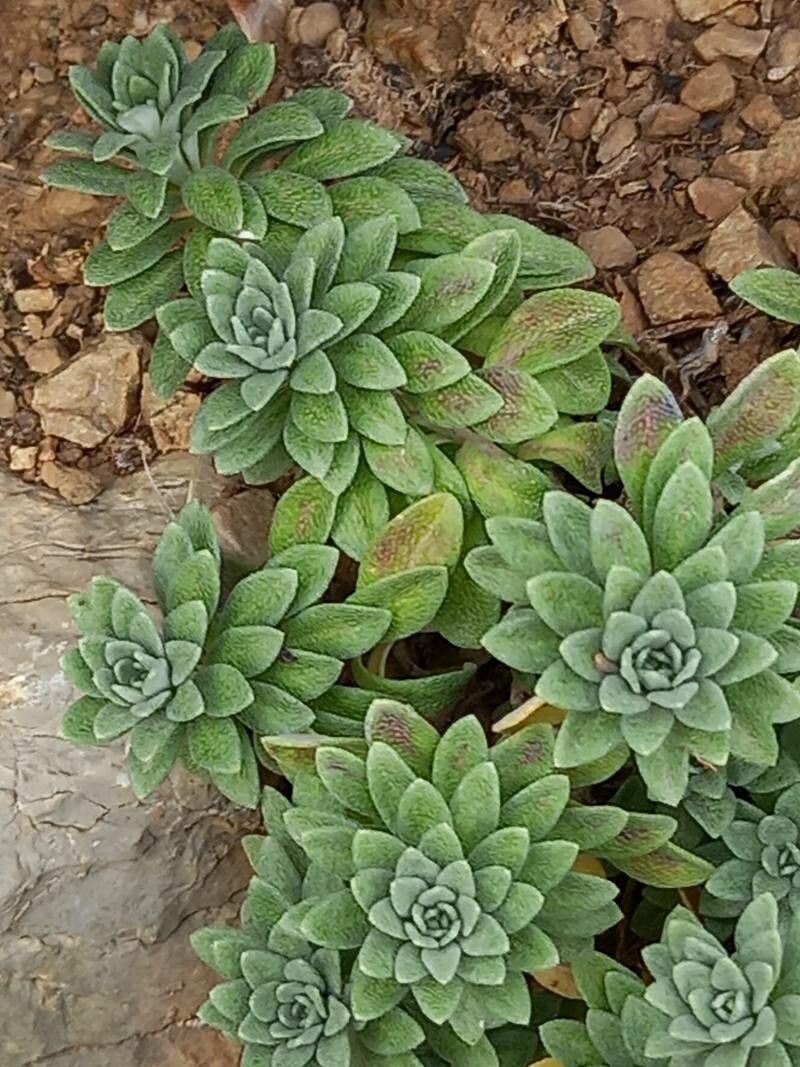
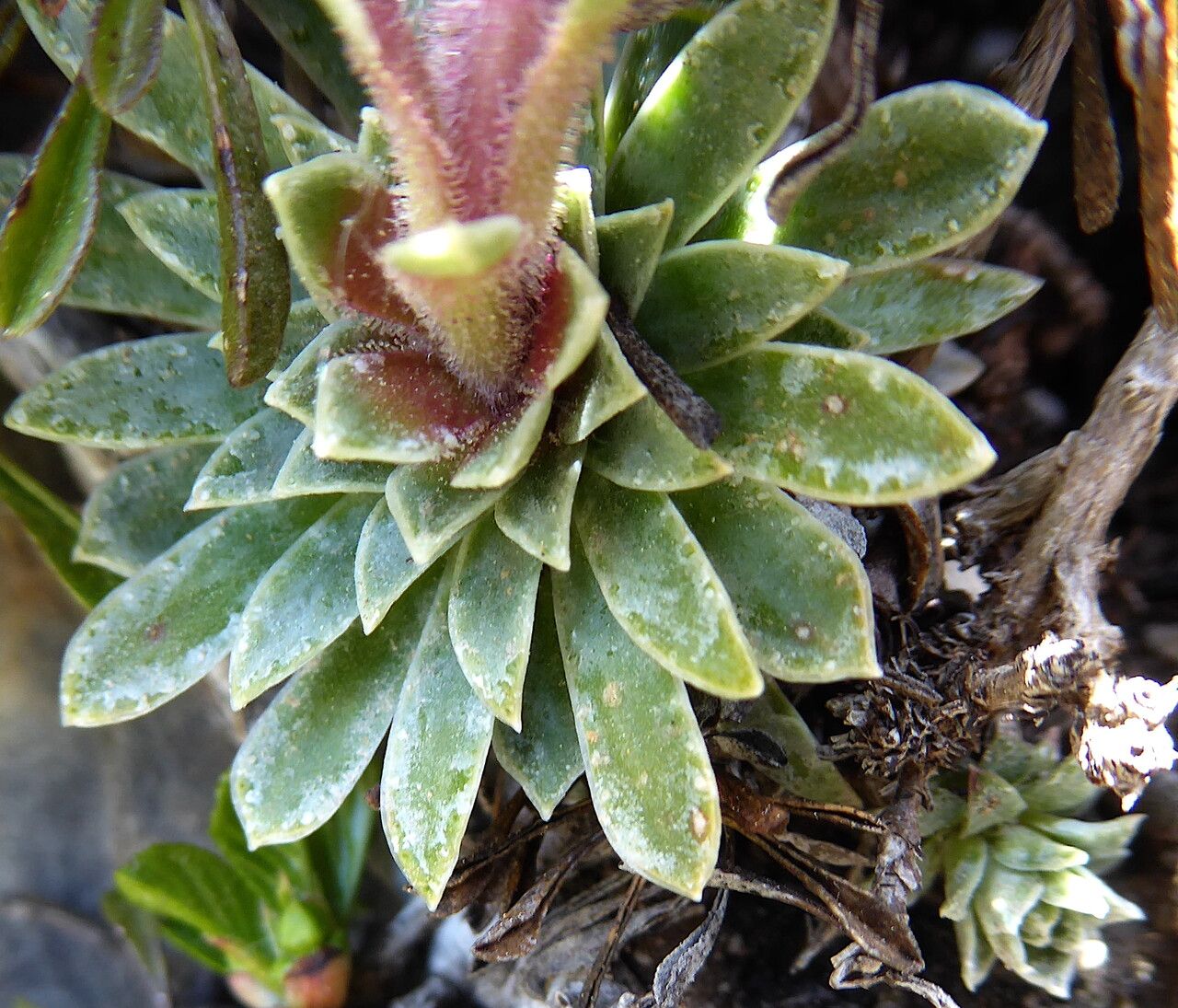
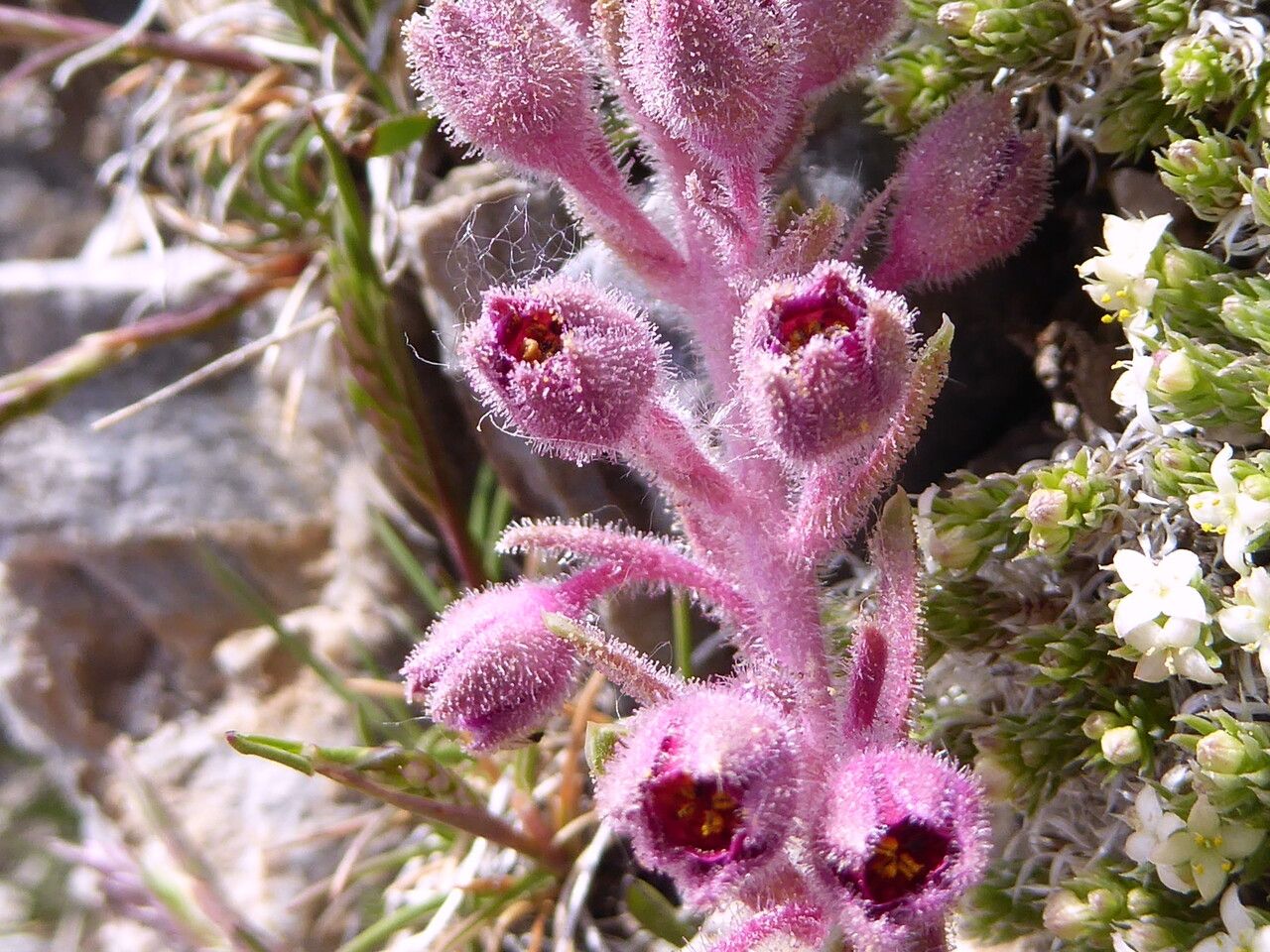
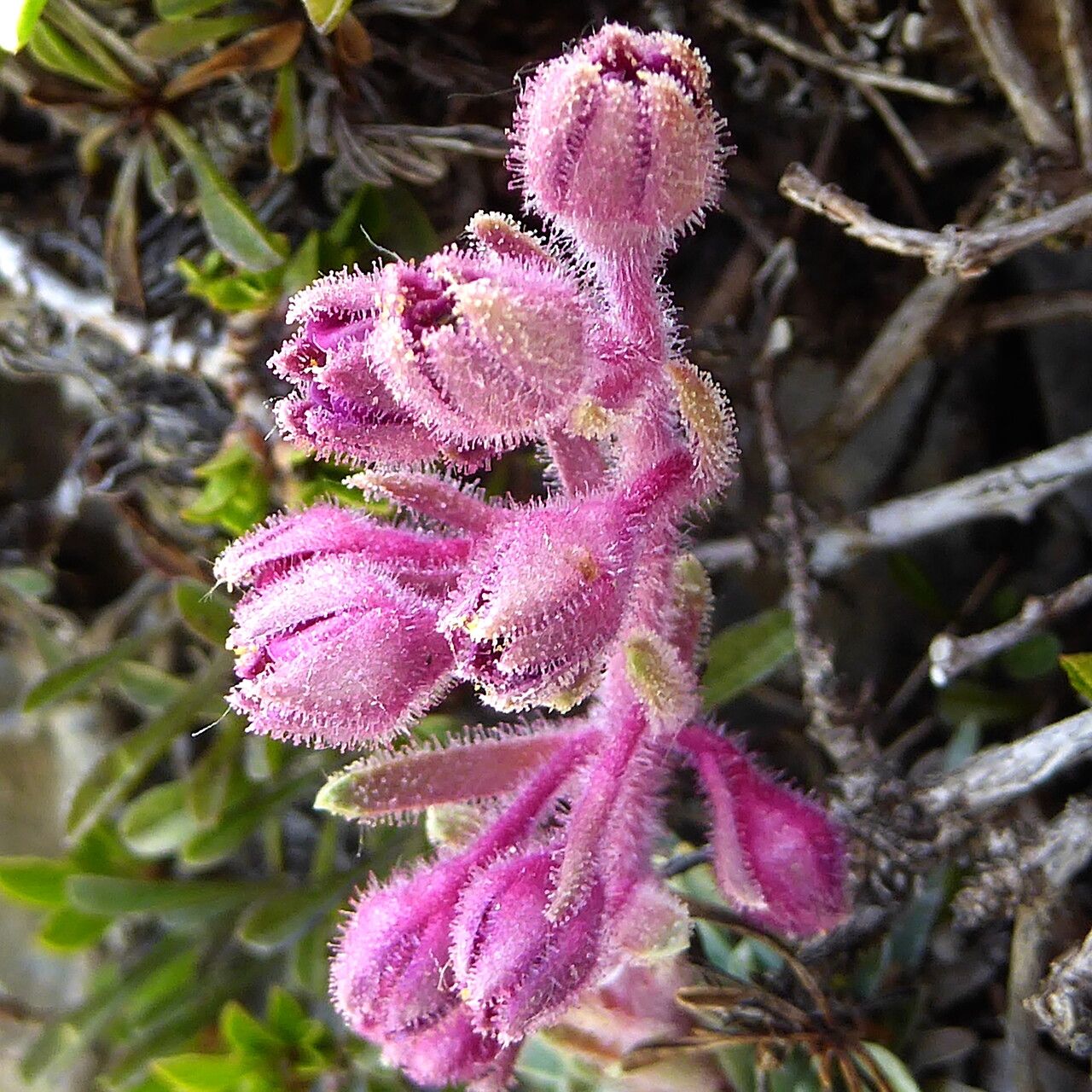
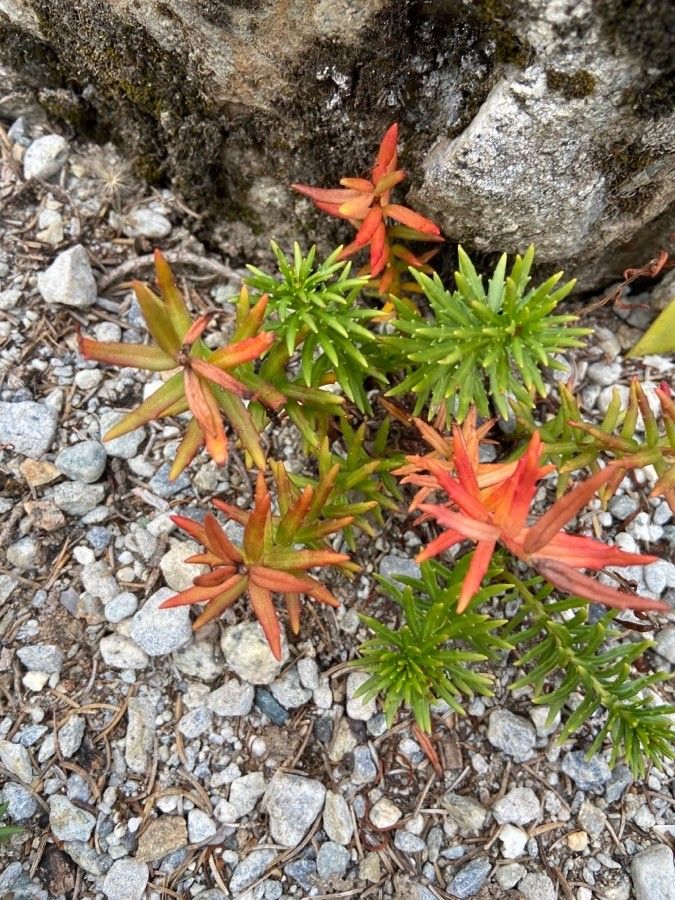
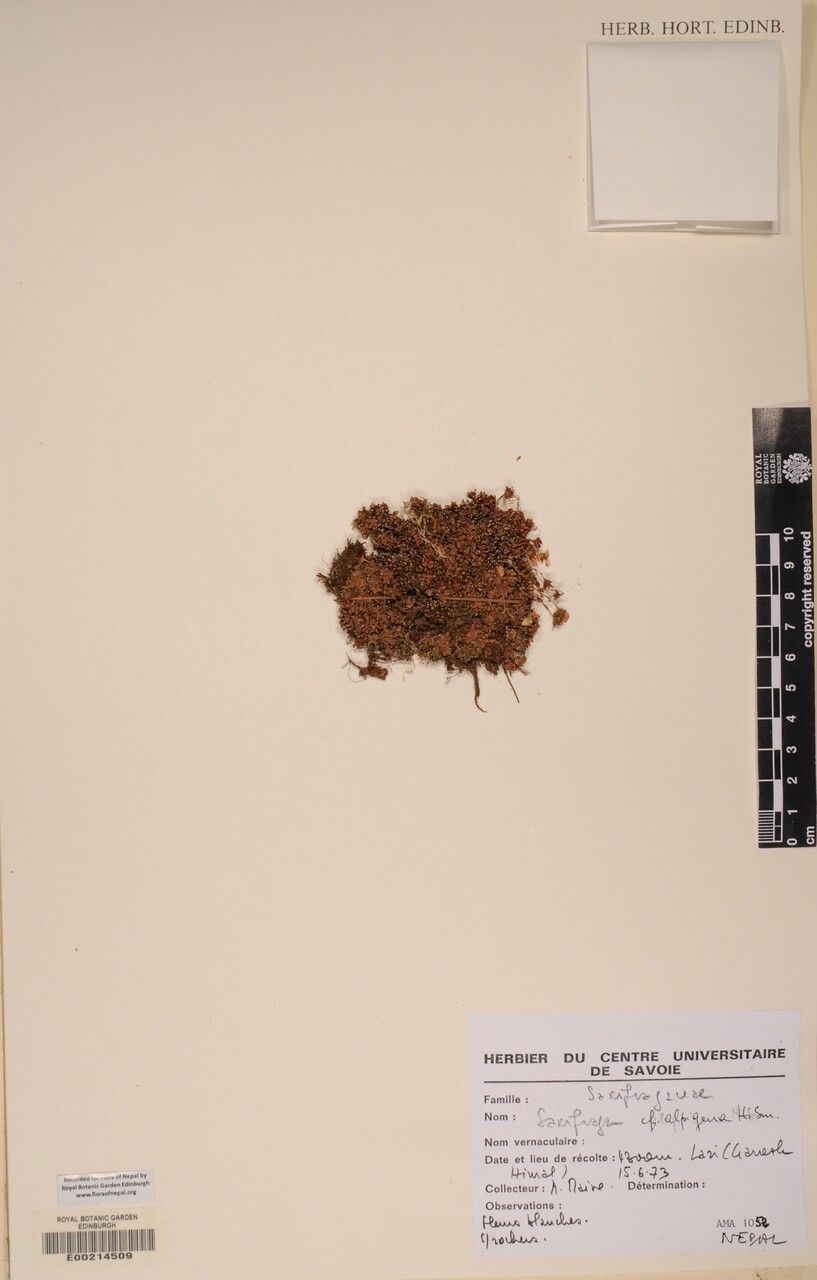
Saxifraga media, commonly known as the big mountain saxifrage or the large-leaved saxifrage, is a perennial herbaceous plant from the Saxifragaceae family. Native to Europe and Asia, it thrives in rocky areas, alpine meadows, and mountain slopes.
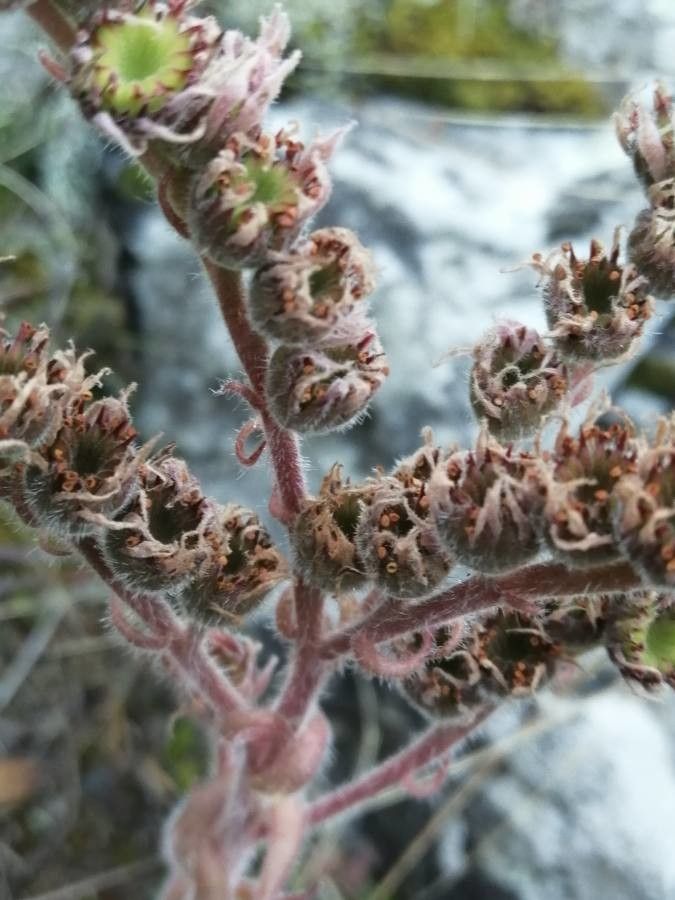
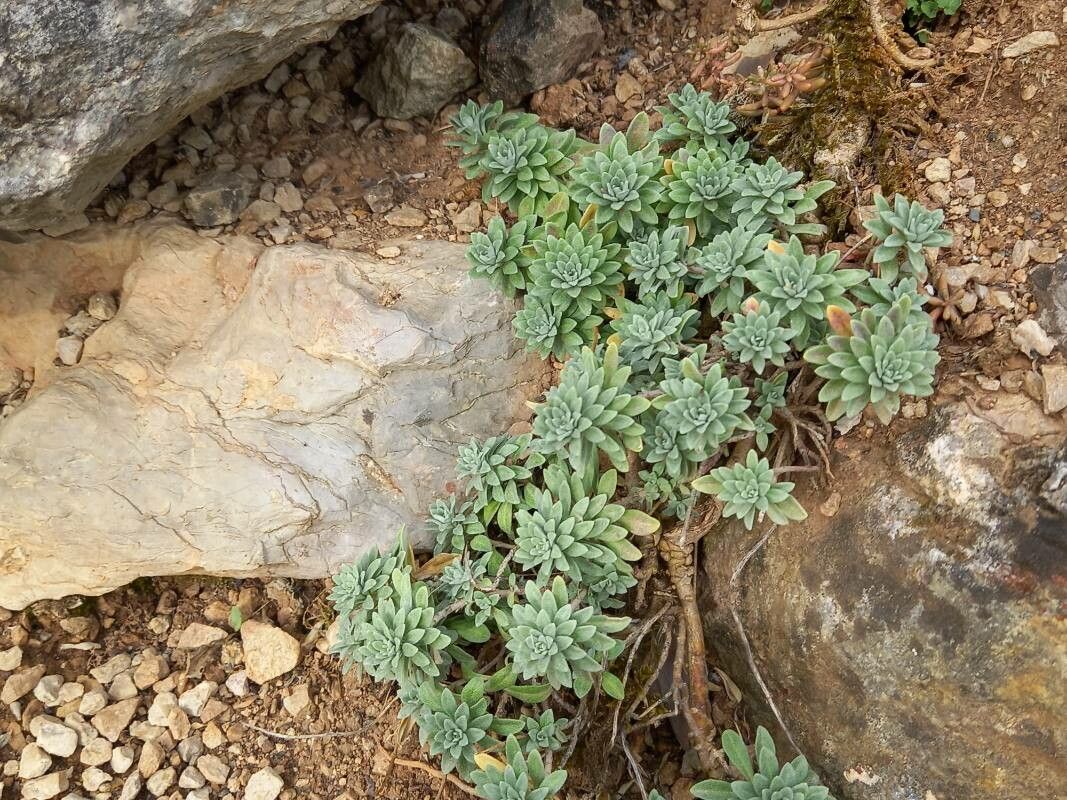
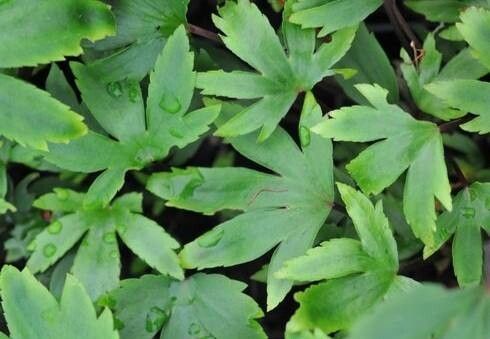
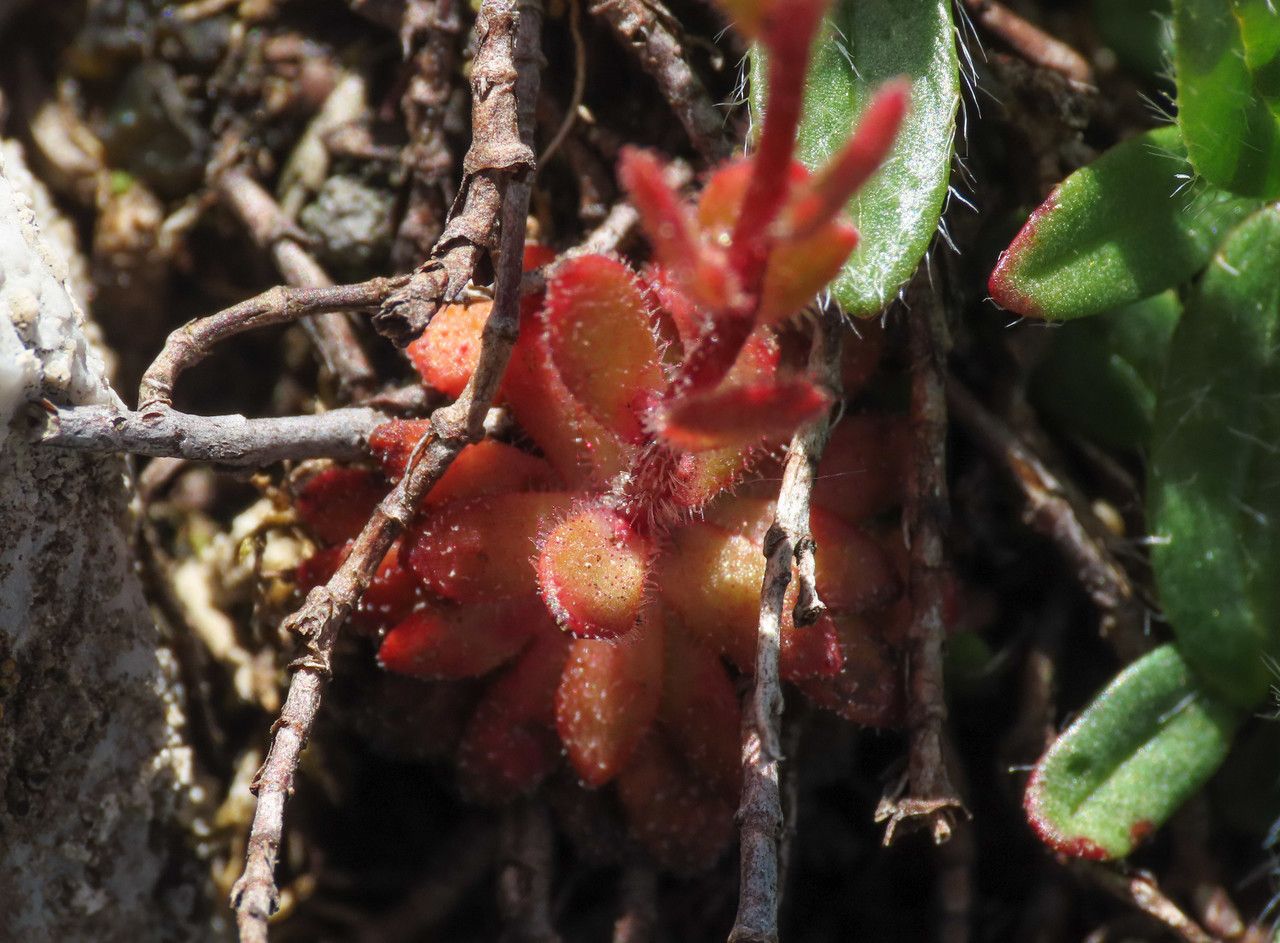
This plant features a rosette of large, basal leaves that are rounded or kidney-shaped with toothed edges. The leaves are hairy on both sides and can grow up to 30 cm in diameter. The stem of Saxifraga media can reach up to 50 cm in height, topped with clusters of small white flowers.
The flowers bloom from June to August, each with five petals that are deeply notched at their tips. They grow in dense clusters on branched stems above the foliage.
Saxifraga media prefers well-drained soil with moderate moisture levels but can tolerate dry conditions once established. It requires full sun exposure but can also thrive in partial shade.
Historically, this plant has been used for medicinal purposes due to its anti-inflammatory properties, making it useful for treating wounds, bruises, burns, and respiratory issues like coughs and colds.
Overall, Saxifraga media is an attractive ornamental plant that adds beauty to rock gardens or alpine gardens. Its unique foliage structure makes it stand out among other plants.
Mossy saxifrage has good disease resistance and is generally not prone to illnesses. Nevertheless, it can be affected by pests and diseases present in its environment. Such infections are usually mild. Regarding care, this plant needs moderate maintenance. It should be pruned regularly to keep a neat appearance and support healthy growth. Fertilizing can also help encourage flowering. Mossy saxifrage is suitable for anyone with an outdoor area, such as a garden or patio, and does not require extensive care experience. It may demand more attention when grown indoors.
How to keep Saxifraga Media.
Light
Mossy saxifrage favors sites where it receives moderate sunlight, though it can also tolerate areas with plentiful sun. Its native habitat reflects this light preference. Proper exposure is essential for healthy growth, while too much or too little can affect its vitality.
Temperature
Mossy saxifrage is indigenous to areas where temperatures range from 41 to 95 °F (5 to 35 ℃). It favors cooler climates, and seasonal adjustments during hotter periods are recommended to ensure its survival.
Fertilizer
For Mossy saxifrage, the primary time to apply fertilizer is in early spring when the flowers are developing. The appropriate fertilizer promotes improved blooms and assists Mossy saxifrage in producing attractive flowers. Fertilizing in early spring guarantees strong flowering during the season and supplies energy for dormant growth phases.
Botanical profile.
- Plant Type
- Herb
- Life Cycle
- Perennial
- Genus
- Saxifraga
- Family
- Saxifragaceae
- Hardiness Zone
- 5-9
- Mature Height
- 10 cm to 30 cm
- Mature Spread
- 34 cm
- Leaf Color
- Green
- Leaf Type
- Evergreen
- Flower Color
- White
- Flower Size
- 0.76 cm to 1.02 cm
- Bloom Time
- Mid spring, Late spring, Early summer
- Planting Time
- Spring, Autumn
- Harvest Time
- Summer
- Native Area
- Norway, Iceland, Ireland, United Kingdom, Belgium, France
Other names.