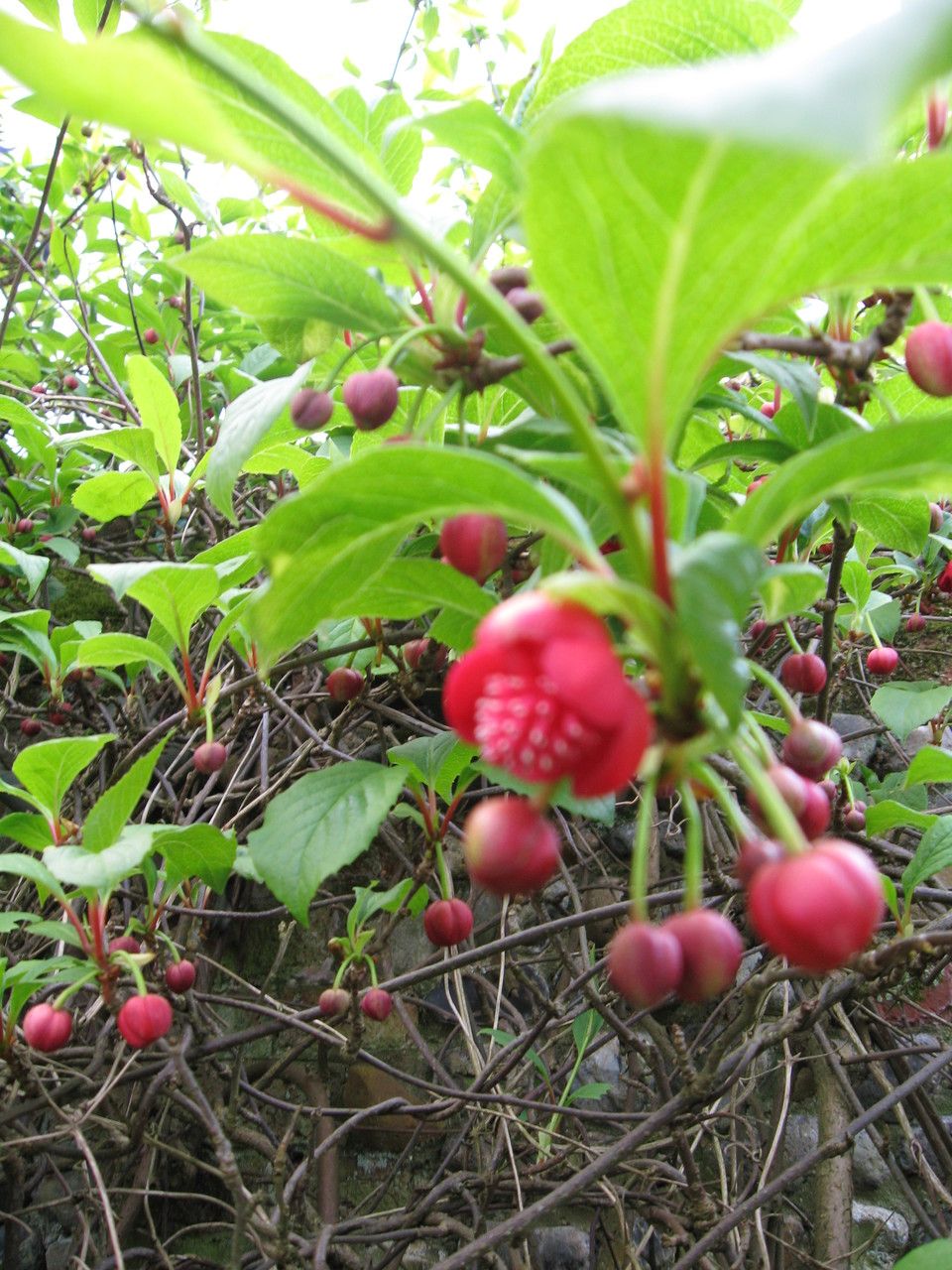
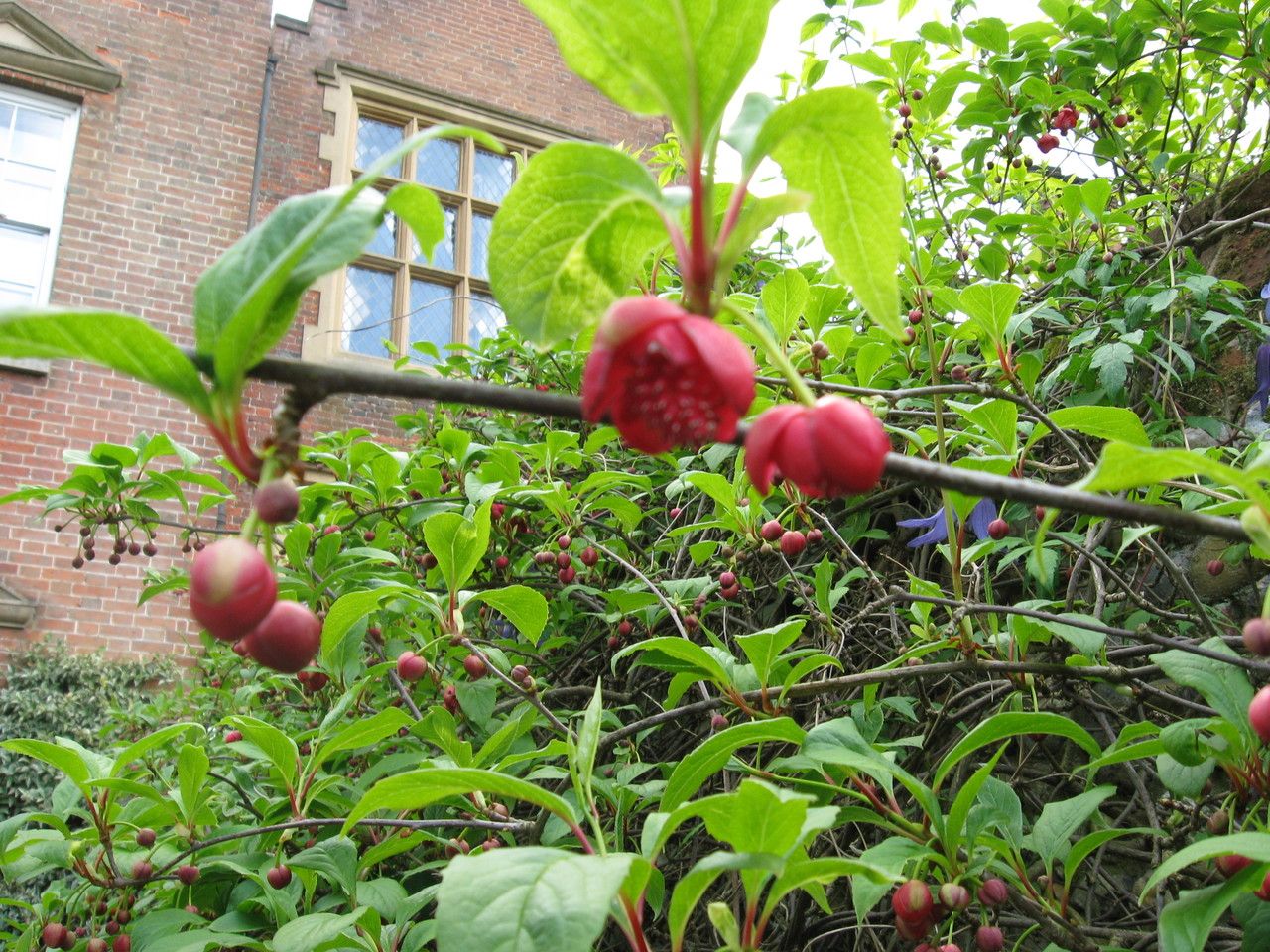
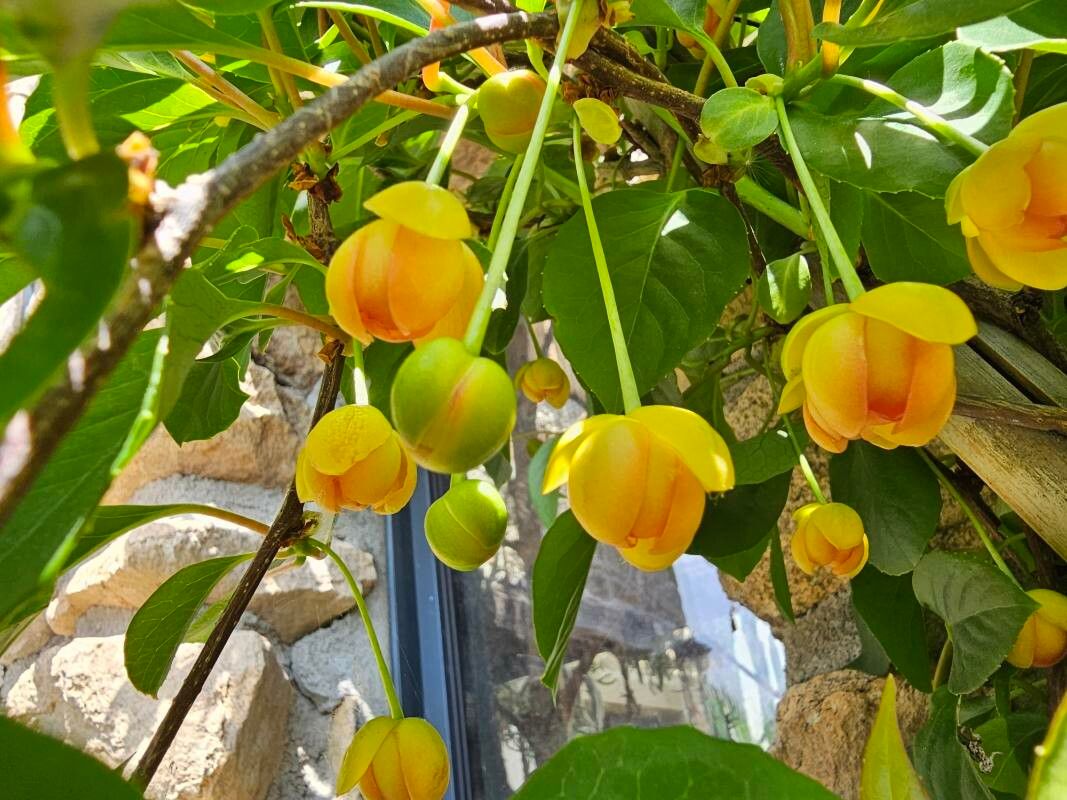
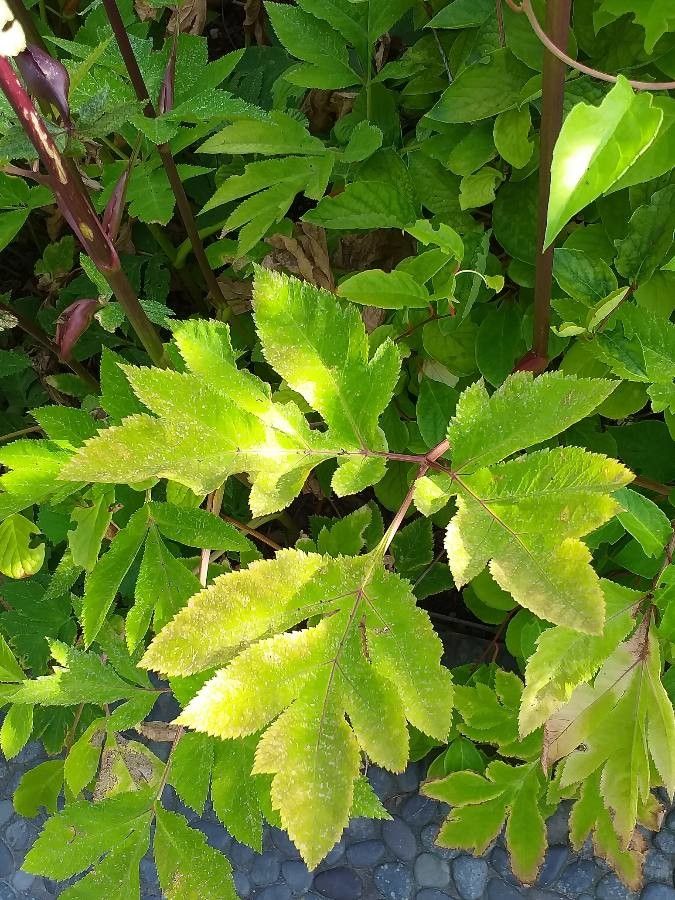
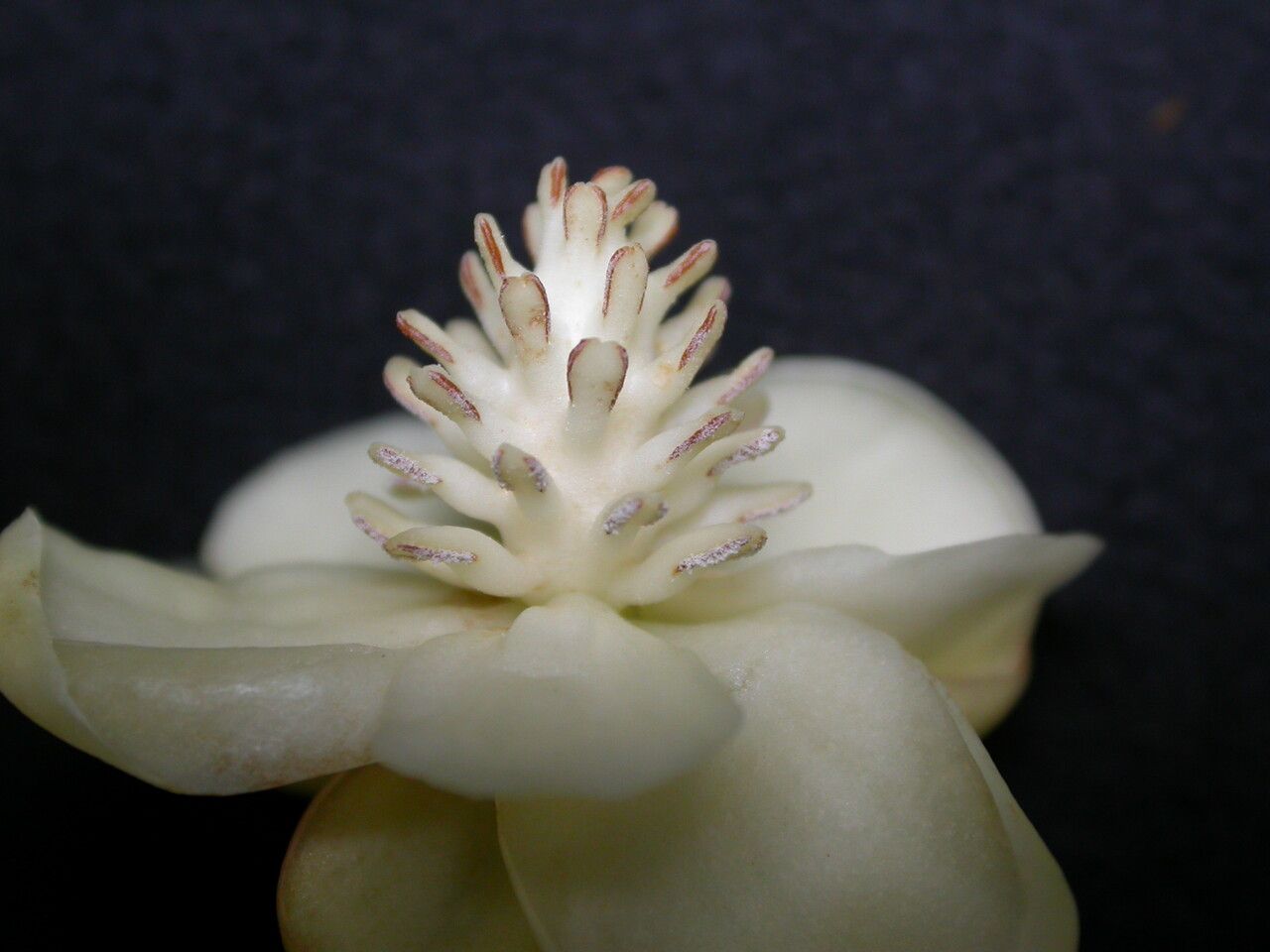
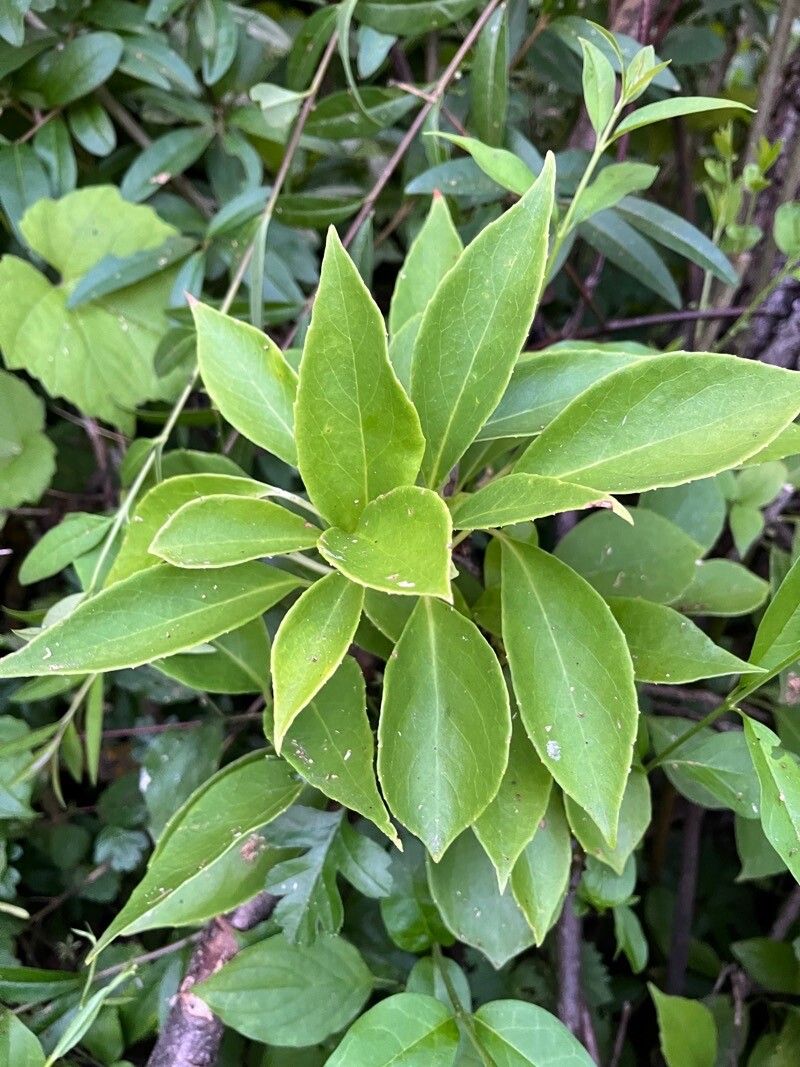
Schisandra rubriflora (红花五味子), the Chinese magnolia vine, is a species of flowering plant in the family Schisandraceae that is native to China (West Sichuan and North Yunnan), India and Myanmar. Growing to 8 m (26 ft) tall, it is a deciduous twining climber with leathery leaves. Waxy red, cup-shaped pendulous blooms in summer are followed by red berries. The Latin specific epithet rubriflora means red-flowered.This plant is grown as an ornamental garden subject. It is fully hardy down to −15 °C (5 °F). It has gained the Royal Horticultural Society’s Award of Garden Merit.
The Chinese magnolia vine is disease-resistant and typically not susceptible to illnesses. Regarding care, this plant is fairly low-maintenance. When grown outdoors it needs minimal watering, and larger plants generally do not require pruning. However, smaller plants should be pruned after they have finished blooming. The Chinese magnolia vine is suitable for anyone with an outdoor area, such as a garden or deck, and does not demand extensive plant-care experience.
How to keep Schisandra Rubriflora.
Light
Chinese magnolia vine naturally occurs in habitats like forest understories or rocky sites where it grows in natural shade. It prefers partial sun but can tolerate full sun or full shade, showing its versatile, hardy nature.
Temperature
The Chinese magnolia vine is very adaptable to a range of climates, from very hot summers to frosty winters. That said, it has an ideal temperature range for growth. If temperatures climb too high, the plant can undergo heat and humidity stress that may kill it. In places where temperatures approach the lower limit of its cold tolerance, insulating measures should be taken to protect the vine.
Fertilizer
Proper timing is important when fertilizing Chinese magnolia vine. Apply fertilizer in early spring and continue monthly until early summer. The fertilizer promotes attractive blooms and supplies energy during both dormant and active growth periods.
Pruning
The Chinese magnolia vine is known for its vibrant red flowers and climbing tendencies. It's important to prune these vines in early spring to remove dead stems, improve air circulation, and maintain their shape. Regular pruning encourages fruit production and prevents overcrowding. To ensure healthier growth, always use sterilized tools to minimize the risk of disease.
Botanical profile.
- Plant Type
- Vine
- Life Cycle
- Perennial
- Genus
- Schisandra
- Family
- Schisandraceae
- Hardiness Zone
- 5-9
- Mature Height
- 11.89 m
- Mature Spread
- 3.96 m
- Leaf Color
- Yellow, Green
- Leaf Type
- Deciduous
- Flower Color
- Red
- Flower Size
- 1.02 cm to 2.03 cm
- Bloom Time
- Mid spring, Late spring
- Planting Time
- Spring, Summer
- Harvest Time
- Late summer, Early fall, Mid fall
- Native Area
- Myanmar, India, China
Other names.