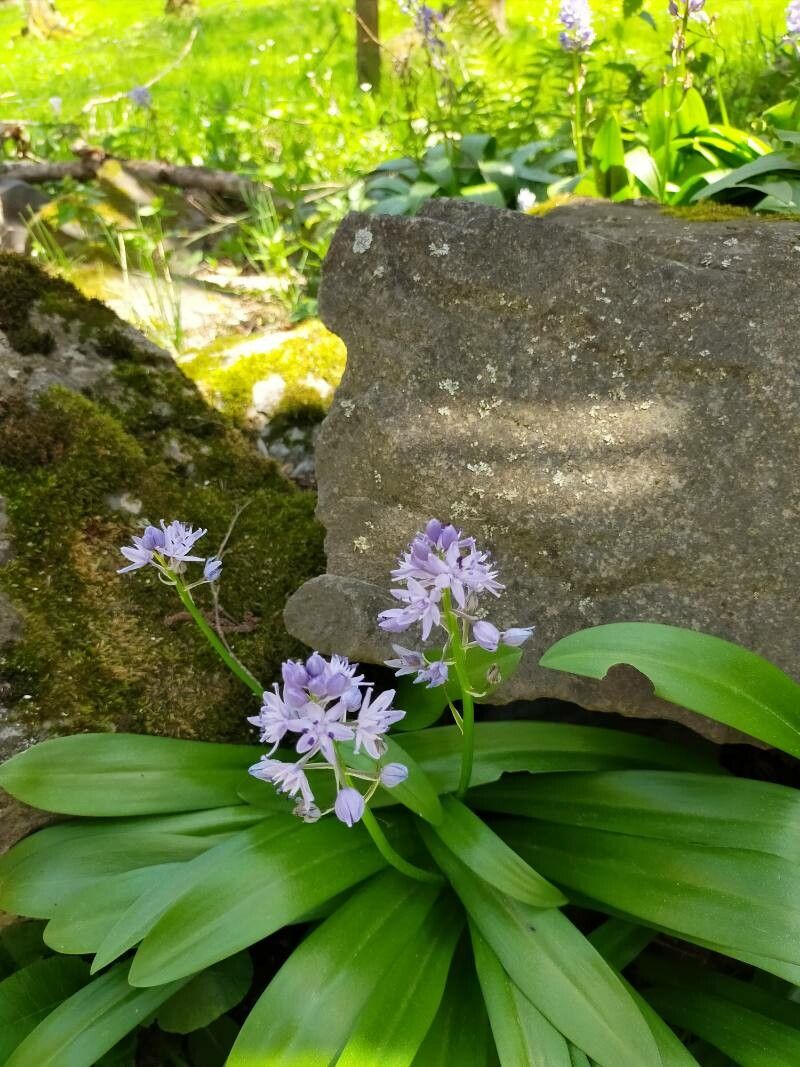
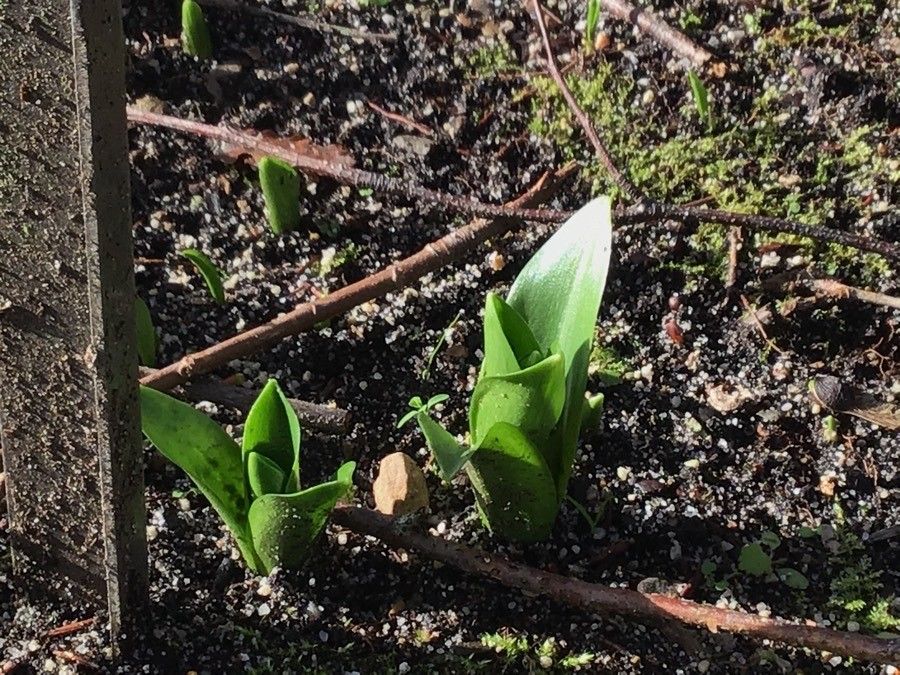
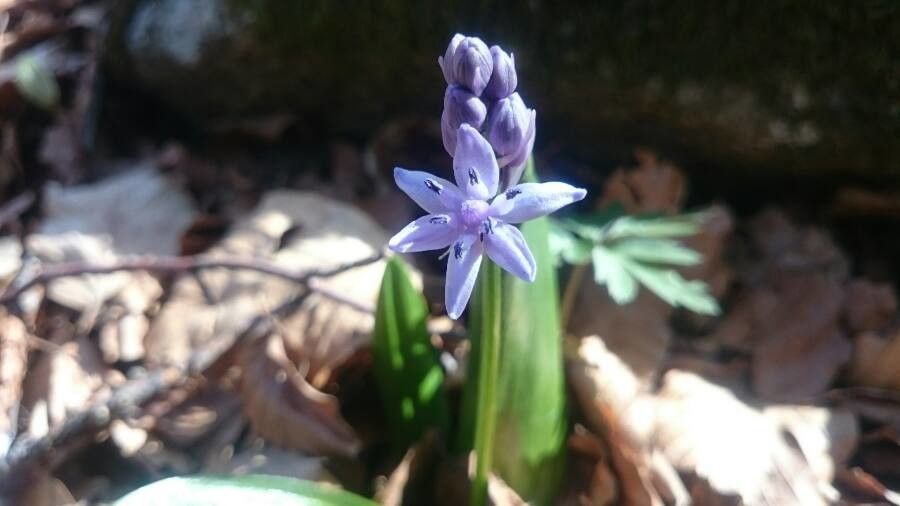
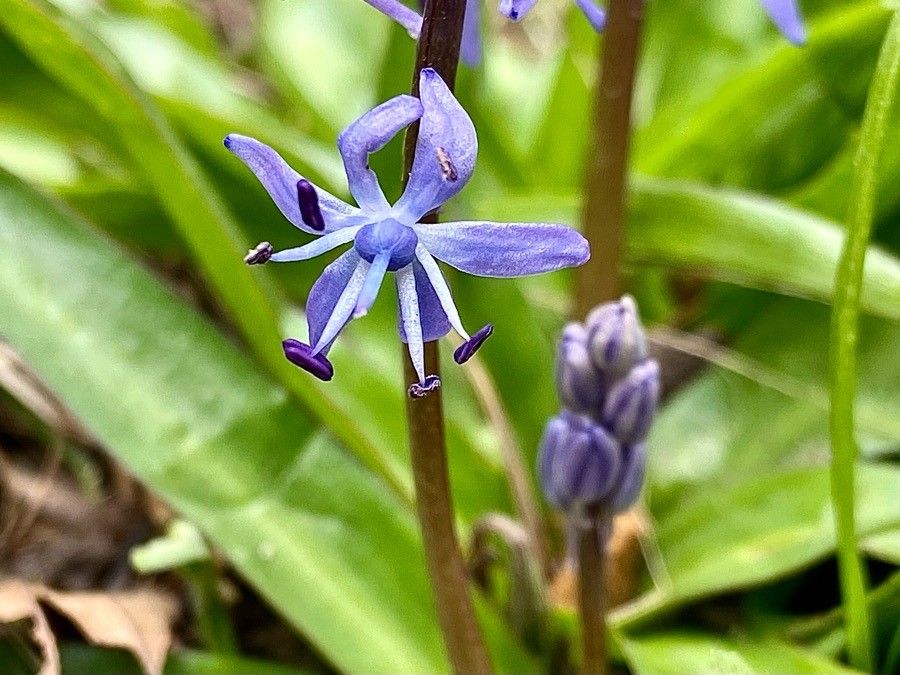
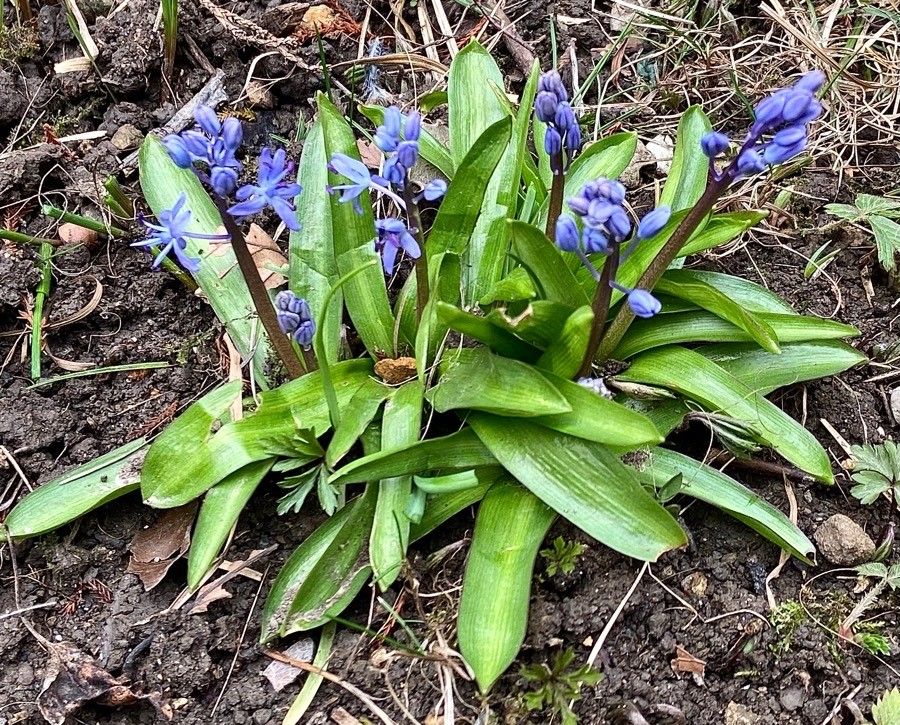
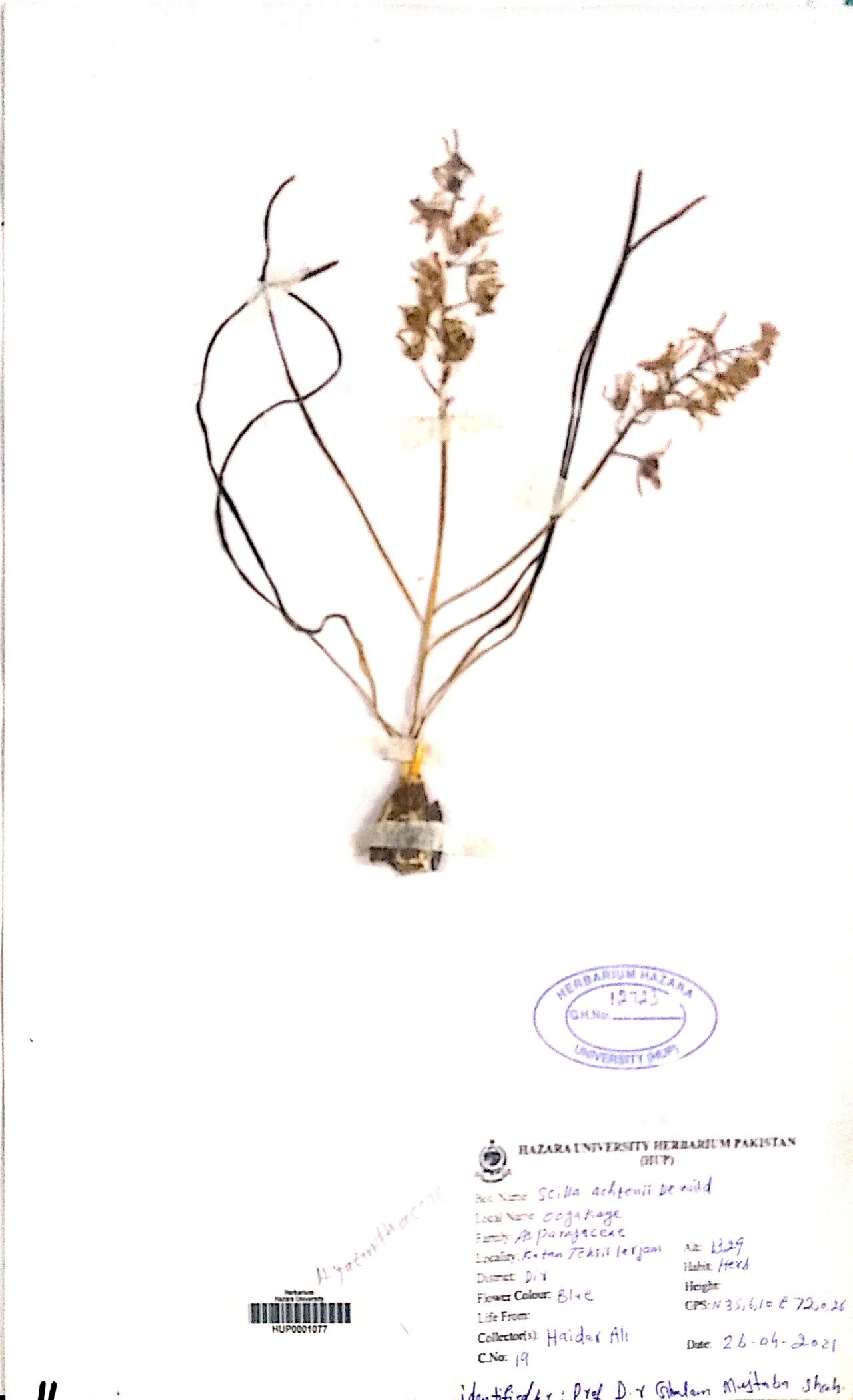
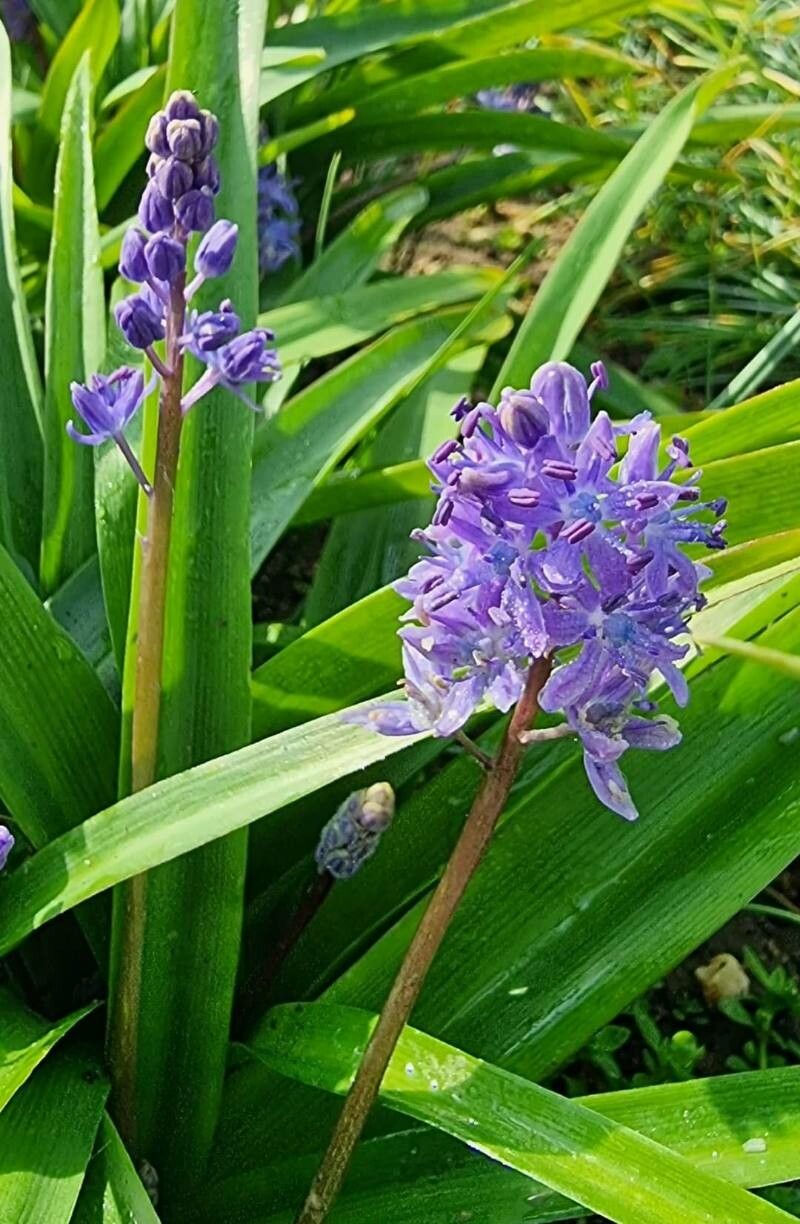
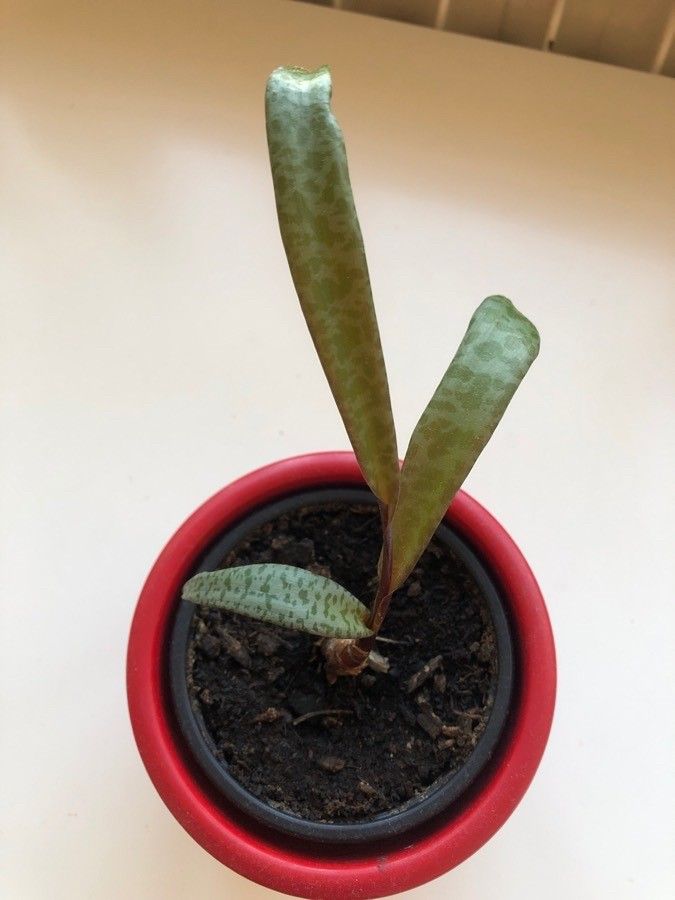
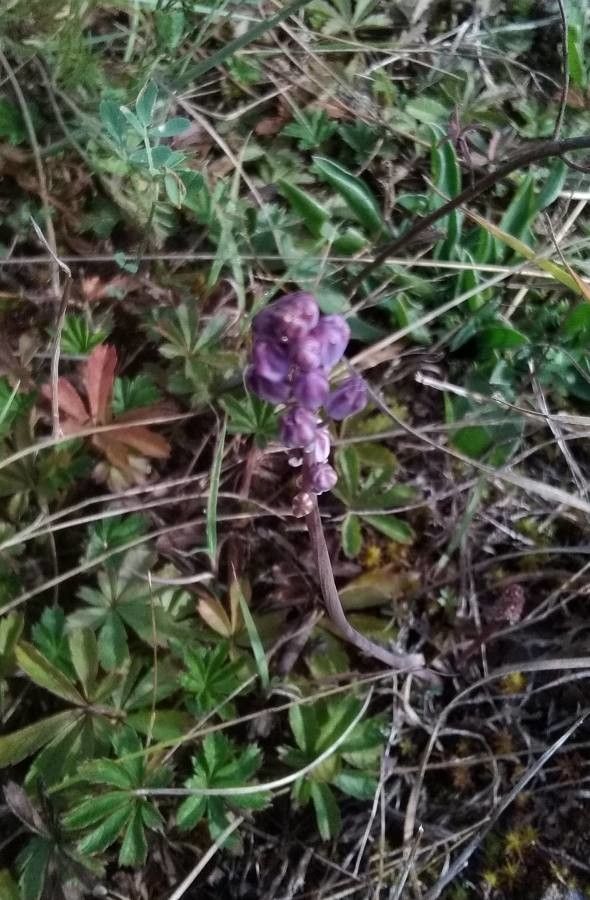
Scilla lilio-hyacinthus, commonly known as Lily-of-the-Valley Squill, is a perennial bulbous plant in the Asparagaceae family. Native to the Mediterranean region, it typically grows in rocky areas and meadows. The plant features narrow, strap-like leaves that are about 15-20 cm long and 1 cm wide. Its bell-shaped flowers, which are white or pale pink with a blue stripe down the center of each petal, bloom in early spring on tall spikes reaching up to 30 cm in height.
Lily-of-the-Valley Squill thrives in well-drained soil and prefers full sun or partial shade for optimal growth. While it is a hardy plant that can tolerate drought, it performs best with regular watering during its growing season.
The bulbs of Scilla lilio-hyacinthus have been used for centuries in traditional medicine for their diuretic properties, which help treat urinary tract infections and kidney stones.
Overall, Scilla lilio-hyacinthus is an attractive ornamental plant with beautiful flowers that add color to any garden or landscape. In addition to its visual appeal, it also offers medicinal benefits when used appropriately.
Pyrenean squill has good resistance to disease and typically does not suffer from illnesses. However, it can be susceptible to pests and diseases present in the surrounding area. These infections are usually not serious. In terms of care, the plant requires moderate maintenance. It should be pruned regularly to preserve a neat appearance and healthy growth. Fertilizing can also help encourage flowering. Pyrenean squill is suitable for anyone with outdoor space such as a garden or patio and does not need extensive gardening experience. It may demand more care when grown indoors.
How to keep Scilla Lilio Hyacinthus.
Light
Pyrenean squill naturally occurs in places like forest understories or rocky areas, where it gets natural shade. It prefers partial sun but can tolerate full sun or full shade, showing its adaptable, hardy nature.
Water
Native to moist woodlands, the Pyrenean squill thrives in environments with consistent moisture and stable humidity. This drought-sensitive plant requires weekly watering to stay healthy. During the growing season, rainwater enhances its hydration, making it well-suited for outdoor conditions in temperate regions.
Humidity
This plant will thrive in moderate humidity, which is probably the level in your home. However, misting it a few times a week can be very beneficial. Make sure the room has good ventilation.
Temperature
Pyrenean squill can tolerate a wide range of temperatures, yet its distribution may still be restricted by particular combinations of moisture and heat. It performs best in warm summer conditions with sufficient rainfall or watering. Long periods of cloudy, rainy weather or extended high temperatures can raise the risk of Pyrenean squill dying. In winter, adequate protection from cold can enhance the plant's chances of survival.
Fertilizer
For Pyrenean squill, the primary time to fertilize is in early spring when the flowers are forming. The appropriate fertilizer promotes better blooms and helps Pyrenean squill produce attractive flowers. Fertilizing in early spring ensures excellent flowering during the season and provides energy during dormant growth phases.
Pruning
Pyrenean squill requires minimal maintenance. After the plant has finished blooming, usually about six weeks later when the leaves turn yellow, you can mow it down. To prevent the spread of Pyrenean squill, make sure to remove the flowers before they have a chance to form seeds.
Pot & Repot
When repotting Pyrenean squill, select a pot 1–2 inches (2.5–5.1 cm) larger with good drainage. Use a well-draining potting mix. Repot in spring or fall, making sure the root ball sits slightly below the rim of the flower pot. Water thoroughly after repotting and place it in a warm spot with indirect sunlight.
Botanical profile.
- Plant Type
- Herb
- Life Cycle
- Perennial
- Genus
- Scilla
- Family
- Asparagaceae
- Hardiness Zone
- 5-9
- Mature Height
- 25 cm
- Mature Spread
- 10 cm
- Leaf Color
- Green
- Leaf Type
- Deciduous
- Flower Color
- Lavender
- Flower Size
- 1.02 cm to 2.03 cm
- Bloom Time
- Early spring, Mid spring
- Planting Time
- Spring
- Harvest Time
- Late spring, Early summer
Other names.