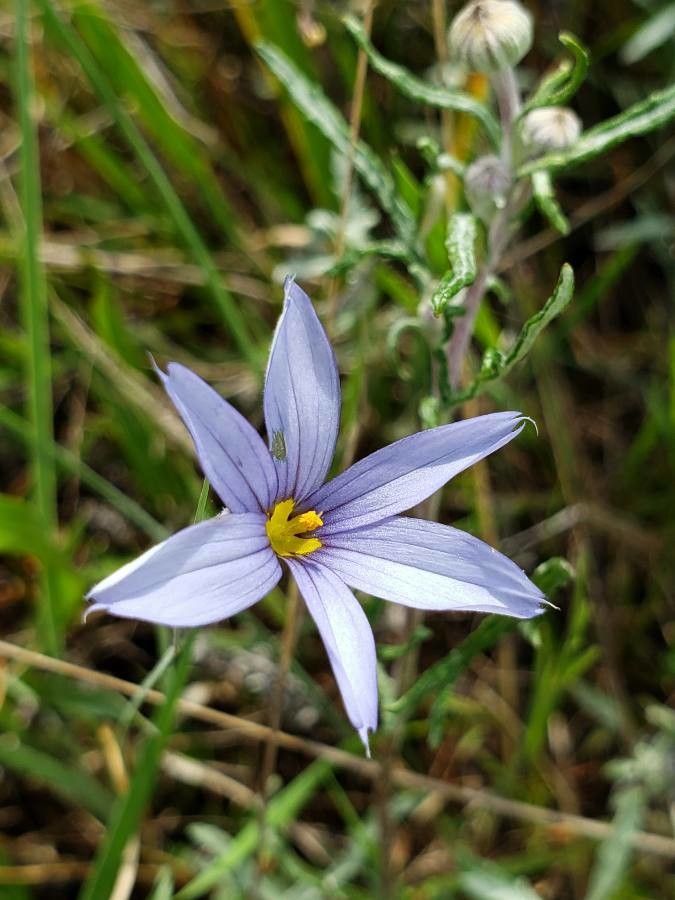
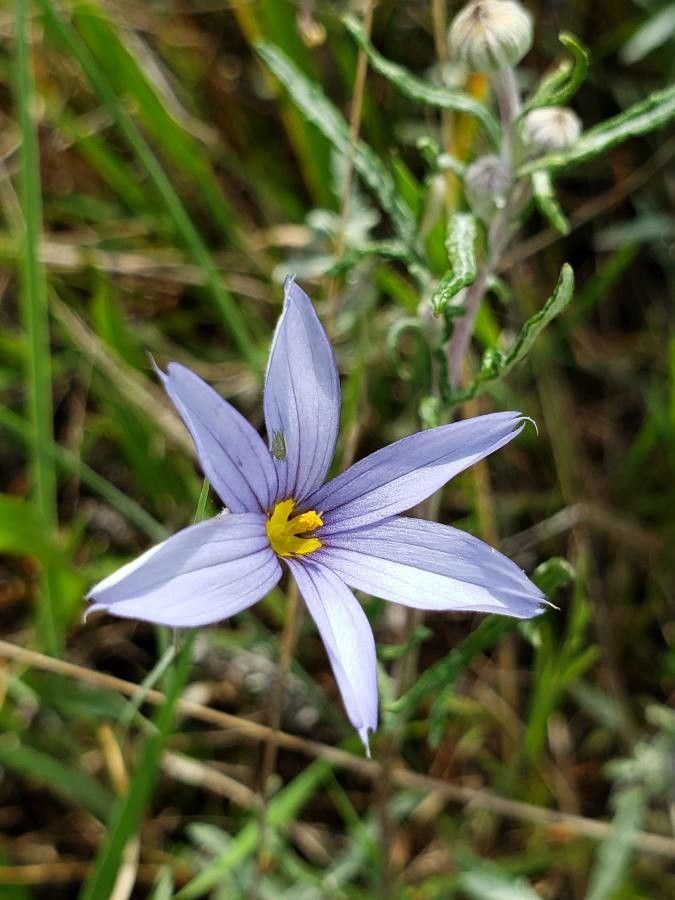
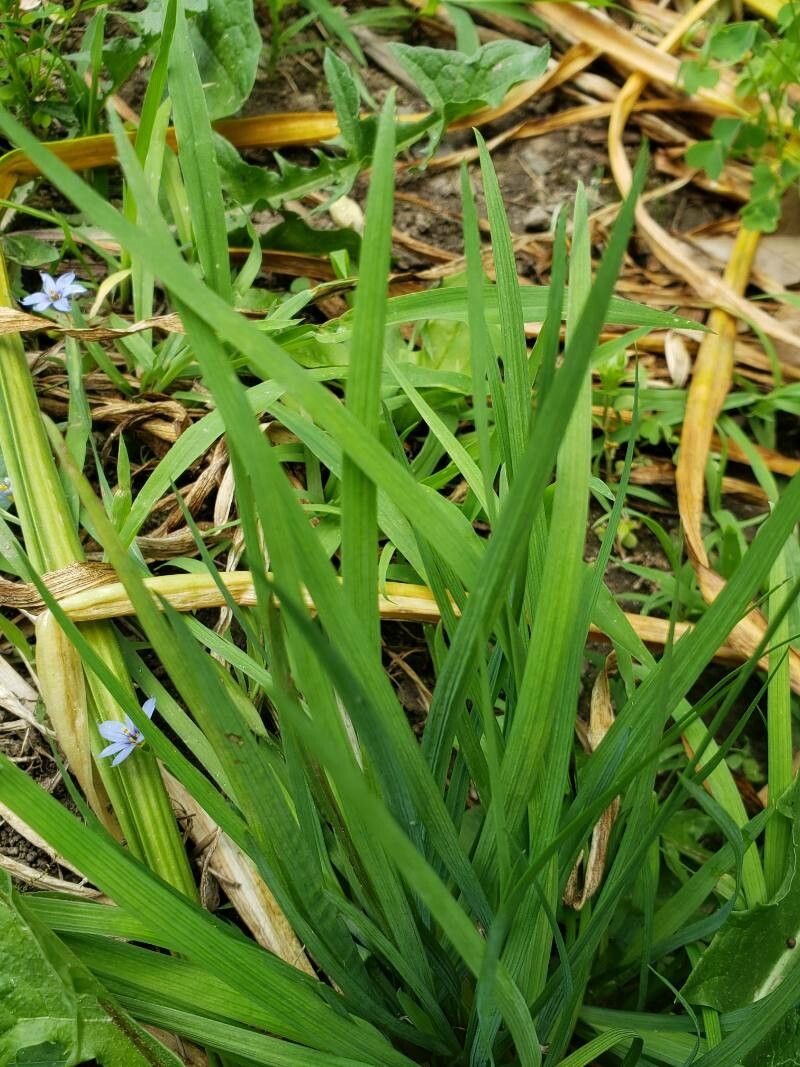
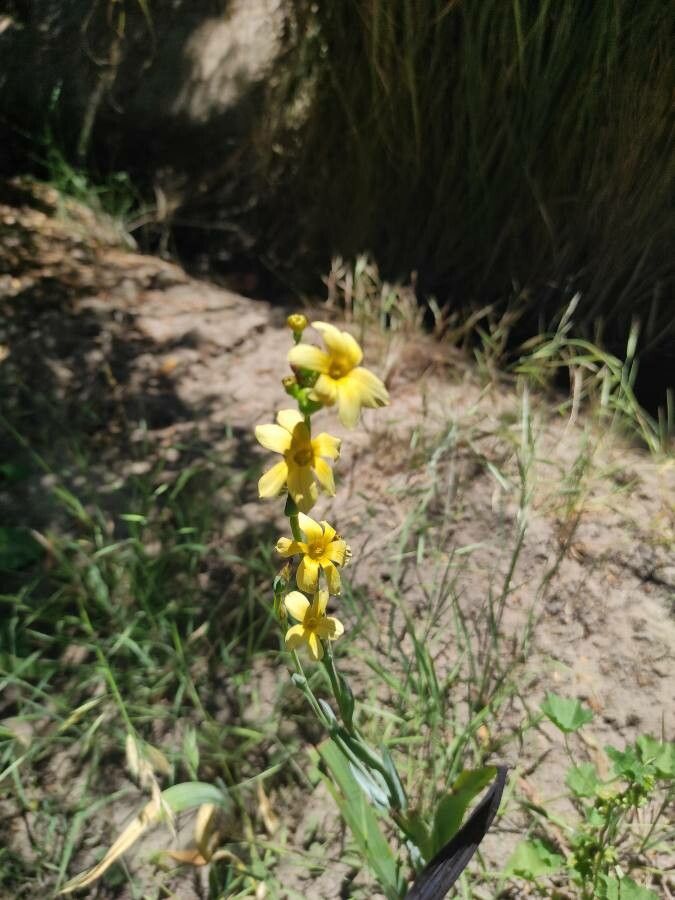
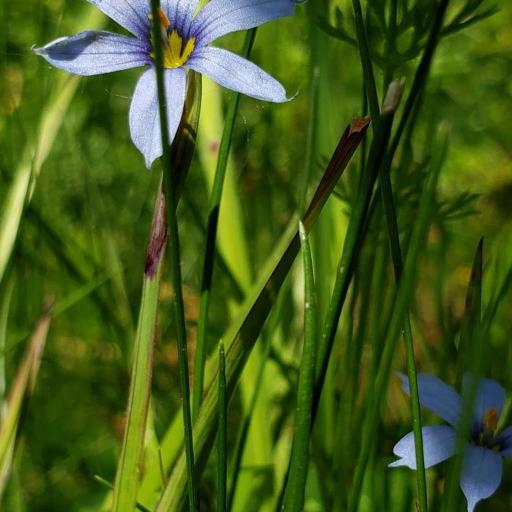
Sisyrinchium idahoense, commonly known as Idaho blue-eyed grass, is a perennial plant species in the Iridaceae family. It is native to North America and thrives in various habitats such as meadows, prairies, and open woodlands. Typically, the plant grows up to 30 cm in height and features narrow leaves that are about 20 cm long. The flowers of Sisyrinchium idahoense are small, blue-violet in color with yellow centers, and bloom from late spring through early summer.
Sisyrinchium idahoense is a hardy plant that tolerates a wide range of soil types, though it prefers well-drained soils with moderate moisture levels. It requires full sun or partial shade for optimal growth but can also withstand some shade.
The plant serves multiple purposes, including ornamental use due to its attractive flowers and foliage. Additionally, Native Americans have used it medicinally to treat various ailments such as headaches, fever, and stomach problems.
Overall, Sisyrinchium idahoense is an appealing perennial species that enhances natural landscapes with its beauty and provides medicinal benefits when properly utilized.
Idaho blue-eyed grass is fairly resistant to disease and generally does not tend to develop many illnesses. However, it can be vulnerable to pests and diseases present in its environment. Such infections are typically minor. For care, the plant requires moderate maintenance. It should be pruned regularly to keep a tidy appearance and encourage healthy growth. Fertilizing can also help promote blooming. This plant is well suited to anyone with outdoor space, like a garden or patio, and does not demand extensive plant-care experience. It may need more attention if grown indoors.
How to keep Sisyrinchium Idahoense.
Light
Idaho blue-eyed grass is a perennial herbaceous plant that prefers sunny conditions and originates from open habitats, commonly thriving in meadows and grasslands. It favors full sun but can also tolerate partial sun.
Water
Idaho blue-eyed grass thrives in semi-aquatic environments and prefers consistent moisture, but it can also adapt to drier conditions. To keep the soil damp without causing waterlogging, water the plant every 1-2 weeks. It grows best outdoors in natural light and aligns well with seasonal rainfall, making it an excellent choice for rain gardens.
Temperature
Idaho blue-eyed grass can tolerate a wide range of temperatures, but its distribution may still be restricted by different combinations of moisture and heat. It does best in warm summer conditions with adequate rainfall or watering. Lengthy stretches of cloudy, rainy weather, as well as extended high temperatures, make the plant more likely to die. In winter, providing proper protection from the cold can increase its survival rate.
Fertilizer
The best time to fertilize Idaho blue-eyed grass is in early spring, as it comes out of dormancy and begins active growth. Fertilizing supplies essential nutrients for healthy development. Although Idaho blue-eyed grass needs relatively little fertilizer, applying it once a year can improve its survival and encourage better, longer-lasting flowers.
Pruning
Idaho blue-eyed grass is known for its appealing, grass-like leaves and delicate blue flowers. To encourage growth and extend the flowering period, prune the plant from early to late spring by removing dead leaves and spent blooms. Light trimming helps maintain a tidy appearance and prevents overcrowding. Be sure to use sanitized tools to reduce the risk of disease.
Botanical profile.
- Plant Type
- Herb
- Life Cycle
- Perennial
- Genus
- Sisyrinchium
- Family
- Iridaceae
- Hardiness Zone
- 4-9
- Mature Height
- 10 cm to 40 cm
- Mature Spread
- 25 cm
- Leaf Color
- Green
- Leaf Type
- Semi-evergreen
- Flower Color
- Blue, Purple
- Flower Size
- 2.03 cm to 3.05 cm
- Bloom Time
- Mid spring, Late spring, Early summer
- Planting Time
- Spring, Summer, Autumn
- Harvest Time
- Summer
Other names.
Reader questions.
What are the sunlight requirements for Idaho blue-eyed grass?
Idaho blue-eyed grass thrives with full sun exposure, requiring above 6 hours of sunlight daily. However, it's advisable to observe how sunlight moves through your garden to select spots that offer a good balance of light and shade, ensuring the plant's optimal growth and happiness. While this plant prefers full sun, it can also tolerate partial sun conditions. Its natural habitat includes open spaces such as meadows and grasslands, indicating its preference for abundant sunlight.
What is the botanical name of Idaho blue-eyed grass?
The botanical name of Idaho blue-eyed grass is Sisyrinchium idahoense.
How can artificial lighting be used to supplement natural sunlight for indoor plants?
When natural sunlight is insufficient, especially during winter or in less sunny spaces, artificial lighting can be crucial for the growth of indoor plants. LED lights are recommended due to their ability to provide specific wavelengths needed by plants. Full sun plants require 30-50W/sq ft, partial sun plants need 20-30W/sq ft, and full shade plants need 10-20W/sq ft of light. The artificial light source should be placed 12-36 inches above the plant to mimic natural sunlight, ensuring plants receive 8-12 hours of light per day. This promotes healthier, faster growth.
What are signs of inadequate light in Idaho blue-eyed grass?
Symptoms of light deficiency in Idaho blue-eyed grass include small leaves, leggy or sparse growth, early leaf drop, slowed or ceased new growth, paler or irregularly colored new leaves, chlorosis, and conditions like sunscald, leaf curling, wilting, and leaf scorching. As a plant that thrives in full sun, inadequate lighting can result in these various signs, indicating the need for better light exposure to maintain its health and growth.
What solutions can be implemented for Idaho blue-eyed grass suffering from poor light conditions?
To address poor light conditions for Idaho blue-eyed grass, gradually acclimate the plant to sunnier spots by transferring it weekly until it receives at least 6 hours of direct sunlight daily. For indoor settings, consider using south-facing windows or artificial lights such as desk or ceiling lamps for a minimum of 8 hours daily. Outdoors, ensure gradual adaptation to avoid sunburn. Reduce light obstructions by pruning trees or transplanting smaller plants to brighter locations with good drainage. Note that parts of the plant already damaged by insufficient light might not recover, but new growth will be healthy with improved light exposure.