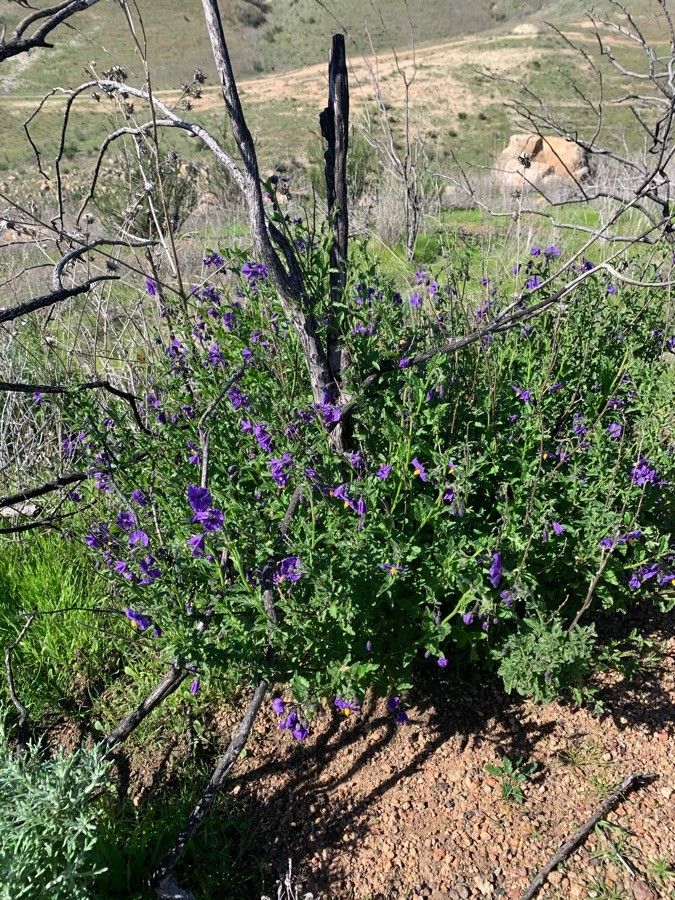
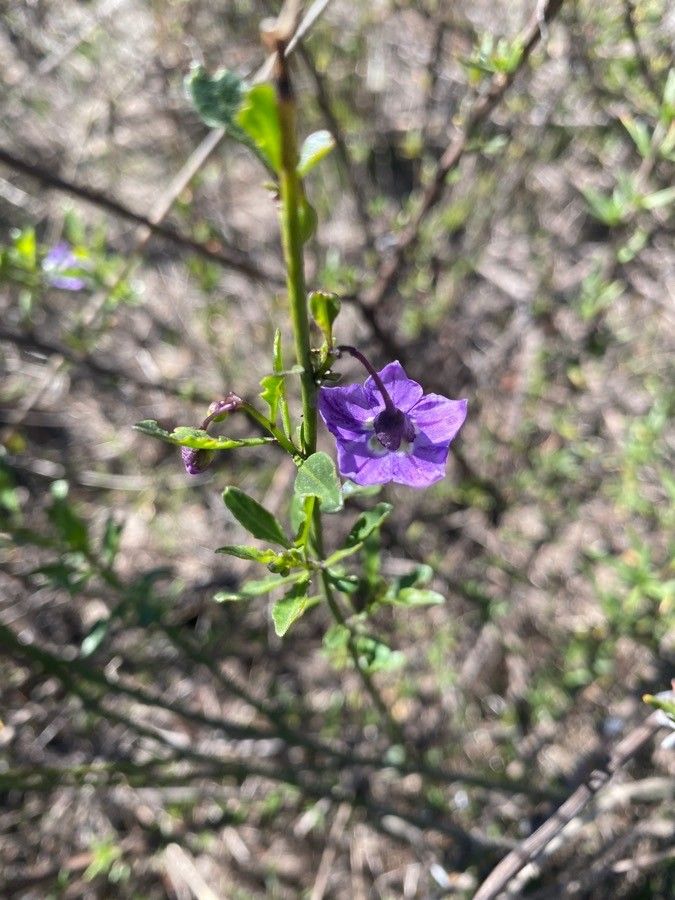
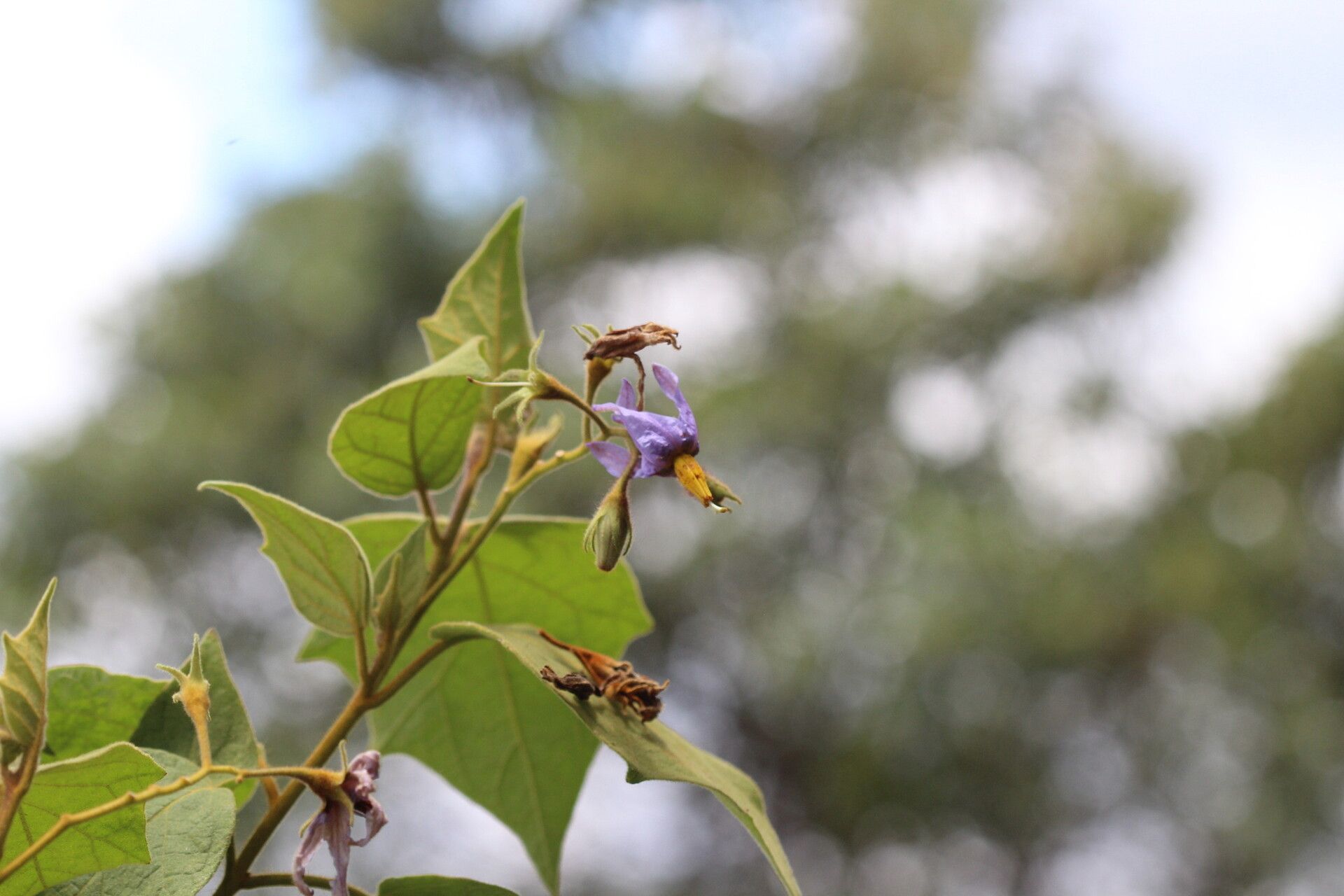
Solanum parishii is a species of nightshade known by the common name Parish's nightshade. It is native to western North America from Oregon to Baja California, where it grows in many types of habitat, including maritime and inland chaparral, woodlands, and forests. It is a perennial herb or subshrub producing a branching, ribbed or ridged stem up to about a meter in maximum height. The lance-shaped to nearly oval leaves are up to 7 centimeters long and smooth-edged or somewhat wavy. The inflorescence is an umbel-shaped array of several flowers, each borne on a short pedicel. The flower corolla is around 2 centimeters wide when fully open and is usually purple, but sometimes white. At the center are yellow anthers. The fruit is a berry roughly a centimeter wide.
How to keep Solanum Parishii.
Pruning
Parish's nightshade is known for its small purple flowers and thrives in well-drained soils. To achieve the best results, prune this plant in early spring. Make sure to remove dead stems and any overcrowded branches to enhance air circulation and sunlight exposure. This practice encourages vigorous growth and helps prevent diseases.
Botanical profile.
- Life Cycle
- Perennial
- Genus
- Solanum
- Family
- Solanaceae
Other names.
Reader questions.
What are the sunlight requirements for Parish's nightshade (Solanum parishii)?
Parish's nightshade (Solanum parishii) thrives in various sunlight conditions. For full sun exposure, it requires more than 6 hours of sunlight per day, ensuring that it receives ample light for optimal growth and health. If you're aiming for partial sun, then about 3-6 hours of sunlight daily is sufficient. It's important to observe how sunlight moves through your garden throughout the day. Finding the right spots that offer a perfect balance of light and shade will significantly contribute to the happiness and well-being of your Parish's nightshade plants.