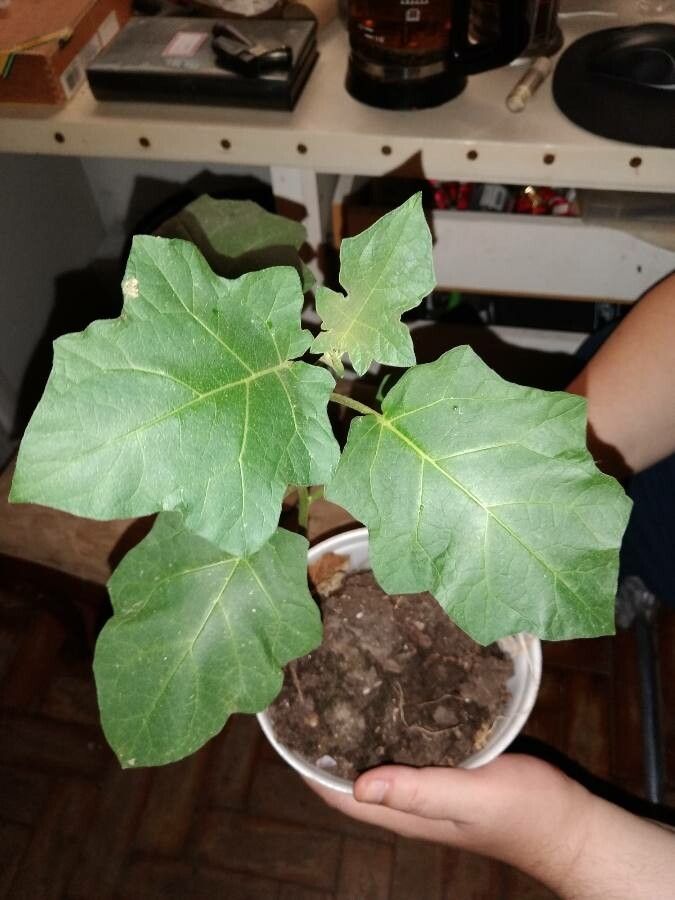
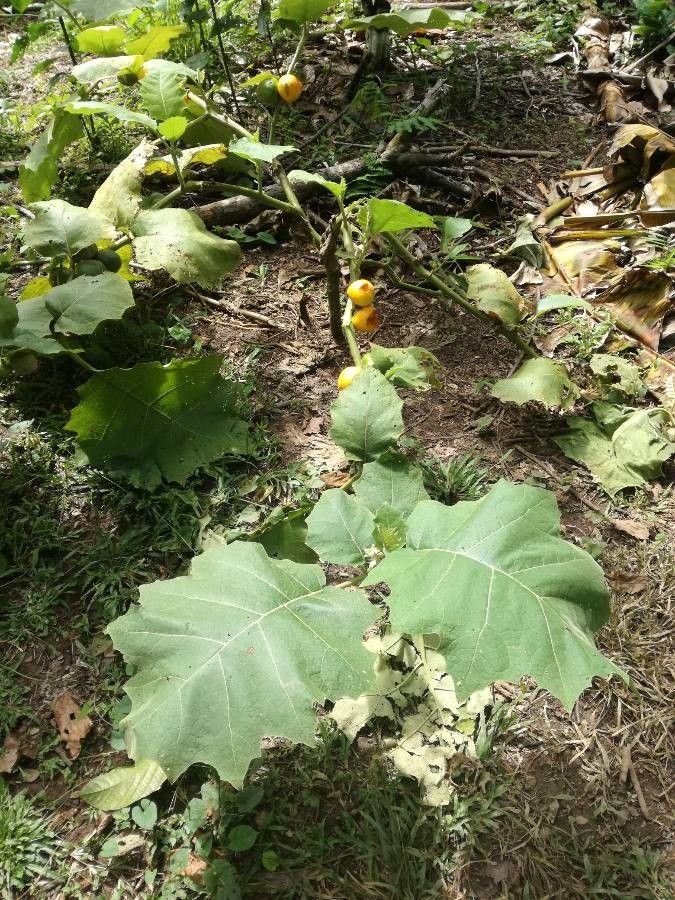
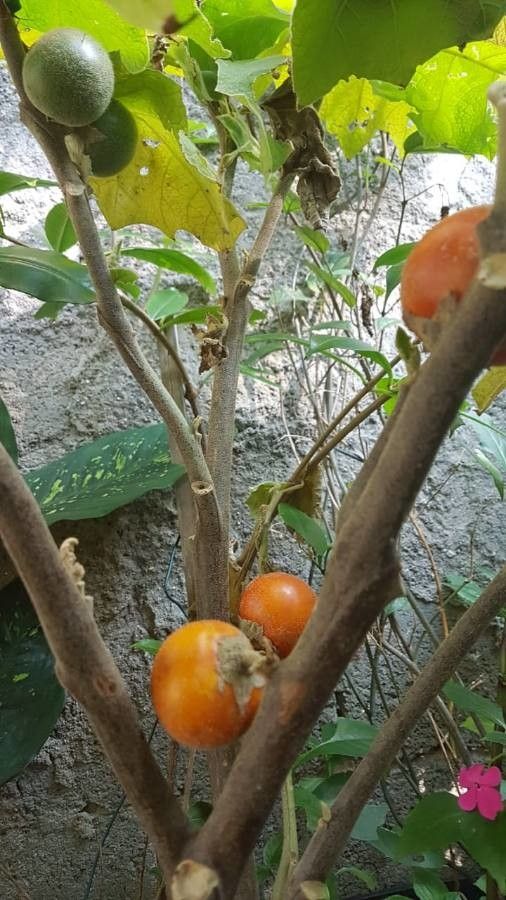
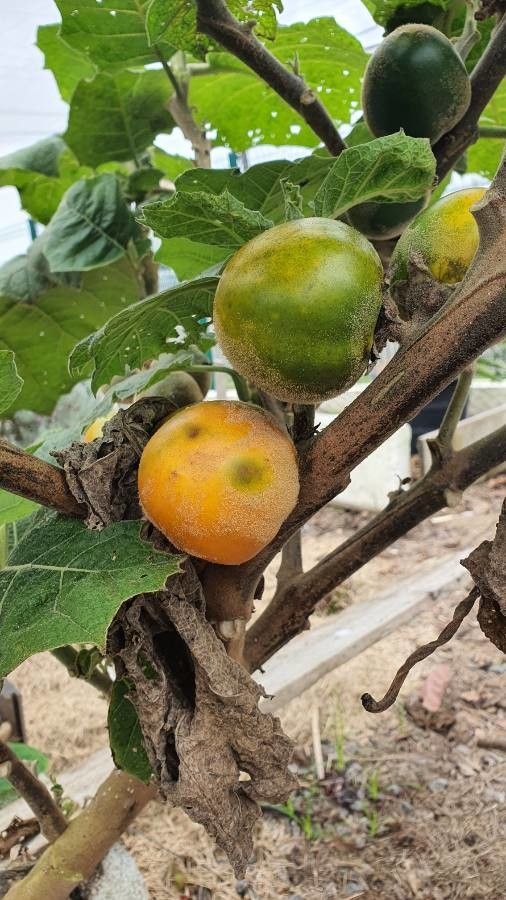
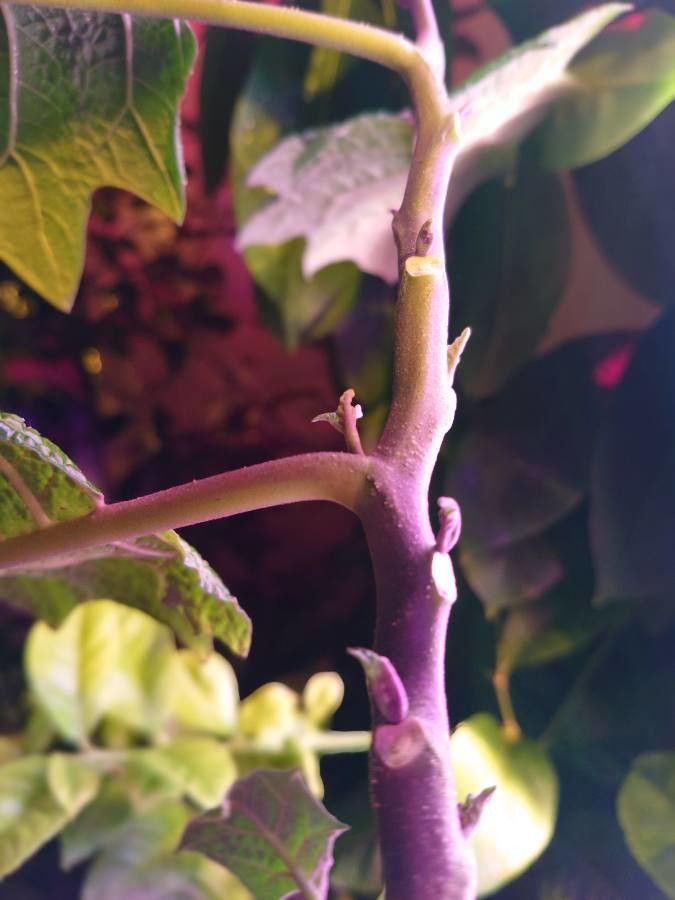
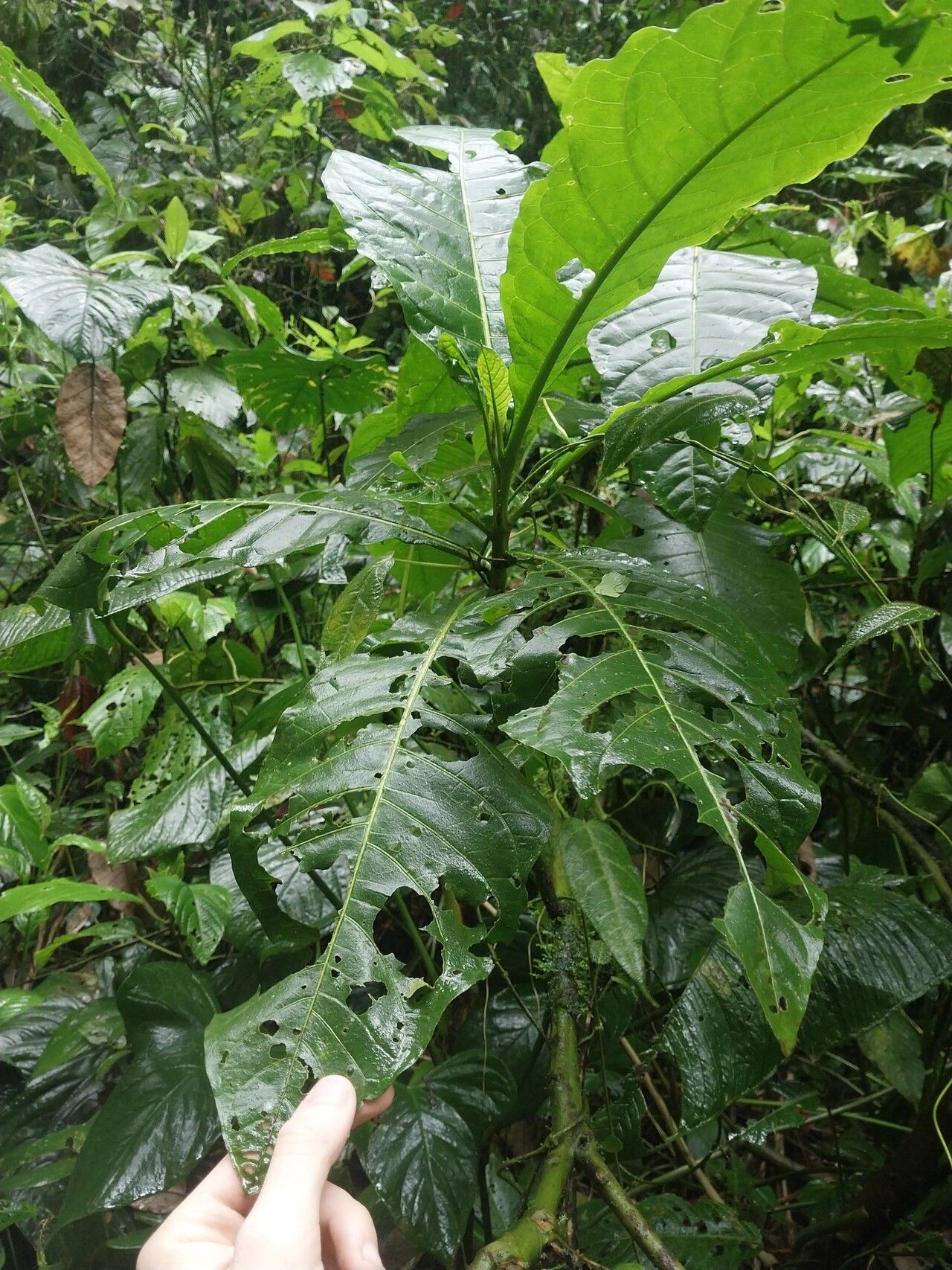
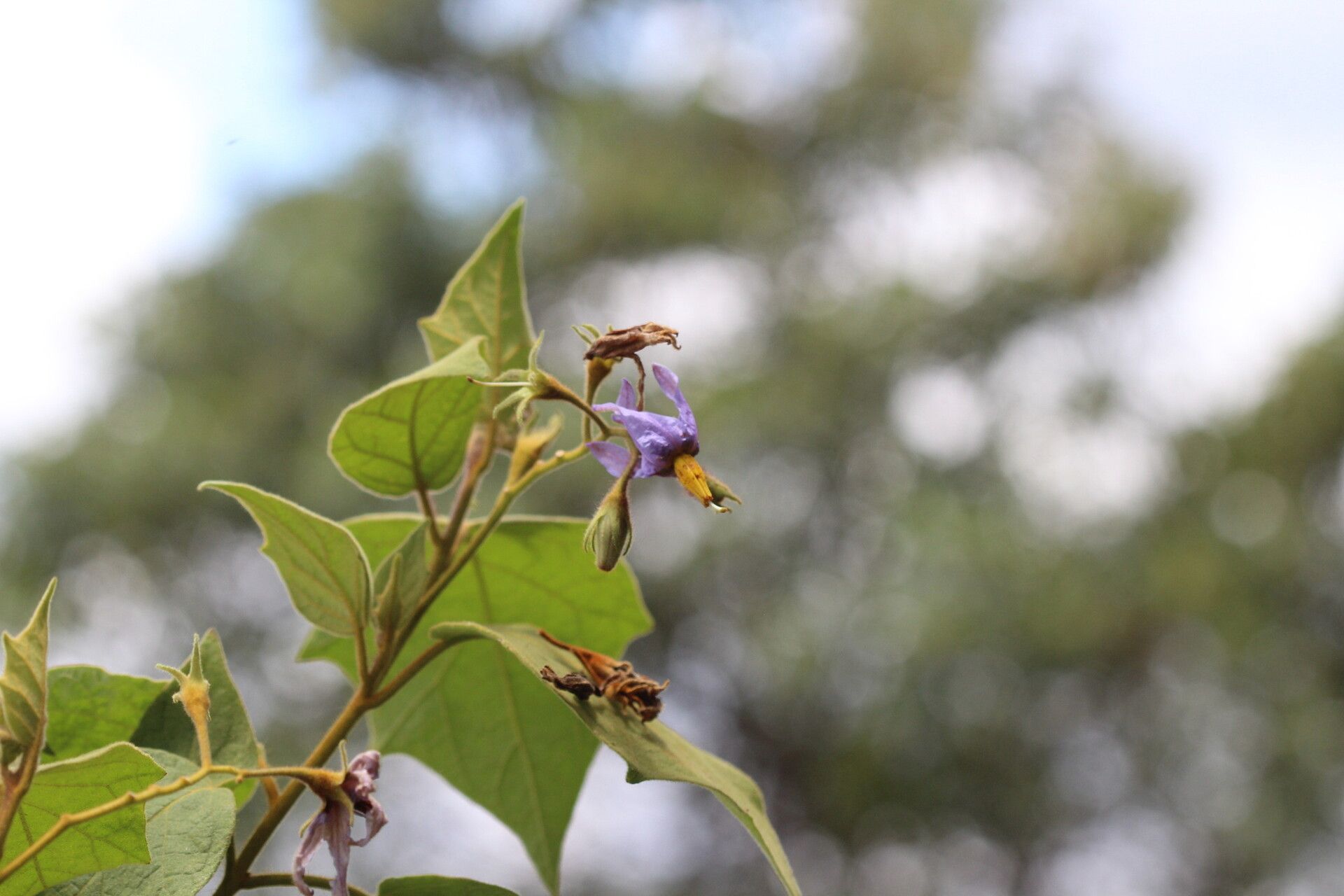
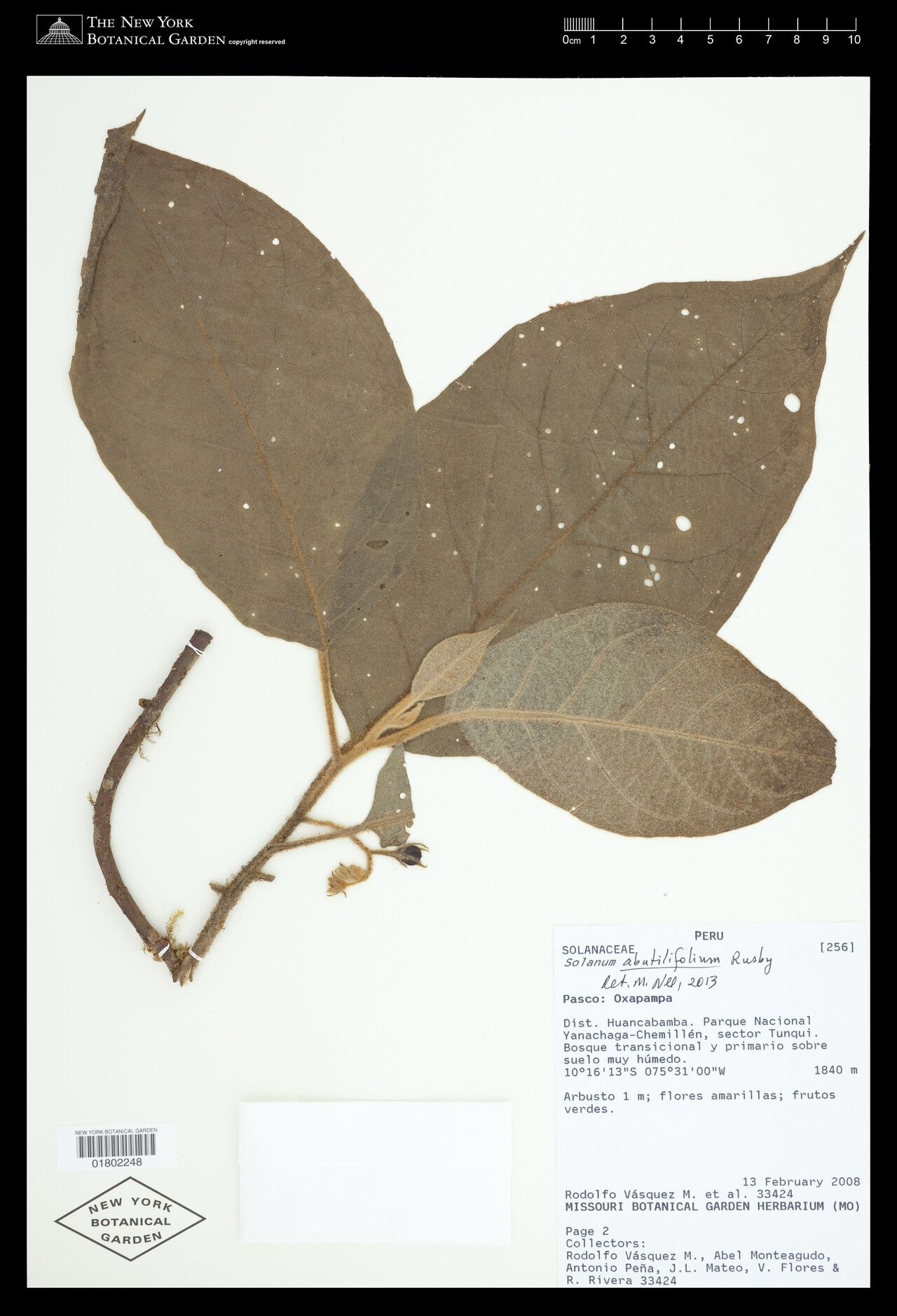
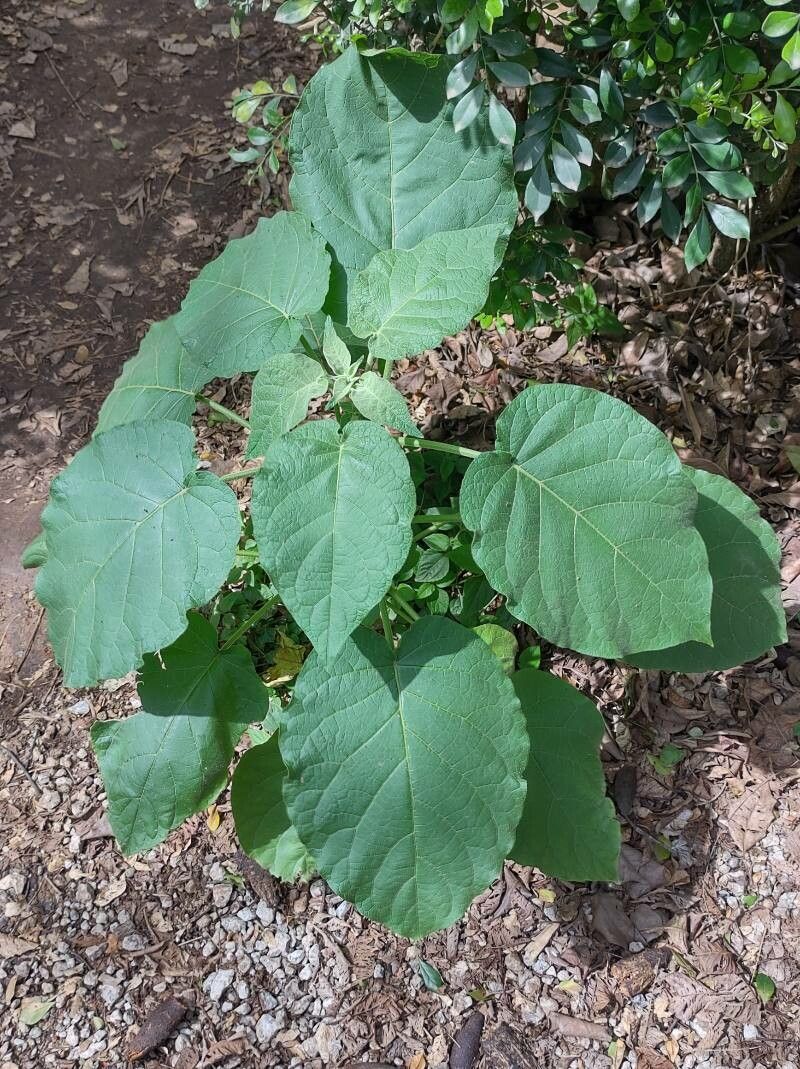
Solanum sessiliflorum, the cocona, is a tropical shrub of the family Solanaceae. The cocona plant has sturdy branches and huge, serrate and hairy leaves. Cocona closely resembles a number of close relatives, including naranjilla and pseudolulo. It can be distinguished from those plants by its lack of spines. It will hybridize with those and other close relatives. Cocona also lacks the characteristic purple coloring usually seen in the naranjilla. Its flowers resemble large potato flowers, with light green petals. Cocona is harvested in parts of South America around the Amazon rainforest such as Purús Province in eastern Peru.The fruit of cocona is a red, orange or yellow edible berry. Cocona is native to the Andean region of South America, where it is occasionally cultivated for human consumption. Cocona can also be grown as an indoor ornamental plant in temperate climates, but it seems to be quite sensitive to spider mites, so care should be taken not to keep it in too dry air during winter. Like the naranjilla, coconas are highly sensitive to aphids and nematodes. As subtropical plants, they can endure cool weather, but will be killed or severely damaged by frost. During summer, it can be grown outside or in a cold greenhouse. When grown from seed, coconas can bear fruit in as little as 9 months, or as long as 24. Solanum georgicum and Solanum hyporhodium were (and sometimes still are) included in this species, but they are generally treated as distinct today.
Cocona is resistant to disease and is generally unlikely to suffer from illnesses. In terms of care, this plant is fairly low-maintenance. When grown outdoors it needs only minimal watering, and larger plants typically do not require pruning. Smaller plants, however, should be pruned after they finish blooming. Coconat is appropriate for anyone with an outdoor area, such as a garden or deck, and does not demand a lot of plant-care experience.
How to keep Solanum Sessiliflorum.
Light
Cocona comes from open habitats, like sunny meadows and forest margins, which provide abundant light. It flourishes in Full Sun but can also tolerate Partial Sun, showing good adaptability to different light conditions.
Temperature
Cocona comes from tropical areas, where the weather is typically warm and humid. Consequently, it is well suited to high temperatures and moisture. It does not tolerate abrupt temperature changes and prefers a consistent thermal environment, so avoiding temperature fluctuations indoors is important. It generally cannot endure cold and needs warmer conditions to develop. If the surrounding temperature falls too low, the plant may stop growing or even die.
Fertilizer
Choose organic fertilizers (e.g., fish emulsion, compost) instead of chemical ones for Cocona. Supply higher levels of nitrogen and phosphorus to young plants in spring. Work compost or fertilizer into the soil before or after planting. For mature plants, top up in spring with either a balanced fertilizer or one aimed at a specific deficiency. Nutrient deficiency leads to small leaves, short branches, yellow or bronze foliage, acidic fruits, premature fruit drop, and splitting.
Botanical profile.
- Plant Type
- Shrub
- Life Cycle
- Perennial
- Genus
- Solanum
- Family
- Solanaceae
- Hardiness Zone
- 9-11
- Mature Height
- 0.91 m to 2.13 m
- Mature Spread
- 0.91 m to 1.52 m
- Leaf Color
- Dark Green
- Leaf Type
- Semi-evergreen
- Flower Size
- 2.03 cm to 3.05 cm
- Bloom Time
- All year round
- Planting Time
- Spring, Summer, Autumn
- Harvest Time
- All year round
- Native Area
- Colombia, Venezuela, Peru, Nicaragua, Ecuador, Costa Rica, Panama
Other names.