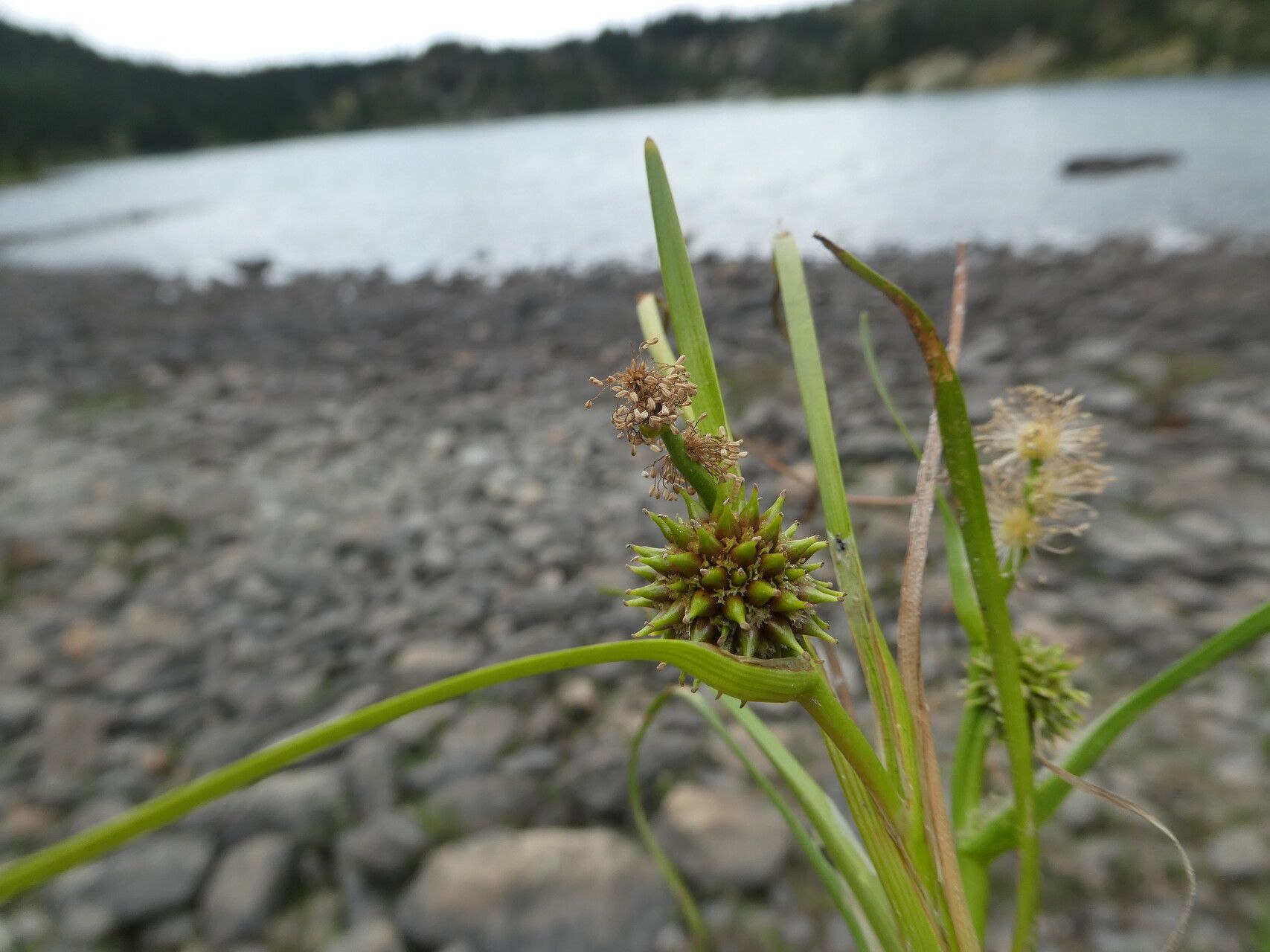
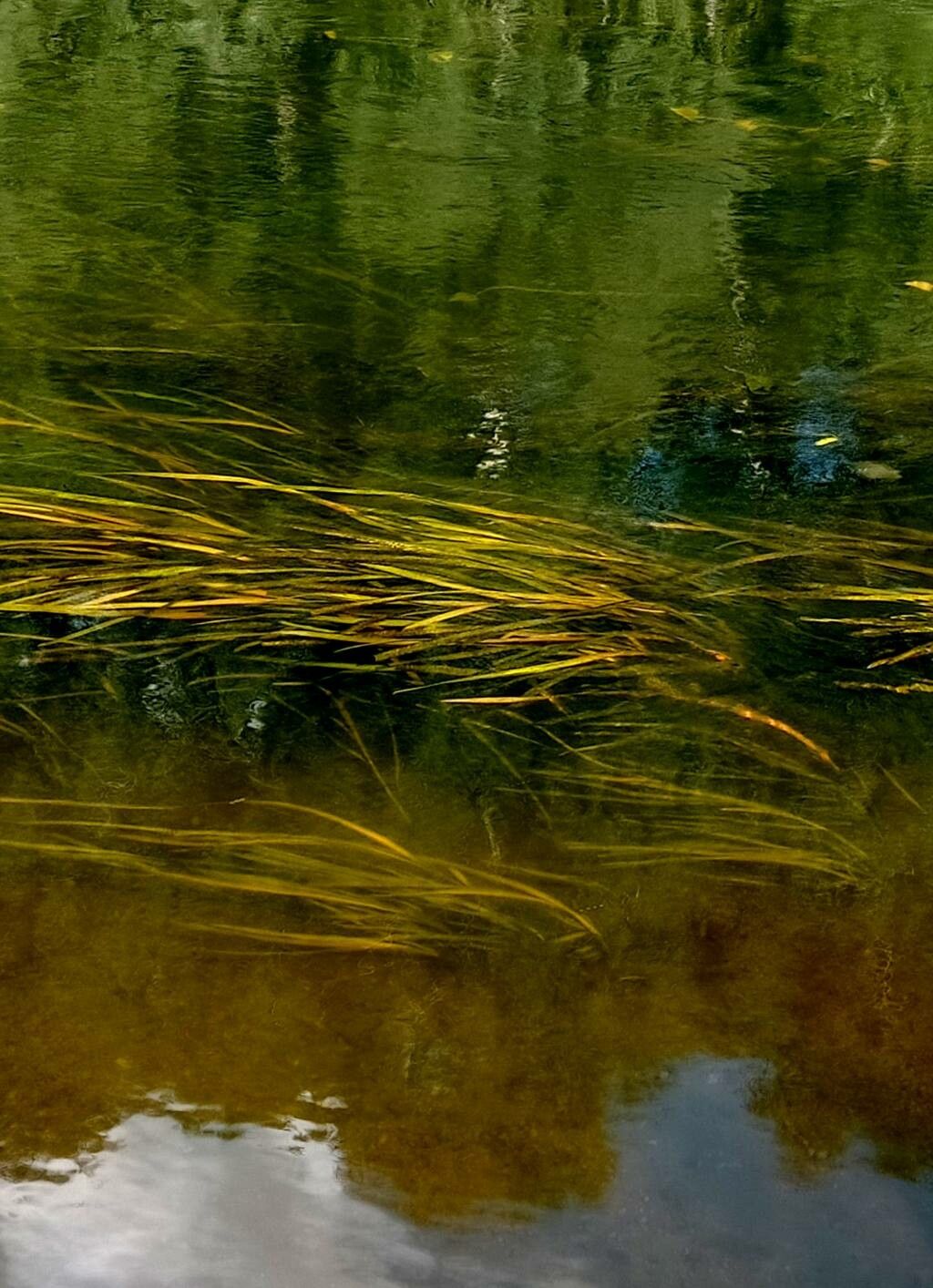
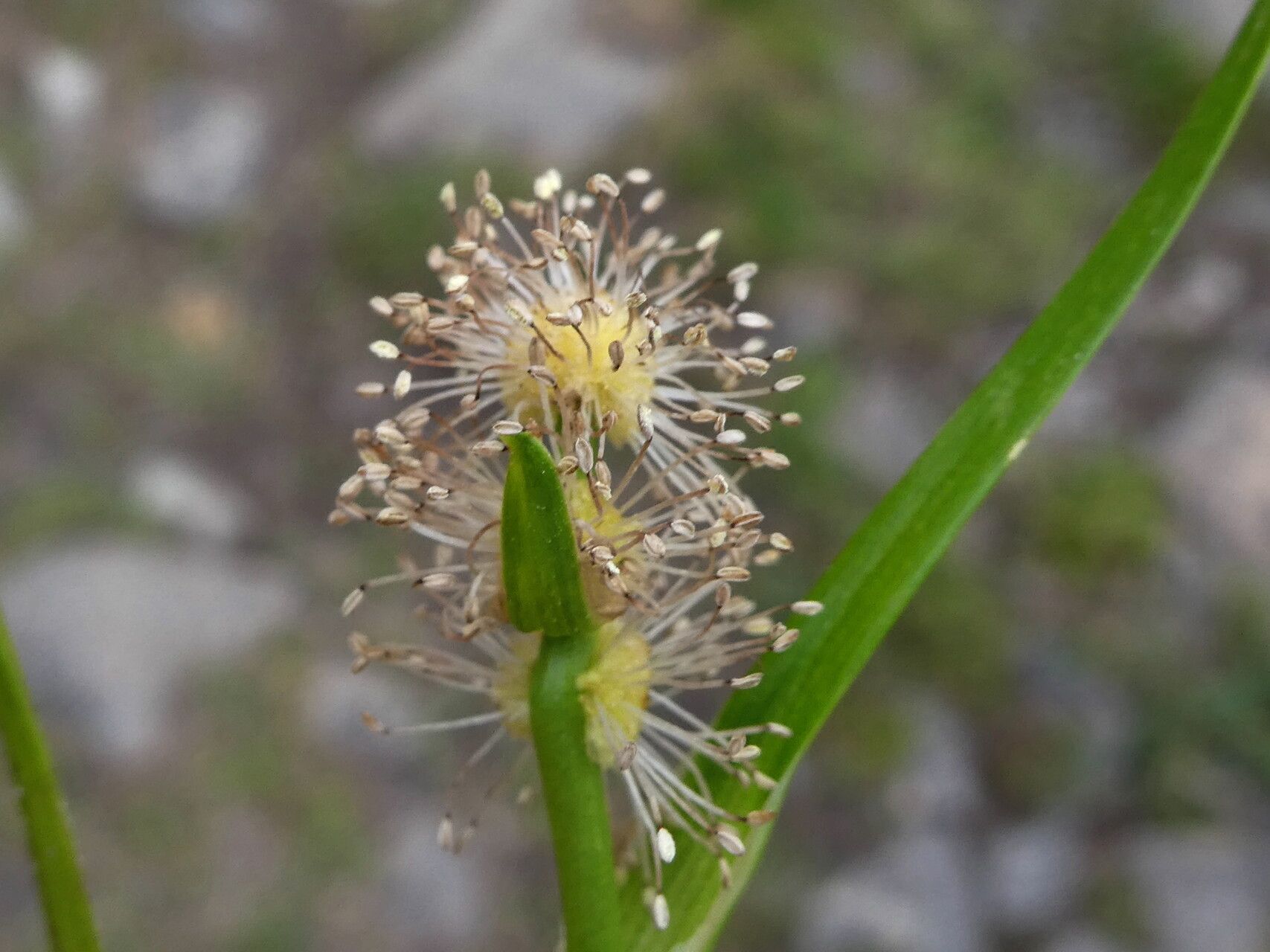
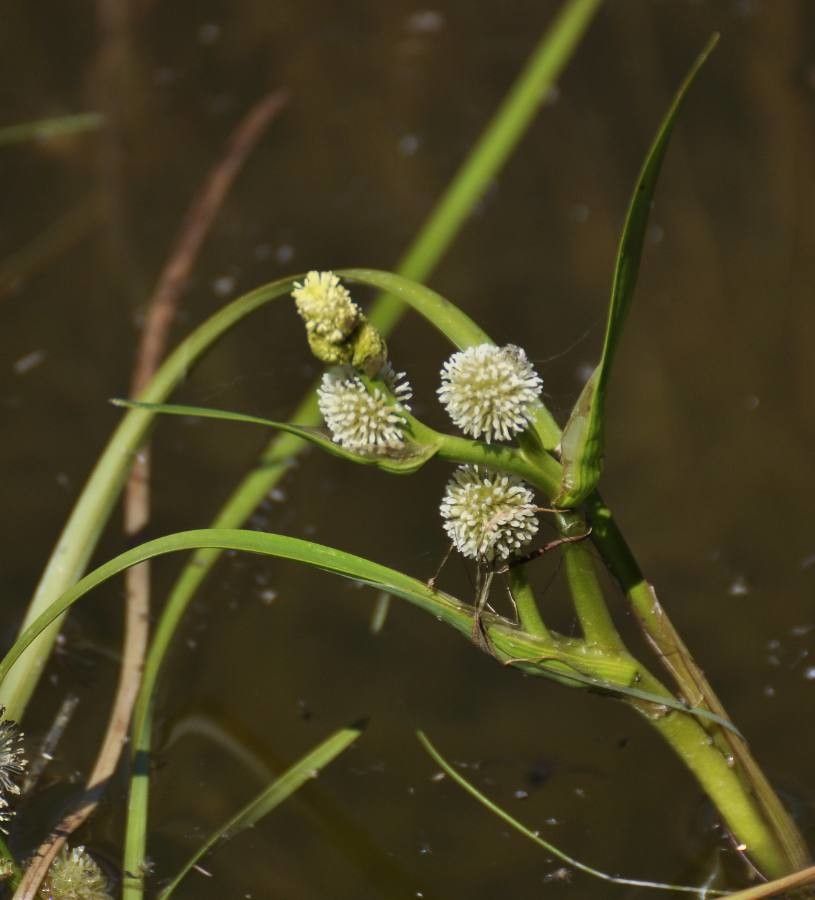
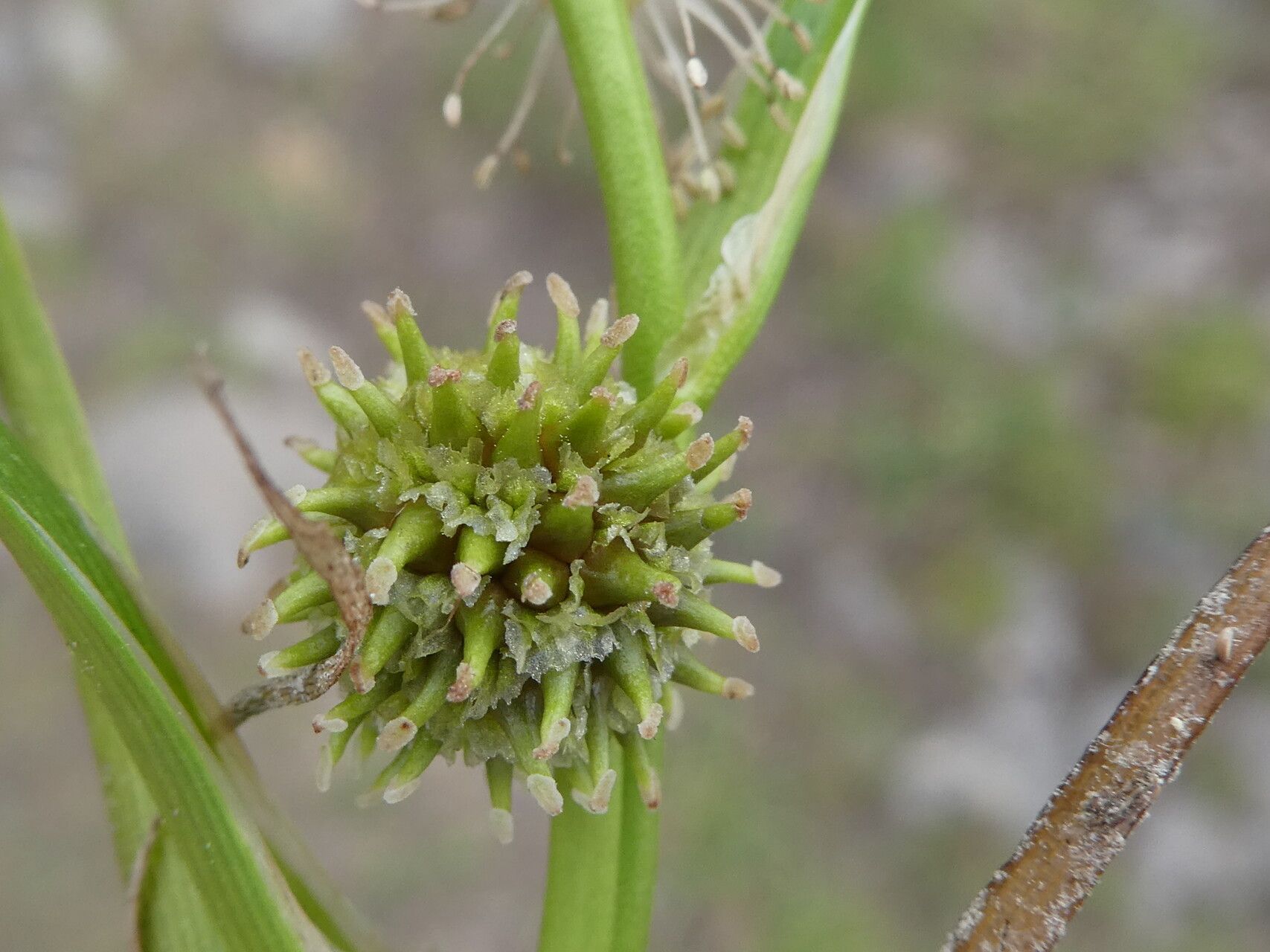
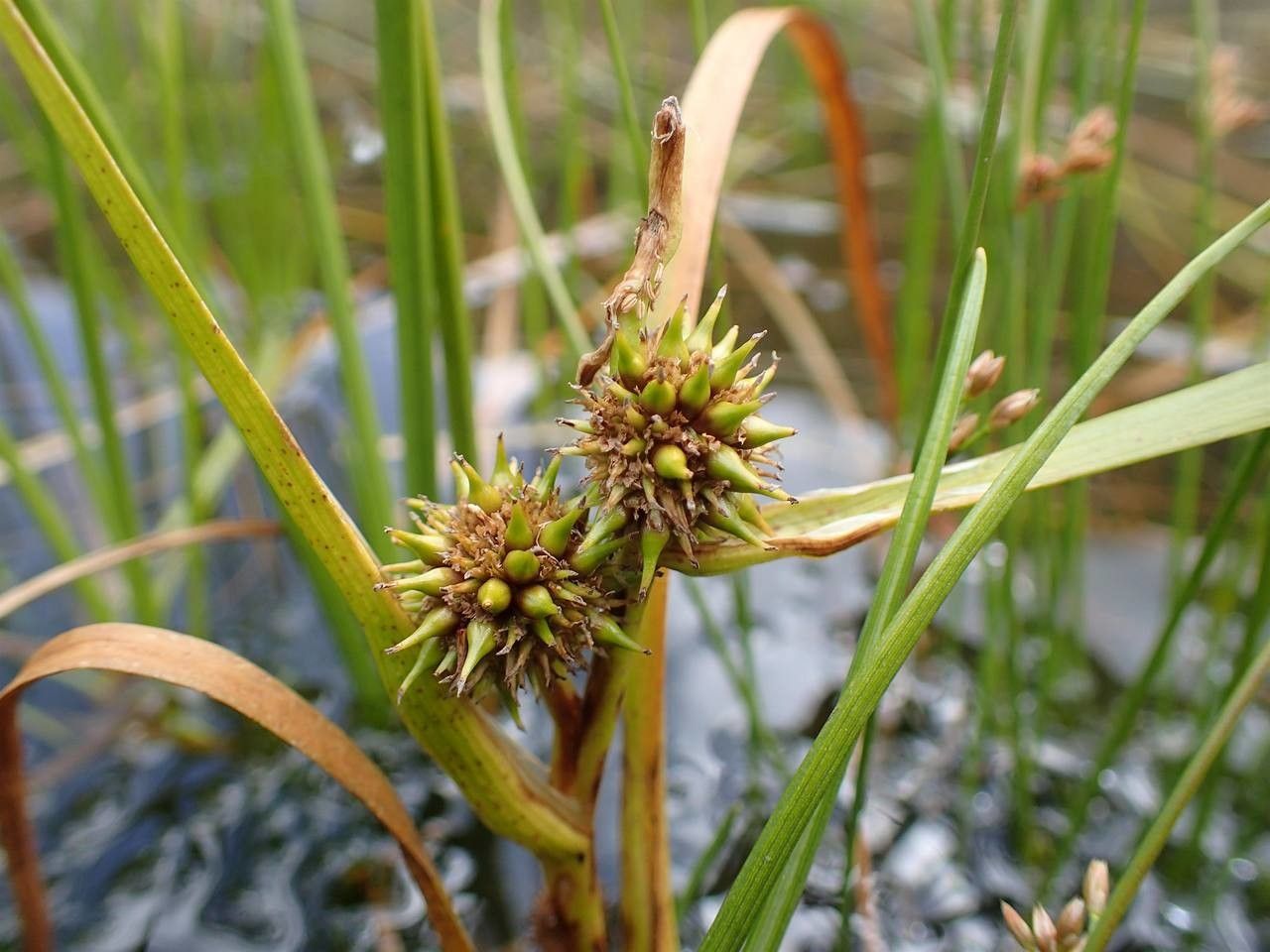
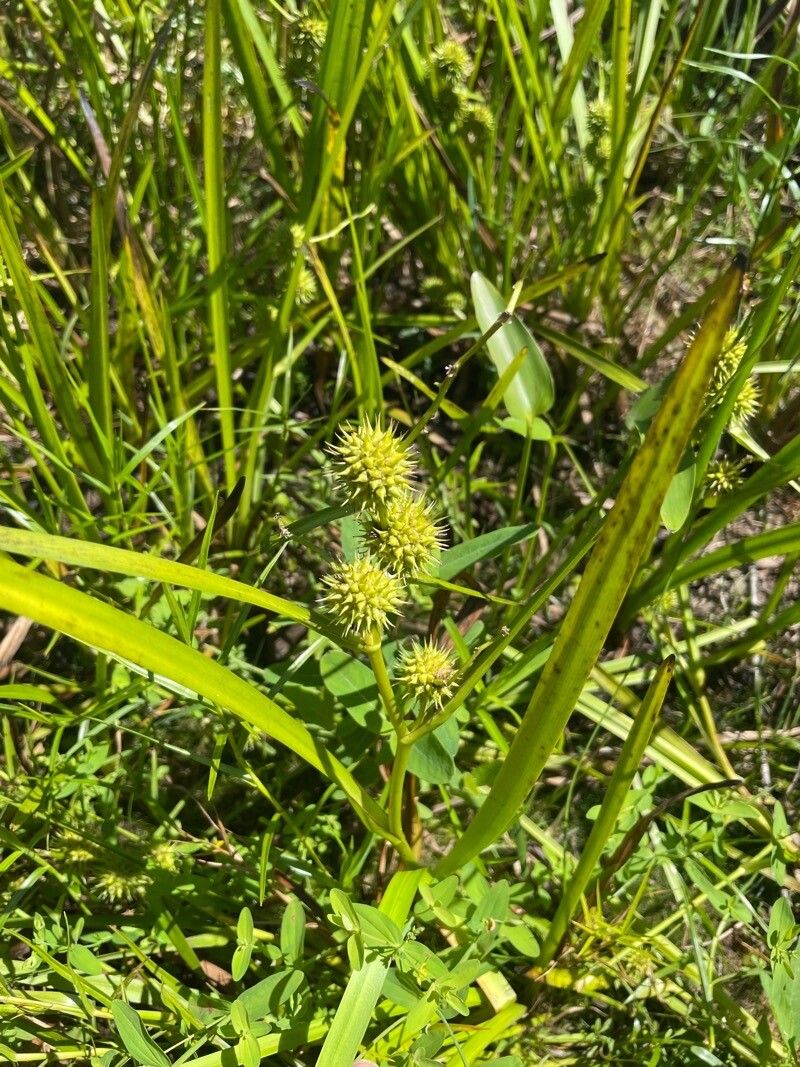
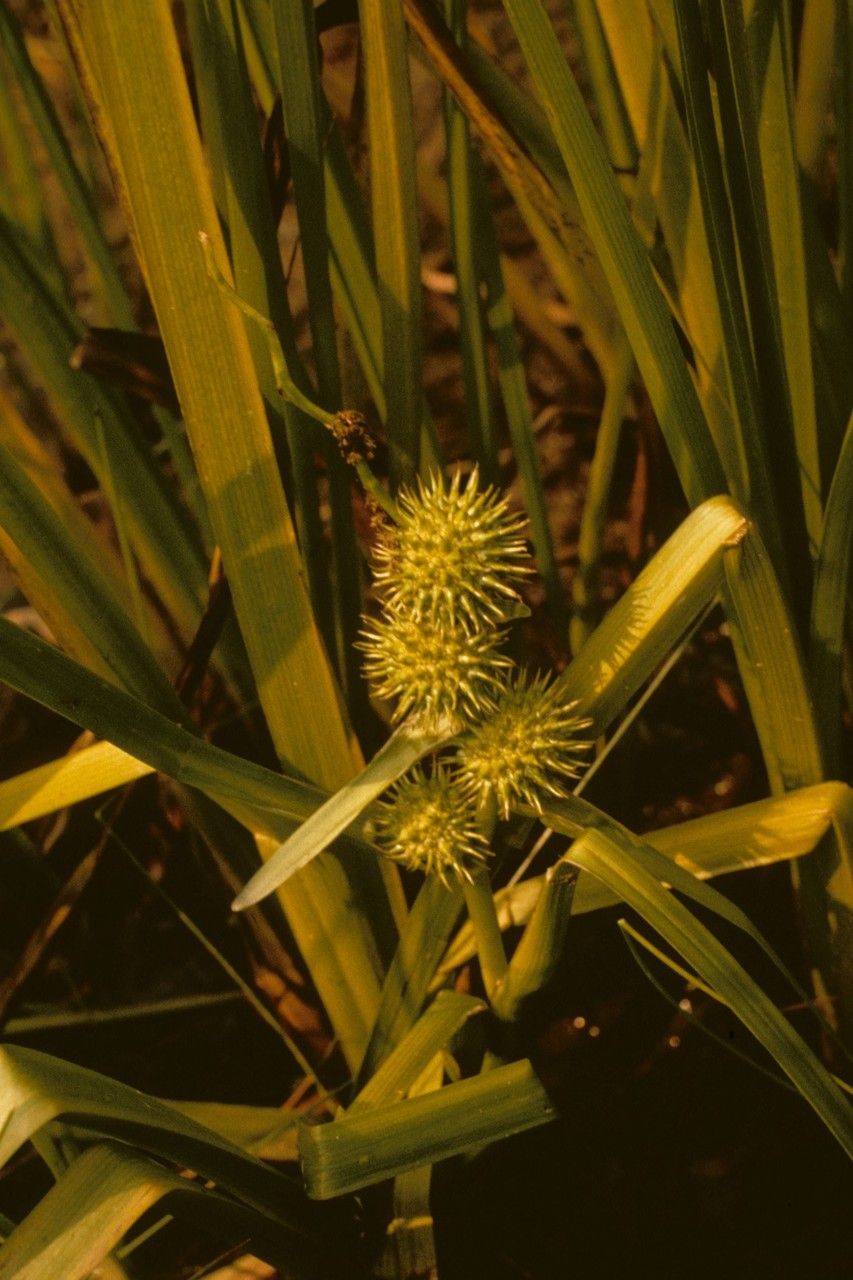
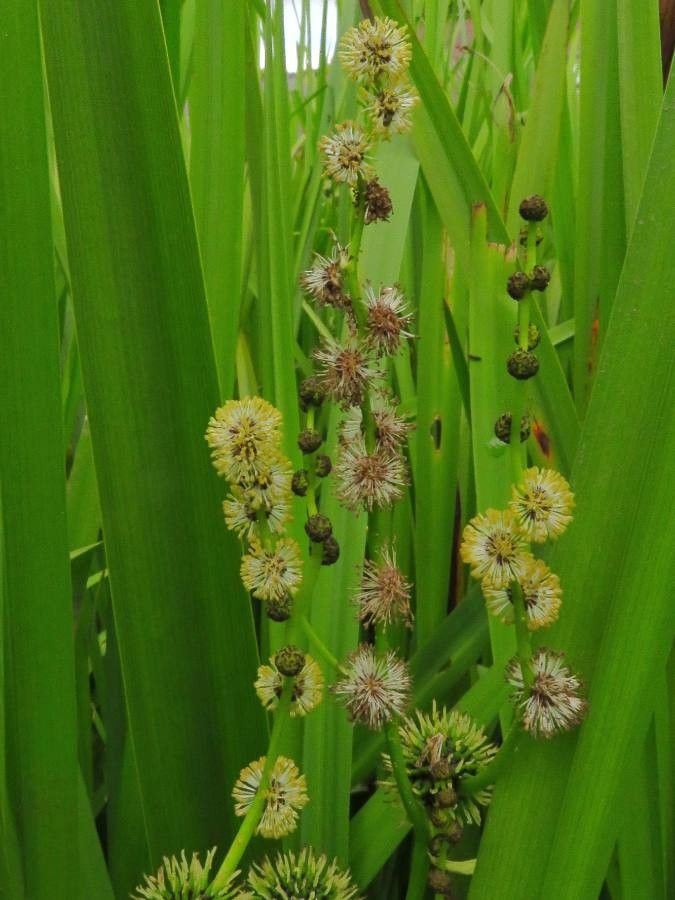
Sparganium angustifolium is a species of flowering plant in the cat-tail family known by the common names floating bur-reed and narrowleaf bur-reed. It has a circumboreal distribution, occurring throughout the northern latitudes of the Northern Hemisphere. It is an aquatic plant, growing in water up to 2.5 meters deep. Its habitat includes acidic, low-nutrient freshwater bodies such as ponds, lakes, slow-moving streams, and ditches. It can become abundant, practically covering the surface of the water. It is a perennial herb producing a floating stem with long, narrow, flattened leaves which can be quite long, sometimes reaching over two meters. It is monoecious, individual plants bearing both male and female inflorescences. These are spherical, the male inflorescence a ball of stamens and the female inflorescence a ball of developing fruits.
Narrowleaf bur-reed has strong disease resistance and typically is not prone to illnesses. Nevertheless, it can be affected by pests and diseases present in its environment. Such infections are generally minor. Regarding care, this plant requires moderate maintenance. It should be pruned regularly to preserve a tidy appearance and support healthy growth. Fertilizing can also encourage flowering. Narrowleaf bur-reed is well suited to anyone with outdoor space, like a garden or patio, and does not demand extensive care experience. It may need more attention when cultivated indoors.
How to keep Sparganium Angustifolium.
Light
Narrowleaf bur-reed comes from habitats with abundant sunlight, like the shallow margins of ponds and lakes. It prefers full sun, although it can also tolerate partial sun.
Water
Narrowleaf bur-reed, a plant native to wetland environments, thrives in consistently moist and saturated soils. It requires weekly watering to support its growth. As an aquatic species, narrowleaf bur-reed plays a vital role in purifying water by absorbing nutrients and pollutants, which helps to enhance the health of the ecosystem.
Temperature
Narrowleaf bur-reed comes from cooler regions and prefers temperatures between 32 and 70 °F (0 to 21 ℃). In very hot summers, water it more often and possibly provide some shade. In cold winters, ensure its roots are well protected.
Pruning
The Narrowleaf bur-reed is characterized by its slender, grass-like leaves and bur-like flower clusters. It's best to prune this plant from early to late spring, concentrating on removing any dead or damaged leaves to encourage healthy growth and prevent disease. Thinning out crowded stems can also enhance water flow and light penetration, which supports optimal development. Be sure to adjust your pruning practices based on the specific conditions of your garden.
Botanical profile.
- Plant Type
- Herb
- Life Cycle
- Perennial
- Genus
- Sparganium
- Family
- Typhaceae
- Hardiness Zone
- 1
- Mature Height
- 0.3 m to 1.07 m
- Mature Spread
- 20 cm to 49 cm
- Leaf Color
- Green
- Leaf Type
- Deciduous
- Flower Color
- Green, Brown
- Flower Size
- 0.51 cm to 0.76 cm
- Bloom Time
- Early summer, Mid summer
- Planting Time
- Spring, Summer
- Harvest Time
- Late summer, Early fall, Mid fall
- Native Area
- India, Sweden, Austria, Slovakia, Montenegro, Croatia, Belarus, Russia, Germany, Iceland, Estonia, Latvia, Belgium, Portugal, Netherlands, France, Czech Republic, Bulgaria, Poland, Greece, Serbia, China, Lithuania, Norway, Italy, Kazakhstan, Spain, Switzerland, Denmark, Japan, Finland, Albania, Ireland, United Kingdom
Other names.
Reader questions.
How should I water my Narrowleaf bur-reed plant?
To best care for the Narrowleaf bur-reed plant, it's recommended to water it with filtered water at room temperature or slightly warmer. Tap water may have harmful particles. This plant prefers warmer temperatures, so avoid using cold water, which can be a shock. Additionally, do not water from above, as it can cause problems with the leaves. Instead, thoroughly soak the soil with the filtered room temperature water. This helps moisten the roots and allows them to spread and absorb essential nutrients.
What are the sunlight requirements for Narrowleaf bur-reed?
Narrowleaf bur-reed (Sparganium angustifolium) is a sun-loving perennial herbaceous plant that thrives in full sunlight but can also tolerate partial sun conditions. Full sun is defined as receiving more than 6 hours of sunlight per day, while partial sun refers to about 3-6 hours of sunlight. It is important to monitor the movement of sunlight through your garden to ensure that plants like the Narrowleaf bur-reed get the right balance of light and shade for optimal growth.
What is the native climate for Narrowleaf bur-reed?
Narrowleaf bur-reed, scientifically known as Sparganium angustifolium, thrives in cooler climates. It grows best in temperatures ranging from 32 to 70 °F (0 to 21 °C). This plant is native to regions where the climate generally falls within these temperature ranges, making it well-suited for growth in cooler environments.
If I give my Narrowleaf bur-reed too much or too little water, what should I do?
Overwatering is a more common problem for Narrowleaf bur-reed, and it can cause wilting, yellowing, and diseases like root rot, mold, and mildew. Underwatering is less common, but it can make the leaves brittle and brown. It's important to recognize signs of overwatering early and reduce watering immediately. If the soil doesn't drain well, replace it with a loose, well-draining potting mix. If the plant isn't getting enough water, simply increase watering until the signs improve.
What are the effects of insufficient sunlight on Narrowleaf bur-reed?
Insufficient sunlight can lead to a range of issues for Narrowleaf bur-reed, including smaller new leaves, leggy or sparse growth, faster leaf drop, slower or halted new growth, lighter-colored new leaves, chlorosis (leaves turning yellow), sunscald, leaf curling, wilting, and leaf scorching. These symptoms indicate that the plant is not receiving adequate sunlight, affecting its ability to photosynthesize and grow healthily.
How should Narrowleaf bur-reed be cared for in hot and cold weather?
In the hot summer months, Narrowleaf bur-reed requires more frequent watering and may benefit from some shade to protect it from sizzling temperatures. Despite its high cold tolerance, during frosty winters, it's crucial to protect the roots by ensuring they are well-covered. Before the first freeze of autumn, watering the plant generously helps the soil stay moist and freeze, which is beneficial for preventing drought and water scarcity through the winter and into early spring.
How frequently do I need to water my Narrowleaf bur-reed?
To determine if your Narrowleaf bur-reed plant needs water, you can follow a simple method whether it is in a pot or grown outdoors. For potted plants, check the soil by sticking your finger into it. If the top two to three inches are dry, it's time to water. Similarly, for plants in the ground, check the soil in the same way. Once the top few inches are dry, it's time to water. Typically, in spring and early fall, watering once a week is sufficient. However, during extremely hot weather, you may need to water twice or more per week. It's worth noting that mature and well-established Narrowleaf bur-reed plants have good drought tolerance.
How can artificial lighting benefit indoor Narrowleaf bur-reed plants?
Artificial lighting can be vital for the growth of indoor Narrowleaf bur-reed plants, especially when natural sunlight is insufficient, such as in winter or less sunny spaces. LED lights are recommended as they can provide specific wavelengths needed by the plant. For full sun plants, 30-50W/sq ft of artificial light is advisable, while partial sun plants need 20-30W/sq ft, and full shade plants require 10-20W/sq ft. The light source should be placed 12-36 inches above the plant and turned on for 8-12 hours per day to mimic natural daylight hours.
What are the temperature thresholds for Narrowleaf bur-reed?
Narrowleaf bur-reed is extremely cold tolerant, able to withstand temperatures down to -45°C. However, temperatures below this can affect its ability to sprout in spring. On the other hand, the plant is not tolerant of high temperatures and ceases to grow when temperatures exceed 21°C, becoming more susceptible to rot at higher temperatures.
How much water does my Narrowleaf bur-reed require?
When watering your Narrowleaf bur-reed, don't hesitate to give it a generous amount of water. Make sure the first two to three inches of soil are dried out before watering, and then thoroughly water the plant until the soil is completely soaked. You should add enough water so that it drains out through the pot's drainage holes. If you don't see any excess water draining, you may not have watered enough, but be careful not to let water accumulate in the soil, as it can harm the plant. However, if there is no water draining from the pot, it could mean that the soil doesn't drain well, which is bad for the plant's health. If the plant is outside, 1 inch of rain per week is sufficient.
What solutions can address light deficiency for Narrowleaf bur-reed?
To address light deficiency in Narrowleaf bur-reed, gradually move the plants to sunnier locations, ensuring they receive at least 6 hours of direct sunlight daily. For indoor plants, use south-facing windows or invest in artificial grow lights. Outdoors, avoid sudden changes in sunlight exposure to prevent sunburn. Observing the environment for obstructions like trees and considering transplantation for smaller plants during their dormant period can also enhance sunlight access. Note that damaged parts may not recover, but new growth should be healthy with improved light conditions.
What should be done if Narrowleaf bur-reed is affected by extreme temperatures?
If Narrowleaf bur-reed experiences temperatures below its cold tolerance limit, with little to no sprouting observed in spring, affected parts should be removed. In case of exposure to high temperatures that cause the plant to stop growing and become susceptible to rot, any sunburned or dried-up parts should be trimmed away. The plant should be moved to a shaded location or protected with a shade cloth during the hottest parts of the day. Additionally, watering in the morning and evening can help keep the soil appropriately moist.