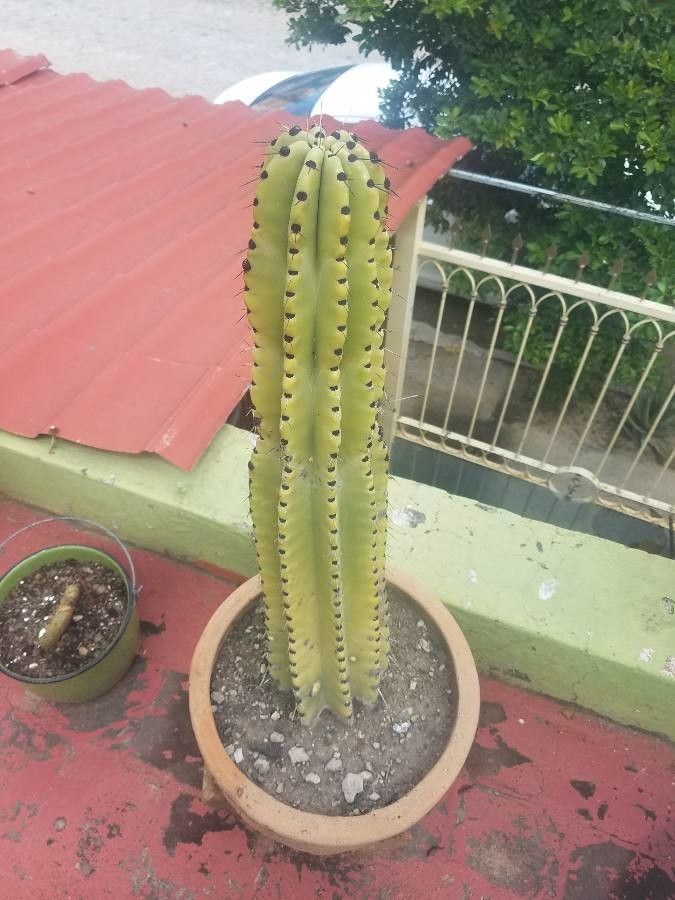
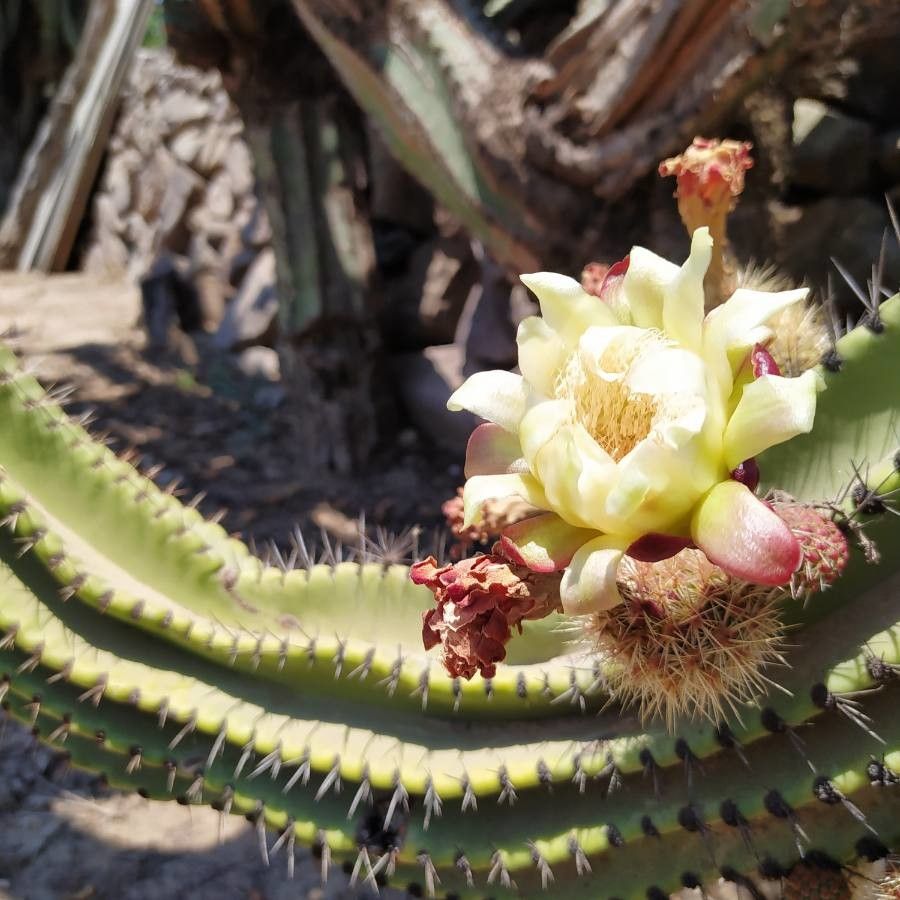
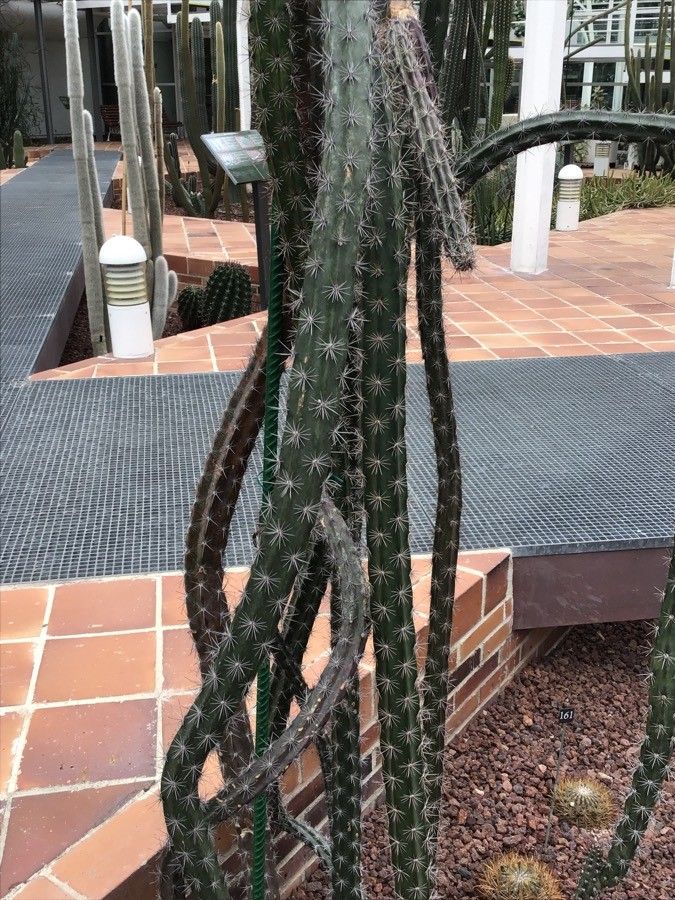
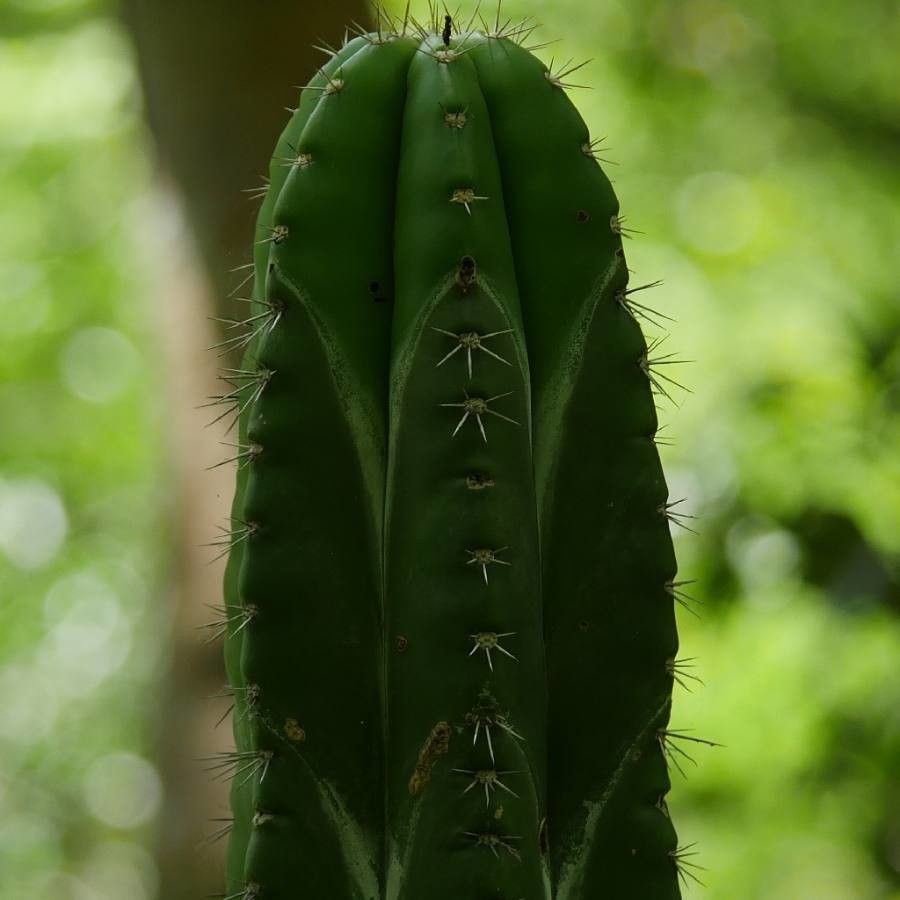
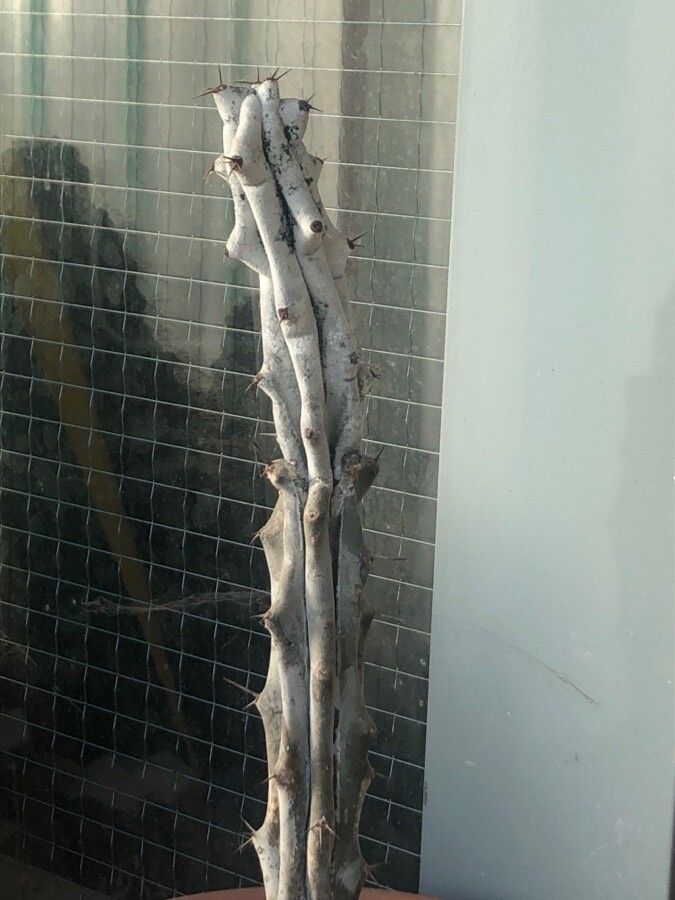
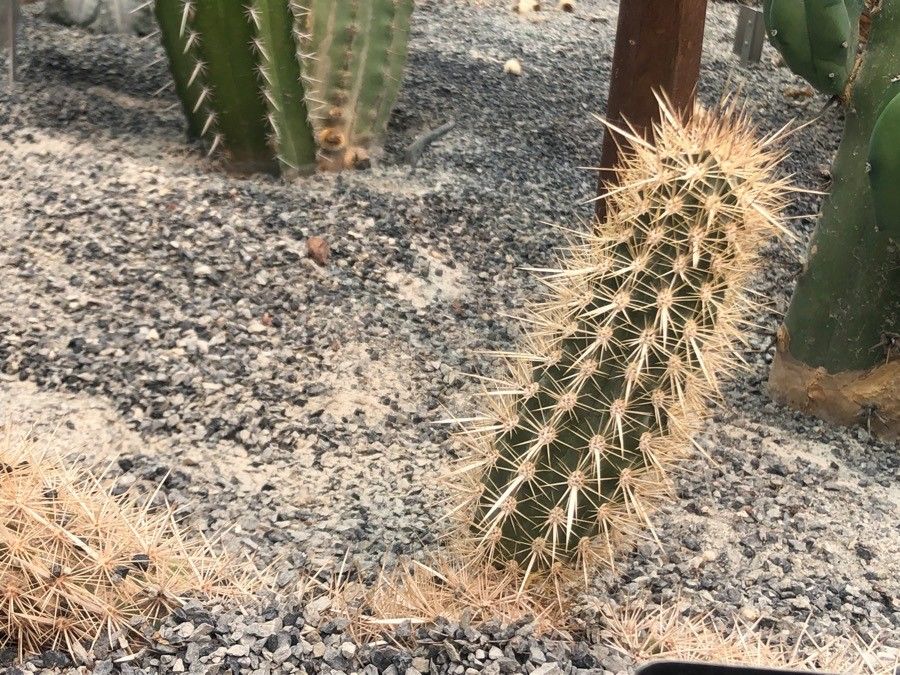
Stenocereus queretaroensis is a species of cactus from Mexico, including the state of Querétaro. It is cultivated for its fruit.Plants are tall, up to 5–6 m (16–20 ft), with a central trunk followed by many upturned branches, producing a candelabra-like shape. The stems are around 15 cm (6 in) across and have six to eight very distinct ribs. The areoles produce five to nine whitish radial spines, up to 2 cm (0.8 in) long, and one to four somewhat grayer central spines, of which the lower are longer, up to 4 cm (1.6 in). The scented white flowers are borne from the sides of the ends of the stems and are 10–12 cm (3.9–4.7 in) long.
Pitaya de Queretaro shows good resistance to diseases and tolerates normal care without becoming ill easily. That said, it can be vulnerable to mealybugs, which may cause some damage but are typically not a serious threat. Regarding care, Pitaya de Queretaro is drought-tolerant and does not need frequent watering. It can withstand long periods without water and requires little fertilizer. However, if light is poor and it is overwatered, it is highly prone to root rot. Overall, Pitaya de Queretaro is appropriate for people who prefer to spend less time caring for their plants, but it is important to know and meet its basic needs. It is especially well-suited for those who are often away for extended periods and might forget to water regularly.
How to keep Stenocereus Queretaroensis.
Light
Native to arid areas, Pitaya de Queretaro performs best in full sun; its native habitat is marked by intense sunlight and little shade. It can also tolerate partial sun, giving it some flexibility in its growth.
Water
Stenocereus queretaroensis is a drought-tolerant plant that requires thorough watering only when the soil is dry. During the growing season (spring to fall), water it once or twice a week. In winter, reduce watering to once a week. It is best to use rainwater or distilled water to prevent soil compaction and avoid splashing water on the stems.
Temperature
Pitaya de Queretaro prospera en ambientes cálidos y necesita temperaturas más altas durante la temporada de crecimiento para favorecer su desarrollo y metabolismo. Prefiere abundante luz solar, niveles de humedad adecuados y buena ventilación. Sin embargo, es vulnerable a daños por temperaturas demasiado bajas y por el exceso de riego. También es importante mantener un equilibrio y evitar temperaturas extremadamente altas y condiciones demasiado secas.
Fertilizer
For Pitaya de Queretaro, small amounts of fertilizer applied once or twice a year during the growing season are sufficient. Do not fertilize in winter or in summer when the plant is dormant. Use less fertilizer for repotted plants and wait a couple of months after repotting before applying fertilizer. Fertilizing supports healthy growth and promotes blooming.
Pruning
Stenocereus queretaroensis is a tall, columnar cactus native to arid regions. For best results, prune this plant in early spring to remove any damaged parts and improve airflow. Be sure to use sterilized tools and wear gloves while pruning. Regular and timely pruning helps manage the size and shape of the cactus and reduces the risk of breakage. For more specific care instructions, consult horticultural guides tailored to this species.
Botanical profile.
- Plant Type
- Succulent
- Life Cycle
- Perennial
- Genus
- Stenocereus
- Family
- Cactaceae
- Hardiness Zone
- 9-11
- Mature Height
- 3.05 m to 4.88 m
- Mature Spread
- 2.13 m to 3.05 m
- Leaf Color
- Green
- Leaf Type
- Evergreen
- Flower Color
- White
- Flower Size
- 7.62 cm to 10.16 cm
- Bloom Time
- Late spring, Early summer, Mid summer
- Planting Time
- Spring, Summer
- Harvest Time
- Mid summer, Late summer, Early fall
- Native Area
- Mexico
Reader questions.
What is Stenocereus queretaroensis?
Stenocereus queretaroensis, also known by its botanical name Stenocereus queretaroensis, does not have additional details provided regarding its essentials or symptoms. This entry is specific to the name and botanical identification of the plant but lacks further information on its characteristics or care needs.