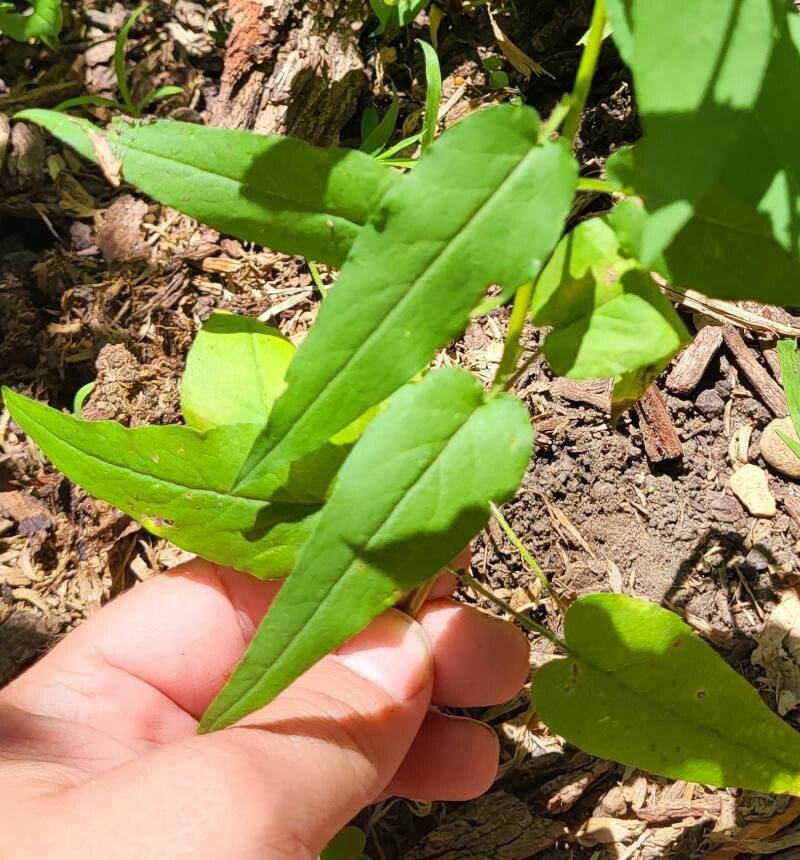
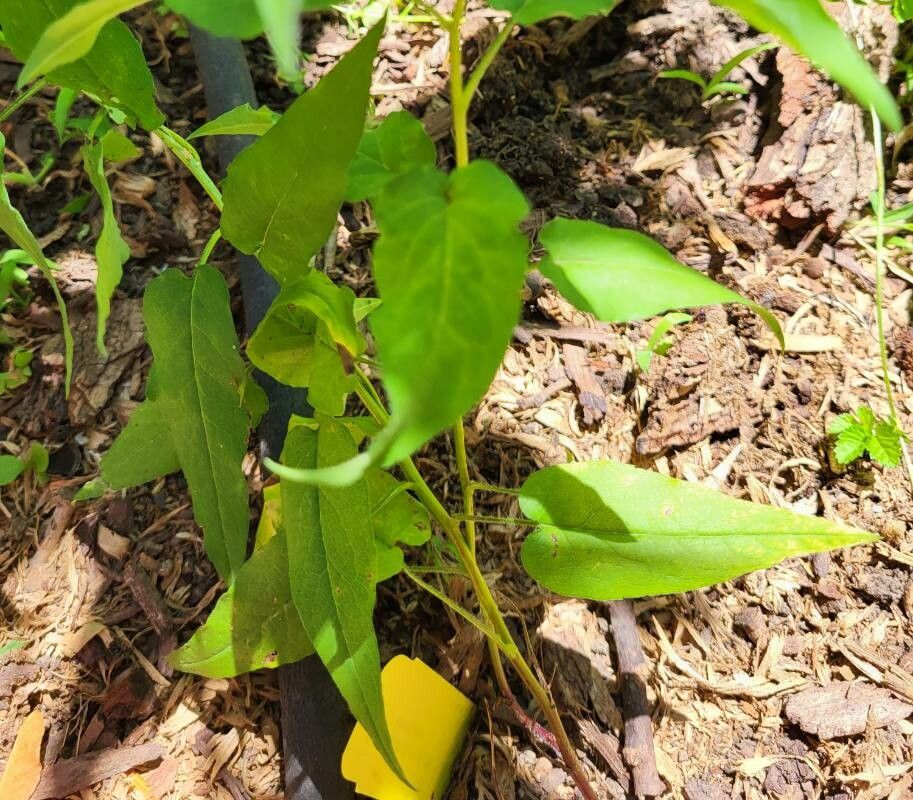
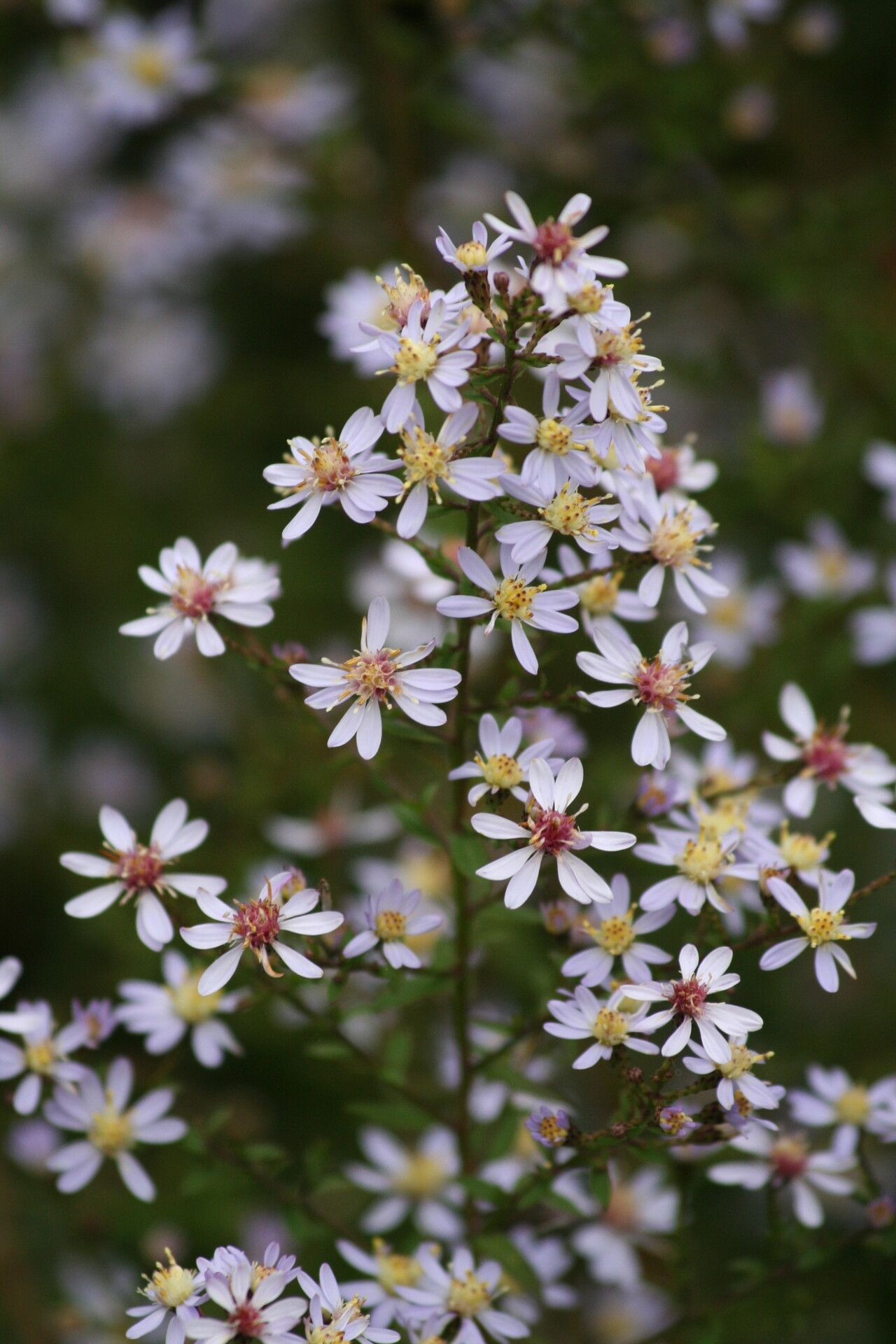
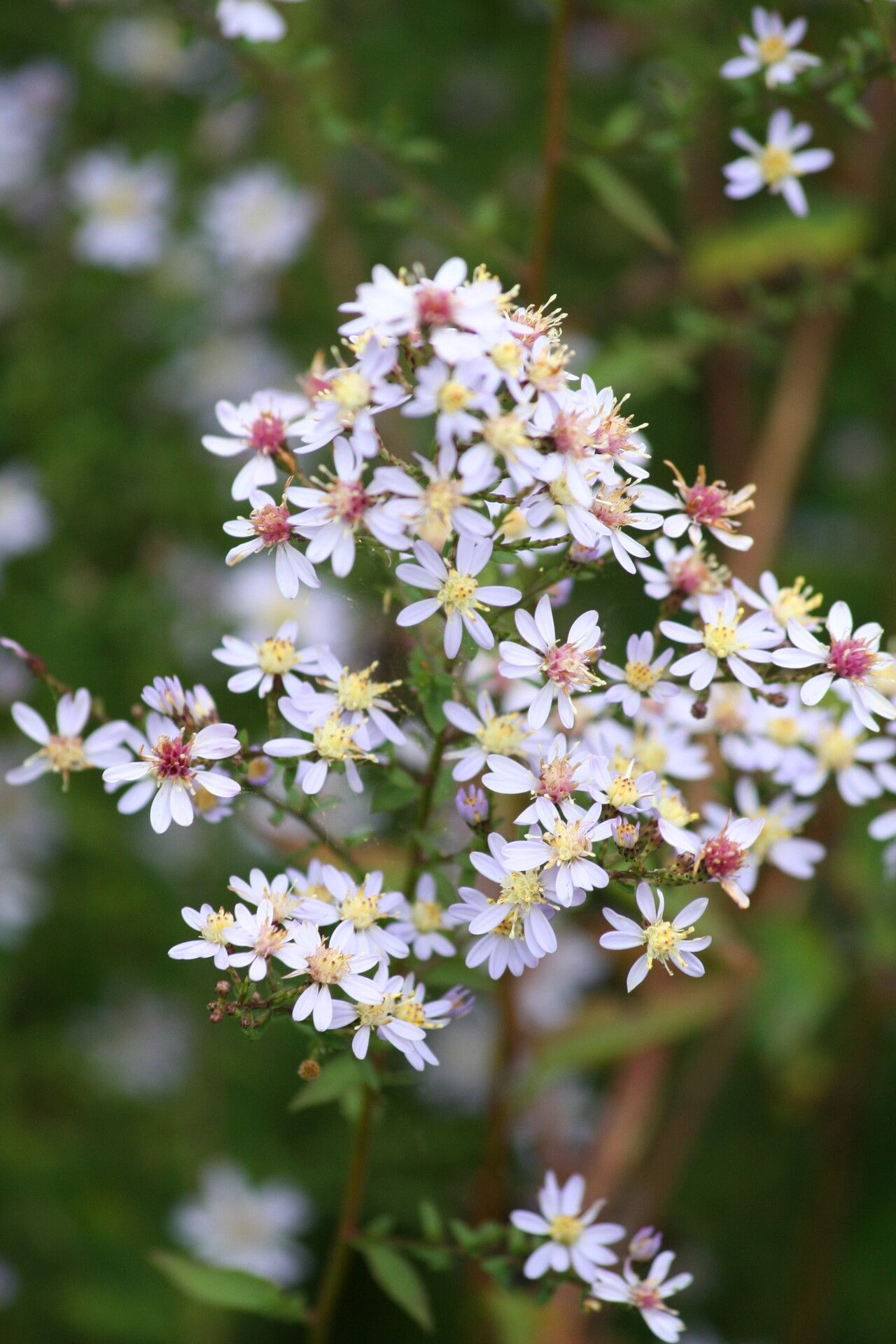
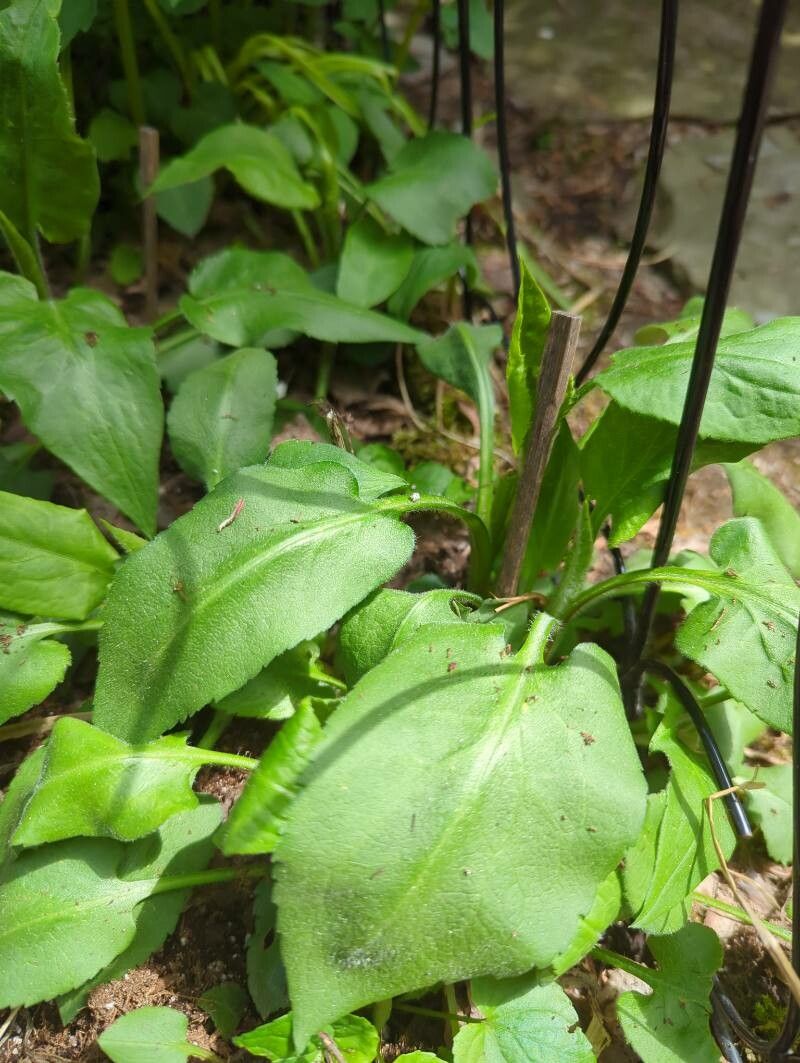
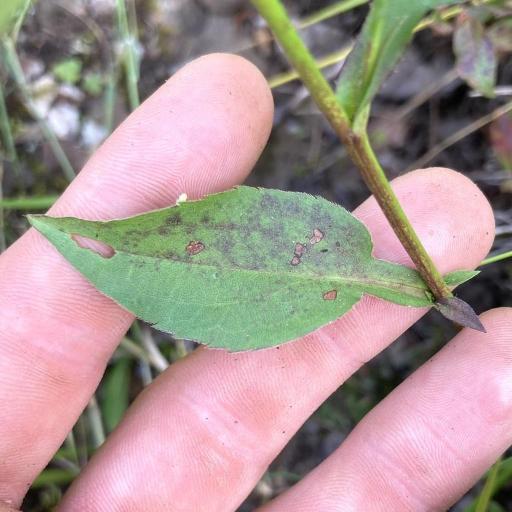
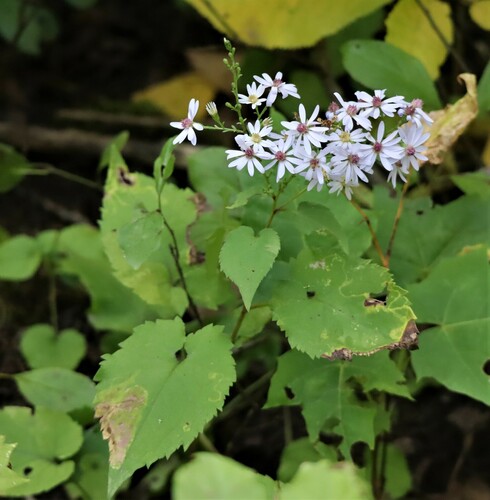
Symphyotrichum shortii (formerly Aster shortii), commonly called Short's aster, is a species of flowering plant in the family Asteraceae. It is native to North America, where it is primarily found in interior areas east of the Mississippi River. Its natural habitat is in thin rocky soils of woodlands and thickets often around limestone bluffs. It is common throughout much of its range, although it is generally restricted to intact natural communities.
Short's aster has strong resistance to disease and is generally unlikely to suffer from illnesses. However, it can be vulnerable to pests and diseases present in its environment. Such infections are typically mild. Regarding care, this plant needs moderate maintenance. It should be pruned regularly to preserve a neat appearance and encourage healthy growth. Applying fertilizer can also aid in boosting flowering. Short's aster is appropriate for anyone with an outdoor area, like a garden or patio, and does not demand extensive care experience. It may need more attention when cultivated indoors.
How to keep Symphyotrichum Shortii.
Light
Short's aster is naturally found in habitats like forest understories and rocky sites, where it exists under natural shade. It favors partial sun but can tolerate both full sun and deep shade, illustrating its adaptable, hardy character.
Water
Originating from moist prairies, Short's aster requires consistent moisture and is sensitive to drought. To maintain its lush foliage, it should be watered weekly. As a perennial herb, the vitality of Short's aster depends on regular watering that mimics its native rainfall patterns.
Temperature
Short's aster can tolerate a wide range of temperatures, but its distribution may still be restricted by different combinations of moisture and heat. It does best in warm summer climates with enough rainfall or watering. Long periods of cloudy, rainy weather or extended high temperatures can increase the risk of Short's aster dying. In winter, adequate protection from cold can enhance the plant's survival chances.
Fertilizer
The best time to fertilize a Short's aster is in early spring, as it is coming out of dormancy and starting active growth. Fertilizing supplies essential nutrients needed for healthy development. Although Short's aster has fairly low fertilizer requirements, applying fertilizer once a year can boost its survival and encourage better, longer-lasting blooms.
Pruning
Short's aster is a perennial plant with lavender-blue flowers, making it perfect for woodland gardens. For optimal growth and to maintain its shape, prune in early to late spring. Be sure to remove any dead foliage to improve air circulation. However, avoid heavy pruning in late summer to ensure you don't lose any blooms.
Botanical profile.
- Plant Type
- Herb
- Life Cycle
- Perennial
- Genus
- Symphyotrichum
- Family
- Asteraceae
- Hardiness Zone
- 4-8
- Mature Height
- 0.3 m to 1.22 m
- Mature Spread
- 49 cm
- Leaf Color
- Green
- Leaf Type
- Semi-evergreen, Deciduous
- Flower Color
- Lavender
- Flower Size
- 2.03 cm to 3.05 cm
- Bloom Time
- Late summer, Early fall, Mid fall
- Planting Time
- Spring, Summer
- Harvest Time
- Fall
Other names.