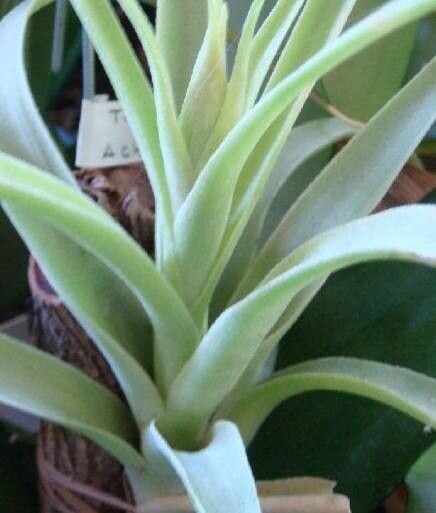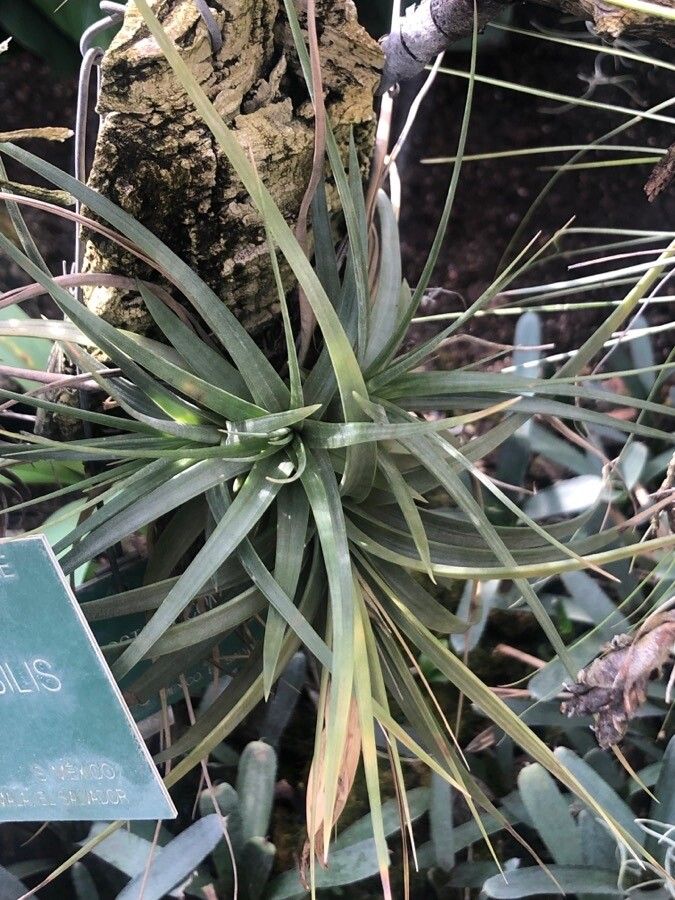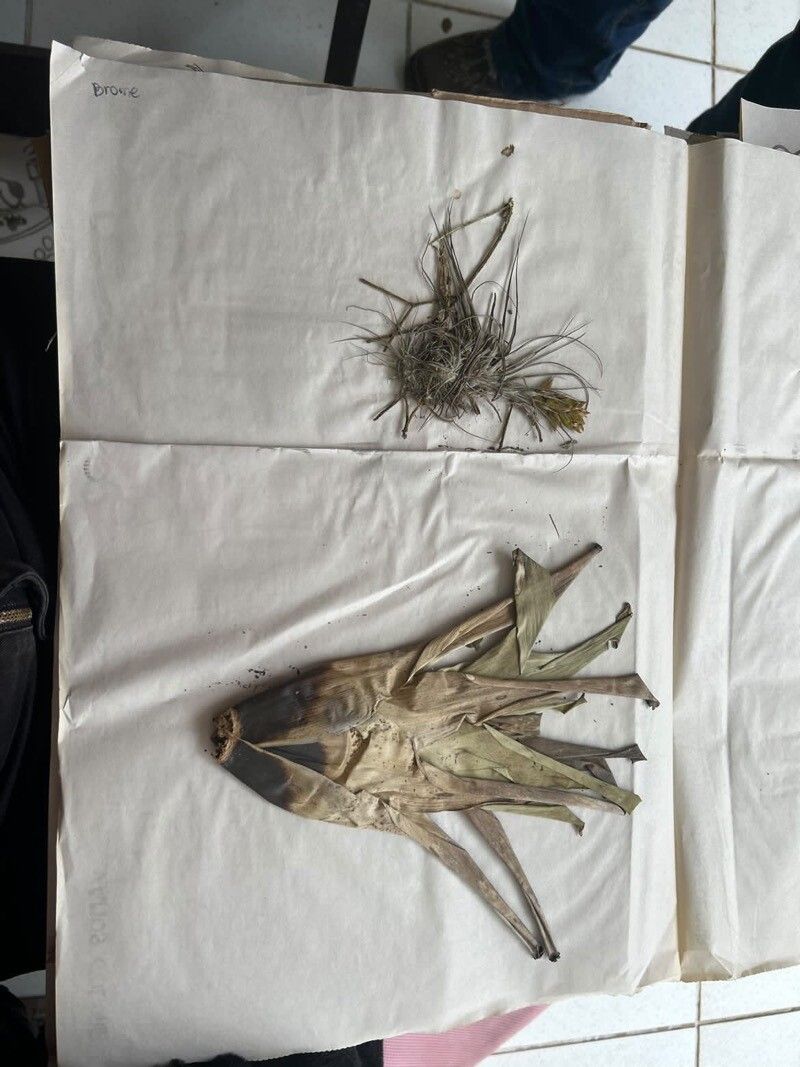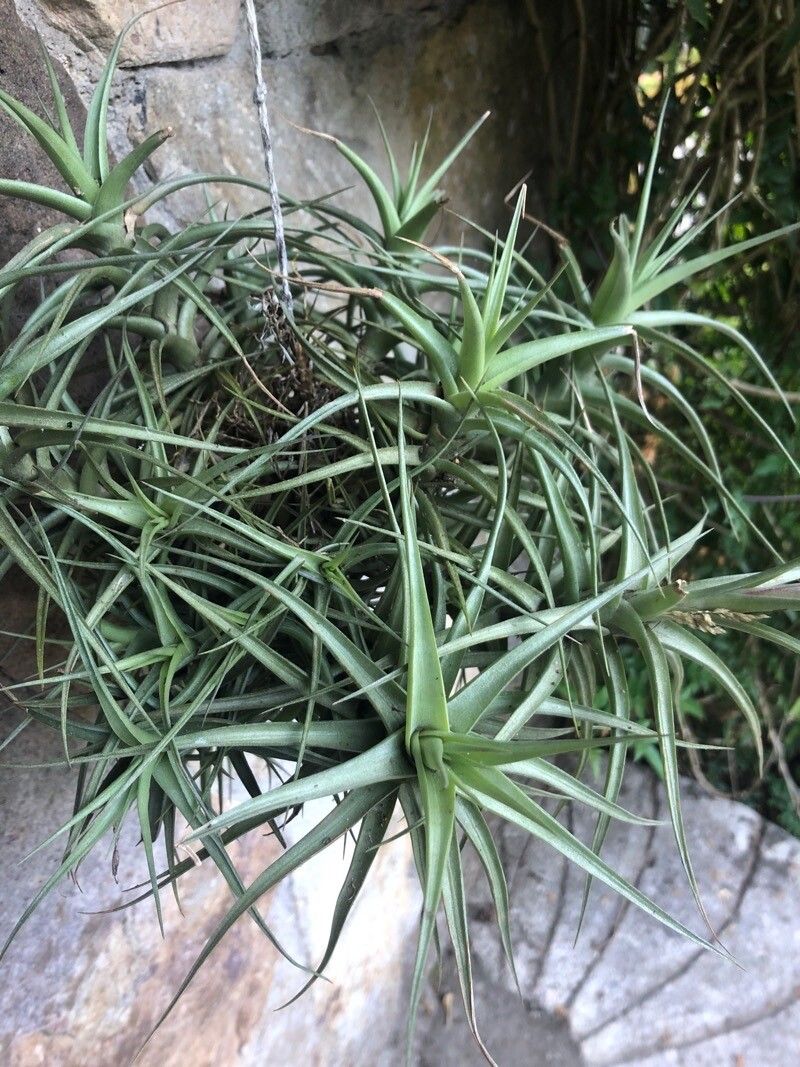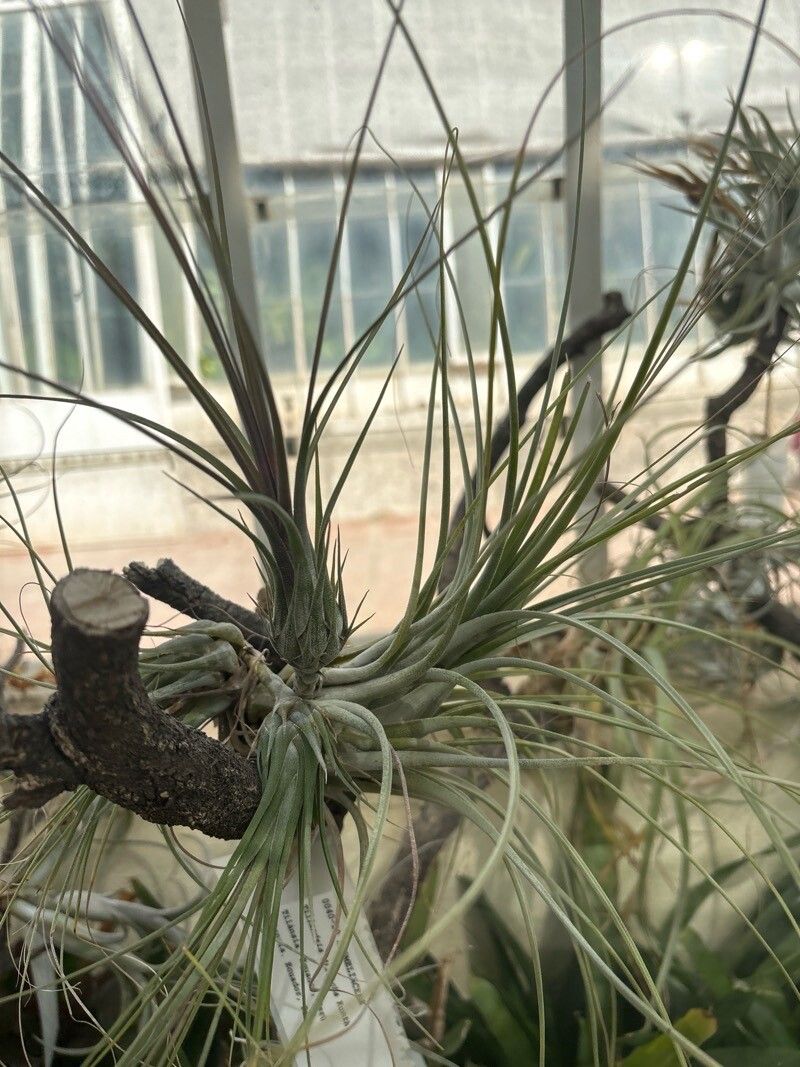
Southern needleleaf is generally resistant to disease and usually not affected by illnesses. However, if air circulation is poor it can become vulnerable to rot. Its care level is considered medium: it needs regular spraying to increase humidity and a small amount of fertilizer mixed into the water. This plant is best for people with some growing experience, because incorrect care over time can kill it, even when problems are not immediately obvious.
How to keep Tillandsia Disticha.
Light
Southern needleleaf comes from habitats such as forest understories that provide natural shade. It favors partial sunlight but can tolerate full sun if needed.
Temperature
Southern needleleaf grows best in warm conditions. If temperatures fall too low, the plant may stop growing or suffer frost damage. It tolerates high heat and humidity well and needs a steady level of moisture in its surroundings. Nevertheless, very high temperatures and humidity can make it prone to fungal infections. In dry environments, regular watering and misting are required to keep the air humidity sufficient. The plant is sensitive to abrupt temperature changes, so maintaining a fairly stable temperature is important.
Botanical profile.
- Plant Type
- Herb
- Life Cycle
- Perennial
- Genus
- Tillandsia
- Family
- Bromeliaceae
- Hardiness Zone
- 9-11
- Mature Height
- 10 cm to 20 cm
- Mature Spread
- 5 cm to 10 cm
- Leaf Color
- Green, Blue
- Leaf Type
- Evergreen
- Flower Color
- Purple, Lavender
- Flower Size
- 1.02 cm to 2.03 cm
- Bloom Time
- Summer
- Planting Time
- Summer, Autumn
- Harvest Time
- Late summer, Early fall, Mid fall
- Native Area
- Guatemala, Cuba, Jamaica