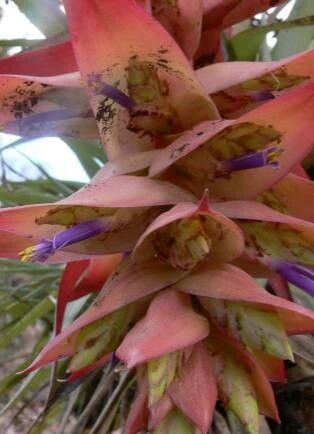
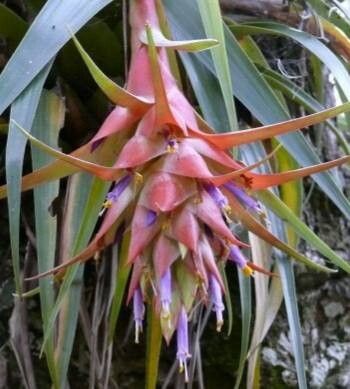
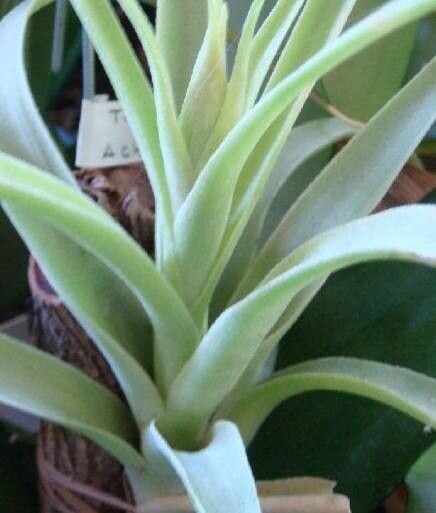
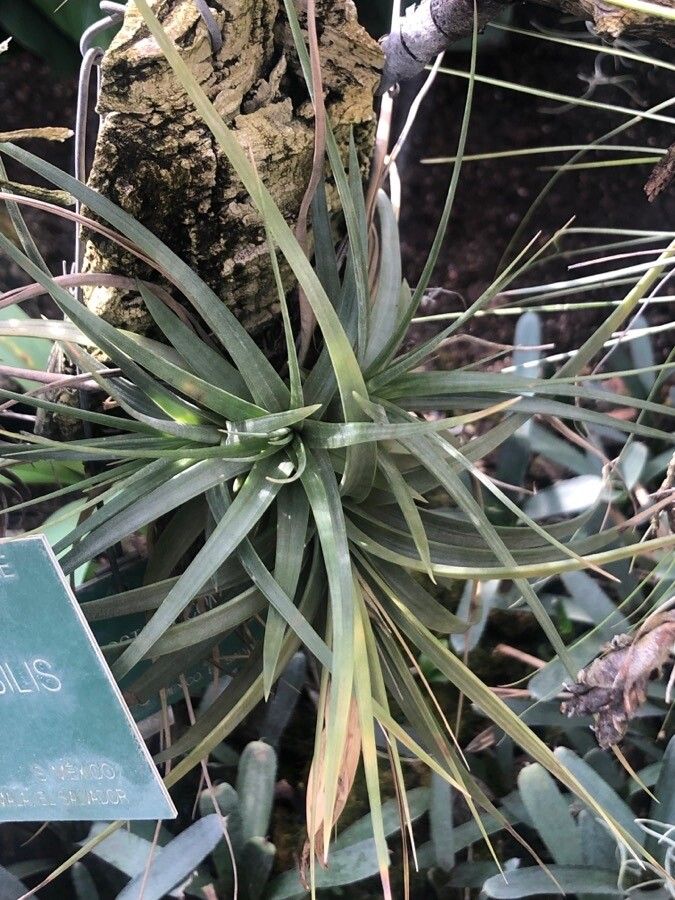
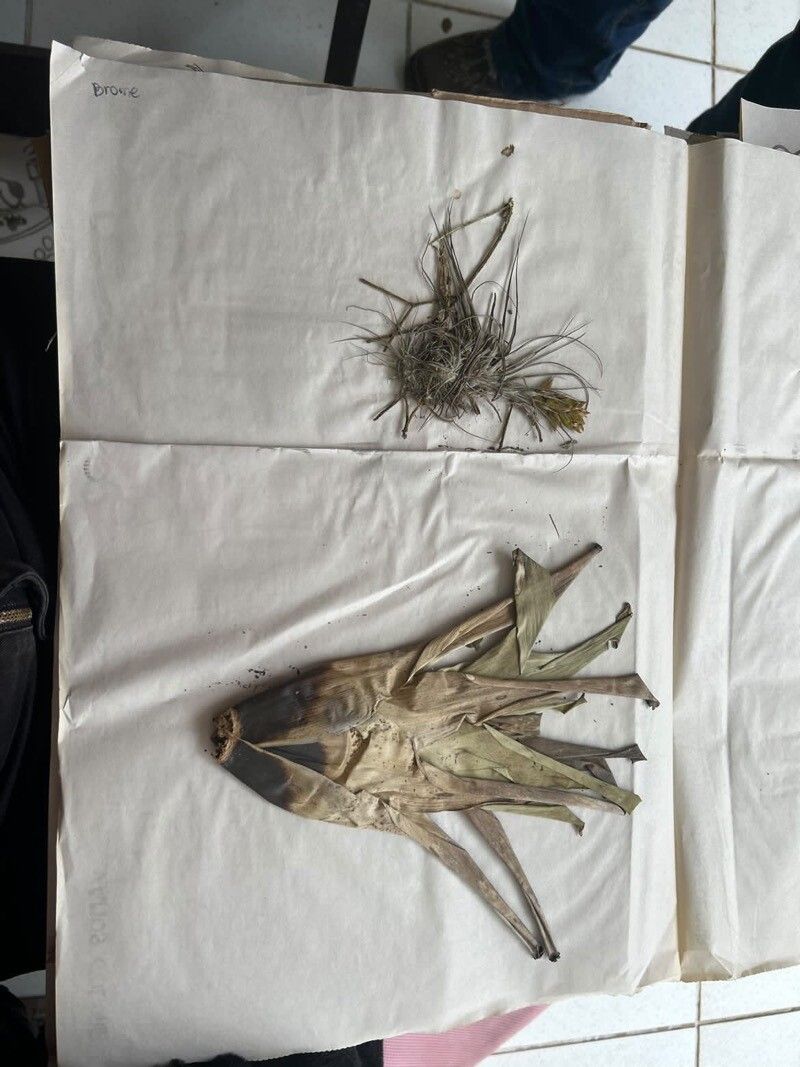
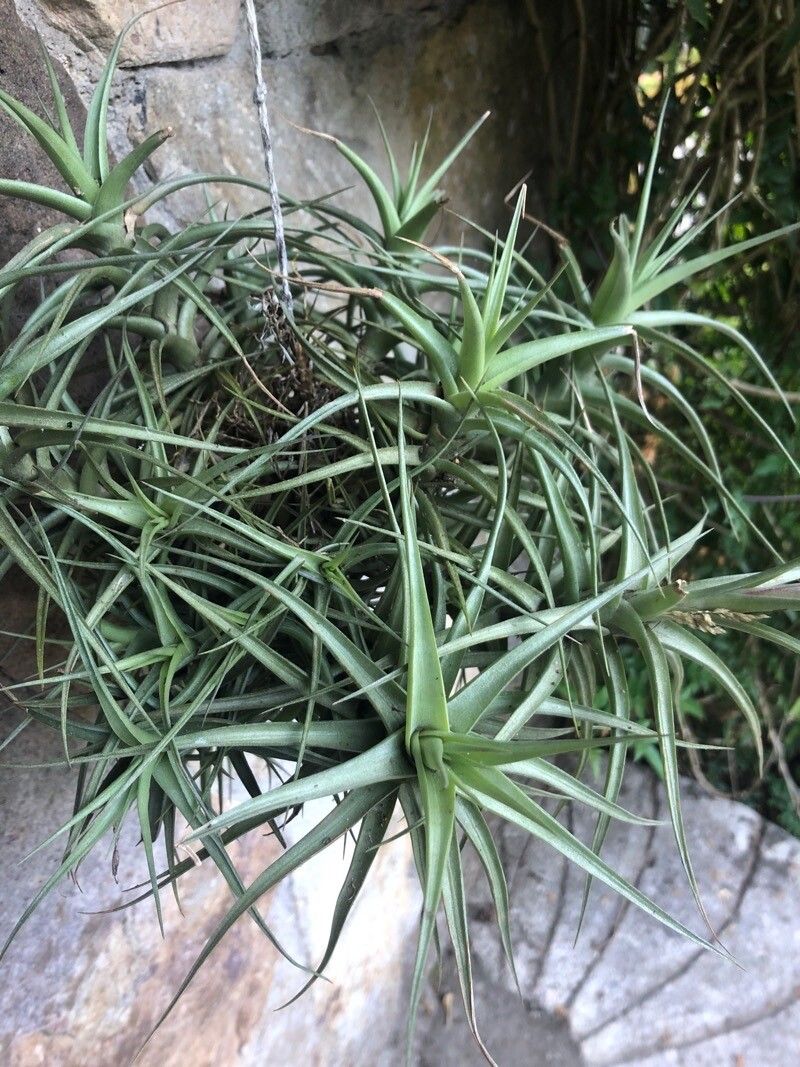
Tillandsia violacea is a species of epiphytic flowering plant in the Bromeliaceae family. It is endemic to Mexico, particularly to the Central Mexican Plateau. This species' habitat is at elevations between 600 and 3,100 meters, and is epiphytic to large trees in humid temperate forests, primarily the species abies religiosa, quercus rugosa, and quercus laurina. In particular, it is a common epiphyte of the temperate pine forests of Hidalgo state, including El Chico National Park. Its range extends to the states of Guerrero, Jalisco, state of Mexico, Michoacán, Morelos, Oaxaca, and Veracruz. Due to its high-elevation habitat, this bromeliad species has tolerance to sub-freezing conditions.
Tillandsia biflora has moderate disease resistance but is fairly sensitive to humidity and overwatering. It is also more prone to disease when kept in low light and overwatered. Regarding care, Tillandsia biflora is drought-tolerant and can withstand long stretches without watering. It needs little fertilizer and only occasional pruning. Because of this, it is suitable for people at any experience level, particularly those who prefer to spend less time on plant care and who may sometimes be away from home for extended periods. It is a good option for those who do not want to devote a lot of time to plant care but still want a plant that is easy to maintain.
How to keep Tillandsia Violacea.
Light
Tillandsia biflora comes from habitats with dappled light, such as the understory of forests or rocky areas that provide natural shade. It favors partial sun but can also tolerate full sun.
Water
To keep your Tillandsia violacea adequately moisturized, you can either soak or mist the plant, ensuring that water does not accumulate between the leaves. After watering, tilt or gently shake the plant to prevent rot. If you notice the leaves curling, it's a sign that the plant is not getting enough water and needs to be soaked immediately for recovery.
Temperature
Tillandsia biflora prefers warm conditions. If temperatures fall too low, growth can halt or the plant may suffer frost damage. It tolerates high heat and humidity well and needs a steady level of moisture in its environment. However, excessively high temperature and humidity can make it prone to fungal infections. In dry conditions, regular watering and misting are needed to keep the surrounding air adequately humid. The plant is sensitive to abrupt temperature changes, so maintaining a relatively stable temperature is important.
Pruning
To keep Tillandsia violacea healthy and encourage new growth, it's beneficial to prune it in early spring. Removing dead leaves at this time enhances the plant's health. Be sure to use clean tools to prevent infections. This practice also helps improve airflow and light penetration. Regular pruning not only aids in controlling the plant's size but also enhances its appearance. As a result, you'll support vigorous growth and flowering, leading to a vibrant and healthy plant.
Botanical profile.
- Plant Type
- Herb
- Life Cycle
- Perennial
- Genus
- Tillandsia
- Family
- Bromeliaceae
- Hardiness Zone
- 10-12
- Mature Height
- 20 cm to 30 cm
- Mature Spread
- 15 cm to 25 cm
- Leaf Color
- Light Green, Silver
- Leaf Type
- Evergreen
- Flower Color
- Lavender
- Flower Size
- 2.03 cm to 3.05 cm
- Bloom Time
- Summer
- Harvest Time
- Late summer, Early fall, Mid fall
- Native Area
- Colombia, Bolivia, Venezuela, Peru, Nicaragua, Ecuador, Costa Rica, Panama
Reader questions.
What are the sunlight requirements for Tillandsia violacea?
Tillandsia violacea, also known by its botanical name Tillandsia violacea, thrives in conditions that provide a balance of light and shade. It requires partial sun, meaning about 3-6 hours of sunlight daily. For areas that are in full shade, less than 3 hours of sunlight is needed. It's important to observe the way sunlight moves through your garden over the course of the day. This observation will help you in choosing the optimal spots that fulfill the plant's need for the perfect balance of light and shade, ensuring its health and happiness.