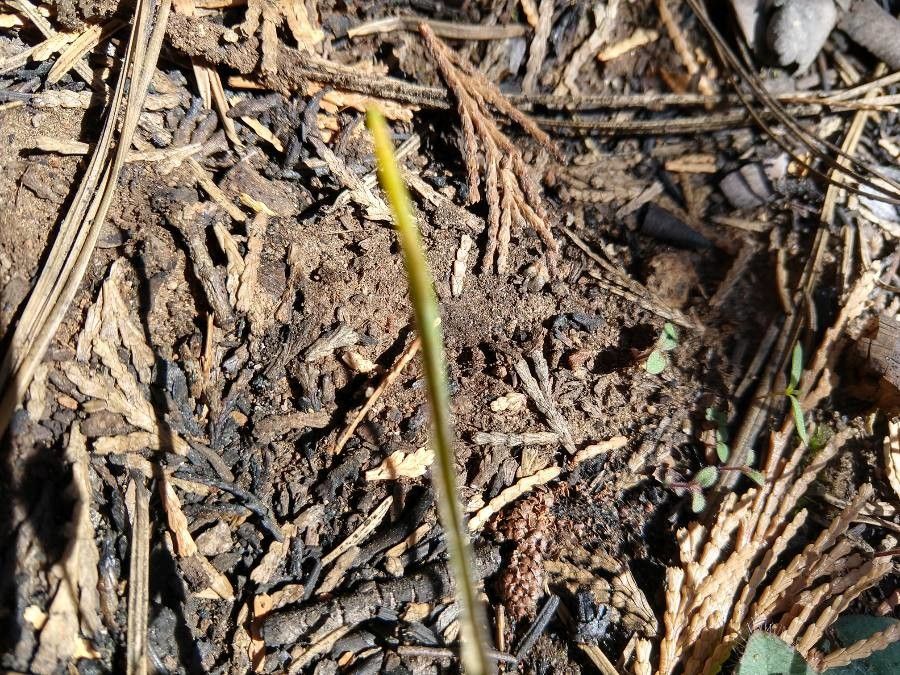
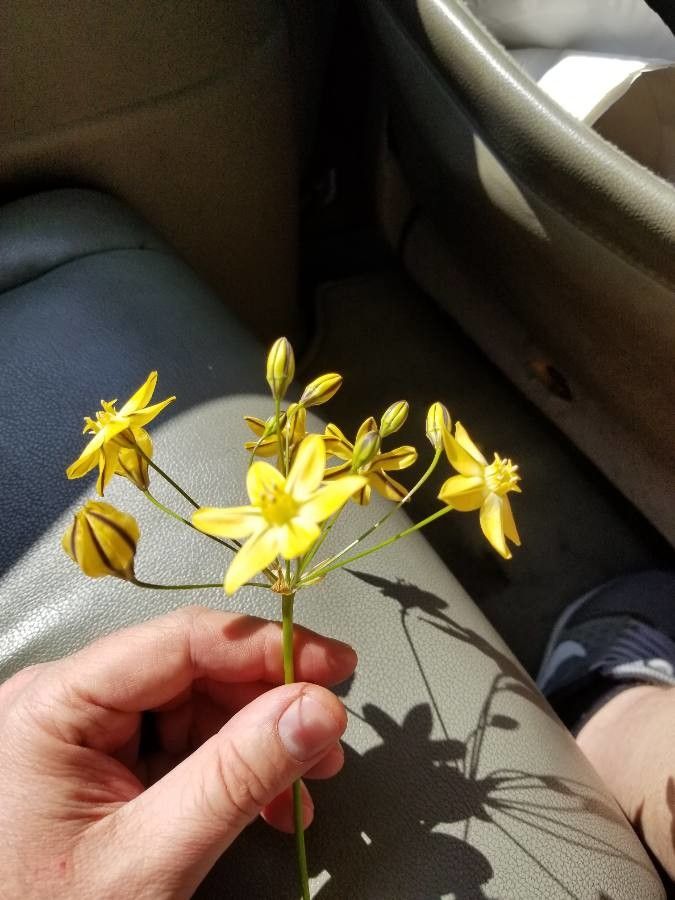
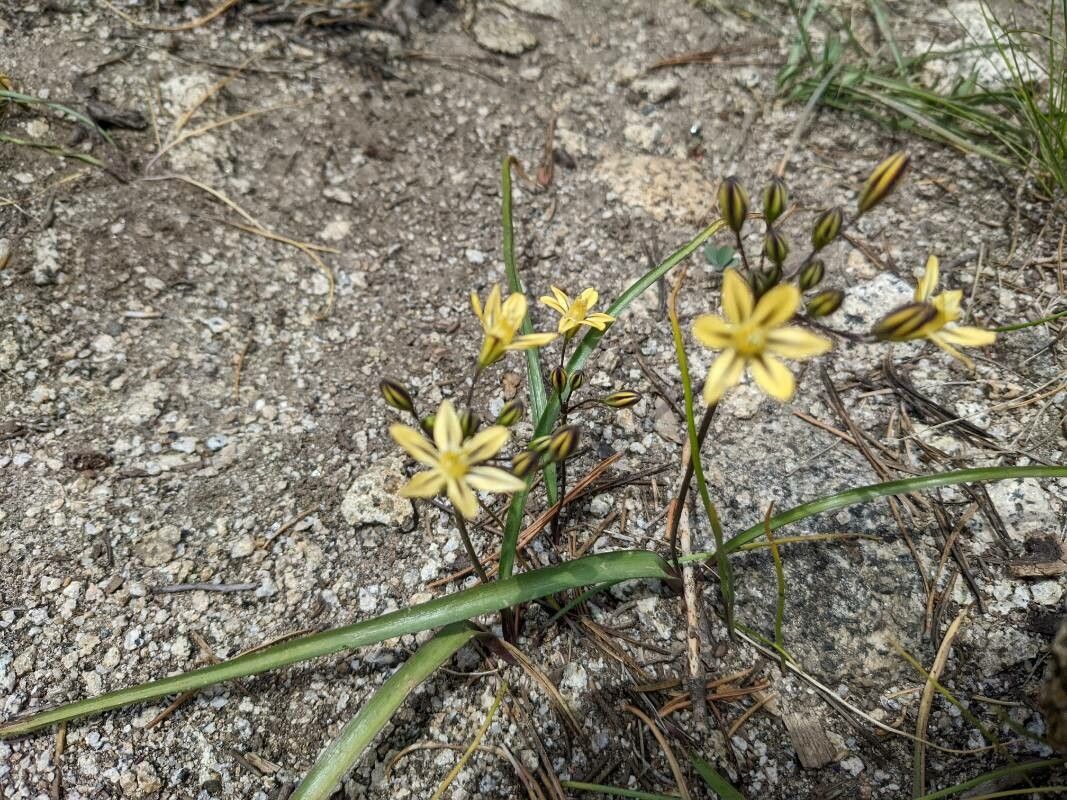
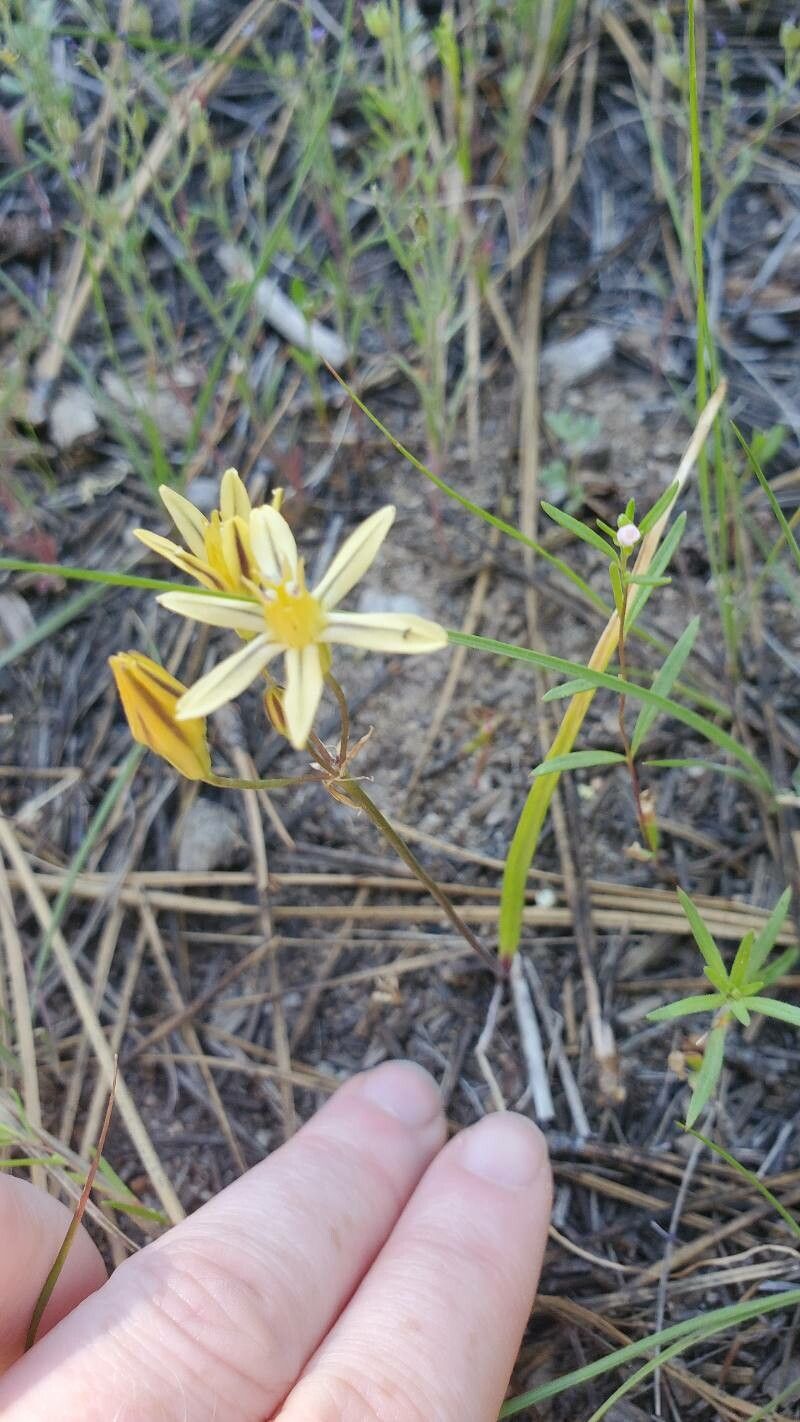
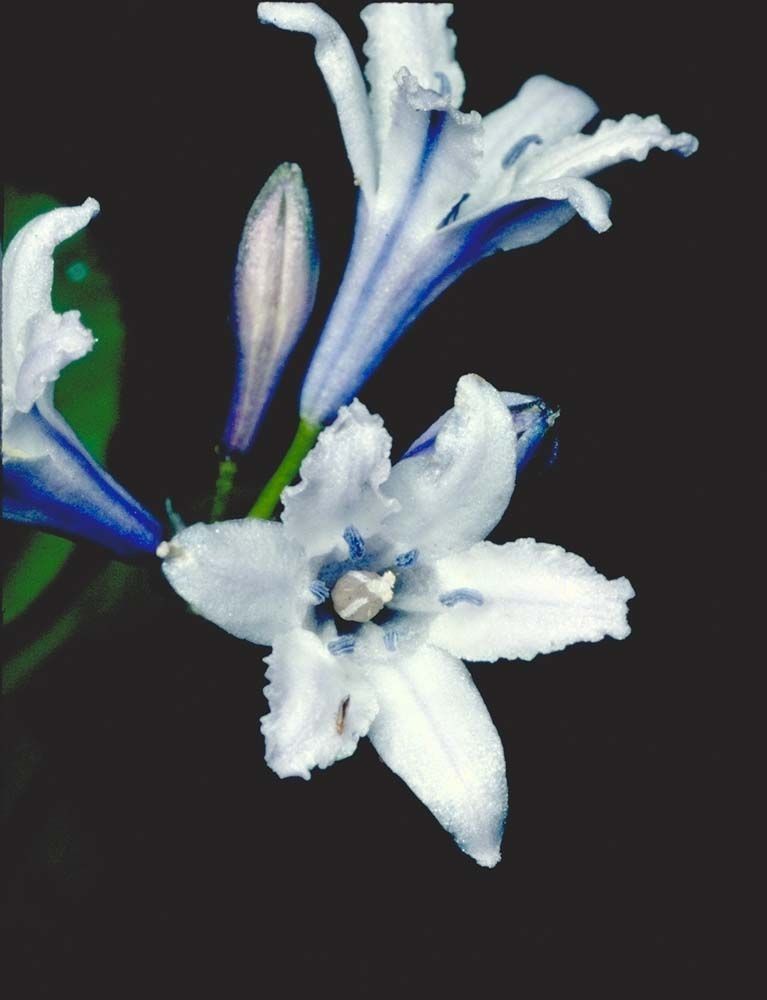
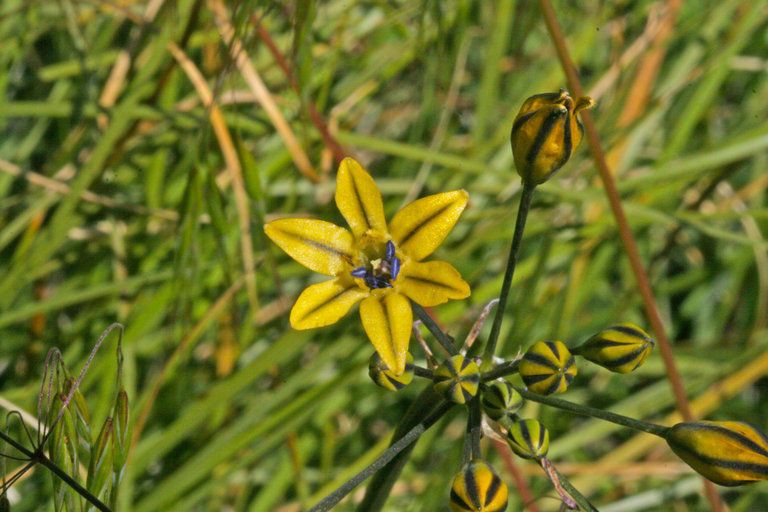
Triteleia ixioides, known as prettyface or golden star, is a monocotyledon flowering plant in the genus Triteleia. It is native to northern and central California and southwestern Oregon, where it can be found in coastal and inland coniferous forests and other habitat. It is a perennial wildflower growing from a corm. It produces one to two basal leaves up to 50 centimeters long by 1.5 wide. The inflorescence arises on an erect stem up to 80 centimeters tall. It is an umbel-like cluster of several flowers each borne on a pedicel up to 7 centimeters long. The flowers are variable in size, measuring one to nearly three centimeters in length. They are pale to bright yellow, or sometimes purple-tinged white. There are six tepals with darker midveins in shades of green, brown, or purple. The lobes are funnel-shaped and may open flat or somewhat reflexed. The six stamens form a fused tube that protrudes from the corolla; they have broad, flat filaments and whitish, yellowish, or blue anthers.
Golden brodiaea has good resistance to disease and is usually not prone to illnesses. Still, it can be vulnerable to pests or diseases found in its surroundings. These problems are typically not severe. For care, the plant requires moderate maintenance. It should be pruned regularly to maintain a neat appearance and support healthy growth. Applying fertilizer can also encourage flowering. Golden brodiaea is suitable for anyone with an outdoor area, such as a garden or patio, and does not demand extensive care experience. It may need more attention when grown indoors.
How to keep Triteleia Ixioides.
Light
The golden brodiaea does best in locations that receive sunlight for most of the day. Continuous sun exposure supports its healthy growth at every stage. Although it comes from habitats with abundant sunlight, changes in light levels could impede its development.
Water
Golden brodiaea thrives in areas with regular weekly rainfall and consistent moisture. While it can tolerate moderate drought, maintaining a balance between hydration and drainage is crucial. To support its growth, especially when grown outdoors, water the plant weekly and provide extra watering during extended dry periods.
Temperature
Golden brodiaea is native to habitats with temperatures between 50 and 95 °F (10 and 35 °C). It generally grows best in climates with distinct seasons and clear temperature shifts. Adjust watering schedules seasonally to accommodate its temperature preferences.
Fertilizer
For Golden brodiaea, the primary time to apply fertilizer is in early spring when the flowers are beginning to form. The appropriate fertilizer promotes better blooms and helps Golden brodiaea produce attractive flowers. Fertilizing in early spring ensures strong flowering during the season and supplies energy for the plant’s dormant growth phases.
Pruning
Golden brodiaea is a perennial bulb known for its vibrant yellow, star-shaped flowers. To maintain the plant's health and promote future growth, prune spent flower stems after they have bloomed, from early spring to late winter. It's important to avoid cutting the green foliage. Always use clean, sharp tools when pruning to prevent disease and ensure the plant remains healthy.
Botanical profile.
- Plant Type
- Herb
- Life Cycle
- Perennial
- Genus
- Triteleia
- Family
- Asparagaceae
- Hardiness Zone
- 6-9
- Mature Height
- 20 cm to 61 cm
- Mature Spread
- 10 cm
- Leaf Color
- Green
- Leaf Type
- Evergreen
- Flower Color
- Yellow, Gold
- Flower Size
- 1.02 cm to 3.05 cm
- Bloom Time
- Late spring, Early summer
- Planting Time
- Spring, Summer
- Harvest Time
- Mid summer, Late summer
Other names.
Reader questions.
How should I water my Golden brodiaea?
To properly care for the Golden brodiaea, it is recommended to use filtered water at room temperature. Tap water may contain harmful particles that can negatively affect the plant's health. Considering that the Golden brodiaea thrives in warm environments, using cold water can potentially shock its system. It is also important to avoid overhead watering as it can lead to issues with the foliage. Instead, gently apply filtered room temperature water directly to the soil until it is fully saturated. This method allows the roots to absorb the moisture and extend in the soil, facilitating nutrient uptake.
Why is it necessary to add fertilizer to my Golden brodiaea?
Fertilization is important for the Golden brodiaea because it provides key nutrients that help the plant grow both above and below ground. While the overall fertilization needs for the Golden brodiaea are relatively low, annual fertilization can be very beneficial. It helps keep the plant alive and may also promote the growth of better and longer-lasting flowers. Therefore, those interested in maintaining the best appearance of their Golden brodiaea should prioritize annual fertilization.
What are the sunlight requirements for Golden Brodiaea?
Golden Brodiaea requires full sun, which means it needs to be exposed to sunlight for more than 6 hours each day to thrive healthily. It is crucial to observe your garden to identify spots that provide the right balance of light and shade, ensuring that your plants receive the perfect conditions for growth. The essence of growing Golden Brodiaea lies in its constant exposure to sunlight, as it is native to environments with generous sun exposure. Insufficient sunlight can hinder its growth and development significantly.
What are the ideal temperature conditions for Golden brodiaea?
Golden brodiaea, known botanically as Triteleia ixioides, is native to environments where temperatures vary between 50 to 95 °F (10 to 35 °C), thriving best in seasonal climates with clear distinctions in temperature throughout the year. It demonstrates strong cold resistance, making special frost protection measures unnecessary in most cases during winter. However, when winter temperatures are expected to plummet below -25°C, providing cold protection by covering the plant with materials like soil or straw can be beneficial. It's advisable to water the plant abundantly before the first freeze in autumn, ensuring the soil remains moist and enters a frozen state, which helps prevent drought and water scarcity during the colder months.
What do I do if I give my Golden brodiaea too much or too little water?
Overwatering can be a big problem for the health of your Golden brodiaea. When this happens, the stems and leaves may wilt and turn yellow. Overwatering for a long time can also cause diseases like root rot, mold, and mildew, which can be deadly for your plant. Underwatering is less common because the Golden brodiaea can handle dry spells. However, it can still happen, and when it does, the leaves become brittle and brown. It's important to recognize the signs of overwatering early so you can take action. Some diseases caused by overwatering, like root rot, can't be fixed if you wait too long. If you notice early signs of overwatering, reduce your watering schedule right away. You should also check the soil. If it doesn't drain well, replace it with a loose, well-draining potting mix. If you see signs of underwatering, simply water more regularly until the signs go away.
When should I fertilize my Golden brodiaea?
The best time to fertilize a Golden brodiaea is in late winter to early spring when the plant is waking up from dormancy and starting to grow. Fertilizing during this period helps the plant thrive and ensures healthy growth for the upcoming season. Although early spring is the most beneficial time, it is also acceptable to fertilize in the fall. However, it is not recommended to feed the plant during summer or winter.
How can artificial lighting be used for indoor Golden Brodiaea plants?
When natural sunlight is insufficient, especially during winter or in less sunny spaces, artificial lighting becomes a crucial solution for the growth of indoor Golden Brodiaea plants. Indoor plants might require different types of artificial light, with LED lights being a popular choice due to their ability to be customized to meet the specific light wavelength needs of plants. For optimal growth, full sun plants need 30-50W/sq ft of artificial light, partial sun plants require 20-30W/sq ft, and full shade plants need 10-20W/sq ft. It is recommended to place the artificial light source 12-36 inches above the plant and mimic natural daylight hours, usually providing 8-12 hours of light per day.
How does Golden brodiaea react to low and high temperatures, and what are the solutions?
Golden brodiaea is quite tolerant of cold temperatures, thriving when the temperature remains above 10°C. During winter, it should ideally stay above -15°C, but it has notable resilience up to temperatures dropping below -25°C. Despite its resilience, exposure to these extreme lows may not manifest in noticeable changes immediately, yet there could be a reduction in sprouting or even complete lack of sprouting come spring. In such cases, it is advised to remove any parts of the plant that fail to sprout. In contrast, during summer, it is crucial to ensure that the Golden brodiaea remains below 35°C. Should temperatures exceed 38°C, the plant is at risk of sunburn, which can result in lighter colored leaves that may curl, wilt, or dry out entirely. To mitigate these issues, trim away any sunburned or dried sections of the plant, relocate it to a shaded area or utilize a shade cloth to protect it from the midday and afternoon sun, and water the plant in the morning and evening to maintain soil moisture.
How many times should I give water to my Golden brodiaea?
If your Golden brodiaea is in a pot, the best way to determine if it needs water is by checking the soil moisture. Insert your finger into the soil and if the top two to three inches are dry, it's time to water. If your Golden brodiaea is planted outdoors in the ground, you can use the same method to test the soil. Once the top few inches have dried out, it's time to water. Typically, this plant needs watering about once a week during the spring and early fall. However, during extremely hot weather, you may need to water twice a week or even more frequently. It's worth noting that mature and well-established Golden brodiaea plants have a remarkable ability to tolerate drought.
When is it best to not use fertilizer on my Golden brodiaea?
To avoid overfertilization and its complications, it is best to only fertilize your Golden brodiaea in late winter and early spring. This plant has low fertilization needs, so a single feeding during this time is sufficient. However, if you didn't fertilize in spring, it is acceptable to feed it in the fall. It is important to note that you should refrain from fertilizing during the rest of the growing season, including winter when the plant is in a dormant phase and not producing new growth.
What are the symptoms of light deficiency in Golden Brodiaea?
Symptoms of light deficiency in Golden Brodiaea can vary but may include smaller new leaves, leggy or sparse growth, faster leaf drop, slower or no new growth, and lighter-colored new leaves. Additionally, excessive sunlight can cause chlorosis, where leaves lose their green color and turn yellow, sunscald, leaf curling, wilting due to increased water loss, and leaf scorching, characterized by brown, dry, and crispy edges on leaves. These symptoms highlight the plant's struggle with insufficient or excessive light exposure.
How much water does my Golden brodiaea require?
When watering your Golden brodiaea, don't be afraid to give it a generous amount. Wait until the top two to three inches of soil are dry, then thoroughly soak the entire soil with enough water. Make sure the excess water drains through the pot's holes. If you don't see any excess water draining, it means you haven't watered enough. However, be careful not to let water accumulate inside the soil, as it can harm the plant. If there's no drainage, it may indicate poor soil drainage, which is not good for the plant's health. If the plant is outside, one inch of rain per week will be enough.