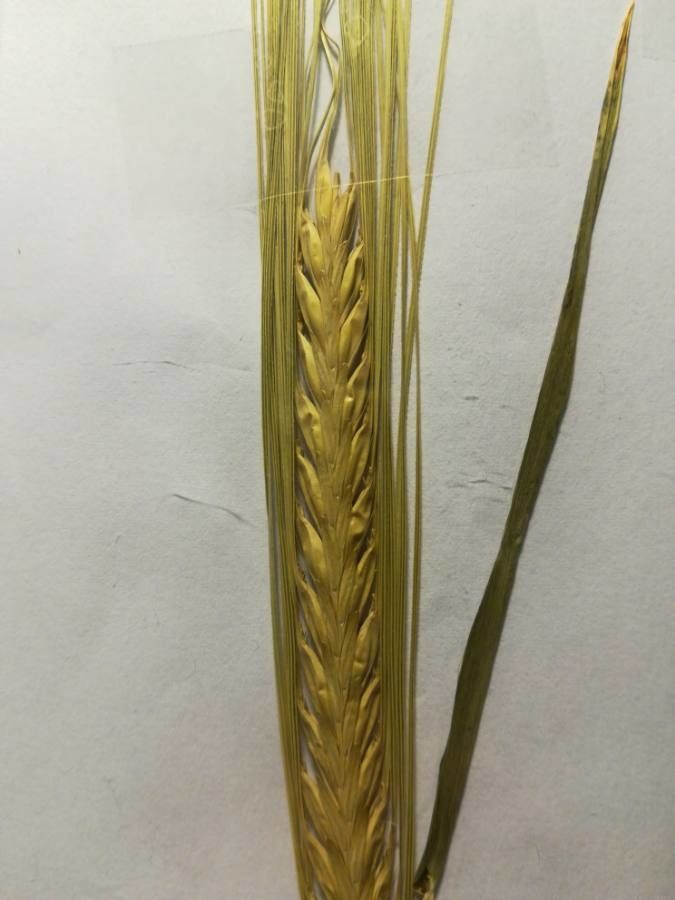
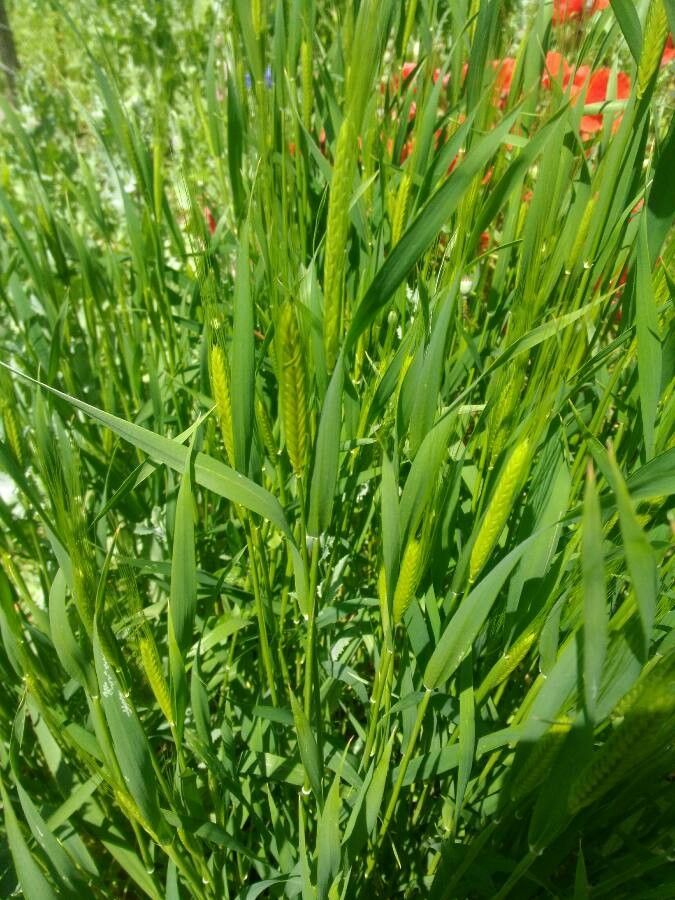
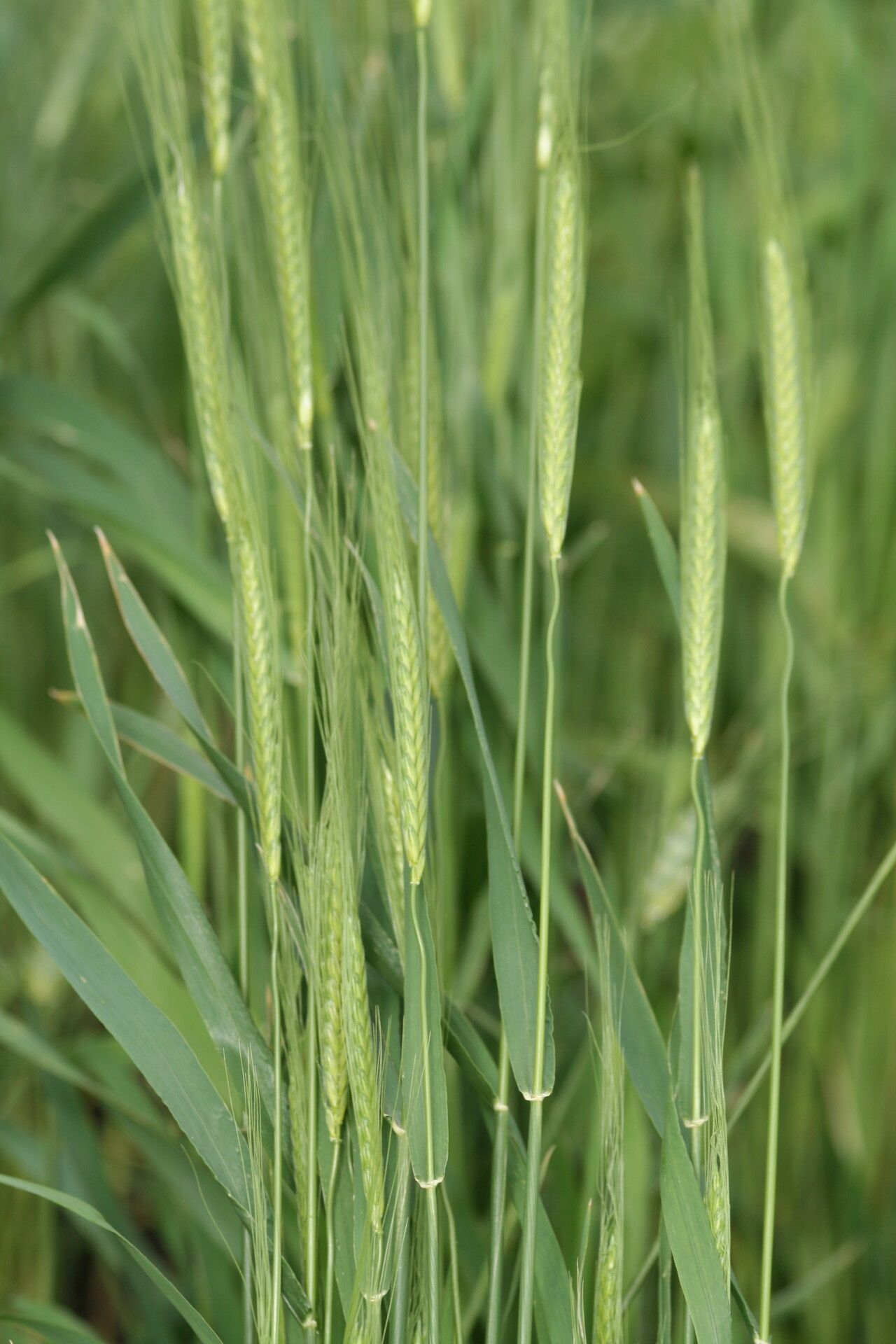
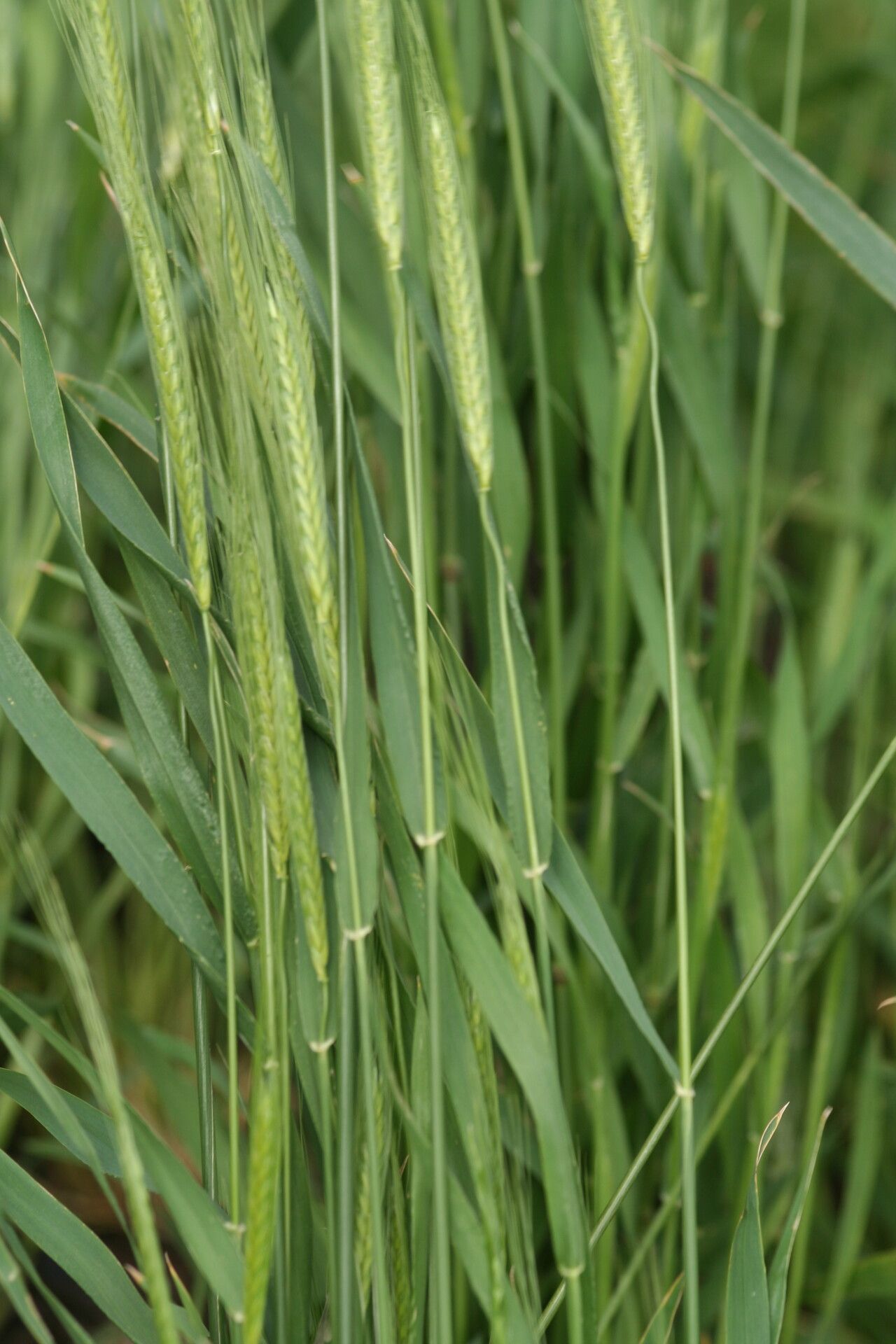
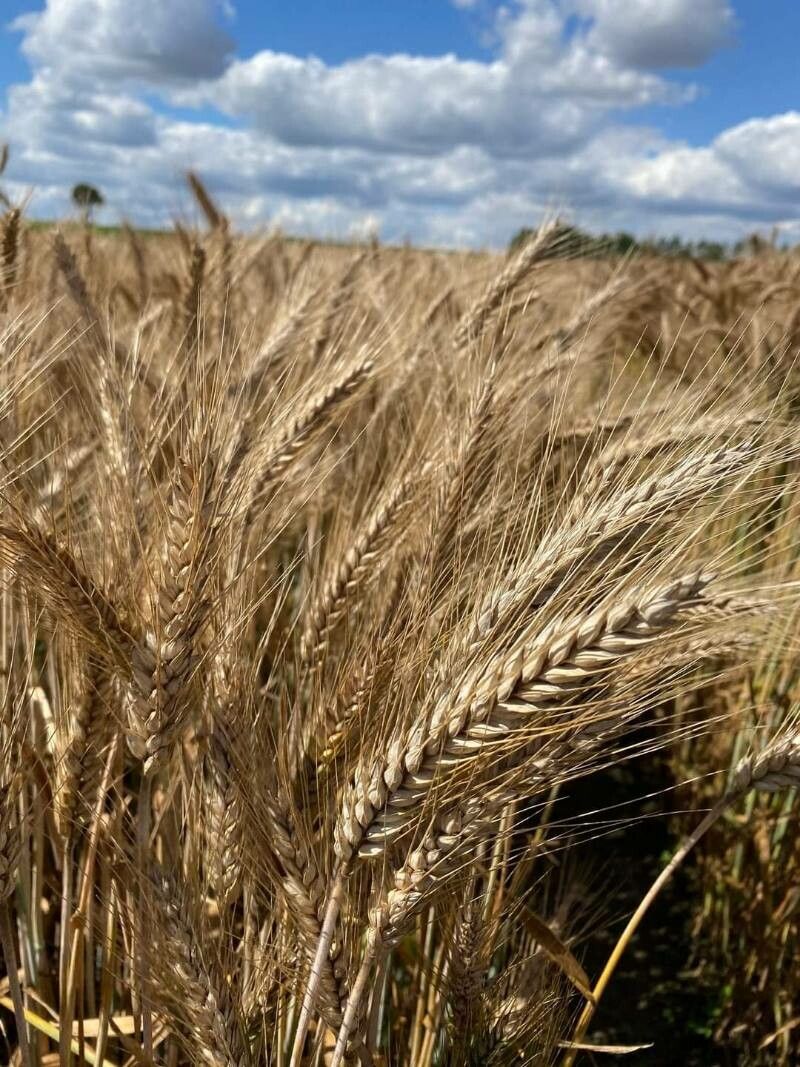
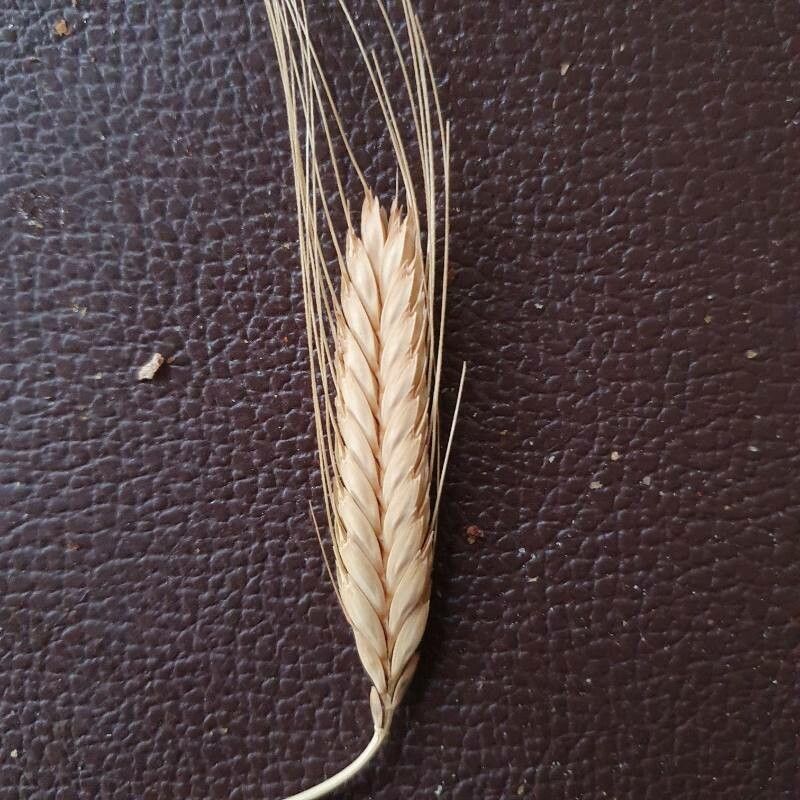
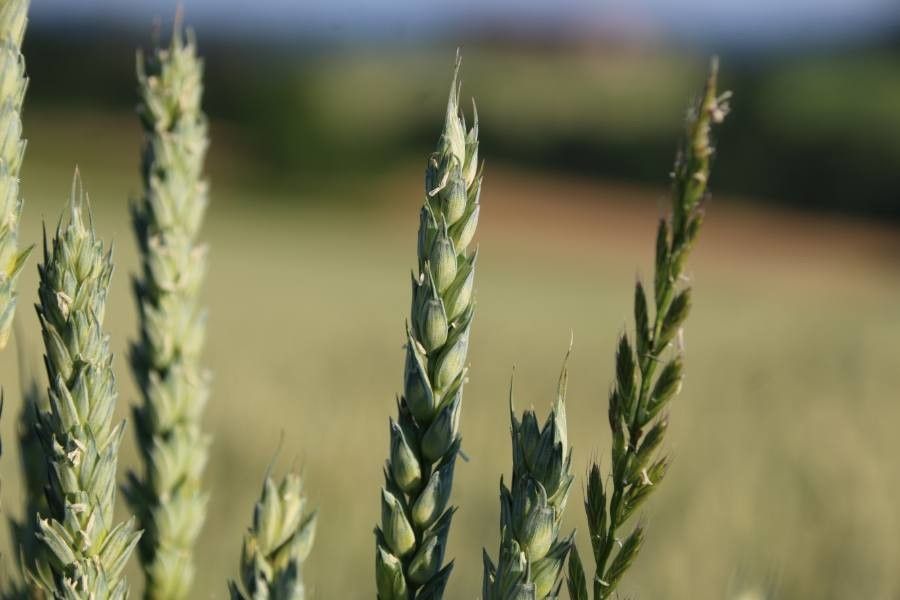
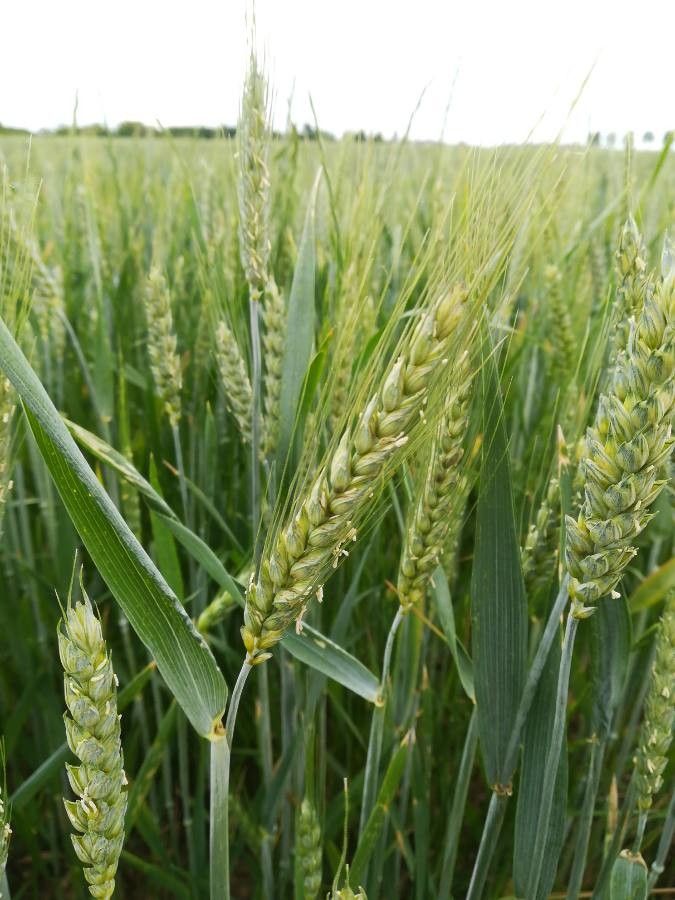
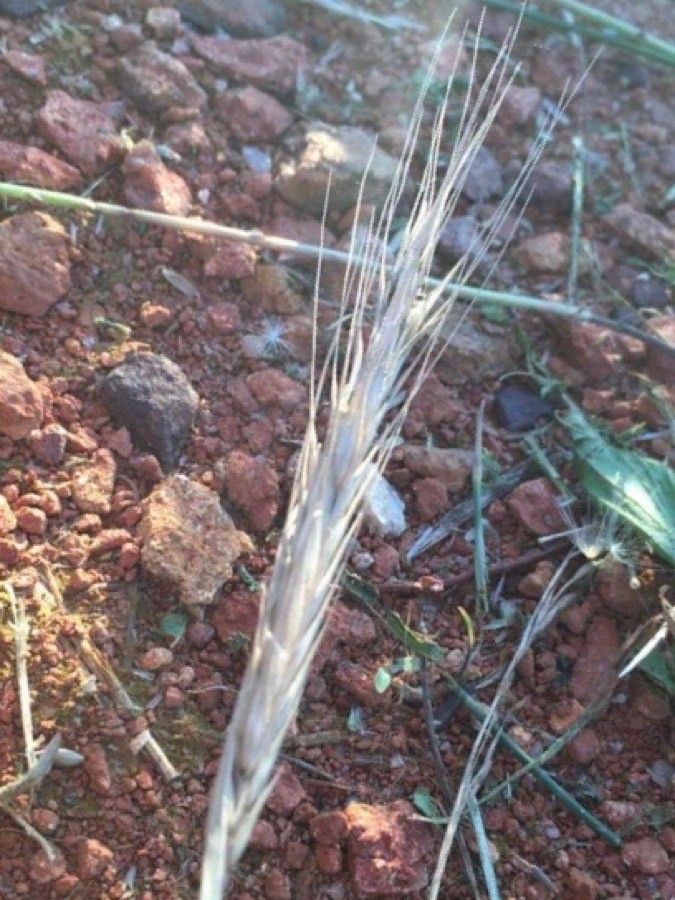
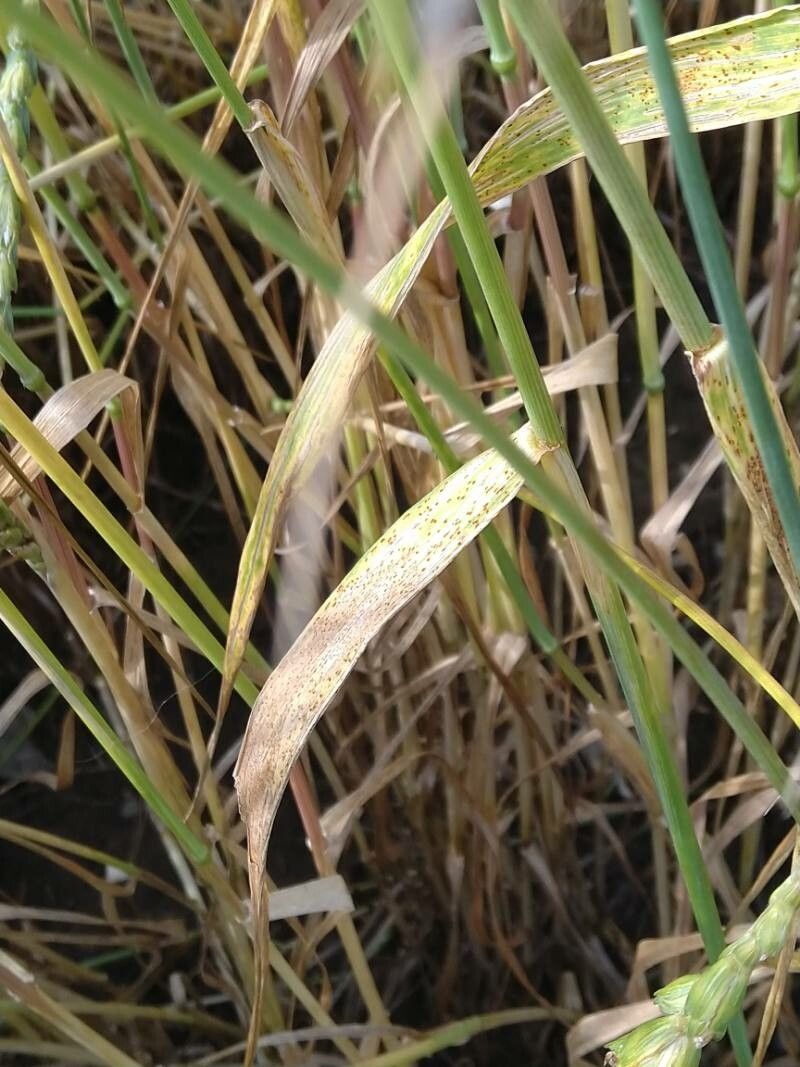
Einkorn wheat (from German Einkorn, literally "single grain") can refer either to the wild species of wheat, Triticum boeoticum, or to the domesticated form, Triticum monococcum. The wild and domesticated forms are either considered separate species, as here, or as subspecies: Triticum monococcum subsp. boeoticum (wild) and T. monococcum subsp. monococcum (domesticated). Einkorn is a diploid species (2n = 14 chromosomes) of hulled wheat, with tough glumes ('husks') that tightly enclose the grains. The cultivated form is similar to the wild, except that the ear stays intact when ripe and the seeds are larger. The domestic form is known as "petit épeautre" in French, "Einkorn" in German, "einkorn" or "littlespelt" in English, "piccolo farro" in Italian and "escanda menor" in Spanish. The name refers to the fact that each spikelet contains only one grain. Einkorn wheat was one of the first plants to be domesticated and cultivated. The earliest clear evidence of the domestication of einkorn dates from 10,600 to 9,900 years before present (8650 BCE to 7950 BCE) from Çayönü and Cafer Höyük, two Early Pre-Pottery Neolithic B archaeological sites in southern Turkey. Remnants of einkorn were found with the iceman mummy Ötzi, dated to 3100 BCE.
Einkorn displays strong resistance to disease and is typically not susceptible to illnesses. Regarding care, this plant is fairly low-maintenance. When grown outdoors, it needs little watering and larger plants usually do not require pruning. However, smaller plants should be trimmed after they have finished blooming. Einkornt is appropriate for anyone with an outdoor area, such as a garden or deck, and does not require much care experience.
How to keep Triticum Monococcum.
Light
Einkorn originates in bright, open habitats where it performs best in full sun. It can tolerate partial shade but favors direct sunlight for optimal growth. This plant, which can be annual or biennial, is noted for its sun-loving character.
Temperature
Einkorn can tolerate a wide range of temperature conditions, but its distribution may still be restricted by various combinations of water and heat. It grows best in warm summer climates with sufficient rainfall or watering. Extended periods of cloudy, rainy weather or prolonged high temperatures can raise the chance of Einkorn dying. In winter, protecting the plant from cold can increase its survival rate.
Fertilizer
For best development, Einkorn needs three fertilizer applications: before planting, one month after seedlings emerge, and a final application 1 to 1.5 months after the second. Some Einkorn varieties also benefit from extra fertilizer at planting to encourage rapid growth.
Botanical profile.
- Plant Type
- Grass
- Life Cycle
- Annual
- Genus
- Triticum
- Family
- Poaceae
- Hardiness Zone
- 4-9
- Mature Height
- 0.61 m to 1.22 m
- Mature Spread
- 15 cm to 30 cm
- Leaf Color
- Green
- Leaf Type
- Deciduous
- Bloom Time
- Late spring, Early summer
- Planting Time
- Spring, Summer
- Harvest Time
- Mid summer, Late summer
- Native Area
- Afghanistan, Iraq, Turkey, Bulgaria, Iran, Albania, Greece, Ukraine
Other names.