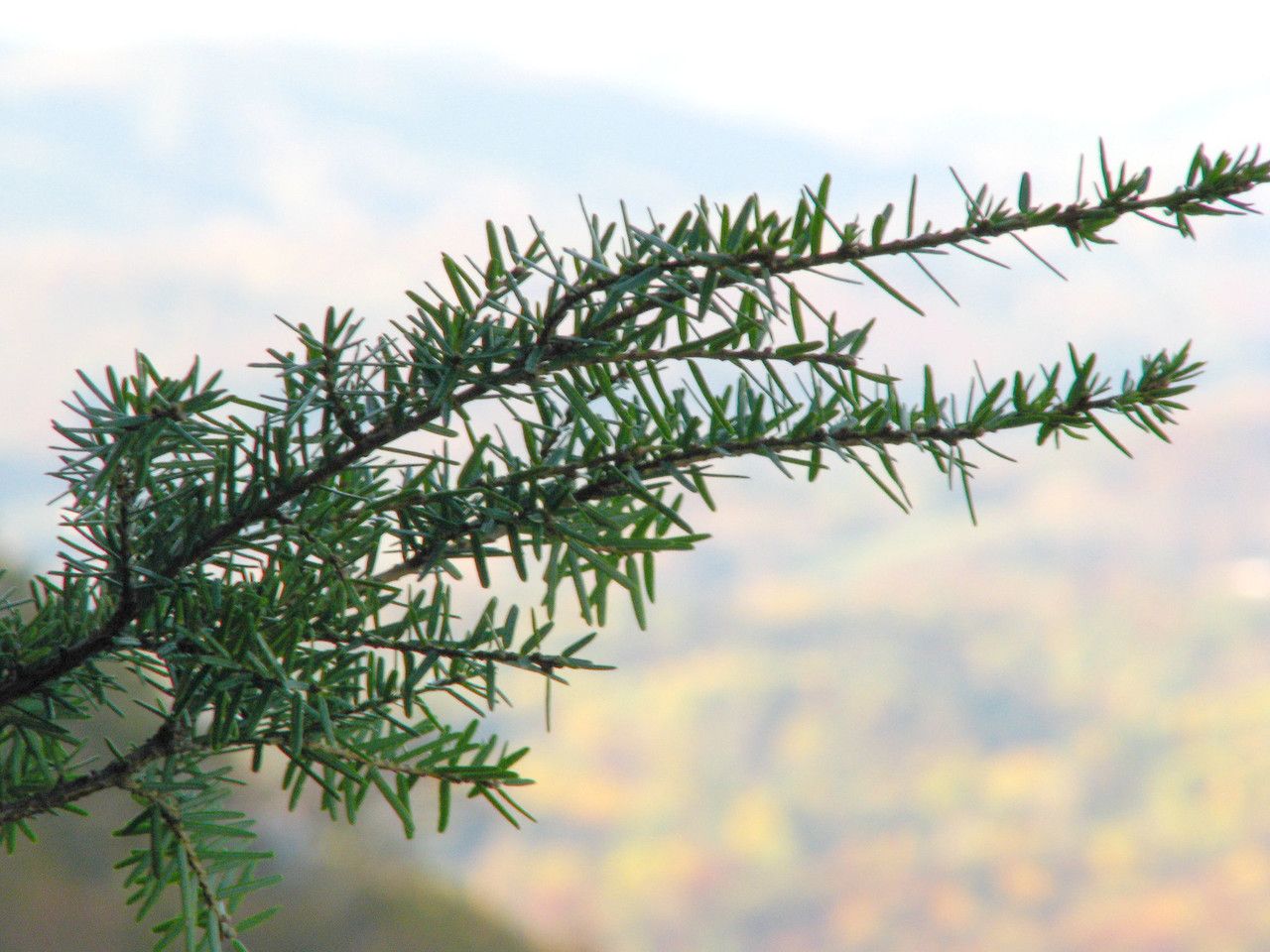
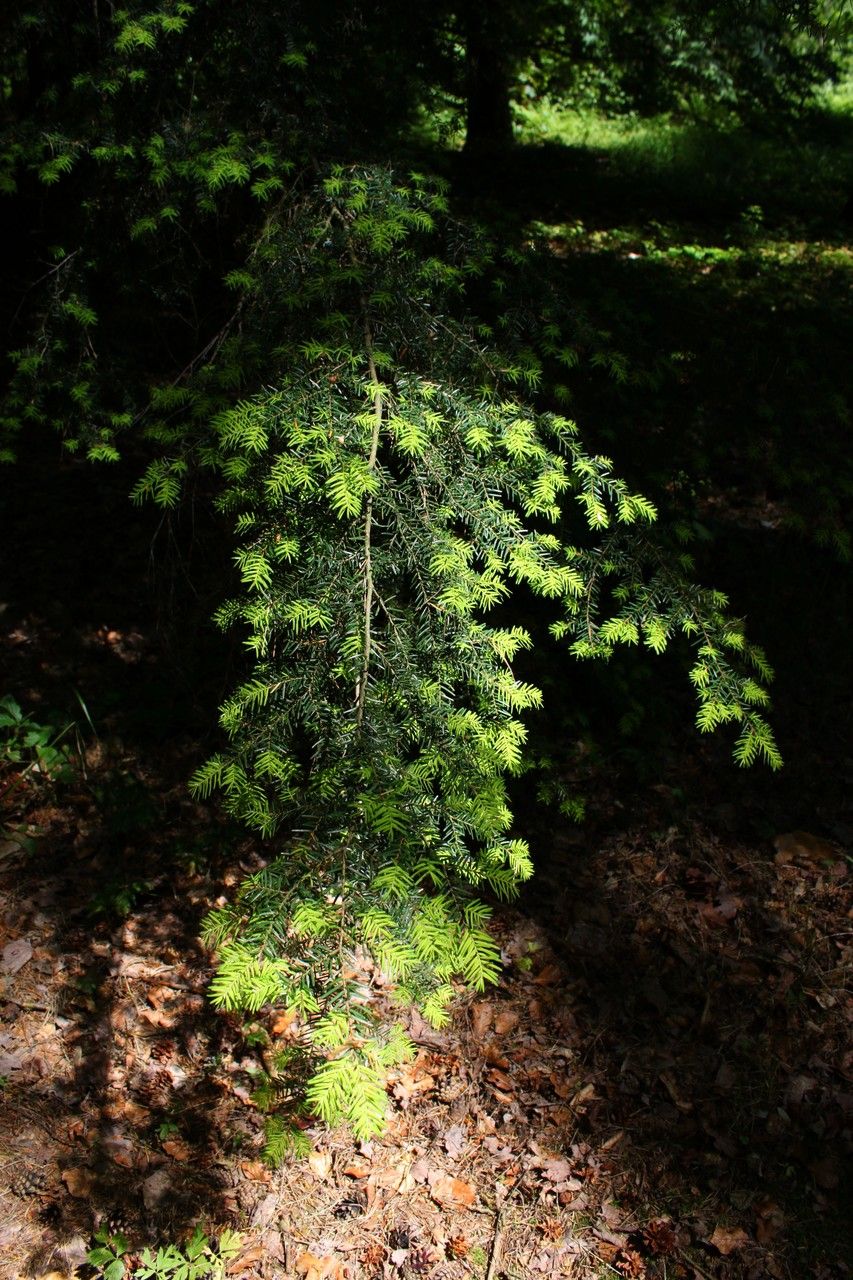
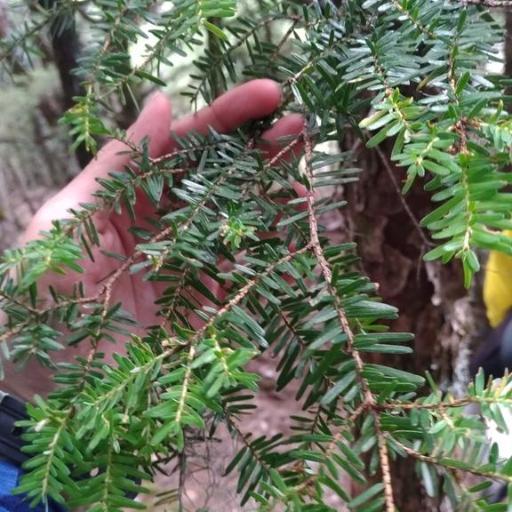
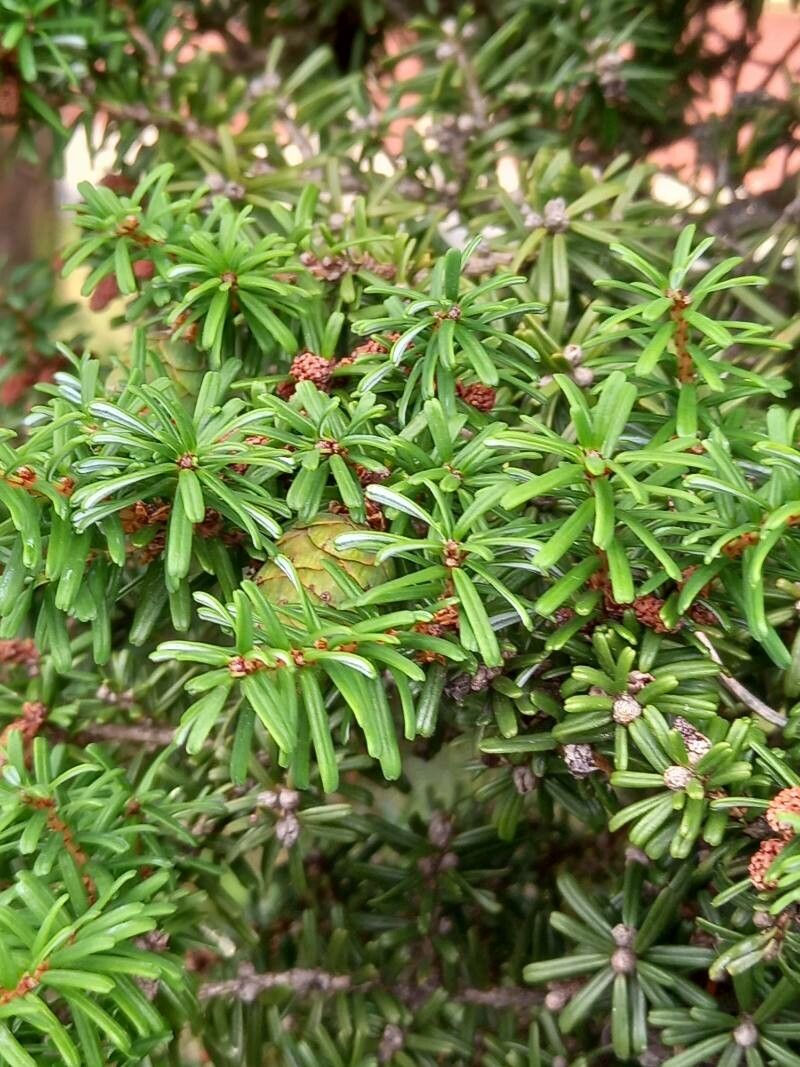
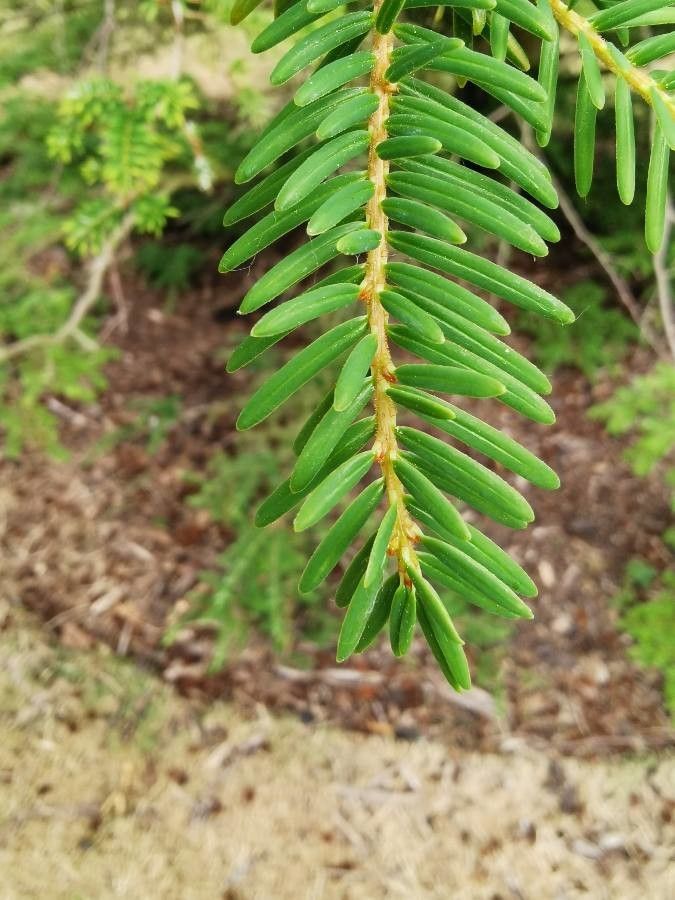
Tsuga caroliniana, commonly known as the Carolina Hemlock, is a species of coniferous tree native to the southeastern United States. This slow-growing evergreen can reach heights of up to 60 feet and widths of around 20 feet. It features a narrow, conical shape with dense foliage composed of short needles that are dark green on top and lighter green underneath.
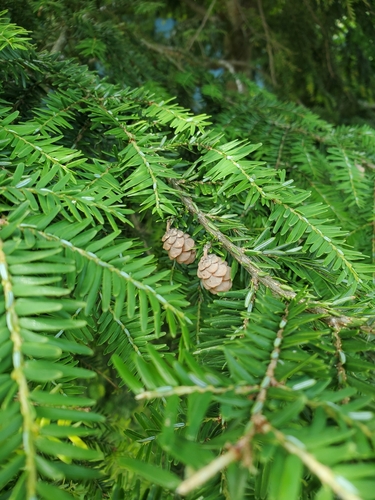
The bark of the Carolina Hemlock is gray-brown and scaly, developing deep furrows with age. The tree produces small cones about an inch long, with thin scales.
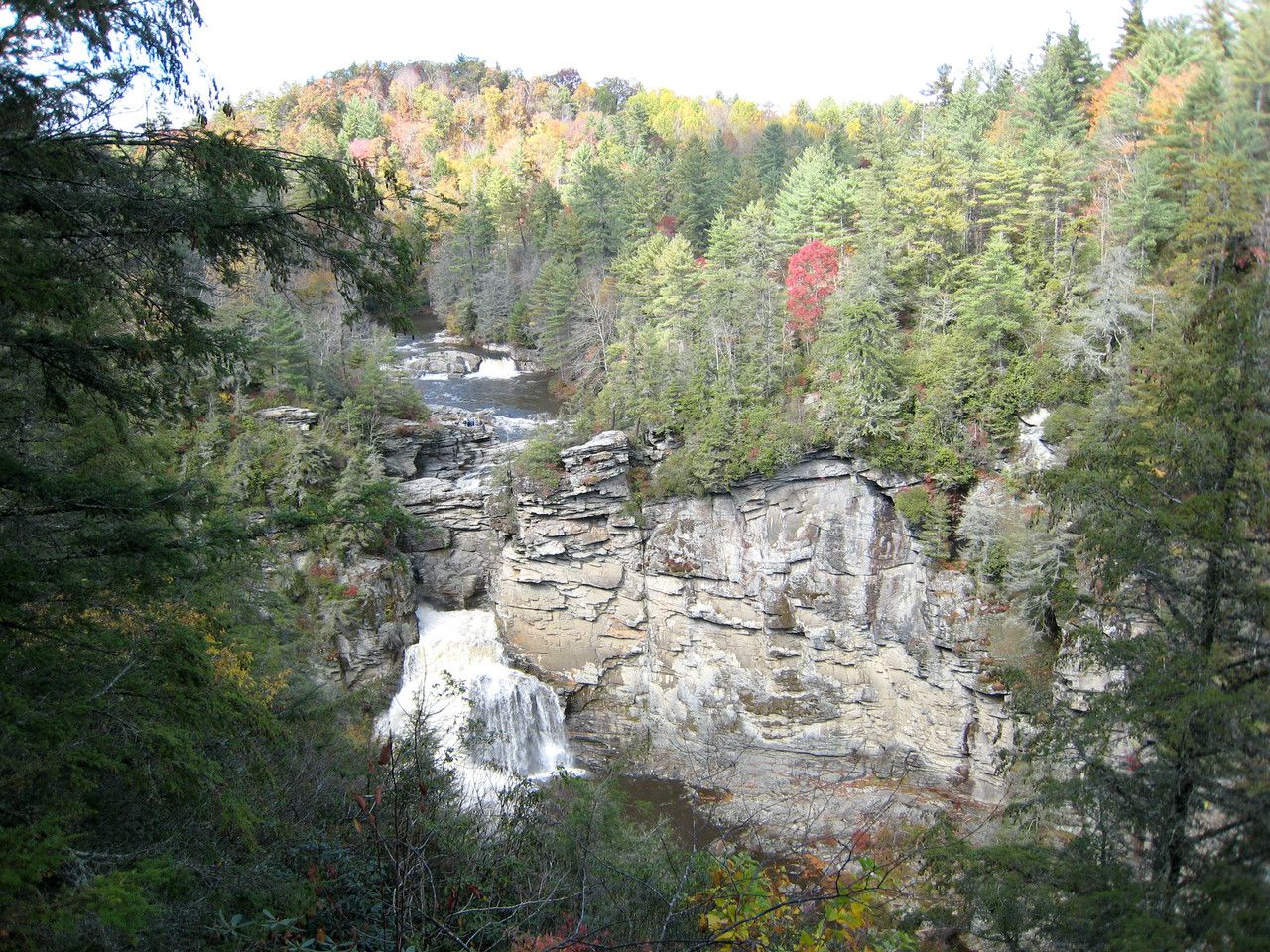
The Carolina Hemlock thrives in moist soils within cool, mountainous regions but can also endure drier conditions once established. It grows best in partial shade but can adapt to full sun if provided with sufficient moisture.
Historically, Native Americans utilized this plant for various purposes, including medicinal remedies for colds and coughs. Today, it is primarily valued for its ornamental appeal due to its attractive foliage.
Unfortunately, Tsuga caroliniana faces several threats, such as insect infestations (including the hemlock woolly adelgid), logging activities, and habitat loss due to development. These challenges have led to its classification as an endangered species on the IUCN Red List since 2019, highlighting the need for conservation efforts to ensure its survival.
Carolina hemlock has strong disease resistance and is typically not prone to illnesses. In terms of care, this plant is fairly low maintenance. When planted outdoors it needs minimal watering, and larger plants generally do not require pruning. Smaller plants, however, should be pruned after they have bloomed. Carolina hemlockt is appropriate for someone with an outdoor space, such as a garden or deck, and does not demand much care experience.
How to keep Tsuga Caroliniana.
Light
Carolina hemlock does well in sites that receive sunlight for part of the day, and it also tolerates deep shade or full exposure. In its native habitat it is commonly found in a variety of light conditions, where both too much and too little light can inhibit its growth.
Water
The Carolina hemlock flourishes in humid, cool mountainous areas where consistent moisture is key to its growth. It does best in soil that remains evenly moist and, once established, can withstand moderate drought conditions. To keep it well-hydrated, water the plant every two weeks. Additionally, applying mulch will help retain moisture and mimic its natural habitat.
Temperature
Carolina hemlock is native to a climate with temperatures between 41 and 90 °F (5 to 32 ℃). It favors conditions within that range and would require extra frost protection in colder months.
Fertilizer
Carolina hemlock has specific nutrient needs and does not require heavy fertilization. Spring is the best time to apply fertilizer for optimal growth. Supplying nutrients improves its health, raises its resistance to pests and diseases, and helps sustain its long lifespan.
Pruning
The Carolina hemlock is an evergreen conifer that benefits from careful pruning. It's best to prune this tree in early to late winter to remove dead branches and improve airflow. Regular thinning helps maintain its health and shape. To preserve the tree's natural form and ensure its optimal growth and longevity, it's important to avoid heavy pruning.
Botanical profile.
- Plant Type
- Tree
- Life Cycle
- Perennial
- Genus
- Tsuga
- Family
- Pinaceae
- Hardiness Zone
- 4-7
- Mature Height
- 9.14 m to 21.34 m
- Mature Spread
- 6.1 m to 7.62 m
- Leaf Color
- Green, White
- Leaf Type
- Evergreen
- Bloom Time
- Mid spring, Late spring
- Planting Time
- Spring, Summer
- Harvest Time
- Late summer, Early fall, Mid fall
Other names.
Reader questions.
What are the sunlight requirements for Carolina hemlock?
Carolina hemlock requires varying amounts of sunlight depending on its environment. It thrives in partial sun, which constitutes about 3-6 hours of sunlight daily, and can also prosper in full sun or full shade, where it receives more than 6 hours of sunlight. In its natural setting, Carolina hemlock is accustomed to various light conditions, and both the lack of or excess light can be detrimental to its growth. It’s crucial to observe the movement of sunlight in your garden to find the ideal balance of light and shade that ensures the well-being of your plants.
What is the ideal temperature range for Carolina hemlock?
Carolina hemlock thrives in a climate with temperatures ranging from 41 to 90 °F (5 to 32 °C). This temperature range is ideal for its growth, and it may require additional frost protection measures during the colder months outside of this range. Interestingly, Carolina hemlock is quite cold-tolerant and generally does not need extra frost protection in winter. However, it's beneficial to water the plant generously before the first freeze in autumn to keep the soil moist and prevent drought and water scarcity for the plant during winter and early spring.
How should I use artificial lighting for indoor Carolina hemlock plants?
When natural sunlight is insufficient for indoor Carolina hemlock plants, especially in winter or less sunny spaces, artificial lighting becomes essential for optimal growth. Opt for LED lights, as they can be tailored to provide specific wavelengths needed by your plants. For full sun plants, aim for 30-50W/sq ft of artificial light, 20-30W/sq ft for partial sun plants, and 10-20W/sq ft for full shade plants. The artificial light source should be placed 12-36 inches above the plant to mimic natural sunlight and kept on for 8-12 hours per day to replicate the day's natural light cycle.
How does Carolina hemlock react to temperatures below its cold tolerance threshold?
Carolina hemlock is extremely cold-tolerant, capable of withstanding winter temperatures above -30°C without significant damage. However, if temperatures fall below this threshold, the plant may not show immediate adverse signs during winter, but in spring, the branches could become brittle and dry, and new shoots might not emerge. The recommended solution for this issue is to prune any dead branches that have failed to produce new leaves in the spring.
What symptoms indicate that my Carolina hemlock is receiving insufficient light?
When Carolina hemlock doesn't get enough light, several signs can manifest, including smaller new leaves, leggy or sparse growth, faster leaf drop, slowed or halted growth, and lighter-colored new leaves. Other symptoms like chlorosis, sunscald, leaf curling, wilting, and leaf scorching might indicate either insufficient light or overexposure to sunlight. These symptoms point to the plant's inability to photosynthesize effectively, leading to poor growth and health.
What should be done if Carolina hemlock experiences high temperatures beyond its tolerance?
Carolina hemlock struggles with high temperatures, especially those exceeding 32°C, which can cause significant leaf drop or, in severe cases, the death of the entire plant. To mitigate damage, sunburned and dried-up parts of the plant should be trimmed away. The plant should be moved to a location that provides shade during the midday and afternoon sun or covered with a shade cloth. Additionally, watering the plant in the morning and evening can help keep the soil adequately moist.
What solutions can I apply for Carolina hemlock struggling with light conditions?
For Carolina hemlock facing light issues, gradual adaptation is key. Indoors, progressively move the plant to sunnier spots each week, aiming for 3-6 hours of sunlight daily, or use artificial lighting for at least 8 hours daily if the plant is large or difficult to move. Outdoors, similarly shift the plant to brighter locations gradually to prevent sunburn. If sunlight is blocked by obstacles like trees, consider pruning to allow more light through. For smaller plants, transplanting during their dormant period to a sunnier area with good drainage can also help improve light exposure. Remember, parts of the plant already affected by light deficiencies may not recover, but new growth will be healthier with adequate light.