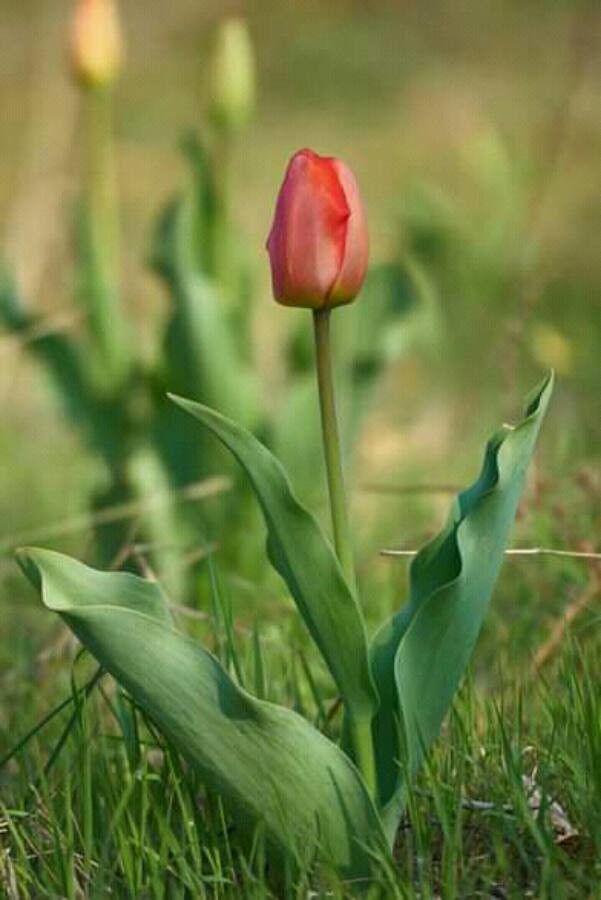
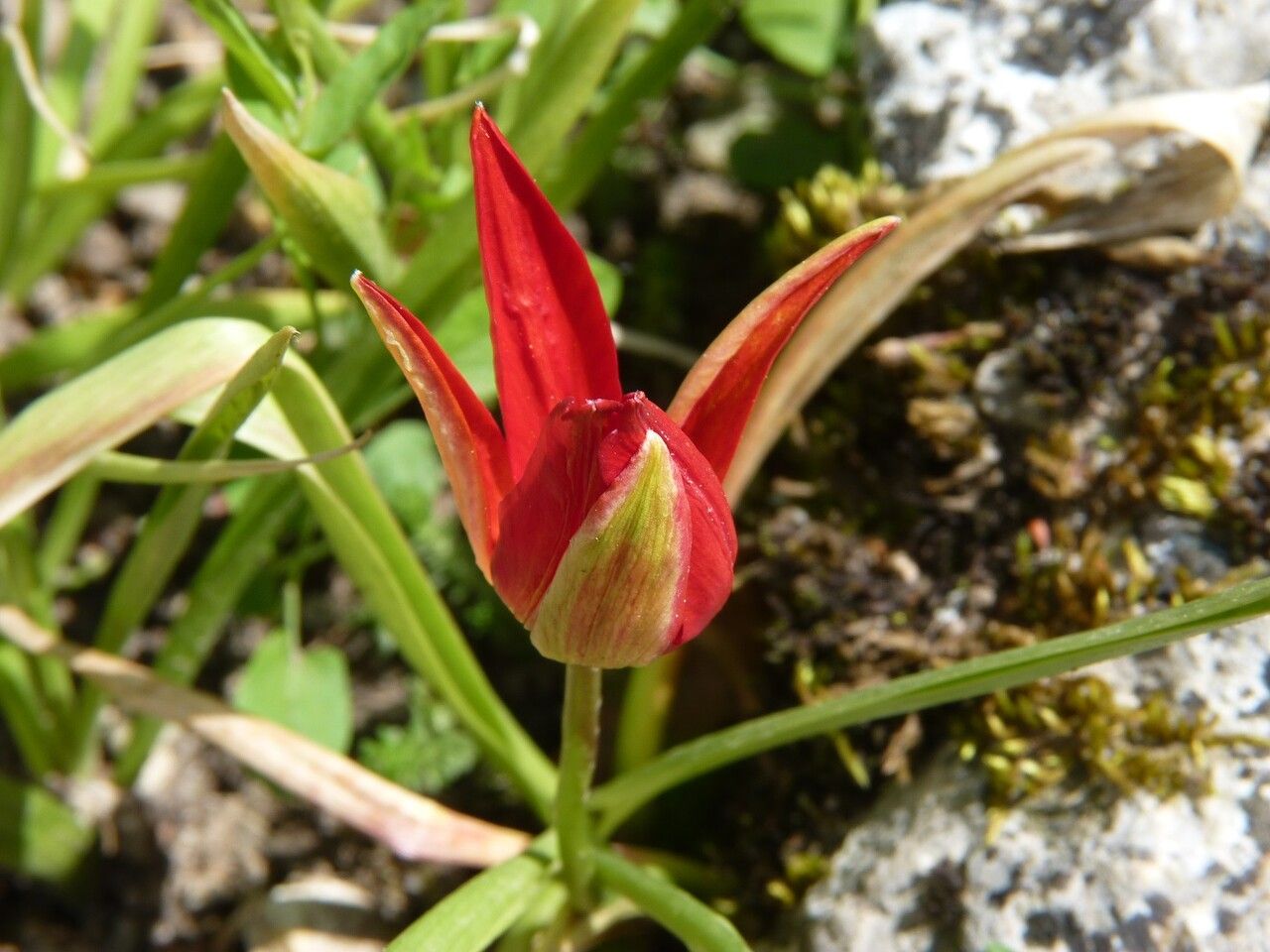
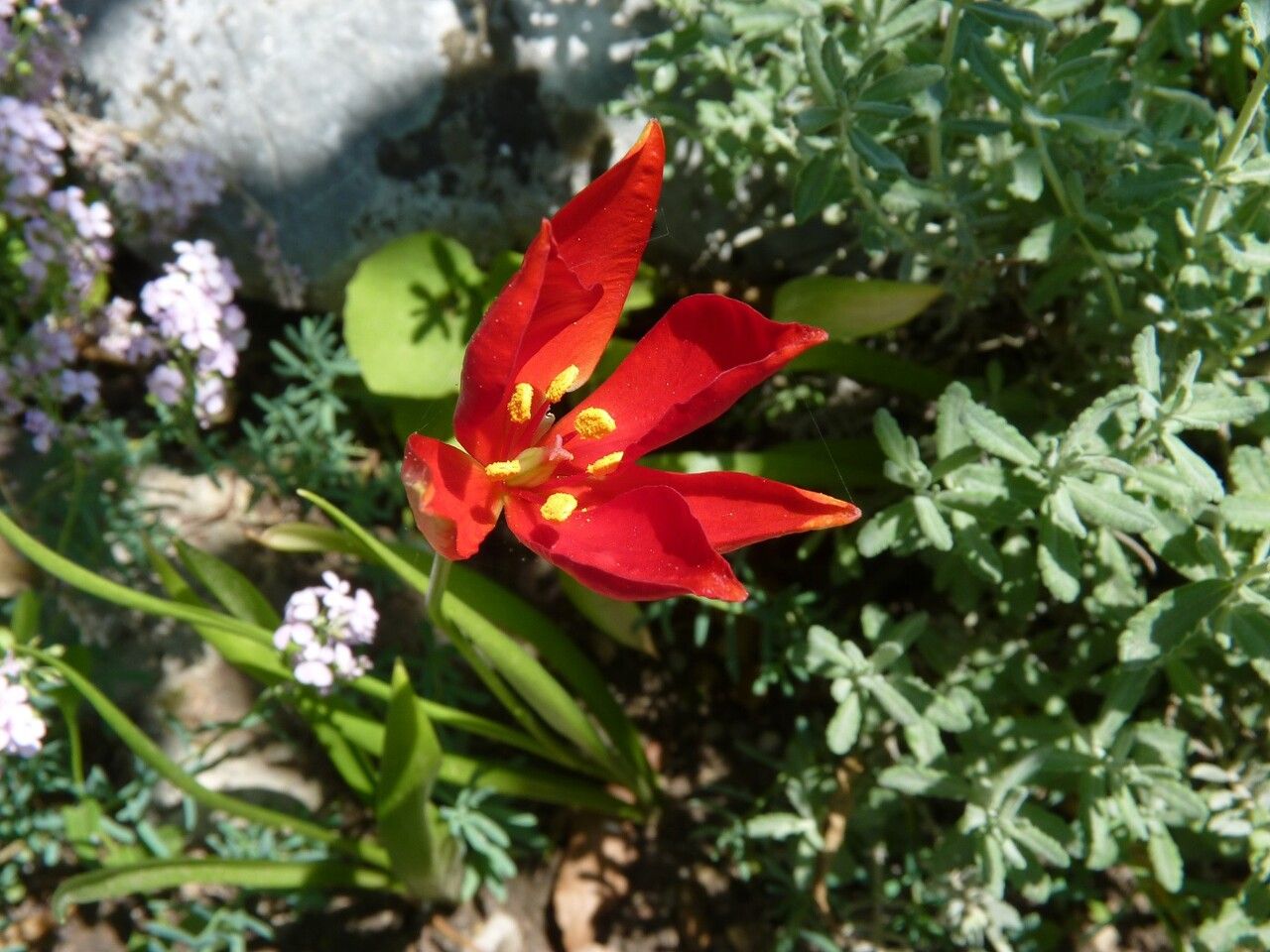
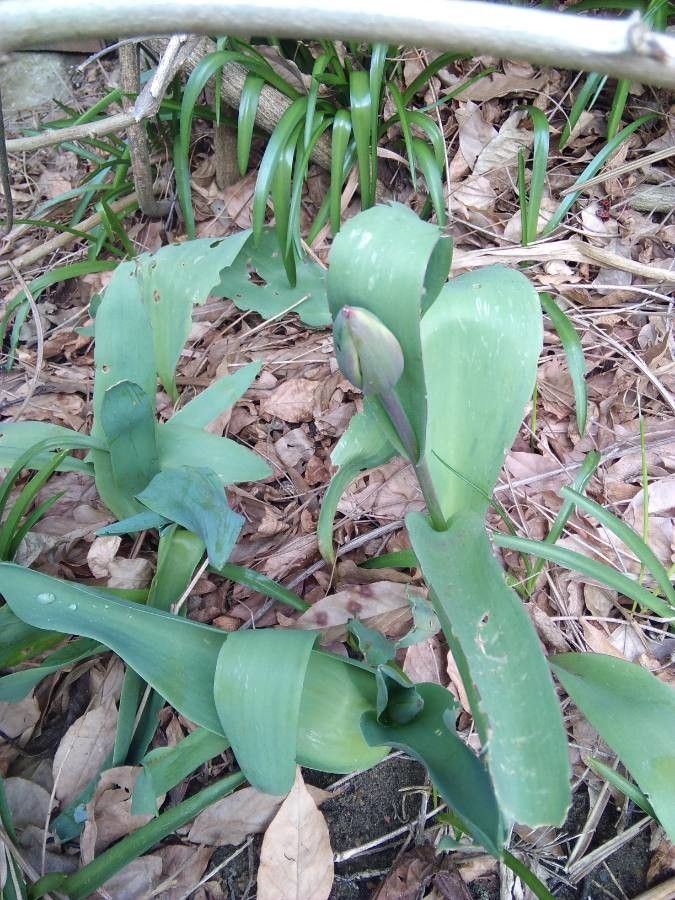
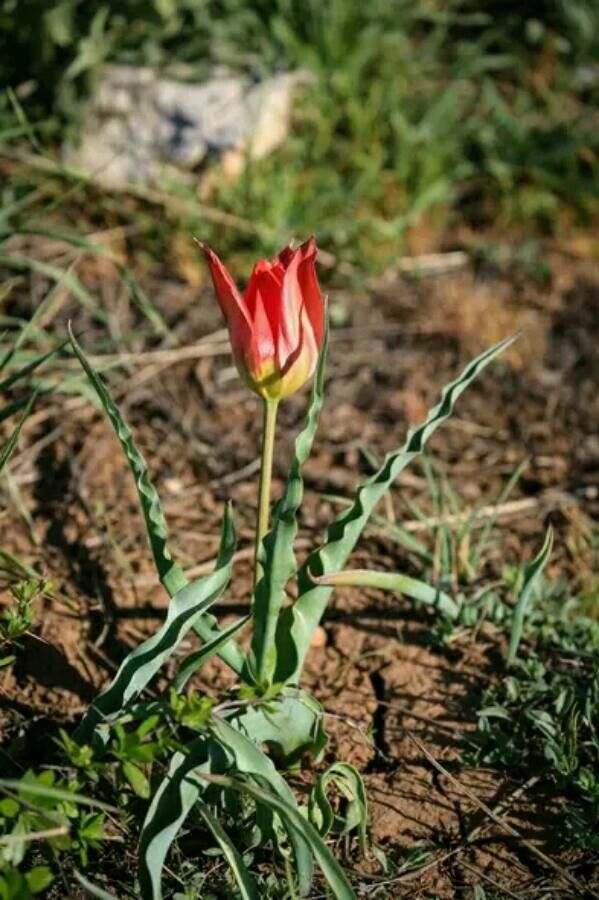
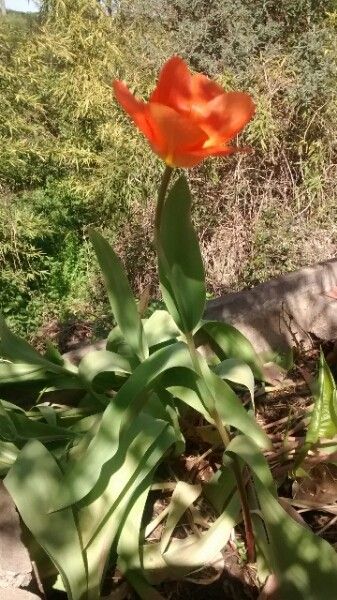
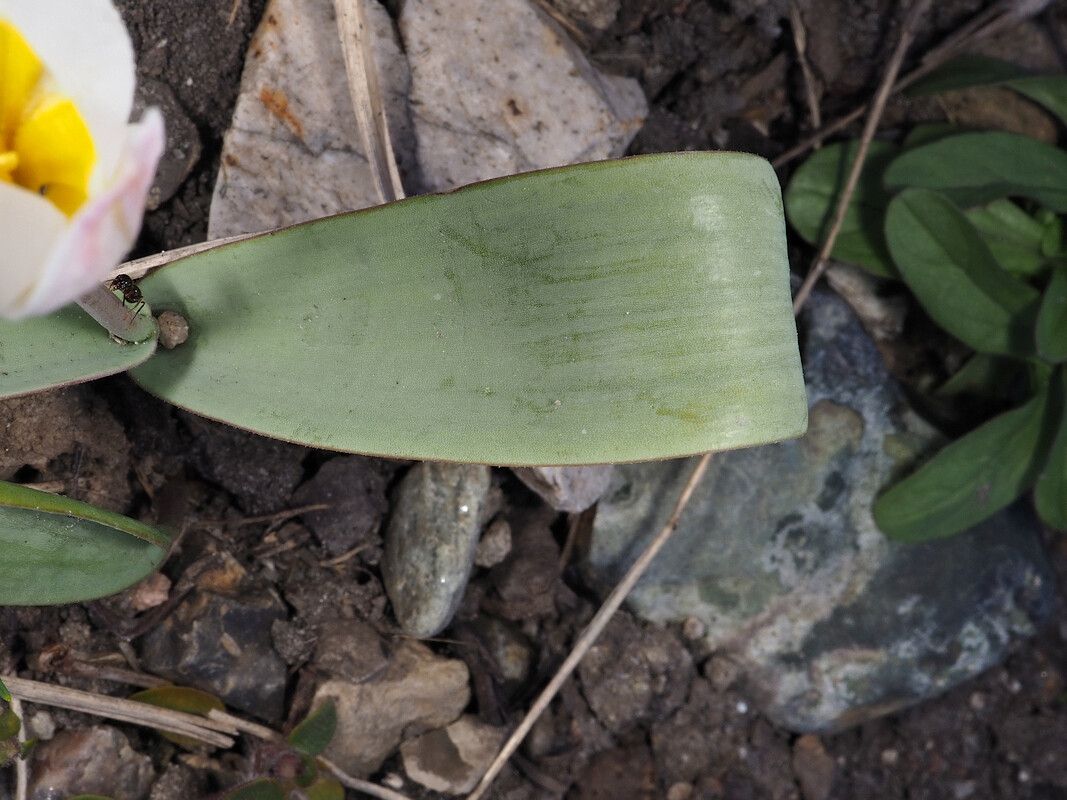
Tulipa sprengeri, or Sprenger's tulip, is a wild tulip from the Pontic coast of Turkey. It is quite rare and possibly extinct in the wild, but widely cultivated as an ornamental. Daniel Hall put it into the Kolpakowskiana group, later in the "solitary species". Wessel Marais placed it in section Tulipa because of its naked filament. Genetically, it seems to belong to the section Eriostemones, even if it does not have a hairy filament, normally seen as a defining characteristic, whereas glabrous filaments are typical of the Tulipa-group. It is diploid. The locus typicus is Amasya.
Sprenger's tulip is fairly resistant to disease and generally not prone to illnesses. However, it can be vulnerable to pests and diseases present in its environment. These infections are generally mild. In terms of care, this plant requires moderate maintenance. It should be pruned regularly to preserve a good appearance and support healthy growth. Fertilizing can also help encourage flowering. Sprenger's tulip is suitable for anyone with an outdoor area, such as a garden or patio, and does not demand extensive care experience. It may need more attention when kept indoors.
How to keep Tulipa Sprengeri.
Light
Sprenger's tulip performs best in full light, with abundant illumination being crucial for its nourishment. It can, however, endure lower light levels. Its original environment is characterized by strong sunlight exposure, but too much light can weaken it while too little can hinder its growth.
Water
Sprenger's tulip, which originates from temperate regions, thrives when it receives moderate moisture and has balanced water retention. It needs to be watered weekly and is usually grown outdoors to take advantage of seasonal rainfall. This aligns with its natural growth cycles and ensures optimal flowering.
Temperature
Sprenger's tulip comes from habitats that experience a broad temperature range and is best suited to climates of 32 to 95 °F (0 to 35 ℃). Providing Sprenger's tulip with a comparable temperature range year-round will encourage optimal growth.
Fertilizer
For Sprenger's tulip, the primary time to apply fertilizer is in early spring while the flowers are forming. The proper fertilizer promotes better blooms and helps Sprenger's tulip produce attractive flowers. Fertilizing in early spring ensures strong flowers during the season and supplies energy for dormant growth phases.
Pruning
Sprenger's tulip blossoms in late spring with delicate red petals. To maintain the plant's health and promote blooming, it's important to prune it in early spring. This helps remove dead foliage, manage the plant's size, and encourage more abundant flowering. Be sure to clean your tools to prevent the spread of diseases, and wear gloves to protect your skin from irritation. Proper pruning enhances the vitality and appearance of Sprenger's tulip.
Pot & Repot
Repot Sprenger's tulip every 2-3 years between late summer and early fall, when the plant is dormant. Choose a deep pot to accommodate the slender bulbs, making sure it has good drainage. After repotting, use well-draining soil and water the plant sparingly to prevent rot. Avoid using oversized containers, as they can hinder optimal growth.
Botanical profile.
- Plant Type
- Herb
- Life Cycle
- Perennial
- Genus
- Tulipa
- Family
- Liliaceae
- Hardiness Zone
- 3-9
- Mature Height
- 30 cm to 37 cm
- Mature Spread
- 10 cm
- Leaf Color
- Green
- Leaf Type
- Deciduous
- Flower Color
- Red
- Flower Size
- 5.08 cm to 6.35 cm
- Bloom Time
- Mid spring, Late spring
- Planting Time
- Spring, Summer
- Harvest Time
- Early summer, Mid summer
- Native Area
- Turkey
Reader questions.
What are the sunlight requirements for Sprenger's tulip?
Sprenger's tulip thrives under full sunlight conditions, requiring more than 6 hours of sunlight daily to flourish efficiently. This plant can also tolerate partial sunlight conditions, meaning about 3-6 hours of sunlight, although it originates from environments with substantial sunlight exposure. It's essential to find the right balance for your Sprenger's tulip, as too much sunlight can harm its vitality, while too little can impede its growth. Observing how sunlight moves through your garden and choosing spots that provide a perfect balance of light and shade will ensure the plant's happiness.
What is the ideal temperature range for growing Sprenger's tulip?
Sprenger's tulip thrives in a temperature range from 32 to 95°F (0 to 35°C). This temperature range is ideal for the tulip's year-round growth, simulating its native habitat conditions. The plant has a strong cold resistance, meaning it usually doesn't require special frost protection measures in winter. However, in extremely cold conditions where temperatures are expected to drop below -35°C, it is crucial to provide protection by covering the plant with soil or straw and watering it abundantly before the first freeze to ensure the soil remains moist.
How do artificial lighting conditions affect Sprenger's tulip?
When natural sunlight is insufficient for Sprenger's tulip, especially during winter or in less sunny spaces, artificial lighting can serve as a vital solution. For optimal growth, it's recommended to use LED lights, which can be customized to provide specific wavelengths needed by the plant. For plants requiring full sun, 30-50W/sq ft of artificial light is needed; for partial sun plants, 20-30W/sq ft; and for full shade plants, 10-20W/sq ft. The light source should be placed 12-36 inches above the plant to mimic natural sunlight conditions, and the duration should mimic natural daylight hours, with most plants needing 8-12 hours of light per day.
How does Sprenger's tulip react to low temperatures?
Sprenger's tulip is cold-tolerant and generally thrives when temperatures are above 0°C. It should ideally be kept above -30°C during the winter. Despite its cold tolerance, if temperatures fall below -35°C, there might not be visible changes during the winter, but the plant may experience a decrease in sprouting or might not sprout at all come spring. In such cases, removing any parts that have failed to sprout in the spring is recommended to aid recovery.
What are the symptoms of improper lighting for Sprenger's tulip?
Symptoms of light deficiency in Sprenger's tulip may include smaller new leaves, leggy or sparse growth, faster leaf drop, slowed or ceased growth, lighter-colored or chlorotic new leaves, sunscald, leaf curling, wilting, and leaf scorching. Conversely, symptoms like chlorosis and sunscald indicate damage from excessive sunlight. These signs show the plant's struggle with incorrect lighting conditions, where too little light hampers growth and too much light causes physical damage to the plant.
What should I do if Sprenger's tulip is exposed to high temperatures?
During the summer, it is essential to ensure that Sprenger's tulip is not exposed to temperatures above 35°C. Exposure to temperatures exceeding 38°C could result in the leaves turning lighter, curling, and becoming prone to sunburn, which, in severe cases, could lead to the entire plant wilting and drying. To mitigate these effects, trim away any sunburned or dried parts, relocate the plant to a shaded area during the midday and afternoon sun, or use a shade cloth. Additionally, watering the plant in the morning and evening will help maintain soil moisture and support the plant's health.
How can you help Sprenger's tulip thrive in terms of sunlight exposure?
To ensure optimal growth for Sprenger's tulip, gradually move the plant to a location where it receives at least 6 hours of direct sunlight daily. This can be achieved by using a south-facing window or employing artificial lights like desk or ceiling lamps for at least 8 hours daily, or investing in professional plant grow lights. For outdoor plants, it's crucial to move them gradually to avoid sunburn. Reducing obstructions that block sunlight, such as pruning trees or transplanting smaller plants to sunnier locations, can also benefit the plant. It's important to remember that while parts of the plant affected by insufficient light may not recover, new growth should be healthy with improved light conditions.