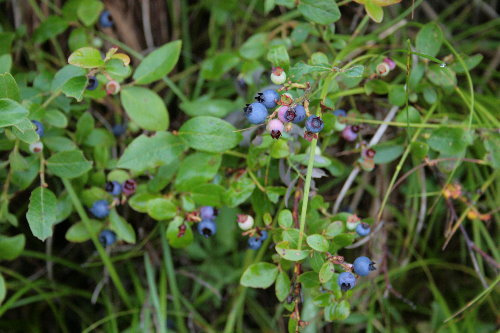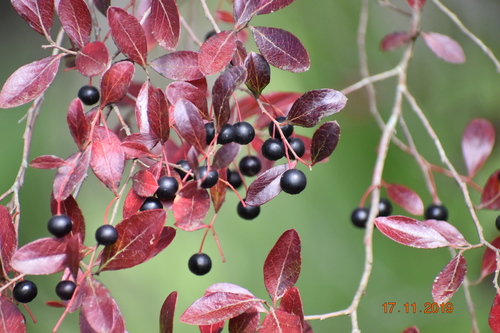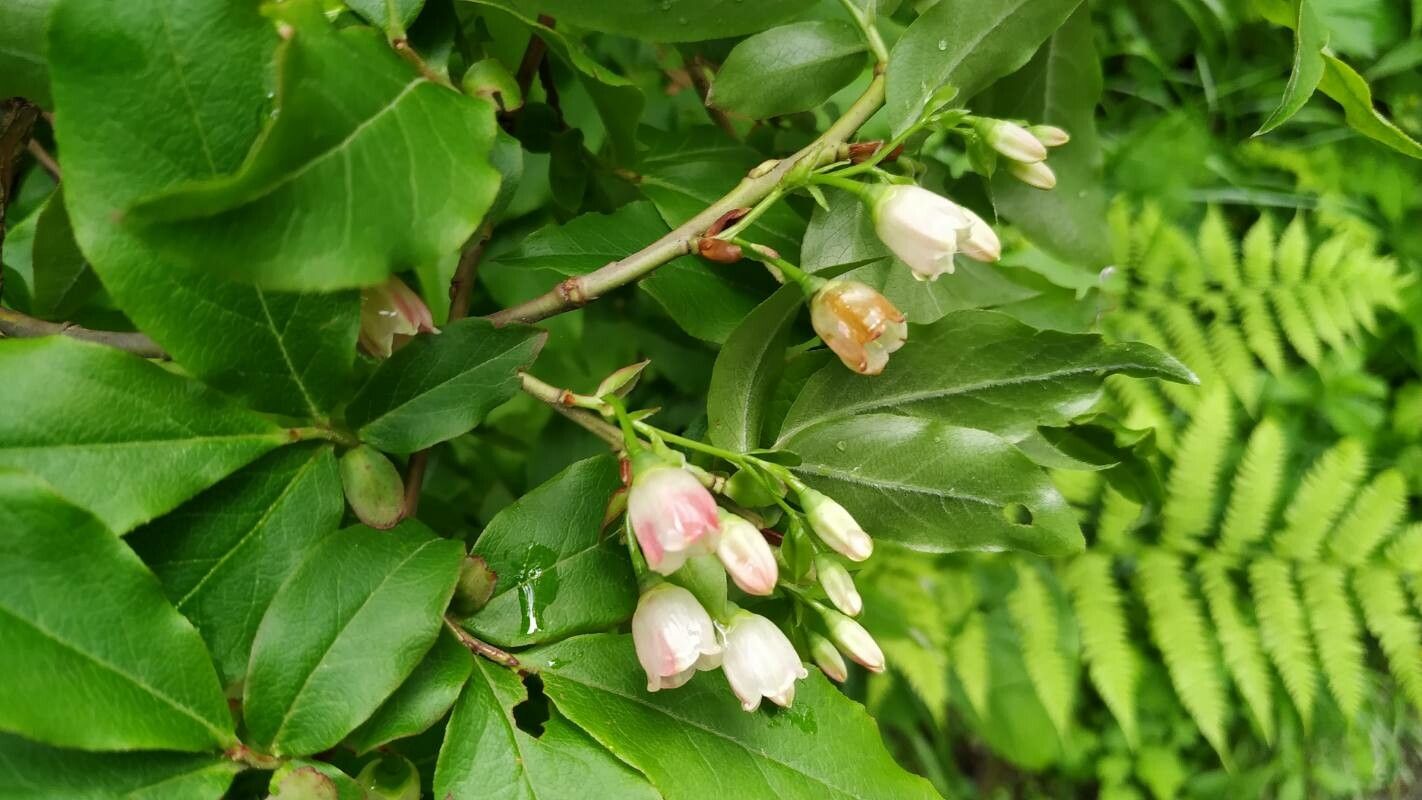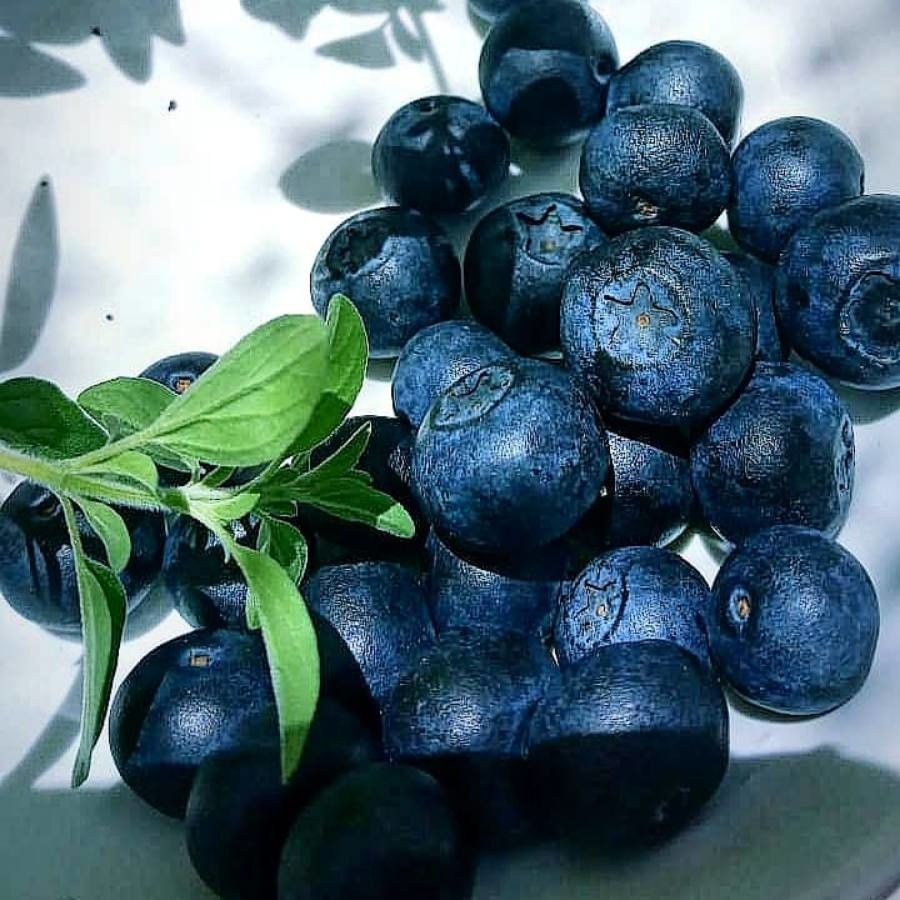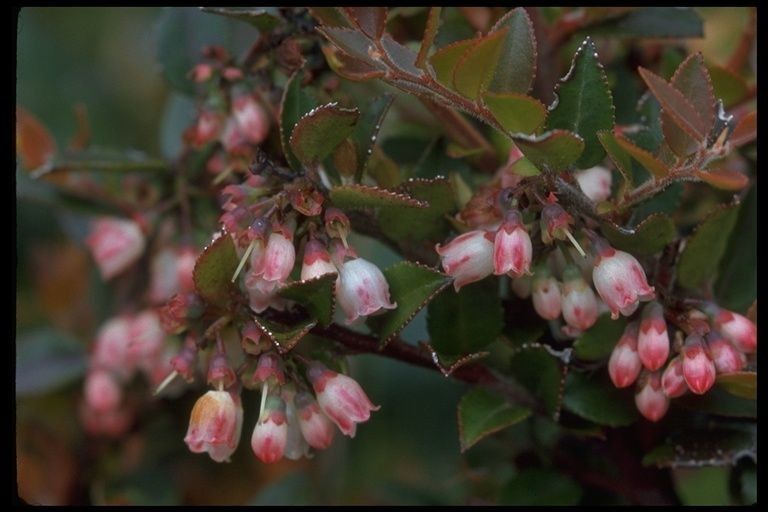
Vaccinium hirsutum is a species of flowering plant in the heath family known by the common name hairy blueberry. This species is endemic to a small area in the southern Appalachian mountains, where it is only known from a few counties in eastern Tennessee, northern Georgia, and the Carolinas.Vaccinium hirsutum is native to dry oak-pine ridges, where it can be locally abundant. It is a shrub up to 75 cm (28 inches) tall, forming large colonies. Leaves are rather thick, elliptical, densely hairy, up to 62 mm (2 1/2 inches) long.Vaccinium hirsutum produces white, cylindrical flowers in late spring, followed by hairy, black berries in the summer.
The hairy blueberry is resistant to disease and typically not susceptible to illnesses. In terms of care, this plant is fairly low-maintenance. When grown outdoors it needs little watering, and larger plants usually do not require pruning. Smaller plants, however, should be pruned after they finish blooming. The hairy blueberry is suitable for anyone with outdoor space, such as a garden or a deck, and does not demand extensive care experience.
How to keep Vaccinium Hirsutum.
Fertilizer
Encourage healthy development by giving your Hairy blueberry fertilizer in the early spring. Routinely fertilizing promotes general health and leads to robust growth, the ability to withstand harsh circumstances, and heightened resistance to diseases and pests. Adhere to a particular fertilization plan for your Hairy blueberry to guarantee bright, deeply colored foliage and a lush look.