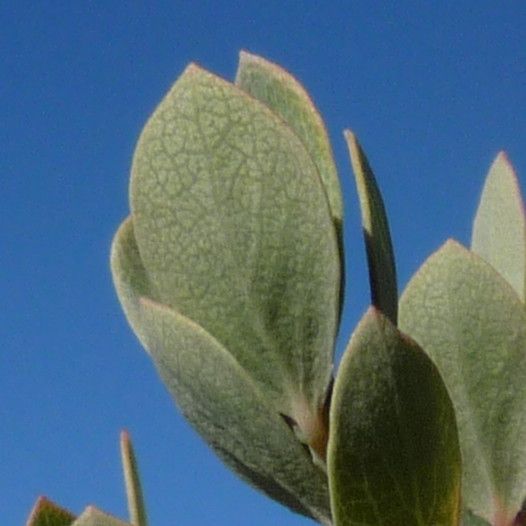
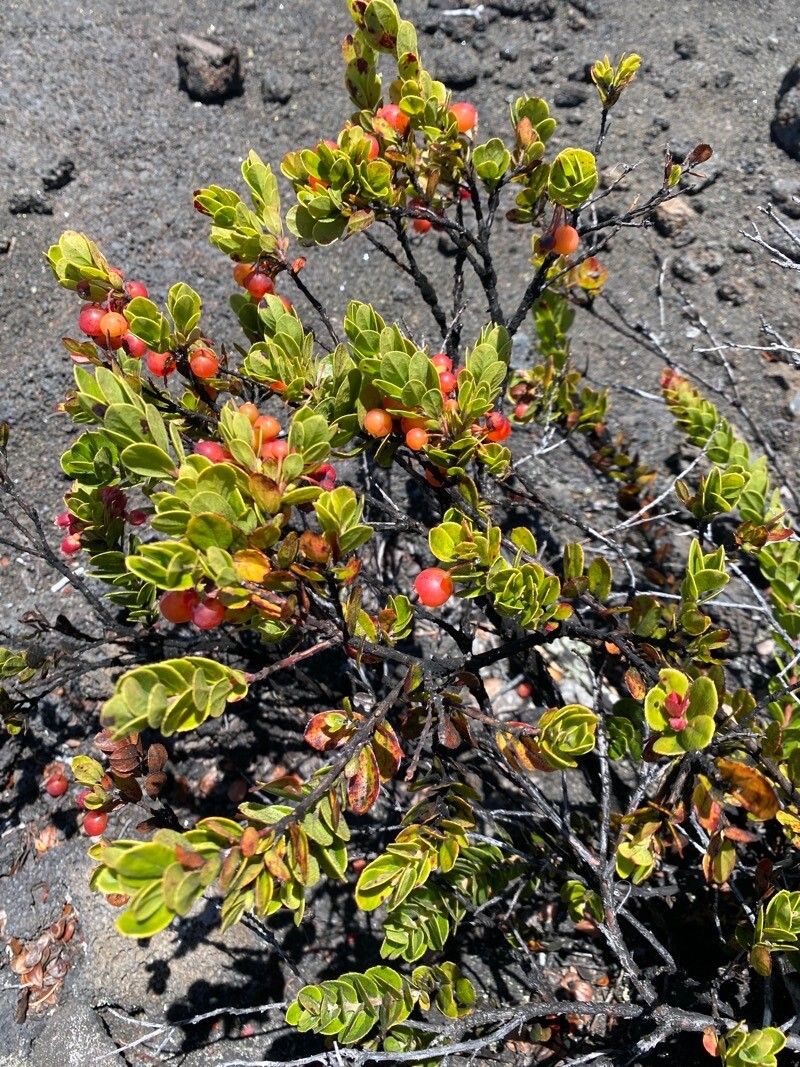
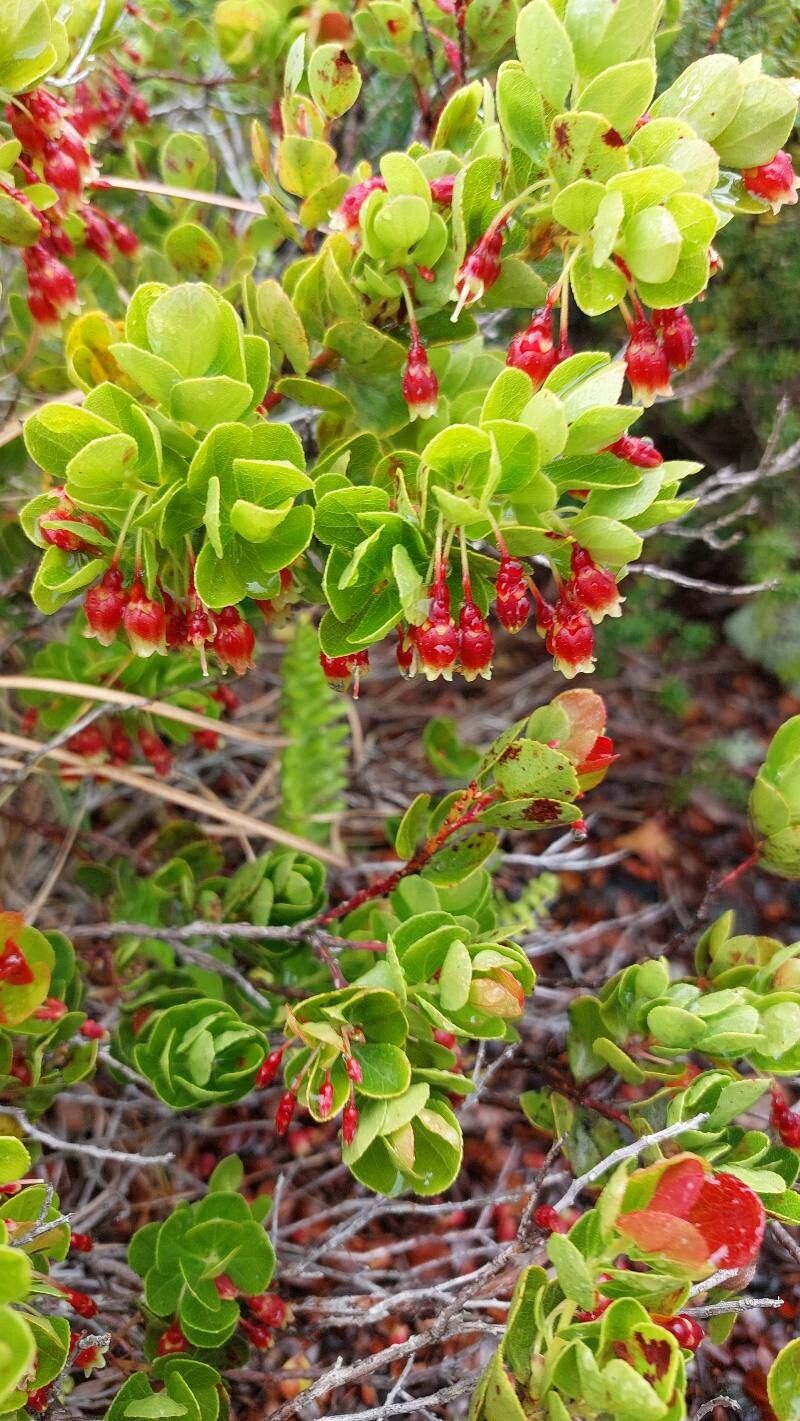
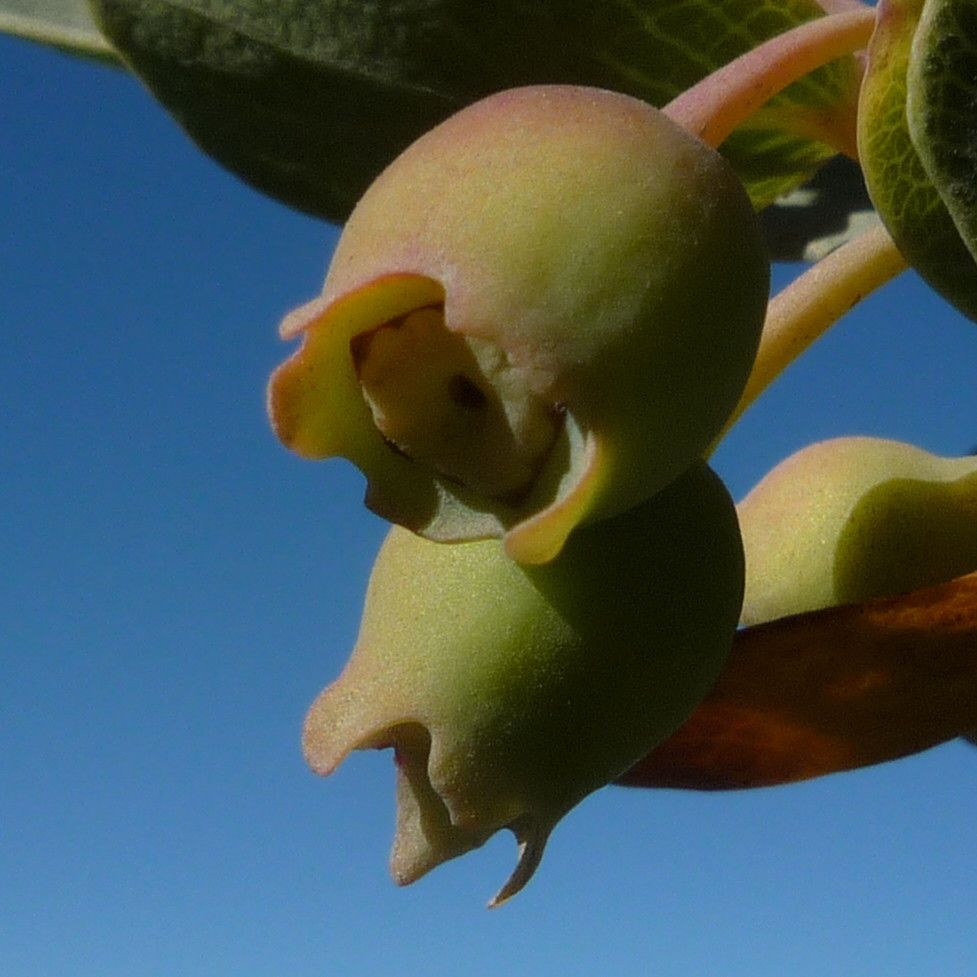
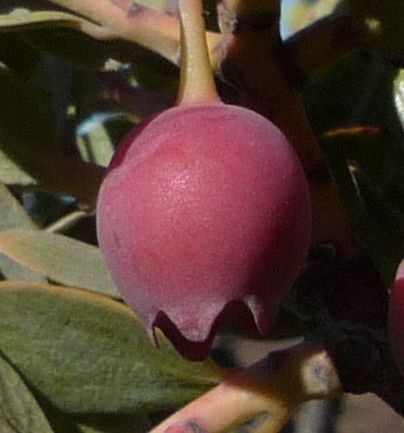
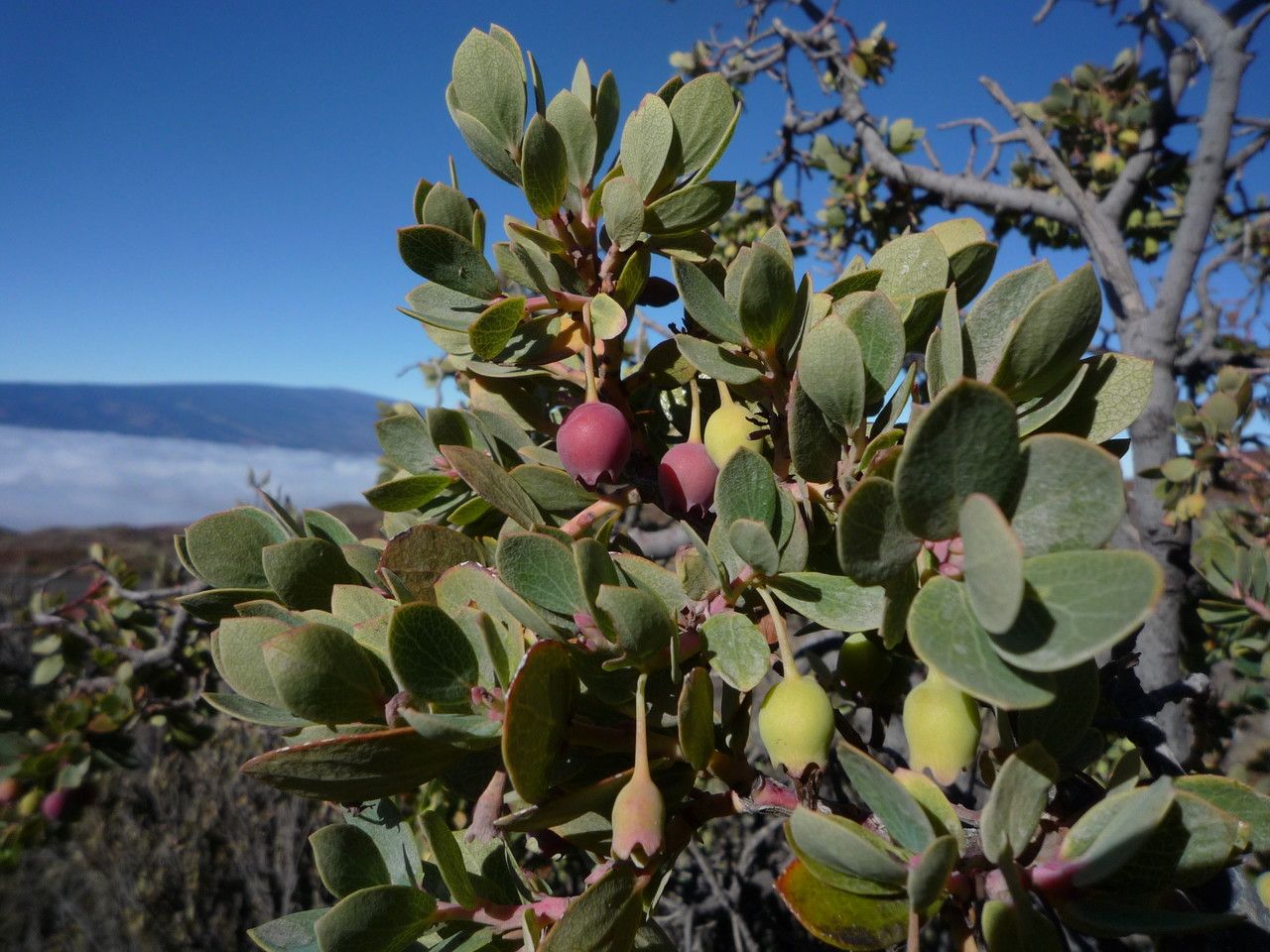
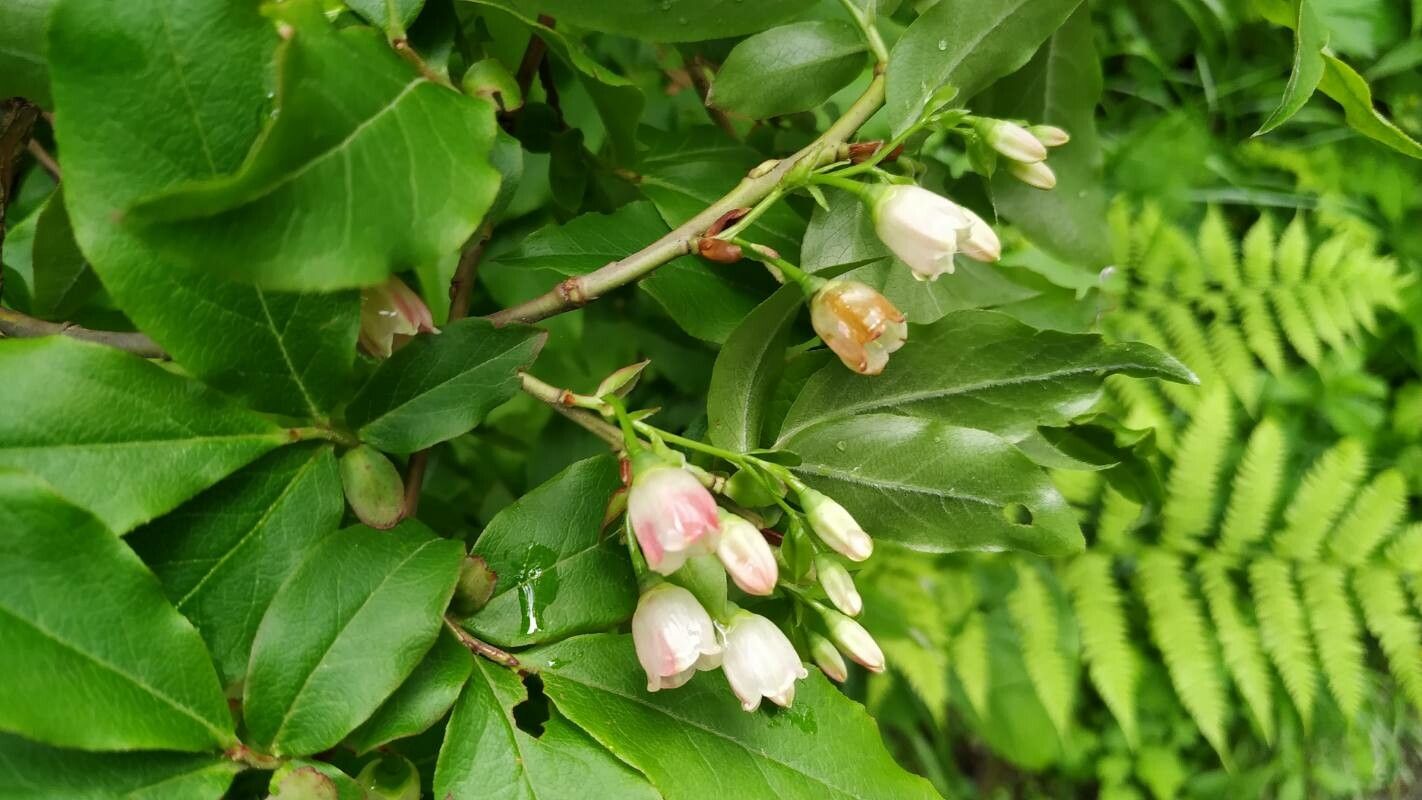
Vaccinium reticulatum, commonly known as the netted blueberry, is a small evergreen shrub that belongs to the Ericaceae family. Native to Southeast Asia, this plant is found in countries such as Thailand, Malaysia, and Indonesia. It typically grows to a height of 1-2 meters and has a spreading habit.
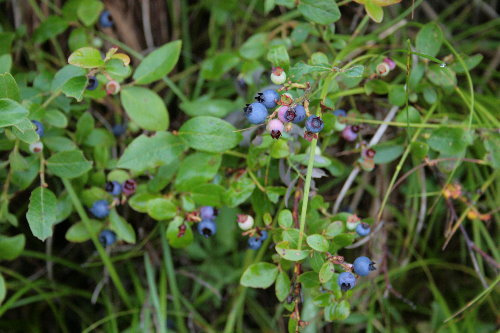
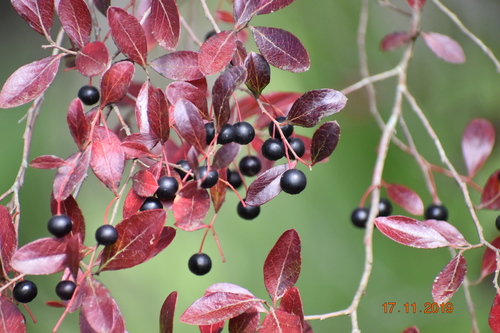
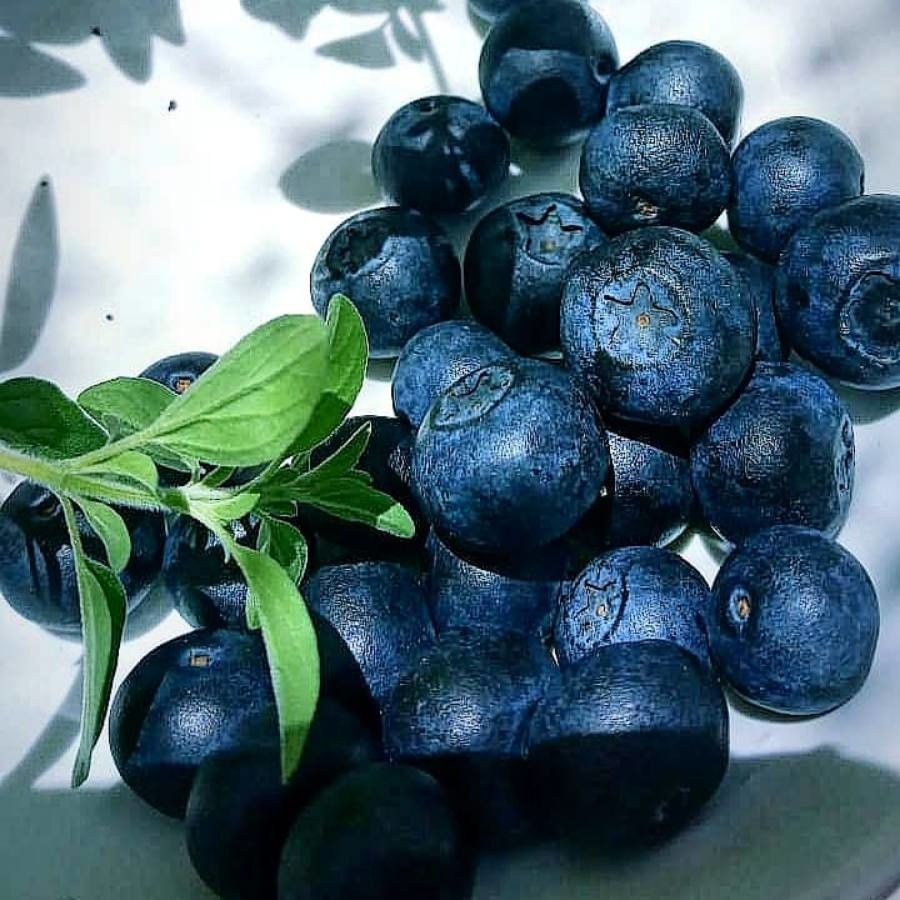
The leaves of Vaccinium reticulatum are small, oval-shaped, and glossy dark green. In the spring, the plant produces clusters of small white or pinkish flowers. These flowers are followed by edible blue-black berries with a sweet taste.
Vaccinium reticulatum prefers acidic soil with good drainage and thrives in partial shade or full sun. It is often grown both for its ornamental value and for fruit production.
Traditionally, the netted blueberry has been used in Southeast Asian medicine to treat various ailments such as diarrhea, fever, sore throat, and urinary tract infections, due to its high antioxidant content.
Overall, Vaccinium reticulatum is an attractive evergreen shrub that offers ornamental appeal and produces edible fruit rich in antioxidants. It makes an excellent addition to any garden or landscape design project.
'ohelo 'ai exhibits strong resistance to disease and is typically not susceptible to illnesses. Regarding upkeep, this plant is fairly low-maintenance. Planted outdoors, it needs only minimal watering, and larger specimens usually do not require pruning. Smaller specimens, however, should be trimmed after they finish blooming. 'ohelo 'ait is appropriate for anyone with outdoor space, such as a garden or a deck, and does not demand extensive care experience.
How to keep Vaccinium Reticulatum.
Water
To successfully grow 'ohelo 'ai, it's important to water them regularly, especially in the hot summer months, as sandy soil does not retain moisture well. Water them every 2-3 days when it's hot. From the time they germinate until their leaves drop, ensure they receive about 25mm of water per week. During the fruiting stage, increase this amount to 40mm per week. As fall approaches, gradually reduce the amount of water to help the plants prepare for dormancy.
Fertilizer
To encourage healthy growth, fertilize your 'ohelo 'ai in early spring. Regular feeding boosts overall health, producing vigorous growth, increased tolerance of harsh conditions, and better resistance to pests and diseases. Follow a consistent fertilization schedule for your 'ohelo 'ai to keep the foliage vibrant, deeply colored, and lush in appearance.
Pruning
To prune 'ohelo 'ai effectively, start in early spring by removing any dead wood and thinning out congested areas to improve airflow. Light pruning helps maintain the plant's natural shape, which boosts growth and fruit yield. Regular pruning promotes vigor, reduces the risk of disease, and enhances sunlight penetration for the plant.
Botanical profile.
Other names.
Reader questions.
What are the sunlight requirements for 'ohelo 'ai (Vaccinium reticulatum)?
The 'ohelo 'ai (Vaccinium reticulatum) needs specific sunlight conditions to thrive. It requires full sun, which means the plant should receive more than 6 hours of sunlight daily. Alternatively, it can grow under partial sun, getting about 3-6 hours of sunlight. It's important to observe the way sunlight moves through your garden, selecting locations that offer the right mix of light and shade, which is crucial for the plant's health and happiness.
What is the common name for Vaccinium reticulatum?
The common name for Vaccinium reticulatum is 'ohelo 'ai.
What is the botanical name of 'ohelo 'ai?
The botanical name of 'ohelo 'ai is Vaccinium reticulatum.