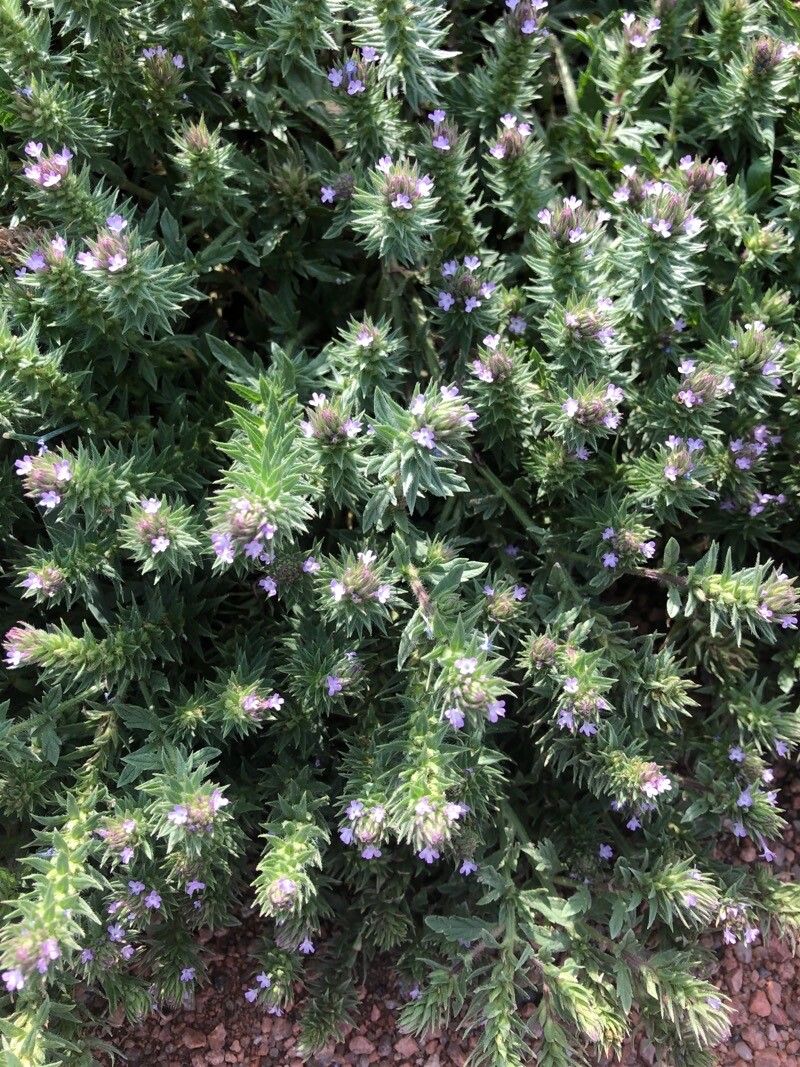
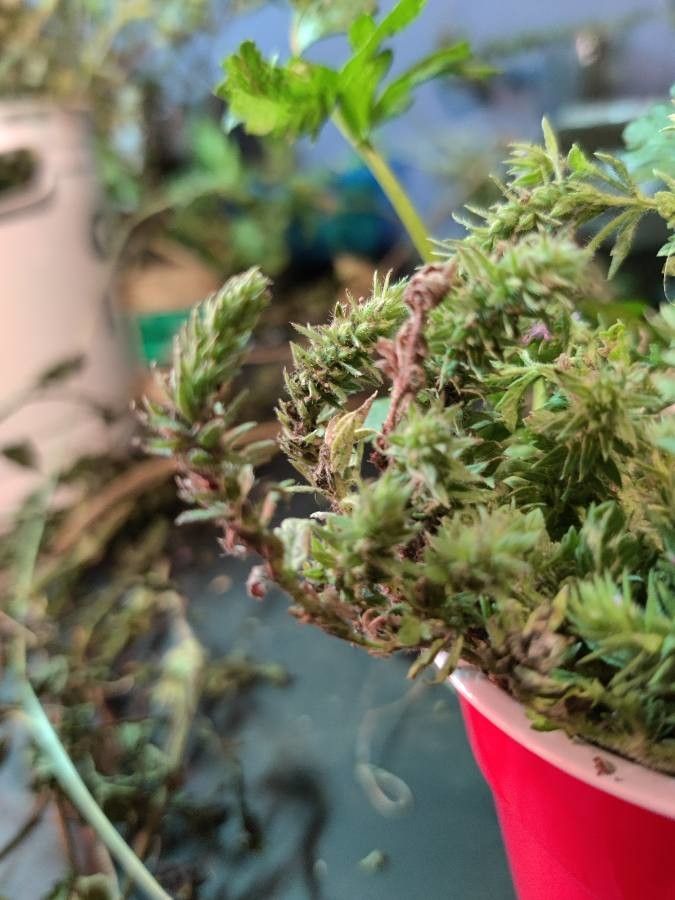
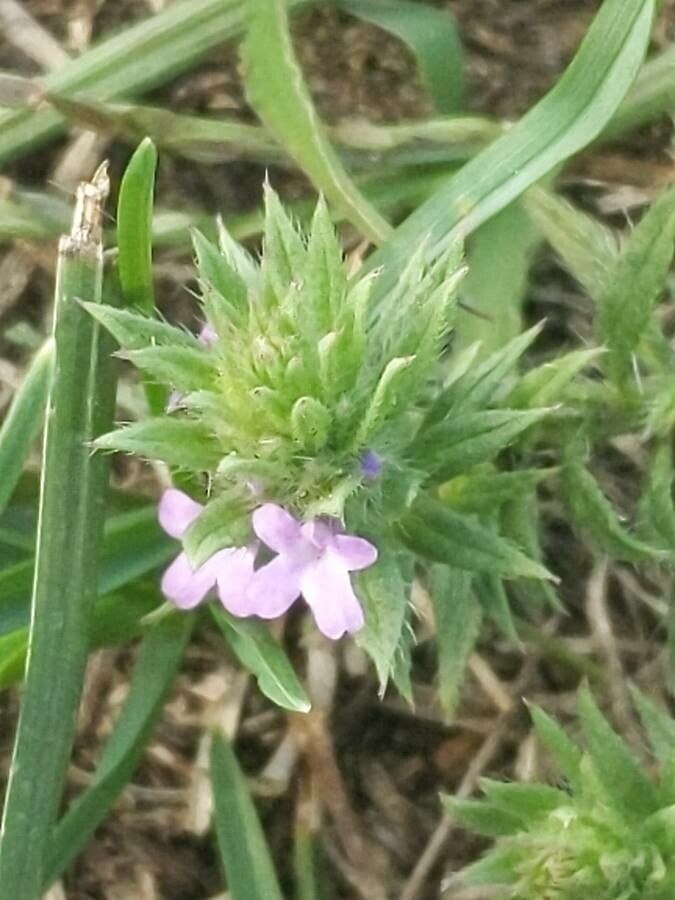
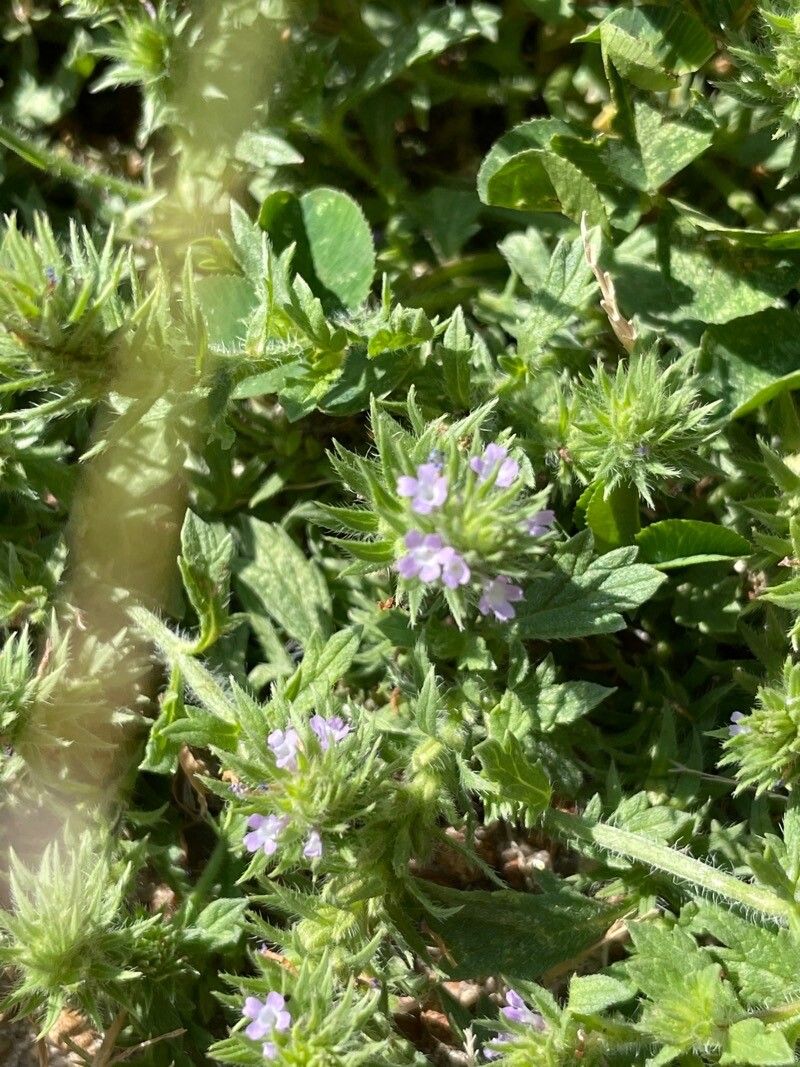
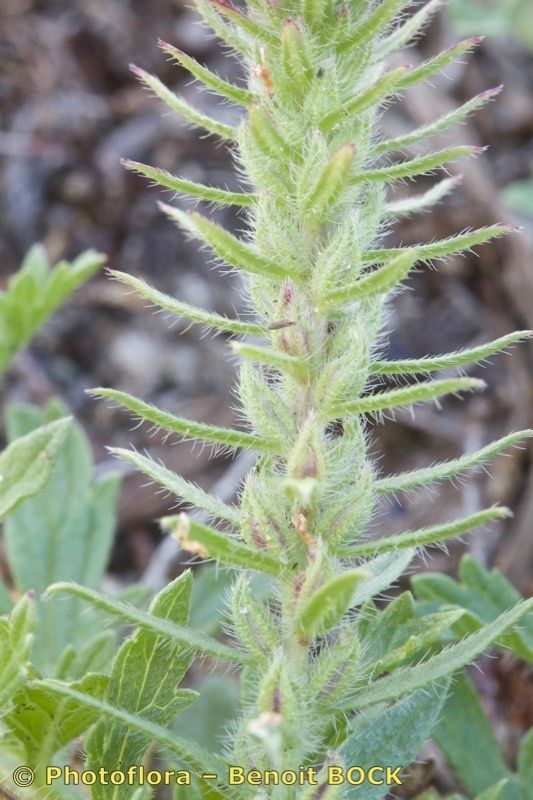
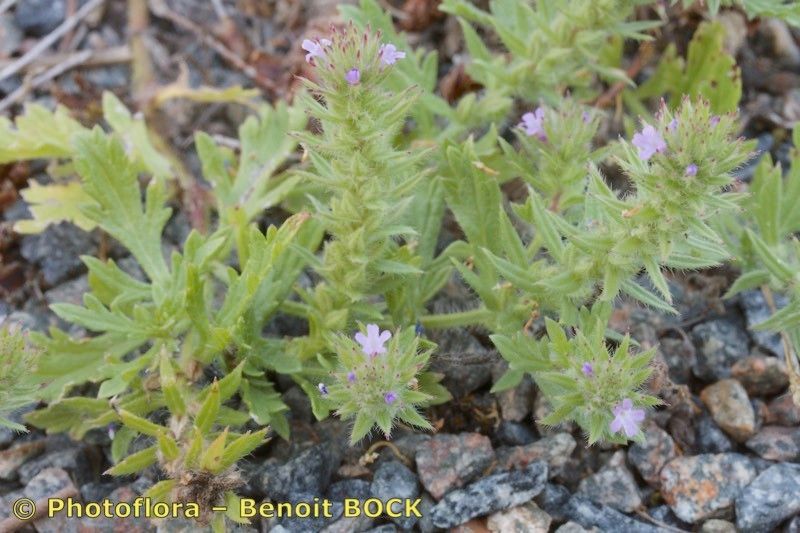
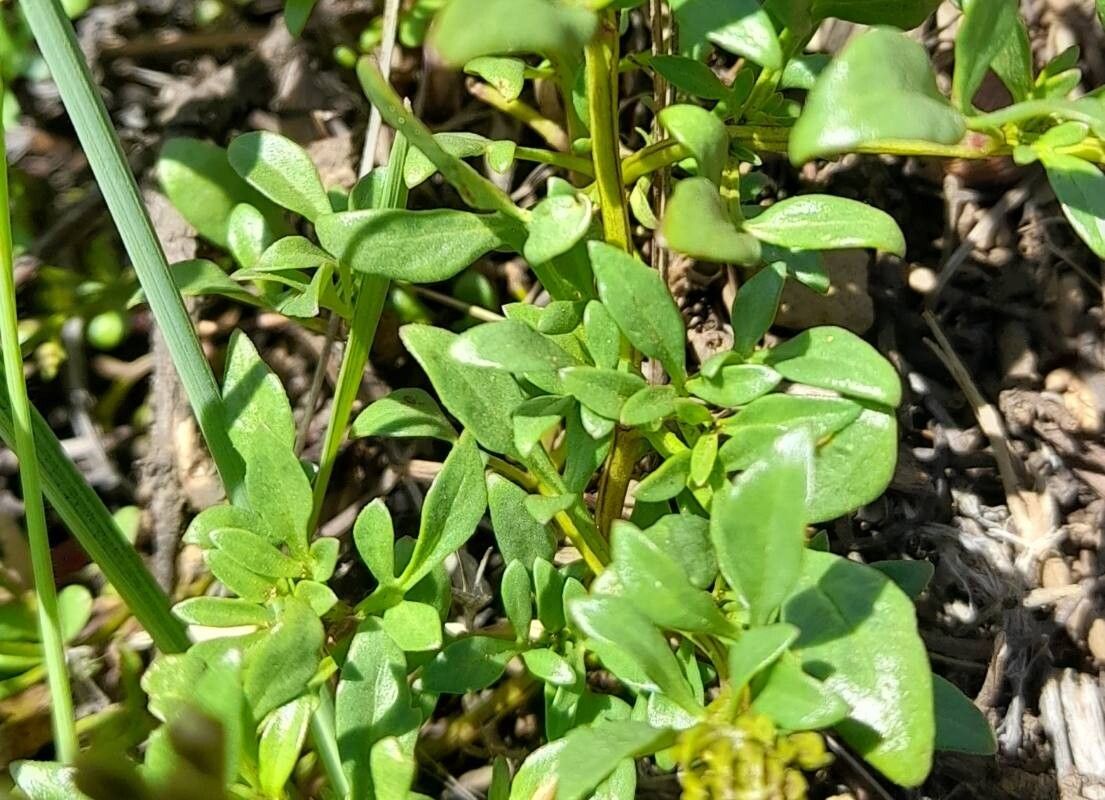
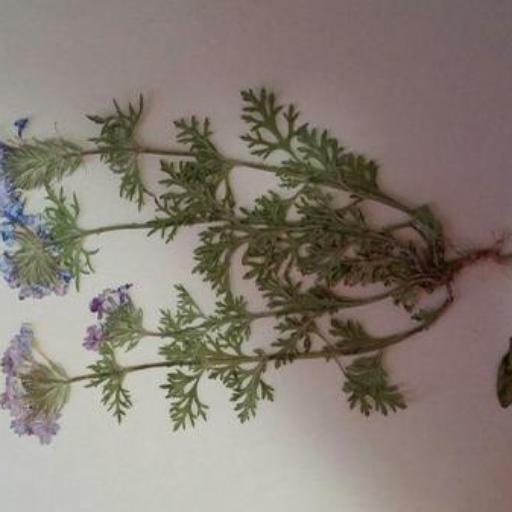
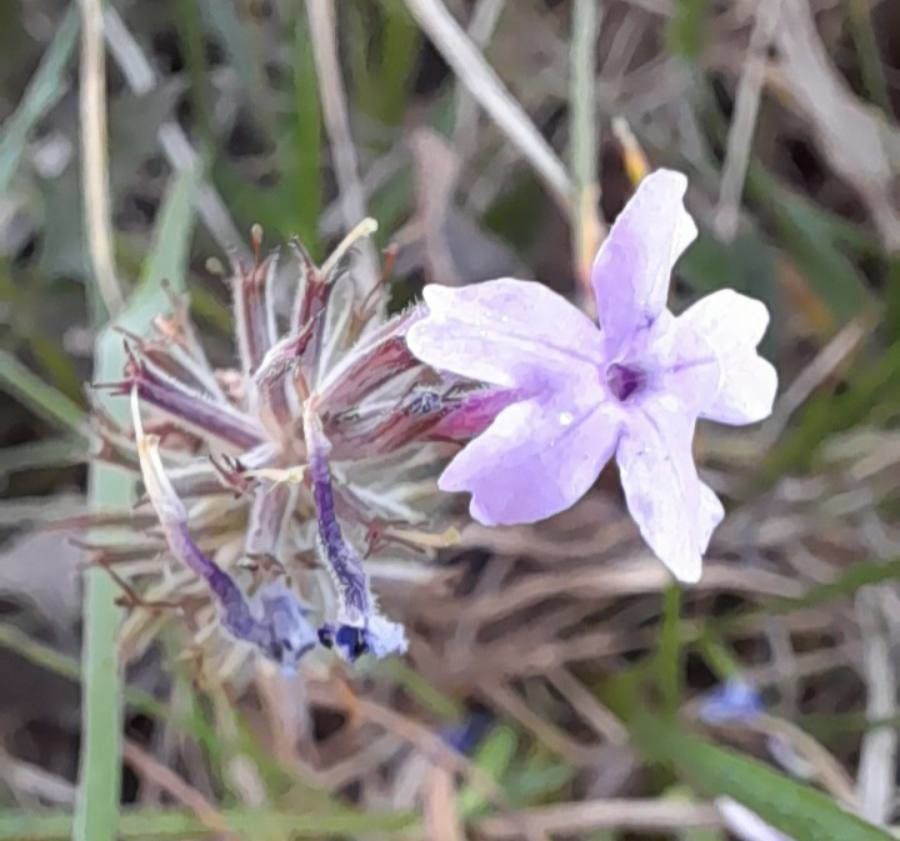
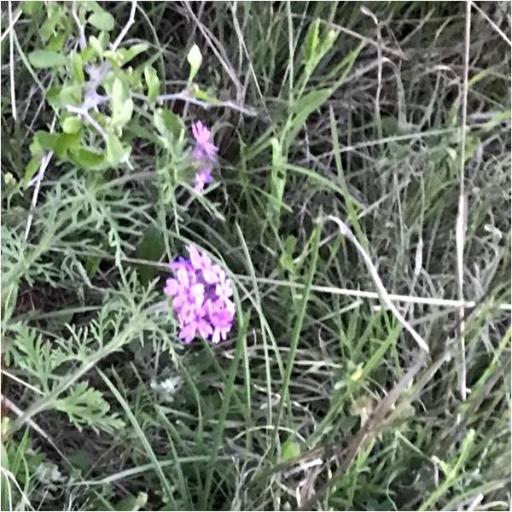
Verbena bracteata is a species of verbena known by the common names bracted vervain, bigbract verbena, prostrate vervain, and carpet vervain. It is native to North America where it is widespread, occurring throughout the continent except for northern Canada and southern Mexico. It occurs in many types of habitat, especially disturbed areas. It typically blooms between the months of May and October. This annual or biennial herb produces several hairy, spreading stems up to 30 centimeters long forming a low mat on the ground. The hairy leaves are toothed or lobed. The inflorescence is a spike of flowers which is dense with long, pointed, leaflike bracts each up to 8 millimeters long. Each small tubular flower is about half a centimeter wide and white to pale purple in color.
Big-Bract Verbena is fairly disease-resistant and generally not prone to illnesses. Nevertheless, it can be affected by pests and diseases present in its environment. These problems are usually not serious. For care, this plant needs moderate maintenance. Regular pruning is necessary to preserve a neat appearance and encourage healthy growth. Fertilizing can also help stimulate flowering. Big-Bract Verbena is well suited for anyone with outdoor space like a garden or patio and does not demand extensive gardening experience. It may need more attention if cultivated indoors.
How to keep Verbena Bracteata.
Light
The big-Bract Verbena thrives best in full sun. Native to areas with plentiful sunlight, it takes in a large portion of solar radiation to fuel growth through its various stages. However, excessive exposure can impair photosynthesis and cause damage. It does poorly without any sun.
Water
Big-Bract Verbena thrives in moderately moist conditions and can withstand short periods of dryness. Ideally, it should be kept consistently moist but not waterlogged, benefiting from a weekly watering routine. As an herbaceous perennial, it grows well outdoors, taking advantage of natural rainfall to boost its resilience during the growing season.
Temperature
Big-Bract Verbena is native to regions with moderate temperatures and thrives between 68 and 95 °F (20 to 35 ℃). These temperature preferences make it adaptable to a variety of climates. Seasonal adjustments may be necessary to maintain the plant's health.
Fertilizer
Big-Bract Verbena benefits from regular, dilute applications of fertilizer to encourage healthy leaf growth. You should fertilize Big-Bract Verbena about once a month during the summer. Nitrogen is vital for foliage, and providing nitrogen-rich sources helps Big-Bract Verbena thrive.
Pruning
The Big-Bract Verbena can reach heights of 10 to 140 cm and spread up to 2 meters wide. It blooms from summer through winter and needs monthly pruning during the summer, with pruning twice a year at other times. To maintain the plant, remove any spent flowers and foliage, and trim 1 to 2 inches at a time. Be careful not to cut more than one-third of the plant at once.
Botanical profile.
- Plant Type
- Herb
- Life Cycle
- Annual, Biennial, Perennial
- Genus
- Verbena
- Family
- Verbenaceae
- Hardiness Zone
- 2-6
- Mature Height
- 5 cm to 25 cm
- Mature Spread
- 30 cm to 91 cm
- Leaf Color
- Green, Dark Green
- Leaf Type
- Semi-evergreen
- Flower Color
- Purple, Lavender
- Flower Size
- 2.54 cm
- Bloom Time
- Late spring, Early summer, Mid summer
- Planting Time
- Spring, Autumn
- Harvest Time
- Summer
- Native Area
- Mexico
Other names.
Reader questions.
What are the sunlight requirements for Big-Bract Verbena?
Big-Bract Verbena thrives best in locations with full sun, which means it requires more than 6 hours of sunlight daily. It can also grow in partial sun, with about 3-6 hours of sunlight. It's crucial to observe how sunlight moves through your garden to find the perfect balance for your plants. Remember, the right amount of sunlight ensures the plant's health and happiness.
How does Big-Bract Verbena respond to sunlight?
Originating from environments where sunlight is plentiful, Big-Bract Verbena has a significant need for solar radiation to support its growth through various stages. It thrives under the full embrace of the sun, but overexposure can damage the plant by hindering its photosynthesis process. Without enough sunlight, the plant doesn't grow well, indicating the importance of providing adequate sunshine for its development.
What are the indoor lighting requirements for Big-Bract Verbena?
Indoor plants like Big-Bract Verbena require adequate lighting, especially when natural sunlight is not sufficient. In winter or less sunny spaces, artificial lights can be a vital solution. LED lights are recommended for their ability to be customized to provide specific wavelengths needed by the plant. For full sun plants, 30-50W per square foot is needed, partial sun plants require 20-30W per square foot, and full shade plants need 10-20W per square foot. The light source should be placed 12-36 inches above the plant and kept on for 8-12 hours a day to mimic natural daylight hours.
What symptoms indicate light deficiency in Big-Bract Verbena when grown indoors?
Symptoms of light deficiency in Big-Bract Verbena include smaller new leaves, leggy or sparse growth, early leaf drop, delayed or halted growth, lighter-colored new leaves, and symptoms of chlorosis. These signs suggest that the plant is not receiving enough light, which is crucial for its development. Adjustments in lighting conditions should be made to ensure the plant's health.
How can you address Big-Bract Verbena's light deficiencies both indoors and outdoors?
To address light deficiencies for Big-Bract Verbena, gradually move the plant to a sunnier location each week to ensure it receives at least 6 hours of direct sunlight daily. For indoor plants, consider using a south-facing window or artificial lights if the plant is large. Outdoors, gradually acclimatize your plants to more sunlight while avoiding sudden changes that could result in sunburn. Reducing obstructions that block sunlight and considering transplanting to sunnier locations can also help in maximizing light exposure.