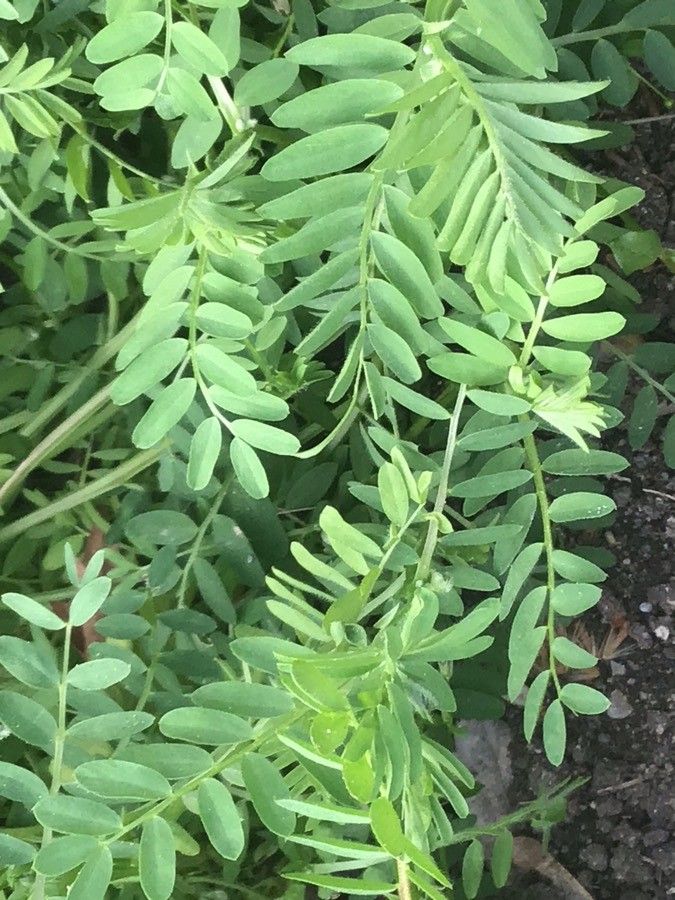
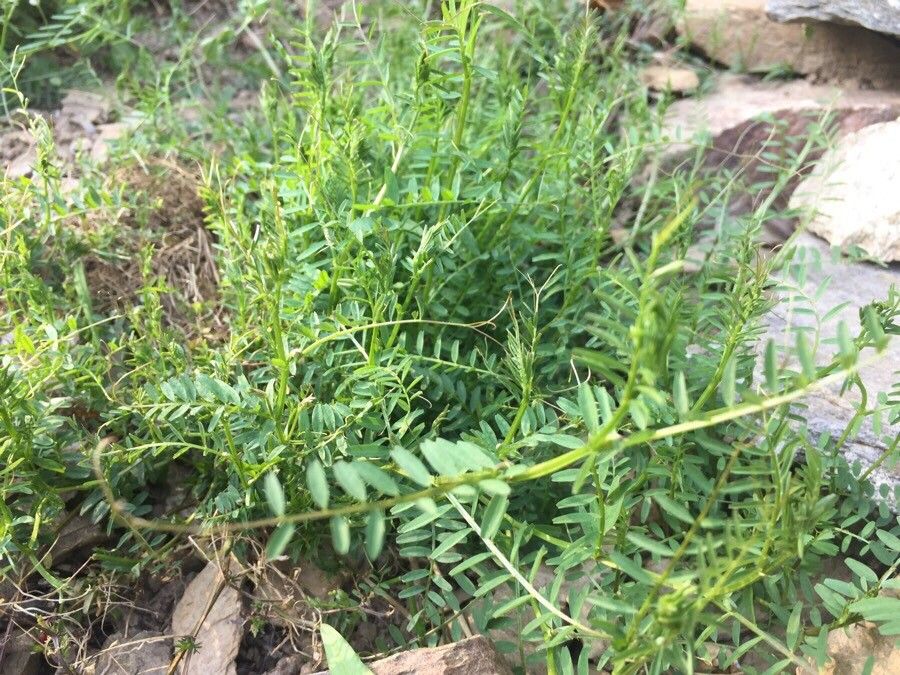
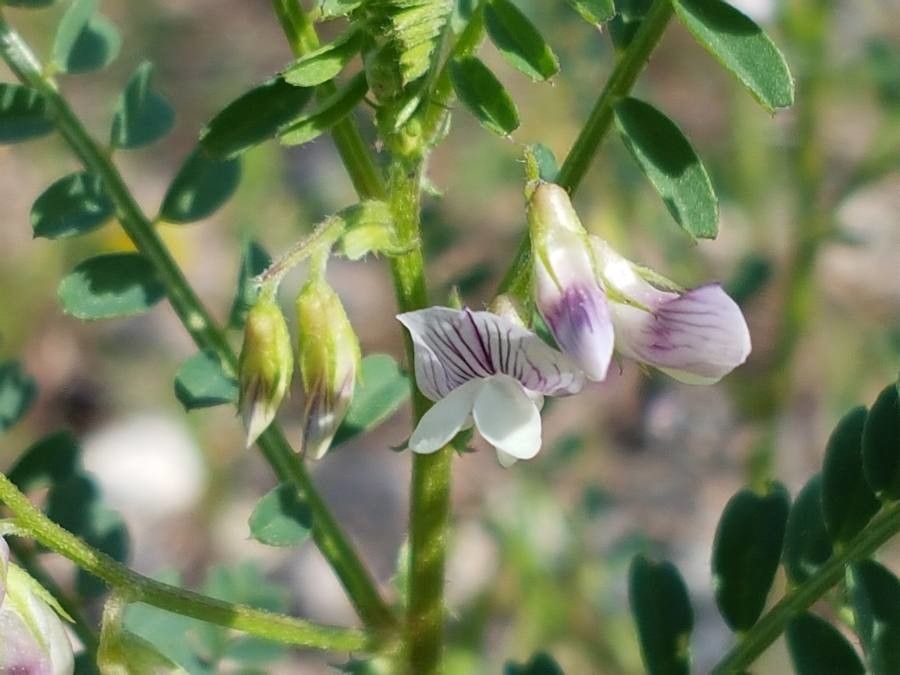
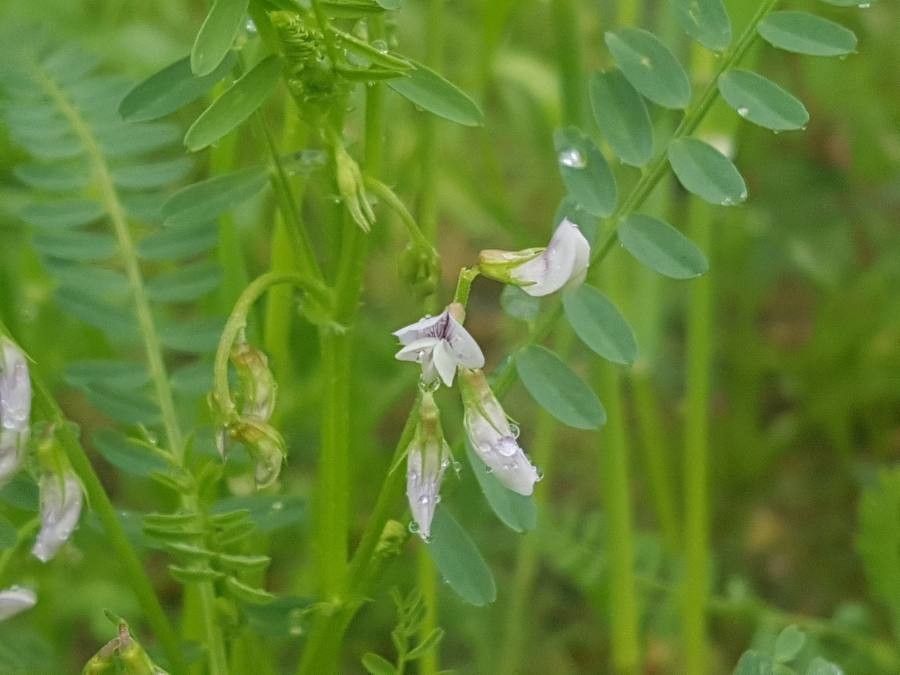
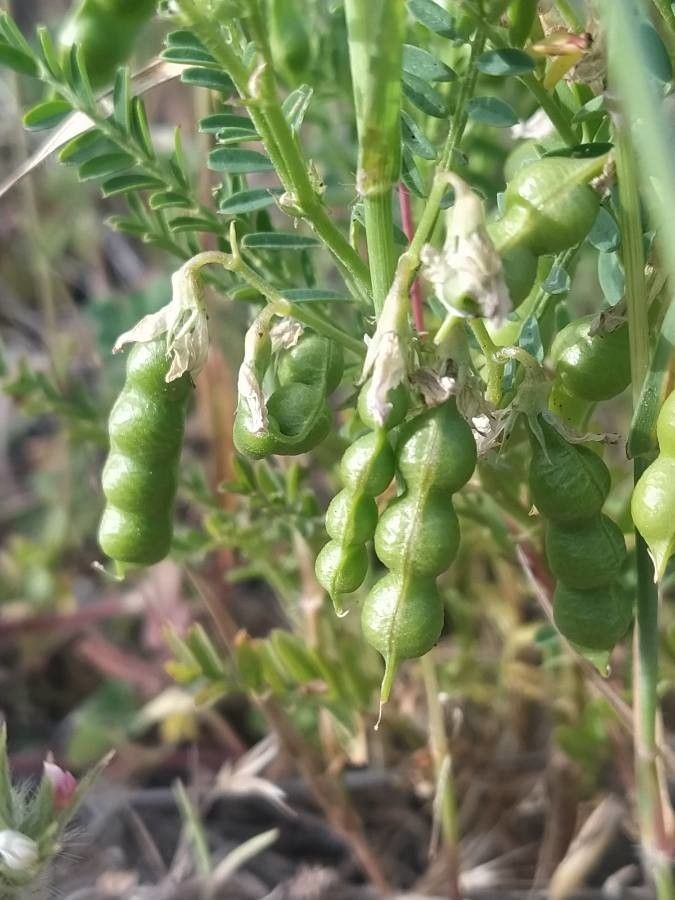
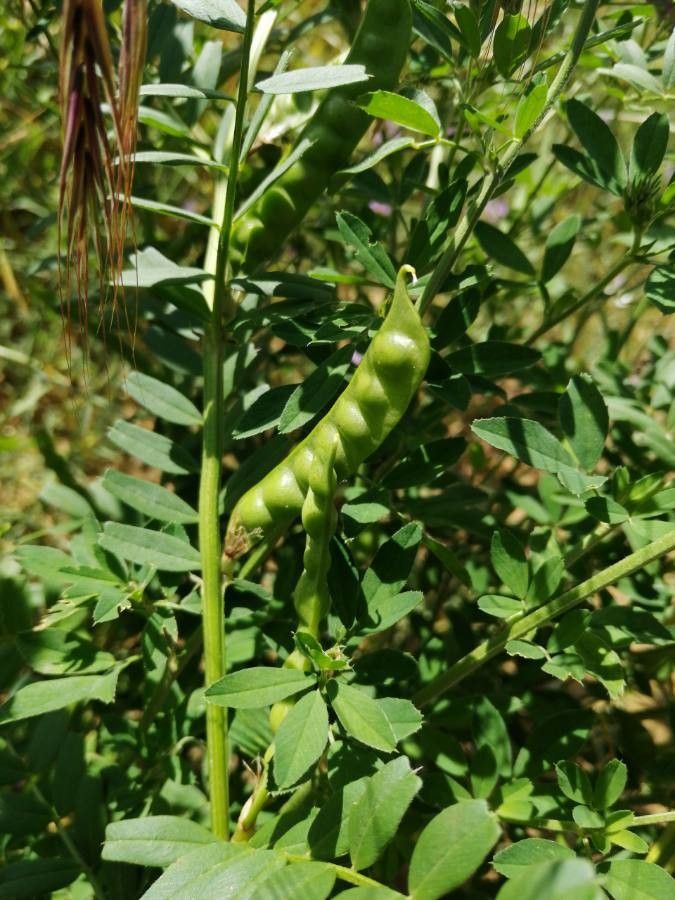
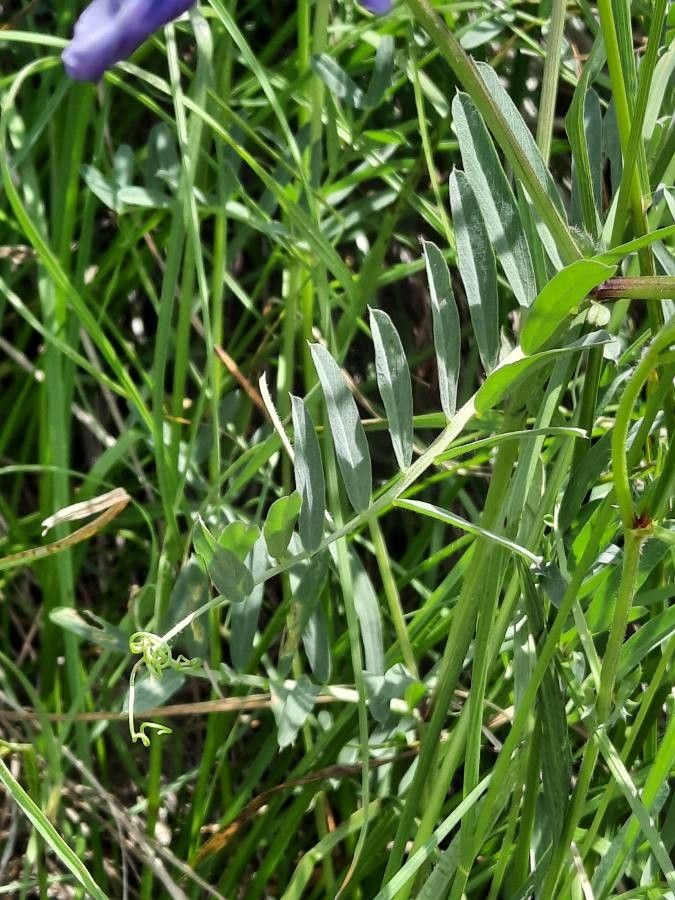
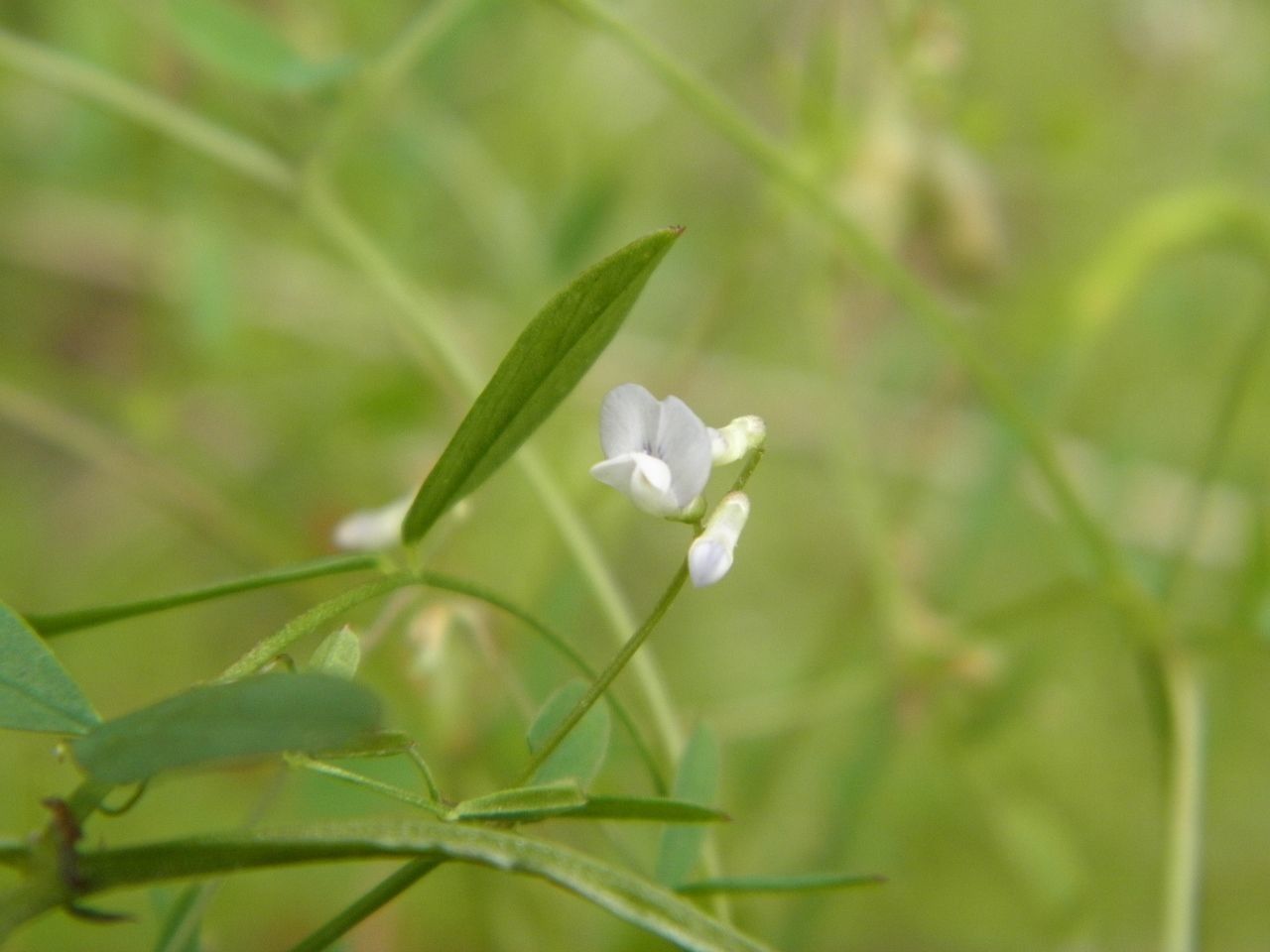
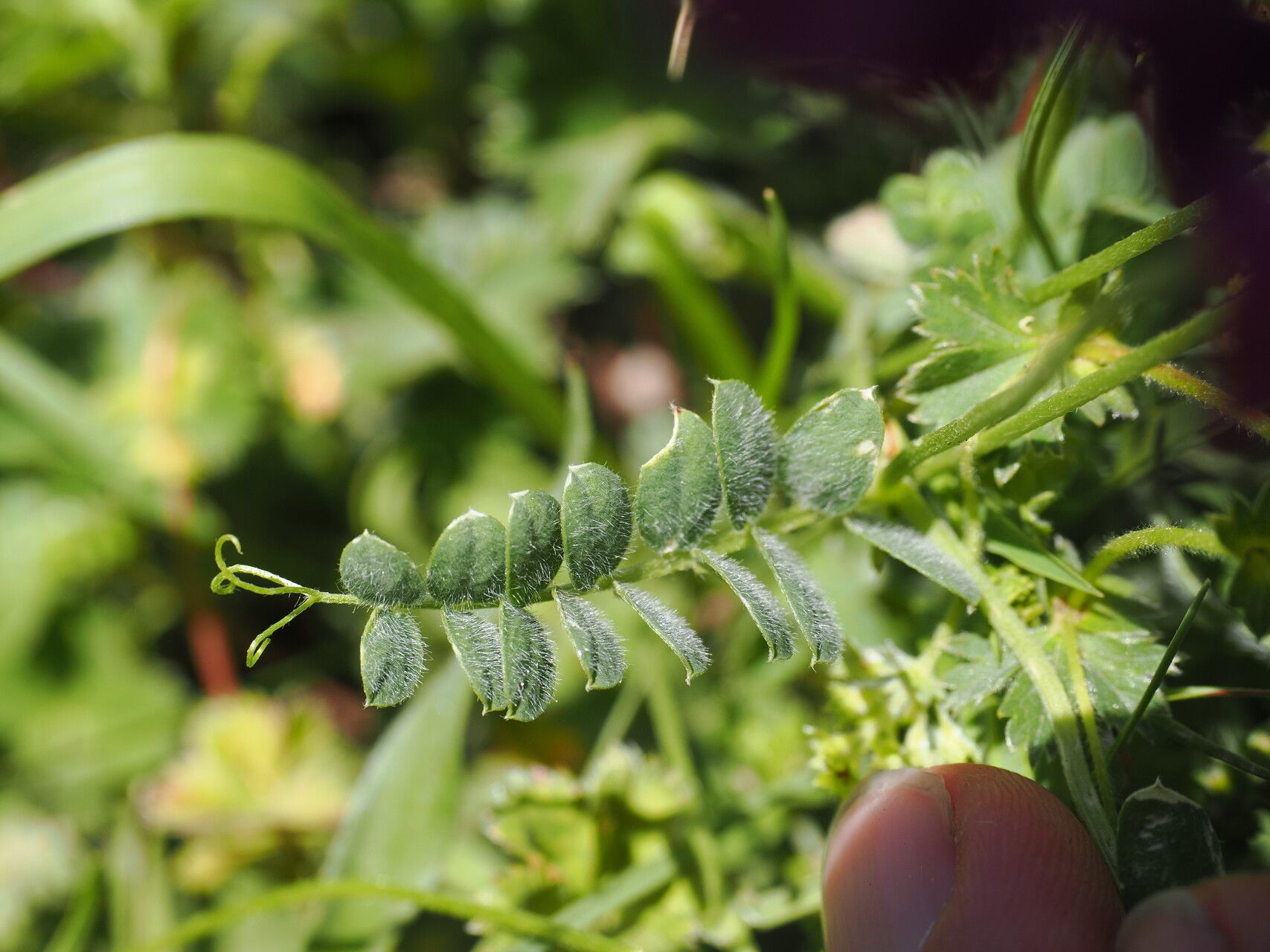
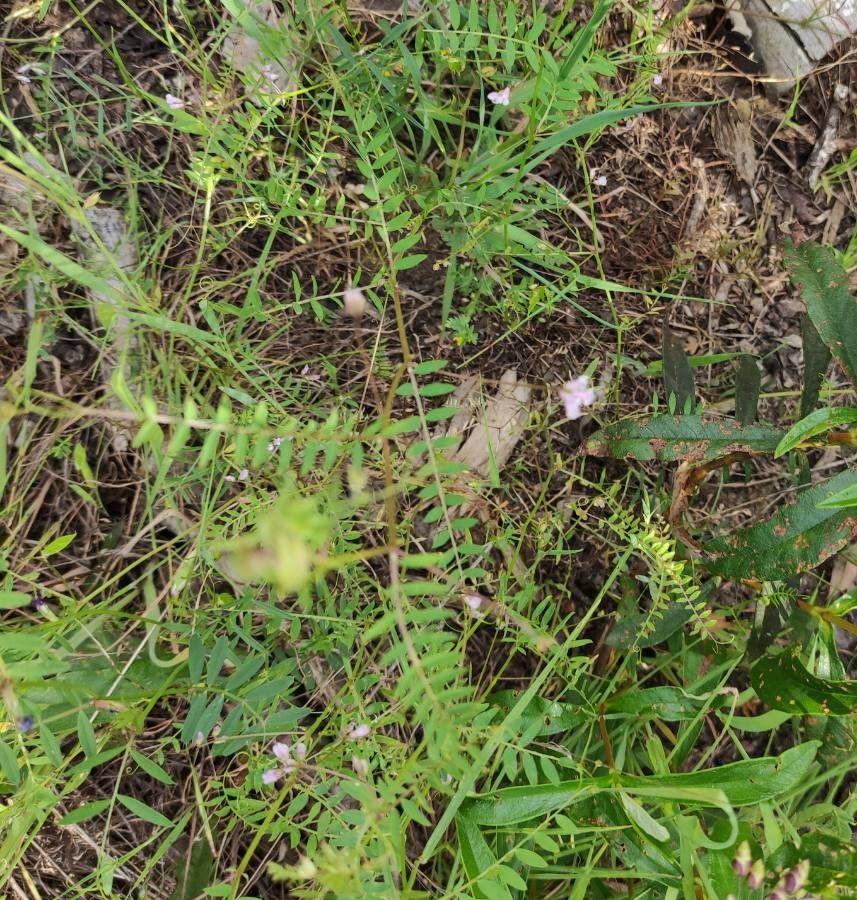
Vicia ervilia, commonly known as ervil or bitter vetch, is an ancient grain legume crop of the Mediterranean region. Besides the English names, other common names include: gavdaneh (Persian), kersannah (Arabic), yero (Spanish), rovi (Greek), and burçak (Turkish). The nutritional value of the grain for ruminant cattle has guaranteed the species' continued cultivation in Morocco, Spain and Turkey. The crop is easy to cultivate and harvest and can be grown on very shallow, alkaline soils. The grain when split resembles red lentils. For human consumption the bitterness of the seeds needs to be removed through leaching by several changes of boiling water. Owing to this bitterness, it is unlikely that someone would accidentally confuse bitter vetch with red lentils. According to Zohary and Hopf, only humans of the poorest economic classes consume this crop, or in times of famine;. Pliny the Elder states that bitter vetch (ervum) has medicinal value like vetch (vicia), citing the letters of Augustus where the emperor wrote that he regained his health from a diet of bitter vetch (N.H. 18.38). The grain is an excellent sheep and cattle feed concentrate. It has been held in high esteem by farmers in the Old World since the beginning of agriculture to improve the nutritional value of bulk feeds.The wild strains of bitter vetch are limited to an area that includes Anatolia and northern Iraq, with an extension south along the Anti-Lebanon Mountains of Syria and Lebanon. Traces of the earliest domesticated instances were recovered from several archeological sites in Turkey, with an uncorrected radiocarbon dating of the 7th and 6th millennia BC.
Bitter vetch shows strong resistance to disease and typically does not suffer from many illnesses. Still, it can be affected by pests and diseases present in its environment. Such infections tend to be mild. Regarding maintenance, this plant needs a moderate amount of care. Regular pruning is necessary to preserve its appearance and support healthy growth. Applying fertilizer can also encourage blooming. Bitter vetch is well suited to anyone with outdoor areas like a garden or patio and does not demand extensive gardening experience. It may need greater attention if cultivated indoors.
How to keep Vicia Ervilia.
Light
Bitter vetch mainly does well in places that receive frequent sunlight, which supports its vigorous growth. It can also tolerate locations that get sun for only part of the day. Too much or too little light can harm its development, leading to weaker health.
Water
Bitter vetch, a plant native to the Mediterranean, flourishes in regions with mild winters and dry summers. It grows best in well-drained soils and has a certain tolerance for drought. To prevent over-watering, it is important to water the plant weekly. For optimal growth and seed development, aligning the plant's growing season with natural rain patterns is crucial.
Temperature
Bitter vetch can tolerate a broad range of temperatures, but its range may still be constrained by particular combinations of moisture and heat. It performs best in warm summer conditions with sufficient rainfall or irrigation. Extended periods of cloudy, rainy weather or sustained high temperatures raise the risk of Bitter vetch dying. During winter, shielding the plant from cold can enhance its chances of survival.
Fertilizer
For optimal growth, bitter vetch needs three fertilizer applications: one before planting, a second about one month after seedlings emerge, and a final application 1 to 1.5 months after the second. Some varieties of bitter vetch also benefit from extra fertilizer at planting to promote rapid growth.
Pruning
Bitter vetch is a resilient legume that fixes nitrogen, enhancing soil quality and providing excellent fodder for animals. For best results, prune the plant in early to late spring to encourage growth, eliminate dead stems, and increase air circulation. This practice helps reduce the risk of disease and encourages the plant to become dense and more productive.
Botanical profile.
- Plant Type
- Herb, Vine
- Life Cycle
- Annual
- Genus
- Vicia
- Family
- Fabaceae
- Hardiness Zone
- 3-7
- Mature Height
- 20 cm to 49 cm
- Mature Spread
- 20 cm to 40 cm
- Leaf Color
- Light Green, Green
- Leaf Type
- Semi-evergreen
- Flower Color
- White, Lavender
- Flower Size
- 0.51 cm to 1.02 cm
- Bloom Time
- Late spring, Early summer
- Planting Time
- Spring, Summer
- Harvest Time
- Mid summer, Late summer
Other names.
Reader questions.
What are the sunlight requirements for Bitter Vetch?
Bitter Vetch thrives in full sun conditions, requiring more than 6 hours of sunlight daily. It can also grow in partial sun, with about 3-6 hours of sunlight. However, both overexposure and underexposure to sunlight can affect its growth negatively. It's essential to observe your garden's sunlight pattern to find spots that offer an optimal balance of light and shade, ensuring the plant's health and happiness.
How can artificial lighting support Bitter Vetch growth indoors?
When natural sunlight is insufficient for Bitter Vetch, especially during winter or in less sunny spaces, artificial lighting can be a vital solution. Indoor plants benefit from adequate lighting to promote faster, healthier growth. LED lights are recommended because they can be customized to provide specific wavelengths needed by plants. Full sun plants require 30-50W/sq ft, partial sun plants need 20-30W/sq ft, and full shade plants need 10-20W/sq ft of artificial light. The light source should be placed 12-36 inches above the plant to mimic natural sunlight, and plants typically need 8-12 hours of light per day.
What are the signs of insufficient light in Bitter Vetch?
When Bitter Vetch does not receive enough light, it may show symptoms such as smaller new leaves, leggy or sparse growth, faster leaf drop, slower or no new growth, lighter-colored new leaves, and chlorosis. Overexposure symptoms include sunscald, leaf curling, wilting, leaf scorching, and chlorosis, where the plant's leaves lose their green color and turn yellow due to a breakdown of chlorophyll, affecting photosynthesis.
How can I address light-related issues in Bitter Vetch?
To resolve light-related issues in Bitter Vetch, gradually move the plants to locations with at least 6 hours of direct sunlight daily, using south-facing windows for indoor plants and ensuring curtains are open during the day. For outdoor plants, avoid drastic changes in light exposure to prevent sunburn. If light obstruction is an issue, prune any branches or leaves blocking sunlight or consider transplanting smaller plants to sunnier locations with good drainage. Using professional grow lights for at least 8 hours daily can also provide ample lighting for larger or immobile plants indoors.