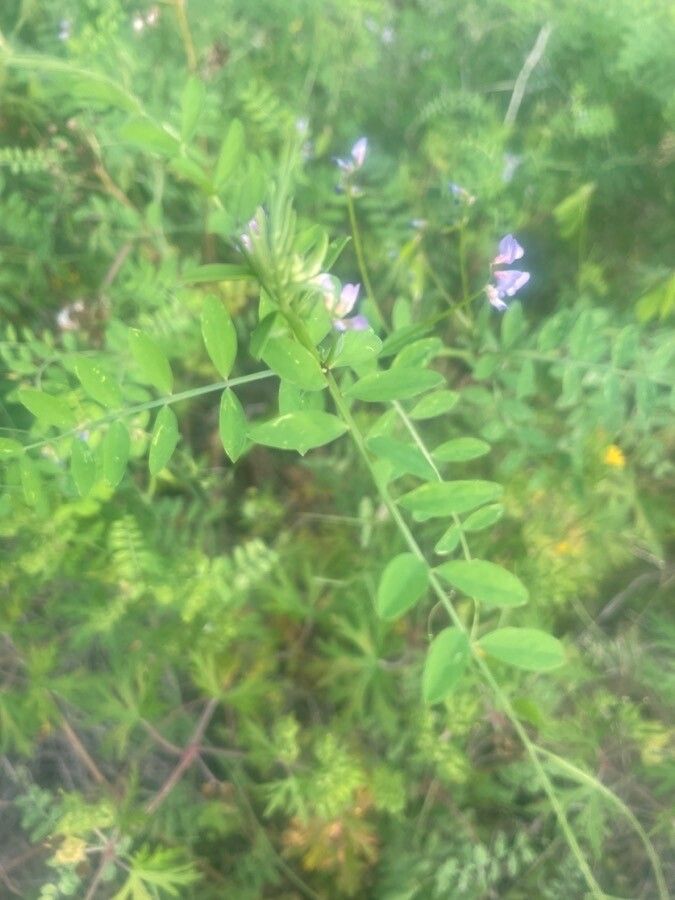
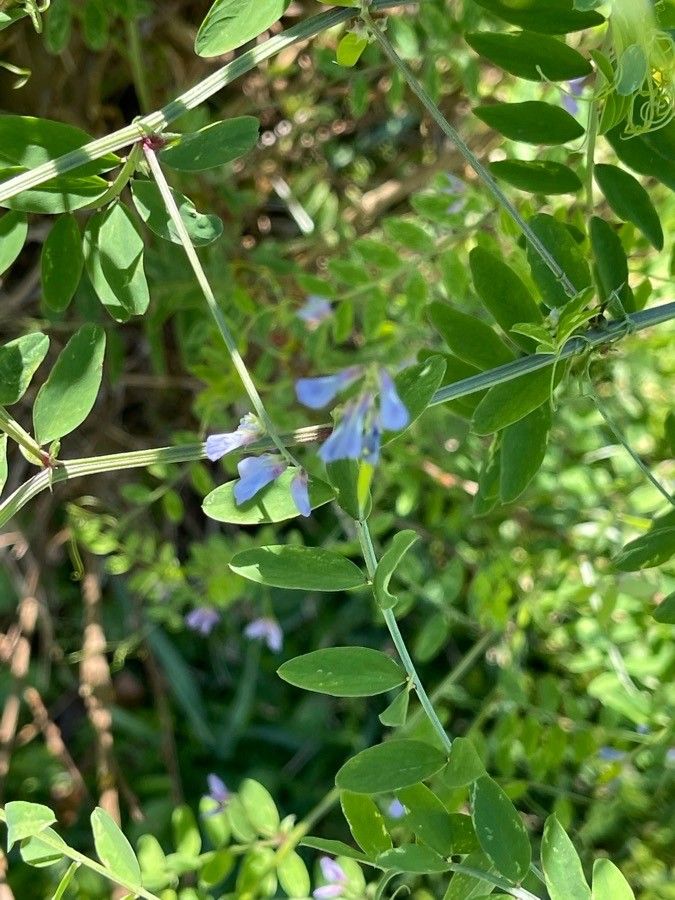
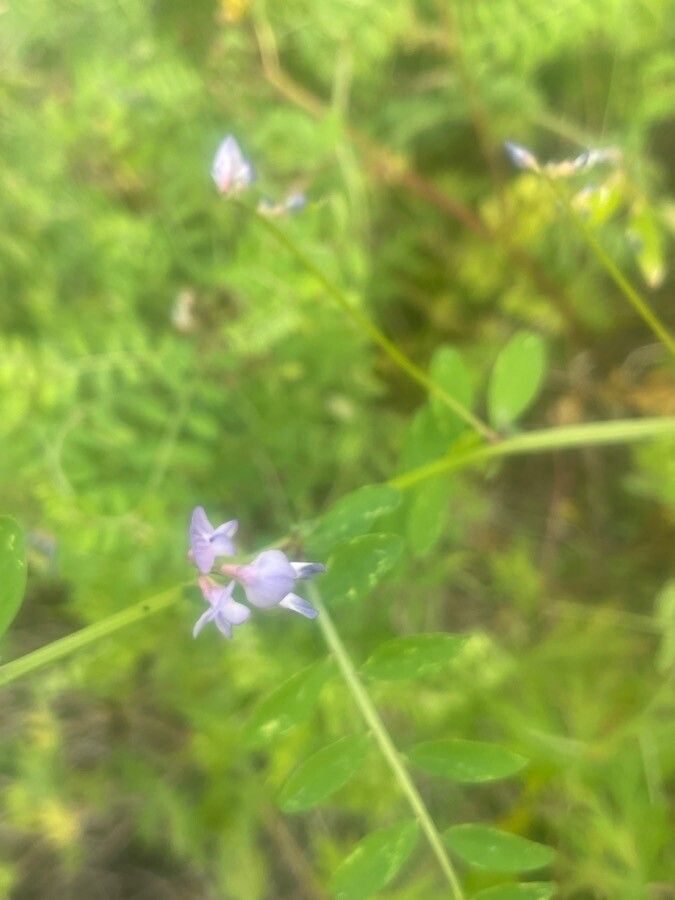
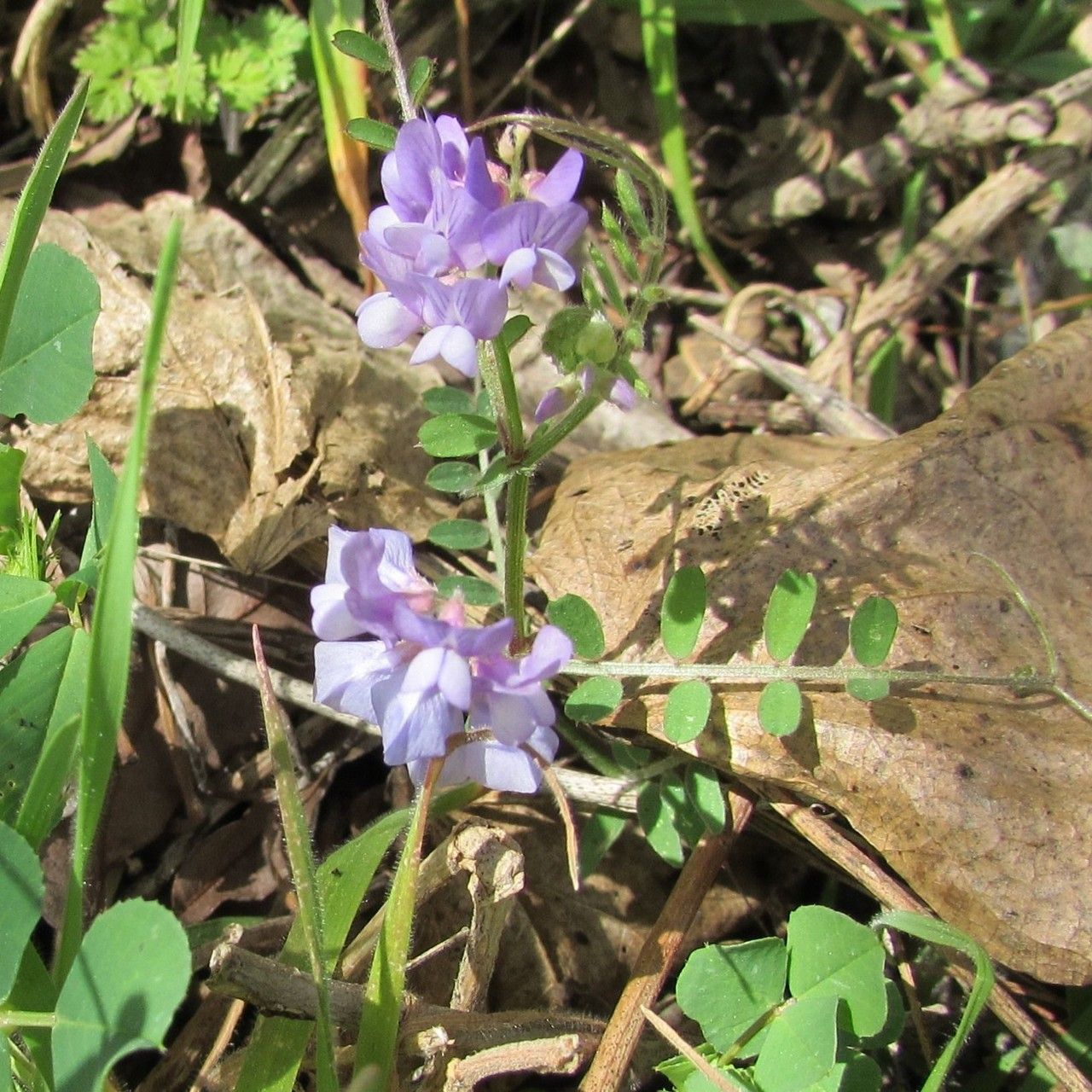
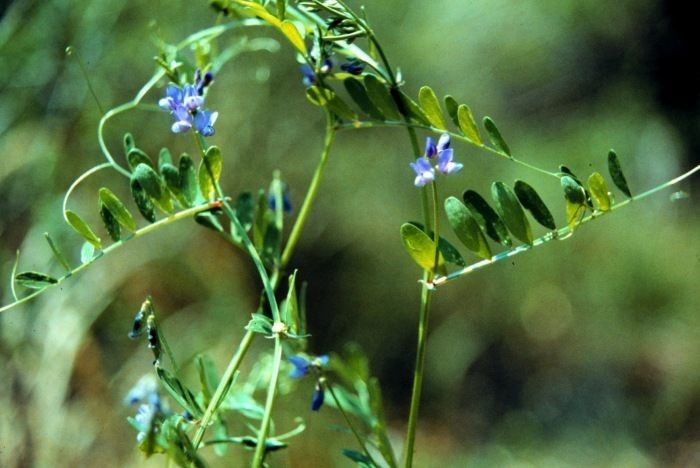
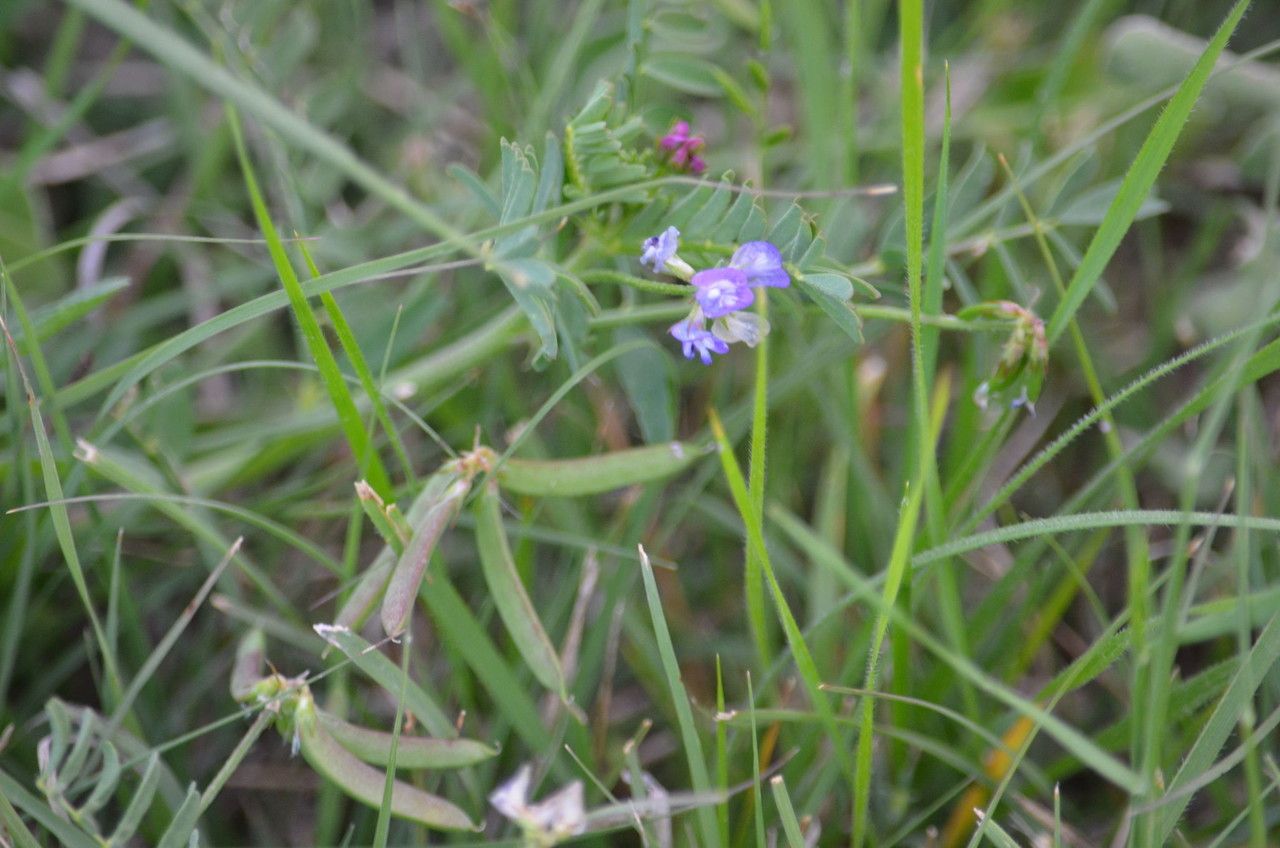
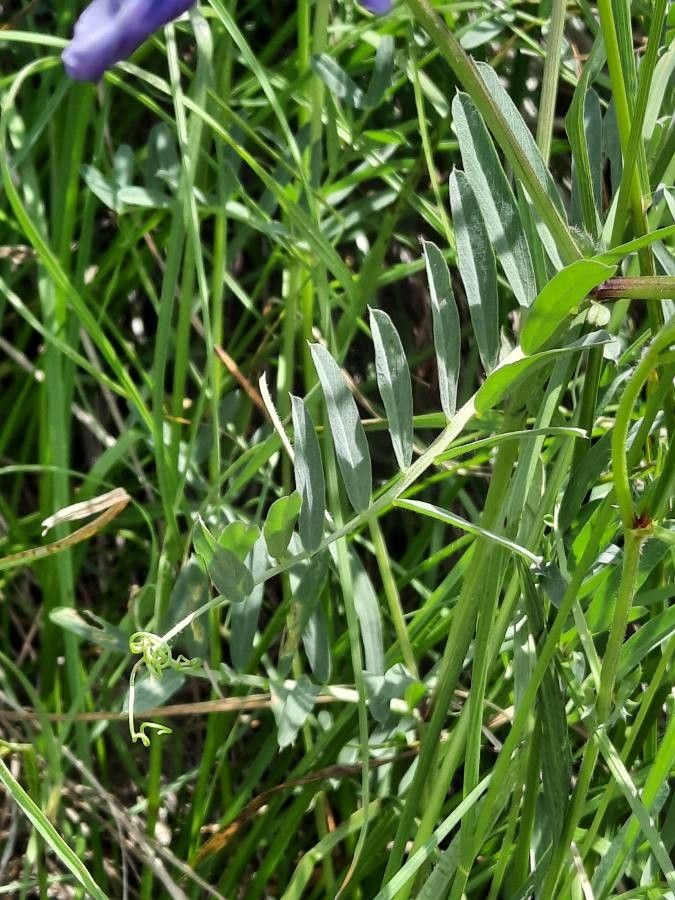
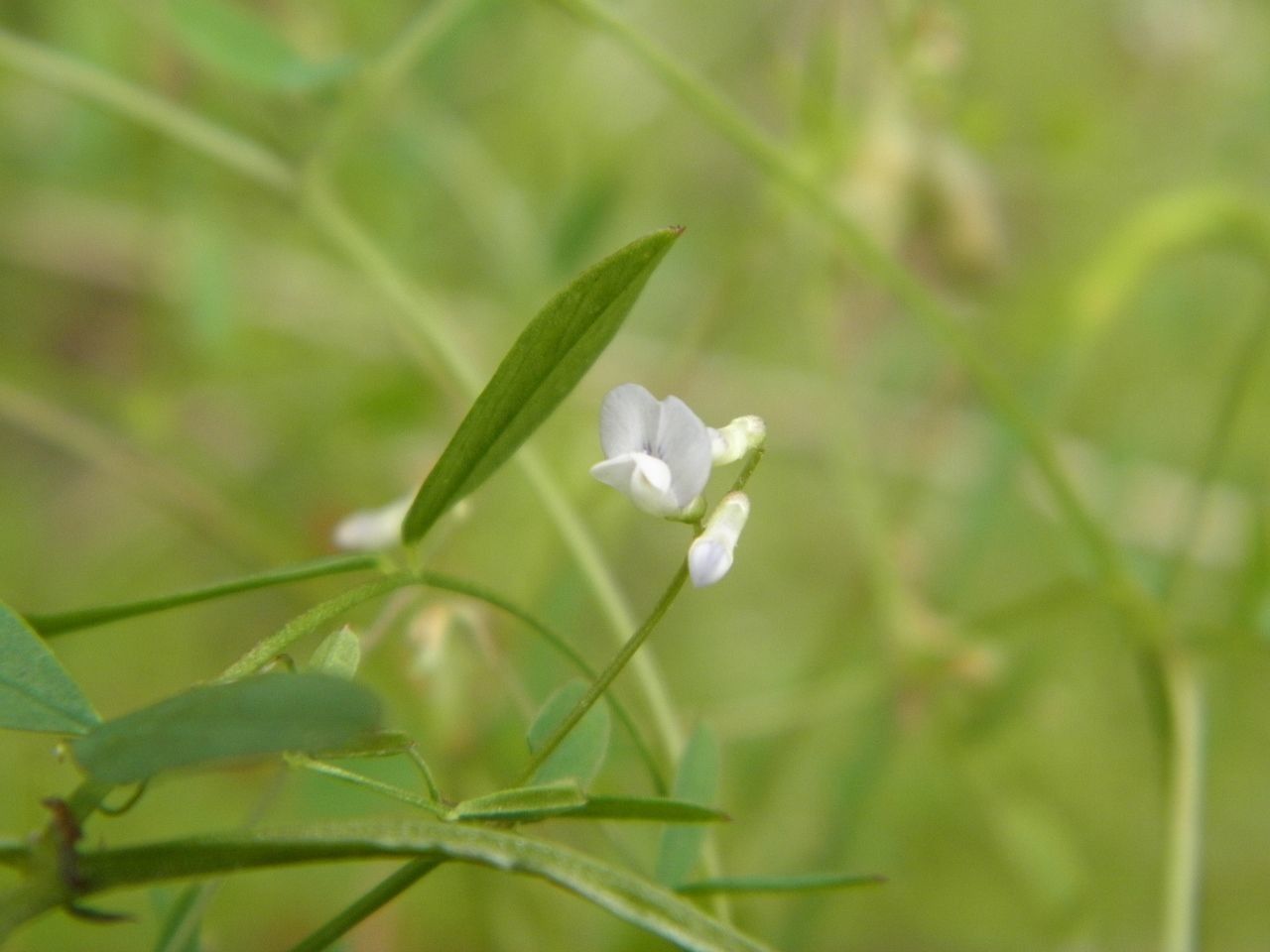
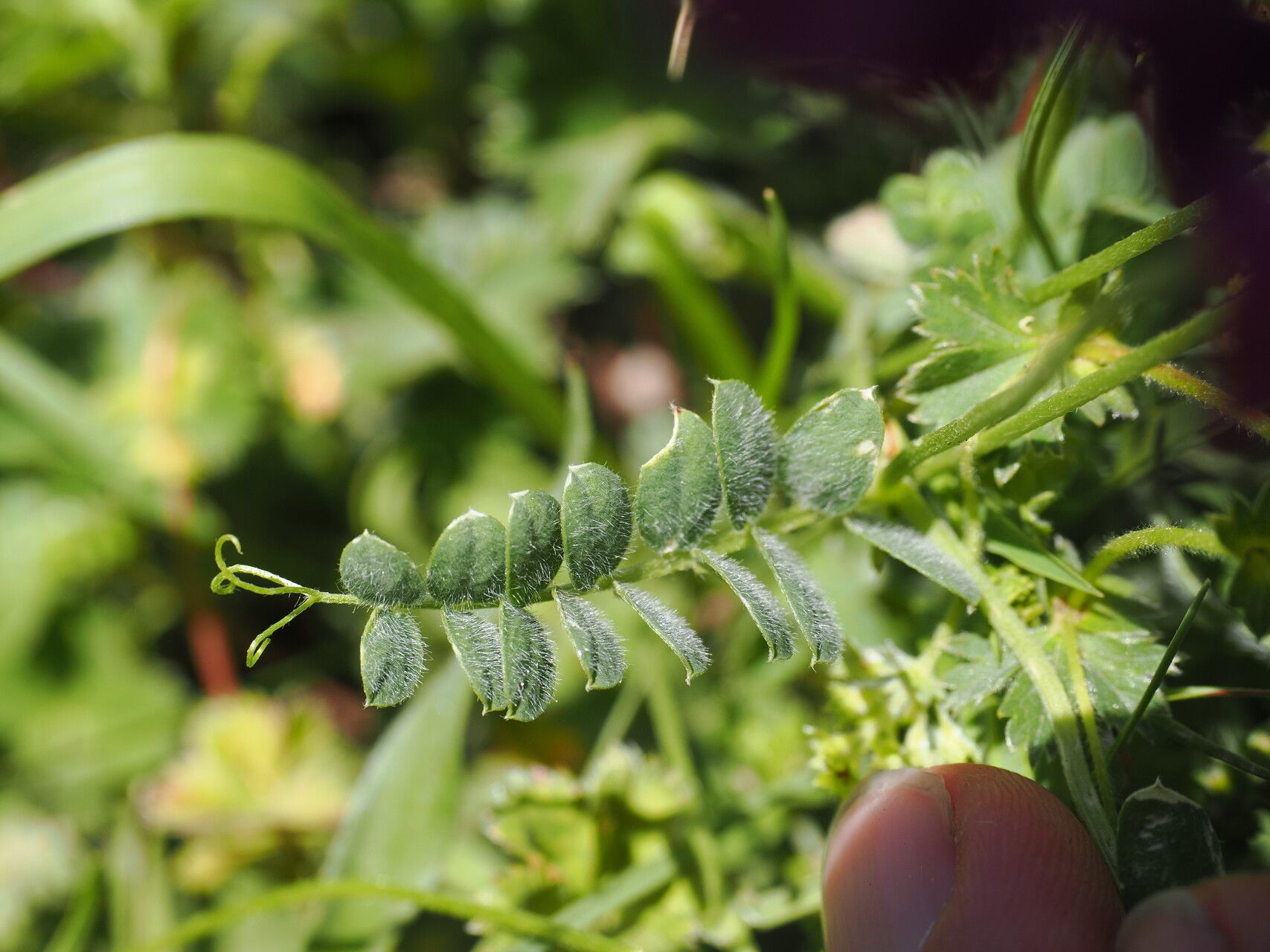
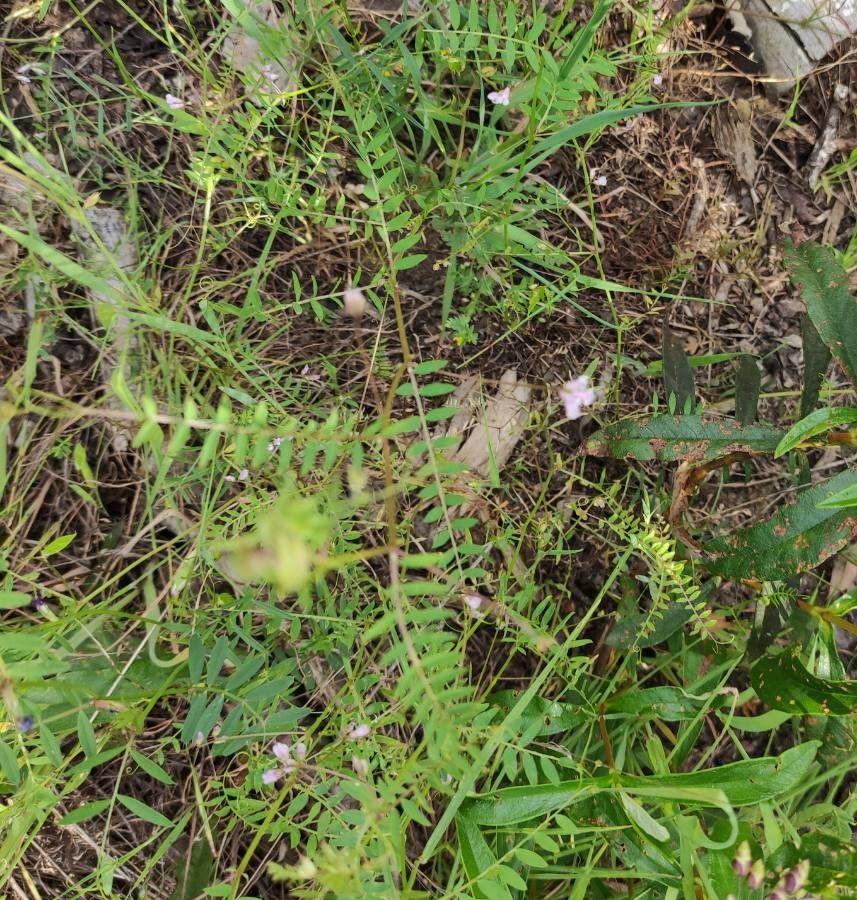
Vicia ludoviciana, commonly known as Louisiana vetch or Louisiana wild vetch, is a species of flowering plant in the pea family, Fabaceae. Native to North America, it thrives in various habitats including prairies, meadows, and open woods.
This plant typically grows to about 1 meter in height and features slender stems adorned with compound leaves, each comprising several small leaflets. The flowers, which bloom from May to July, are pinkish-purple and form clusters at the ends of the stems.
Louisiana vetch is valuable as a forage crop for livestock due to its high protein content. Additionally, it plays a crucial role in soil conservation by fixing atmospheric nitrogen into the soil through its root nodules.
Despite its many benefits, Louisiana vetch can sometimes be considered a weed because it spreads rapidly through self-seeding. Nonetheless, it is generally not viewed as invasive or harmful.
In summary, Vicia ludoviciana is ecologically important and provides significant benefits to both agriculture and the livestock industry.
Louisiana Vetch has strong resistance to diseases and is generally not prone to them. However, it can be affected by pests and diseases present in its surroundings. These infections are usually mild. For care, this plant requires moderate maintenance. It should be pruned regularly to keep a good appearance and support healthy growth. Fertilizing can also encourage flowering. Louisiana Vetch is suitable for anyone with an outdoor area, such as a garden or patio, and does not demand much gardening experience. It may need extra care when grown indoors.
How to keep Vicia Ludoviciana.
Light
The Louisiana vetch prospers with ample sunlight, yet it also demonstrates resilience by growing adequately in lower-light conditions. Sunlight drives its growth and health, while insufficient light can impede its development. Its native habitat receives a significant amount of sun.
Water
Louisiana Vetch thrives in moisture-rich conditions and requires consistent hydration. Ideally, it should be watered weekly, ensuring that the soil remains evenly moist but not waterlogged. As an outdoor plant in temperate regions, Louisiana Vetch adjusts its water uptake during the growing season to enhance its flowering potential.
Temperature
Louisiana Vetch originates from regions where average temperatures range from 68 to 100.4 °F (20 to 38 ℃). It performs best in moderate climates. If it faces severe temperatures across seasons, it's recommended to adjust its environment.
Fertilizer
Louisiana Vetch does well with frequent, light fertilizer applications to encourage healthy leaf development. Fertilize Louisiana Vetch about once a month during the summer. Nitrogen is important for foliage, and adding nitrogen-rich sources helps Louisiana Vetch thrive.
Pruning
Louisiana Vetch is a climbing annual vine that benefits greatly from proper pruning, which should be done from early to late spring. Pruning techniques include cutting back overgrown stems and improving air circulation. These practices help enhance the plant's health, reduce pests, and promote vigorous growth and extended blooming periods.
Botanical profile.
- Plant Type
- Herb, Vine
- Life Cycle
- Annual
- Genus
- Vicia
- Family
- Fabaceae
- Hardiness Zone
- 9-12
- Mature Height
- 30 cm to 91 cm
- Mature Spread
- 20 cm to 49 cm
- Leaf Color
- Green
- Leaf Type
- Deciduous
- Flower Color
- Lavender, White
- Flower Size
- 0.51 cm to 0.76 cm
- Bloom Time
- Spring
- Planting Time
- Spring, Summer, Autumn
- Harvest Time
- Late spring, Early summer, Mid summer
Other names.
Reader questions.
What are the requirements for Louisiana Vetch in terms of sunlight?
Louisiana Vetch requires a significant amount of sunlight to thrive, performing optimally in full sun conditions, which means it needs above 6 hours of sunlight daily. However, it can also manage in partial sun with about 3-6 hours of sunlight. To ensure the plant's happiness, it's crucial to observe how sunlight moves through your garden throughout the day and choose locations that offer a balance of light and shade according to these requirements.
What is the native climate for Louisiana Vetch?
Louisiana Vetch, scientifically known as Vicia ludoviciana, is native to regions where mean temperatures range from 68 to 100.4°F (20 to 38°C). It is best suited for moderate climates. Given its preference for warmer temperatures, it's important to protect it from harsh weather by adjusting its environment accordingly. Specifically, Louisiana Vetch is heat-loving, and exposure to cold can be harmful. In the autumn, it's advisable to bring the plant indoors if it was previously outside, ensuring it's placed near a bright window but kept away from direct heat sources. Maintaining temperatures above 20°C during the winter supports its growth, while temperatures near 0°C can be harmful.
What are some essentials for growing Louisiana Vetch successfully?
The essentials for growing Louisiana Vetch include ensuring it receives an abundant supply of sunlight, as its growth and vitality are fueled by sunlight. Even though it can grow in less light, its development may be hampered under insufficient light conditions. For indoor plants, when natural sunlight is inadequate, artificial lighting such as LED lights can be used. These should provide 30-50W/sq ft for full sun plants, 20-30W/sq ft for partial sun plants, and 10-20W/sq ft for shade plants. The lights should be placed 12-36 inches above the plants and turned on for 8-12 hours per day to mimic natural sunlight conditions.
How does Louisiana Vetch react to low temperatures, and what solutions exist?
Louisiana Vetch prefers warm environments and struggles with low temperatures, thriving best above 20°C. It is vital to keep it above 0°C during colder months. Exposure to temperatures below -5°C can result in a lightening of leaf color, which eventually turns brown or black as frost damage progresses, accompanied by wilting and drooping. If such damage occurs, damaged parts of the plant should be trimmed off, and the plant should be moved indoors to a warm location. Placing it near a south-facing window ensures ample sunlight, but it's crucial to avoid situating it near heaters or air conditioning vents, which can dry out the air excessively.
What are the symptoms of insufficient light for Louisiana Vetch?
When Louisiana Vetch is grown indoors or in conditions of inadequate light, several symptoms may arise. These include smaller new leaves, leggy or sparse growth, faster leaf dropping, slower or halted growth, lighter-colored new leaves, and symptoms of too much light such as chlorosis, sunscald, leaf curling, wilting, and leaf scorching. These signs indicate that the plant is not receiving the optimal light for photosynthesis and healthy growth.
What is the recommended care for Louisiana Vetch in high temperatures?
In the summer, it is imperative to keep Louisiana Vetch below 38°C to prevent heat stress. Temperatures exceeding 43°C can cause the leaves to lighten, increasing susceptibility to sunburn. To mitigate damage from high temperatures, trim away sunburned or dried parts of the plant. Relocating the plant to an area that provides shade during the peak sun hours of midday and afternoon helps prevent further stress. It's also beneficial to water the plant during the cooler times of day, such as in the morning and evening, to maintain soil moisture.
How can I address light-related issues with Louisiana Vetch?
To address light-related issues with Louisiana Vetch, consider gradually moving your plants to a sunnier location, ensuring they receive at least 6 hours of direct sunlight daily. For indoor plants that are large or not easily movable, using artificial light can help meet their light needs. Outdoors, avoid sudden changes in light to prevent sunburn. For plants obstructed by trees or buildings, you may need to prune or transplant them to reduce obstructions and allow more sunlight. Remember, parts of the plant affected by insufficient sunlight might not recover, but new growth should be healthy with proper light exposure.