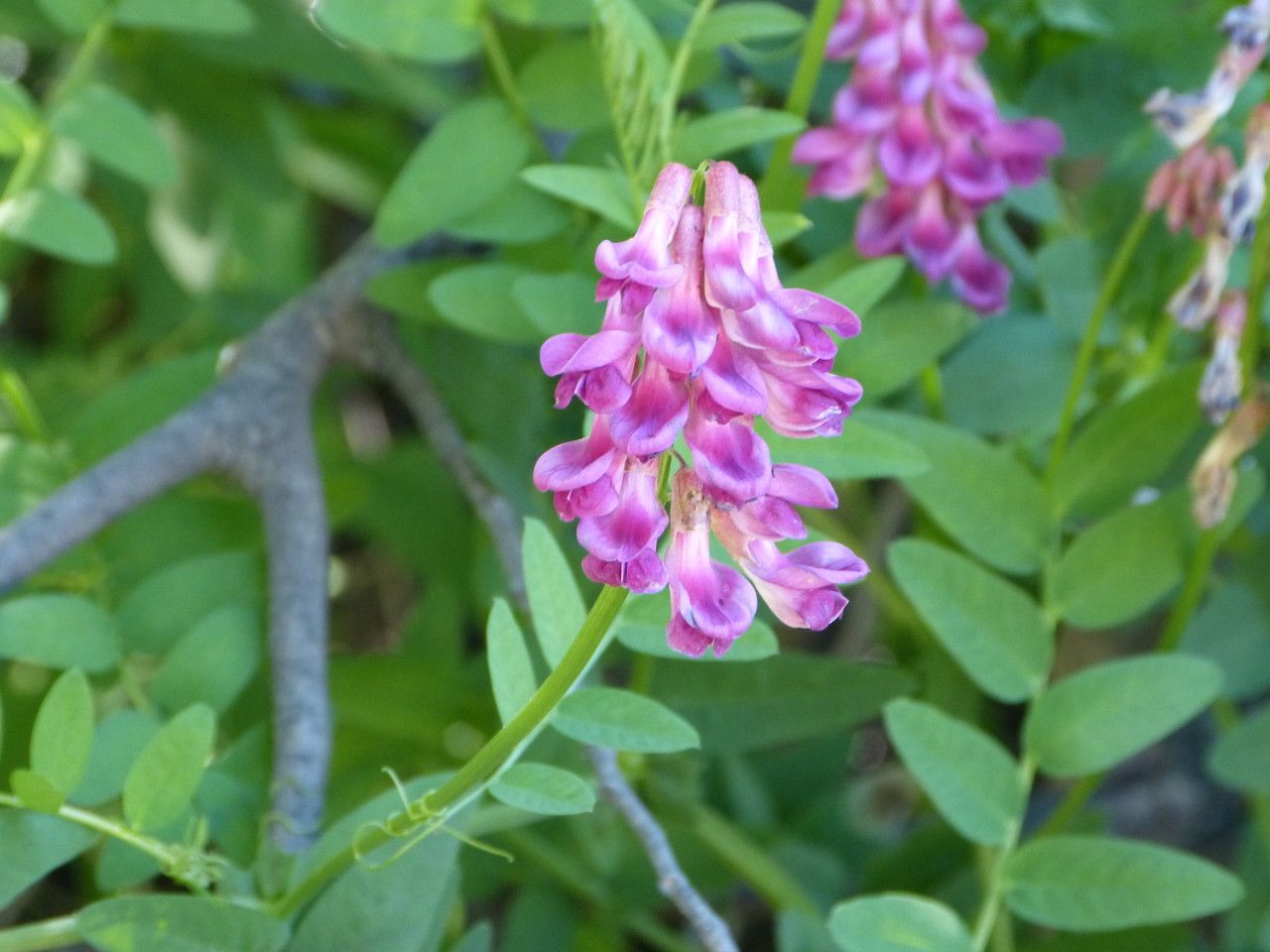
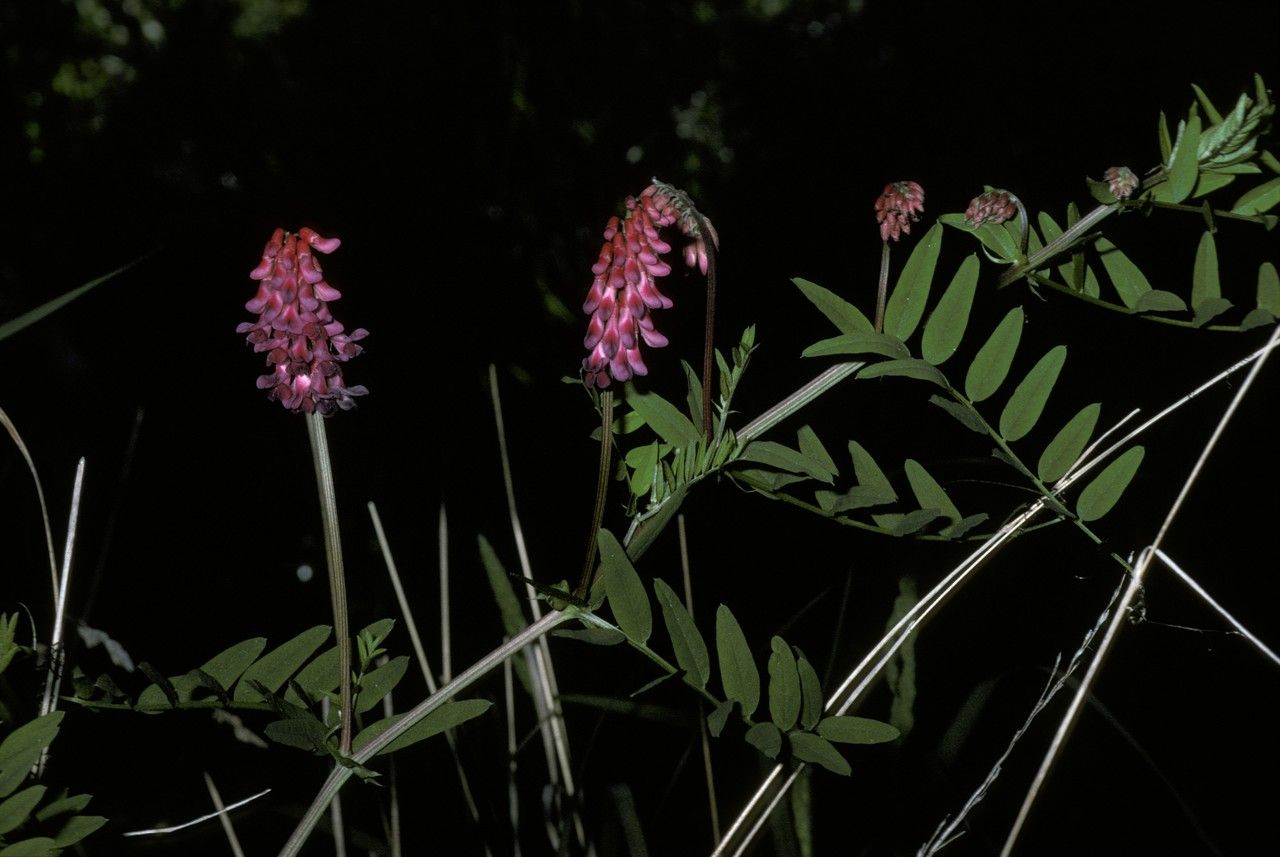
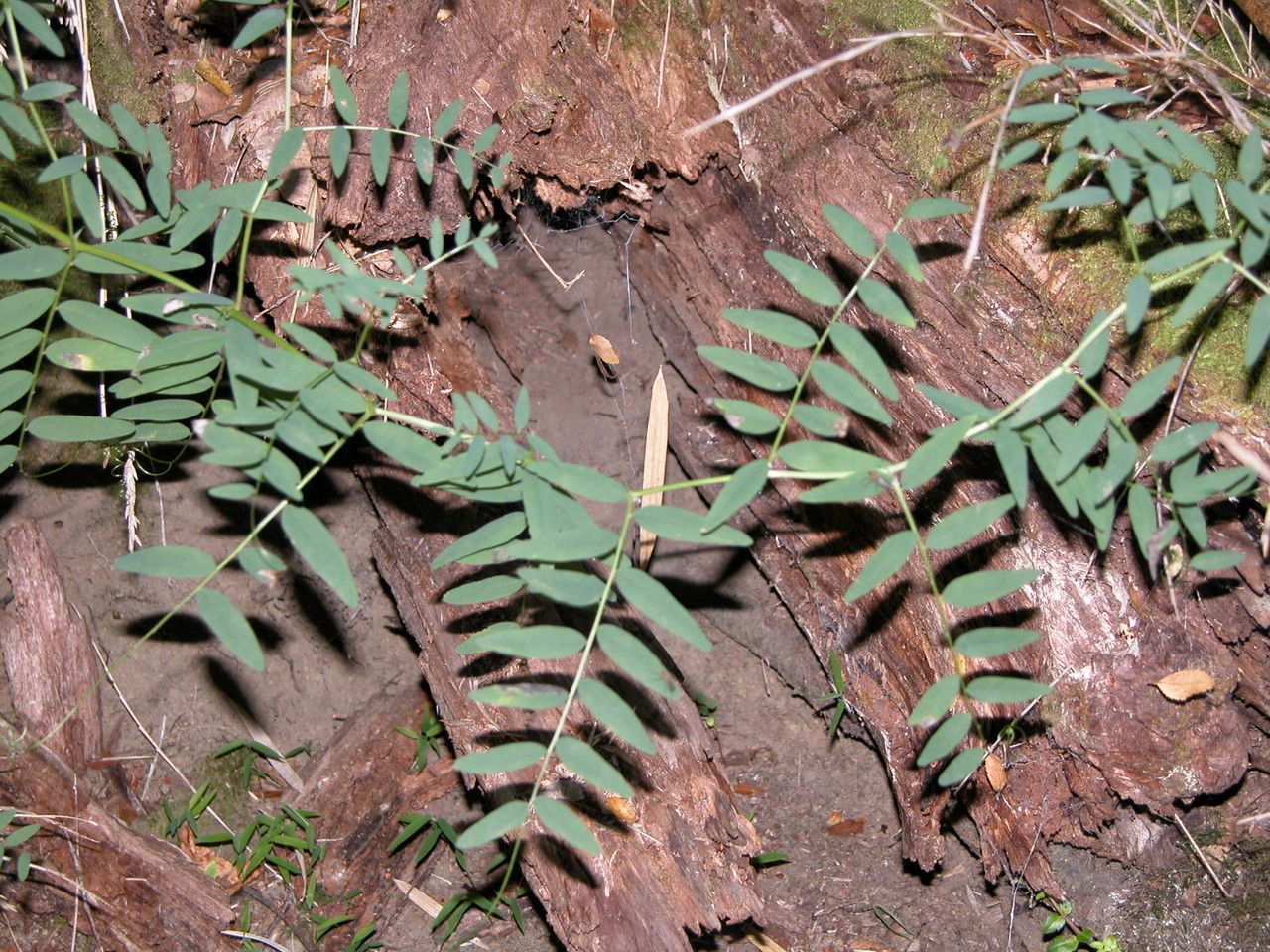
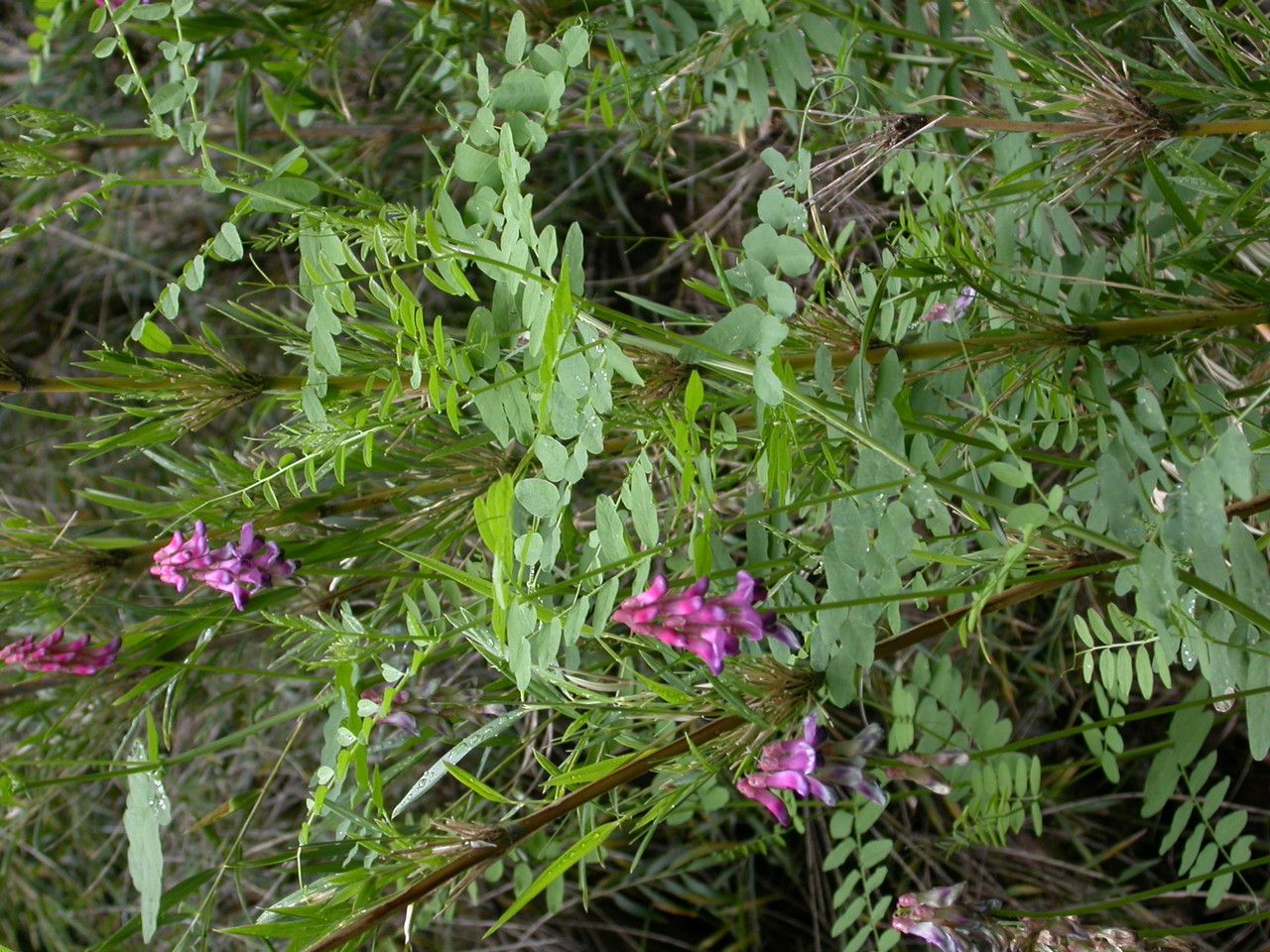
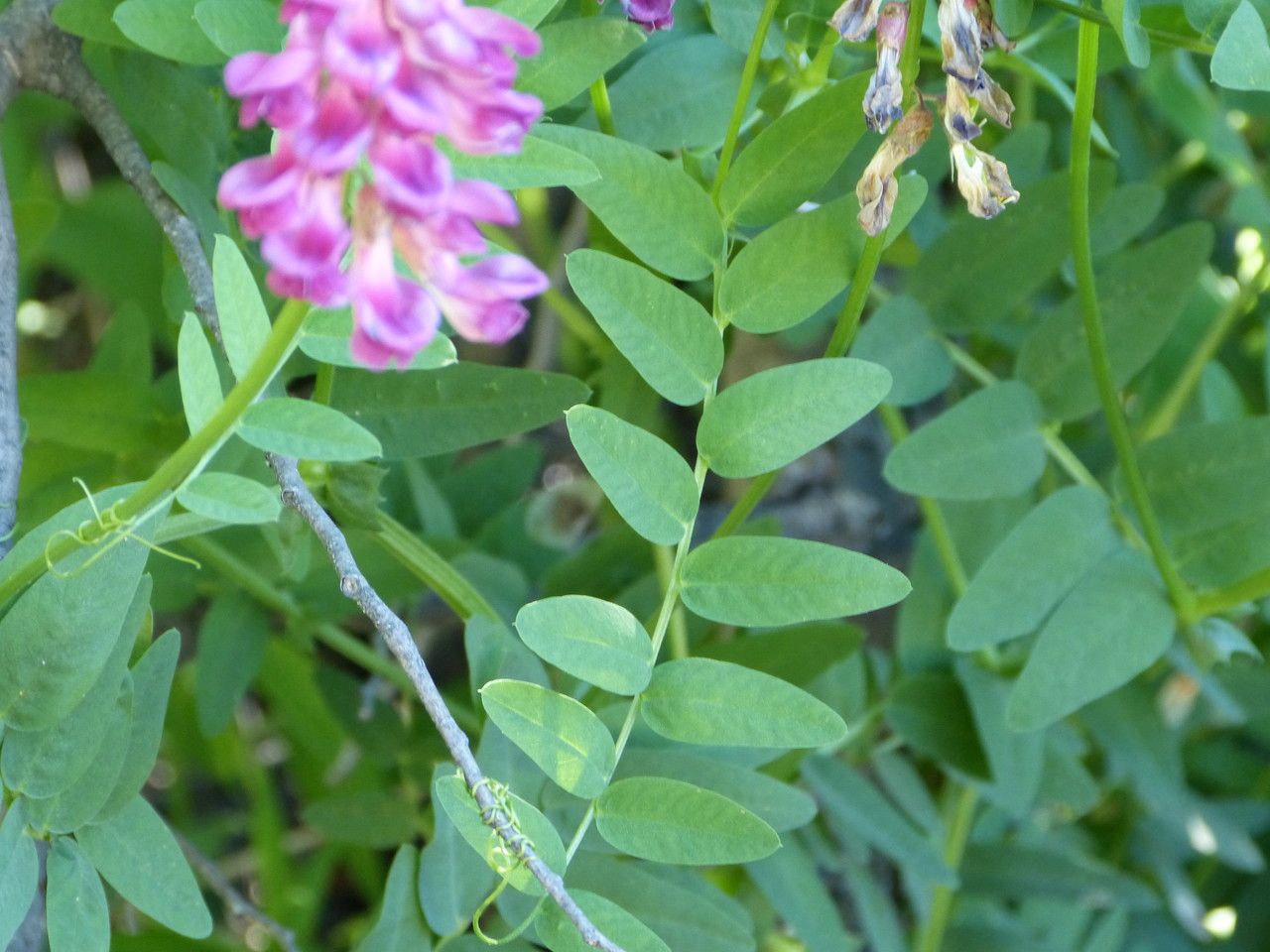
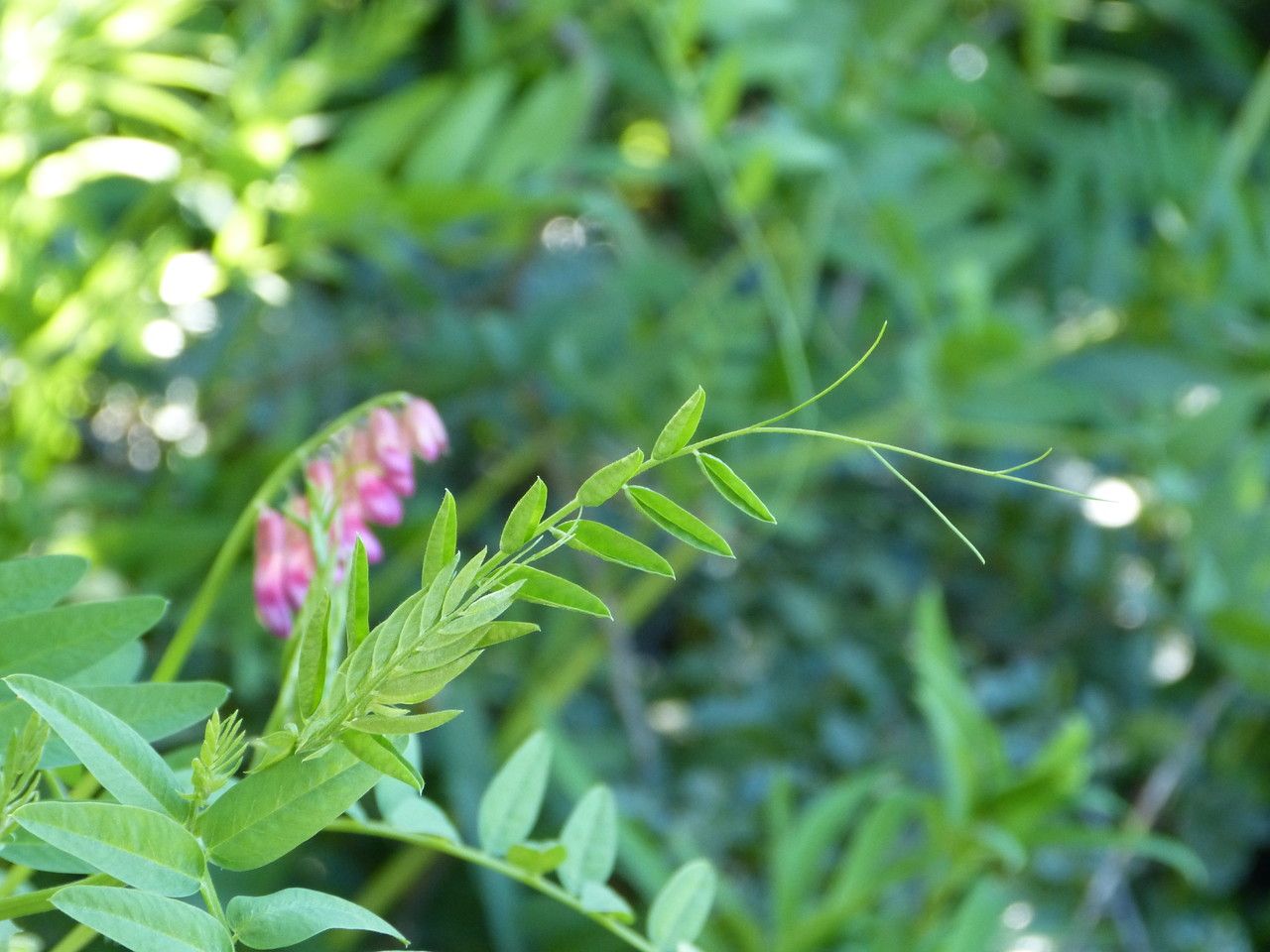
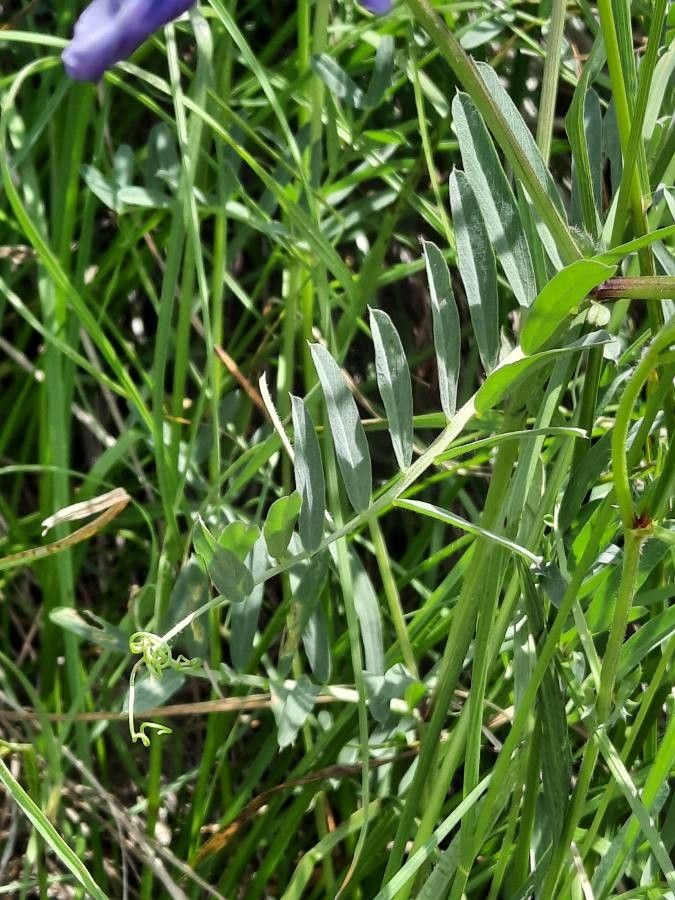
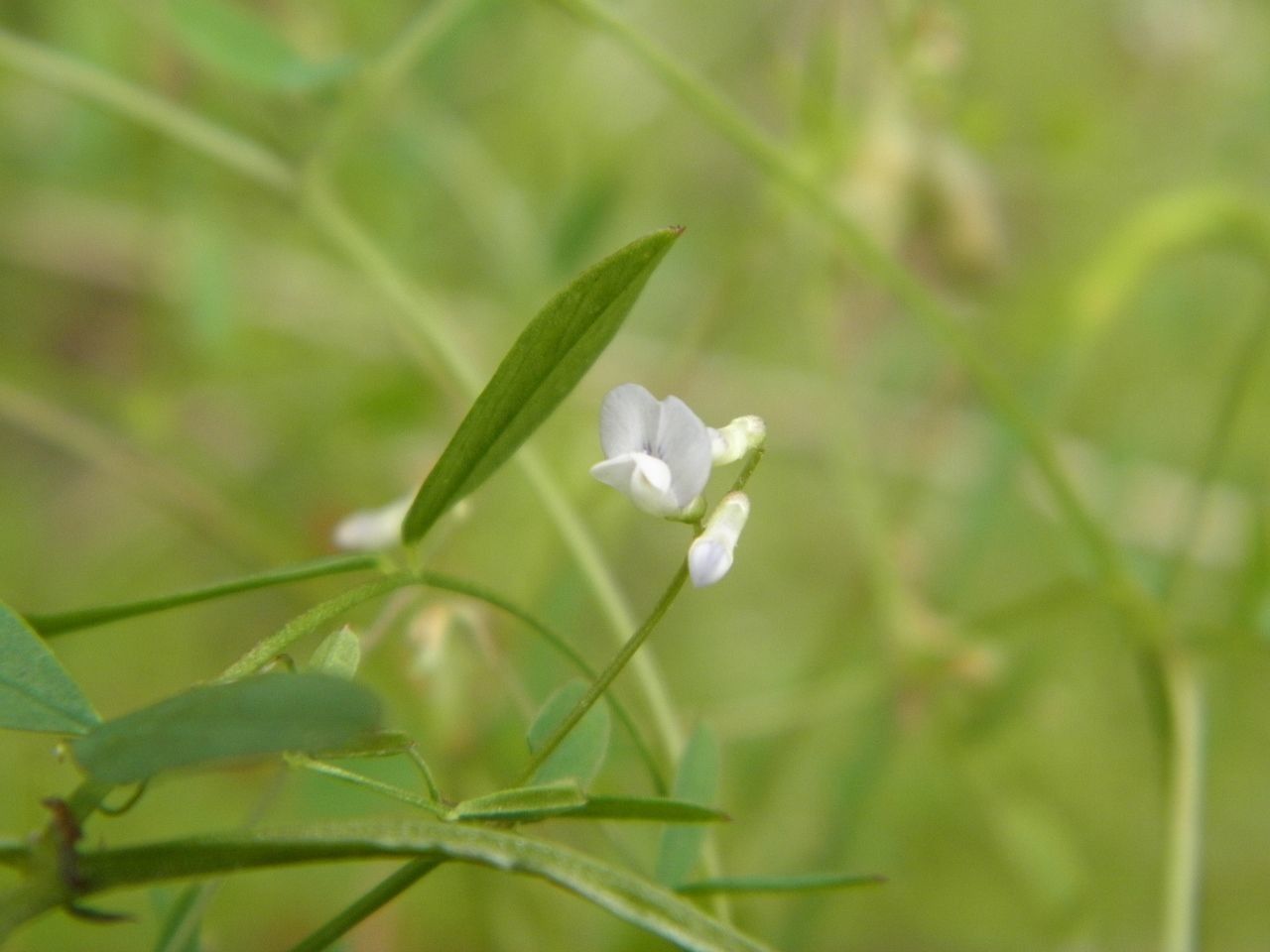
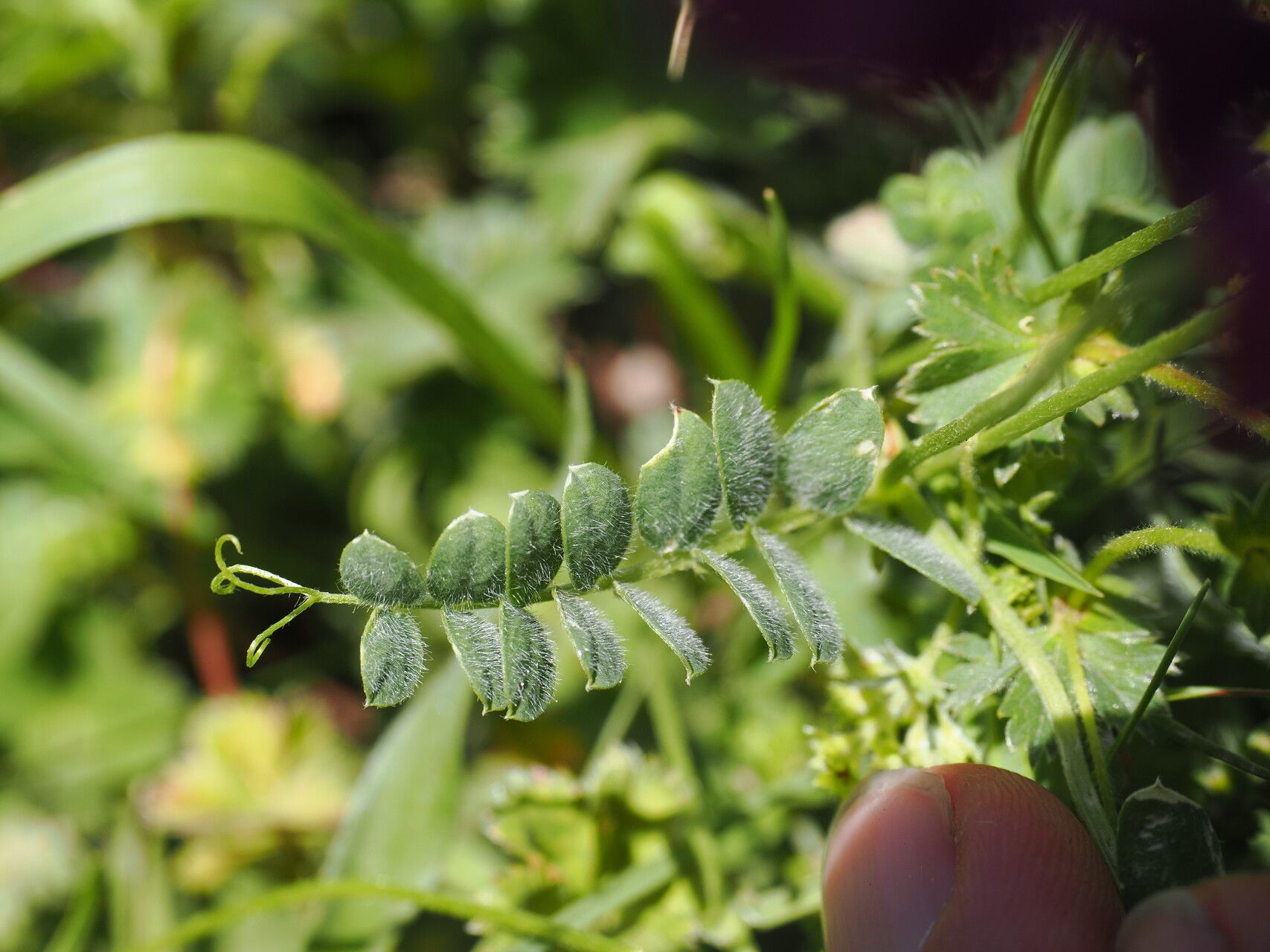
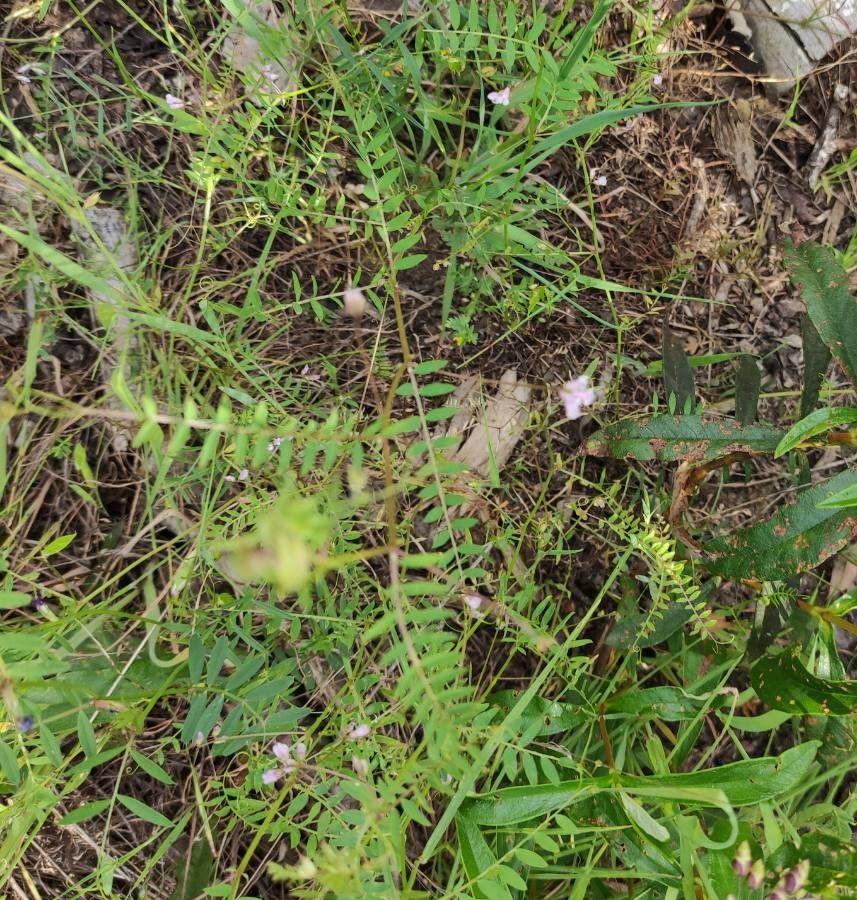
Vicia nigricans is a species of vetch known by the common name black vetch. It has a disjunct distribution, its two subspecies divided by thousands of miles in range. The northern subspecies, ssp. gigantea (giant vetch), is native to western North America from Alaska to northern California, where it occurs in coastal and moist inland habitat and disturbed areas. The southern subspecies, ssp. nigricans, occurs in southern South America, in Argentina and Chile.This vetch is a perennial herb with stout, hollow, and ridged climbing stems that may reach two meters in length. It attaches to objects and other plants by its large branched tendrils for support. The leaves are made up of 9 to 13 pairs of lance-shaped or elongated oval leaflets that may measure up to 4 centimeters in length. The inflorescence is a one-sided raceme of up to 15 or 20 flowers which have pale pink to dark reddish purple or sometimes yellowish to orange corollas. The flowers, each with a calyx about half as long as the corolla, are 1 to 2 centimeters long. They yield fruits which are legume pods measuring up to 4 centimeters long by 1.5 wide. As they dry they turn black.
Lens nigricans has good resistance to diseases and is generally not prone to them. However, it can be vulnerable to pests and diseases present in its surroundings. These infections are generally mild. As for care, this plant requires a moderate level of maintenance. It should be pruned regularly to retain an attractive appearance and healthy growth. Fertilizing can also help encourage flowering. Lens nigricans is suitable for anyone who has an outdoor area, such as a garden or patio, and does not demand much prior care experience. It may need more attention when grown indoors.
How to keep Vicia Nigricans.
Light
Lens nigricans is native to bright, open habitats where it flourishes in full sun. It can tolerate partial sun but favors direct sunlight for best growth. This plant, which may be annual or biennial, is noted for its sun-loving nature.
Temperature
Lens nigricans can tolerate a wide range of temperatures, but its distribution may still be restricted by specific combinations of moisture and heat. It grows best in warm summer conditions with adequate rainfall or irrigation. Extended periods of cloudy, rainy weather or prolonged high temperatures increase the chance of Lens nigricans dying. In winter, protecting it from cold can raise its survival rate.
Fertilizer
Lens nigricans benefits from regular, diluted fertilizer applications to encourage healthy leaf development. Fertilize Lens nigricans roughly once a month during the summer. Nitrogen is vital for foliage, and providing nitrogen-rich nutrients helps Lens nigricans flourish.
Botanical profile.
- Plant Type
- Herb
- Life Cycle
- Annual
- Genus
- Vicia
- Family
- Fabaceae
- Hardiness Zone
- 8-11
- Mature Height
- 20 cm to 40 cm
- Mature Spread
- 15 cm to 30 cm
- Leaf Color
- Green
- Leaf Type
- Deciduous
- Flower Color
- White
- Flower Size
- 0.51 cm to 0.76 cm
- Bloom Time
- Mid spring, Late spring
- Planting Time
- Spring, Autumn
- Harvest Time
- Early summer, Mid summer
Other names.