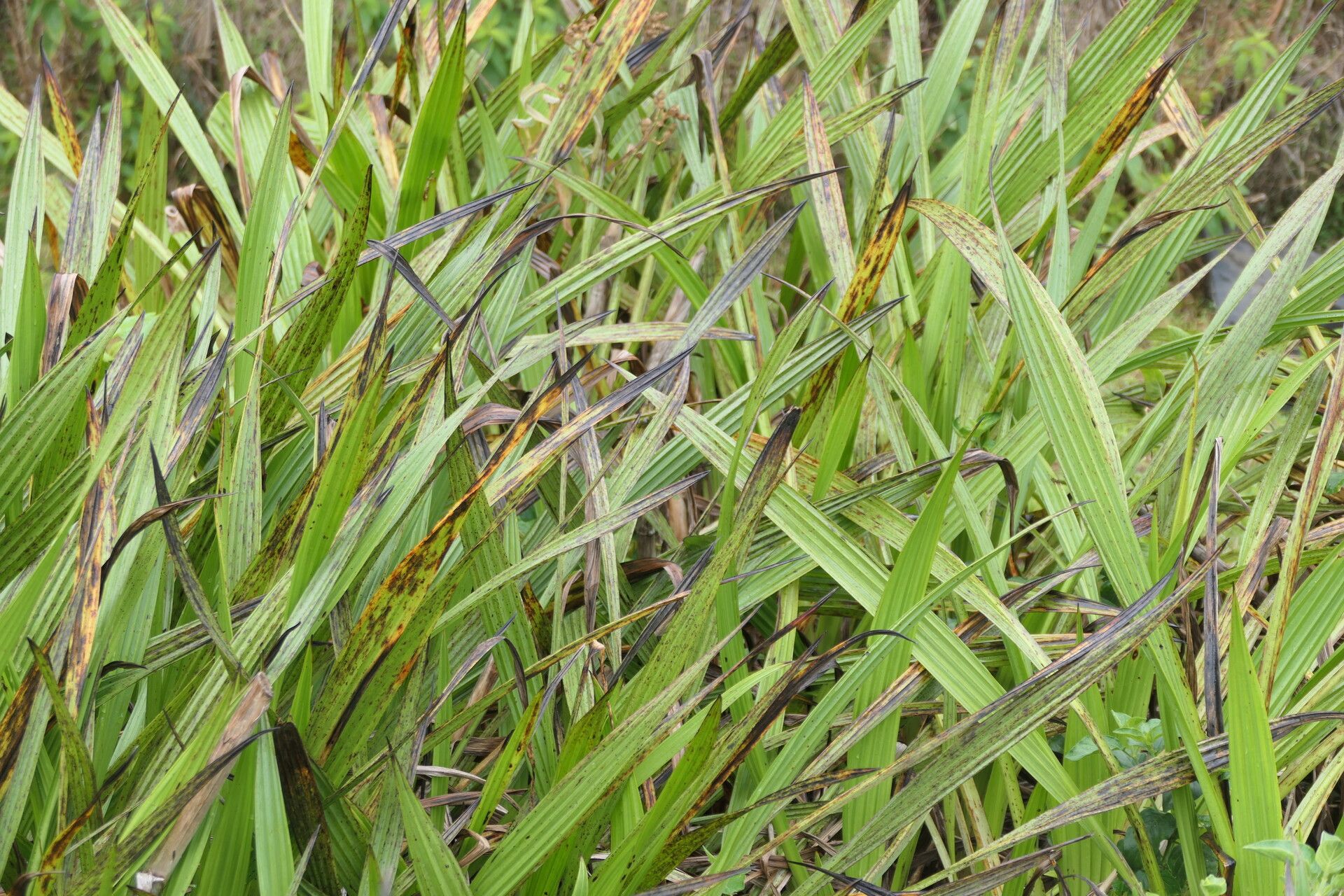
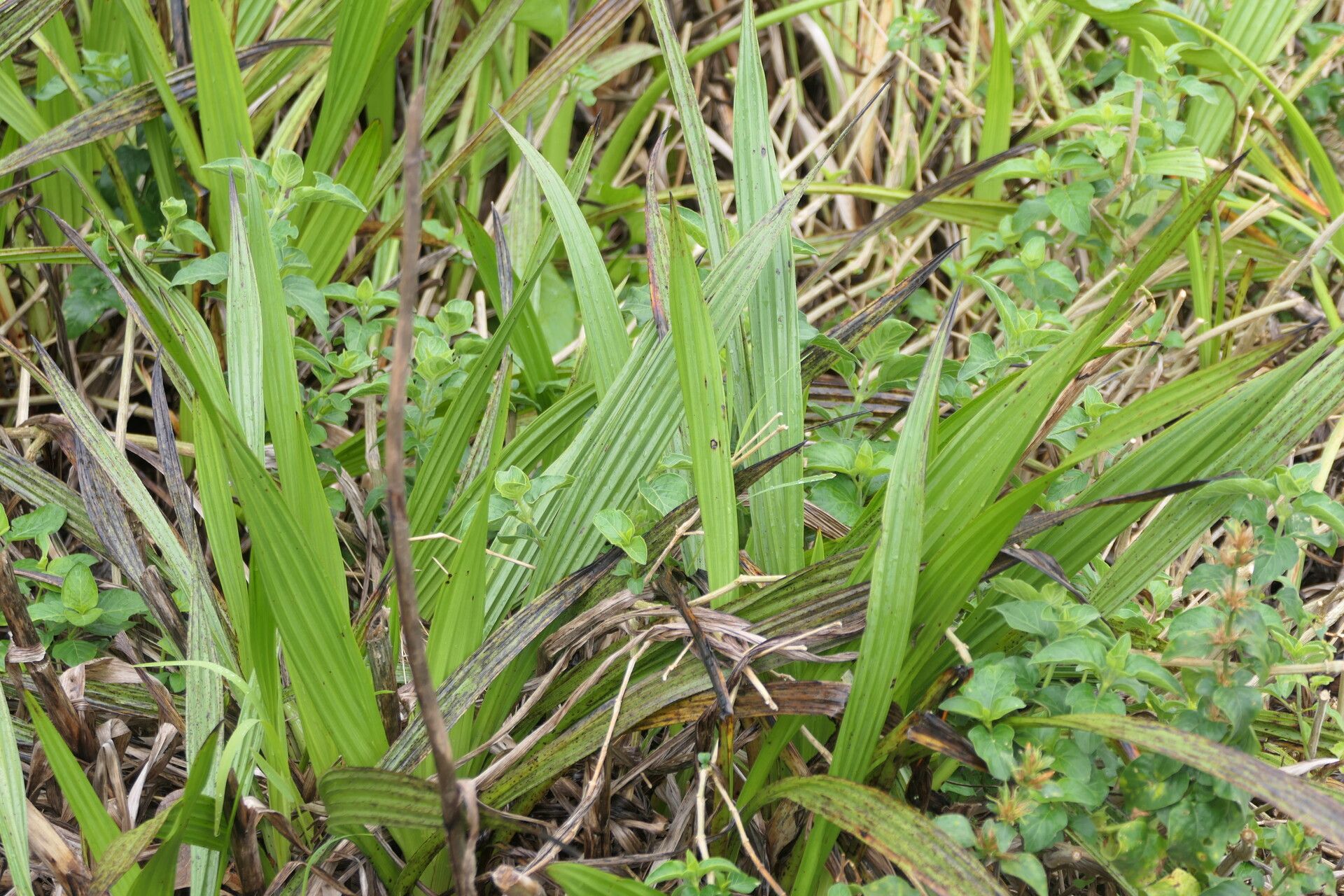
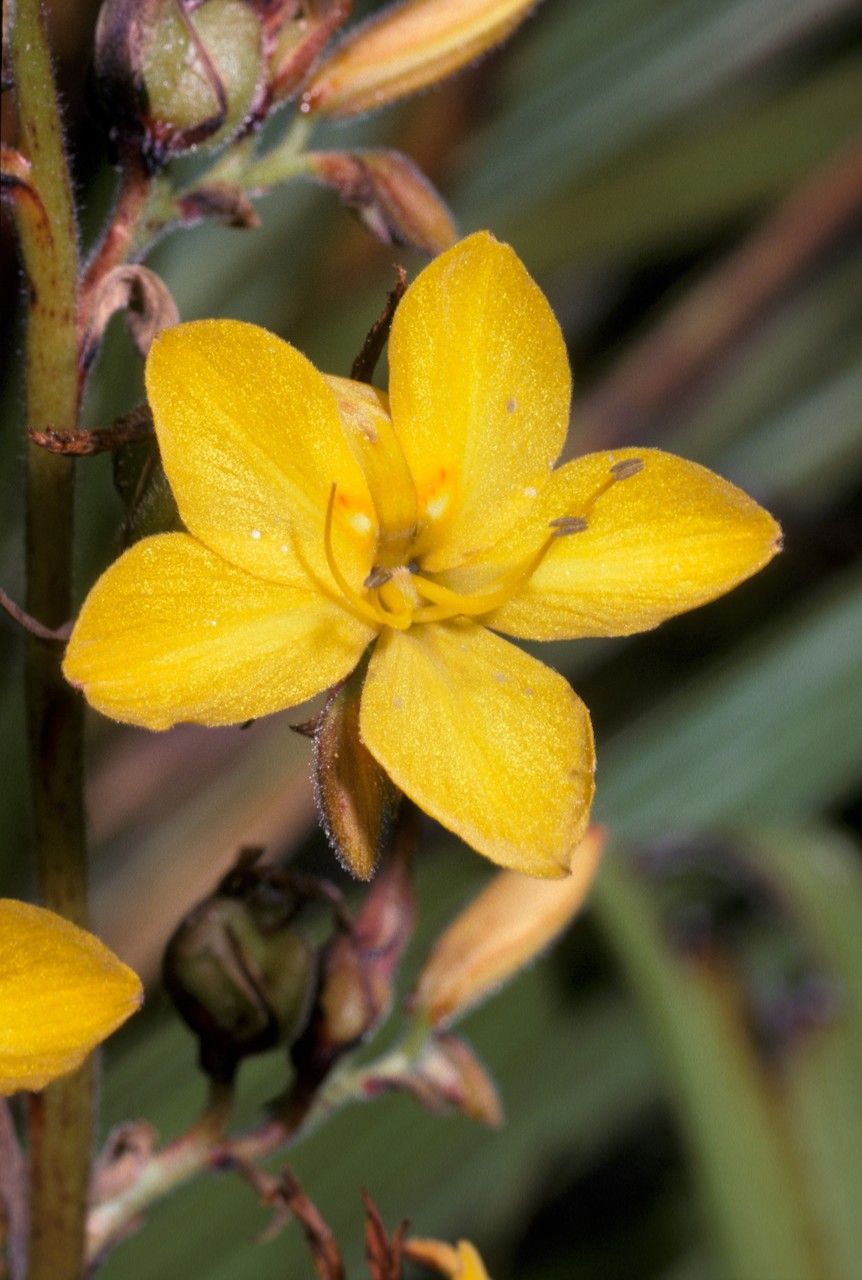
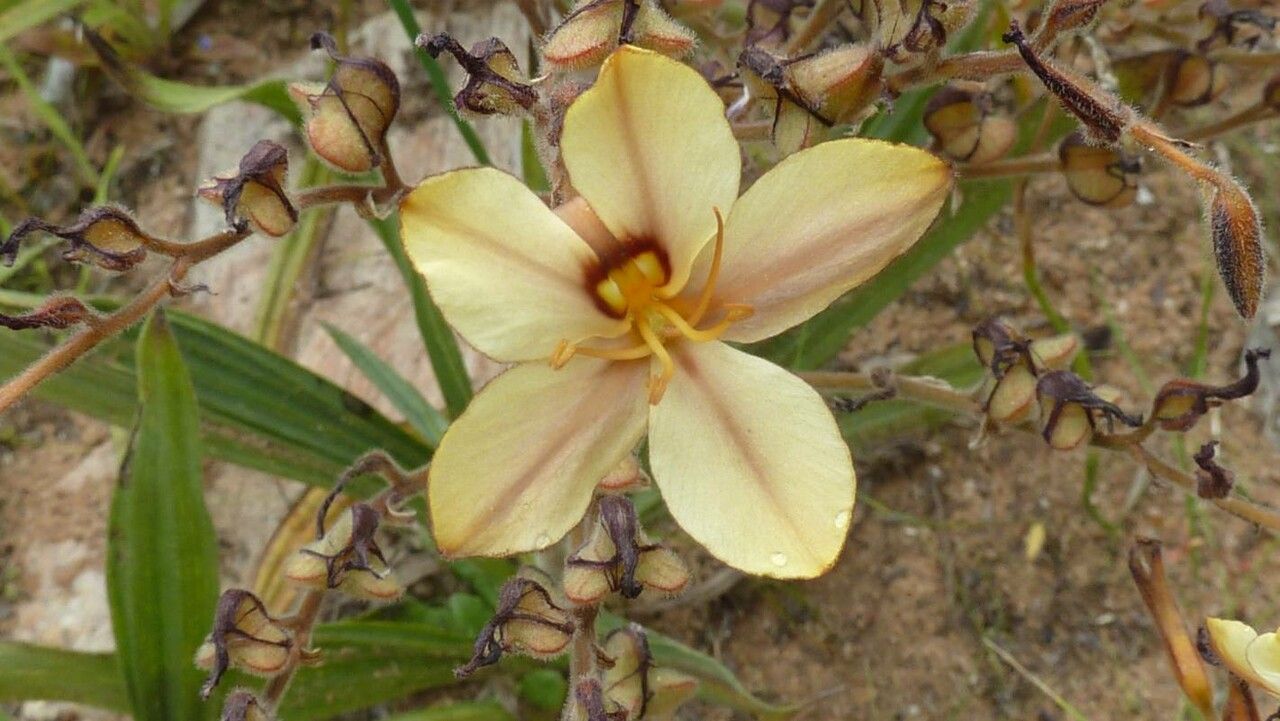
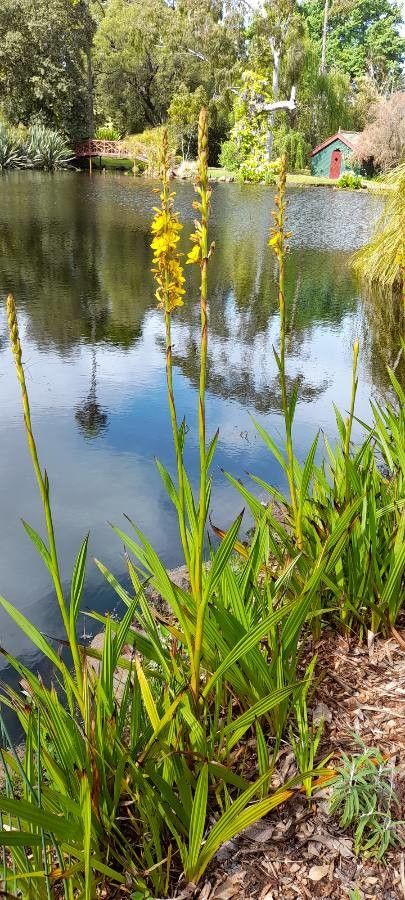
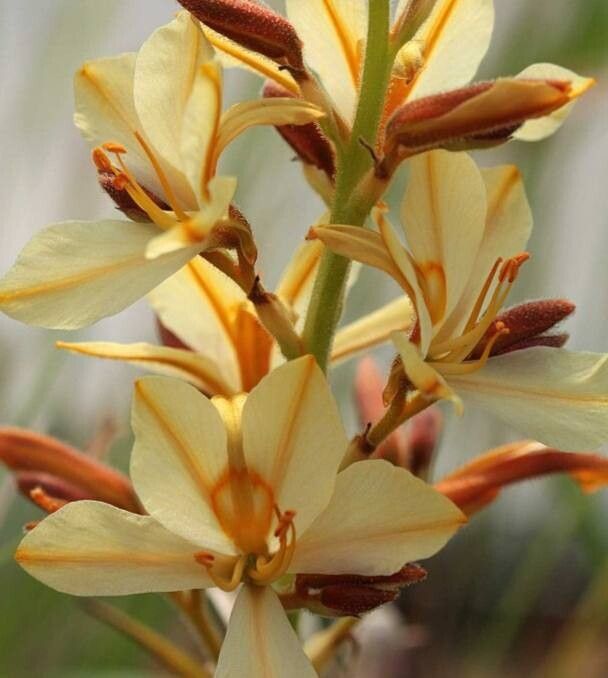
Wachendorfia thyrsiflora, the marsh butterfly lily, is a plant species of 0.6–2.5 m (2.0–8.2 ft) high when flowering, that has been assigned to the bloodroot family. It is a large to very large evergreen perennial plant with an underground rootstock with clusters of roots produced at the nodes. The rootstock has a distinctive red colour that results from so-called arylphenalenone pigments. The sturdy, entire and broadly sword-shaped leaves have laterally flattened and pleated leaf blades. The golden yellow flowers are set a dense cylindrical panicle on a tall firm stalk. Flowering occurs from spring until mid-summer.
The butterfly lily is fairly disease-resistant and typically does not suffer from many illnesses. Nonetheless, it can be affected by pests and diseases present in its environment. Such infections are typically mild. Regarding upkeep, this plant needs moderate care. It should be pruned regularly to preserve a neat appearance and support healthy growth. Applying fertilizer can also encourage blooming. The butterfly lily is appropriate for anyone who has outdoor space, like a garden or patio, and it does not demand extensive gardening experience. It can need extra attention if grown indoors.
How to keep Wachendorfia Thyrsiflora.
Light
The butterfly lily performs best in spots that receive direct, unshaded sunlight for most of the day, which promotes healthy growth. Excessive sun exposure causes little harm. However, too little light can weaken the plant and diminish its flowering.
Water
The butterfly lily flourishes in moist environments and needs weekly watering to maintain its lush growth. It prefers wet soil and has a high tolerance for humidity. To achieve optimal conditions for this evergreen plant, keep the soil evenly moist. This will enhance its foliage and flowering potential.
Temperature
Butterfly lily shows good temperature adaptability, able to withstand higher heat and wider temperature fluctuations. In hot weather, attention should be given to watering and providing adequate shade to avoid sunburn. However, Butterfly lily is relatively sensitive to low temperatures. While it can tolerate some cold, excessively low temperatures can cause frost damage.
Fertilizer
The best time to fertilize a Butterfly lily is in early spring, when it is coming out of dormancy and beginning active growth. Fertilization supplies essential nutrients for healthy growth. Although the Butterfly lily has fairly low fertilizer requirements, applying fertilizer once a year can improve its survival and encourage better, longer-lasting flowers.
Pruning
The butterfly lily is known for its vibrant flowers and blade-shaped leaves. To encourage growth and maintain its attractive appearance, prune the plant in early spring or late winter. This involves removing dead foliage and trimming off spent flowers. Always use clean tools to minimize stress on the plant, improve airflow, and reduce the risk of disease.
Botanical profile.
- Plant Type
- Herb
- Life Cycle
- Perennial
- Genus
- Wachendorfia
- Family
- Haemodoraceae
- Hardiness Zone
- 8-11
- Mature Height
- 1.22 m to 1.83 m
- Mature Spread
- 61 cm to 91 cm
- Leaf Color
- Green
- Leaf Type
- Evergreen
- Flower Color
- Yellow
- Flower Size
- 2.54 cm
- Bloom Time
- Mid spring, Late spring
- Planting Time
- Spring, Summer, Autumn
- Harvest Time
- Early summer, Mid summer
- Native Area
- South Africa
Other names.
Reader questions.
What are the sunlight requirements for a Butterfly Lily?
The Butterfly Lily requires full sun, which means it needs above 6 hours of sunlight daily to thrive. It's crucial to observe how sunlight moves through your garden to choose the best spots that provide a perfect balance of light and shade for your plants. The Butterfly Lily generally benefits from unfiltered sunlight for most of the day, contributing to its healthy growth and minimal adverse effects from overexposure. However, too little sunlight can affect the plant's vigor and flowering capabilities.
How does artificial lighting benefit indoor Butterfly Lilies?
Indoor Butterfly Lilies require adequate lighting for optimal growth, especially when natural sunlight is insufficient. Artificial lights, such as LED lights which can provide specific wavelengths needed by plants, are ideal. For full sun plants, it's recommended to have 30-50W per square foot of artificial light. The light source should be placed 12-36 inches above the plant, mimicking natural sunlight as much as possible, and kept on for 8-12 hours per day to promote faster and healthier growth.
What are some important symptoms of light deficiency in Butterfly Lilies?
Symptoms of light deficiency in Butterfly Lilies include smaller new leaves, leggy or sparse growth due to elongated spaces between leaves or stems, faster leaf drop to conserve resources, slower or no new growth as the plant enters a survival mode, lighter-colored new leaves indicating a lack of chlorophyll, and chlorosis resulting in yellowing leaves. Additionally, excessive sunlight exposure can lead to symptoms like sunscald, leaf curling, wilting, leaf scorching, and damage from intense sunlight exposure.
What are the solutions for correcting light deficiency in Butterfly Lilies?
To correct light deficiency in Butterfly Lilies, gradually increase their exposure to sunlight. For indoor plants, move them to a sunnier location each week until they receive at least 6 hours of direct sunlight daily, or use artificial lights for at least 8 hours daily. Outdoor plants should also be moved to sunnier spots gradually to avoid sunburn. Additionally, reduce obstructions like tree branches that may block sunlight and consider transplanting smaller plants during their dormant period to areas with ample sunlight and good drainage.