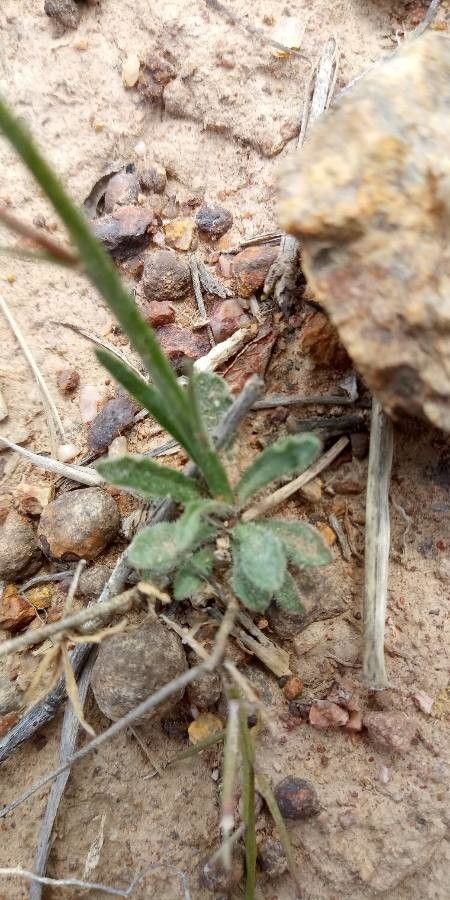
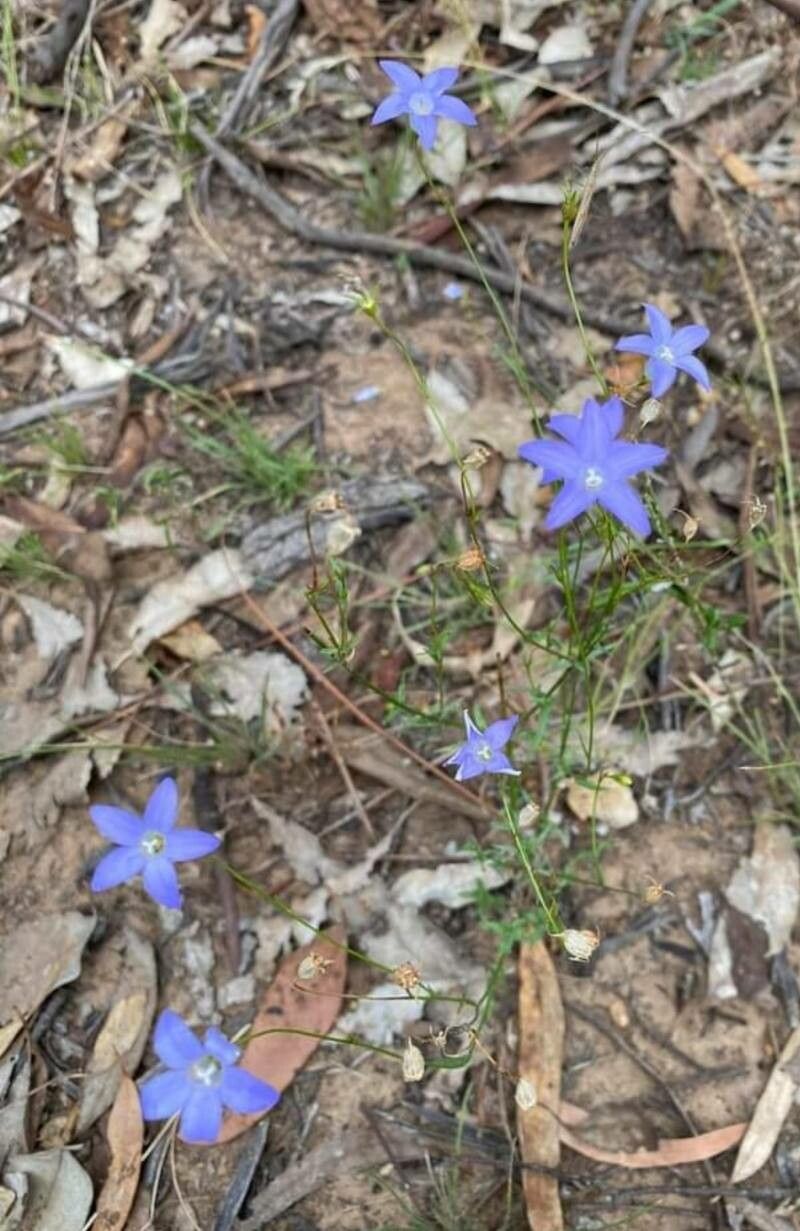
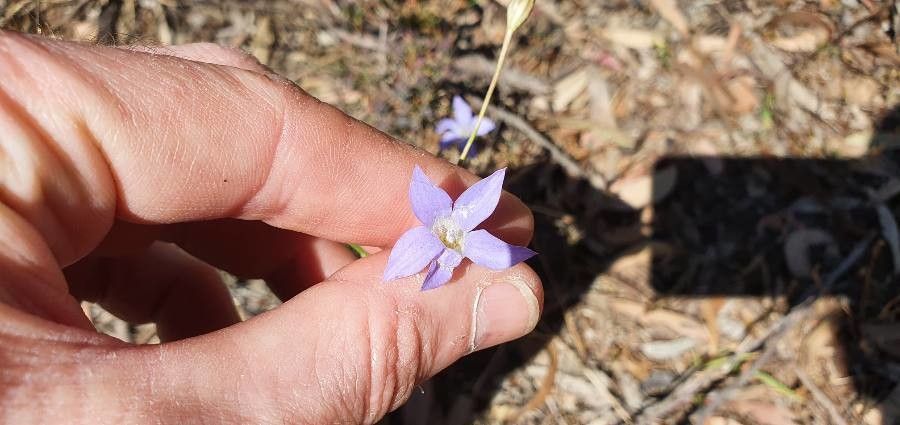
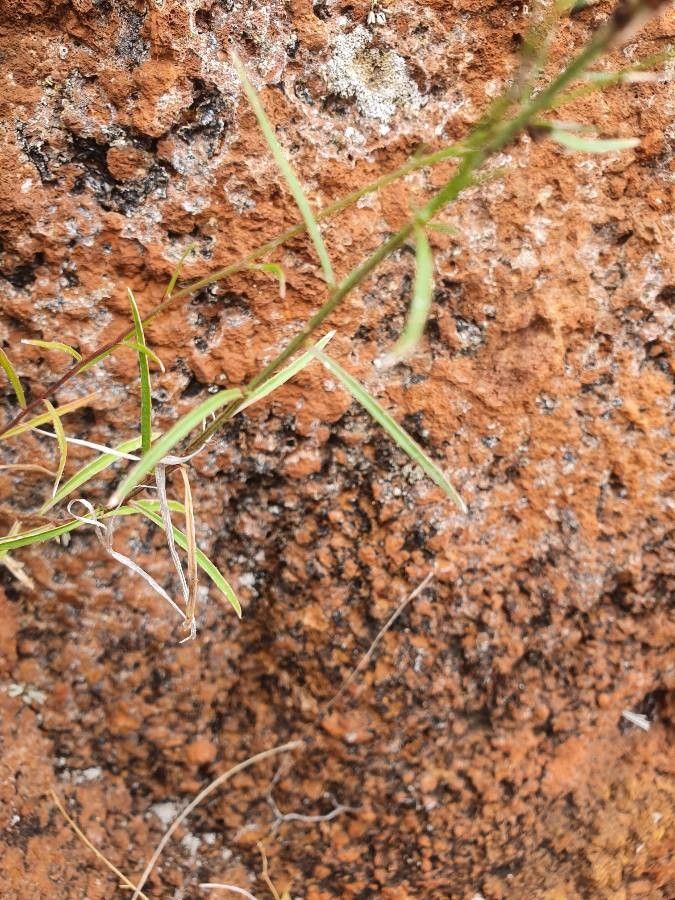
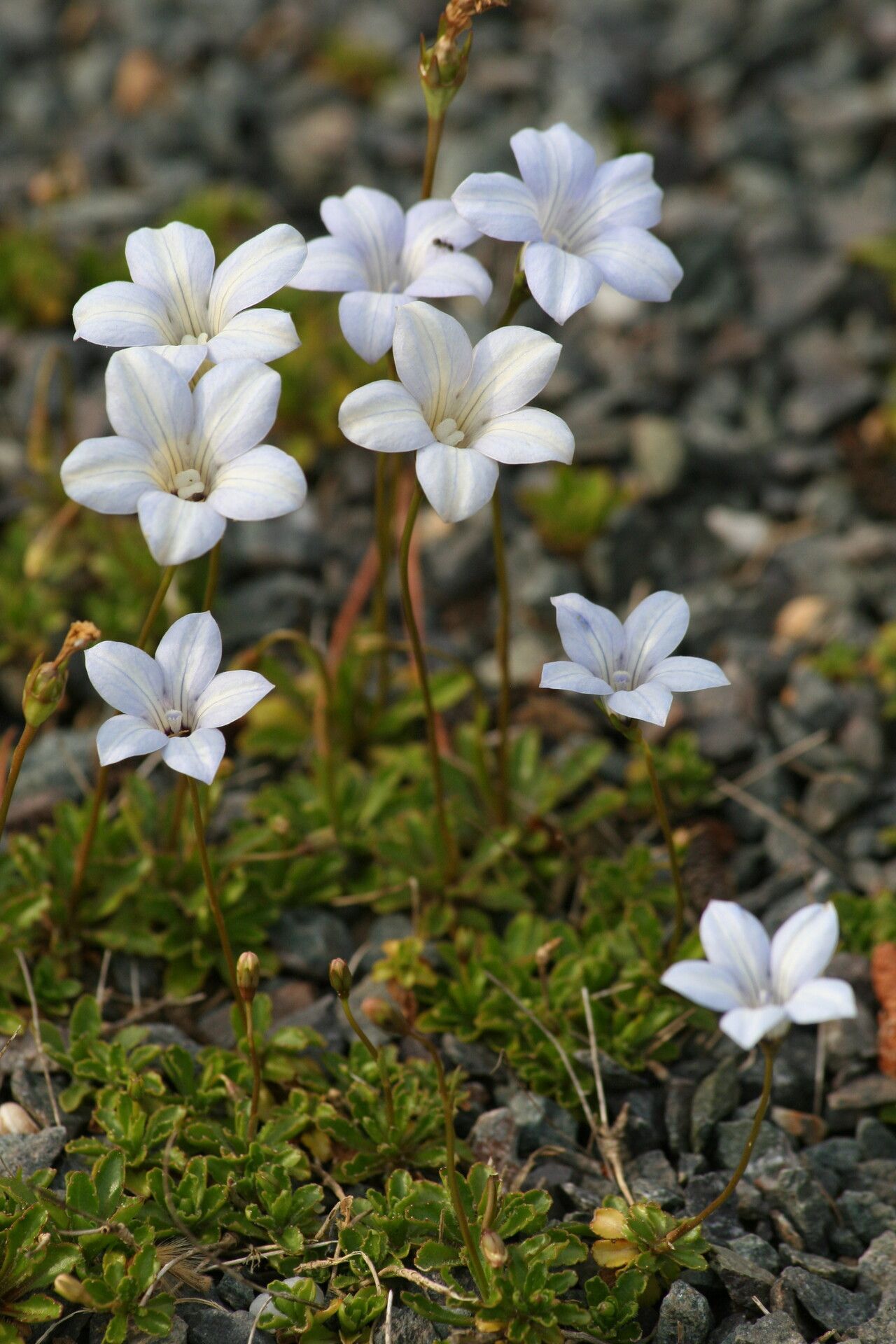
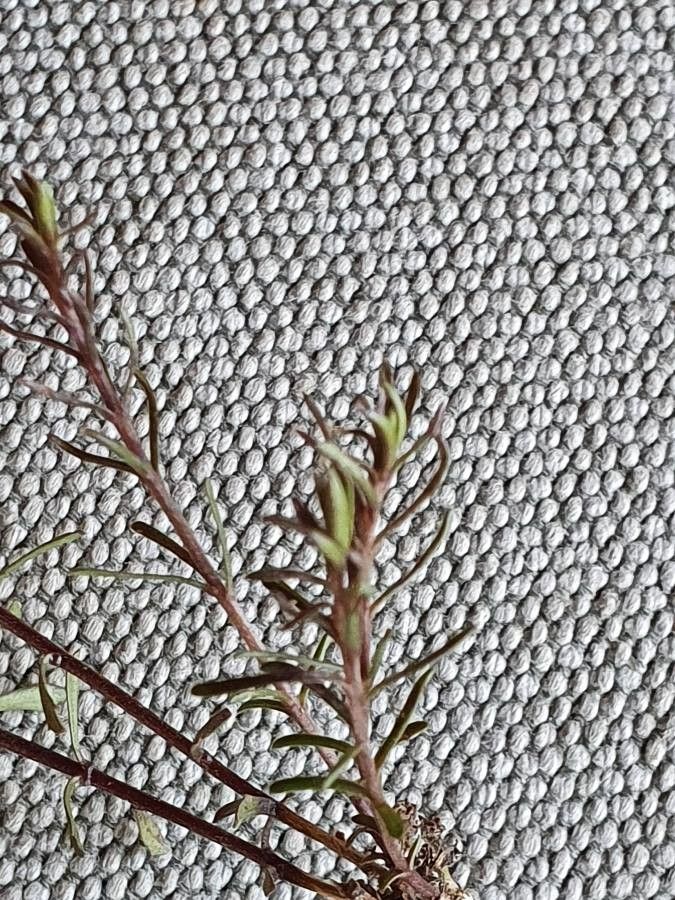
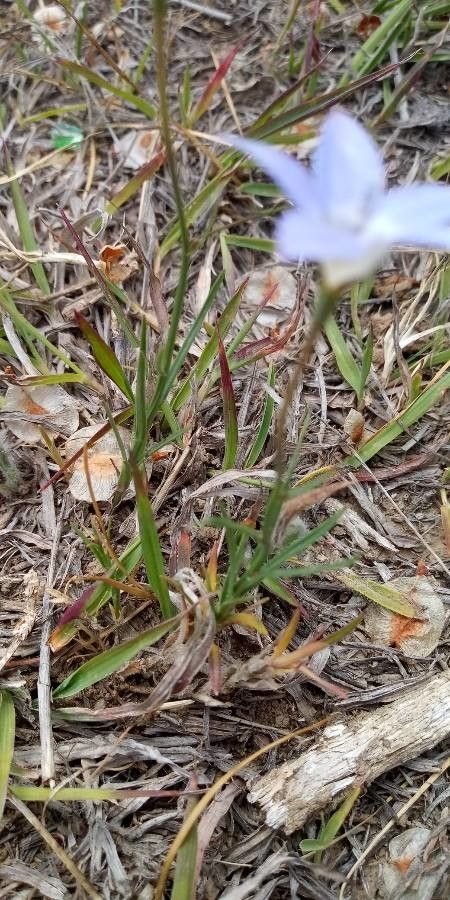
Wahlenbergia stricta, the Australian bluebell, tall bluebell or austral bluebell, is an Australian wildflower from the Campanulaceae family. It is considered the most commonly encountered of the Wahlenbergias. It is found in all Australian states but not the Northern Territory. It is often seen growing by the side of the road, enjoying the extra runoff. Wahlenbergia stricta is a perennial herb flowering mainly in spring or summer with pale blue bell-like flowers. The leaves are long and linear, 5–70 millimetres (0.20–2.76 in) long. The five-petalled flowers are erect on long, slender stems and about 6–20 millimetres (0.24–0.79 in) in diameter. It forms thin, carrot shaped tubers.
The Australian bluebell has good disease resistance and is generally not prone to illnesses. However, it can be vulnerable to pests and diseases present in its environment. These infections are usually mild. When it comes to care, this plant requires moderate maintenance. It should be pruned regularly to keep a tidy appearance and support healthy growth. Fertilizing can also help encourage flowering. The Australian bluebell is suitable for anyone with outdoor space, such as a garden or patio, and does not demand extensive gardening experience. It may need more attention when grown indoors.
How to keep Wahlenbergia Stricta.
Light
The Australian bluebell is a sun-loving, perennial herbaceous plant native to open habitats and frequently found in meadows and grasslands. It prefers full sun but can also tolerate partial sun conditions.
Humidity
This plant will thrive in moderate humidity, which is probably the level in your home. However, misting it a few times a week can be very beneficial. Make sure the room has good ventilation.
Temperature
Australian bluebell can tolerate a wide range of temperatures, but its distribution may still be constrained by different combinations of moisture and heat. It does best in warm summer conditions with sufficient rainfall or watering. Extended periods of cloudy, rainy weather, as well as prolonged high temperatures, can raise the likelihood of Australian bluebell dying. In winter, adequate protection from cold can enhance the plant's survival rate.
Fertilizer
The best time to fertilize an Australian bluebell is in early spring, as it comes out of dormancy and begins active growth. Fertilization supplies essential nutrients for healthy development. Although the Australian bluebell has relatively low fertilizer requirements, applying fertilizer annually can improve its survival and encourage better, longer-lasting flowers.
Pruning
The Australian bluebell showcases delicate blue flowers and benefits significantly from early spring pruning, which encourages robust growth and vibrant blooms. To maintain a healthy plant, remove any dead stems and trim overgrown branches to shape it properly. Focus on light maintenance to improve air circulation and enhance the plant's vigor. Always use clean, disinfected tools for pruning to prevent the spread of disease.
Botanical profile.
- Plant Type
- Herb
- Life Cycle
- Perennial
- Genus
- Wahlenbergia
- Family
- Campanulaceae
- Hardiness Zone
- 7-10
- Mature Height
- 30 cm to 61 cm
- Mature Spread
- 20 cm to 40 cm
- Leaf Color
- Green, Dark Green
- Leaf Type
- Semi-evergreen
- Flower Color
- Lavender
- Flower Size
- 1.02 cm to 2.03 cm
- Bloom Time
- Mid spring, Late spring, Early summer
- Planting Time
- Spring, Autumn
- Harvest Time
- Summer
Other names.
Reader questions.
What are the sunlight requirements for an Australian bluebell?
The Australian bluebell (Wahlenbergia stricta) thrives under specific sunlight conditions. It requires 'full sun' exposure, which means it should receive above 6 hours of sunlight daily. Alternatively, it can also grow well under 'partial sun' conditions, needing about 3-6 hours of sunlight daily. It's important to observe the way sunlight moves across your garden to find the ideal spots that offer a harmonious balance of light and shade, ensuring the plants' well-being and growth.