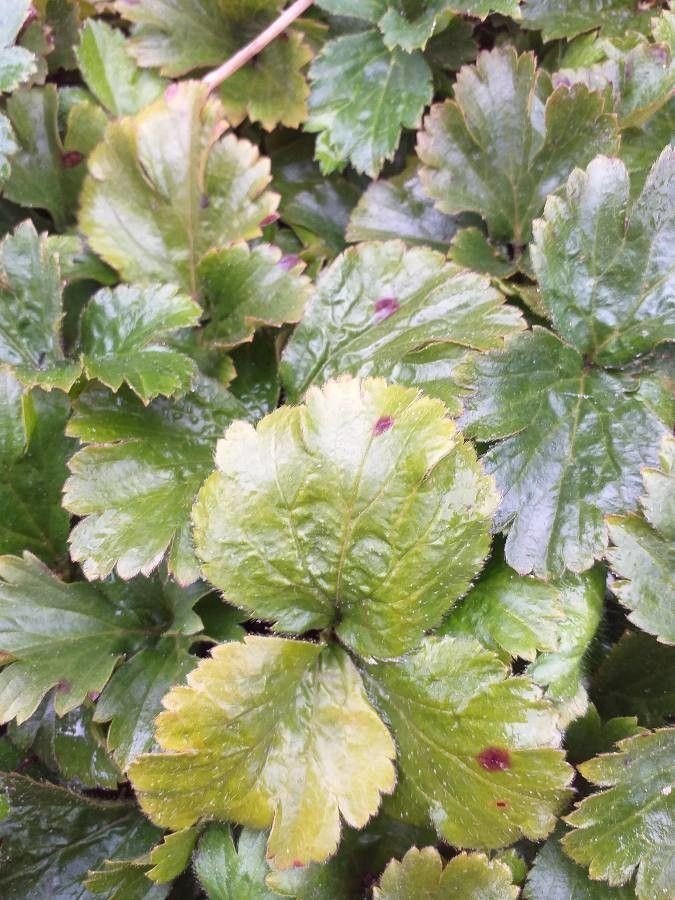
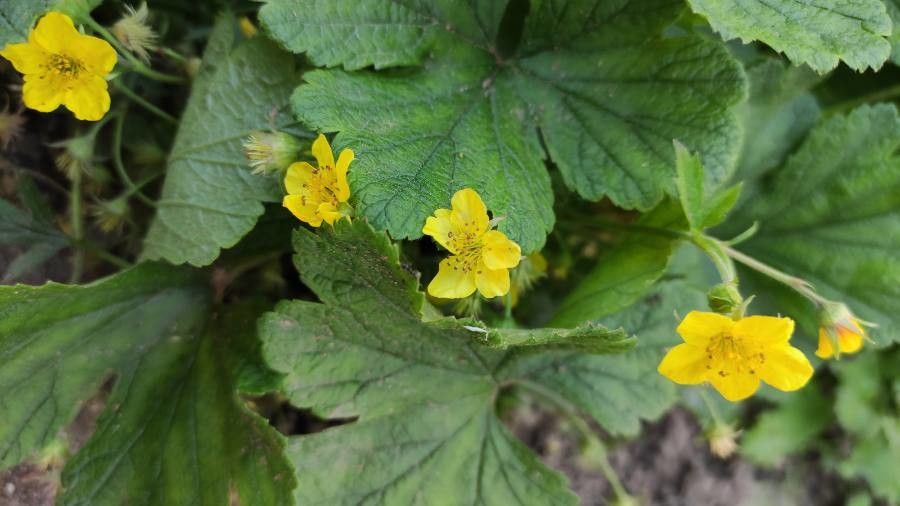
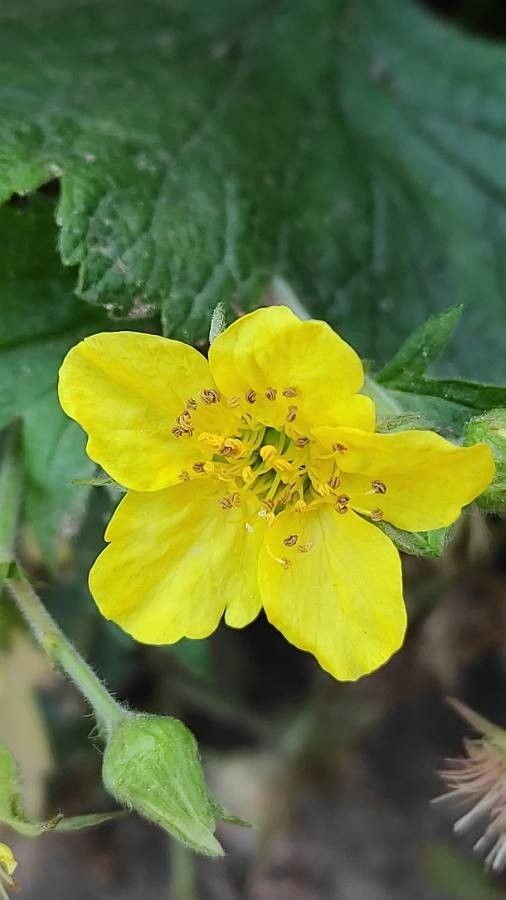
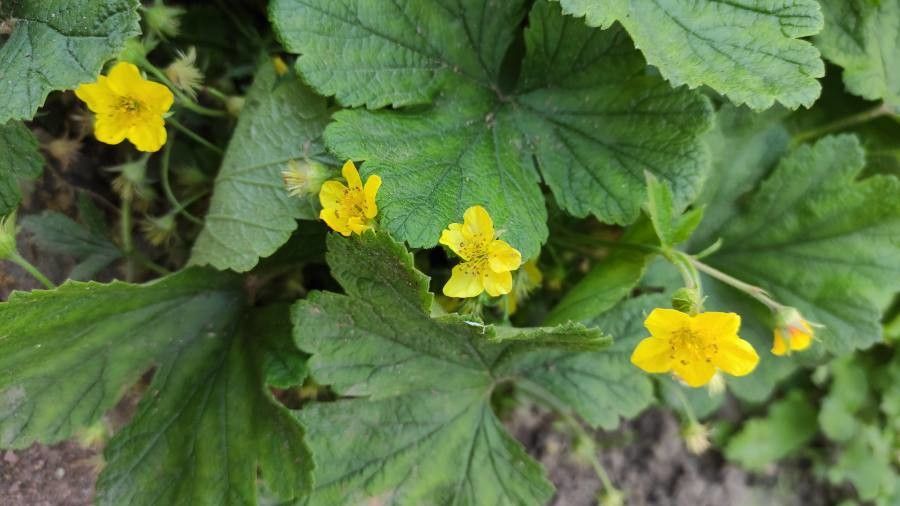
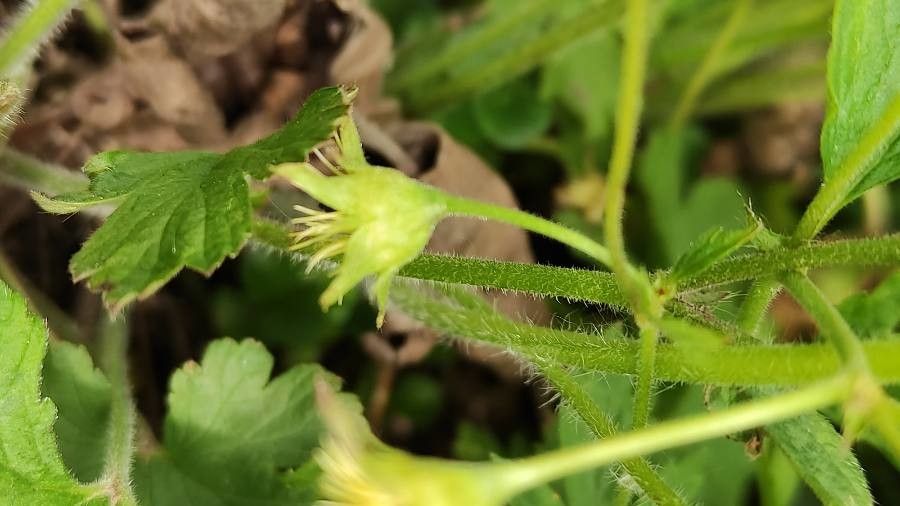
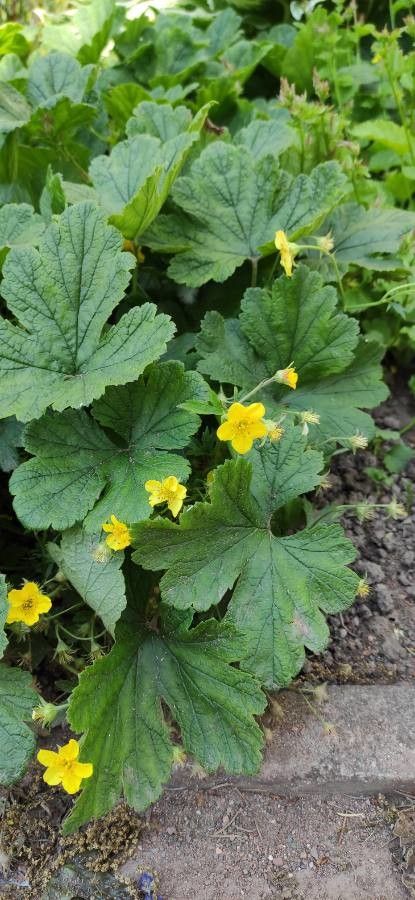
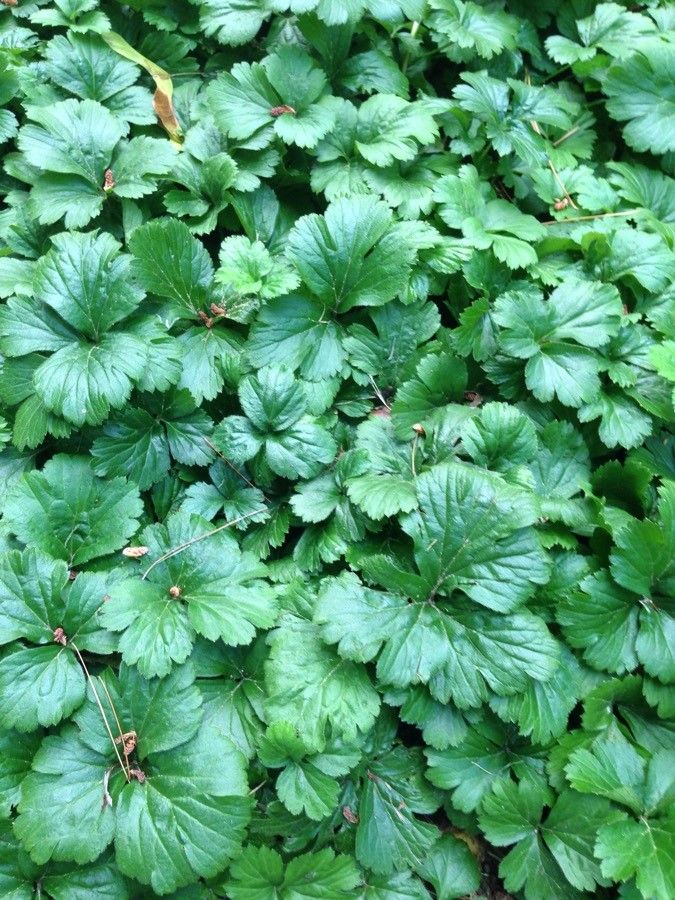
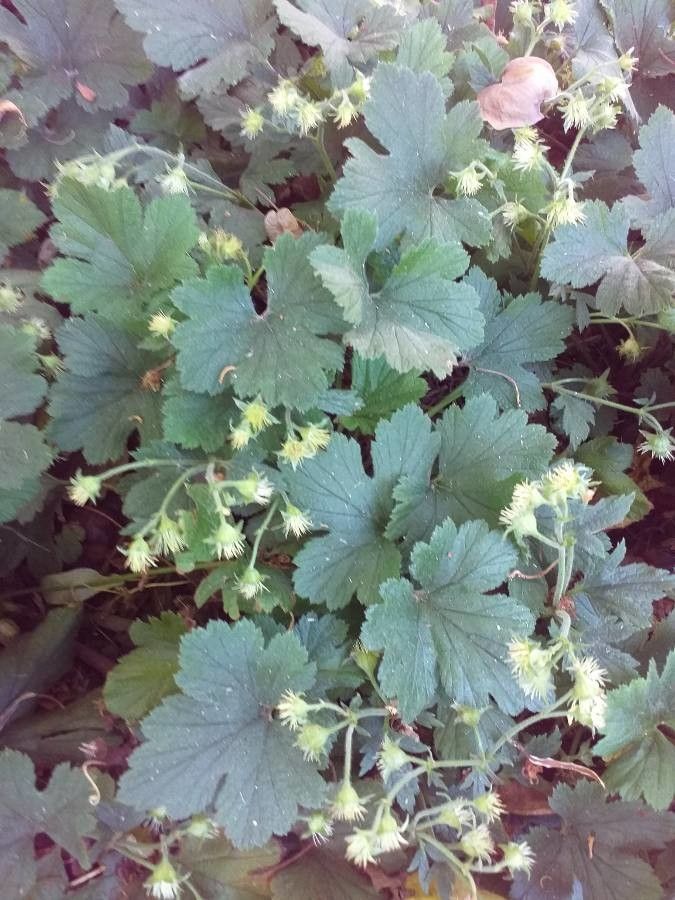
Waldsteinia ternata, commonly referred to as barren strawberry, is an herbaceous perennial plant. It has a disjunct distribution, being native to Eastern Europe and Eastern Asia, namely the Changbai Mountains of China, Sakhalin and Siberia in Russia, and Japan.Both the leaves and the flowers of W. ternara are reminiscent of strawberry. The leaves are trifoliate (hence the specific epithet), arranged in rosettes, glossy, and evergreen in climates with mild winters. The yellow, five-petaled flowers appear in late spring or early summer. The fruit is an inedible berry. The plant usually grows 4 inches (10 cm) to 6 inches (15 cm) tall and forms a thick foliage carpet by spreading via stolons and rhizomes. The spread is slow and thus not seen as aggressive.W. ternata has been cultivated since at least 1803. The cultivated plants are, for the most part, based on W. ternata subsp. trifolia. Undemanding of soil conditions, W. ternata is used in landscape and garden design as a groundcover or as an edger for the herbaceous border. As it can grow in either sun or dappled shade, it is considered appropriate for shade gardens. Neither pests nor diseases pose significant problems. The 'Kronstadt' cultivar has enlarged flowers, while 'Variegata' has variegated leaves.
Barren strawberry is fairly resistant to disease and is generally not easily affected. Still, it can be vulnerable to pests and illnesses present in its environment. These outbreaks are typically mild. Regarding care, this plant needs a moderate amount of attention. It should be pruned regularly to keep a neat appearance and support healthy growth. Feeding it can also help encourage flowering. Barren strawberry is appropriate for anyone with outdoor space, such as a garden or patio, and does not demand extensive gardening experience. It may need extra care when grown indoors.
How to keep Waldsteinia Ternata.
Light
Barren strawberry does best when it gets abundant sunlight throughout the day. While the plant can survive with less light, it achieves its best growth with prolonged exposure. Conversely, long periods of low light can slow its development. This matches its origin in environments that receive a great deal of sun.
Temperature
Barren strawberry originates from habitats with moderate temperatures, ideally about 41 to 89.6 °F (5 to 32 ℃). It is adaptable and can tolerate occasional temperature dips. Modify care to prevent prolonged exposure to extreme cold or heat.
Fertilizer
The primary time to fertilize Barren strawberry is in early spring when the flowers are developing. Using the correct fertilizer promotes better blooms and helps Barren strawberry produce attractive flowers. Fertilizing in early spring ensures strong flowers throughout the season and supplies energy for dormant growth stages.
Botanical profile.
- Plant Type
- Herb
- Life Cycle
- Perennial
- Genus
- Waldsteinia
- Family
- Rosaceae
- Hardiness Zone
- 4-8
- Mature Height
- 8 cm to 15 cm
- Mature Spread
- 15 cm to 30 cm
- Leaf Color
- Green, Blue
- Leaf Type
- Semi-evergreen, Deciduous
- Flower Color
- Yellow
- Flower Size
- 2.54 cm
- Bloom Time
- Mid spring, Late spring
- Planting Time
- Spring, Summer
- Harvest Time
- Early summer, Mid summer
Other names.