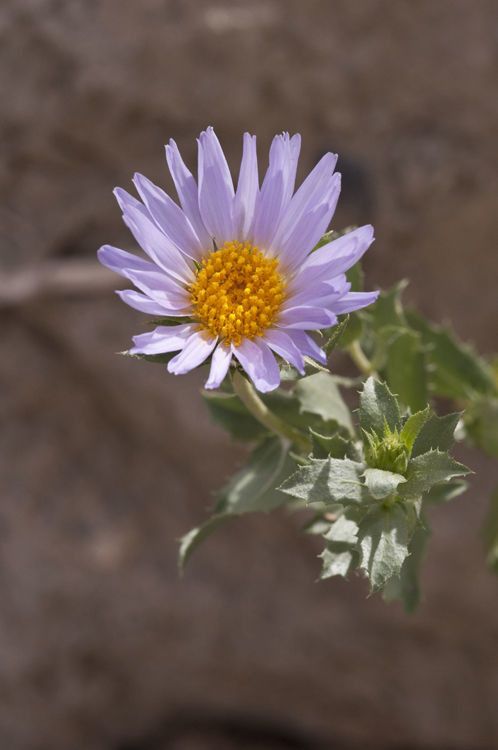
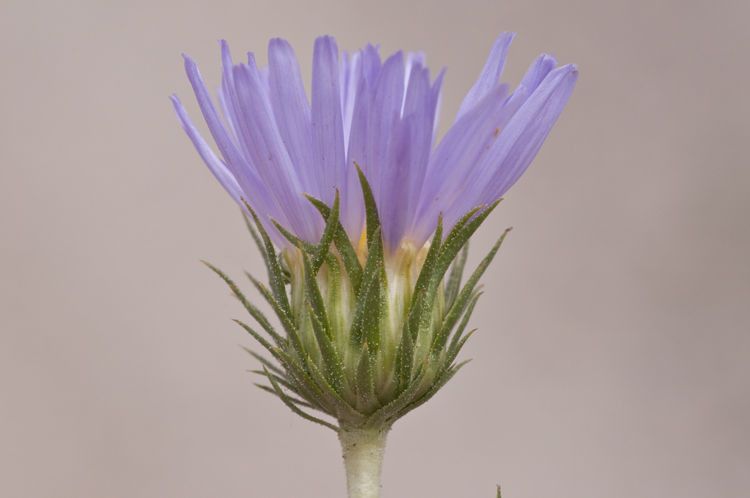
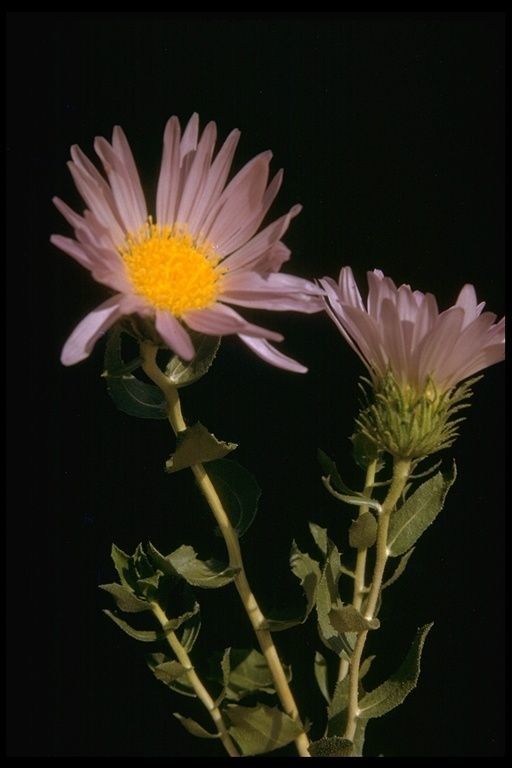
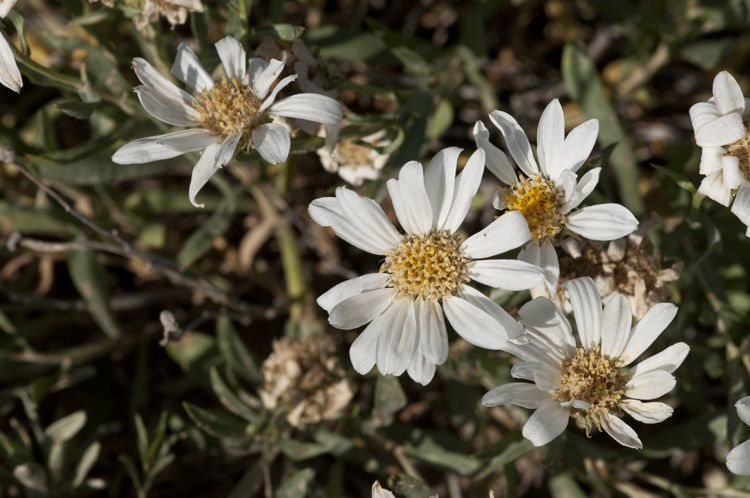
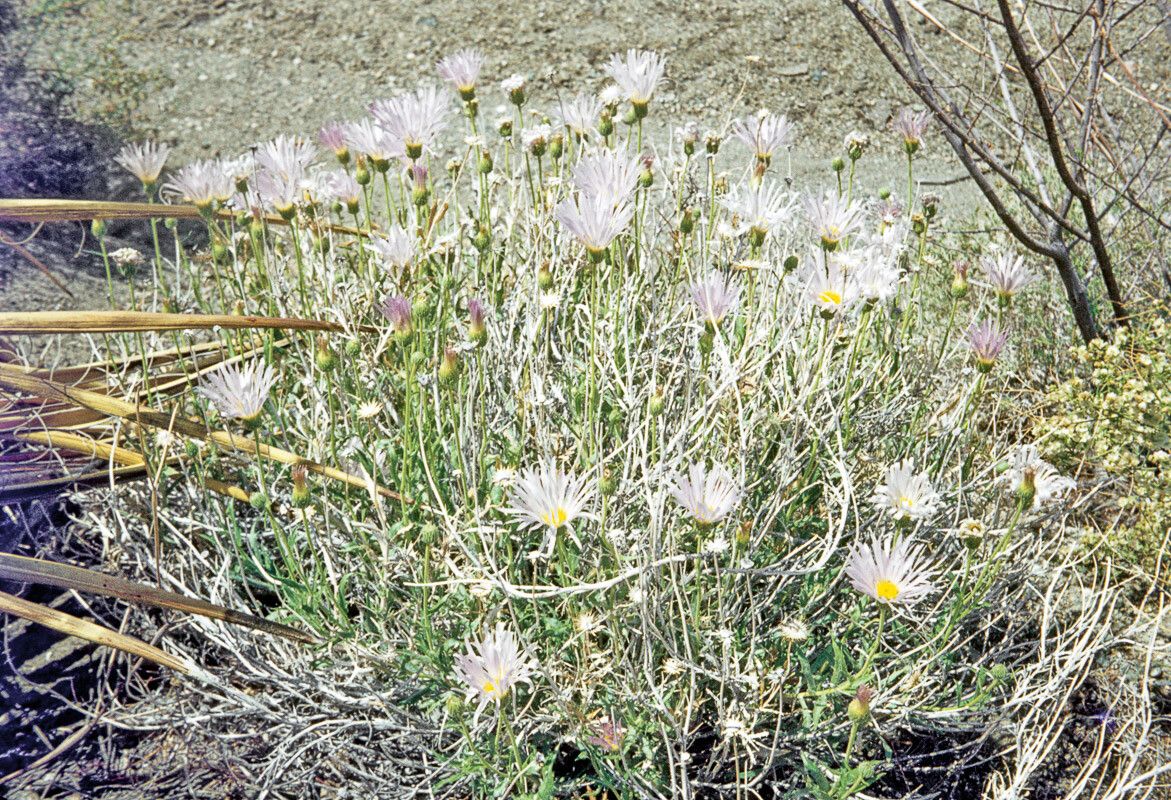
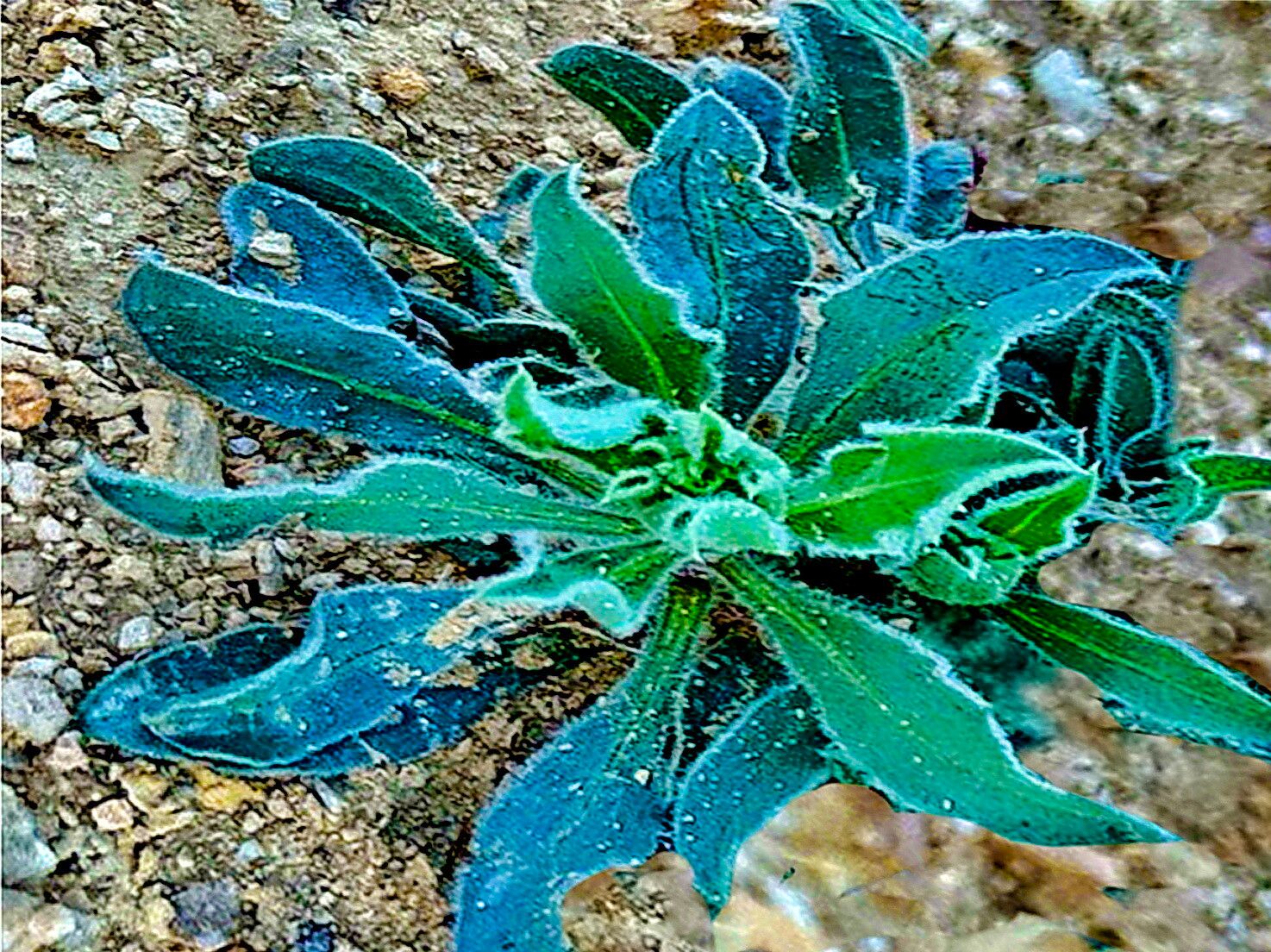
Xylorhiza orcuttii is a perennial plant in the family Asteraceae known by the common name Orcutt's aster. It is native to southern California and northern Baja California, where it grows in scrubby habitat in the dry canyons of the Sonoran Desert. It often grows in rocky and sandy substrates, clay, and alkaline soils amongst cactus. It is a shrub with branching, mostly hairless stems that may reach 1.5 meters in length. The leaves are lance-shaped to oblong with smooth, toothed, or spiny edges. The inflorescence is a solitary flower head with up to 40 or more lavender or pale blue ray florets, each of which may measure over 3 centimeters in length. Flowering may begin as early as late fall or winter. The fruit is an achene which may be over a centimeter long, including its pappus of bristles.
Orcutts aster demonstrates strong disease resistance and is usually not susceptible to illnesses. In terms of care, this plant is fairly low-maintenance. When grown outdoors it needs only minimal watering, and larger plants typically do not require pruning. Smaller plants, however, should be trimmed after they have finished blooming. Orcutts aster is well suited to anyone with an outdoor area, such as a garden or a deck, and does not demand much gardening experience.
How to keep Xylorhiza Orcuttii.
Light
Orcutts aster comes from open habitats, such as sunny meadows and forest edges, where light is plentiful. It does best in Full Sun but will also tolerate Partial Sun, adjusting well to different light levels.
Water
Orcutt's aster thrives in arid conditions, requiring minimal water and preferring dry soil between waterings. Water it twice a week, making sure the soil is completely dry before each watering. As an outdoor plant suitable for xeric landscapes, Orcutt's aster needs a well-draining soil mix to prevent water retention.
Temperature
Orcutts aster shows strong adaptability to a variety of climate conditions, whether in blistering summers or freezing winters. However, it does have an optimal temperature range for growth. When temperatures climb too high, the plant is susceptible to heat and humidity stress, which can lead to its death. In locations where temperatures approach the lower limit of its cold tolerance, it is important to provide insulation to protect the plant.
Fertilizer
The timing is important when fertilizing Orcutts aster. Begin fertilizing in early spring and continue monthly through early summer. Fertilizer encourages lovely blooms and supplies energy during both dormant and active growth phases.
Pruning
Orcutt's aster is known for its striking purple flowers and ability to thrive in dry conditions. To keep the plant healthy and ensure abundant flowering, early spring pruning is essential. This involves removing dead stems, excess growth, and spent flowers, which also improves the plant's appearance. Be sure to use clean, sharp tools to make precise cuts and prevent the spread of disease.
Botanical profile.
- Plant Type
- Shrub
- Life Cycle
- Perennial
- Genus
- Xylorhiza
- Family
- Asteraceae
- Hardiness Zone
- 8-11
- Mature Height
- 1.52 m
- Mature Spread
- 30 cm to 46 cm
- Leaf Color
- Gray, Green
- Leaf Type
- Deciduous
- Flower Color
- Lavender, White
- Flower Size
- 3.05 cm to 6.35 cm
- Bloom Time
- Spring
- Planting Time
- Spring, Summer
- Harvest Time
- Late spring, Early summer, Mid summer
- Native Area
- Mexico
Other names.
Reader questions.
What are the sunlight requirements for Orcutts aster (Xylorhiza orcuttii)?
Orcutts aster, also known by its botanical name Xylorhiza orcuttii, thrives under specific sunlight conditions to ensure its health and growth. Plants categorized under this species require 'Full sun,' which means they need to be exposed to more than 6 hours of sunlight daily. However, they can also tolerate 'Partial sun,' indicated by about 3-6 hours of sunlight. It's essential to observe how sunlight tracks through your garden throughout the day to identify areas that offer an ideal mix of light and shade, which will foster the wellbeing of your Orcutts aster.