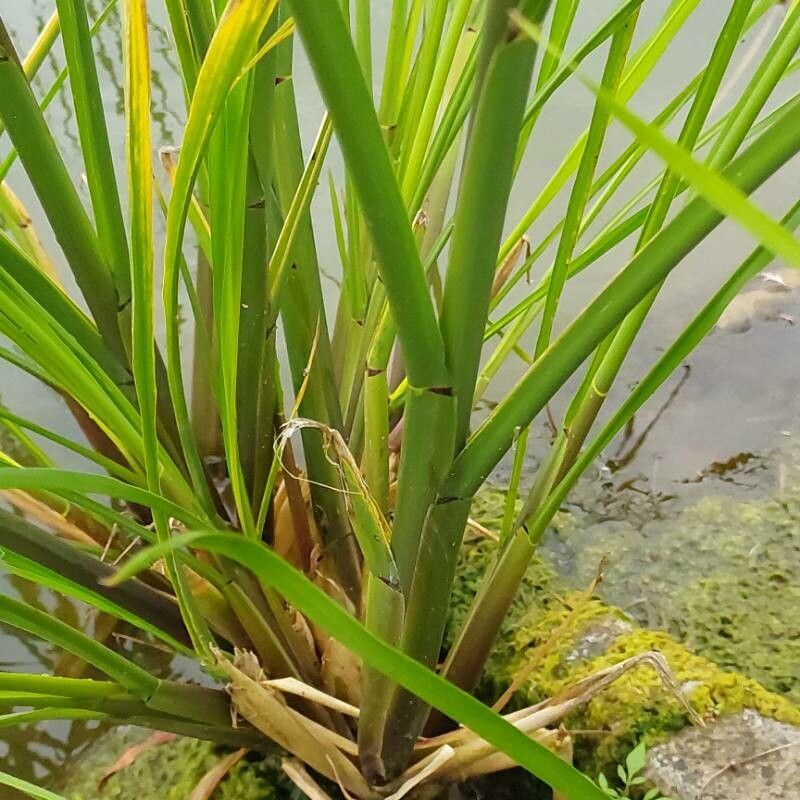
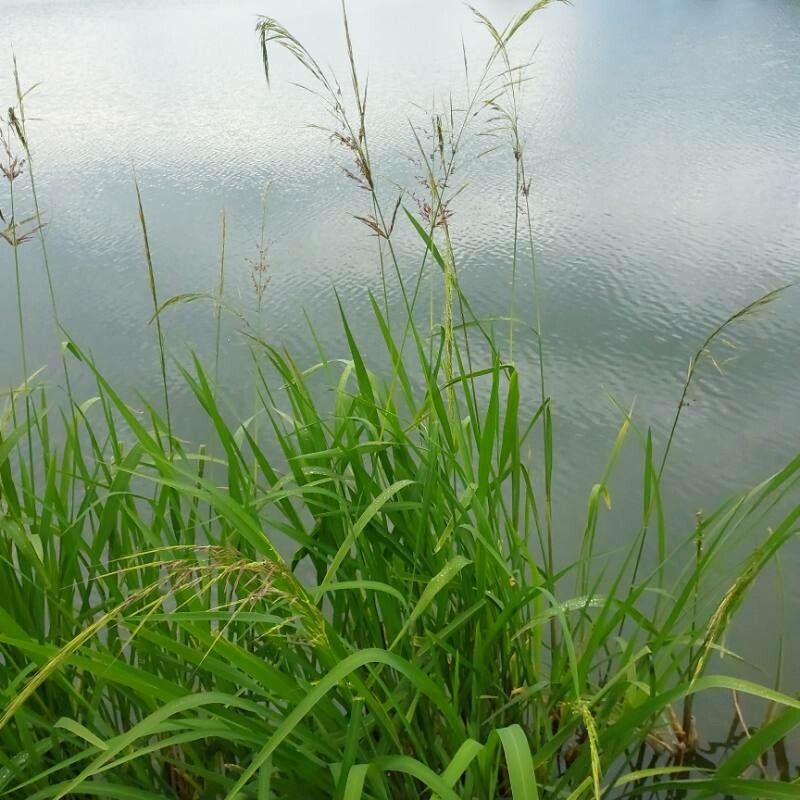
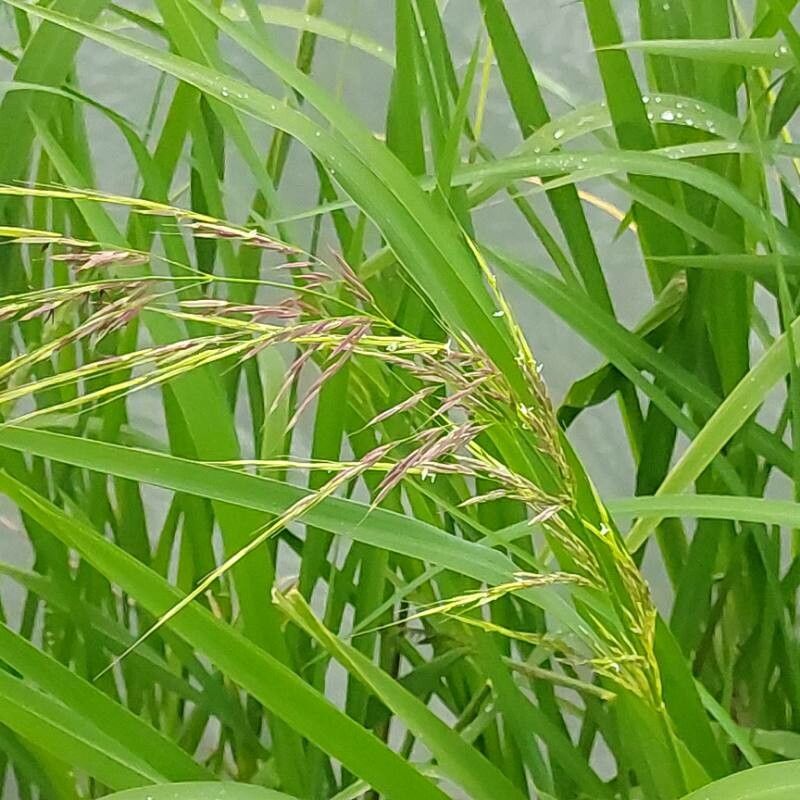
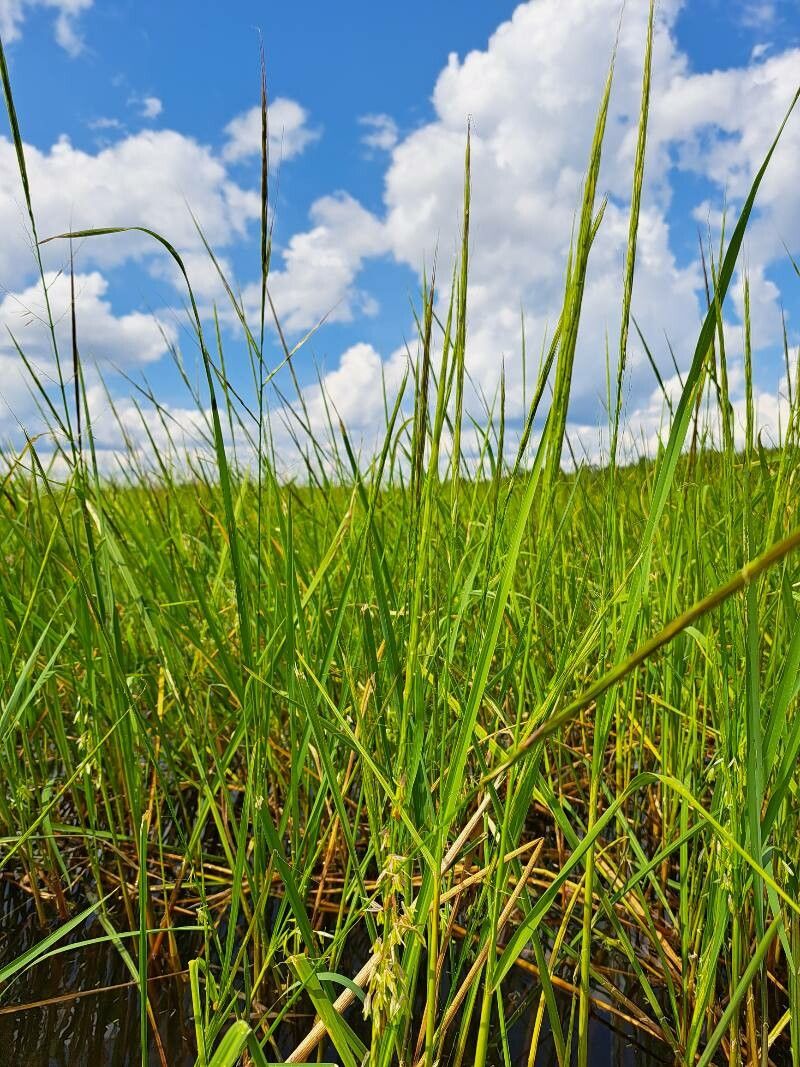
Zizania latifolia, known as Manchurian wild rice (Chinese: 菰; pinyin: gū), is the only member of the wild rice genus Zizania native to Asia. It is used as a food plant. Both the stem and grain are edible. Gathered in the wild, Manchurian wild rice was an important grain in ancient China.: 165 A wetland plant, Manchurian wild rice is now very rare in the wild, and its use as a grain has completely disappeared in Asia, though it continues to be cultivated for its stems.: 165 A measure of its former popularity is that the surname Jiǎng (simplified Chinese: 蒋; traditional Chinese: 蔣), one of the most common in China, derives from this crop.
Manchurian wildrice shows moderate resistance to diseases but can be vulnerable to problems such as leaf spot. Its vulnerability to insect pests differs by variety, though most cultivars have relatively low pest resistance. For care, Manchurian wildrice requires consistent watering and fertilizing, plus frequent removal of yellow leaves. Prompt control of pests and diseases when they occur and timely harvesting are important. Manchurian wildrice is appropriate for people who can dedicate some time and effort to regular maintenance.
How to keep Zizania Latifolia.
Light
Manchurian wildrice is native to habitats with plentiful sunlight, such as open fields and sunlit meadows. It prefers full sun but can withstand partial sun.
Water
Manchurian wildrice, which originates from aquatic environments, thrives in consistently moist conditions. It requires weekly watering, as it is not drought-tolerant. Usually grown outdoors, this plant does best in standing water. You can tell the soil is well hydrated if the ground remains damp.
Temperature
Manchurian wildrice comes from areas with marked temperature variations, so it’s relatively easy to adjust. It prefers temperatures of 68 to 95°F (20 to 35°C). To ensure growth throughout the seasons, keep temperatures around that range.
Pruning
To encourage healthy growth of Manchurian wild rice, it's best to prune it in early spring, which aligns with its natural growth cycle. Start by cutting old stems down to ground level to enhance air circulation and remove any dead or damaged stems. Make sure to use clean, sharp tools during this process to prevent the spread of disease. Regular pruning also helps to control the plant's spread, ensuring vigorous new growth.
Botanical profile.
- Plant Type
- Herb
- Life Cycle
- Perennial
- Genus
- Zizania
- Family
- Poaceae
- Hardiness Zone
- 9
- Mature Height
- 0.91 m to 2.13 m
- Mature Spread
- 49 cm to 91 cm
- Leaf Color
- Green
- Leaf Type
- Deciduous
- Flower Color
- Yellow, Green, Brown
- Flower Size
- 1.02 cm to 1.52 cm
- Bloom Time
- Mid summer, Late summer
- Planting Time
- Spring, Summer, Autumn
- Harvest Time
- Early fall, Mid fall
- Native Area
- Russia, India, Vietnam, Myanmar, Mongolia, Japan, Koppen, South Korea, Thailand, China
Other names.
Reader questions.
What are the sunlight requirements for Manchurian wildrice?
Manchurian wildrice thrives best in full sun conditions, requiring more than 6 hours of sunlight daily. However, it can also tolerate partial sun with about 3-6 hours of sunlight. The plant's native habitats, such as open fields and sunny meadows, underline its need for abundant sunlight. Observing how sunlight traverses your garden can help you find the ideal balance of light and shade, ensuring your plants remain healthy and happy.
What is the ideal temperature range for growing Manchurian wildrice?
Manchurian wildrice, known botanically as Zizania latifolia, thrives in temperatures ranging between 68 to 95°F (20 to 35°C). This optimal temperature range supports its growth across different seasons. To promote its health and development, it's crucial to maintain temperatures above 20°C during the winter months. The plant displays a moderate tolerance to low temperatures, but it's important to ensure that the temperature stays above the freezing point to prevent damage. When outdoor temperatures drop to -5°C (25°F) or lower in winter, taking protective measures like moving Manchurian wildrice indoors or wrapping it with protective materials is advisable.
How can artificial lighting support Manchurian wildrice growth indoors?
When natural sunlight is insufficient, especially during winter or in less sunny areas, artificial lighting becomes crucial for the growth of indoor Manchurian wildrice. Selecting the right type of artificial light, such as LED lights, allows for customization to meet your plant's specific light wavelength needs. Full sun plants need 30-50W per square foot, partial sun plants 20-30W per square foot, and full shade plants 10-20W per square foot of artificial light. The light source should be placed 12-36 inches above the plant to mimic natural sunlight and be kept on for 8-12 hours per day to simulate natural daylight hours.
How does Manchurian wildrice react to low temperatures and what are the solutions?
Manchurian wildrice exhibits moderate tolerance to cold, but it's best kept in conditions where temperatures range between 20°C and 35°C. Exposure to temperatures below 0°C can lead to symptoms like darkening of leaves, while temperatures dropping below -5°C may cause water-soaked necrosis, wilting, drooping, and leaves gradually turning brown. To counter frost damage, affected parts should be trimmed away and the plant should be moved indoors to a warmer setting or protected by setting up a makeshift greenhouse. If moved indoors, placing the plant near a south-facing window will ensure it gets enough sunlight; supplementary lighting may be used if natural light is insufficient.
What are the signs of light deficiency in Manchurian wildrice?
Manchurian wildrice shows several signs when grown under light-deficient conditions including smaller new leaves, leggy or sparse growth, premature leaf drop, halted or nonexistent new growth, paler new leaves, and symptoms of chlorosis, sunscald, leaf curling, wilting, and leaf scorching. These symptoms indicate a struggle with insufficient light, negatively impacting the plant's health and growth.
What should be done if Manchurian wildrice is exposed to high temperatures?
During the summer months, it's important to keep Manchurian wildrice's environment below 35°C to prevent stress from high temperatures. Exposure to temperatures above 38°C can slow down the plant's growth, lead to lighter leaf coloration, and increase susceptibility to sunburn. To mitigate these issues, trim away any sunburned or dry parts of the plant and relocate it to a shaded area, especially to avoid the harsh afternoon sun. Ensuring the plant is watered in the morning and evening will help keep the soil adequately moist, further protecting it from heat stress.
What solutions can correct light deficiency symptoms in Manchurian wildrice?
To address light deficiency in Manchurian wildrice, gradually increase its exposure to sunlight. Indoors, move the plant closer to a south-facing window or utilize artificial light for at least 8 hours daily. For outdoor plants, transition them to sunnier spots gradually to prevent sunburn. Reducing obstructions like pruning tree branches can also improve light access. If the plant is small enough, consider transplanting during its dormant phase to a location with better sunlight and drainage. Note that while damaged parts may not recover, new growth should be healthy with improved light conditions.