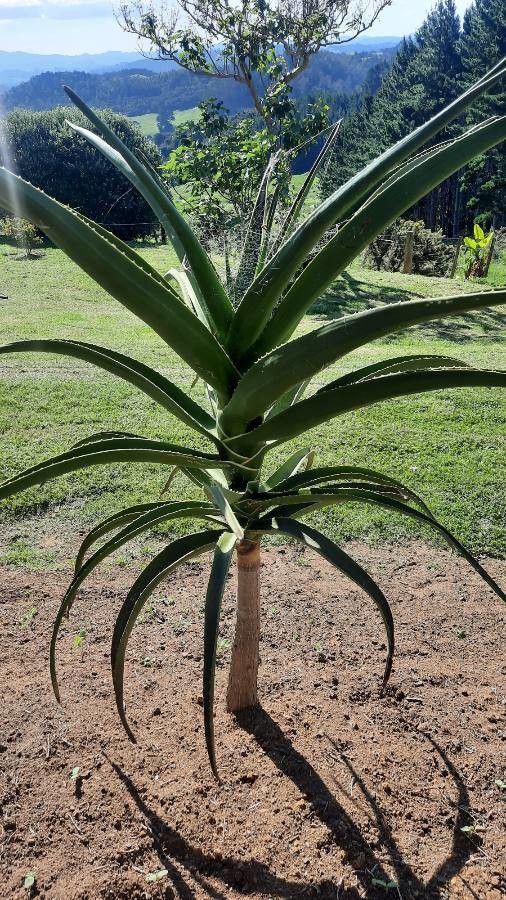
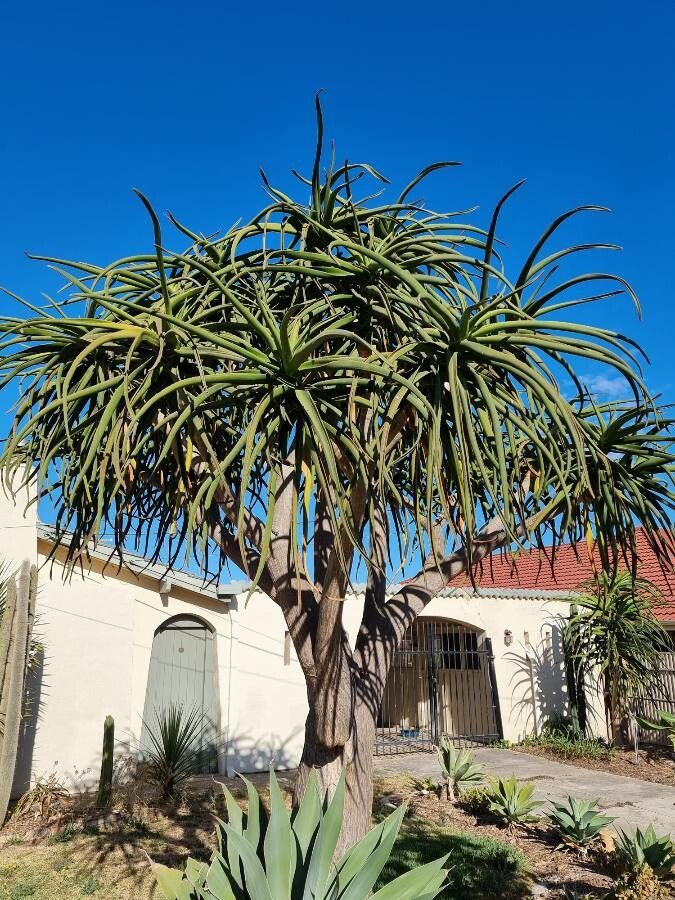
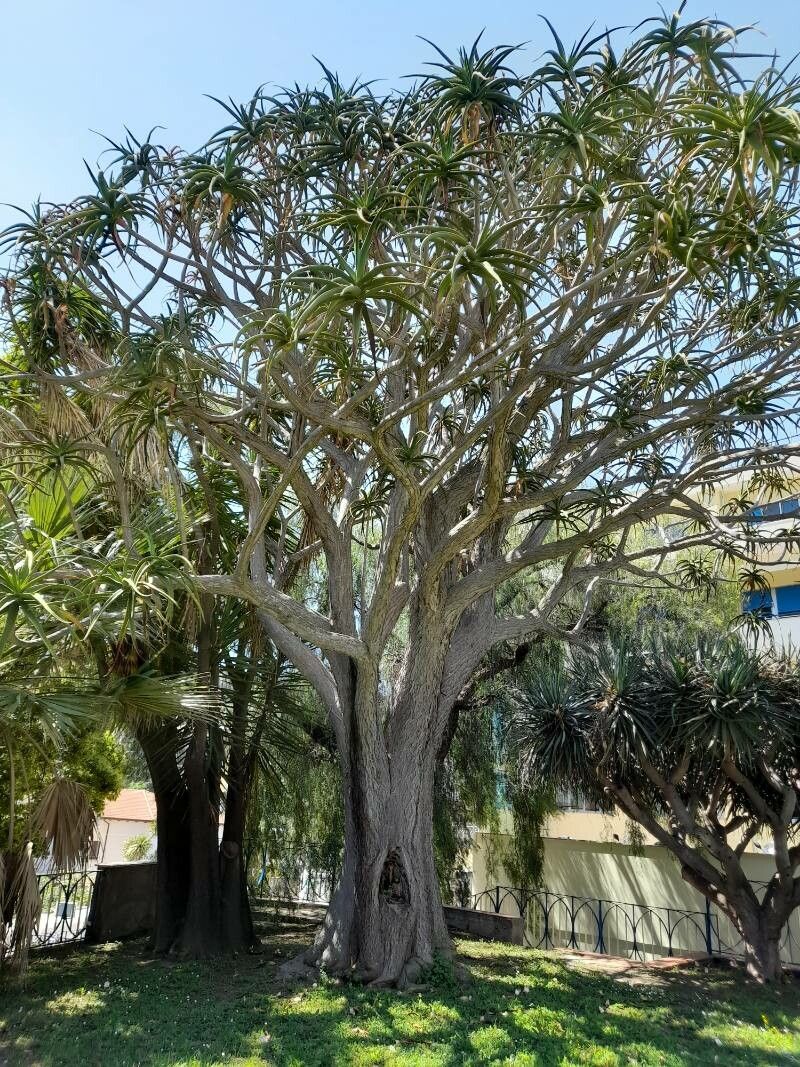
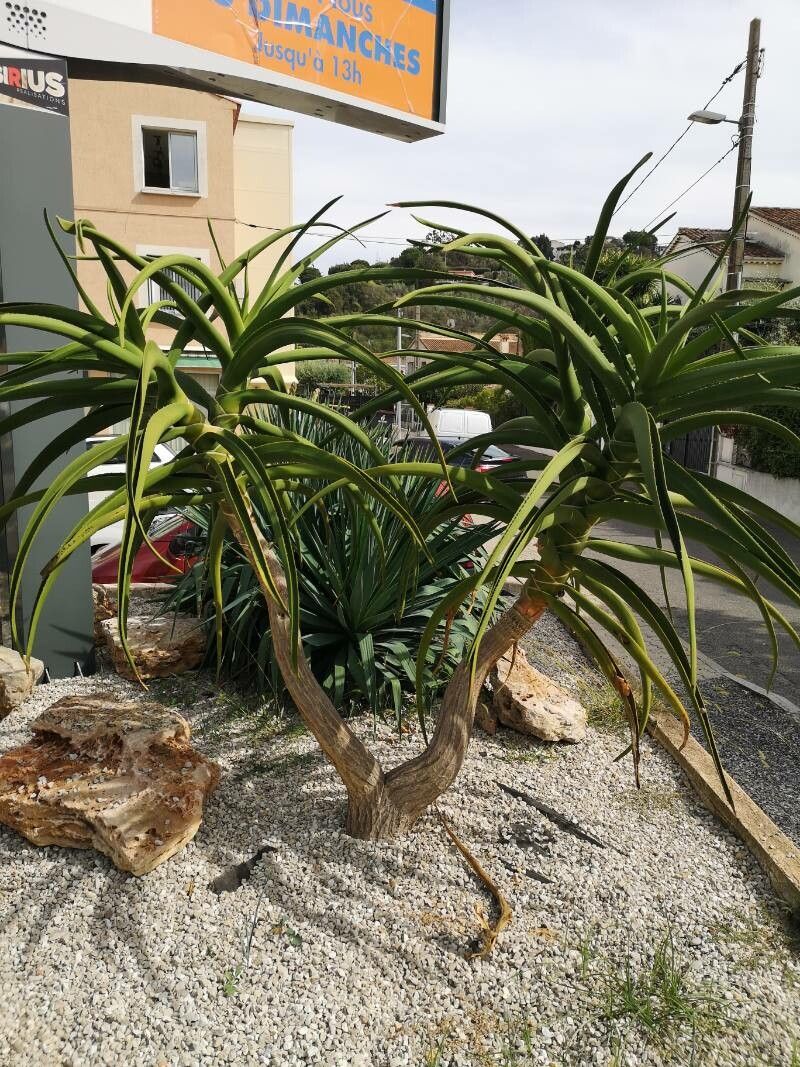
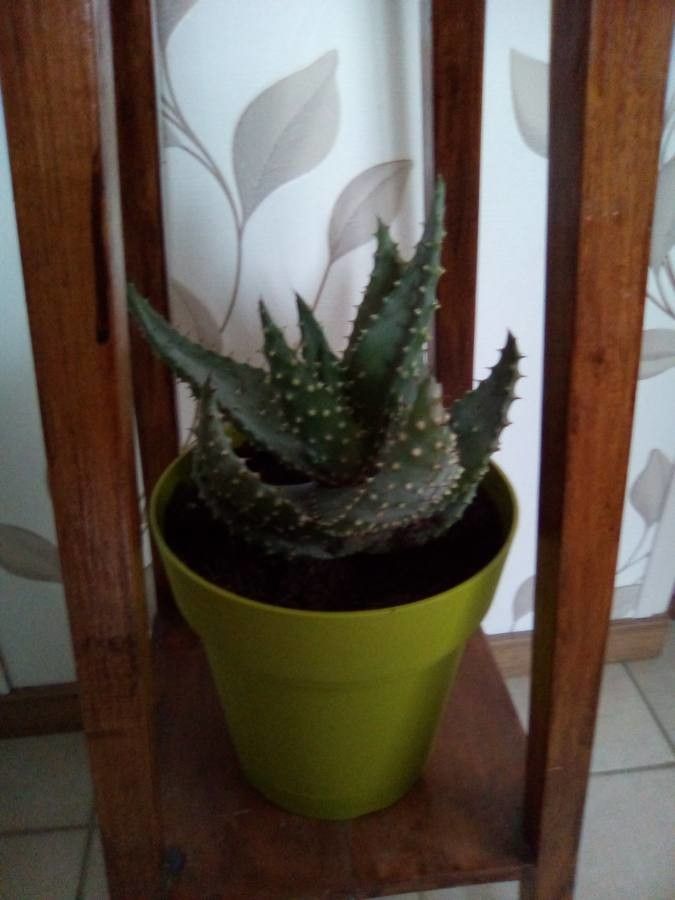
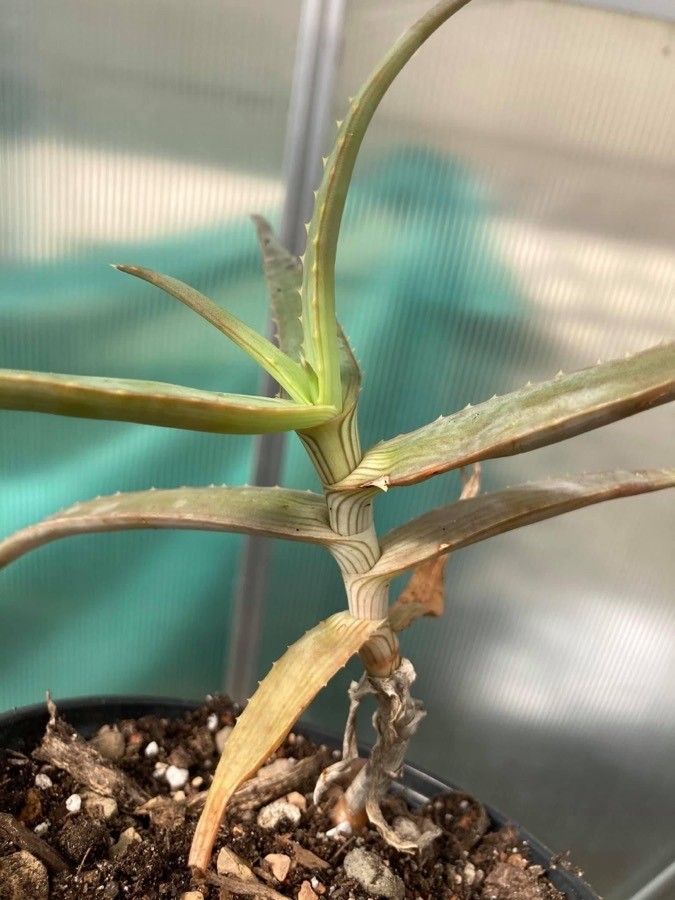
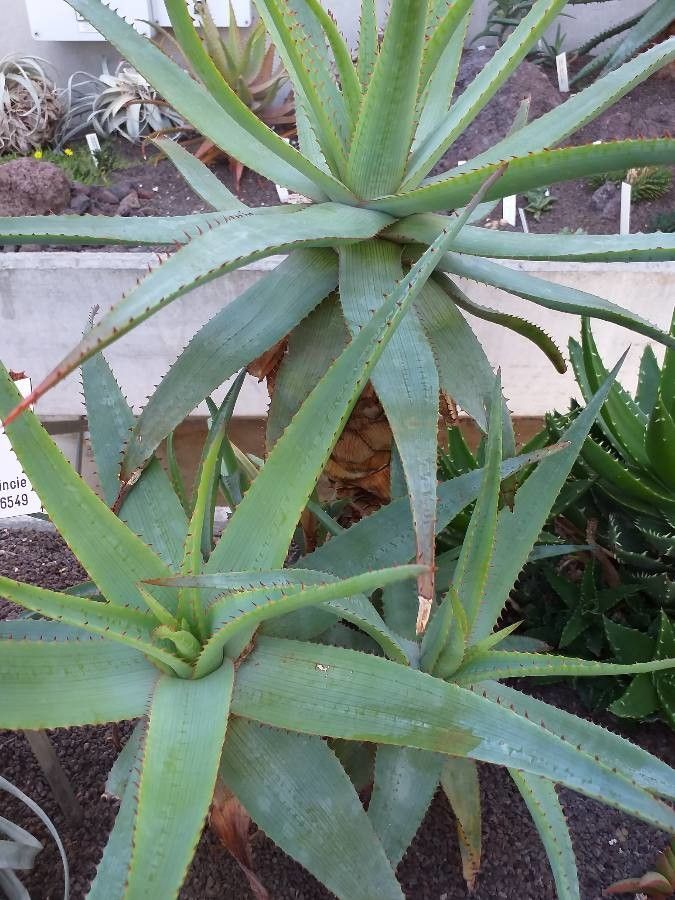
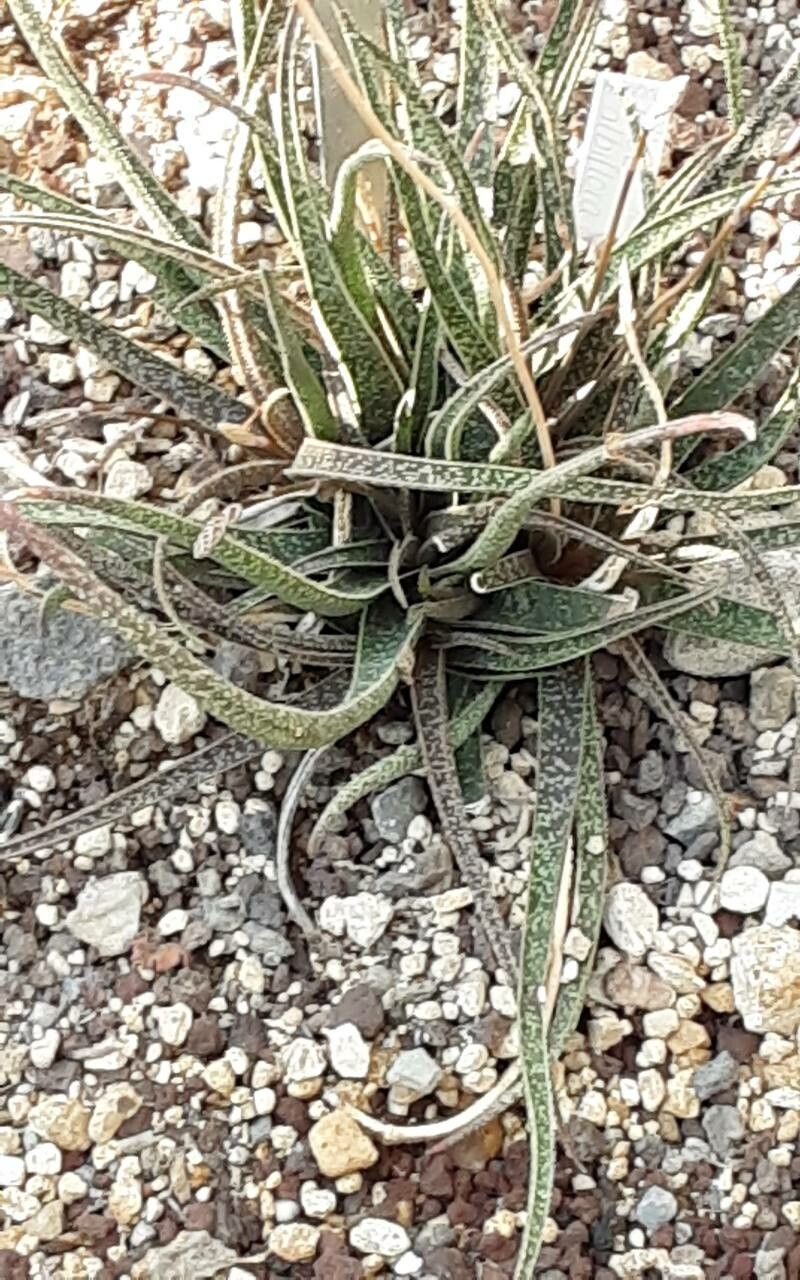
Aloidendron barberae, formerly Aloe bainesii and Aloe barberae, also known as the tree aloe, is a species of succulent plant in the genus Aloidendron. It is native to South Africa northwards to Mozambique. In its native climes this slow-growing tree can reach up to 60 feet (18 m) high and 36 inches (0.91 m) in stem diameter. Aloidendron barberae is Africa's largest aloe-like plant. The tree aloe is often used as an ornamental plant. Its tubular flowers are rose pink (green-tipped); it flowers in winter and in its natural environment is pollinated by sunbirds.
Tree aloe has strong disease resistance and, with normal care, is unlikely to fall ill. It is likewise not easily affected by most pests and diseases. In terms of care, tree aloe is drought-tolerant and can withstand long stretches without watering. It needs little fertilizer and generally does not require pruning. This makes it suitable for people of all experience levels, especially those who prefer to spend less time tending their plants. It’s a good option for people who are often away for extended periods and might forget to water regularly.
How to keep Aloe Barberae.
Light
The tree aloe flourishes in situations where it has access to sunlight all day long. From the seedling stage to full maturity, sufficient sunlight greatly contributes to its vigorous growth. Born in locations where light is plentiful, the tree aloe is capable of withstanding intense sun exposure. Nonetheless, insufficient sunlight may lead to damage, impeding its growth and overall wellbeing.
Temperature
The tree aloe is native to hot climates, where the temperature fluctuates from 68 to 100°F (20 to 38 ℃). It flourishes in these thermal conditions and may require adjustments during colder periods or in chillier areas.
Fertilizer
For the Tree aloe, administering small amounts of fertilizer one to two times annually during its growth period is adequate. Do not fertilize during winter and summer when the plant is inactive. Diminish the quantity of fertilizer for plants that have been repotted and hold off on fertilizing for a few months post-repotting. Fertilizing assists in vibrant growth and promotes flowering.
Botanical profile.
- Plant Type
- Tree
- Life Cycle
- Perennial
- Genus
- Aloe
- Family
- Xanthorrhoeaceae
- Hardiness Zone
- 9-11
- Mature Height
- 91 cm
- Mature Spread
- 91 cm
- Leaf Color
- Green, Blue
- Leaf Type
- Evergreen
- Flower Color
- Pink
- Flower Size
- 3.81 cm
- Bloom Time
- Mid summer, Late summer
- Planting Time
- Spring, Summer
- Harvest Time
- Early fall, Mid fall
- Native Area
- South Africa, Eswatini, Mozambique
Other names.