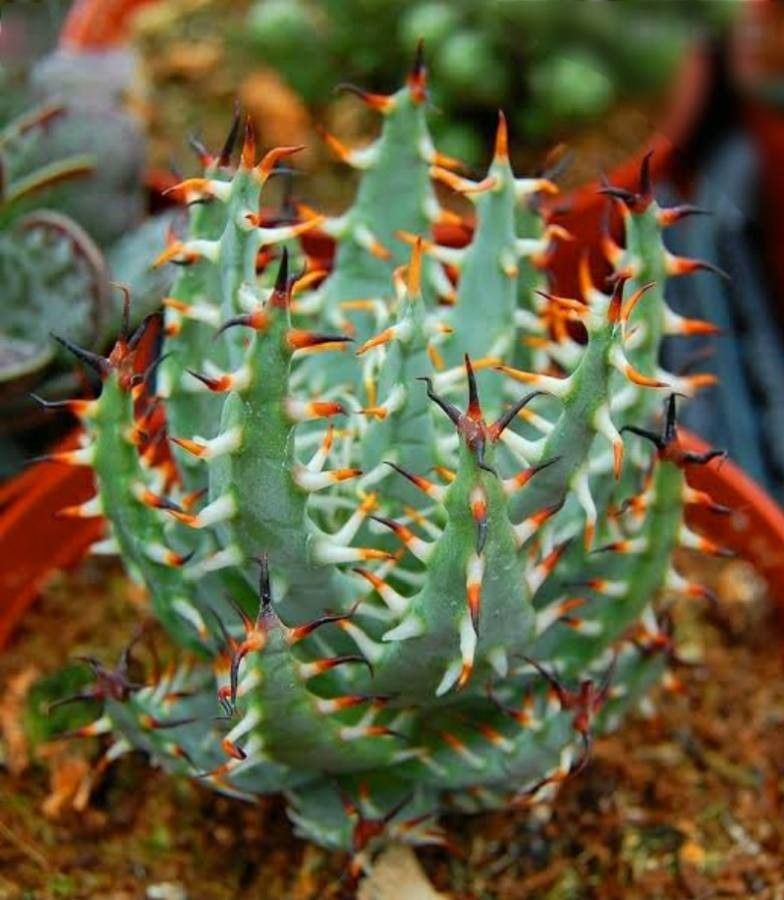
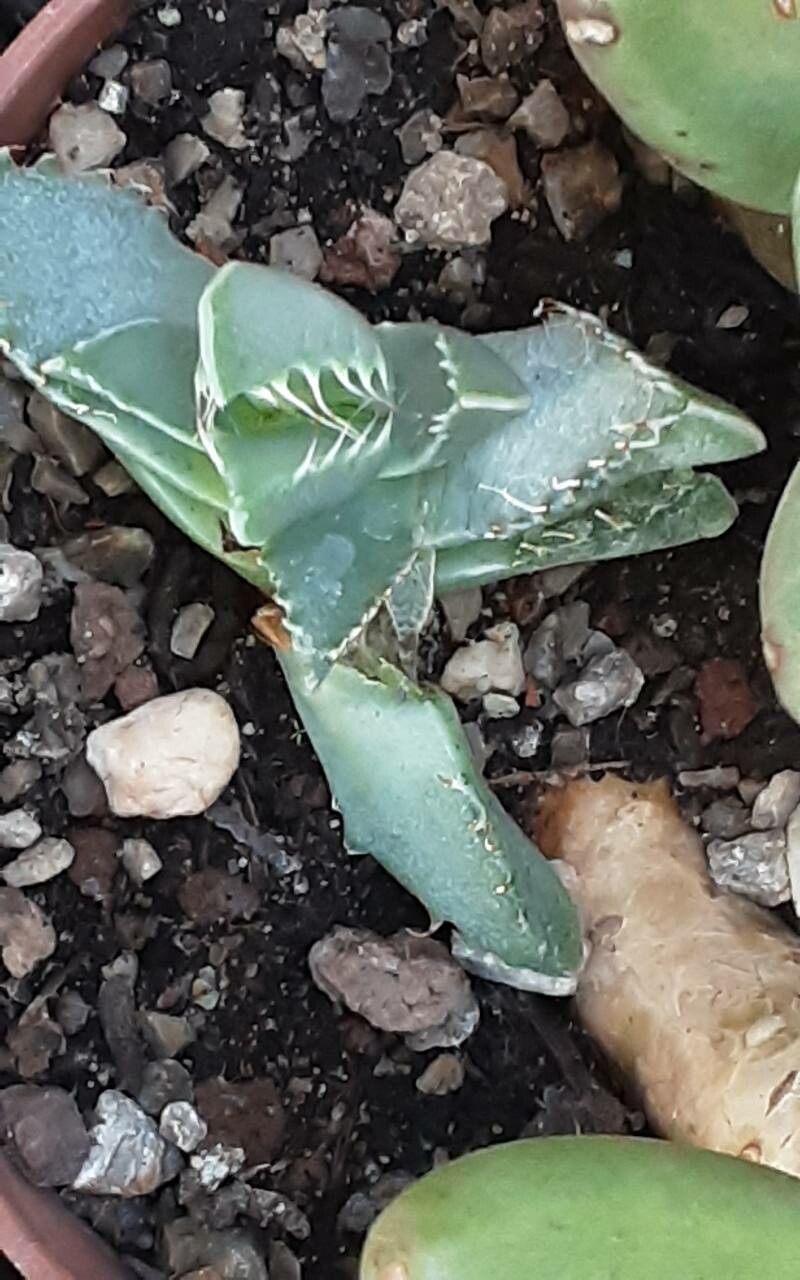
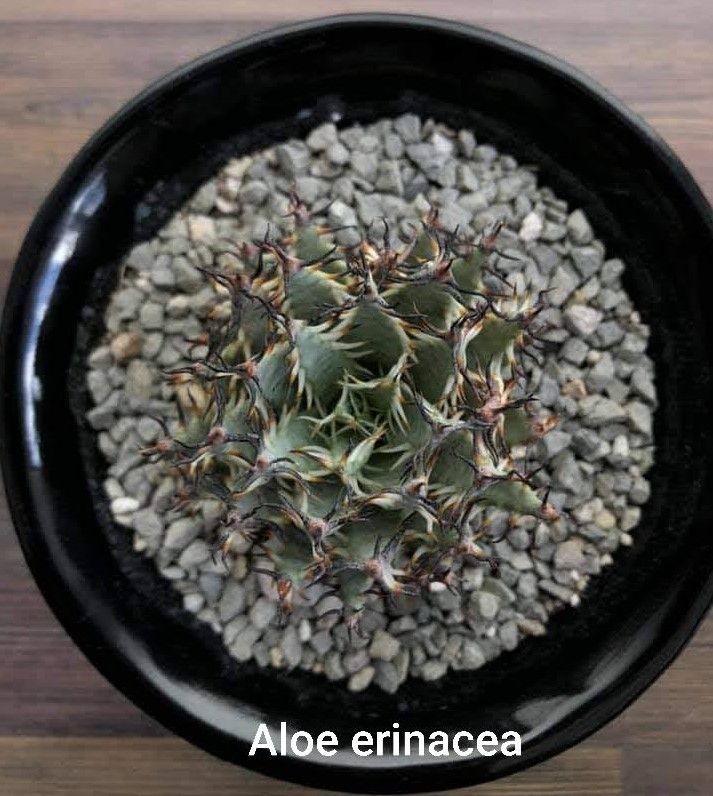
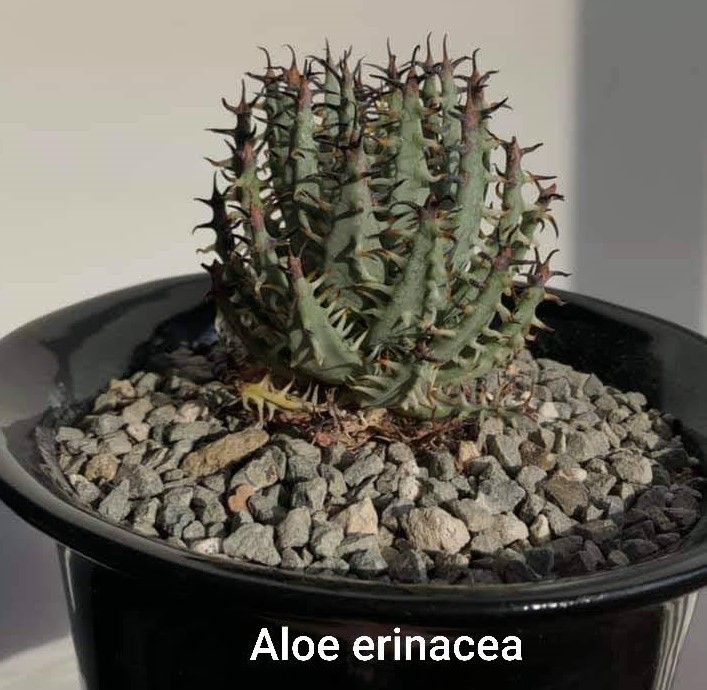
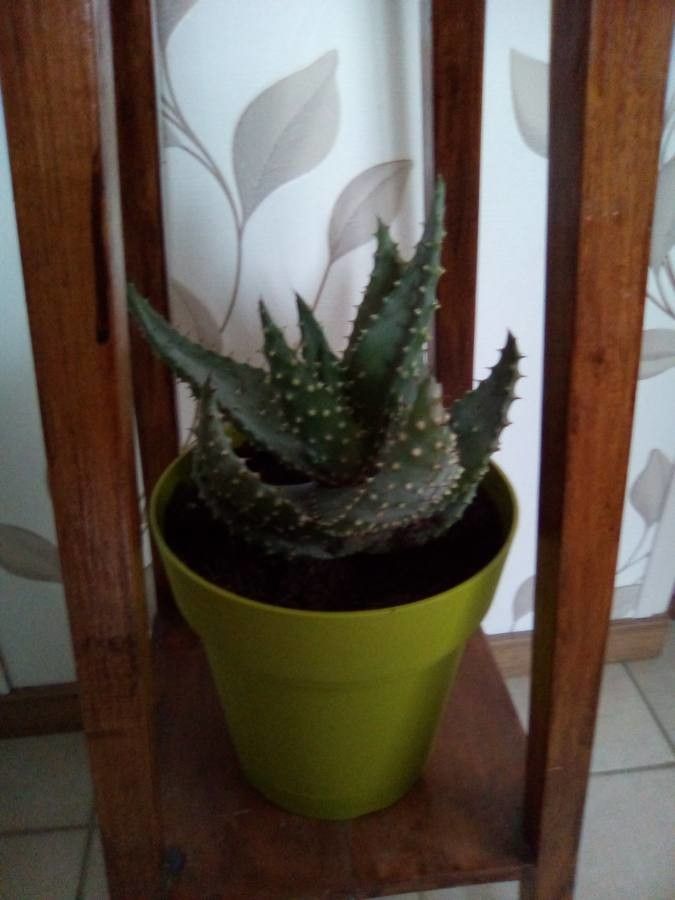
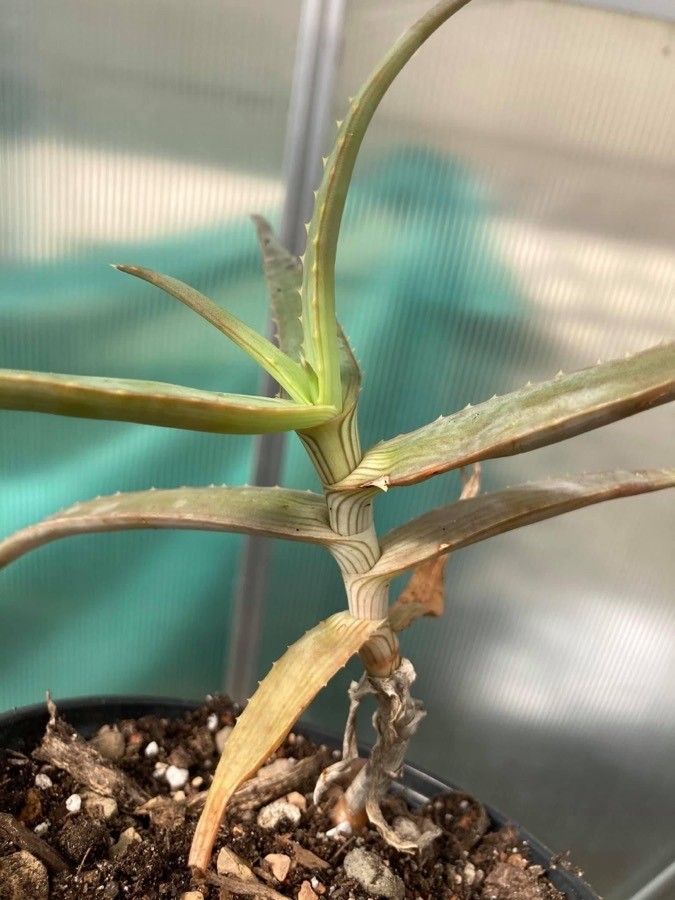
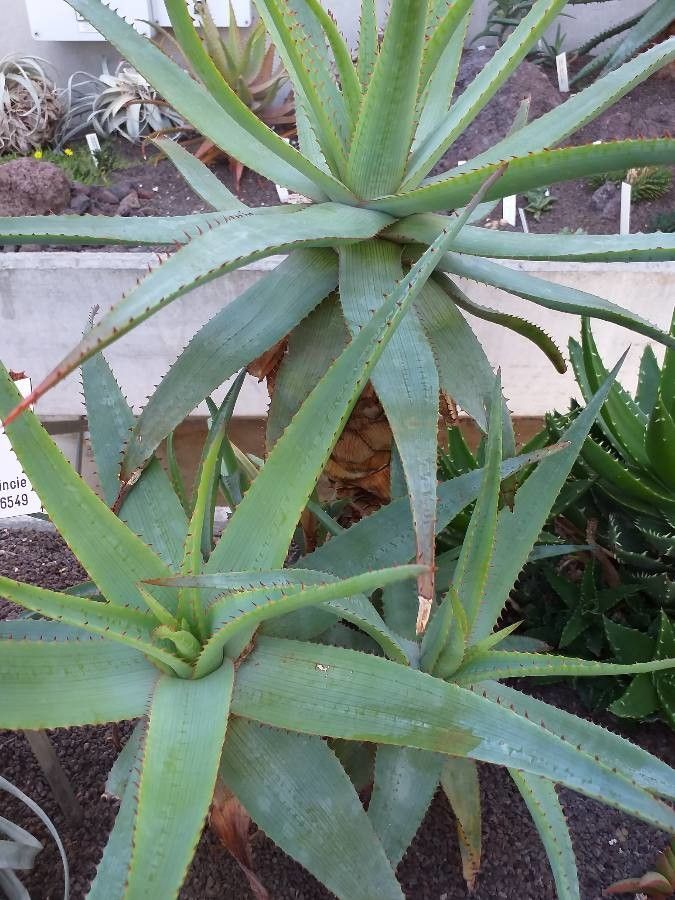
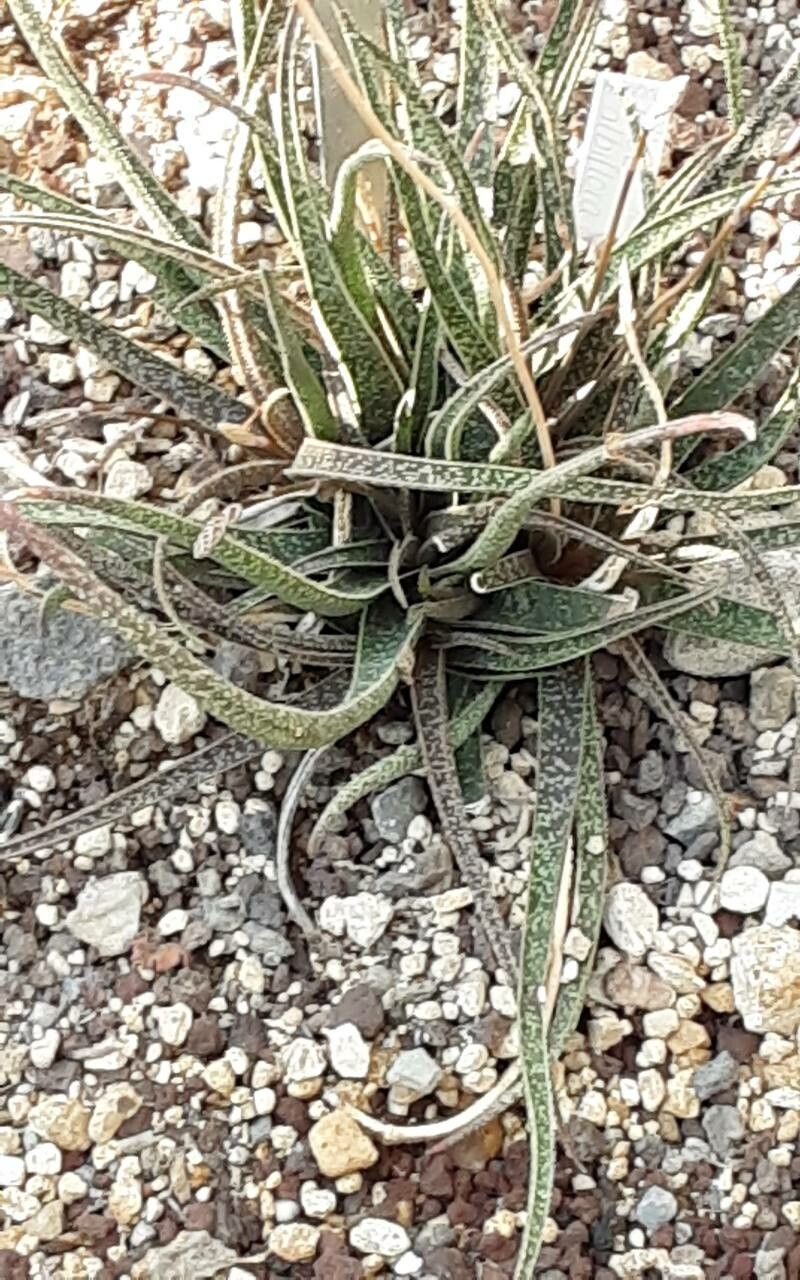
Aloe erinacea (locally known as the "Goree") is a rare species of succulent plant in the genus Aloe, from arid areas of Namibia.
Goree has strong disease resistance and is less prone to illness when kept under normal care. It is also not easily affected by most pests and diseases. Regarding care, Goree is drought-tolerant and can endure long stretches without watering. It requires little fertilizer and typically does not need pruning. Because of this, it is an appropriate plant for people at any experience level, especially those who prefer to spend less time on plant care. It is a good option for individuals who are often away for long periods and might forget to water their plants regularly.
How to keep Aloe Erinacea.
Light
Goree does best when it receives steady sunlight. However, too much sun can harm its leaves, causing discoloration or burns. In its native habitat it grows naturally in places with constant light and will not tolerate shaded locations. Varying illumination across growth stages is not necessary for its healthy development.
Water
Goree is well-suited to arid environments because it efficiently stores water and has a high tolerance for drought. It needs to be watered roughly once every three weeks and maintains its foliage throughout the year. Favored for indoor settings, goree adapts well to low-moisture conditions, making it an ideal choice for drier climates.
Temperature
Goree originates from a climate where temperatures usually range from 59 to 100°F (15 to 38 ℃). It prefers warm conditions and requires at least these temperatures for optimal growth. Adjustments may be needed during colder months.
Fertilizer
For Goree, light applications of fertilizer once or twice a year during the growing season are adequate. Avoid fertilizing in winter and in summer when the plant is dormant. Use less fertilizer for repotted plants and wait a couple of months after repotting before applying fertilizer. Fertilizing supports healthy growth and promotes blooming.
Pruning
Goree plants typically do not require pruning. However, it is helpful to remove any spent flower stalks and dead leaves. Trim any orange or brown leaves to help direct nutrients to the healthier parts of the plant. For smaller plants, use a knife, and for larger ones, use pruning shears to maintain their overall health.
Botanical profile.
- Plant Type
- Succulent
- Life Cycle
- Perennial
- Genus
- Aloe
- Family
- Asphodelaceae
- Hardiness Zone
- 8-11
- Mature Height
- 46 cm
- Mature Spread
- 40 cm
- Leaf Color
- Green, Blue, White, Brown
- Leaf Type
- Evergreen
- Flower Color
- Yellow, Red
- Flower Size
- 1.02 cm to 2.03 cm
- Bloom Time
- Late fall, Early winter, Mid winter
- Planting Time
- Spring, Summer, Autumn
- Harvest Time
- Late winter, Early spring, Mid spring
- Native Area
- Namibia