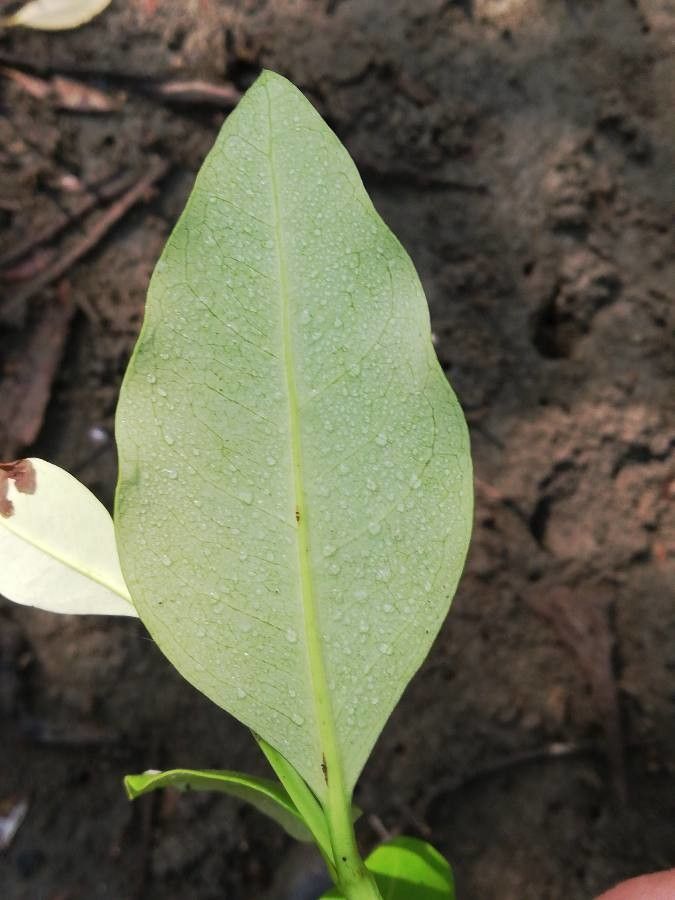
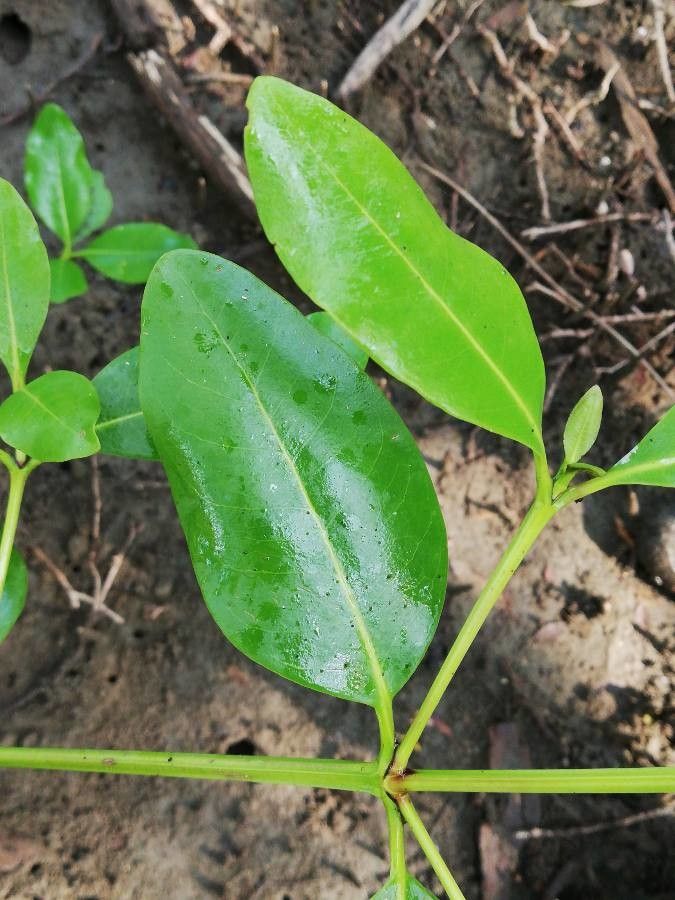
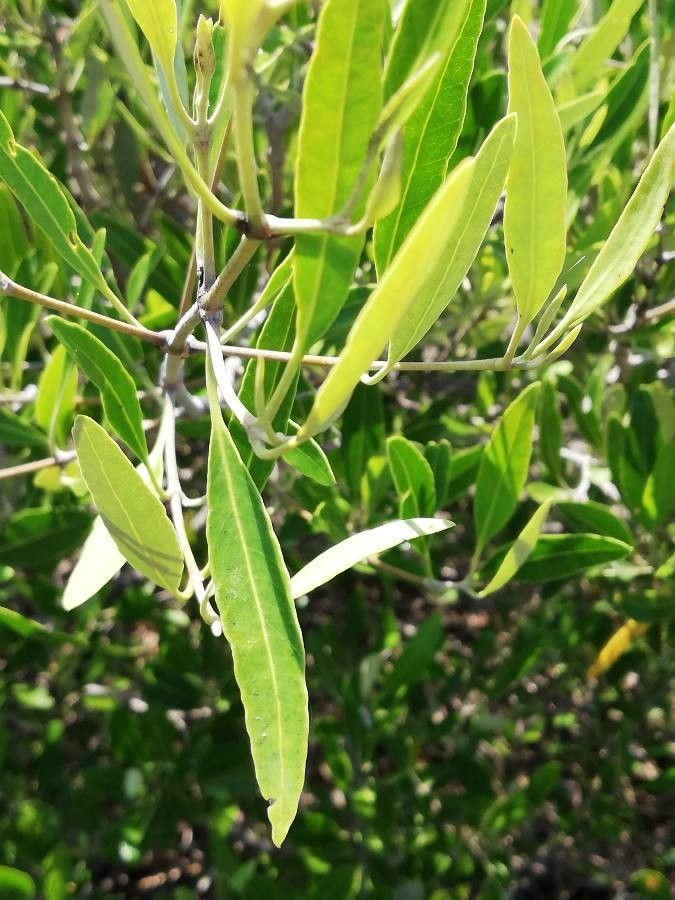
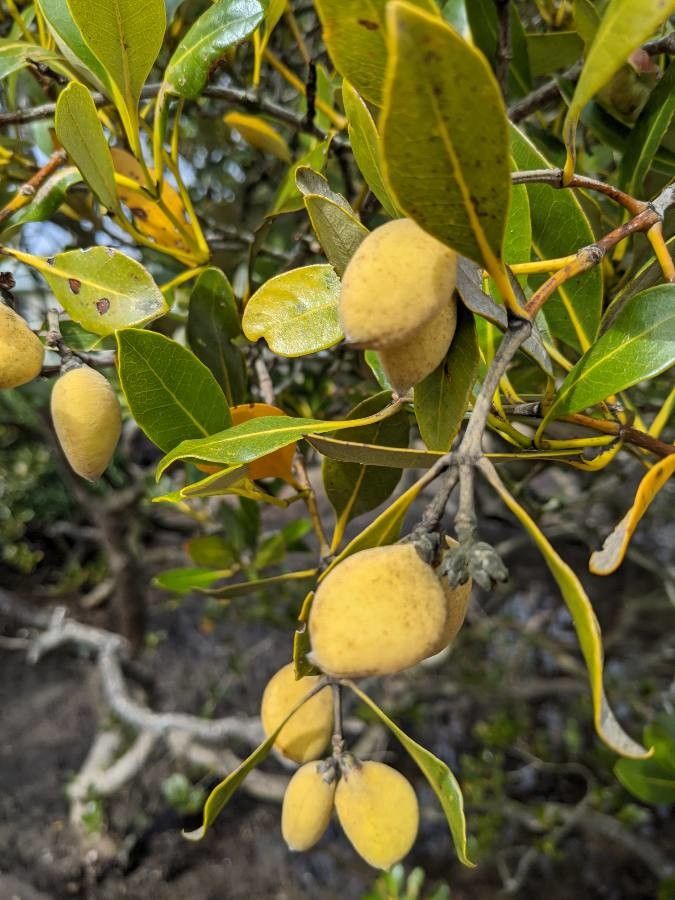
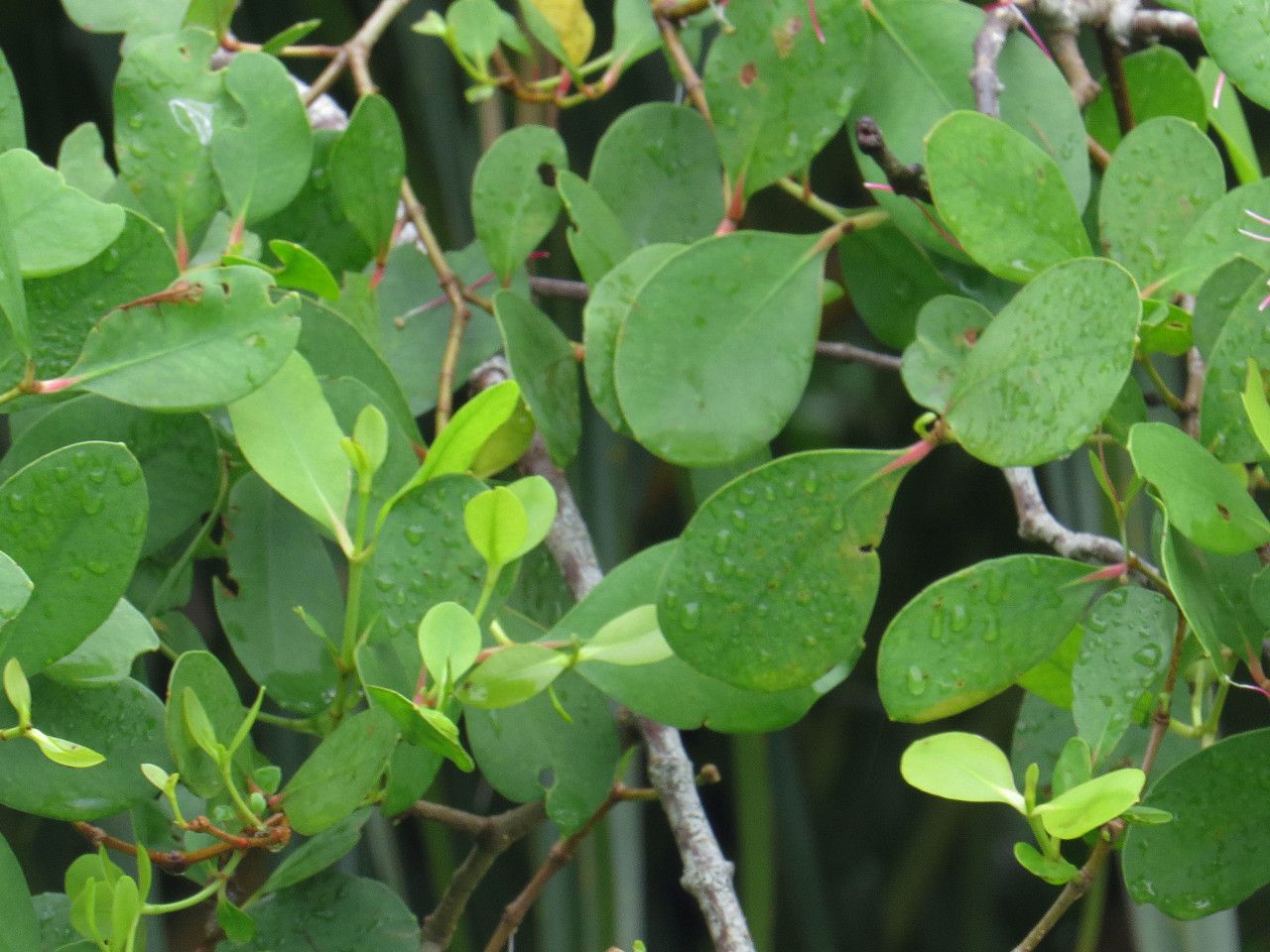
Avicennia bicolor, commonly known as the white mangrove, is a mangrove tree species in the Acanthaceae family. It is native to coastal regions of the Indian Ocean and the western Pacific Ocean, including areas in Australia and Southeast Asia. The white mangrove can reach heights of up to 20 meters and has distinctive pale grey bark that peels off in thin strips. Its leaves are oval-shaped with pointed tips, typically measuring between 5 and 10 centimeters in length. The tree produces small yellow flowers that bloom in clusters during the spring or summer. One of the unique features of Avicennia bicolor is its ability to tolerate high levels of salt in its environment, making it well-suited to coastal areas with brackish water or tidal mudflats. The white mangrove plays a crucial role in stabilizing shorelines by trapping sediment with its extensive root system. It also provides habitat for a variety of marine organisms, such as crabs, snails, and fish. In traditional medicine practices across Southeast Asia, various parts of Avicennia bicolor have been used for their medicinal properties, such as treating fever or skin infections. Overall, Avicennia bicolor is an important species both ecologically and culturally in the many regions where it grows along coastlines.
Botanical profile.
- Genus
- Avicennia
- Family
- Acanthaceae
Other names.