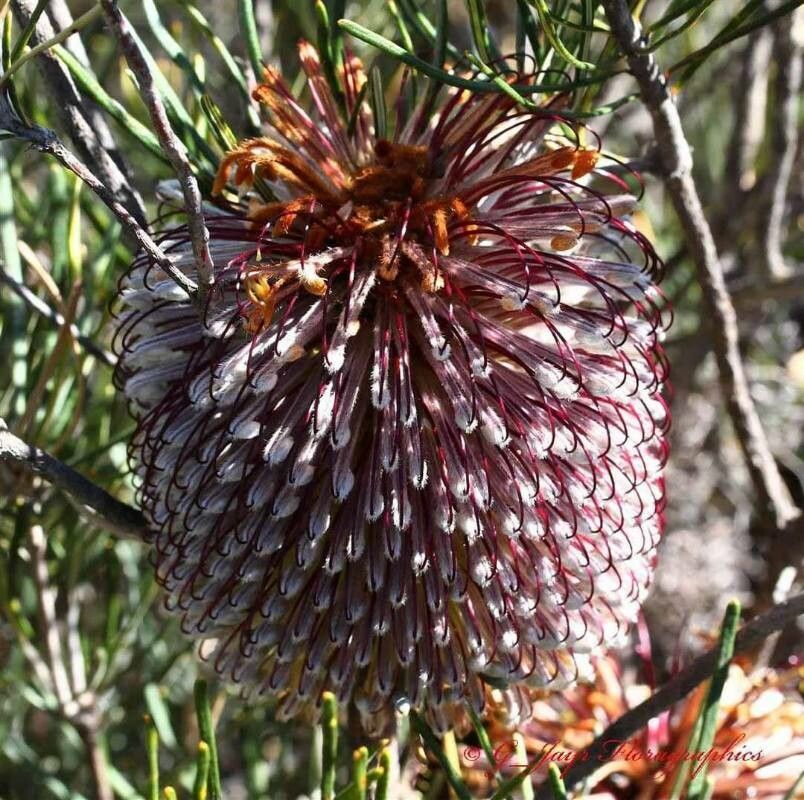
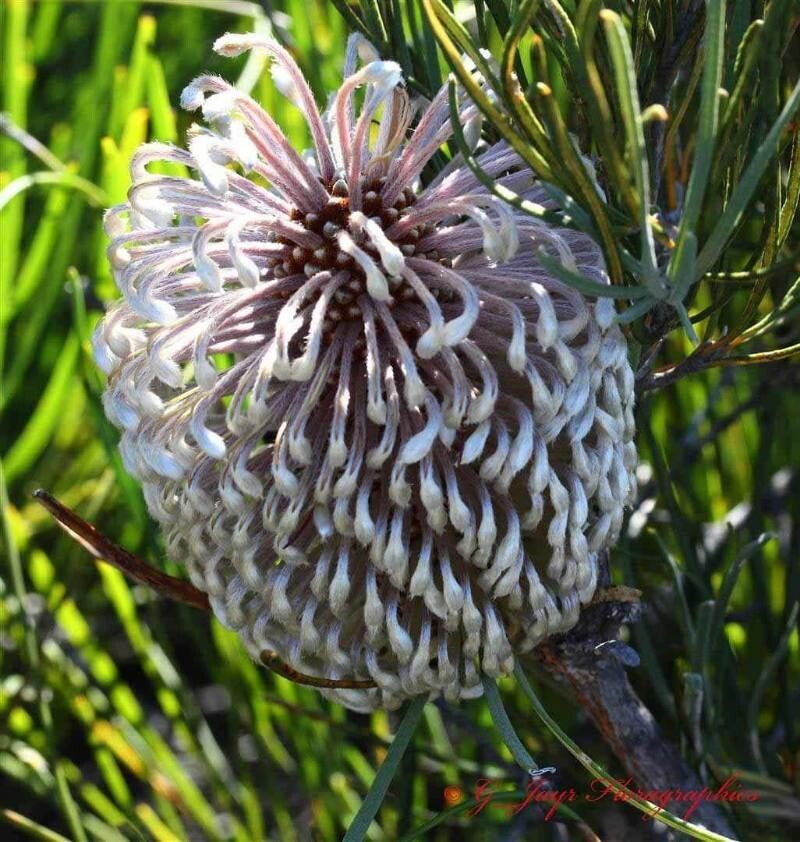
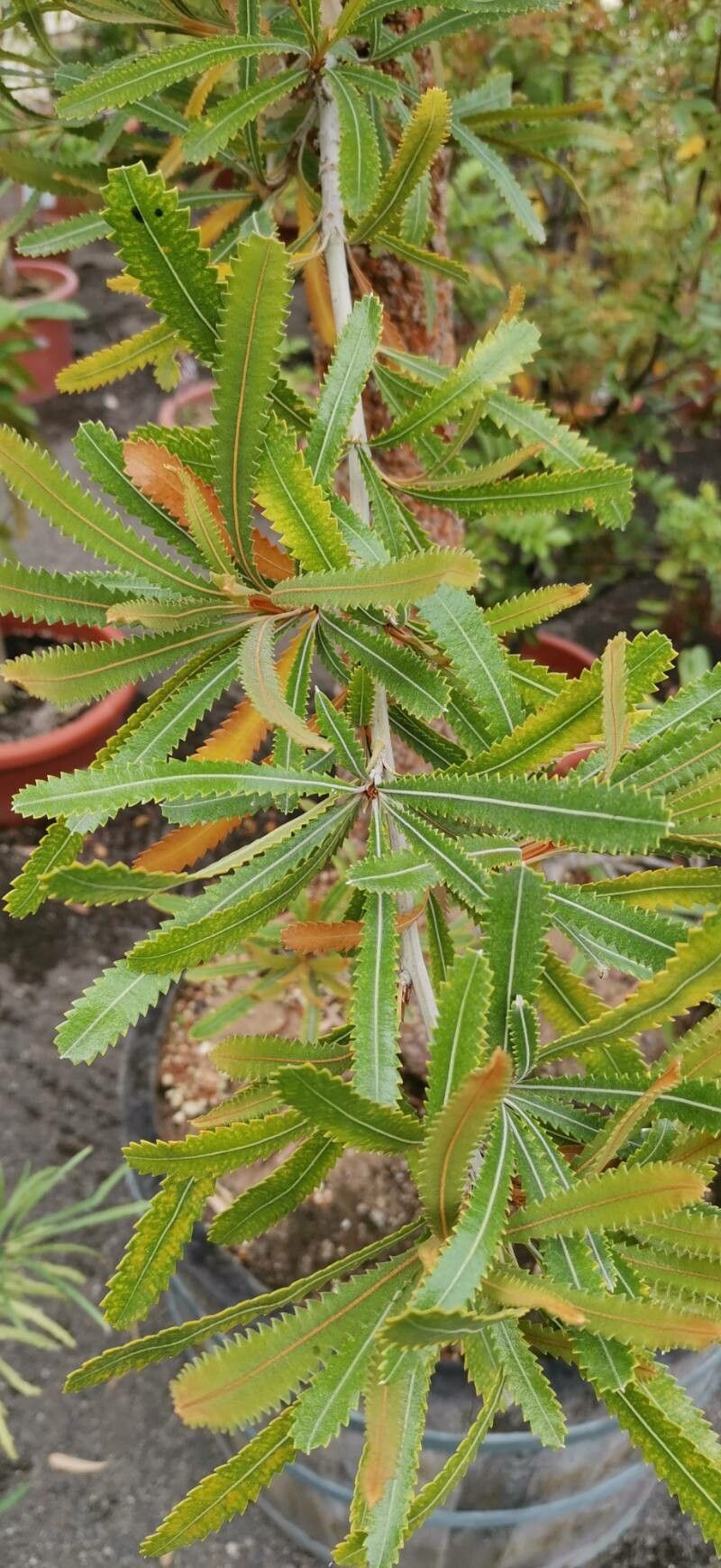
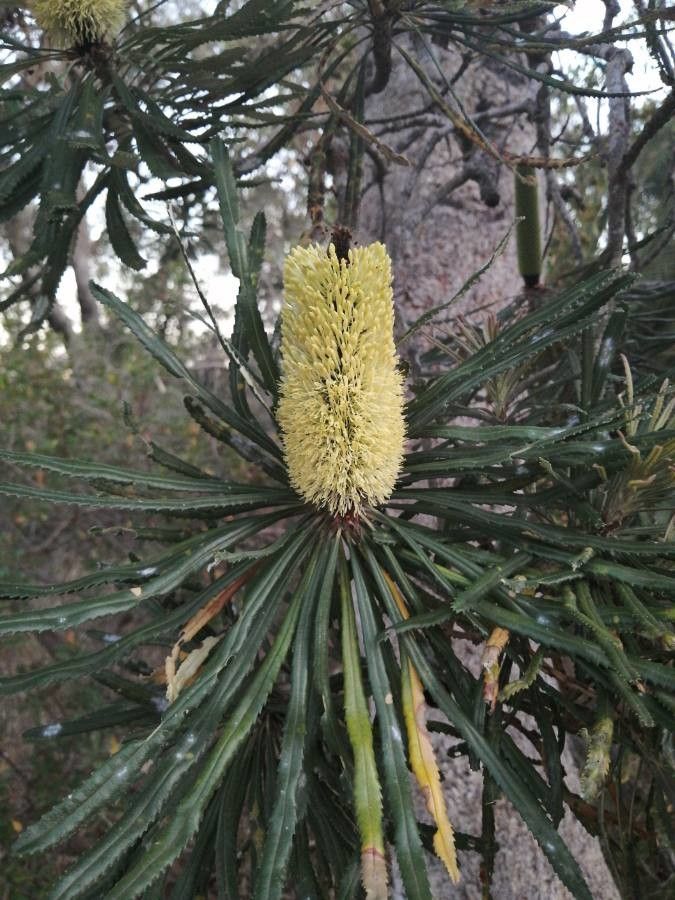
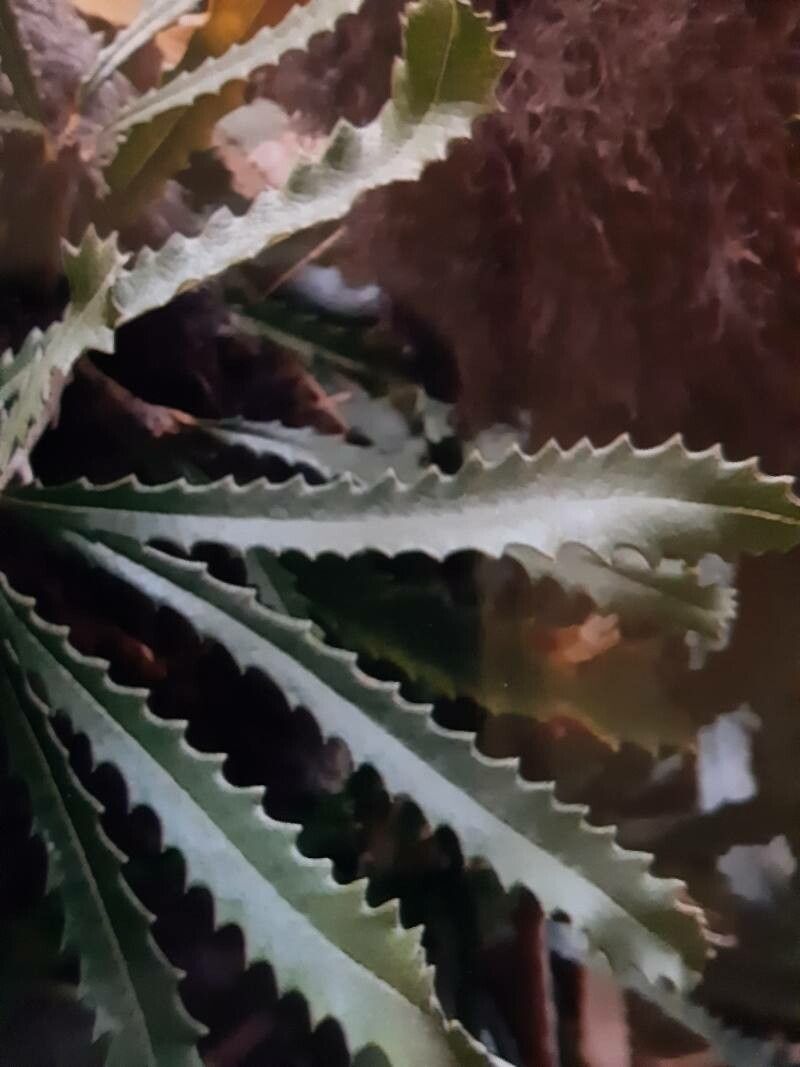
Banksia grossa is a species of shrub in the family Proteaceae and is endemic to Southwest Australia. It is one of fourteen species of banksia of the series Abietinae, all of which bear predominantly cylindrical or oval inflorescences. Collected in 1965, it was first formally described in 1981 by Alex George. Its thick leaves and large seeds distinguish it from other members of the Abietinae, and are the basis of its species name. Found in sand or sand over laterite among heath between Eneabba and Badgingarra in Western Australia, it grows as a many-stemmed shrub to 1 m (3.3 ft) high with narrow leaves and oval brownish flower spikes up to 10 cm (4 in) high, composed of hundreds of individual flowers. Flowering occurs throughout the cooler months of March to September. Flower spikes develop woody follicles which bear the seeds. After bushfire, Banksia grossa regenerates from its woody lignotuber; bushfires also stimulate the release of seeds, which germinate after disturbance. Visitors to (and likely pollinators of) inflorescences include insects and a nocturnal mammal, the white-tailed dunnart.
Botanical profile.
- Genus
- Banksia
- Family
- Proteaceae