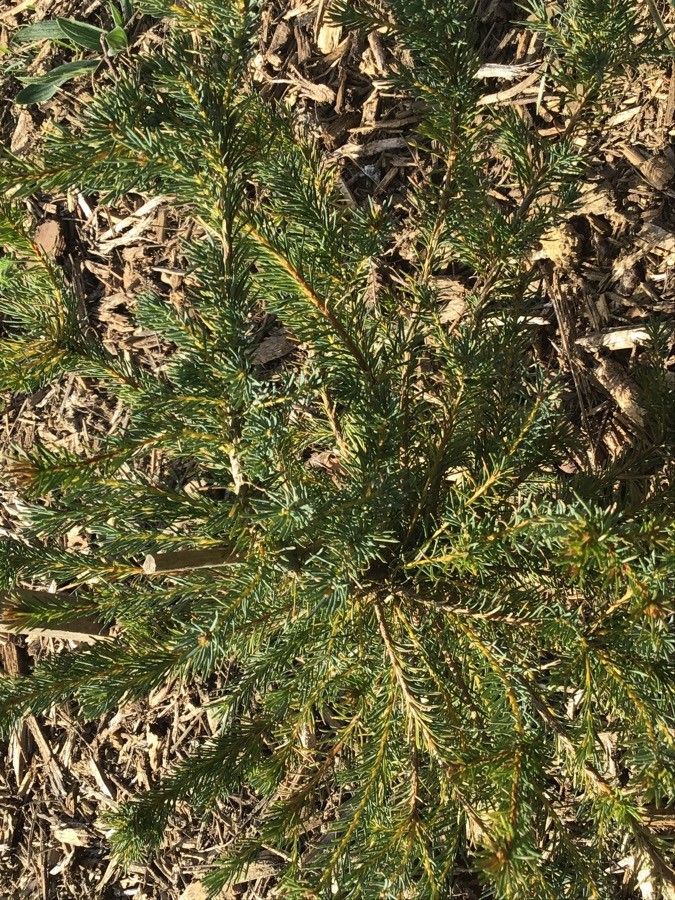
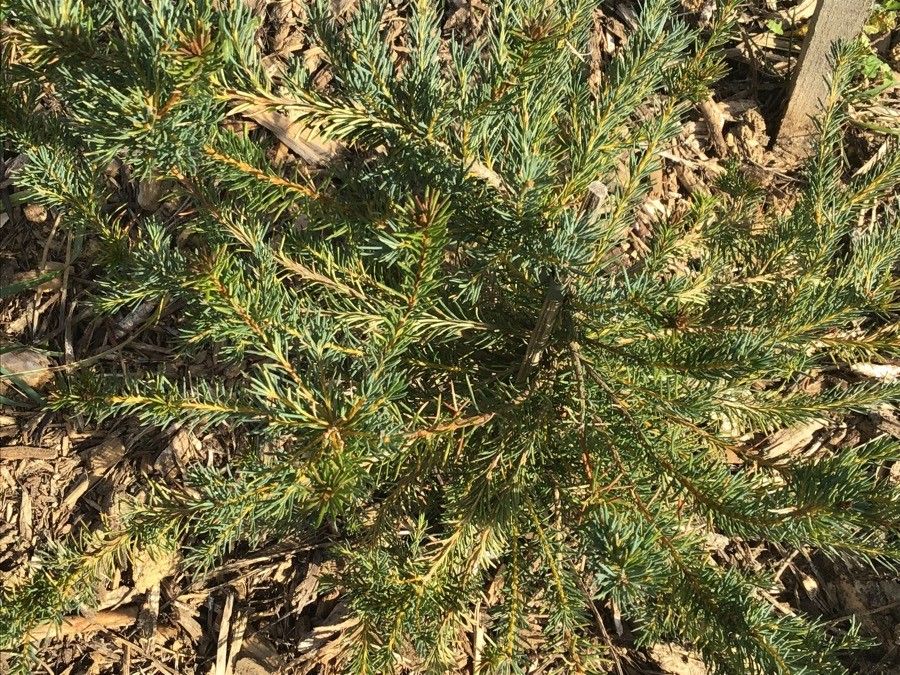
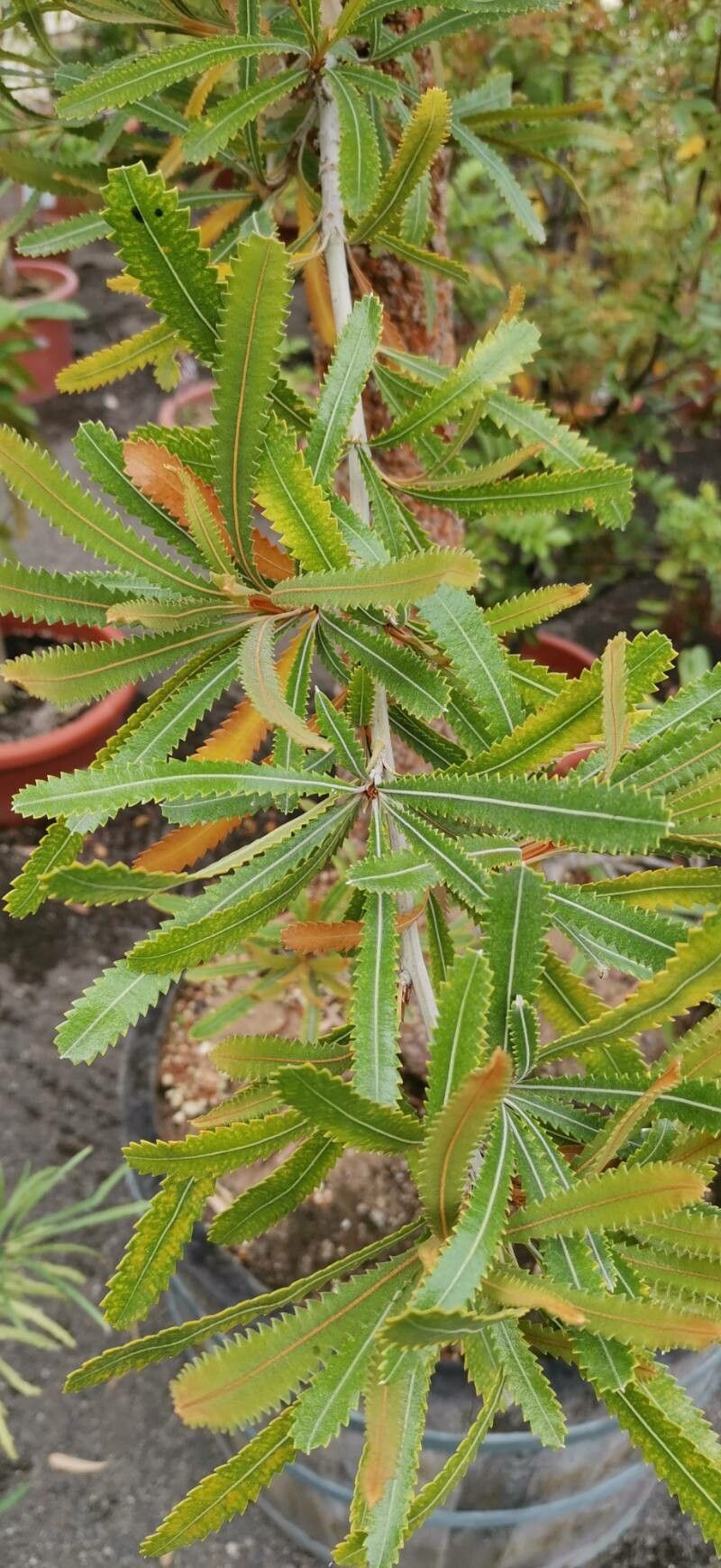
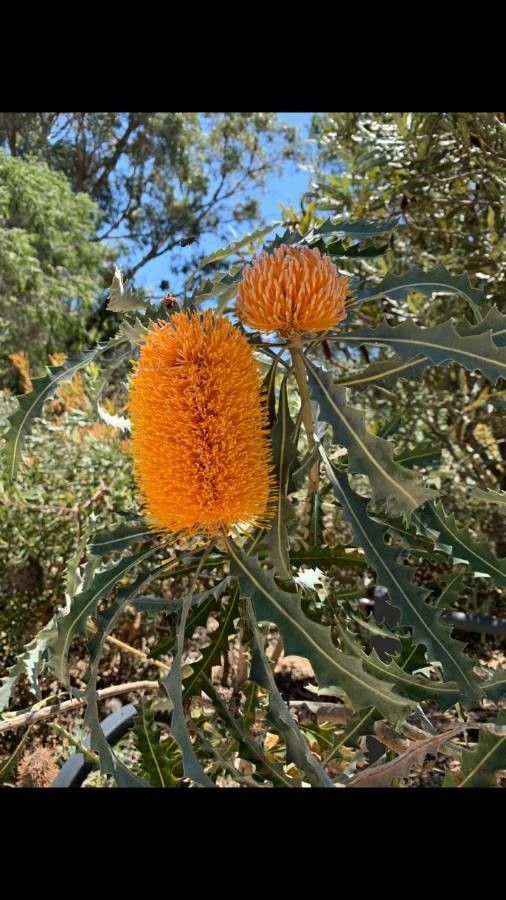
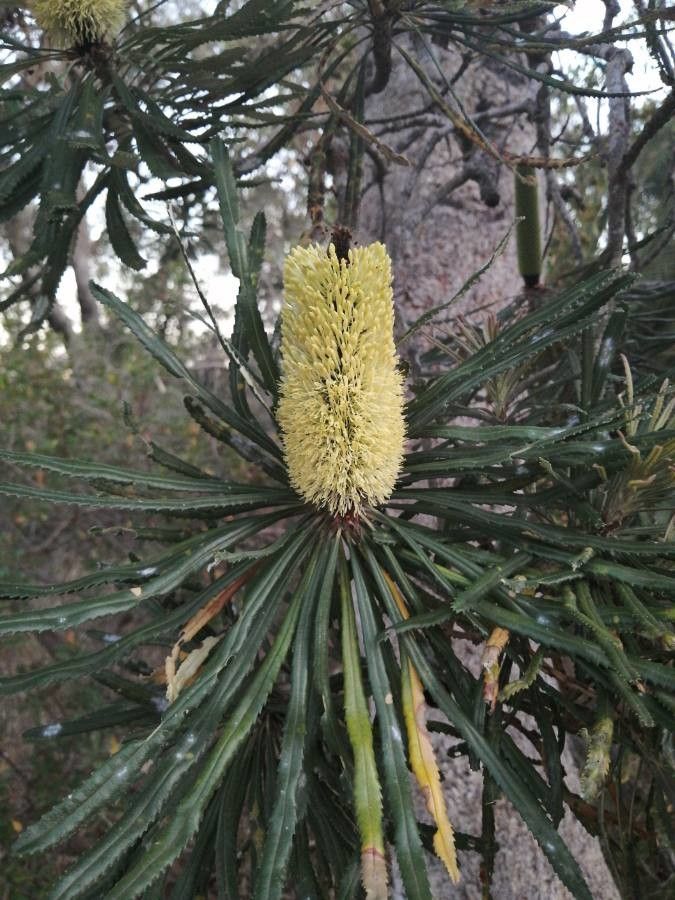
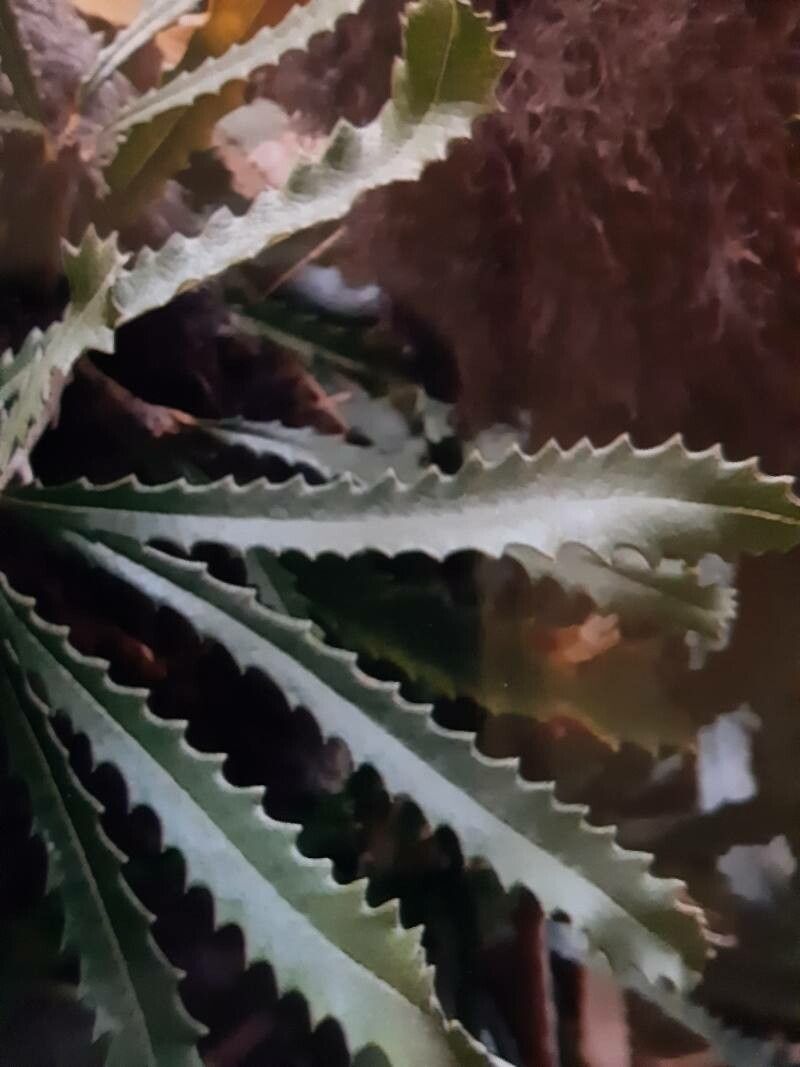
Banksia nutans, commonly known as nodding banksia, is a species of shrub native to the south coast of Western Australia in the genus Banksia. Growing to a metre (3 ft) tall, it has pale blue-green fine-leaved foliage and unusual purple-brown inflorescences which hang upside down rather than grow upright like most other banksias. It is one of many banksias first described by the botanist Robert Brown in the early 19th century. It is not commonly seen in cultivation. Readily grown in areas with Mediterranean climates, its sensitivity to dieback makes it short-lived in climates of summer humidity such as Sydney.
Banksia nutans has strong resistance to disease and is usually not susceptible to illnesses. In terms of upkeep, this plant is fairly low-maintenance. When grown outdoors it needs minimal watering, and larger specimens generally do not require pruning. Smaller plants, however, should be pruned after they have finished blooming. Banksia nutans is suitable for anyone with outdoor space, such as a garden or a deck, and does not demand extensive gardening experience.
How to keep Banksia Nutans.
Fertilizer
To encourage robust growth, nourish your Banksia nutans during the early spring. Consistent fertilization boosts overall wellbeing, leading to strong growth, hardiness in harsh conditions, and heightened resistance to disease and pests. Uphold a precise fertilization timetable for your Banksia nutans to guarantee lively leaves with rich color and a dense look.
Pruning
Banksia nutans is known for its drooping flowers and brush-like form. To help it thrive, it's important to prune it in early spring. Begin by removing any dead or diseased wood, and thin out crowded branches to improve air circulation. After it flowers, prune the plant to maintain its shape. Regular pruning encourages healthy growth and helps prevent the plant from becoming leggy or overgrown.
Botanical profile.
- Plant Type
- Shrub
- Life Cycle
- Perennial
- Genus
- Banksia
- Family
- Proteaceae
- Hardiness Zone
- 8-11