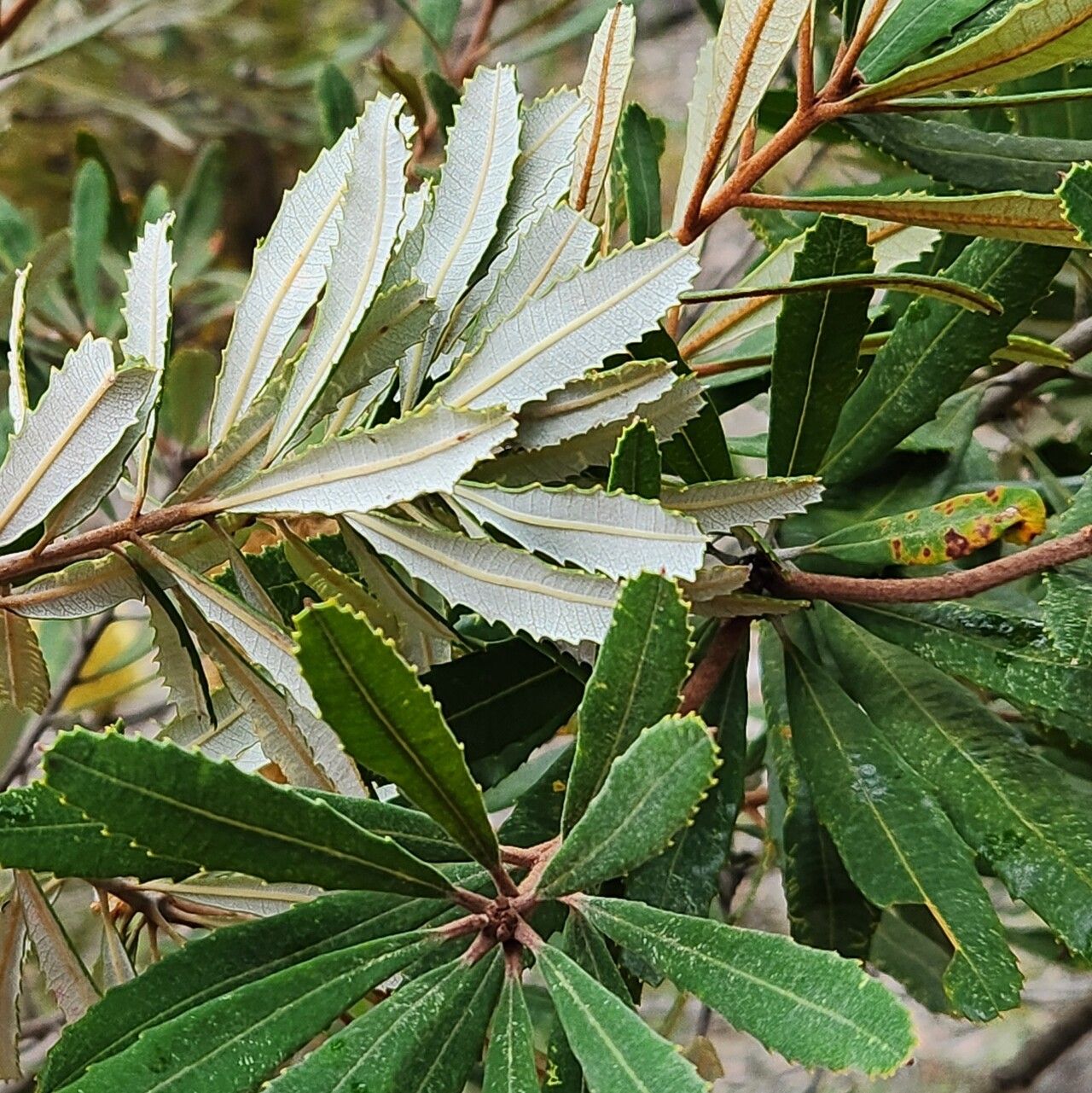
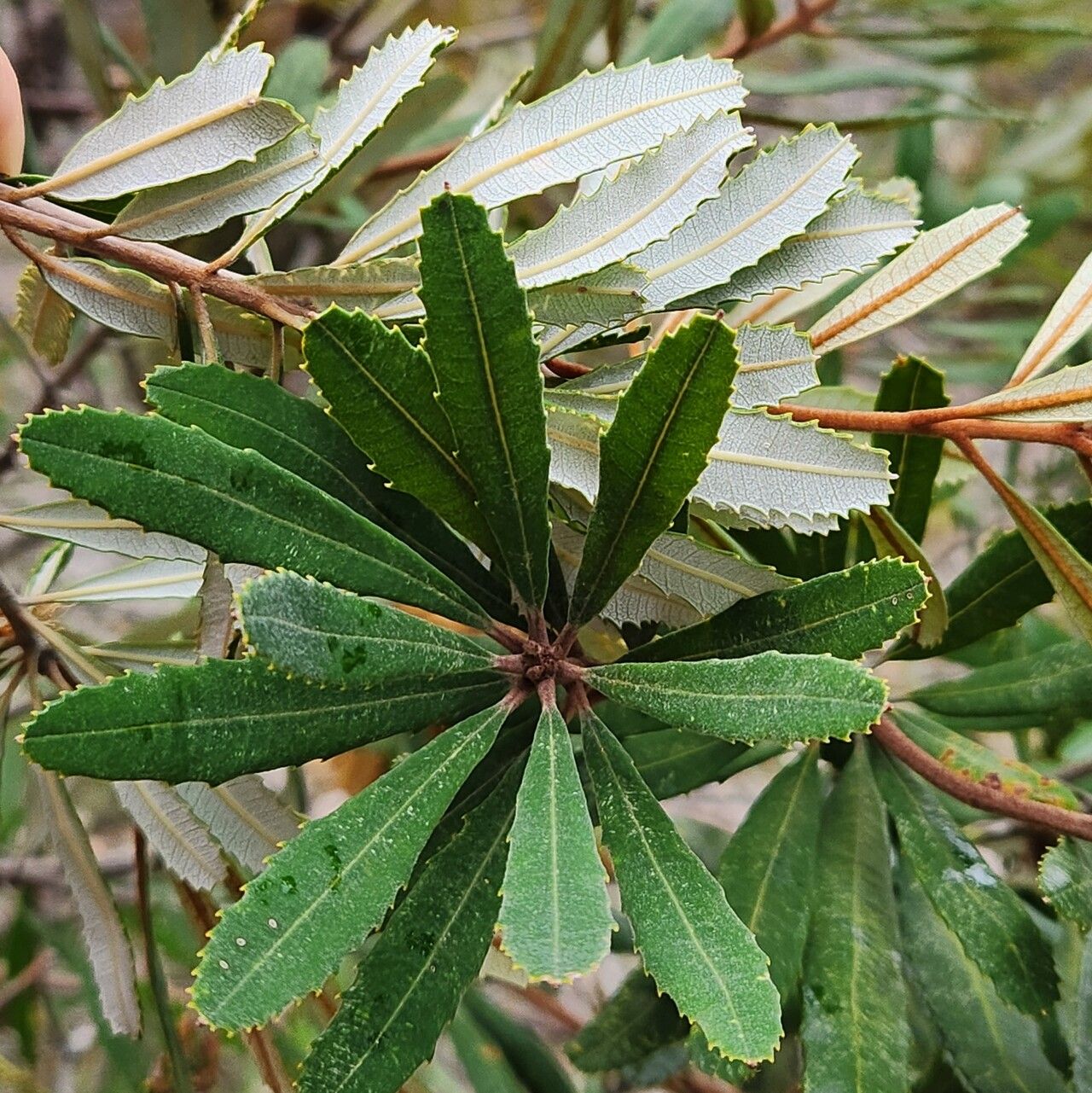
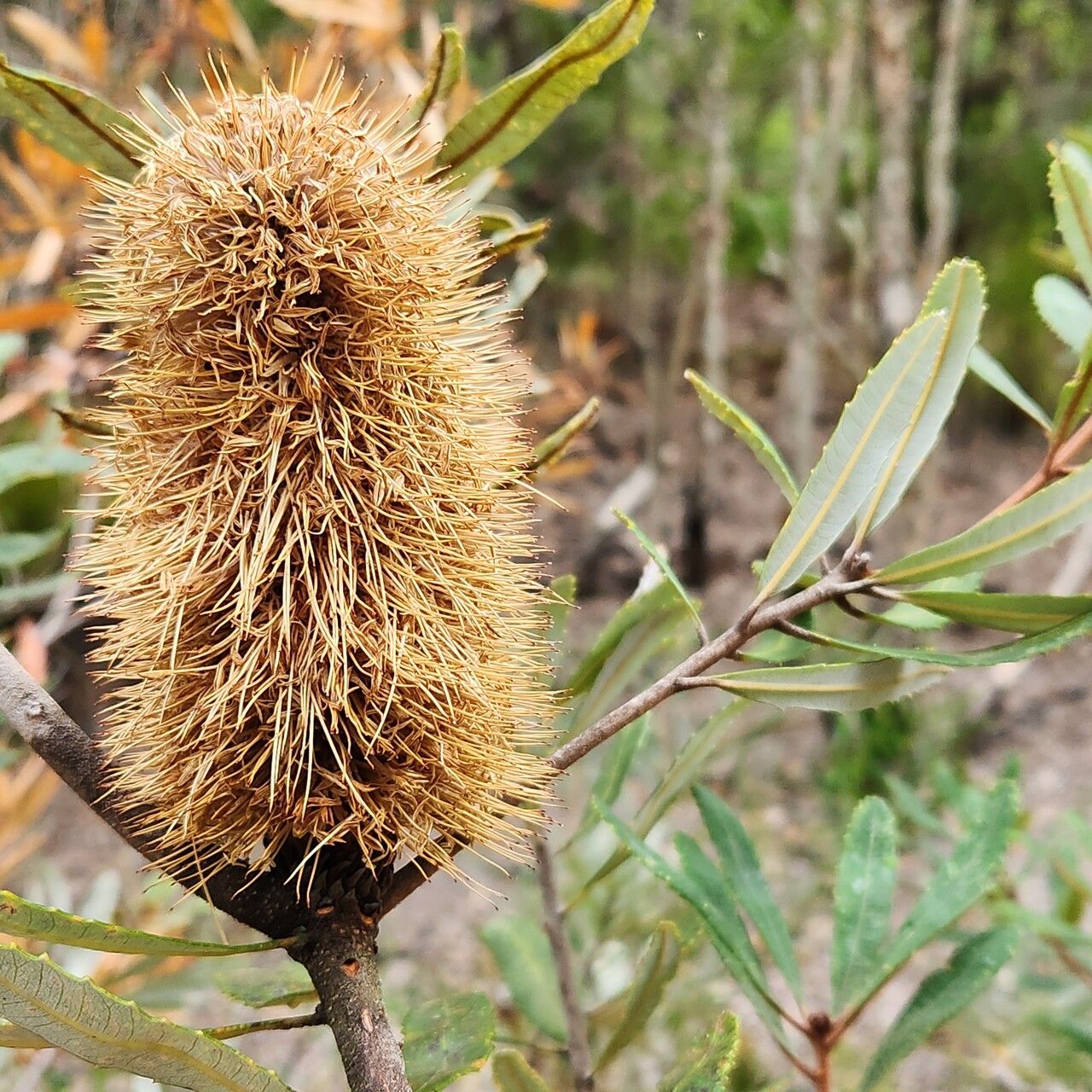
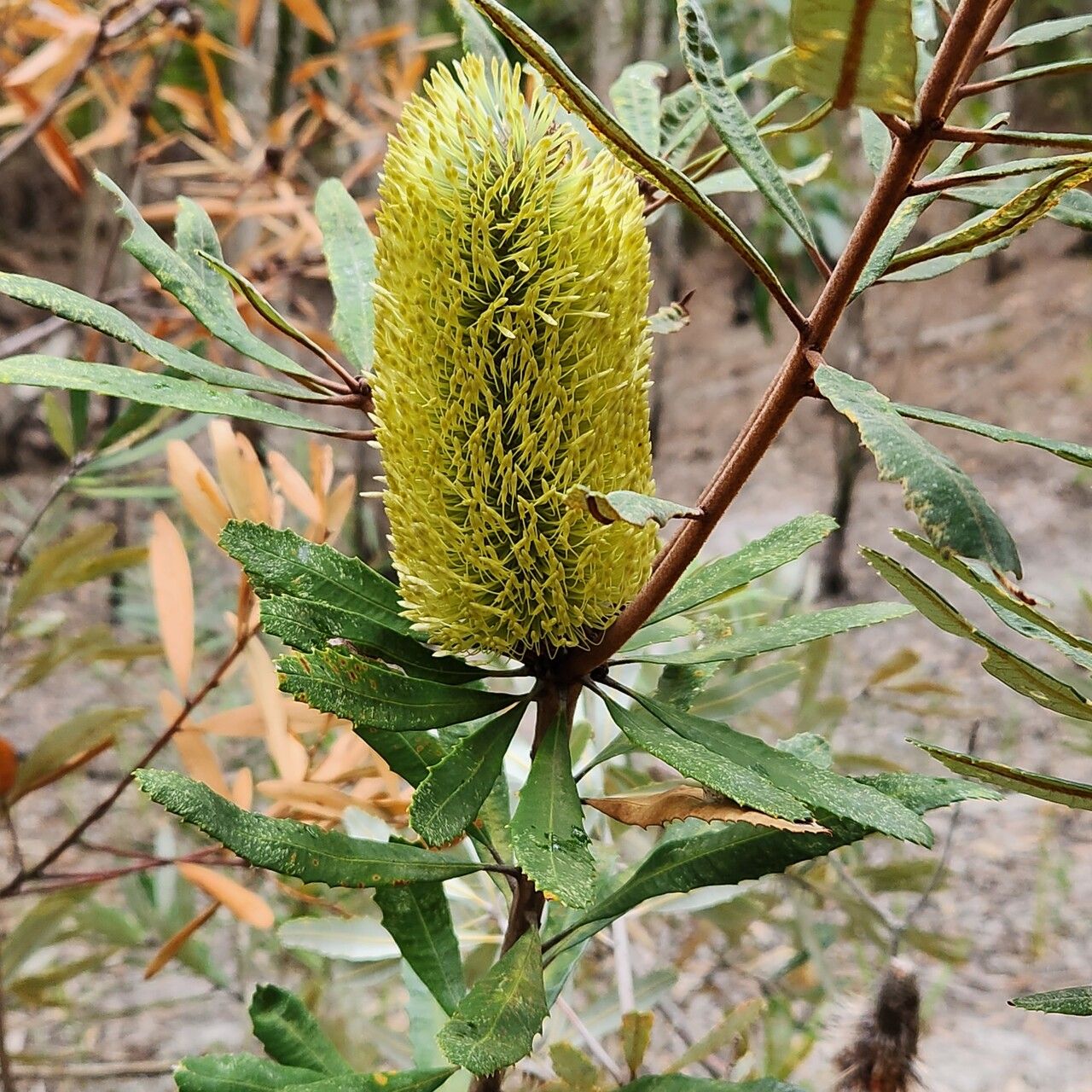
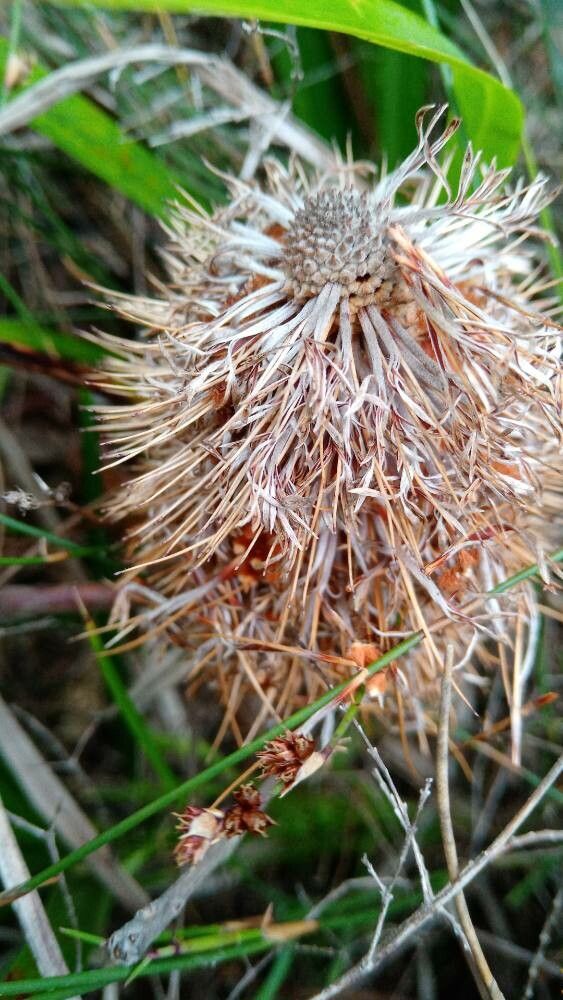
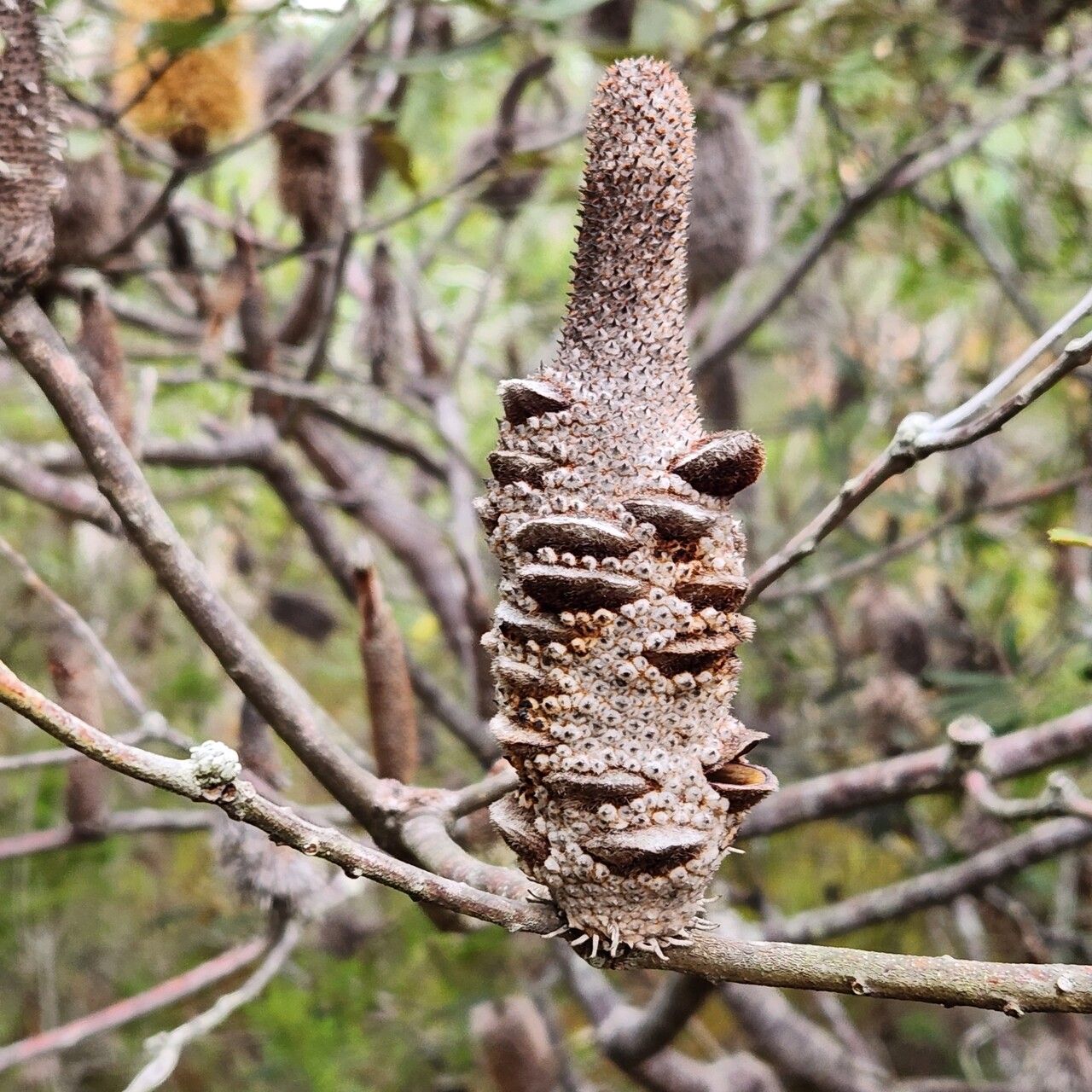
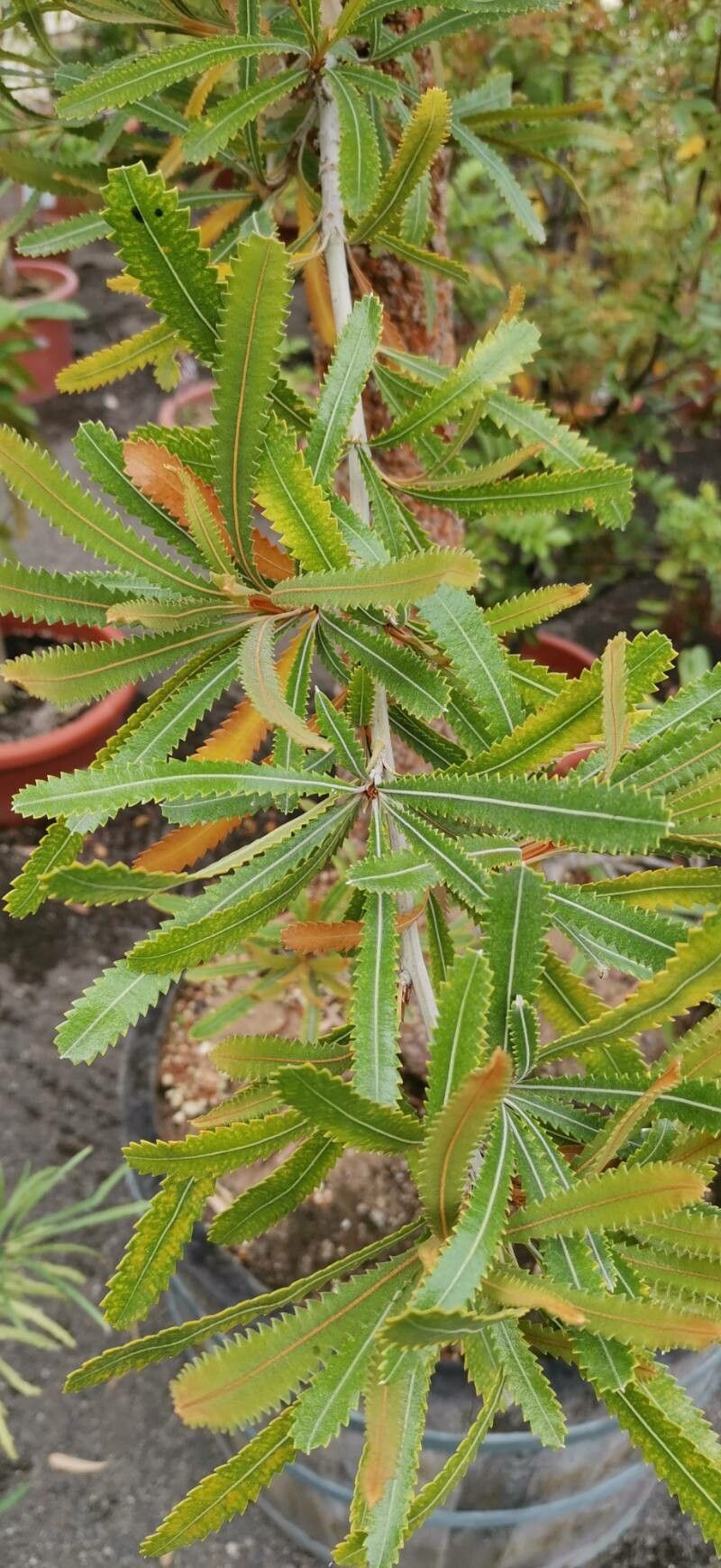
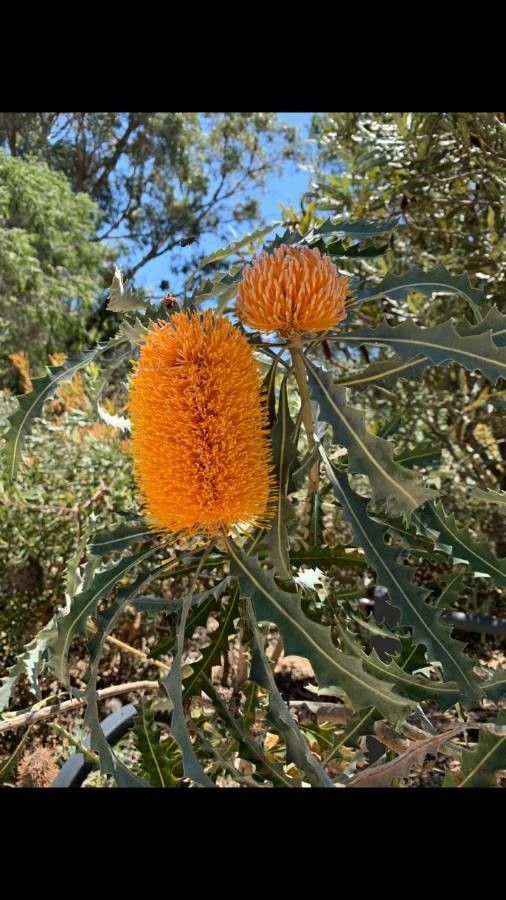
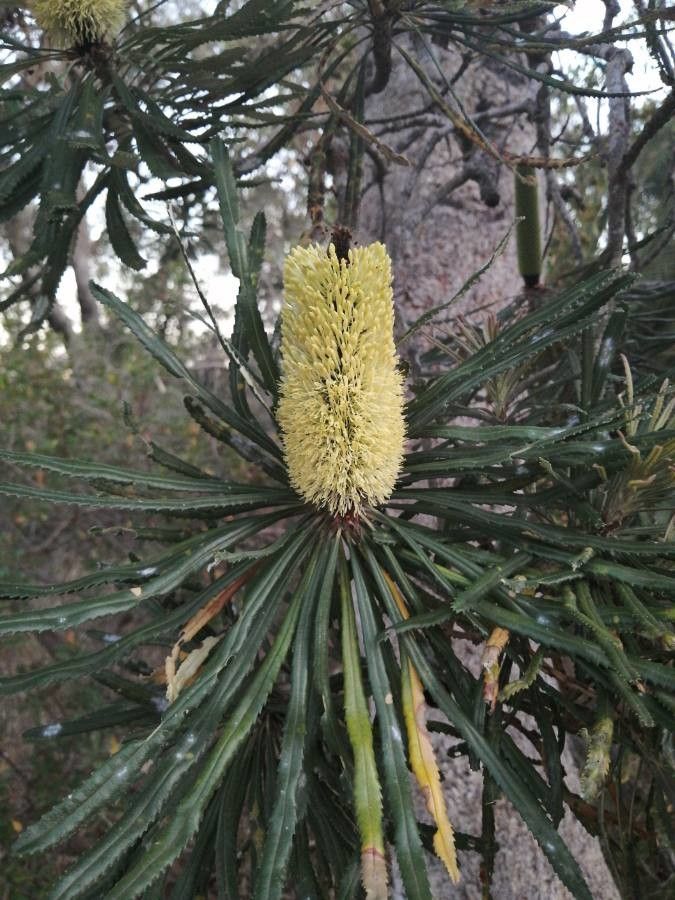
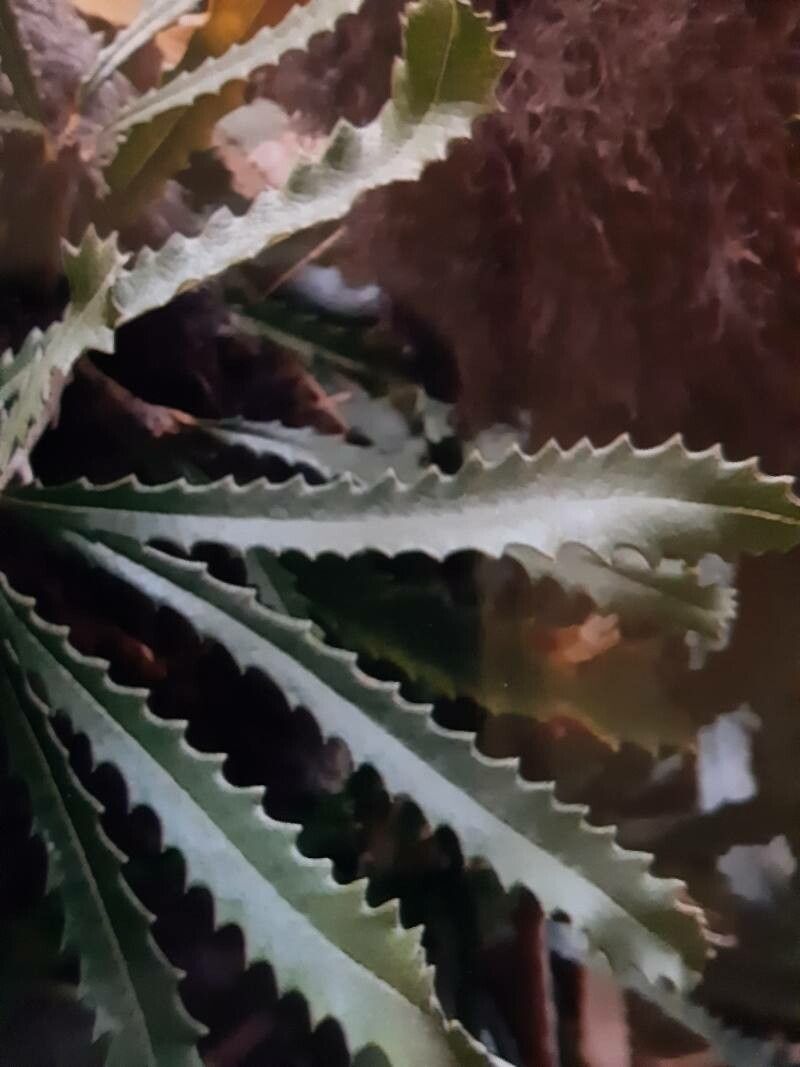
Banksia oblongifolia, commonly known as the fern-leaved, dwarf or rusty banksia, is a species in the plant genus Banksia. Found along the eastern coast of Australia from Wollongong, New South Wales in the south to Rockhampton, Queensland in the north, it generally grows in sandy soils in heath, open forest or swamp margins and wet areas. A many-stemmed shrub up to 3 m (9.8 ft) high, it has leathery serrated leaves and rusty-coloured new growth. The yellow flower spikes, known as inflorescences, most commonly appear in autumn and early winter. Up to 80 follicles, or seed pods, develop on the spikes after flowering. Banksia oblongifolia resprouts from its woody lignotuber after bushfires, and the seed pods open and release seed when burnt, the seed germinating and growing on burnt ground. Some plants grow between fires from seed shed spontaneously. Spanish botanist Antonio José Cavanilles described B. oblongifolia in 1800, though it was known as Banksia aspleniifolia in New South Wales for many years. However, the latter name, originally coined by Richard Anthony Salisbury, proved invalid, and Banksia oblongifolia has been universally adopted as the correct scientific name since 1981. Two varieties were recognised in 1987, but these have not been generally accepted. A wide array of mammals, birds, and invertebrates visit the inflorescences. Though easily grown as a garden plant, it is not commonly seen in horticulture.
Silver banksia is fairly resistant to disease and is generally not prone to illnesses. As for care, this plant is relatively low-maintenance. When planted outside it needs minimal watering, and larger specimens typically do not require pruning. Smaller plants, however, should be pruned after they have finished flowering. Silver banksia is suitable for anyone with an outdoor area, such as a garden or deck, and does not demand extensive plant-care experience.
How to keep Banksia Oblongifolia.
Light
The silver banksia does best in direct sunlight, which is essential for its healthy development. Coming from habitats with strong sunlight, it can tolerate stretches of reduced light. However, prolonged insufficient light or excessive exposure can harm its vigor.
Water
The fern-leaved banksia, native to Australia's dry sclerophyll forests, thrives with moderate watering about once a week. This evergreen plant needs consistent moisture to maintain its foliage year-round. It flourishes best outdoors, where it can replicate the conditions of its natural habitat.
Temperature
Silver banksia naturally grows in climates with temperatures from 59 to 100 °F (15 to 38 ℃). A moderate climate is preferable for optimal growth. During seasonal shifts, silver banksia is resilient and needs minimal intervention or adjustment.
Fertilizer
Timing is essential for fertilizing Silver banksia. Start in early spring and apply fertilizer each month through early summer. Fertilizer encourages attractive blooms and supplies the plant with energy during both dormant periods and active growth.
Pruning
The fern-leaved banksia thrives with regular pruning, which helps maintain its shape and promotes flowering. Key techniques include removing dead branches and thinning out congested areas to improve airflow. The best time to prune is from early to late winter. Pruning during this period minimizes sap loss and encourages growth in the spring, while also helping to prevent pests and diseases.
Botanical profile.
- Plant Type
- Tree, Shrub
- Life Cycle
- Perennial
- Genus
- Banksia
- Family
- Proteaceae
- Hardiness Zone
- 8-11
- Mature Height
- 0.2 m to 11.89 m
- Mature Spread
- 1.52 m to 2.44 m
- Leaf Color
- Green, Blue, Gray, Silver
- Leaf Type
- Evergreen
- Flower Color
- Yellow
- Flower Size
- 7.62 cm to 10.16 cm
- Bloom Time
- Fall
- Planting Time
- Spring
- Harvest Time
- Winter
Other names.