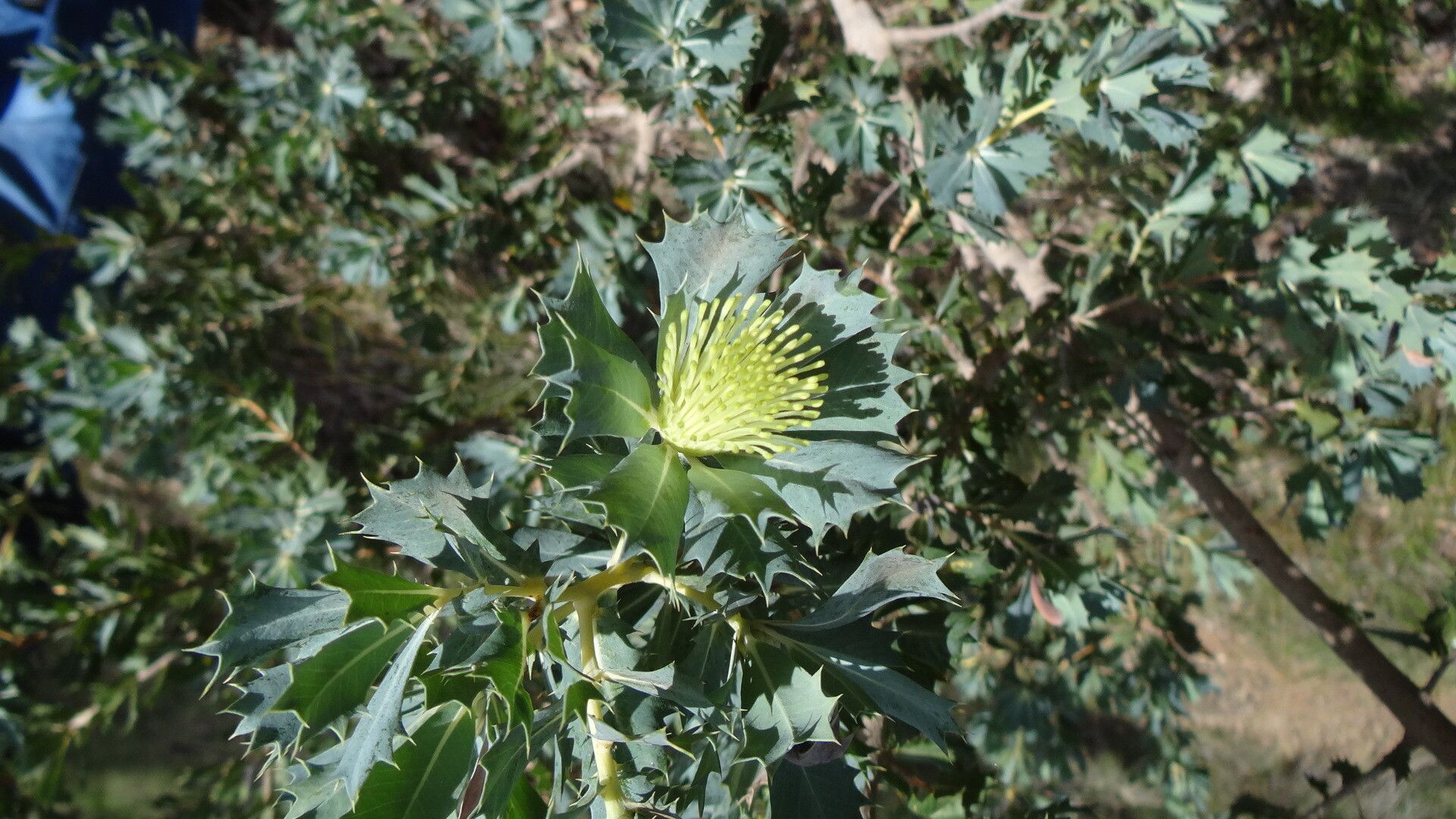
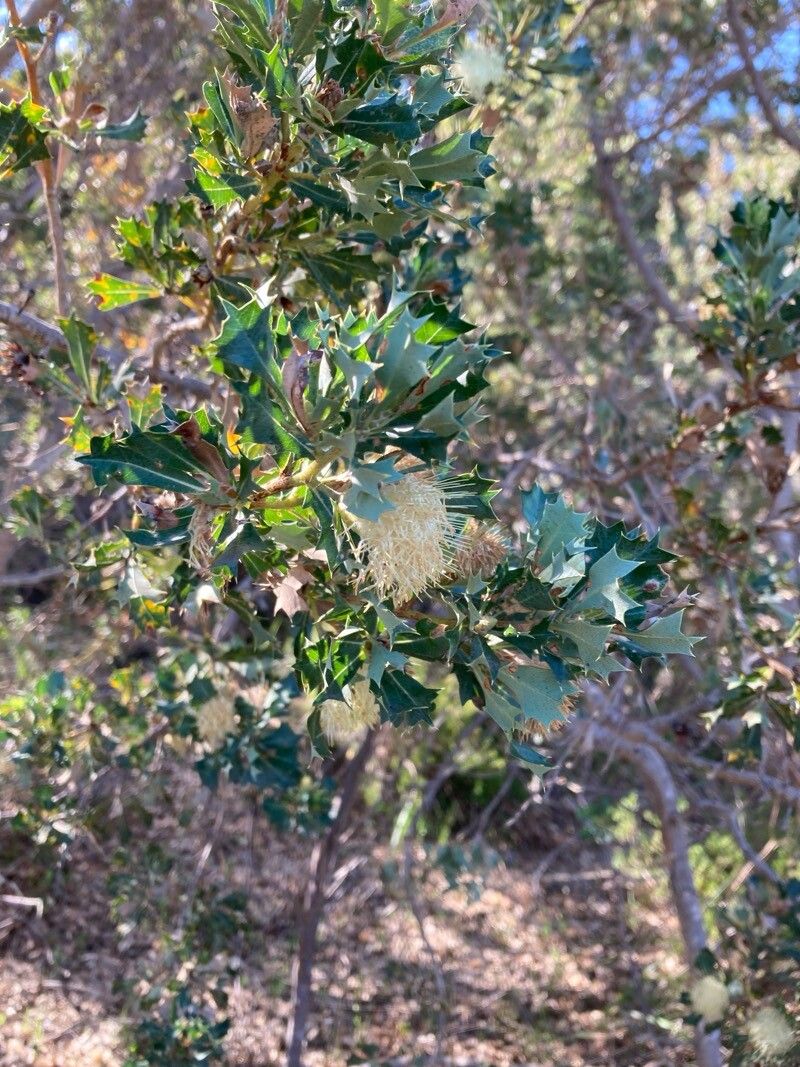
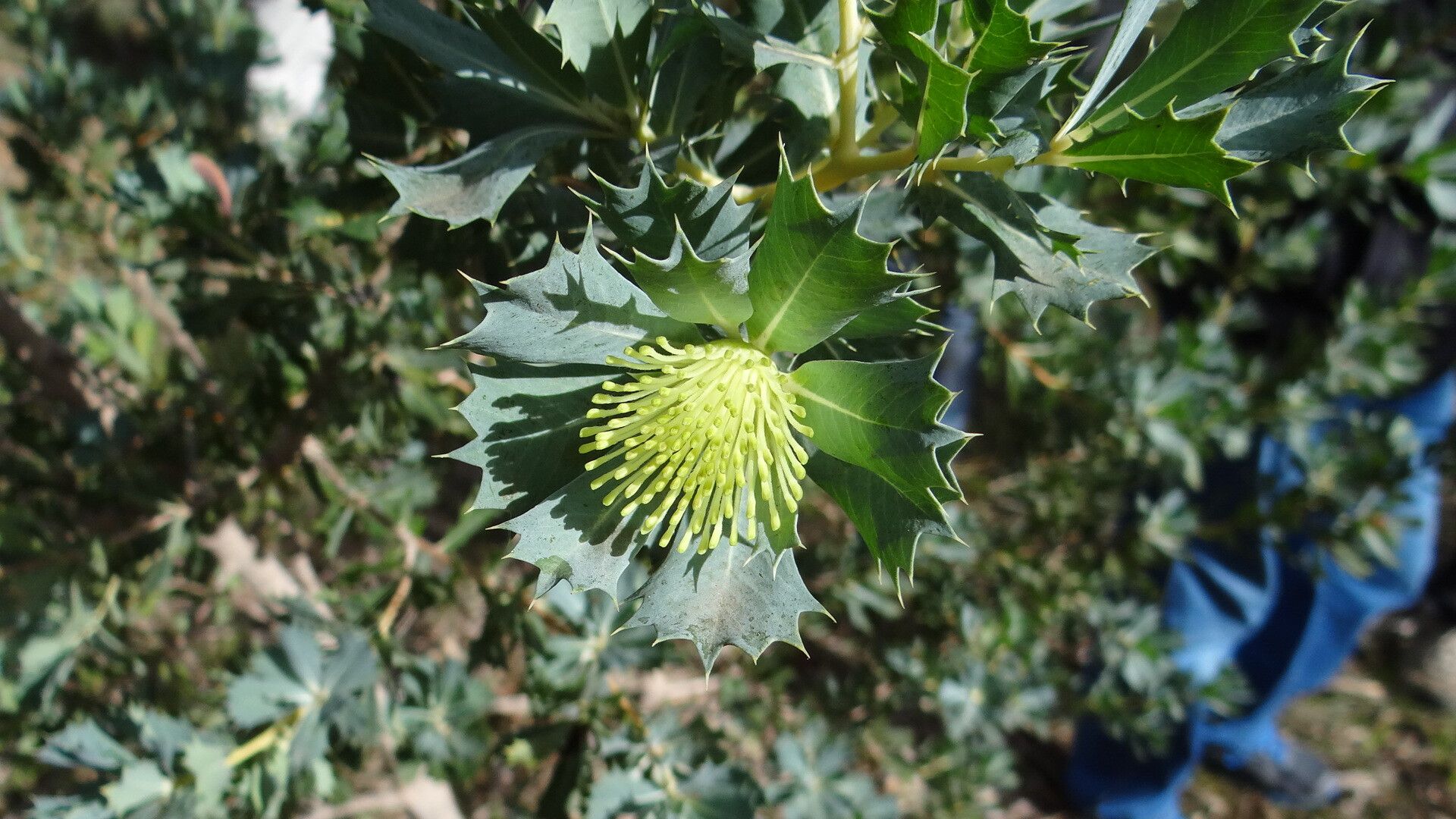
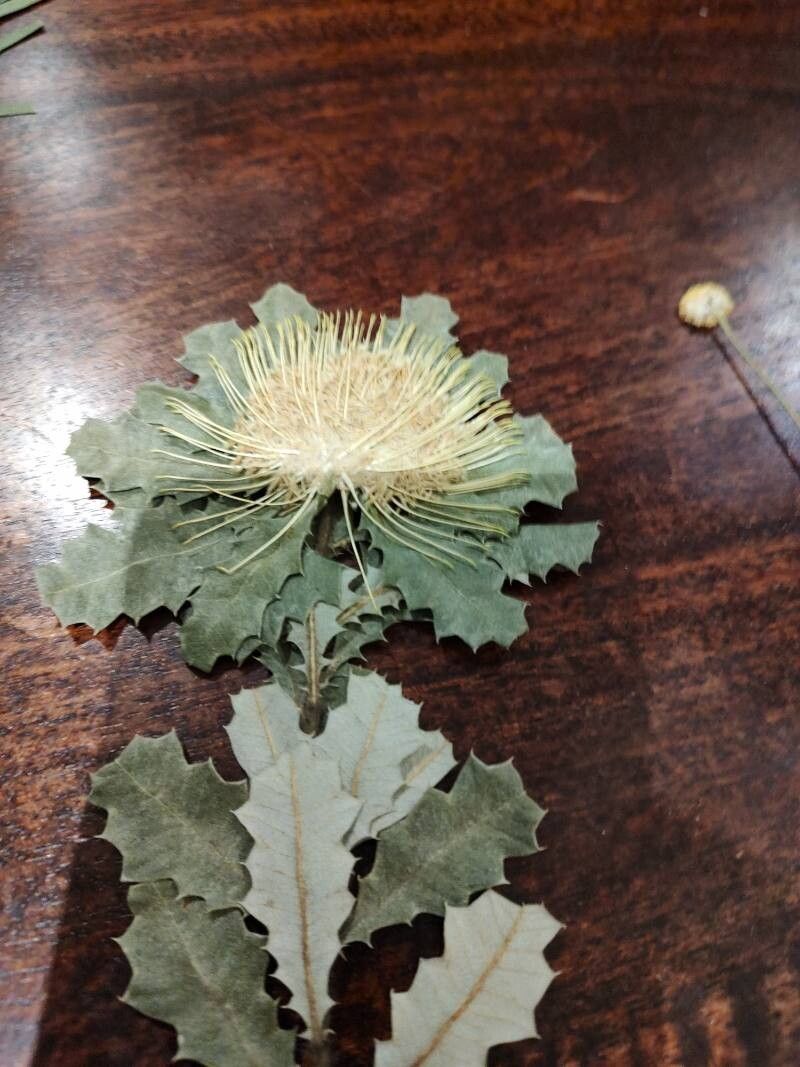
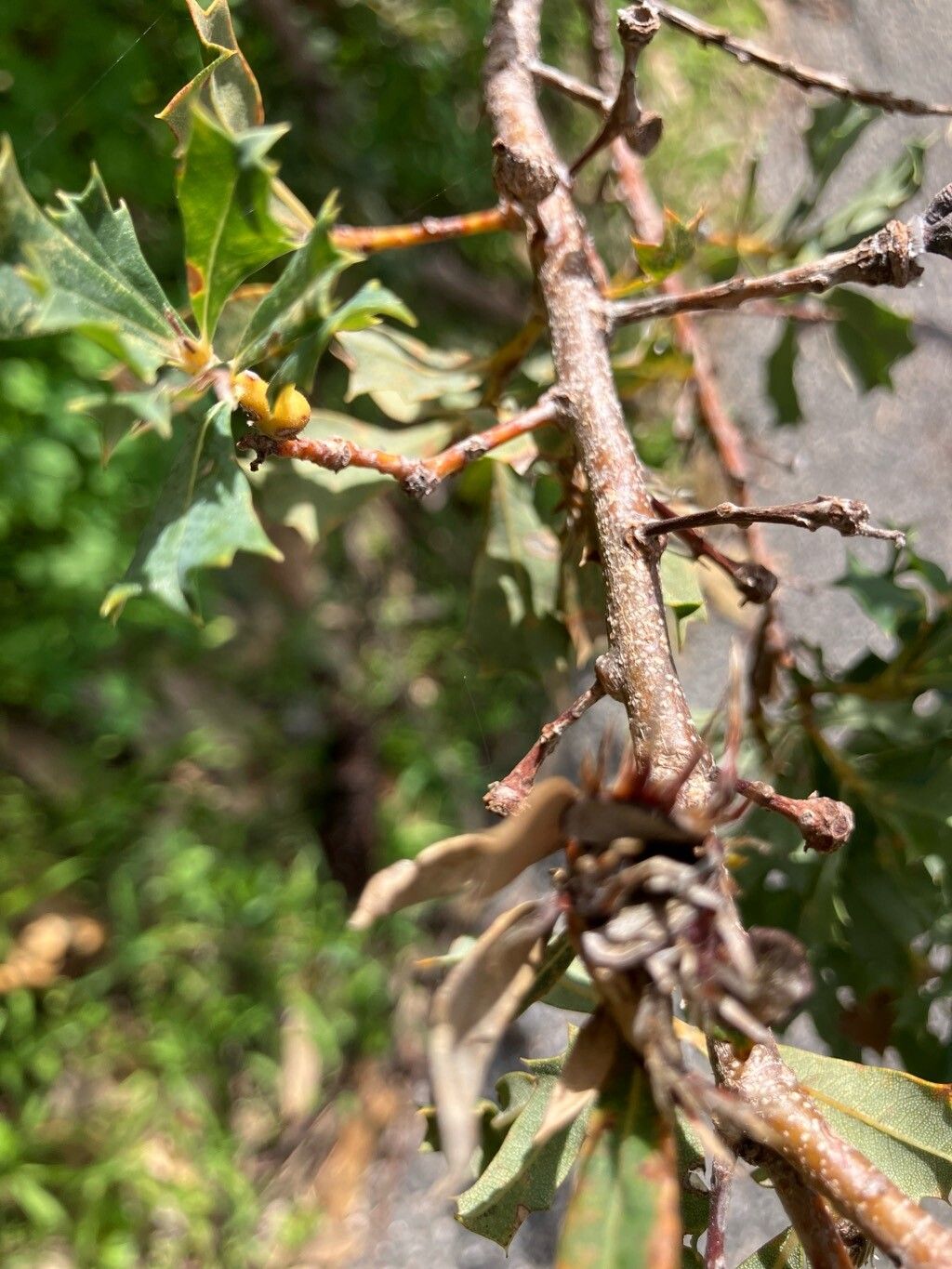
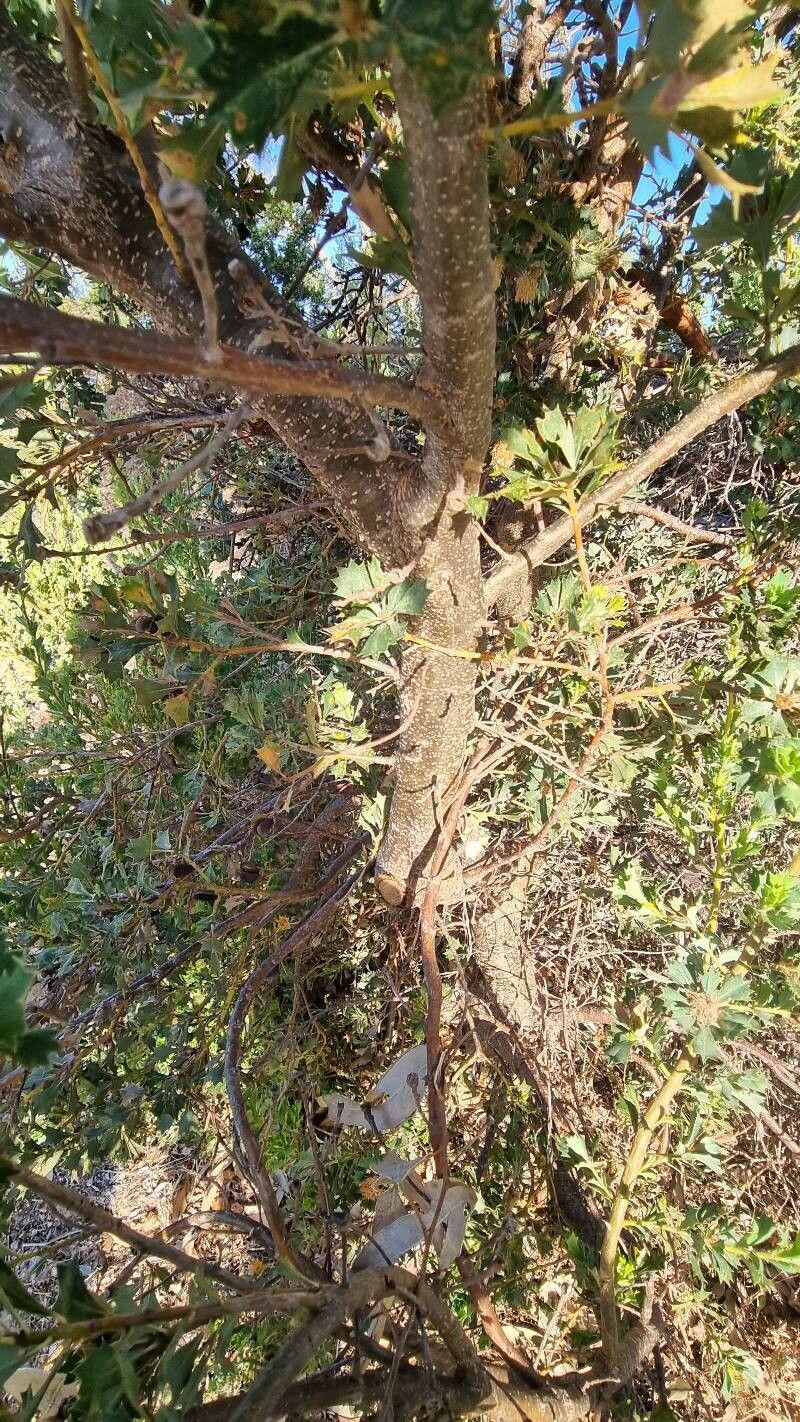
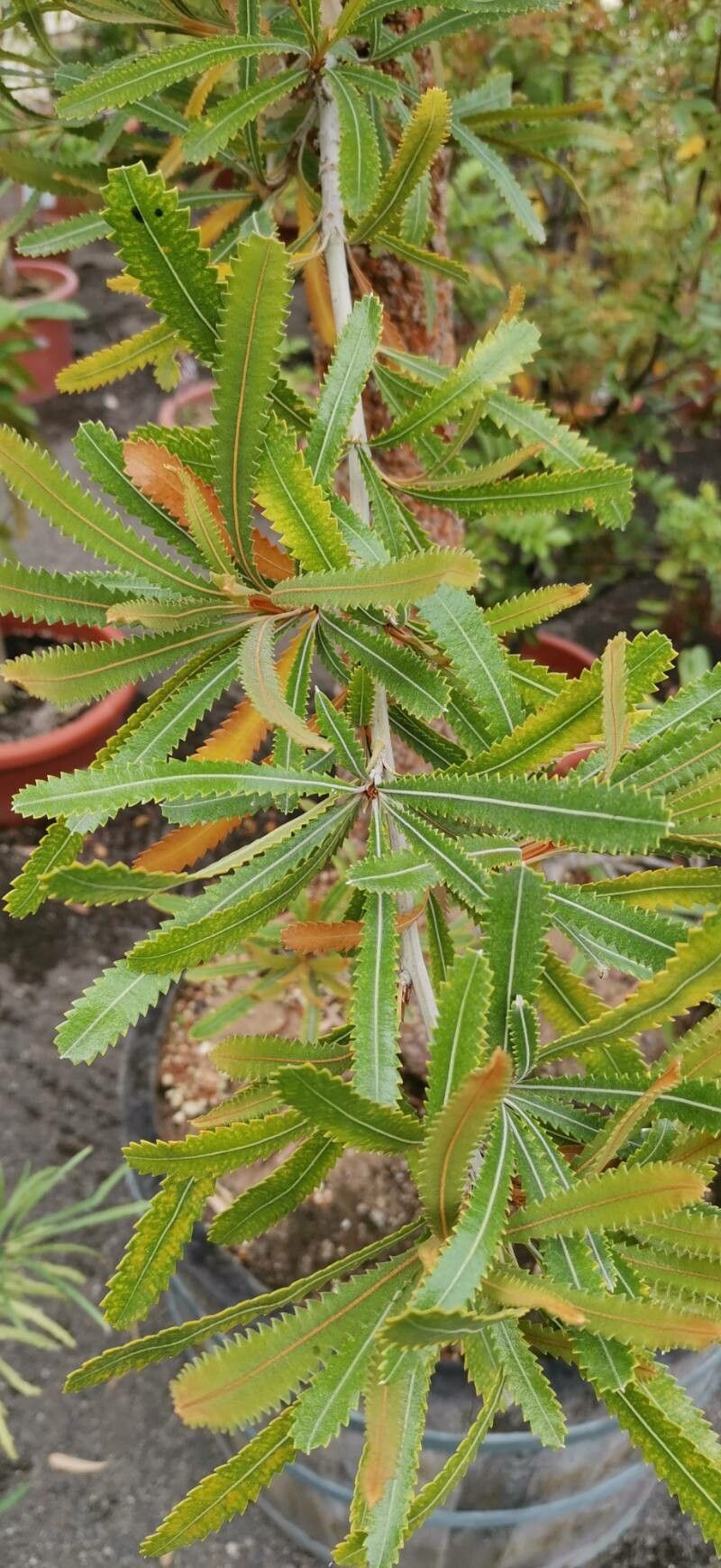
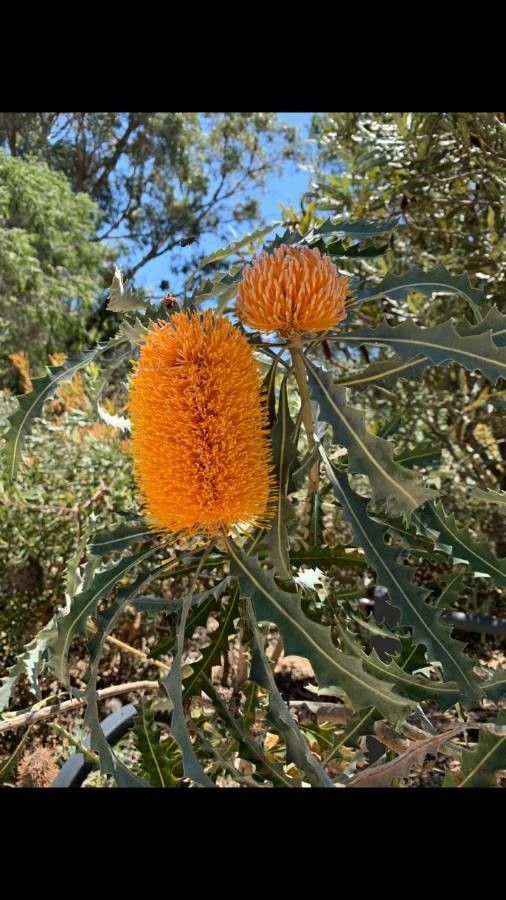
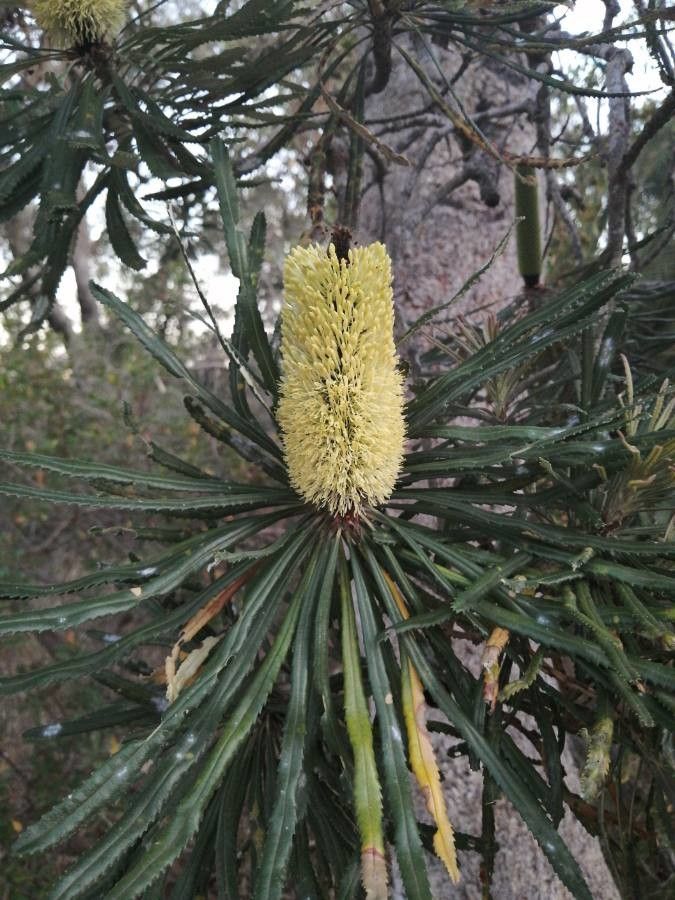
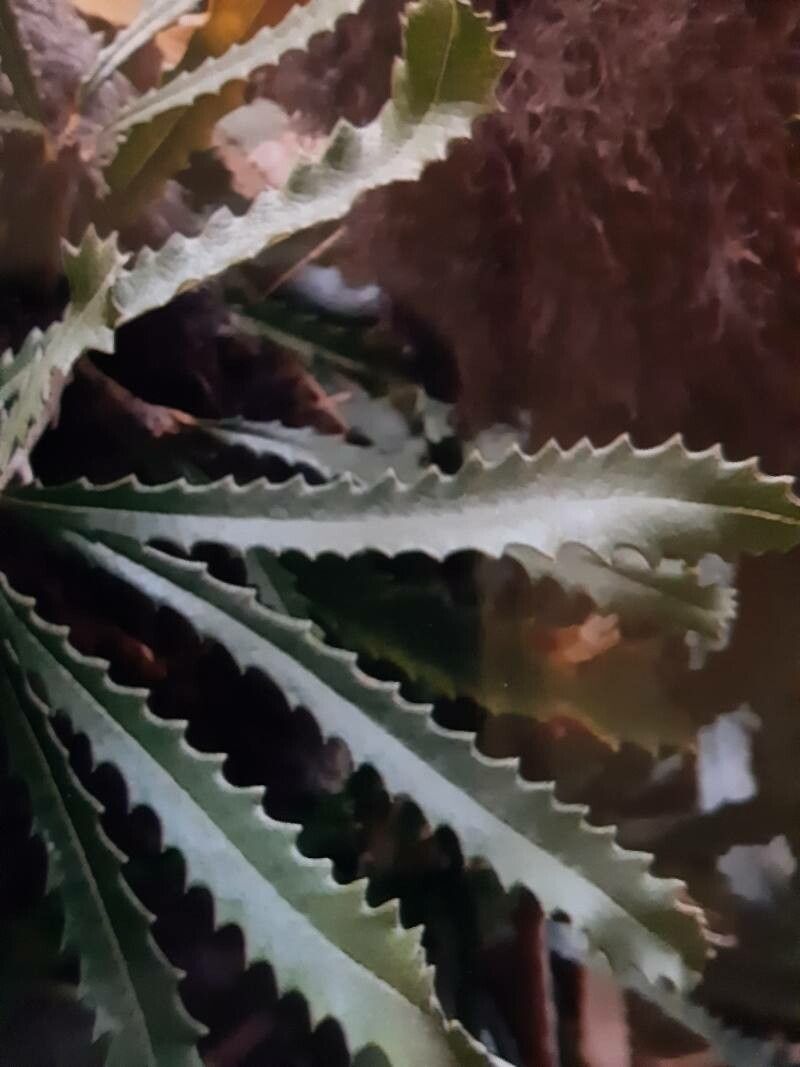
Banksia sessilis, commonly known as parrot bush, is a species of shrub or tree in the plant genus Banksia of the family Proteaceae. It had been known as Dryandra sessilis until 2007, when the genus Dryandra was sunk into Banksia. The Noongar peoples know the plant as budjan or butyak. Widespread throughout southwest Western Australia, it is found on sandy soils over laterite or limestone, often as an understorey plant in open forest, woodland or shrubland. Encountered as a shrub or small tree up to 6 m (20 ft) in height, it has prickly dark green leaves and dome-shaped cream-yellow flowerheads. Flowering from winter through to late spring, it provides a key source of food—both the nectar and the insects it attracts—for honeyeaters in the cooler months, and species diversity is reduced in areas where there is little or no parrot bush occurring. Several species of honeyeater, some species of native bee, and the European honey bee seek out and consume the nectar, while the long-billed black cockatoo and Australian ringneck eat the seed. The life cycle of Banksia sessilis is adapted to regular bushfires. Killed by fire and regenerating by seed afterwards, each shrub generally produces many flowerheads and a massive amount of seed. It can recolonise disturbed areas, and may grow in thickets.
Parrot bush is well resistant to disease and generally not susceptible to illnesses. In terms of maintenance, this plant is fairly low-maintenance. When grown outdoors it needs only minimal watering, and larger specimens typically do not need pruning. However, smaller plants should be pruned after they finish blooming. Parrot busht is appropriate for anyone with an outdoor area, such as a garden or deck, and does not demand extensive care experience.
How to keep Banksia Sessilis.
Light
Parrot bush comes from open habitats, such as sunlit meadows and forest margins, which supply abundant light. It flourishes in Full Sun but can also tolerate Partial Sun, adjusting well to various sunlight conditions.
Temperature
Parrot bush shows strong adaptability to a wide range of climatic conditions, from burning summers to frosty winters. Still, it has a preferred temperature range for healthy growth. If temperatures climb too high, the plant is vulnerable to heat and humidity stress, which can kill it. In areas where temperatures reach the lower edge of its cold tolerance, providing insulation is important to protect the plant.
Fertilizer
Timing is important when fertilizing Parrot bush. Apply fertilizer in early spring and continue once a month until early summer. Fertilizer encourages attractive blooms and supplies energy both during dormancy and periods of active growth.
Pruning
Parrot bush is known for its distinctive foliage and vibrant flowers. To promote healthy growth, prune in early spring. Focus on removing damaged branches and thinning crowded areas to improve light penetration. Avoid heavy pruning to ensure that the plant recovers well. Use sharp tools to minimize the risk of disease.
Botanical profile.
- Plant Type
- Shrub, Tree
- Life Cycle
- Perennial
- Genus
- Banksia
- Family
- Proteaceae
- Hardiness Zone
- 9-11
- Mature Height
- 0.49 m to 3.05 m
- Mature Spread
- 0.91 m to 3.05 m
- Leaf Color
- Dark Green
- Leaf Type
- Evergreen
- Flower Color
- Yellow, Orange
- Flower Size
- 2.03 cm to 3.05 cm
- Bloom Time
- Late summer, Early fall, Mid fall
- Planting Time
- Summer
- Harvest Time
- Late fall, Early winter, Mid winter
Other names.