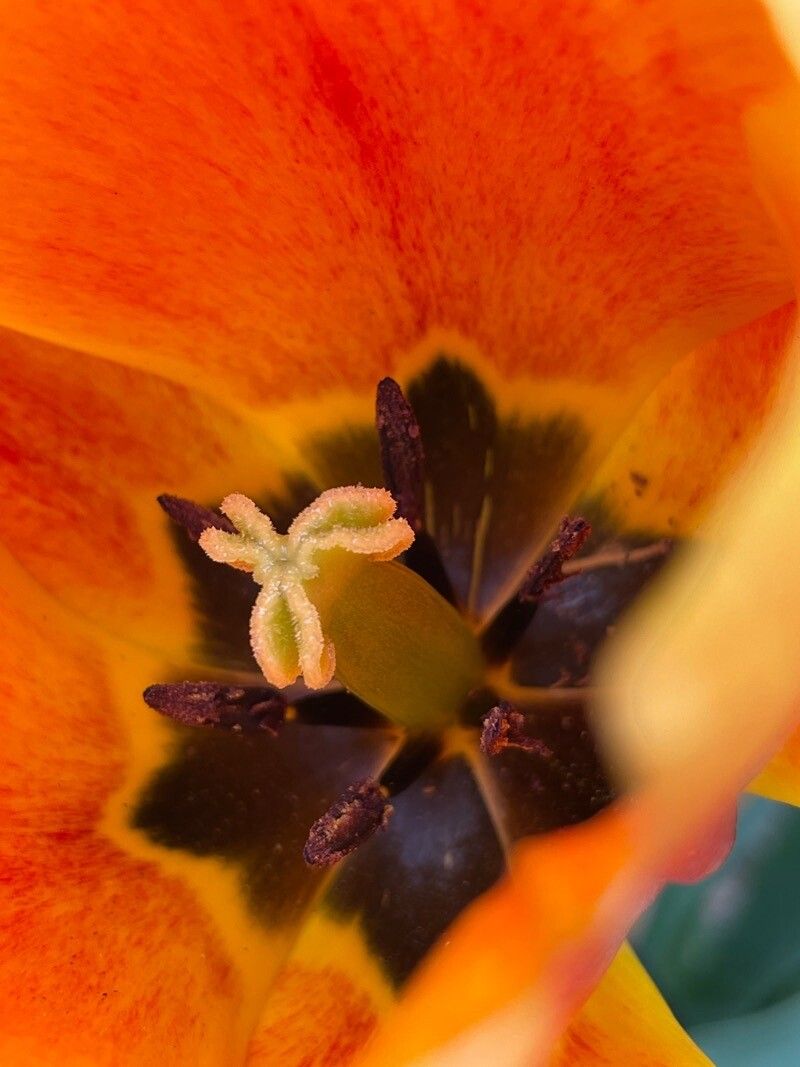
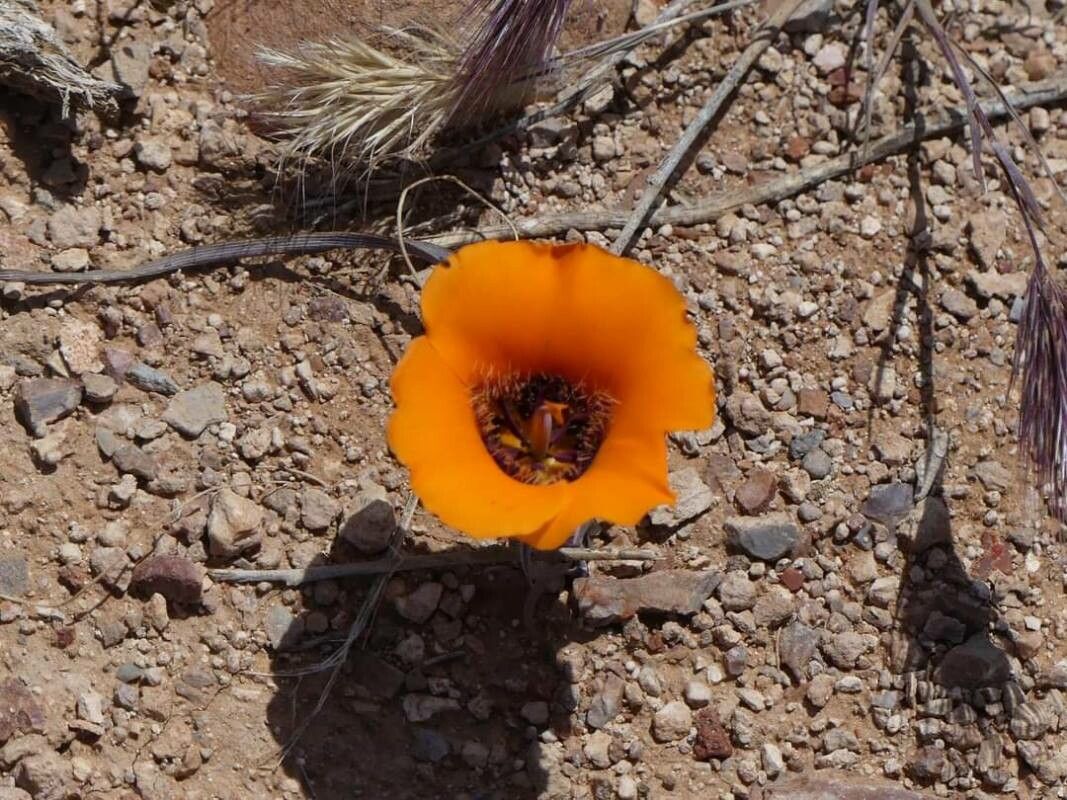
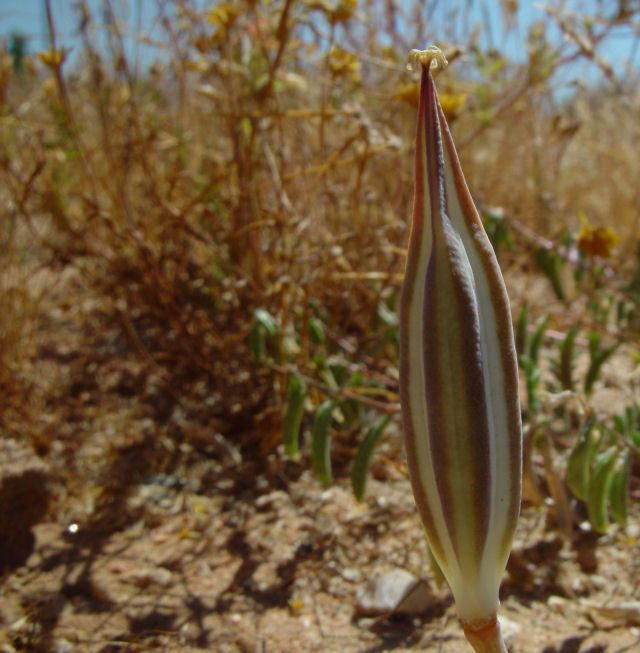
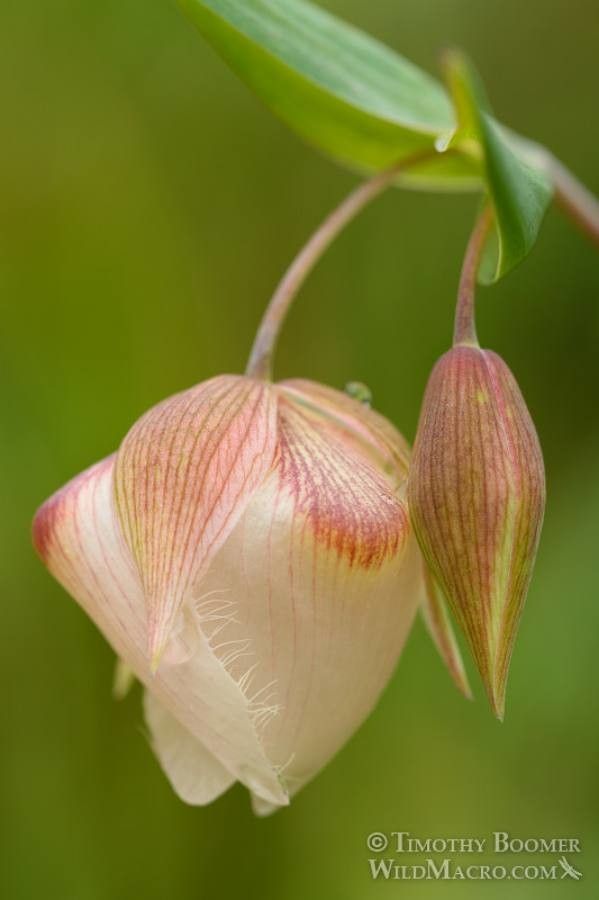
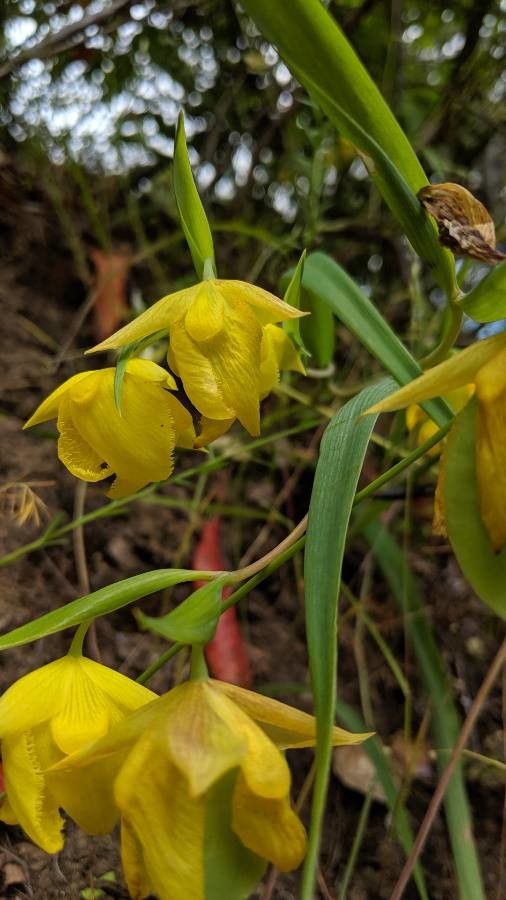
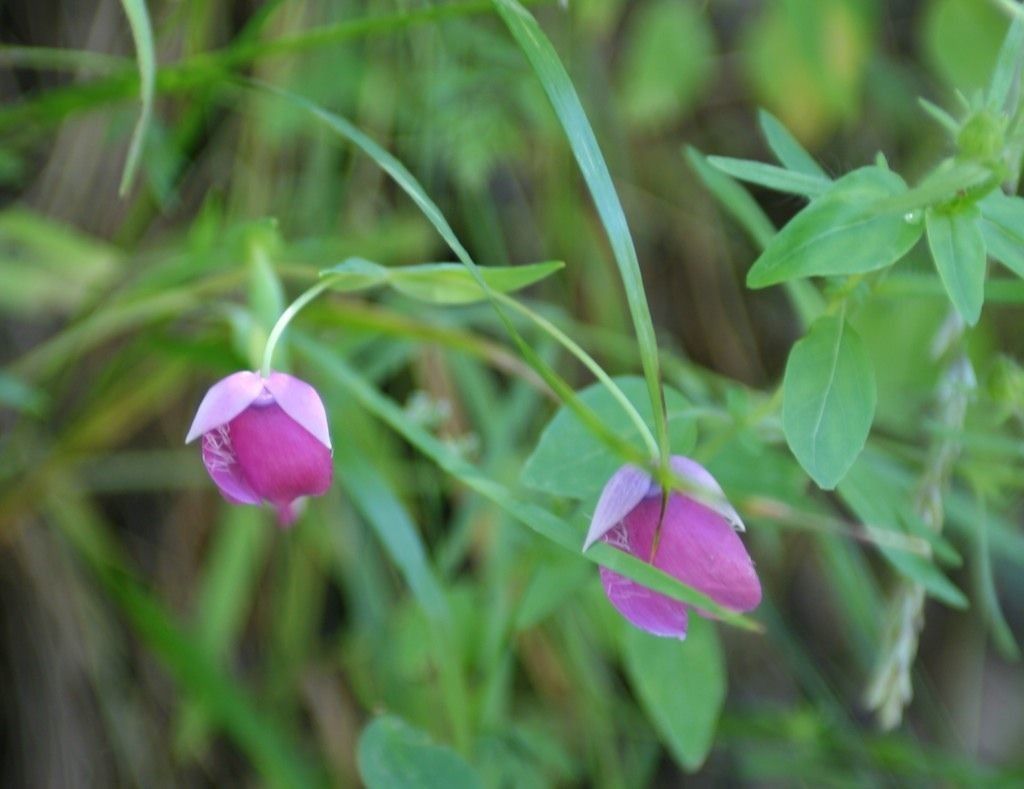
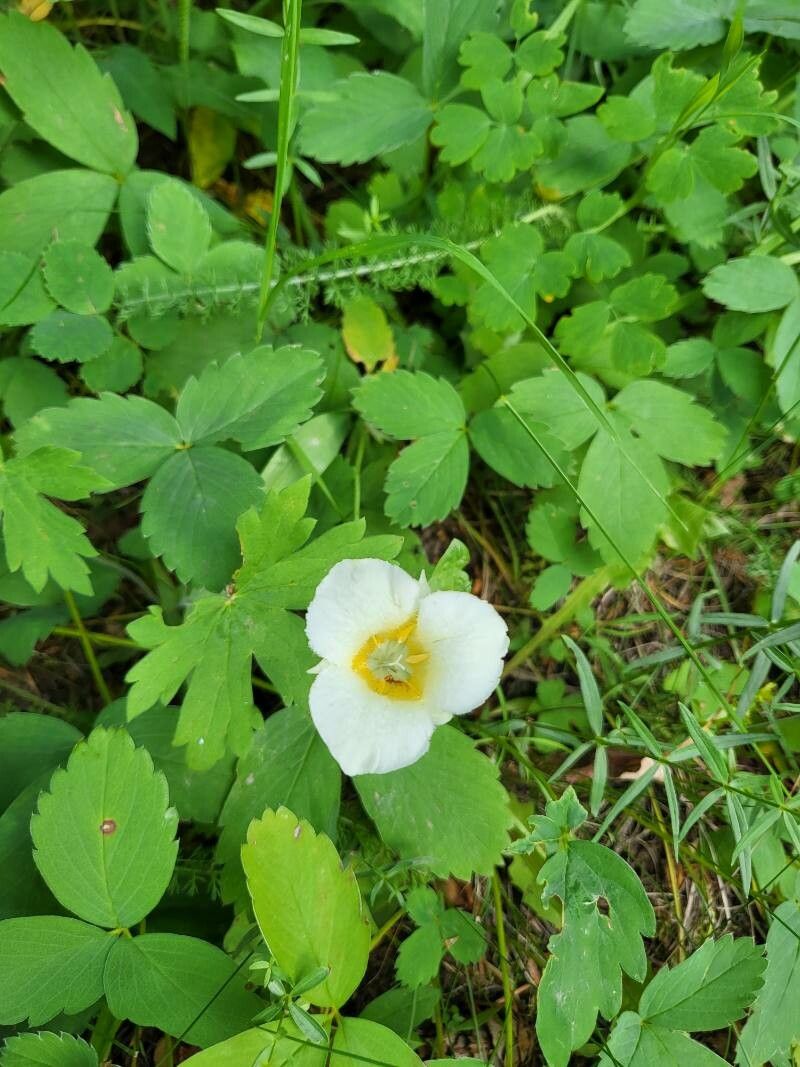
Calochortus kennedyi is a North American species of flowering plant in the lily family known by the common name desert mariposa lily.It is native to the deserts of the Southwestern United States (Arizona, southern California, southern Nevada, southern Utah and western Texas), and northern Mexico (Sonora, Chihuahua). In California it is found in the Mojave Desert and rain shadowed eastern slopes of the Transverse Ranges.Species is named for plant collector William L. Kennedy.
The desert mariposa lily has good disease resistance and is generally not prone to illnesses. However, it can be vulnerable to pests and diseases present in its environment. These issues are typically mild. Carewise, this plant needs moderate maintenance. It requires regular pruning to keep an attractive appearance and encourage healthy growth. Applying fertilizer can also help promote flowering. The desert mariposa lily is suitable for anyone with outdoor space, such as a garden or patio, and does not demand much care experience. It may need more attention when grown indoors.
How to keep Calochortus Kennedyi.
Light
The desert mariposa lily is a sun-loving, perennial herbaceous plant native to open habitats and commonly found in meadows and grasslands. It prefers full sun but can also tolerate partial sun.
Water
The desert mariposa lily excels in arid environments due to its high drought tolerance, preferring dry conditions. To stay healthy, it requires weekly watering, but care should be taken to avoid over-saturation. Adapted for outdoor growth in desert climates, the desert mariposa lily efficiently uses minimal moisture during its active growing season.
Temperature
The desert mariposa lily is native to regions with moderate temperatures and prefers a range of 59 to 95 °F (15 to 35 ℃). In cooler climates, it will need to be brought indoors during the colder months.
Fertilizer
The best time to apply fertilizer to Desert mariposa lily is in early spring, when the flowers are beginning to form. Using an appropriate fertilizer improves bloom quality and helps the Desert mariposa lily produce attractive flowers. Fertilizing in early spring supports strong flowering during the season and supplies energy for periods of dormancy.
Pruning
The desert mariposa lily is characterized by its vibrant orange flowers and grass-like leaves. It requires minimal pruning for maintenance. To encourage optimal growth, remove spent blooms and yellowing leaves from early to late spring. Performing light, selective pruning helps promote healthy foliage and flowers, enhancing the plant's natural beauty.
Botanical profile.
- Plant Type
- Herb
- Life Cycle
- Perennial
- Genus
- Calochortus
- Family
- Liliaceae
- Hardiness Zone
- 7-10
- Mature Height
- 15 cm to 46 cm
- Mature Spread
- 10 cm to 20 cm
- Leaf Color
- Green
- Leaf Type
- Deciduous
- Flower Color
- Orange
- Flower Size
- 5.08 cm to 7.62 cm
- Bloom Time
- Mid spring, Late spring
- Planting Time
- Spring, Autumn
- Harvest Time
- Early summer, Mid summer
- Native Area
- Mexico
Other names.
Reader questions.
How should I water my Desert mariposa lily?
To properly water the Desert mariposa lily, it is recommended to use filtered water at room temperature. This is because tap water may contain harmful particles for the plant's health. Additionally, it is important to avoid using cold water as it can be a shock to the plant, considering it is native to warm environments. Furthermore, it is best to avoid overhead watering to prevent any complications with the foliage. Instead, simply soak the soil with filtered room temperature water until it is completely saturated. This method benefits the plant by providing moisture to the roots and aiding in the spread and collection of essential nutrients.
What are the sunlight requirements for Desert Mariposa Lily?
Desert Mariposa Lily requires full sun, which means it thrives in areas receiving more than 6 hours of direct sunlight daily. However, it can also tolerate partial sun conditions, where the sunlight exposure is about 3-6 hours a day. It's essential to observe the movement of sunlight through your garden to select the best spots that offer a perfect balance of light and shade, ensuring the plants' wellbeing.
What are the ideal temperature conditions for Desert Mariposa Lily?
Desert Mariposa Lily, or Calochortus kennedyi, thrives in areas with moderate temperatures, preferring a temperature range between 59 to 95°F (15 to 35°C). It has strong cold resistance; however, in climates cooler than its preferred range, it requires adjustments such as being moved indoors during colder months. While special frost protection measures are not usually necessary thanks to its cold resistance, if temperatures are expected to plunge below -15°C, protective measures should be taken. This can include covering the plant with soil or straw. Additionally, to prevent drought and water scarcity during winter and early spring, it is recommended to water the plant abundantly before the first freeze of autumn, ensuring the soil is moist as it freezes.
What should I do if I give my Desert mariposa lily too much or too little water?
Taking care of your Desert mariposa lily requires attention to its watering needs. Overwatering is a more common problem and can lead to wilted, yellow leaves and even diseases like root rot. Underwatering is less likely, as this plant is drought-tolerant, but it can cause brittle, brown leaves. To prevent overwatering, watch for early signs like wilting and adjust your watering schedule accordingly. If the soil doesn't drain well, replace it. If underwatering occurs, simply increase your watering until the plant recovers.
Can Desert Mariposa Lily tolerate artificial lighting?
Yes, Desert Mariposa Lily can benefit from artificial lighting, especially when natural sunlight is insufficient, like during winter or in spaces that don't receive adequate sunlight. Artificial lights, particularly LEDs which can be customized to provide specific light wavelengths, promote healthier and faster growth. For full sun plants, 30-50W/sq ft is needed, for partial sun plants 20-30W/sq ft, and for full shade plants 10-20W/sq ft. The lights should be placed 12-36 inches above the plant to mimic natural sunlight, and the duration should mimic natural daylight hours, typically 8-12 hours per day.
How does Desert Mariposa Lily react to temperature changes?
Desert Mariposa Lily is cold-tolerant and prefers temperatures to stay above 15°C. During winter, keeping it above -10°C is essential. If temperatures fall below -15°C, the plant may experience decreased sprouting or fail to sprout in the spring, although there might not be noticeable changes during the winter. To address this, remove any parts that have failed to sprout in the spring. In contrast, during summer, temperatures should remain below 35°C for the plant to stay healthy. Exposure to temperatures above 41°C can cause the leaves to lighten in color, curl, become susceptible to sunburn, and in severe cases, lead to the wilting and drying of the entire plant. Solutions include trimming sunburned and dried-up parts, relocating the plant to a shaded area, or using a shade cloth, especially during midday and afternoon. Watering the plant in the morning and evening helps keep the soil moist and the plant healthy.
How many times should I water my Desert mariposa lily?
If your Desert mariposa lily is in a pot, you can use a precise method to determine if it needs water. Simply stick your finger into the soil, and if the top two to three inches are dry, it's time to water it. The same rule applies if you have planted the Desert mariposa lily outdoors in the ground. During the spring and early fall, you may need to water it about once a week, as indicated by the dryness of the top few inches of soil. However, during extremely hot weather, you may need to water it twice or even more times per week. It's worth noting that mature and well-established Desert mariposa lilies have an impressive ability to survive drought.
What symptoms indicate insufficient light for Desert Mariposa Lily?
Symptoms of light deficiency in Desert Mariposa Lily include smaller new leaves, leggy or sparse growth, faster leaf drop, slowed or halted new growth, paler or lighter-colored new leaves, chlorosis (leaves turning yellow due to chlorophyll breakdown), sunscald, leaf curling as a defense mechanism against excessive sunlight, wilting from too much water loss, and leaf scorching characterized by brown, dry patches on leaves.
How much water does my Desert mariposa lily require?
When watering your Desert mariposa lily, don't hold back on the amount of water you give. Make sure the top few inches of soil are dry before watering thoroughly. Water until the soil is completely soaked and excess water drains out of the pot's drainage holes. If no excess water drains out, you may have not watered enough. However, be careful not to let water accumulate in the soil, as this can harm the plant. If water doesn't drain well from the pot, it could be due to poorly draining soil, which is unhealthy for the plant. If the plant is outside, 1 inch of rain per week should be enough.
What are possible solutions to insufficient light exposure for Desert Mariposa Lily?
To combat insufficient light exposure for Desert Mariposa Lily, indoors, gradually move the plant to a sunnier location, aiming for at least 6 hours of direct sunlight daily. Use south-facing windows and consider artificial lighting if necessary. Outdoors, also gradually move plants to sunnier spots to avoid sunburn. Reduce light obstructions by pruning trees or other obstacles. For smaller plants, consider transplanting during their dormant period to a location with better light and drainage.
How much water should I give my Desert mariposa lily at different times of growth?
The water needs of the Desert mariposa lily can vary depending on its growth stages. In the first few years of its life or after transplanting, more water is required. These stages are crucial for the plant to develop strong roots for future growth, so extra moisture is necessary. However, as the plant matures over several seasons, it will require less water. Additionally, during the bloom period, the Desert mariposa lily may need increased watering due to the significant moisture needed for flower development.
How should I water my desert mariposa lily throughout the year?
The Desert mariposa lily has different water needs throughout the year. In the hottest months of summer, you may need to water it more than once a week if the soil dries out quickly. However, during winter, the plant goes into a dormant phase and needs much less water. In fact, you may not need to water it at all during the winter months. If you choose to water it in winter, do so only about once a month to avoid the risk of disease.