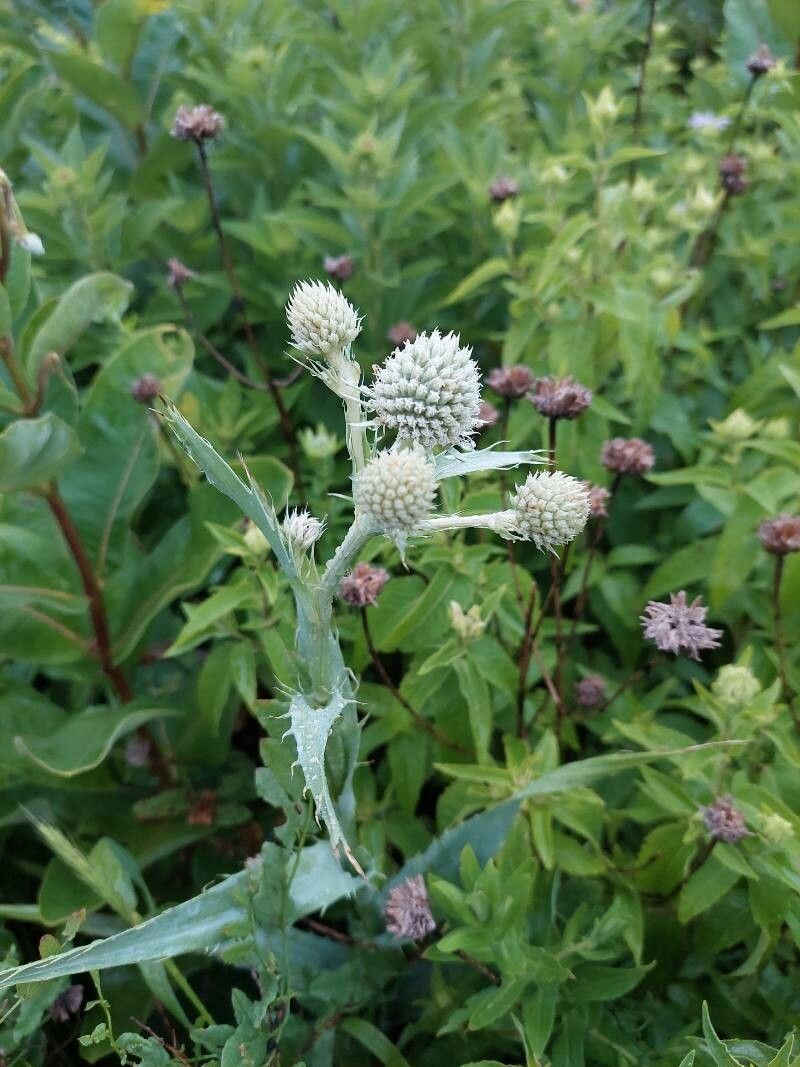
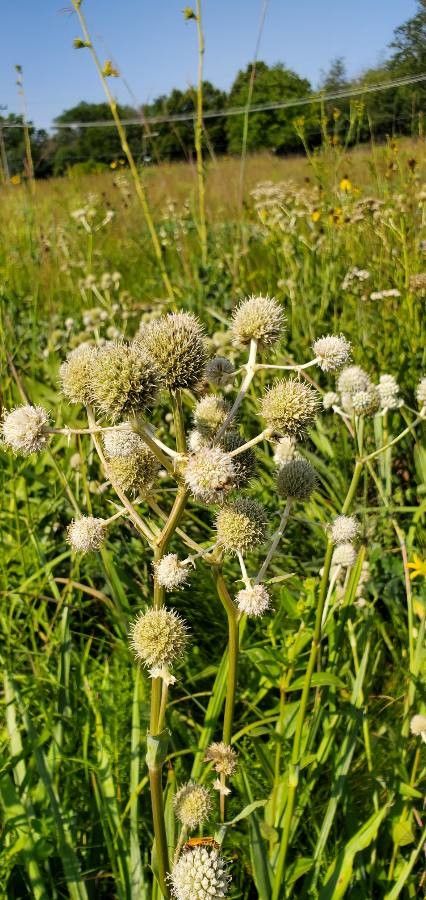
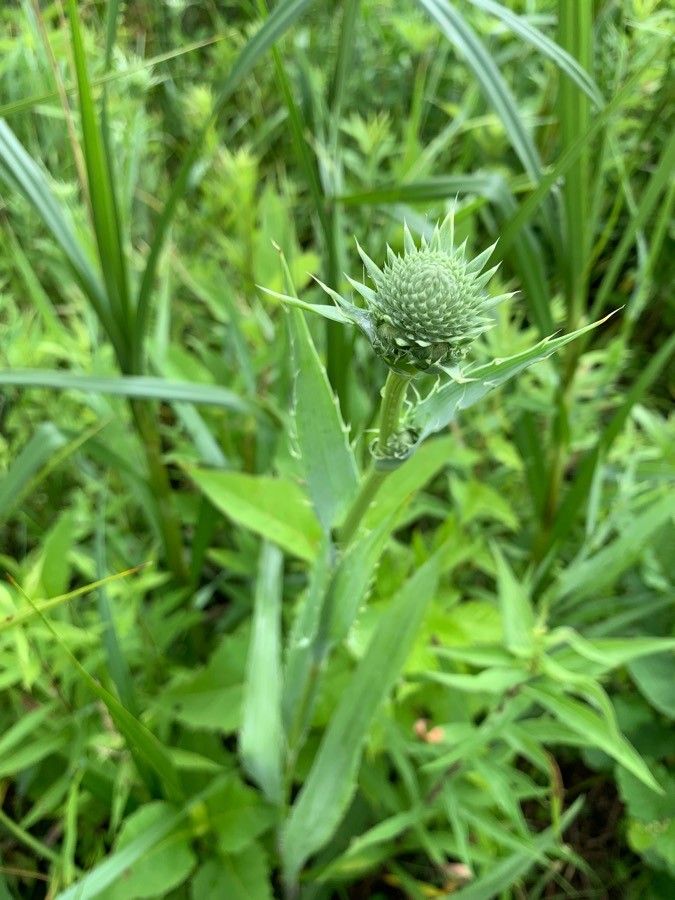
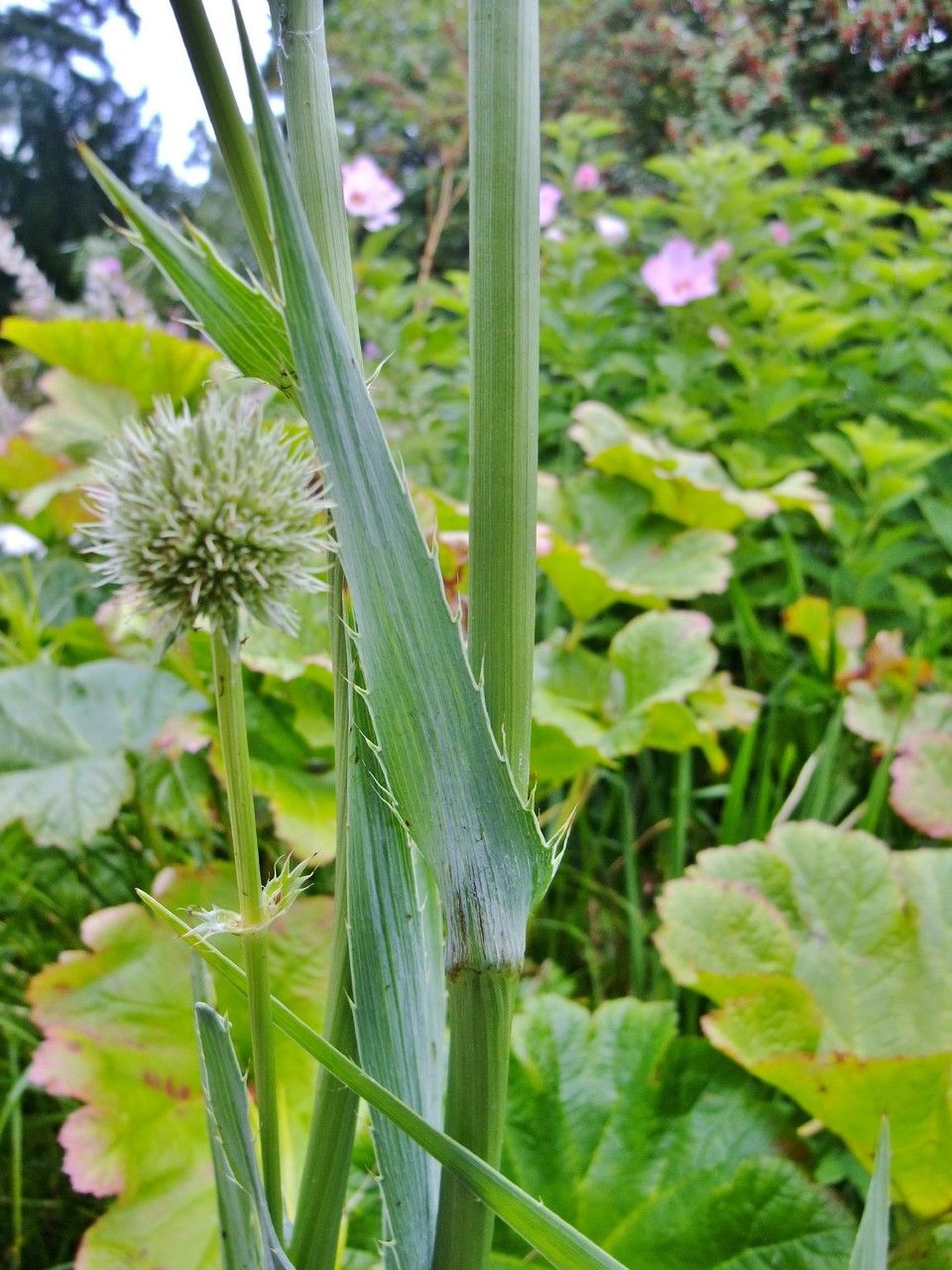
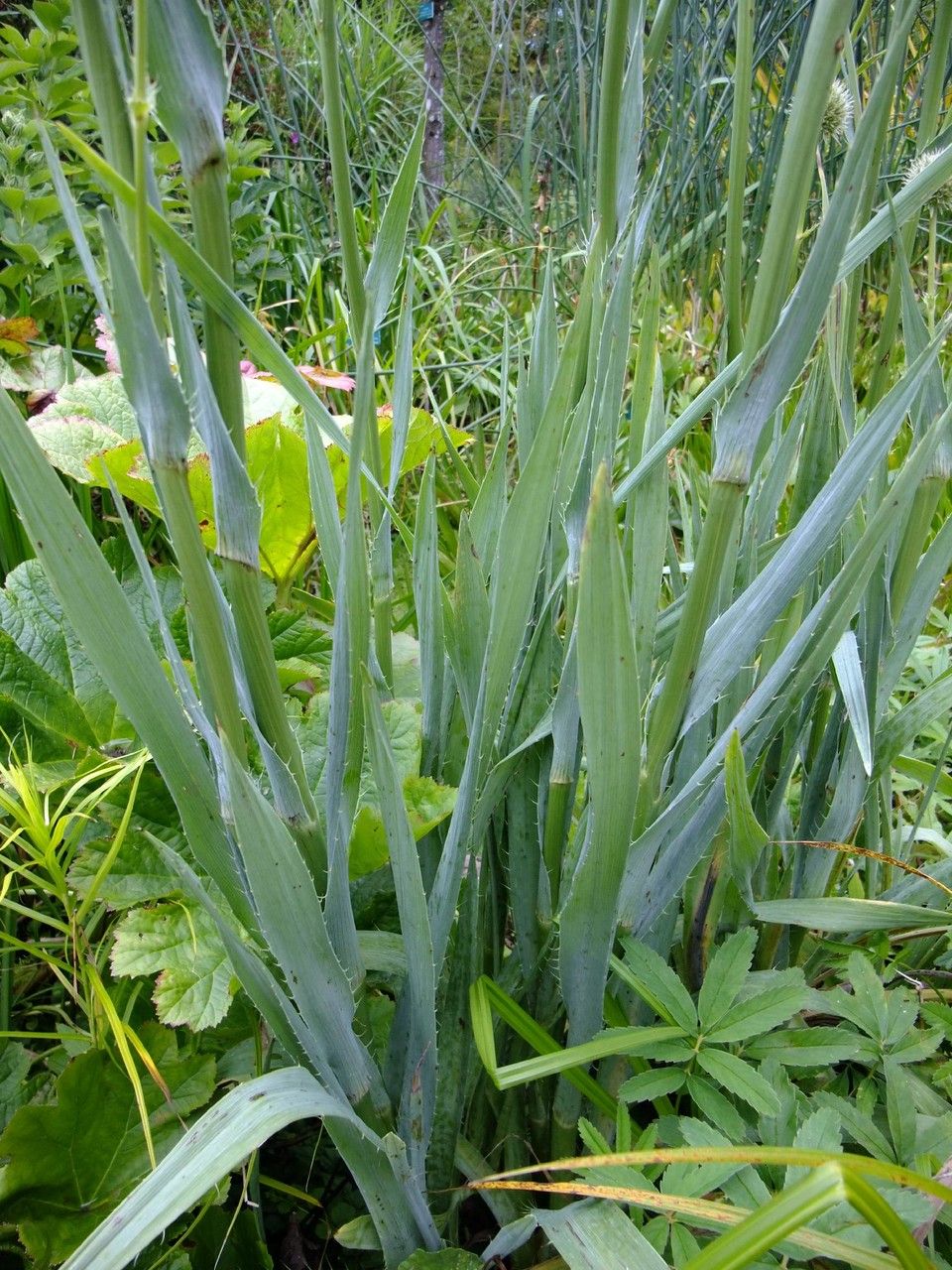
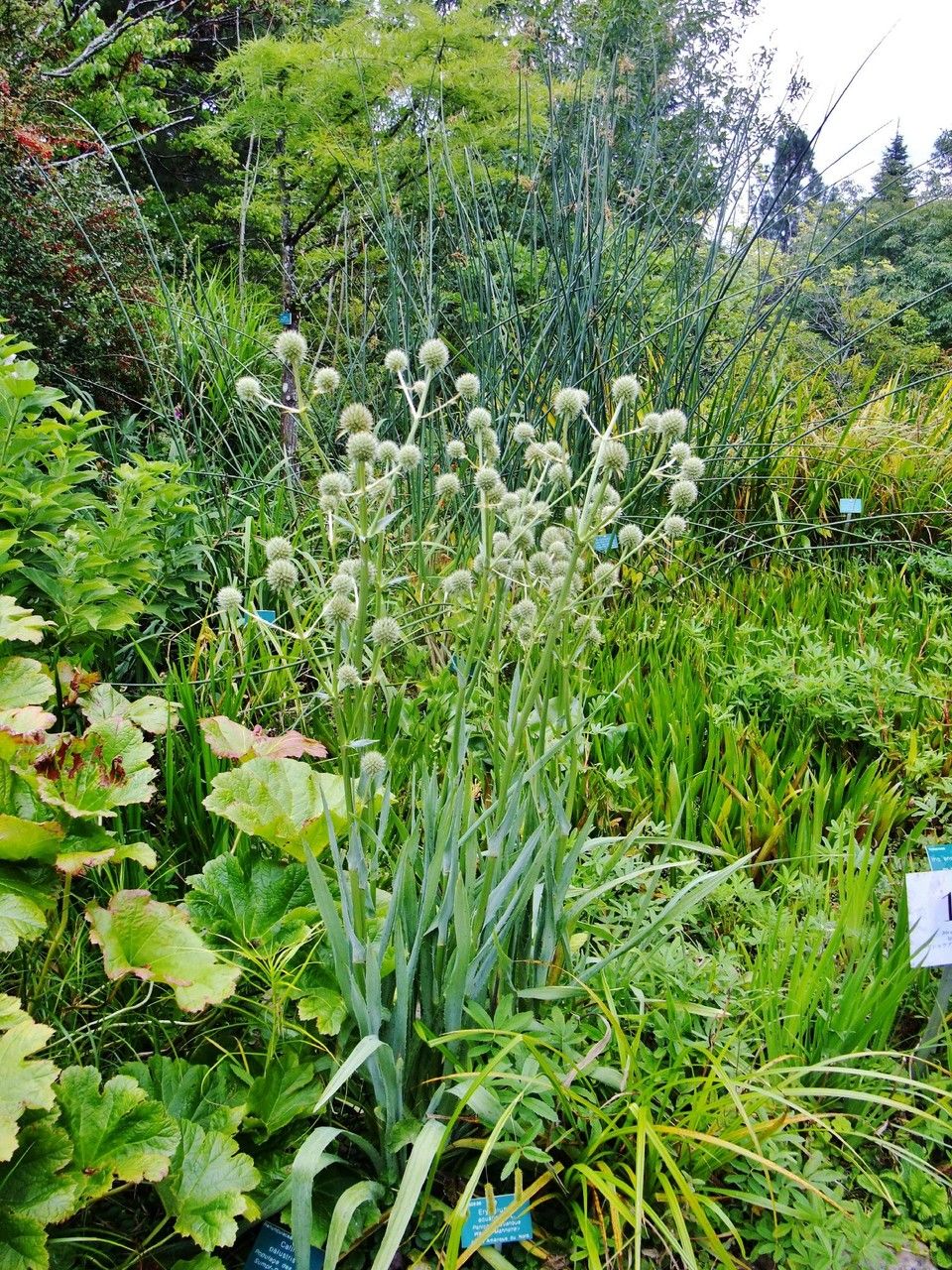
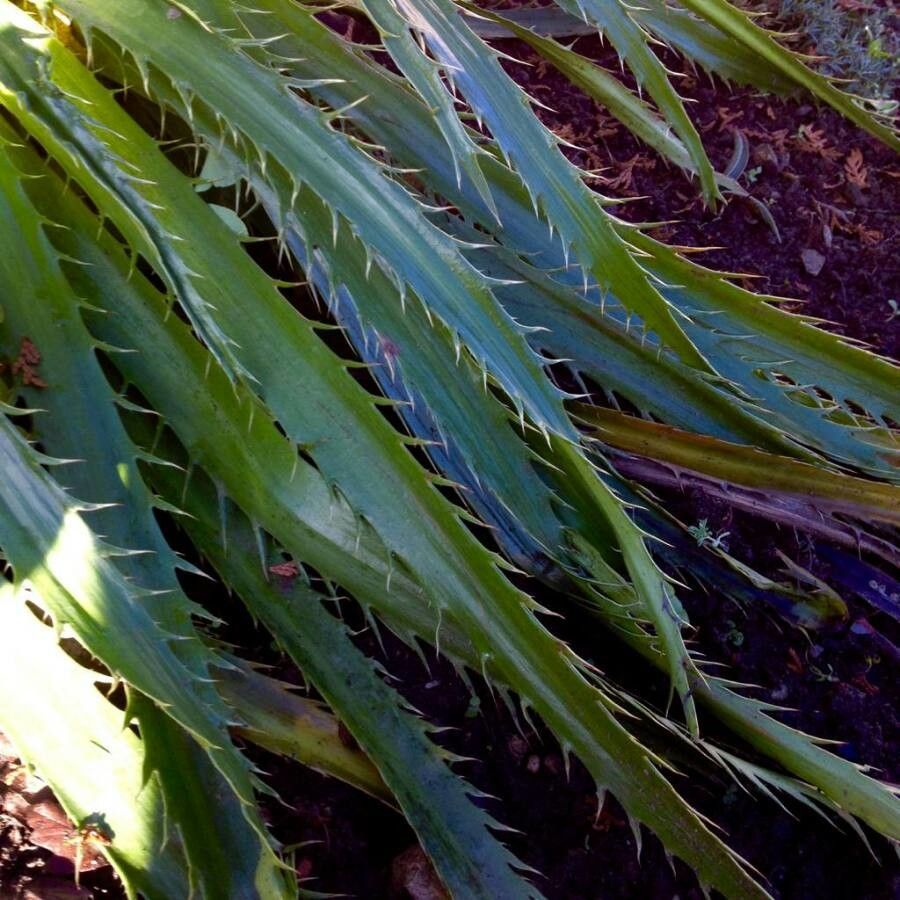
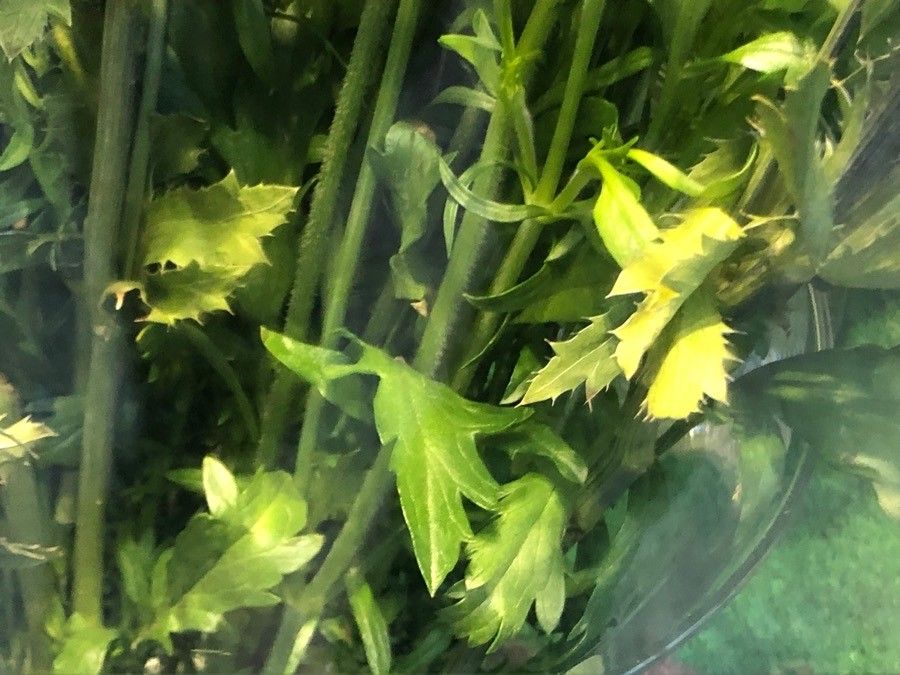
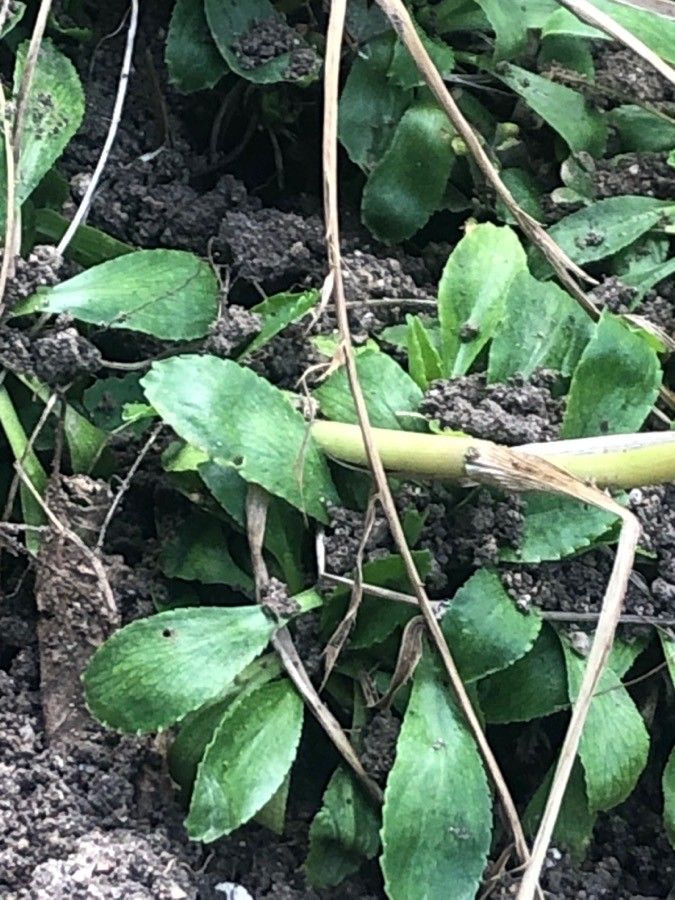
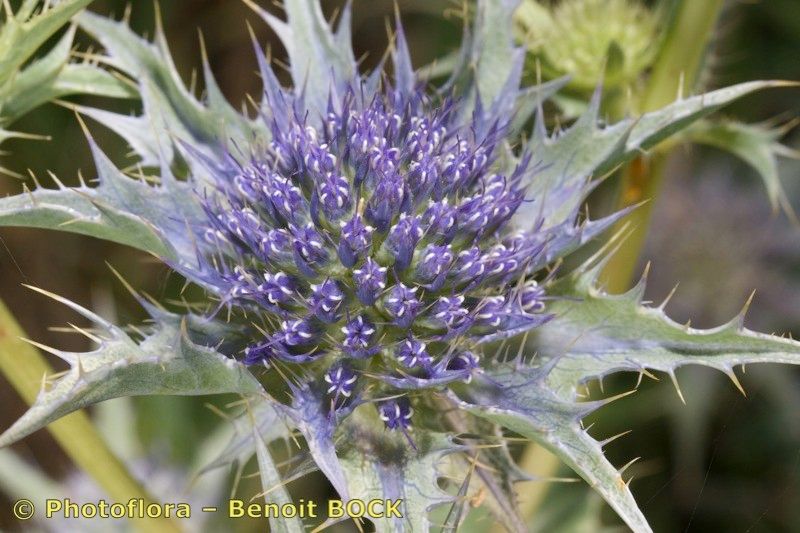
Eryngium aquaticum is a species of flowering plant in the family Apiaceae known by the common name rattlesnakemaster, marsh rattlesnake master, corn-snakeroot, bitter snakeroot, and marsh eryngo. This plant is native to eastern North America.This biennial or perennial herb grows up to 2 meters tall. The ribbed, erect stem branches toward the top. There are alternately arranged leaves which are lance-shaped and toothed on the edges. The basal leaves may be up to 90 centimeters long by 9 wide. The inflorescence contains white to blue flower heads with spiny, blue-tinged bracts.In the wild this plant grows in wet soils, such as those by bogs, marshes, and ditches. It tolerates saturated soils and periodic flooding.This plant had a number of medicinal uses for Native American groups. The Cherokee people used it for nausea. The Choctaw people used it as a remedy for snakebite and gonorrhea, and the Delaware people used it for intestinal worms. Many groups made it into tea to treat gastrointestinal complaints. The Koasati attributed magical powers to the plant.This plant is used in flower arranging and as an ornamental garden plant. However, most plants sold under the name E. aquaticum are actually specimens of Eryngium yuccifolium.
Water eryngo is fairly disease-resistant and typically not easily affected by illnesses. Nevertheless, it can be vulnerable to pests and diseases present in its environment. When infections do occur, they are generally mild. Regarding care, it requires a moderate level of attention. Regular pruning is necessary to preserve its appearance and encourage healthy growth. Fertilizing can also aid in enhancing flowering. This plant is a good choice for anyone with an outdoor area, such as a garden or patio, and does not demand extensive gardening experience. It may need extra care if cultivated indoors.
How to keep Eryngium Aquaticum.
Light
Water eryngo is found in habitats that receive plenty of sunlight, for example the shallow margins of ponds and lakes. It prefers full sun but can also tolerate partial sun.
Water
Water eryngo, a native of wetlands, thrives in humid environments. It requires consistent watering once a week and adapts well to different soil types, as long as they remain moist. This herbaceous perennial is ideal for container gardening, striking a balance between drought tolerance and the need for ample moisture.
Temperature
Water eryngo can tolerate a wide range of temperatures, but its distribution may still be restricted by various combinations of moisture and heat. It performs best in warm summer climates with sufficient rainfall or supplemental watering. Extended periods of cloudy, rainy weather or prolonged high temperatures can raise the chance of Water eryngo dying. In winter, adequate protection from cold can boost the plant's survival rate.
Pruning
Water eryngo flourishes in wet, marshy environments, featuring distinctive spiky blue flowers. To maintain its health and appearance, it's best to prune the plant from early to late spring. This helps remove dead stems and thin out overcrowded areas, improving air circulation and sunlight exposure. As a result, the plant grows more robustly, maintains an attractive shape, and is less likely to become invasive, promoting a healthier and more vibrant appearance.
Botanical profile.
- Plant Type
- Herb
- Life Cycle
- Biennial
- Genus
- Eryngium
- Family
- Apiaceae
- Hardiness Zone
- 5-9
- Mature Height
- 0.3 m to 1.22 m
- Mature Spread
- 0.91 m to 1.22 m
- Leaf Color
- Dark Green
- Leaf Type
- Semi-evergreen
- Flower Size
- 1.02 cm to 2.03 cm
- Bloom Time
- Summer
- Planting Time
- Spring, Summer
- Harvest Time
- Late summer, Early fall, Mid fall
Other names.