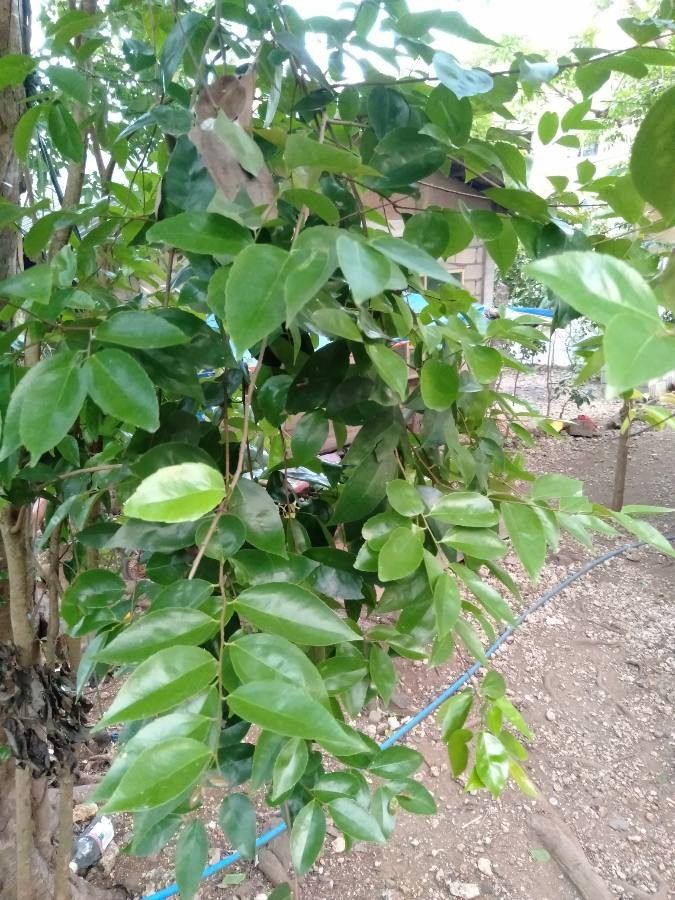
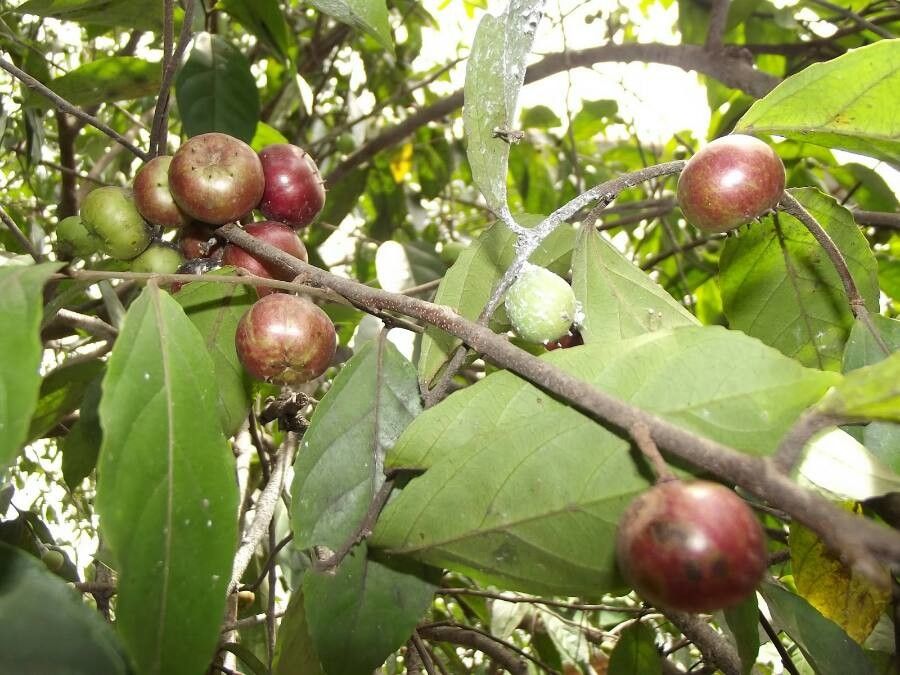
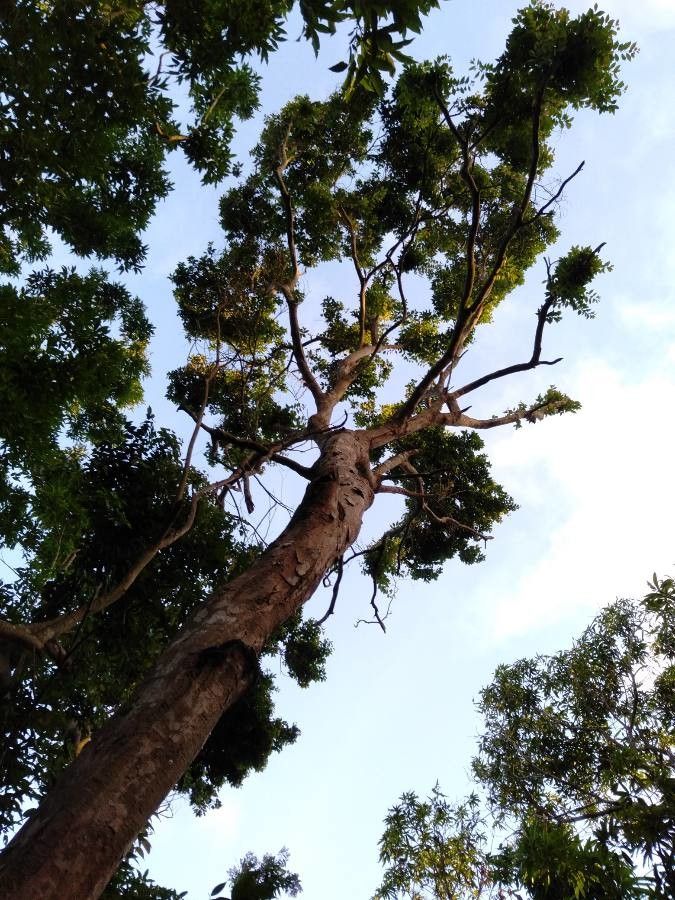
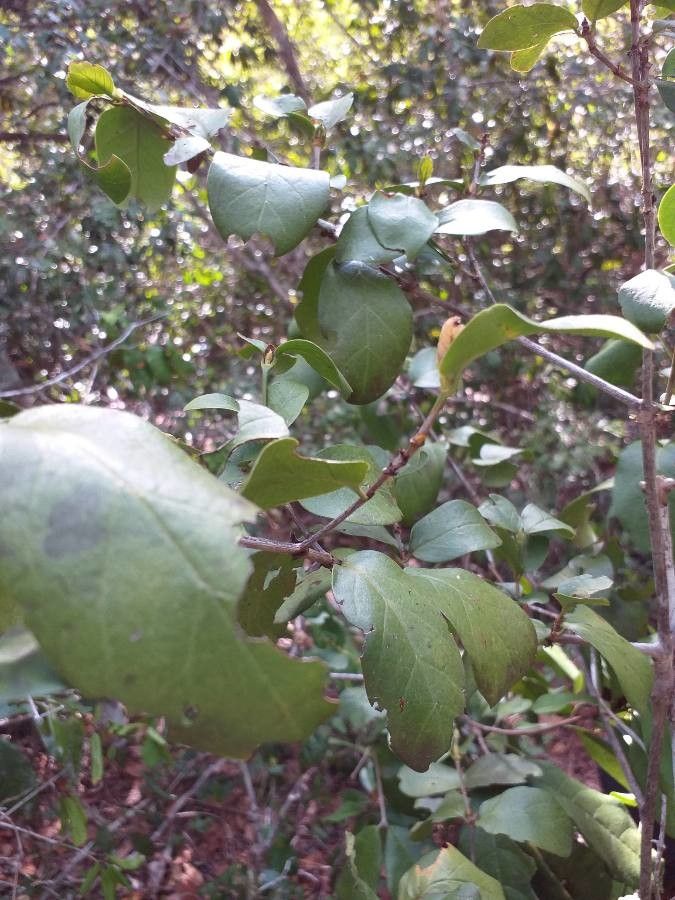
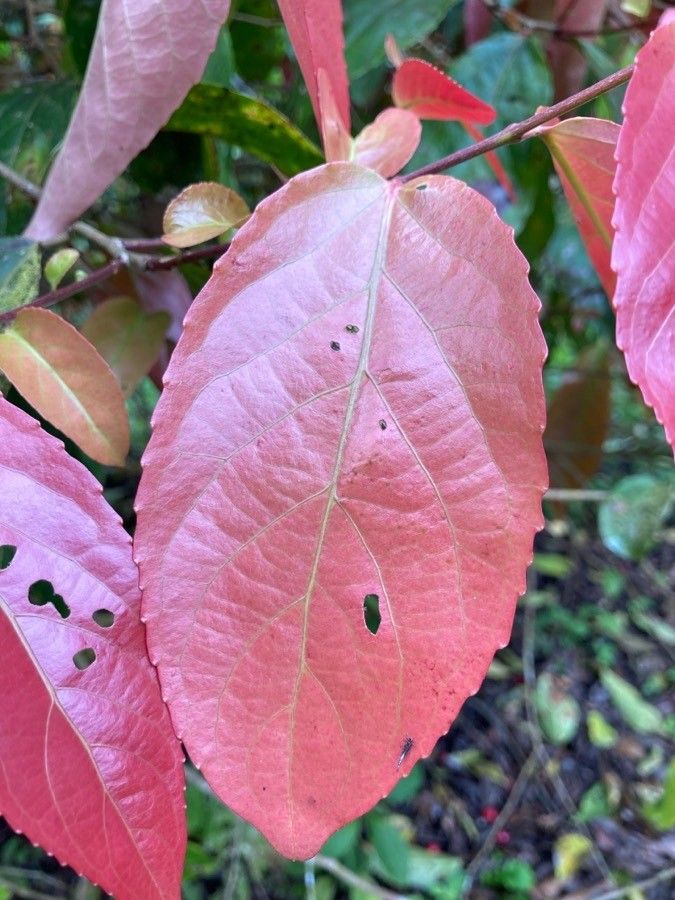
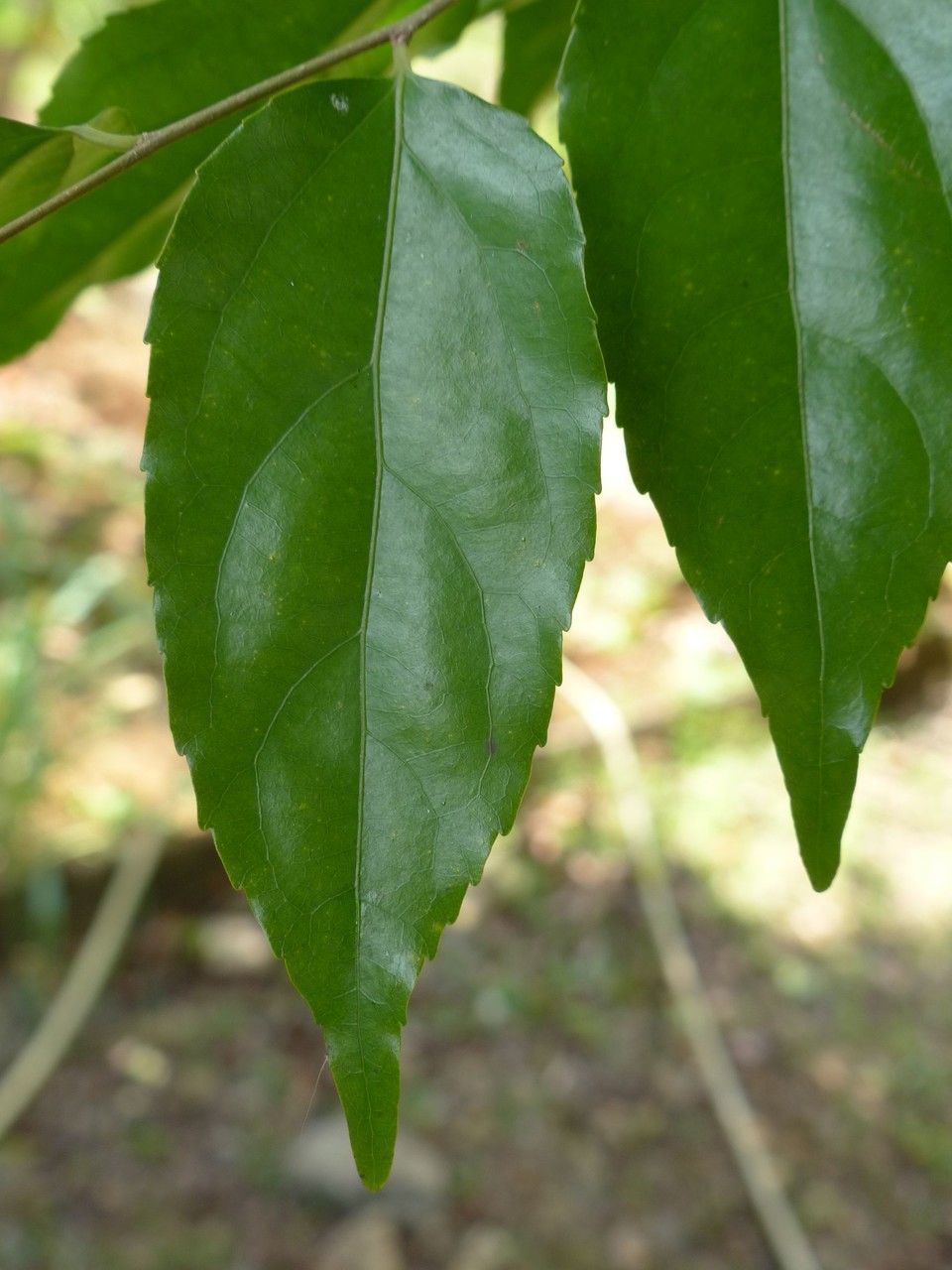
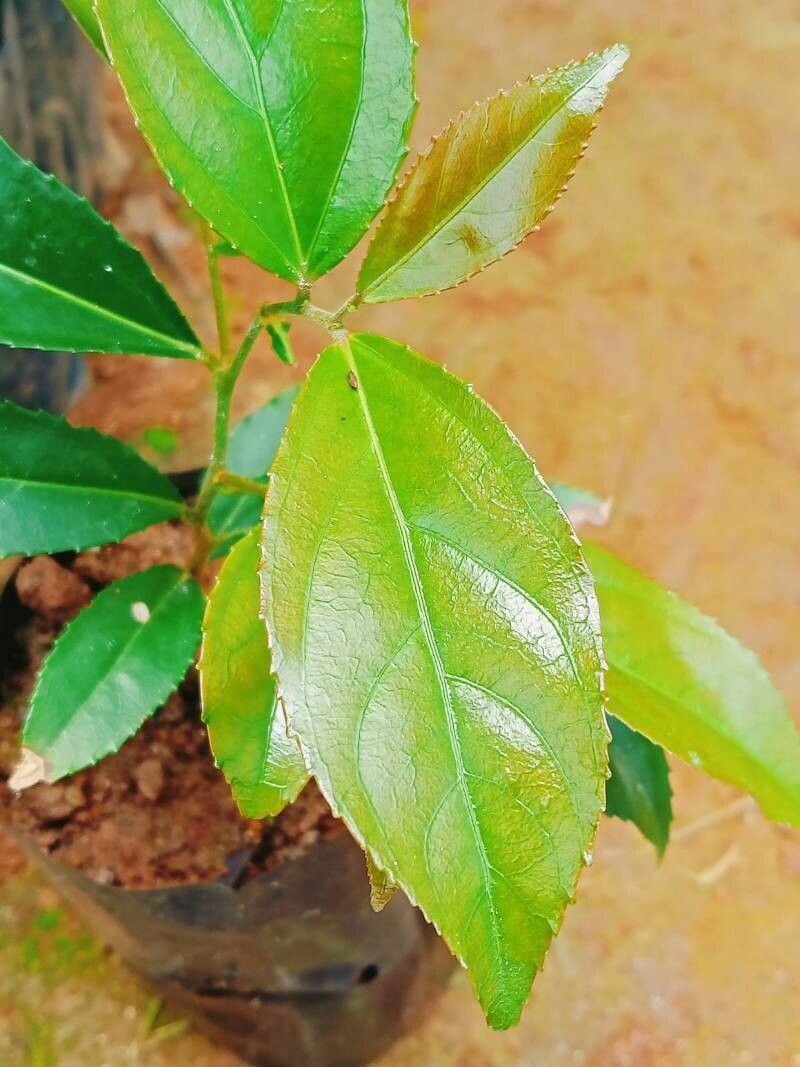
Flacourtia rukam is a species of flowering plant in the family Salicaceae. It is native to Island Southeast Asia and Melanesia, but has spread into Mainland Southeast Asia, India, and Polynesia. It is also cultivated for its edible fruit. Common names include rukam, governor's plum, Indian plum, and Indian prune.This species is a tree growing 5 to 15 meters tall. The trunk is lined with thorns up to 10 centimeters long; some cultivated varieties lack thorns. New leaves are red to brown in color. Mature leaves are somewhat oval in shape with toothed edges and up to 16 centimeters long by 7 wide. Racemes of yellow-green male and female flowers occur in the leaf axils. The rounded fruit is about 2 centimeters long and is green, red, or purple in color.
Rukam is disease-resistant and is usually unlikely to develop illnesses. As for care, this plant is fairly low-maintenance. When grown outdoors it needs only minimal watering, and larger plants typically do not require pruning. Smaller plants, however, should be pruned after they finish blooming. Rukamt is a good choice for anyone with an outdoor area, like a garden or a deck, and it does not demand much experience in plant care.
How to keep Flacourtia Rukam.
Light
Rukam needs abundant sunlight and grows best when placed where it receives full sun throughout the day. At various growth stages it can tolerate conditions with lower sun intensity. However, because it comes from an environment that thrives on high light levels, overcast or shady conditions can impede its healthy development. In low-light situations it may become stunted or even die.
Water
Rukam thrives in high humidity and consistently moist soil, so it needs to be watered every two weeks. It prefers well-draining soil to prevent root rot, especially during heavy rain, which reflects its tropical origins. Typically grown outdoors, Rukam requires a balance between adequate hydration and effective drainage.
Temperature
Rukam does well in its native habitat where temperatures range from 68 to 95 °F (20 to 35 ℃). The plant favors warmth and may require adjustments for seasonal temperature changes, particularly in cooler climates.
Fertilizer
Use organic fertilizers (for example, fish emulsion or compost) instead of chemical fertilizers for Rukam. Supply young plants with higher levels of nitrogen and phosphorus in spring. Work compost or fertilizer into the soil before or immediately after planting. For mature plants, apply a balanced fertilizer or one aimed at the specific deficiency in spring. Nutrient deficiency results in small leaves, short branches, yellow or bronze foliage, acidic fruits, premature fruit drop, and fruit splitting.
Pruning
The Rukam plant is characterized by dense growth and spiny branches. To promote vigorous growth in the spring, it is best to prune the plant in late winter. During pruning, remove any dead or overcrowded branches to improve air circulation. Be sure to use clean, sharp tools for accurate cuts, and avoid heavy pruning when the plant is actively growing to minimize stress. By following these practices, you can ensure the plant's optimal health.
Botanical profile.
- Plant Type
- Tree
- Life Cycle
- Perennial
- Genus
- Flacourtia
- Family
- Salicaceae
- Hardiness Zone
- 10
- Mature Height
- 4.88 m to 14.94 m
- Mature Spread
- 3.05 m to 6.1 m
- Leaf Color
- Dark Green, Forest Green
- Leaf Type
- Semi-evergreen
- Flower Color
- White
- Flower Size
- 0.51 cm to 1.02 cm
- Bloom Time
- Late spring, Early summer, Mid summer
- Planting Time
- Spring, Summer, Autumn
- Harvest Time
- Late summer, Early fall, Mid fall
- Native Area
- Malaysia, Indonesia, Vietnam, Philippines, Singapore, Laos, Brunei, Thailand, China
Other names.
Reader questions.
What are the sunlight requirements for Rukam?
Rukam requires full sunlight for optimal growth, which means it thrives best in locations that receive more than 6 hours of direct sunlight per day. It can also tolerate partial sun conditions, where sunlight is present for about 3-6 hours. However, it's essential to watch how sunlight moves through your garden to ensure plants get a balance of light and shade, as overcast or shady conditions can hinder healthy growth. In its natural environment, Rukam flourishes under substantial luminosity, and insufficient light may lead to stunted growth or even the death of the plant.
What is the ideal temperature range for growing Rukam?
Rukam flourishes in its native climate with temperatures ranging from 68°F to 95°F (20°C to 35°C). It is a heat-loving plant that thrives in warm conditions. To foster its growth, especially in cooler climates, ensure the plant is adjusted to seasonal temperature variations. During winter, it's advised to keep the temperature above 20°C and ensure that it does not drop to 5°C or below, as such cold temperatures can severely harm the plant.
How important is artificial lighting for Rukam, and how can it be optimized?
For indoor Rukam plants or during less sunny seasons like winter, artificial lighting becomes crucial for maintaining optimal growth. When natural sunlight is insufficient, artificial lights provide a vital solution. LED lights are recommended for their ability to mimic the specific wavelengths of light that plants need. Full sun plants require 30-50W/sq ft of artificial light, while partial sun plants need 20-30W/sq ft. The light source should be placed 12-36 inches above the plant to mimic natural sunlight and kept on for 8-12 hours per day to simulate the length of natural daylight the plant would receive outdoors.
How should Rukam be cared for in cold temperatures?
In the face of cold temperatures, which Rukam does not tolerate well, it is crucial to take measures to protect the plant. If temperatures drop below 1°C, the leaves may discolor, becoming lighter before turning brown or black after frost damage, leading to wilting and drooping. To mitigate frost damage, affected parts should be trimmed off, and the plant should be moved indoors to a warmer spot, preferably near a south-facing window for ample sunlight. Moreover, avoid placing Rukam near heaters or air conditioning vents to prevent air dryness.
What are the common symptoms of inadequate light for Rukam?
Rukam plants showing inadequate light symptoms may exhibit smaller new leaves, leggy or sparse growth, faster leaf drop, slower or no new growth, lighter-colored new leaves, chlorosis, sunscald, leaf curling, wilting, and leaf scorching. These symptoms indicate that the plant is not receiving enough light, suffering from excessive light, or experiencing water loss and damage due to overexposure to sunlight.
What steps should be taken if Rukam experiences high temperatures?
During the summer, Rukam should be kept below 35°C to avoid heat stress. Temperatures above 41°C can cause leaf discoloration and increase susceptibility to sunburn. If the plant suffers from high temperatures, trim the sunburned and dried parts away and relocate it to a shaded area, away from direct midday and afternoon sun. Additionally, maintain soil moisture by watering the plant in the morning and evening.
What solutions can enhance the growth of Rukam in insufficient light conditions?
To combat insufficient light conditions, gradually move Rukam plants to a sunnier spot, increasing sunlight exposure each week until they receive at least 6 hours of direct sunlight daily. For indoor plants or those that are large and not easily movable, consider supplementing with artificial light, ensuring at least 8 hours of light daily. Outdoors, acclimate plants to brighter conditions and minimize light obstructions by pruning trees if necessary. For ground planting, choose a location with ample sunlight and good drainage, and consider moving smaller plants during their dormant period to avoid shock.
What is the botanical name of Rukam?
The botanical name of Rukam is Flacourtia rukam.