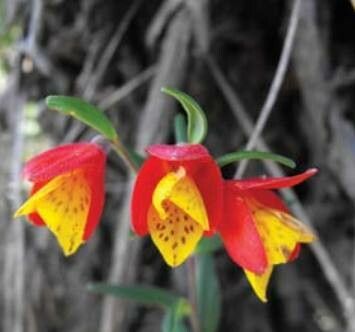
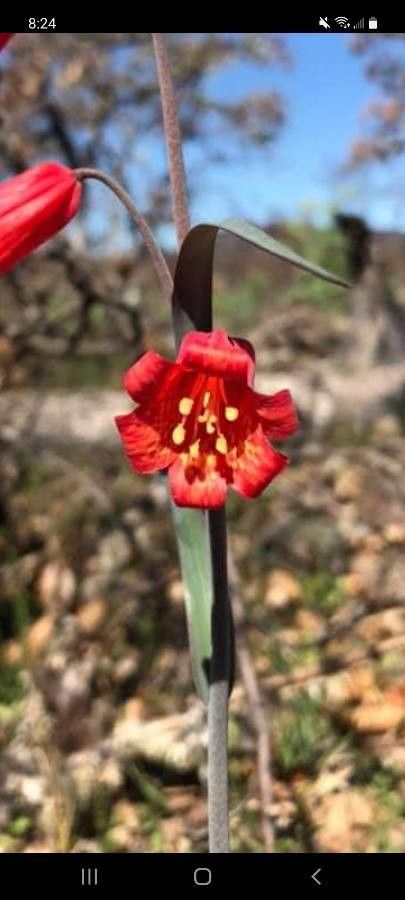
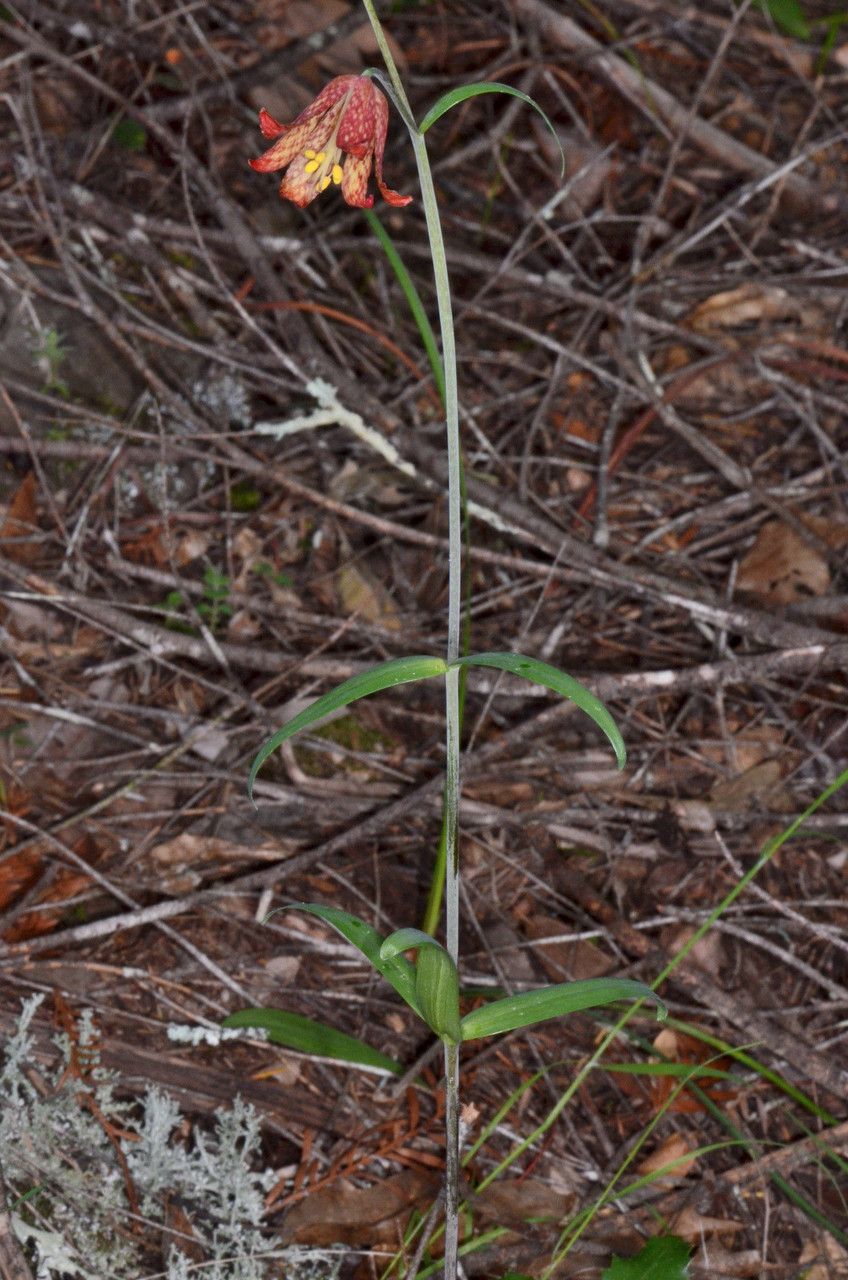
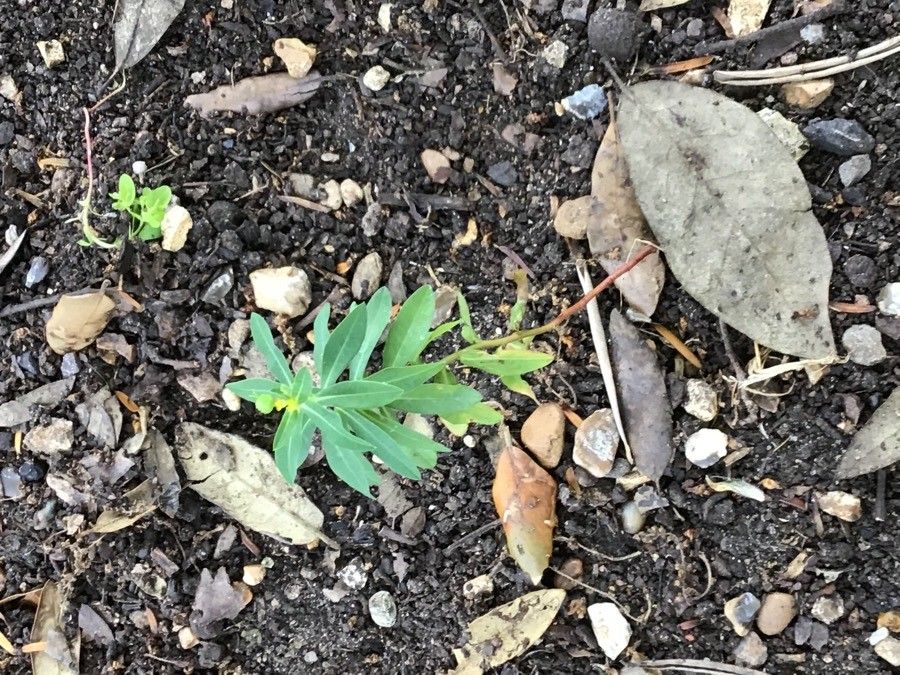
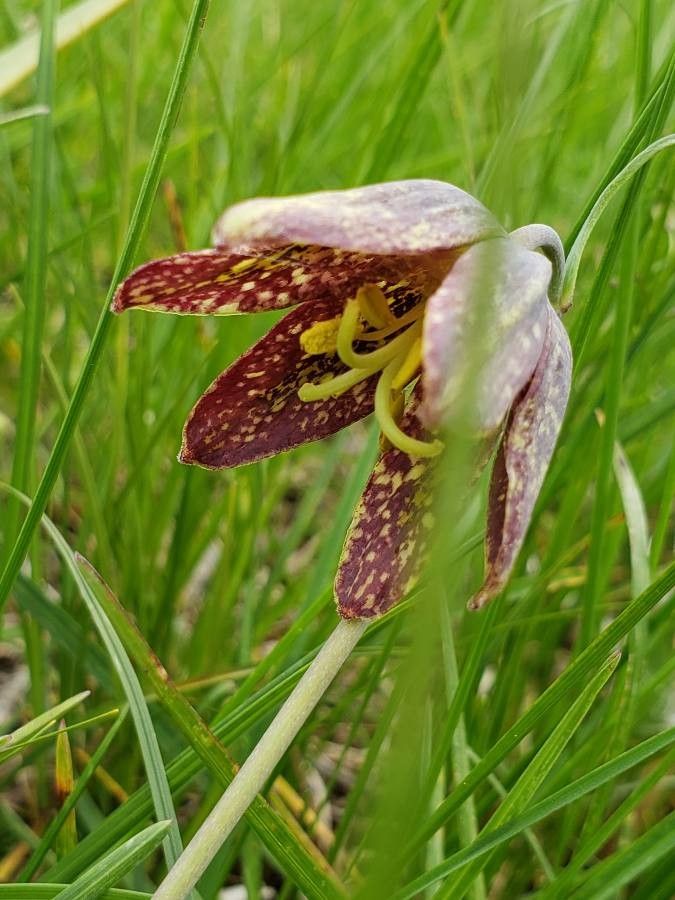
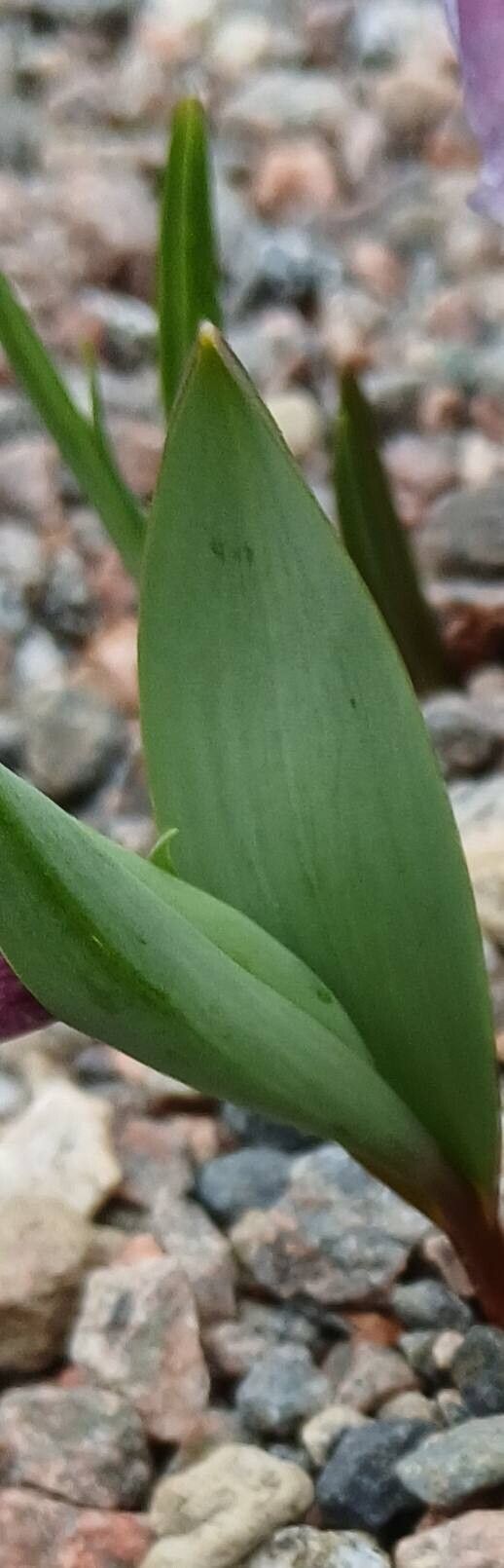
Fritillaria recurva, the scarlet fritillary, is a North American bulb-forming herbaceous perennial plant in the lily family Liliaceae. It is native to the western United States, from southwest Oregon down to northern California where it grows in the Klamath Mountains, Northern Coast Ranges, Cascade Range, and Sierra Nevada. Most of the known Californian locations are in the northern half of the state, as far south as Solano and El Dorado Counties, but there are isolated populations in Tulare and Mariposa Counties. The species has also been reported from Douglas and Washoe Counties in Nevada. It grows in dry, open woodlands and chaparral at 300–2,200 metres (980–7,220 ft), and it blooms in spring from February to July.
Scarlet fritillary has strong disease resistance and is typically not vulnerable to illnesses. However, it can be affected by pests and diseases present in its surroundings. Such infections are generally mild. In terms of care, this plant requires moderate upkeep. It should be pruned regularly to preserve a good appearance and support healthy growth. Applying fertilizer can also encourage flowering. Scarlet fritillary is suitable for anyone with an outdoor area, such as a garden or patio, and does not demand extensive care experience. It may need extra attention when grown indoors.
How to keep Fritillaria Recurva.
Light
Scarlet fritillary requires a large amount of sunlight to grow and develop. It flourishes where sunlight is abundant and can tolerate slight shade. However, too much shade can harm its health. In the wild it is found in fully exposed areas rather than under canopies or in shadows. Insufficient light may result in poor growth.
Water
Scarlet fritillary, native to rocky slopes, thrives in well-drained soils and requires consistent moisture, although it can tolerate short dry spells. Water it every 1-2 weeks. Typically grown outdoors, it benefits from cooler temperatures and seasonal rainfall, which enhance its flowering phase.
Temperature
Scarlet fritillary is native to temperate regions and does best in a temperature range of 50 to 95 °F (10 to 35 ℃). It prefers milder climates and may require adjustment and protection when seasonal temperatures deviate.
Fertilizer
For the Scarlet fritillary, the primary time to apply fertilizer is in early spring when the flowers are developing. The appropriate fertilizer promotes better blooms and helps the Scarlet fritillary produce attractive flowers. Fertilizing in early spring guarantees strong flowering during the season and supplies energy for its dormant growth stages.
Pruning
The Scarlet fritillary is characterized by its nodding, scarlet flowers and benefits from pruning in early spring. Removing dead stems enhances air circulation and encourages new growth. After the plant has finished blooming, the foliage should be cut back in late spring. This practice rejuvenates the plant, helps it maintain its shape, and promotes vibrant flowering in future seasons.
Botanical profile.
- Plant Type
- Herb
- Life Cycle
- Perennial
- Genus
- Fritillaria
- Family
- Liliaceae
- Hardiness Zone
- 6-9
- Mature Height
- 91 cm
- Mature Spread
- 10 cm to 15 cm
- Leaf Color
- Green, Dark Green
- Leaf Type
- Deciduous
- Flower Color
- Yellow, Red, Orange
- Flower Size
- 1.52 cm to 3.81 cm
- Bloom Time
- Early spring, Mid spring
- Planting Time
- Spring
- Harvest Time
- Late spring, Early summer
Other names.
Reader questions.
What should I do if I give my Scarlet fritillary plant too much or too little water?
Overwatering is a common issue that can harm your Scarlet fritillary. It causes wilting, yellowing leaves, and can lead to diseases like root rot, mold, and mildew that can kill the plant. Underwatering is less common and the Scarlet fritillary is somewhat drought tolerant, but it can still happen. Signs of underwatering include brittle and brown leaves. Pay attention to signs of overwatering early on, as some diseases are irreversible if not addressed promptly. Reduce watering if you see these signs and consider using well-draining potting mix if the soil drains poorly. If you notice signs of underwatering, water more regularly until the signs improve.
Why is it important to fertilize my Scarlet fritillary?
The main structure of the Scarlet fritillary is made up of its leaves, and fertilization plays a crucial role in making sure these leaves look good and function properly. When you fertilize your Scarlet fritillary, it will not only maintain consistent color and healthy texture in its leaves but also promote the growth of new roots and maintain existing ones. This, in turn, ensures that your plant remains healthy and can effectively absorb nutrients from the soil in the long run.
What are the sunlight requirements for Scarlet fritillary?
Scarlet fritillary requires a significant amount of sunlight to grow and develop effectively. It thrives best in environments that offer full sun, receiving more than 6 hours of sunlight daily. It can also tolerate partial sun, approximately 3-6 hours of sunlight, but excessive shade may negatively impact its health, leading to poor growth. In its natural habitat, Scarlet fritillary is found in fully exposed areas rather than shaded areas like under canopies or in shadows.
What is the native climate of Scarlet Fritillary?
Scarlet Fritillary is native to temperate areas and thrives best in a temperature range of 50 to 95 °F (10 to 35 °C). It prefers milder climates and has a strong cold resistance, making it adaptable to various weather conditions without needing special frost protection measures in most cases. However, if winter temperatures are expected to fall below -25°C, it's crucial to provide cold protection by covering the plant with soil or straw to maintain moisture in the soil, preventing water scarcity during winter and early spring.
How often should I give water to my Scarlet fritillary plant?
If your Scarlet fritillary plant is in a pot, the best way to determine if it needs water is by checking the soil with your finger. If the top two to three inches of soil feel dry, it's time to water it. If you have your Scarlet fritillary planted outside in the ground, you can use the same method to check the soil. Once again, if the top few inches of soil have dried out, it's time to water. Typically, during spring and early fall, you'll need to water about once a week using this method. However, during very hot weather, you may need to water it about twice a week or more. That being said, mature and well-established Scarlet fritillary plants have an impressive ability to survive drought.
When should I fertilize my Scarlet fritillary?
If you choose to grow your Scarlet fritillary outdoors, it will start growing again in early spring. Once you see new leaves emerging, it's a good time to start fertilizing for the year. Usually, one application of fertilizer is enough for the plant to thrive. However, if you want your Scarlet fritillary to grow even more, you can fertilize it multiple times throughout the spring and early summer. In this case, you can feed it about once per month to month and a half.
What should I do if natural sunlight is insufficient for my indoor Scarlet fritillary plant?
If natural sunlight is insufficient, especially during winter or in areas with less sun exposure, using artificial lights can be a crucial solution to ensure optimal growth for your indoor Scarlet fritillary plants. LED lights are commonly recommended for their ability to be customized to the necessary light wavelengths your plants require. For full sun plants, 30-50W per square foot is recommended; for partial sun plants, 20-30W per square foot; and for full shade plants, 10-20W per square foot. Place the light source 12-36 inches above the plant and mimic natural daylight conditions by providing 8-12 hours of light per day.
How does Scarlet Fritillary react to extreme temperatures?
Scarlet Fritillary is notably cold-tolerant and ideally should be kept above 10°C during the winter, ensuring it stays above -15°C. At temperatures below -25°C, the plant may not show immediate damage but could experience reduced sprouting in spring. In contrast, during summer, it's essential to prevent the plant from being exposed to temperatures above 35°C. Exposure to temperatures above 38°C can result in sunburn, lighter-colored leaves, curling, and in severe cases, the plant wilting and drying. To mitigate these risks, it's advisable to trim away any sun-damaged parts, provide afternoon shade, and keep the soil moist with morning and evening watering.
How much water does my Scarlet fritillary butterfly need?
To best water your Scarlet fritillary, don't be afraid to give it a good amount of water. Wait until the top two to three inches of soil are dry before watering. When you do water, make sure the soil gets completely soaked. It's important to add enough water so that it drains out of the bottom of the pot. If you don't see water draining out, that means you haven't watered enough. However, be careful not to overwater and let the water accumulate in the soil, as this can harm the plant. On the other hand, if water isn't draining properly from the pot, it may be because the soil doesn't drain well. This is not good for the plant, so it's important to avoid using poorly draining soils. If the plant is outdoors, one inch of rain per week should be enough.
When should I not give fertilizer to my Scarlet fritillary?
During the late fall and winter, your Scarlet fritillary goes into a dormant phase and stops growing. So, it's best not to fertilize it during this time. However, during the spring and summer, if you choose to fertilize, reduce the amount as summer approaches because the growth rate of your Scarlet fritillary will also slow down. It's important to note that you should never fertilize it during extremely hot weather or when the soil is overly dry, as this can cause stress and potentially lead to the premature death of your Scarlet fritillary.
What are the signs of light deficiency in Scarlet fritillary?
Signs of light deficiency in Scarlet fritillary include smaller new leaves, leggy or sparse growth, faster leaf drop, slower or halted growth, lighter-colored new leaves or irregular color patterns, and chlorosis, where leaves lose their green color and turn yellow. Additionally, symptoms like sunscald, leaf curling, wilting, and leaf scorching may occur due to excessive sunlight exposure, indicating the need for a balance in light conditions.
What are the recommended care tips for Scarlet Fritillary in response to temperature-induced stress?
For Scarlet Fritillary facing low-temperature stress below -25°C, removing parts that failed to sprout in spring is recommended to promote healthier growth. In case of high-temperature stress where the plant experiences sunburn or excessive drying, it's advisable to trim away the affected parts. Relocating the plant to a shaded area or using a shade cloth can protect it from direct sunlight, particularly during the midday and afternoon. Maintaining soil moisture with regular watering sessions in the morning and evening helps mitigate temperature-induced stress, ensuring the well-being of the Scarlet Fritillary.