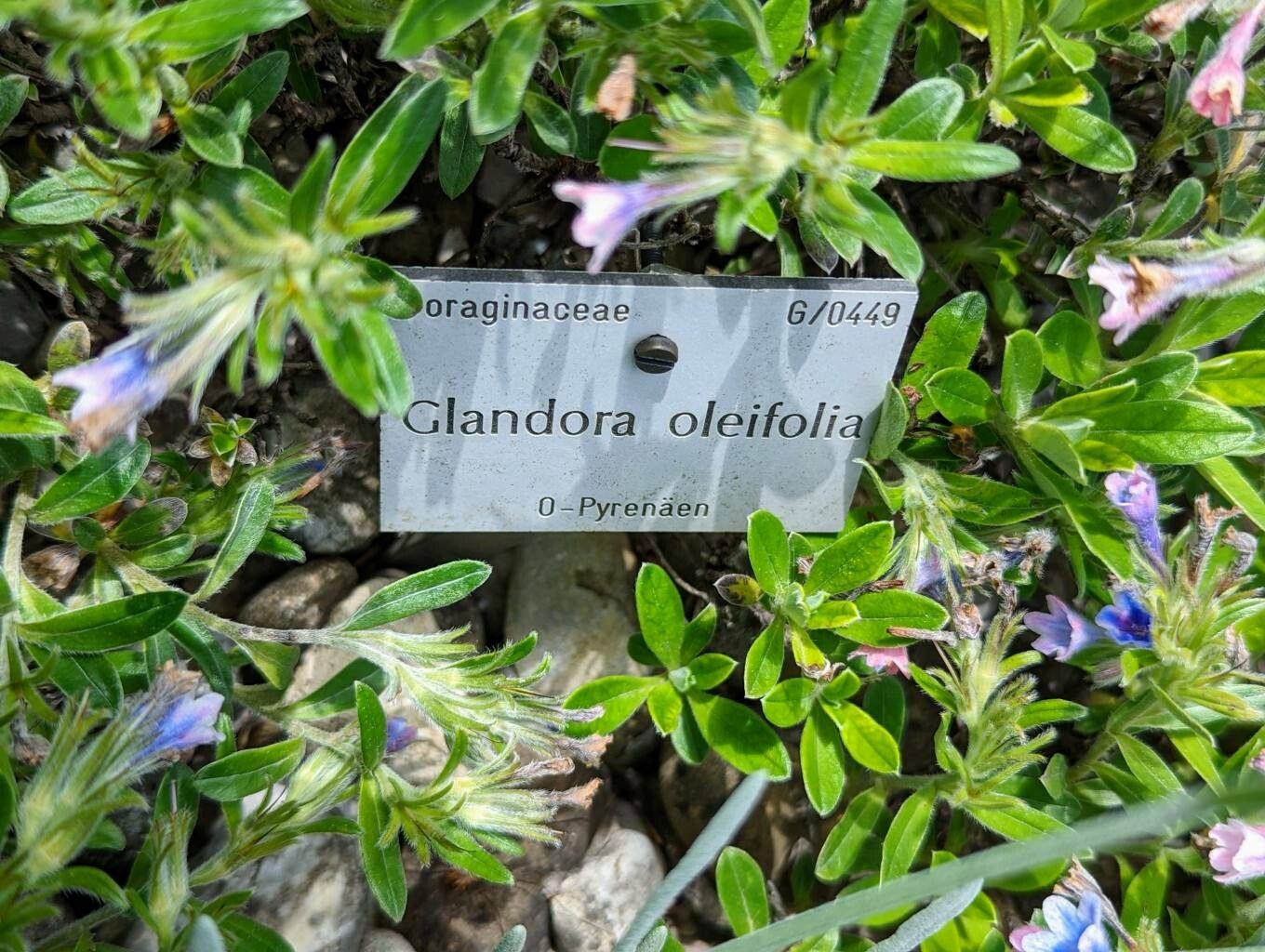
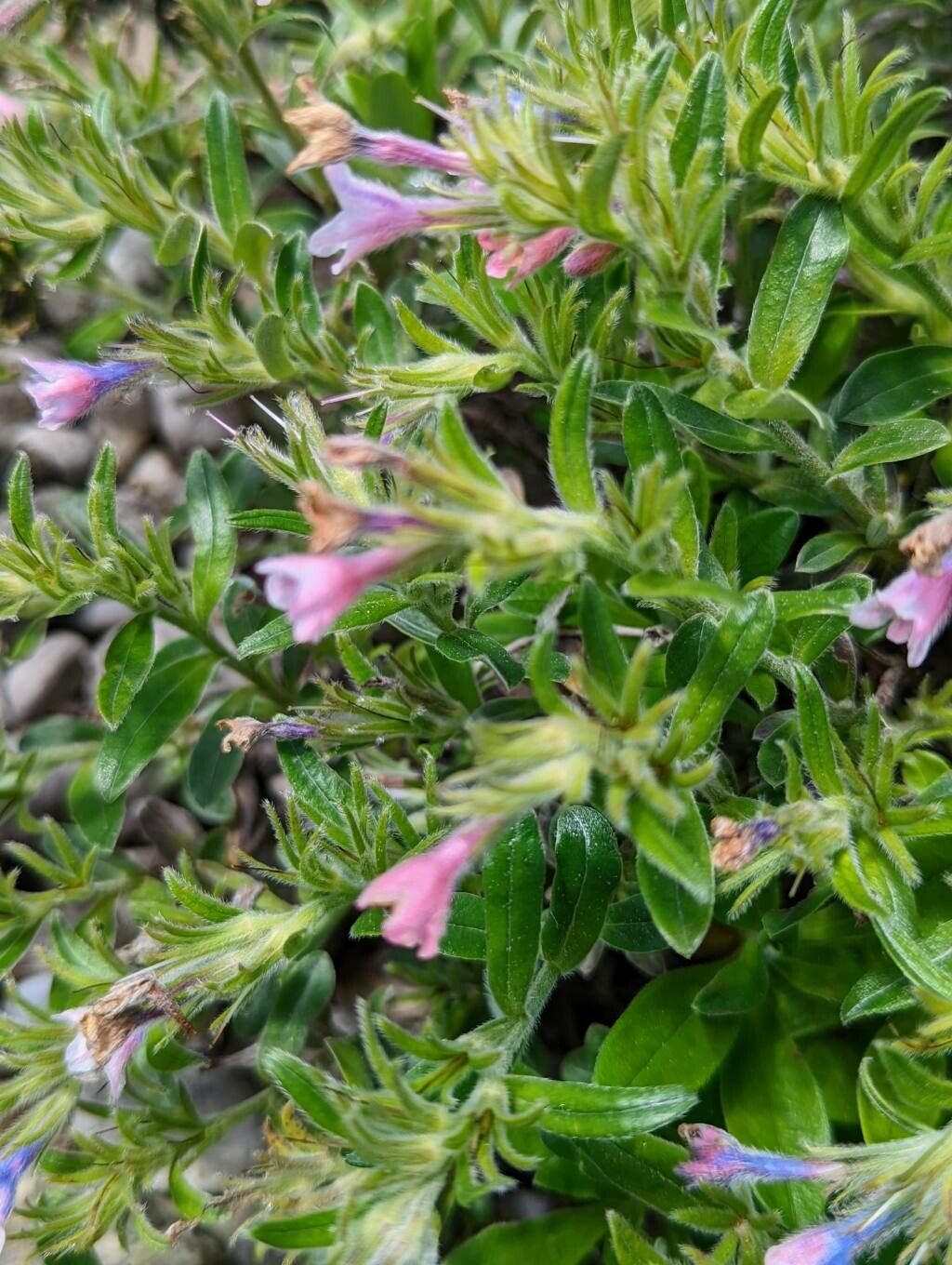
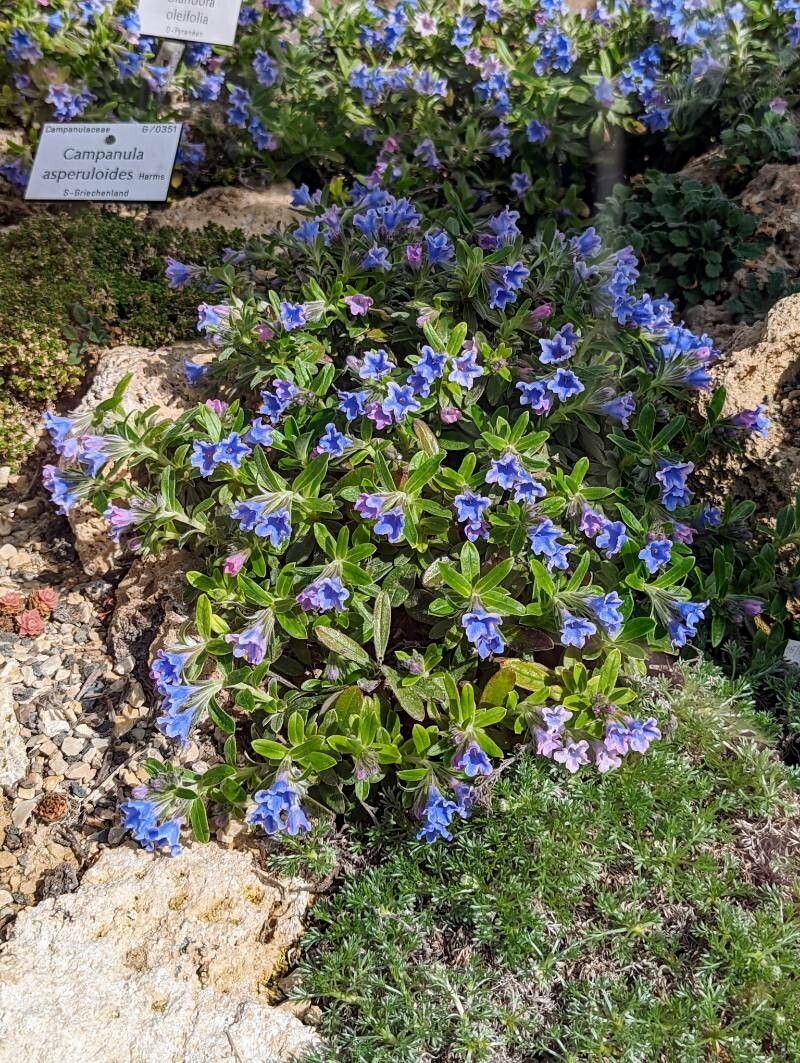
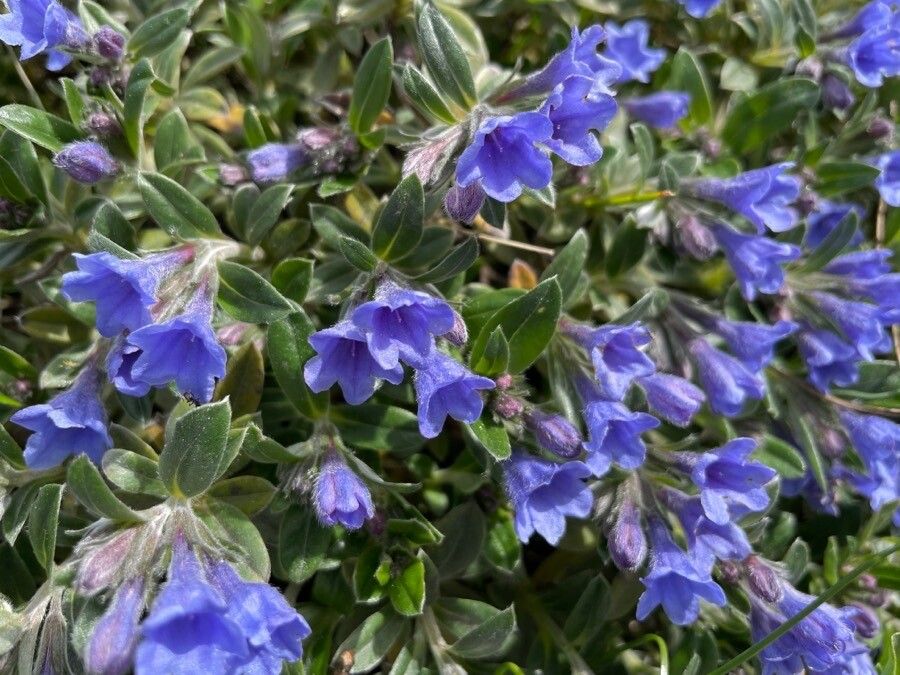
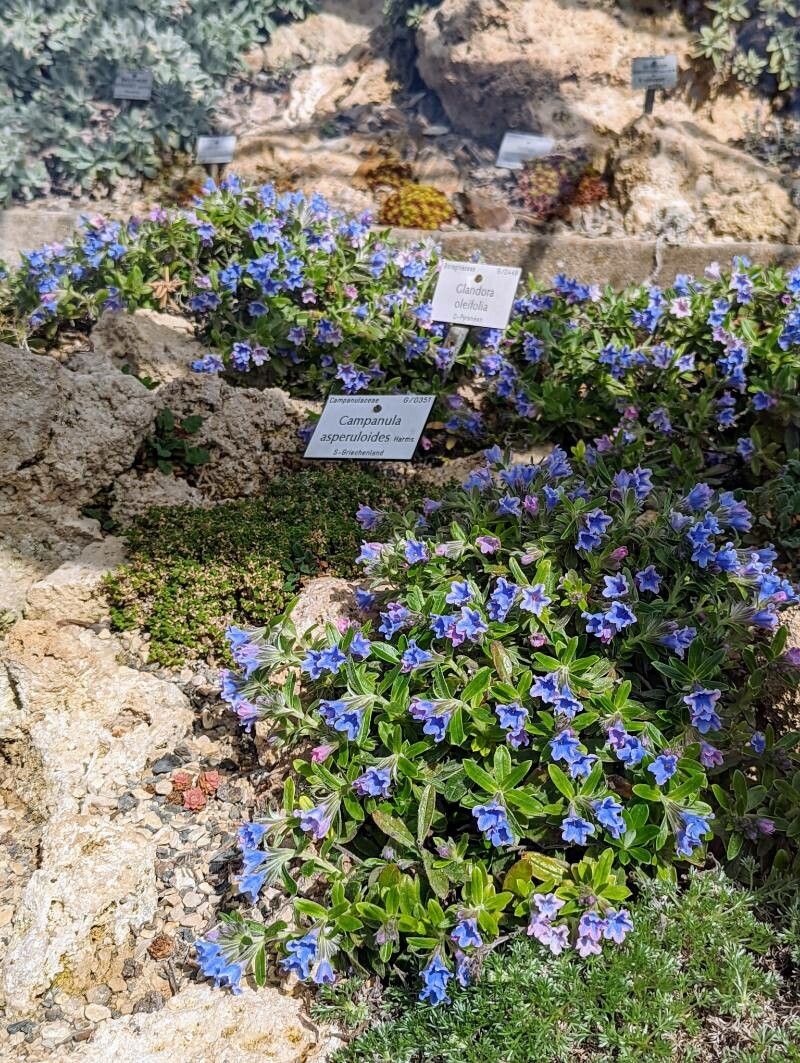
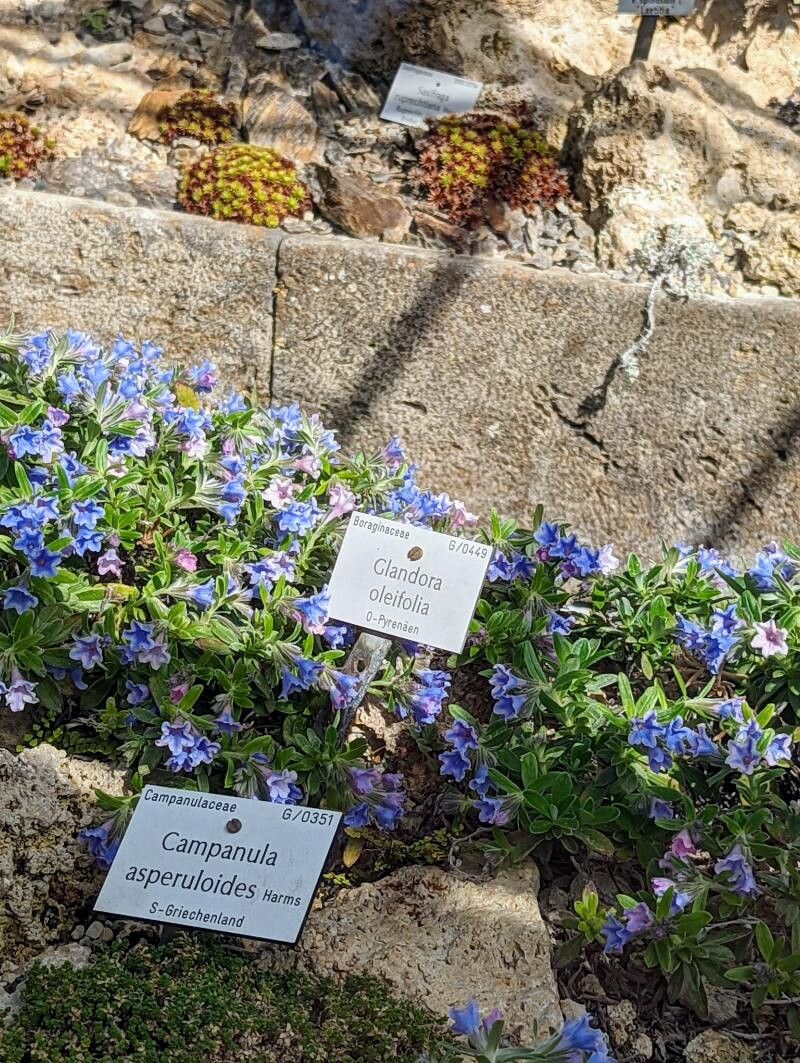
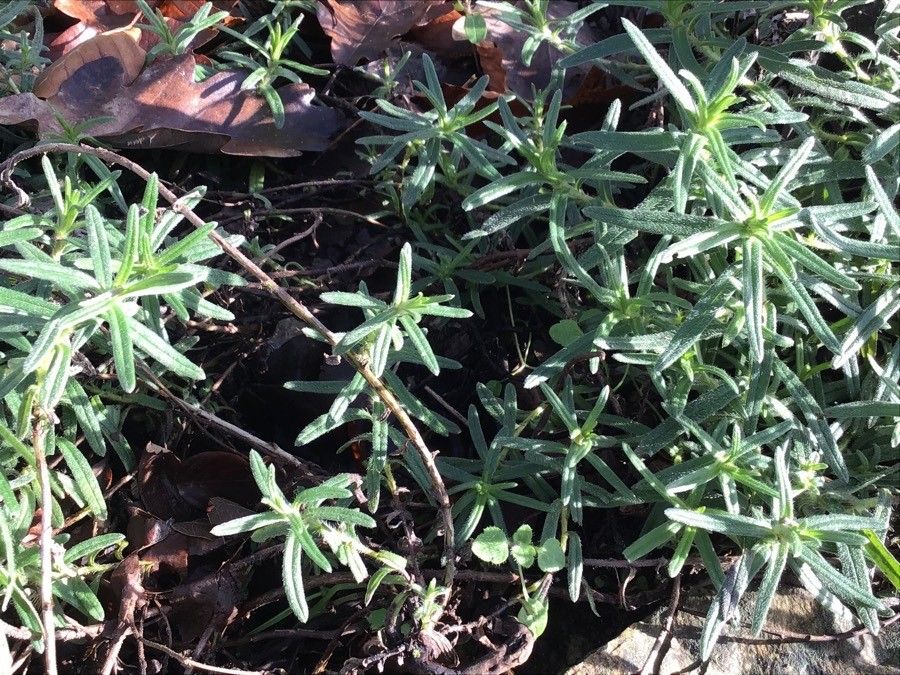
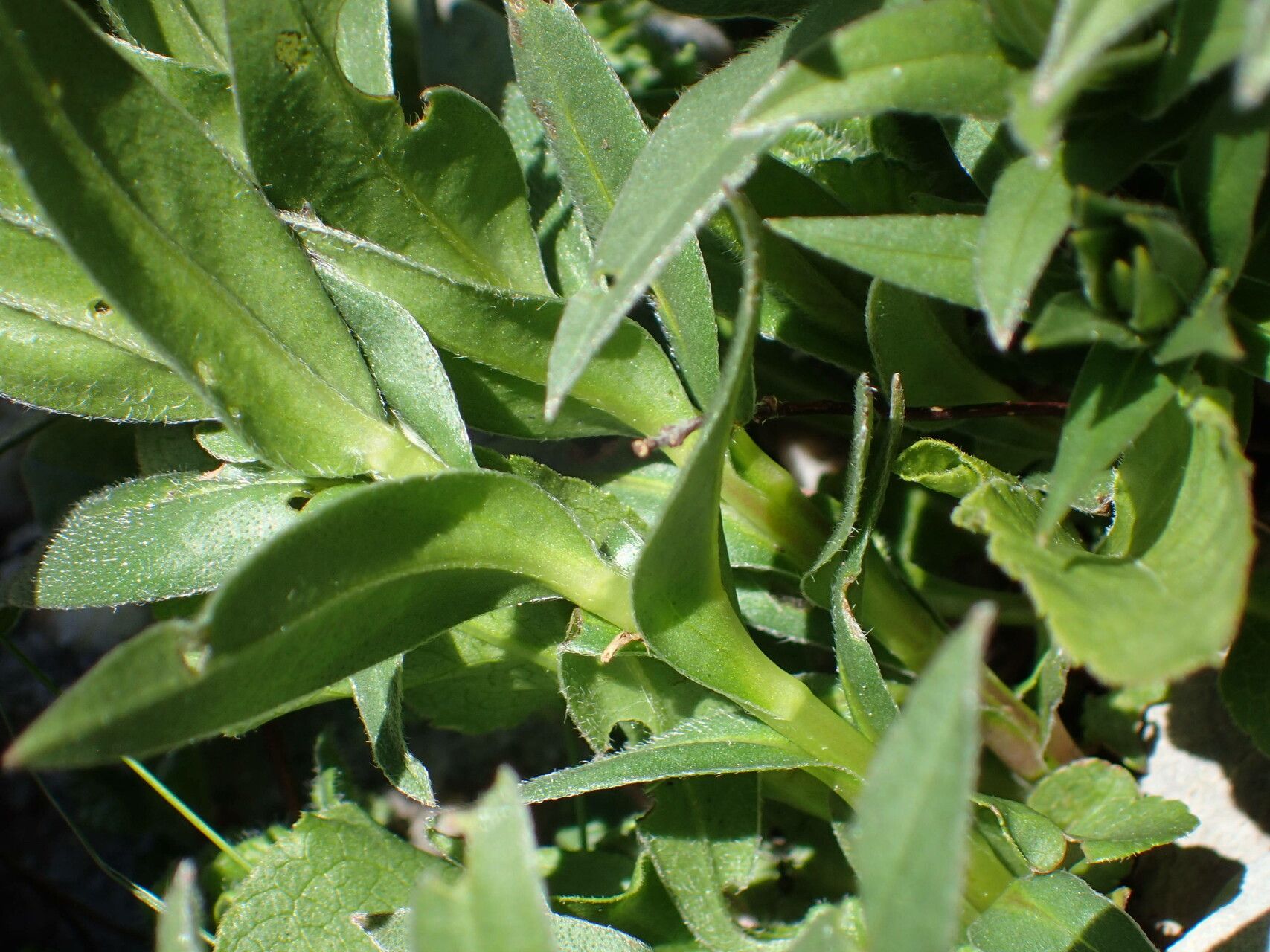
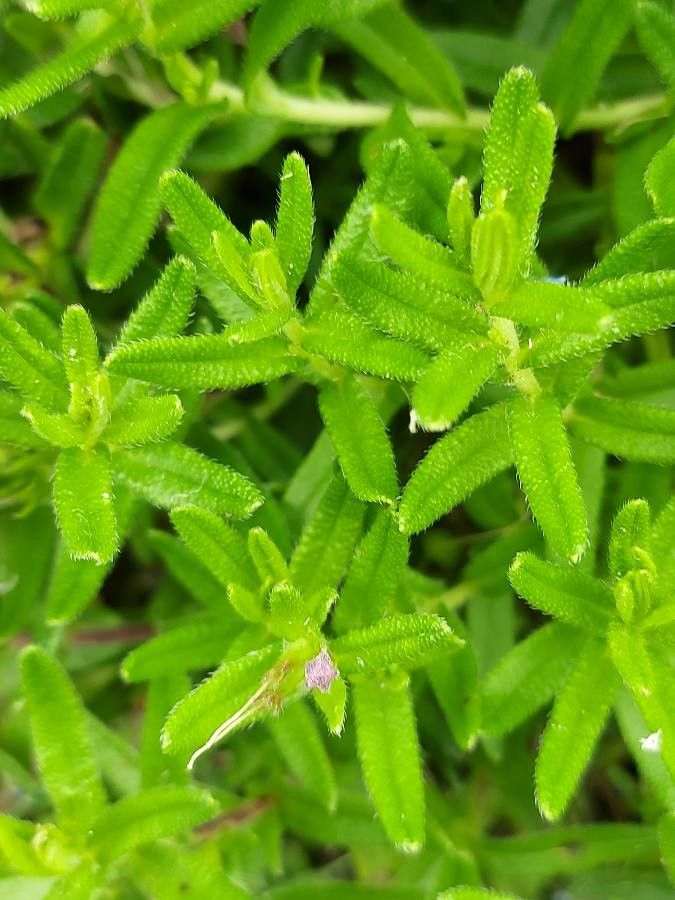
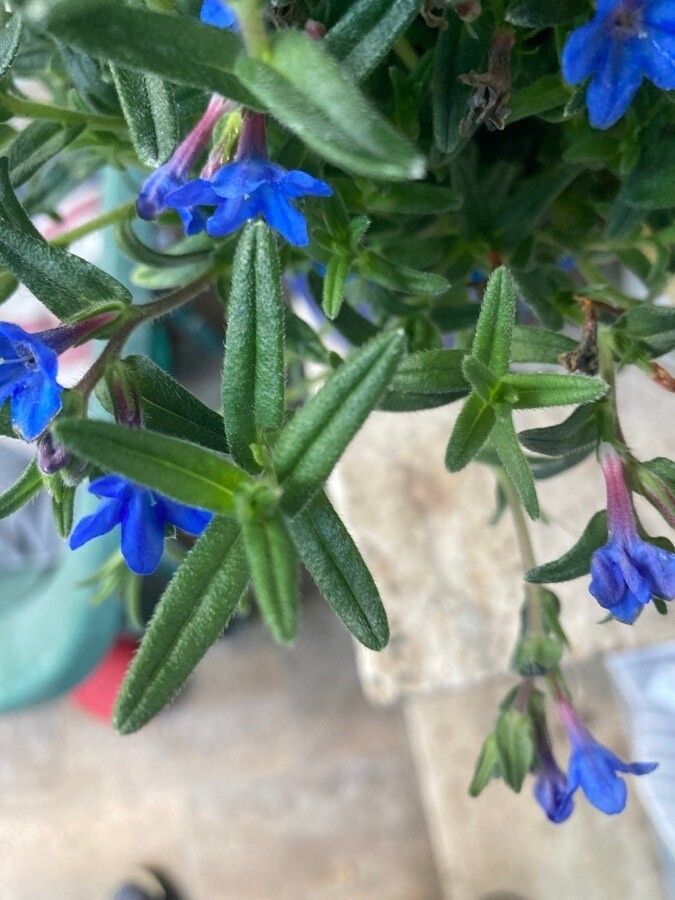
Glandora oleifolia, the olive-leaved gromwell (syn. Lithodora oleifolia, Lithospermum oleifolium), is a species of flowering plant in the family Boraginaceae. The plant is native to a small rocky area near Figueras in the eastern Pyrenees, and is endemic to Spain.
Olive-leaved gromwell is well resistant to disease and is generally unlikely to be affected by illnesses. In terms of care, the plant is fairly low maintenance. When grown outdoors it needs only light watering, and larger specimens typically do not require pruning. Smaller plants, however, should be pruned after they have bloomed. Olive-leaved gromwellt is suitable for anyone with an outdoor area, such as a garden or deck, and does not demand much gardening experience.
How to keep Glandora Oleifolia.
Light
Olive-leaved gromwell is a plant that does well in locations receiving plentiful sunlight throughout the day. Adequate sun noticeably benefits the plant's health, encouraging vigorous growth. Originating from areas with abundant sunshine, the plant can perform poorly when light is insufficient, resulting in weak growth. Too much sun exposure can also cause sunscald.
Water
Olive-leaved gromwell, a plant native to arid regions, is known for its drought tolerance. It generally needs watering only once every 2-3 weeks. Although it is often cultivated outdoors, it's important to ensure proper drainage during the growing season to prevent root rot caused by unexpected heavy rain.
Temperature
Olive-leaved gromwell originates from climates with temperatures between 59 and 89.6°F (15 to 32°C). It does best in these warm conditions. Seasonal adjustments are typically unnecessary, but if temperatures drop significantly, indoor care may be required.
Fertilizer
The timing of fertilizing Olive-leaved gromwell is important. Apply fertilizer in early spring and repeat monthly until early summer. Fertilizer encourages attractive blooms and supplies energy during both dormant and active growth phases.
Pruning
The olive-leaved gromwell is a shrub known for its narrow, olive-like leaves and striking blue flowers. To promote healthier growth and abundant flowering, it’s important to prune the plant from early to late winter. Begin by removing any dead wood and thinning the branches to improve airflow. Shape the shrub carefully to maintain its form, using clean, sharp tools for the best results.
Botanical profile.
- Plant Type
- Shrub
- Life Cycle
- Perennial
- Genus
- Glandora
- Family
- Boraginaceae
- Hardiness Zone
- 8
- Mature Height
- 15 cm to 23 cm
- Mature Spread
- 49 cm
- Leaf Color
- Green
- Leaf Type
- Evergreen
- Flower Color
- Blue, Purple
- Flower Size
- 0.51 cm to 1.02 cm
- Bloom Time
- Late spring, Early summer, Mid summer
- Planting Time
- Spring, Summer
- Harvest Time
- Mid summer
- Native Area
- Spain, France
Other names.
Reader questions.
What are the sunlight requirements for Olive-leaved gromwell?
Olive-leaved gromwell requires full sun, meaning it needs above 6 hours of sunlight daily to thrive optimally. It's important to observe how sunlight moves through your garden to choose spots that provide the perfect balance of light and shade, ensuring the plant's happiness. This plant originates from areas with abundant sunlight, which is crucial for its vigorous growth. However, too much sunlight without proper care may lead to sunscald, while insufficient light can result in poor growth.
What is the native climate for Olive-leaved Gromwell?
Olive-leaved Gromwell (Glandora oleifolia) is native to climates where temperatures range between 59 to 89.6°F (15 to 32°C). It thrives best in these warm conditions, indicating a preference for warmer climates without the need for significant seasonal adjustments. However, it's important to note that if temperatures drop considerably, bringing the plant indoors may be necessary to protect it from extreme cold.
How does artificial lighting support Olive-leaved gromwell indoors?
When natural sunlight is not sufficient, especially during winter or in less sunny spaces, artificial lighting becomes essential for Olive-leaved gromwell's growth. LED lights are recommended as they can be adjusted to provide specific wavelengths needed by the plant. Full sun plants require 30-50W/sq ft, partial sun plants need 20-30W/sq ft, and full shade plants need 10-20W/sq ft of artificial light. The artificial light source should be placed 12-36 inches above the plant for 8-12 hours per day to mimic natural sunlight conditions effectively.
What are the cold resistance capabilities of Olive-leaved Gromwell?
Olive-leaved Gromwell has strong cold resistance, so it usually does not need special frost protection during winter. However, if winter temperatures are expected to drop below -10°C, it's important to take measures to protect the plant from the cold. This can be done by wrapping the trunk and branches with insulating materials such as non-woven fabric or cloth. Additionally, watering the plant abundantly before the first freeze in autumn to keep the soil moist can help prevent drought and water scarcity during winter and early spring.
What are the symptoms of inadequate sunlight exposure in Olive-leaved gromwell?
Olive-leaved gromwell, when not receiving enough sunlight, may exhibit symptoms such as smaller new leaves, leggy or sparse growth, faster leaf drop, slower or halted growth, paler new leaves, chlorosis (leaves turning yellow), sunscald, leaf curling, wilting, and leaf scorching. These symptoms reflect the plant's struggle under suboptimal lighting conditions, either due to too little or too much sunlight exposure.
How should I care for Olive-leaved Gromwell in low temperatures?
Olive-leaved Gromwell is cold-tolerant, generally thriving best when temperatures are above 15°C but should be kept above -5°C during winter. When temperatures fall below -10°C, you might not notice immediate changes, but the branches may become brittle and dry by spring, failing to produce new shoots. To address this, prune away any dead branches in spring to encourage new growth.
How can I help my Olive-leaved gromwell get sufficient sunlight?
To ensure your Olive-leaved gromwell receives sufficient sunlight, gradually move it to sunnier locations, allowing at least 6 hours of direct sunlight daily. If indoors, use a south-facing window and keep curtains open or use artificial grow lights for at least 8 hours daily. For outdoor plants, avoid sudden changes in light exposure to prevent sunburn. Removing obstructions and transplanting to sunnier spots can also help. Note that parts of the plant affected by previous insufficient sunlight may not recover, but new growth should be healthy with improved light conditions.
What steps should I take if my Olive-leaved Gromwell experiences high temperatures?
During summer, it's important to ensure that Olive-leaved Gromwell does not remain in temperatures above 32°C. Exposure to temperatures exceeding 35°C can result in lighter leaf coloration, dry and withered leaf tips, and increased susceptibility to sunburn. To manage this, trim away the sunburned and dried-up parts of the plant. Relocate the plant to a shaded location or use a shade cloth to protect it from midday and afternoon sun. Additionally, water the plant during the cooler morning and evening hours to maintain soil moisture.