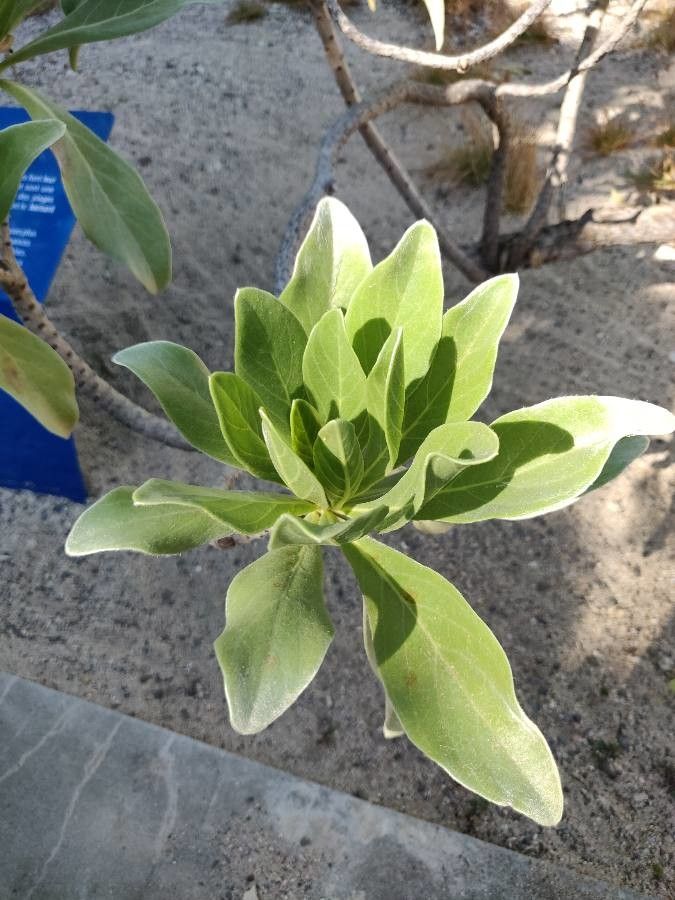
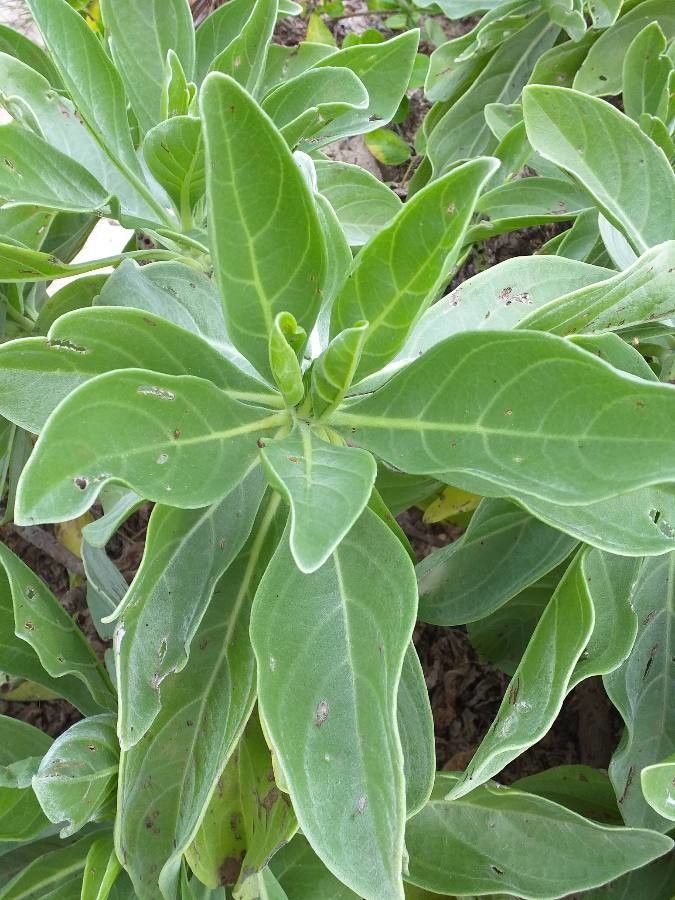
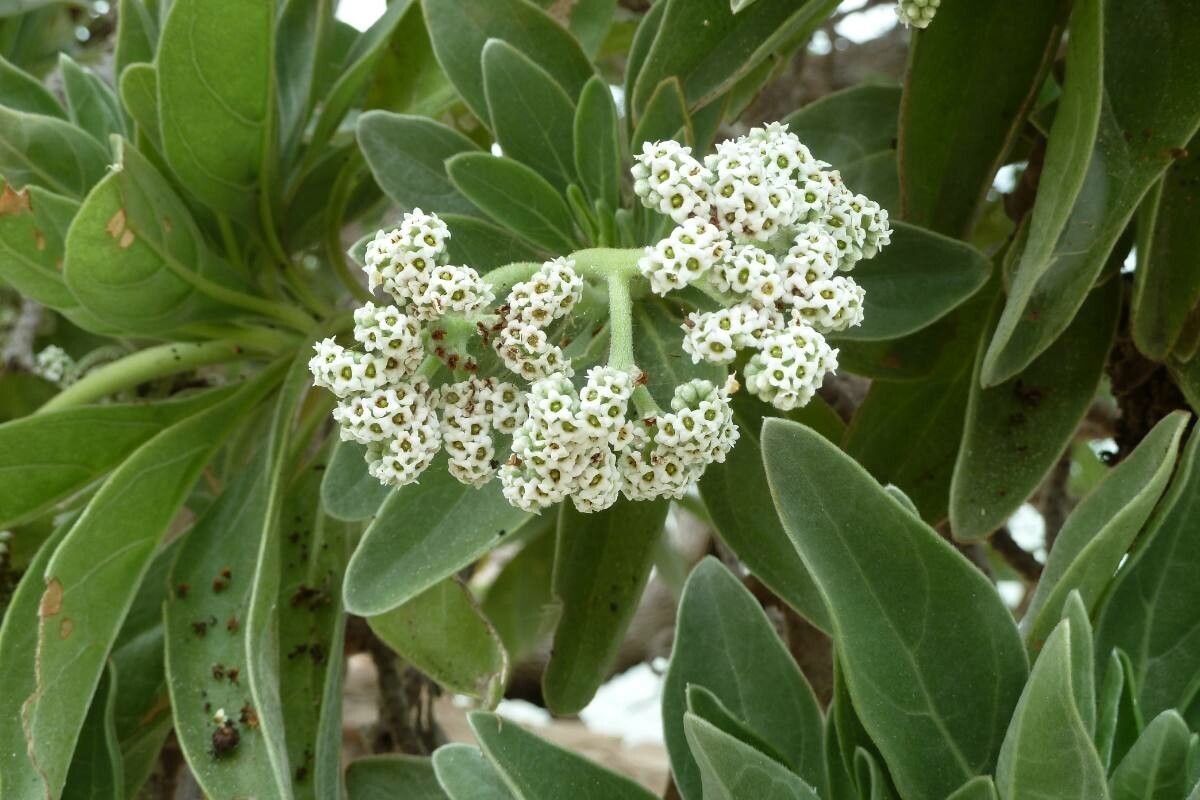
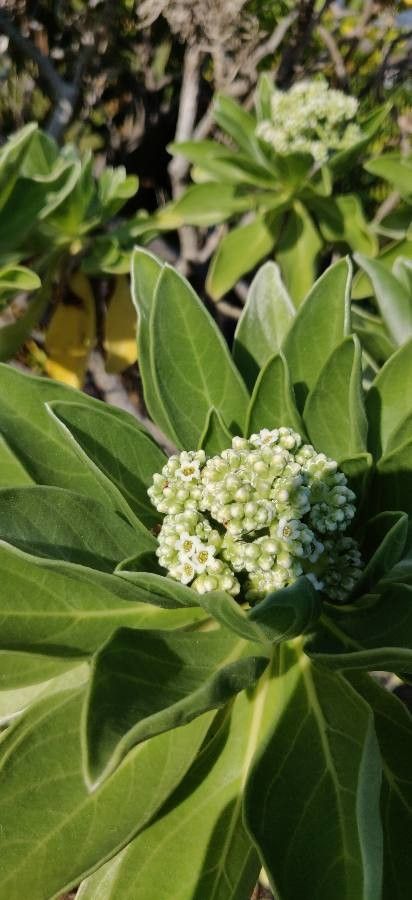
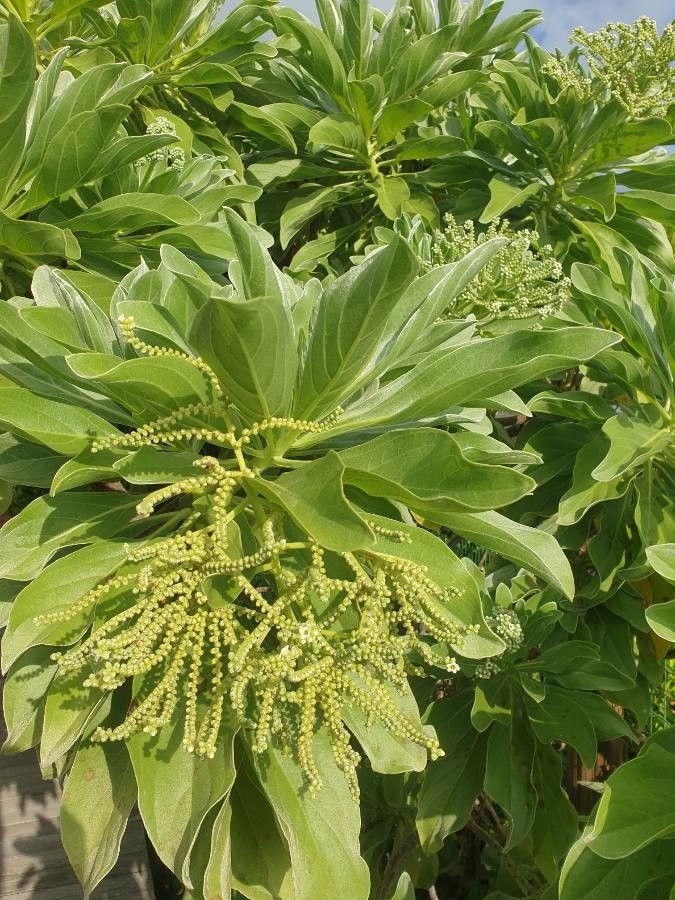
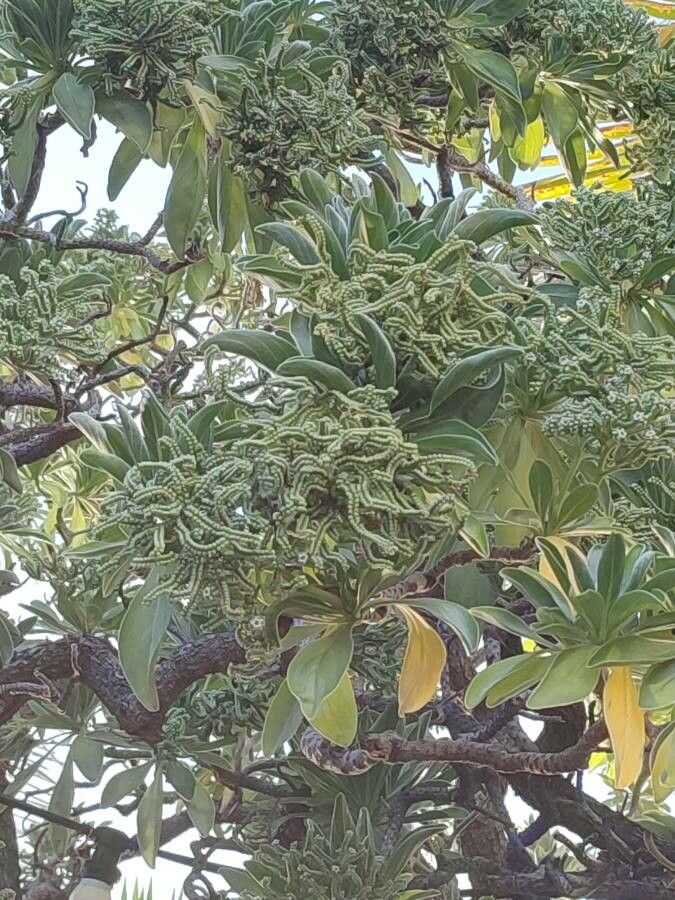
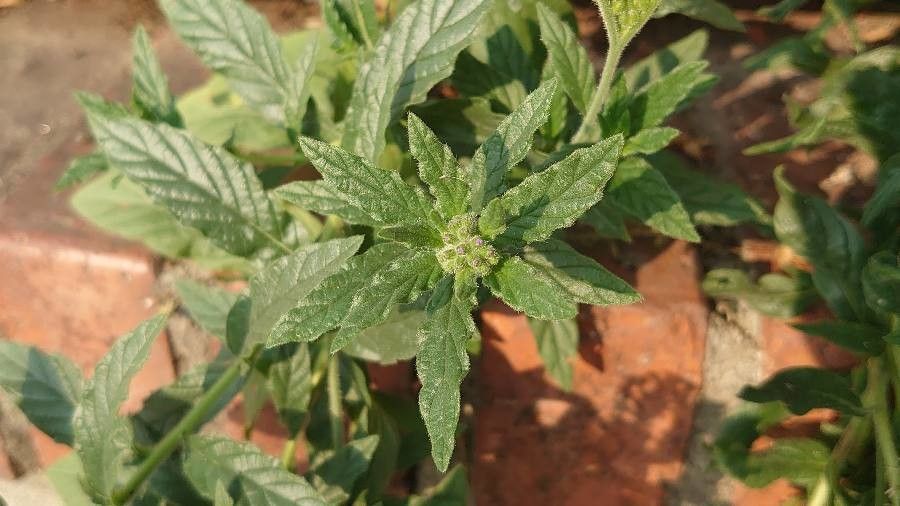
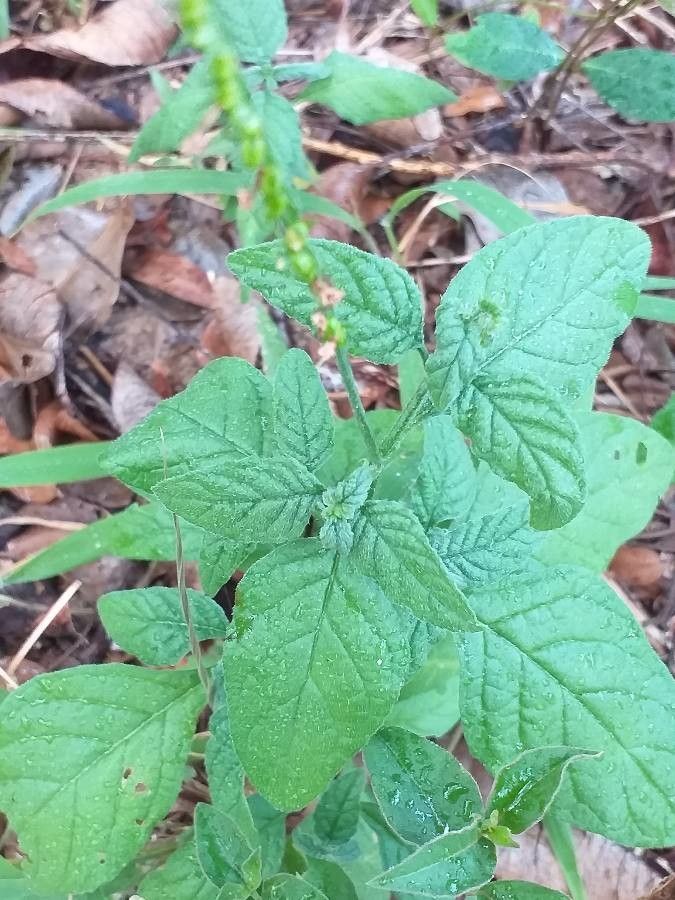
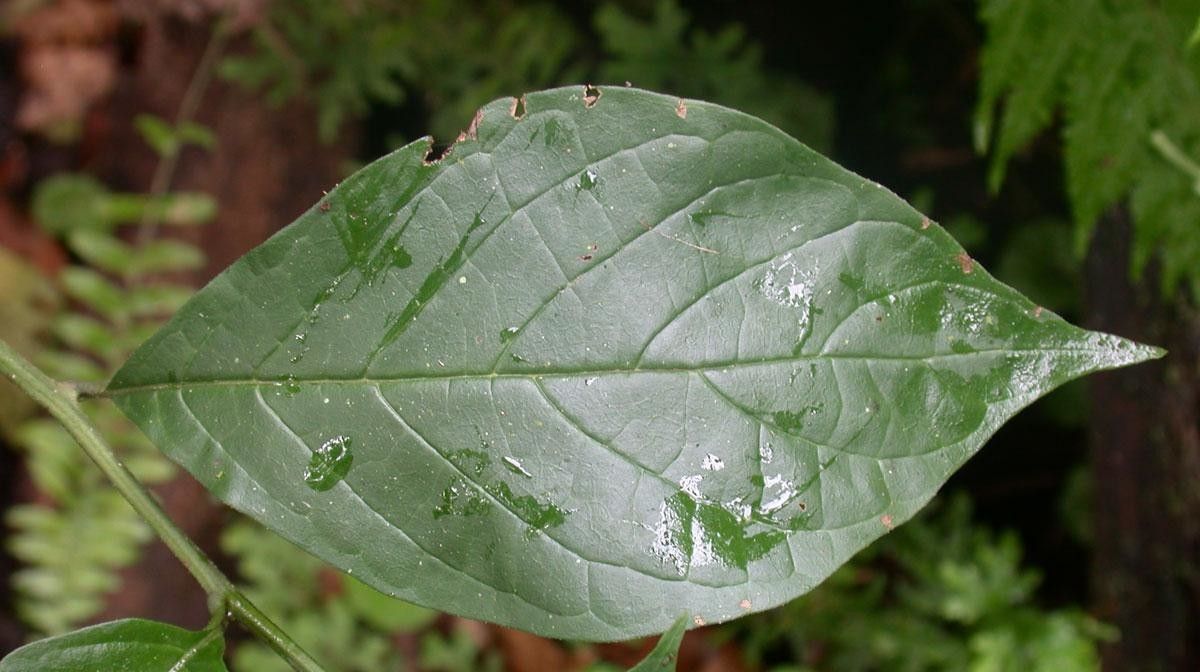
Heliotropium foertherianum, commonly known as the ocean blue heliotrope or blue heliotrope, is a tropical plant species that belongs to the Boraginaceae family. Native to Southeast Asia, it can be found in countries such as Indonesia, Malaysia, and the Philippines.
The plant typically grows up to 1 meter tall and features lance-shaped, dark green leaves. Its small, fragrant flowers are deep blue or purple, fading to white toward the center. In warm climates, these flowers bloom throughout the year.
Heliotropium foertherianum is often used for ornamental purposes due to its attractive appearance and pleasant fragrance. Depending on the climate, it can be cultivated as either an annual or a perennial.
In traditional medicine, Heliotropium foertherianum has been recognized for its medicinal properties, particularly for treating skin conditions like eczema and psoriasis, owing to its anti-inflammatory effects.
However, it is important to note that Heliotropium foertherianum contains pyrrolizidine alkaloids, which can cause liver damage if consumed in large quantities over an extended period.
In summary, Heliotropium foertherianum is a beautiful tropical plant valued for its ornamental qualities and medicinal potential. Nevertheless, it should be used with caution when considered for medicinal purposes due to the associated health risks with its consumption.
Tree-heliotrope has good resistance to disease and is generally unlikely to develop illnesses. As for care, this plant is fairly low-maintenance. When grown outdoors it needs only minimal watering, and larger specimens typically do not require pruning. Smaller plants, however, should be pruned after they have finished blooming. Tree-heliotrope is suitable for anyone with an outdoor area, such as a garden or a deck, and does not require extensive experience in plant care.
How to keep Heliotropium Foertherianum.
Light
Tree-heliotrope does best with plentiful sunlight for optimal growth, reflecting the bright conditions of its native habitat. Because it is not shade-tolerant, too much sun is not harmful, but too little light can limit growth by impeding proper photosynthesis and compromising the plant's health.
Water
The tree-heliotrope, native to coastal environments, thrives with regular moisture and can withstand short periods of drought. For optimal health, water it weekly. This plant prefers humid conditions and benefits from rainwater, which supports lush growth during its peak growing season in tropical areas.
Temperature
Tree-heliotrope is native to areas with temperatures between 68 and 100.4 °F (20 to 38 ℃). It grows best in these warm conditions. During cooler seasons, adjusting indoor heating to replicate these temperatures can help support the tree-heliotrope's health.
Fertilizer
The best time to fertilize a Tree-heliotrope is in early spring as it breaks dormancy. This supports overall growth and the development of flowers. Fertilizing improves the foliage, stems, and branches and encourages blooms that are larger, more vivid, and longer-lasting. It helps transfer nutrients from the roots to the flowers and enhances the plant’s health and resistance to disease.
Pruning
The Tree-heliotrope, with its glossy leaves and fragrant flowers, benefits greatly from pruning between early and late winter. To enhance its growth and floral display, focus on key techniques such as removing damaged branches and shaping the tree for aesthetics. Make sure to use clean cuts and sterilized tools to prevent disease and ensure the tree's longevity.
Botanical profile.
- Plant Type
- Tree
- Life Cycle
- Perennial
- Genus
- Tournefortia
- Family
- Boraginaceae
- Hardiness Zone
- 10-11
- Mature Height
- 3.66 m
- Mature Spread
- 4.88 m
- Leaf Color
- Green, Blue
- Leaf Type
- Evergreen
- Flower Color
- Purple, Lavender
- Flower Size
- 0.51 cm
- Bloom Time
- Late spring, Early summer, Mid summer
- Planting Time
- Spring, Summer
- Harvest Time
- Mid summer, Late summer
- Native Area
- Sri Lanka, India, Malaysia, Indonesia, Vietnam, Mozambique, Japan, Vanuatu, Philippines, Kenya, Australia, Fiji, Tanzania, China
Other names.
Reader questions.
How should I water my Tree-heliotrope effectively?
Your Tree-heliotrope can be watered using any common watering tool. This includes watering cans, hoses, or even cups. It's important to apply the water directly to the soil, making sure all areas are moistened evenly for the root system to receive adequate hydration. Using filtered water is recommended, as tap water may contain harmful particles. Additionally, using water at or slightly above room temperature is beneficial to avoid shocking the Tree-heliotrope. However, generally, this plant responds well to any type of water provided.
What are the sunlight requirements for Tree-heliotrope?
Tree-heliotrope, known botanically as Heliotropium foertherianum, thrives in full sun, requiring more than 6 hours of sunlight daily for optimum growth. It can also grow in partial sun, benefiting from about 3-6 hours of sunlight. Observing how sunlight moves through your garden can help in choosing spots that offer the perfect balance of light and shade, ensuring your plants grow healthy and happy.
What is the native temperature range for Tree-heliotrope?
Tree-heliotrope is native to regions where the temperatures range from 68 to 100.4 °F (20 to 38 °C). It thrives best in these warm climates. During the cooler seasons, adjusting indoor heating to mimic these temperatures can help support the health of Tree-heliotrope. It is extremely heat-loving, and exposure to cold temperatures can be harmful. In autumn, it is advisable to bring outdoor-grown Tree-heliotrope indoors, placing it near a bright window, but not too close to heaters to avoid damage. Keeping the temperature above 20°C during the winter is beneficial for the plant's growth, while temperatures approaching 5°C can be detrimental.
What should I do if I give my Tree-heliotrope too much water or too little water?
For newly planted outdoor plants, especially seedlings, it's important to remember that they can be susceptible to lack of watering. Make sure to water them adequately for the first few months when they are small or just planted. Once the roots are established, Tree-heliotrope plants can usually rely on rain for moisture. However, when Tree-heliotrope is planted in pots, overwatering becomes more common. If you accidentally overwater your Tree-heliotrope, take immediate action to fix it. Stop watering the plant right away to minimize the impact. Then, carefully inspect the roots by removing the plant from its pot. If there are no signs of root rot, you can return the plant to its container. But if there is root rot, trim away affected roots and consider applying a fungicide to prevent further damage. Repot the Tree-heliotrope in well-draining soil. On the other hand, underwatering Tree-heliotrope is usually easily resolved. If you notice drooping, drying, and falling leaves, water the plant more frequently. The leaves should regain their fullness after sufficient watering. It's important to correct your watering frequency promptly when underwatering occurs.
What are the essential sunlight conditions for Tree-heliotrope?
The Tree-heliotrope requires abundant solar exposure to grow well, mirroring its native habitat's conditions. This plant does not tolerate shade well, indicating that it can handle excessive sunlight without harm. However, inadequate sunlight may impede its growth, affecting photosynthesis and overall plant health. If natural sunlight is insufficient, especially in winter or less sunny spaces, adequate lighting through artificial means is crucial. Artificial lights like LED can be tailored to provide specific light wavelengths needed, ensuring optimal growth.
How does low temperature affect Tree-heliotrope, and what are the solutions?
Tree-heliotrope prefers warm temperatures and does not tolerate low temperatures well. It thrives best when temperatures are above 20°C. During winter, it's important to keep it above 5°C. Exposure to temperatures below 1°C may cause the leaves to lighten in color, and after frost damage, the foliage may gradually turn brown or black, showing symptoms such as wilting and drooping. To remedy this, trim off frost-damaged parts and immediately move the plant to a warmer indoor environment for cold protection. Placing the plant near a south-facing window ensures it receives ample sunlight. Additionally, avoid placing the plant near heaters or air conditioning vents to prevent excessive dryness in the air.
How often do I need to water my Tree-heliotrope?
Most outdoor plants can rely on rainfall for their water needs. If your area doesn't get enough rain, make sure to water your plants every 2 weeks in spring and fall, and more frequently in summer. In winter, when plants grow slower and require less water, water them sparingly or not at all. However, if your Tree-heliotrope is young or newly planted, water it more often to help it establish and eventually become more adaptable to drought conditions. For potted plants, there are two main ways to determine watering frequency for your Tree-heliotrope. One option is to follow a set watering schedule, such as once a week or every other week. However, this may not always work well since it doesn't consider the specific conditions of your plant's environment. Another approach is to check the soil moisture. Wait until the top two to four inches of soil have completely dried out before watering again, which is usually about one-third to half the depth of the pots.
What symptoms indicate insufficient sunlight for Tree-heliotrope?
When the Tree-heliotrope is exposed to low light, especially indoors during winter, it may exhibit symptoms such as smaller new leaves compared to older ones, leggy or sparse growth, faster leaf drop, slower or no new growth, lighter-colored new leaves, chlorosis (leaves turning yellow), sunscald, leaf curling, wilting, and leaf scorching. These signs suggest that the plant is not receiving enough sunlight, which is critical for its health and growth.
What are the effects of high temperature on Tree-heliotrope and its care?
During the summer, it is crucial to maintain the temperature for Tree-heliotrope below 38°C. When the temperature exceeds 43°C, the plant's leaves may lighten in color, making it more susceptible to sunburn. To care for a tree-heliotrope experiencing these conditions, trim away the sunburned and dried-up parts. Relocate the plant to an area that provides shade, particularly from the midday and afternoon sun. Ensure the soil remains moist by watering the plant in the morning and evening.
How much water does my Tree-heliotrope require?
When watering your Tree-heliotrope, remember that it does not always require a lot of water. If only a few inches of soil have dried since the last watering, you can give it about five to ten ounces of water each time. You can also determine the amount of water it needs by checking the moisture of the soil. Keep track of how many inches of soil have dried out between waterings. To ensure the Tree-heliotrope receives enough moisture, provide enough water to moisten all the dry soil layers since the last watering. If more than half of the soil is dry, consider giving it more water. Keep adding water until you see excess water draining from the pot's drainage holes. If your Tree-heliotrope is planted in an area that gets plenty of rain outdoors, it may not need additional watering. When it is young or just getting established, ensure it receives 1-2 inches of rain per week. As it grows and becomes established, it can rely on rainwater alone. Only when the weather is hot and there has been no rainfall for 2-3 weeks, should you give it a full watering to avoid stress.
How can you address insufficient sunlight for Tree-heliotrope?
To address insufficient sunlight for Tree-heliotrope, gradually move the plant to a sunnier location to receive at least 6 hours of direct sunlight daily, ideally using a south-facing window. If indoor conditions or the plant's size limits sun exposure, consider using artificial light, such as desk or ceiling lamps, for at least 8 hours daily or invest in professional plant grow lights. Outdoors, ensure the plant is gradually adapted to brighter spots to prevent sunburn. Observe and reduce obstructions like branches that may block sunlight, and consider transplanting smaller plants to sunnier locations, ensuring good soil drainage. Parts of the plant affected by low light may not recover, but new growth should be healthy with improved light conditions.
How do I know if I'm giving my Tree-heliotrope enough water?
Overwatering is a common problem for the Tree-heliotrope. There are signs to look for when this happens. An overwatered Tree-heliotrope will have yellowing leaves and may drop some leaves. Overwatering can also cause the plant structure to shrink and promote root rot. On the other hand, an underwatered Tree-heliotrope will wilt and have brown or brittle leaves. If you see signs of overwatering or underwatering, you should intervene to restore the plant's health.