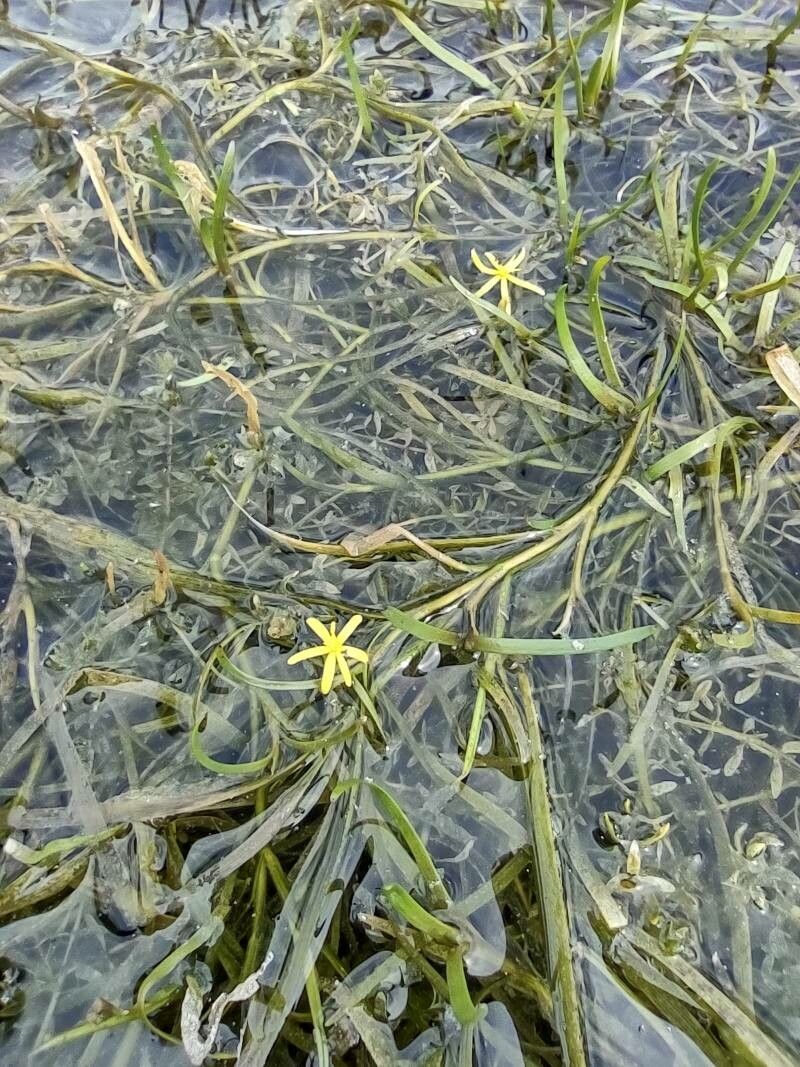
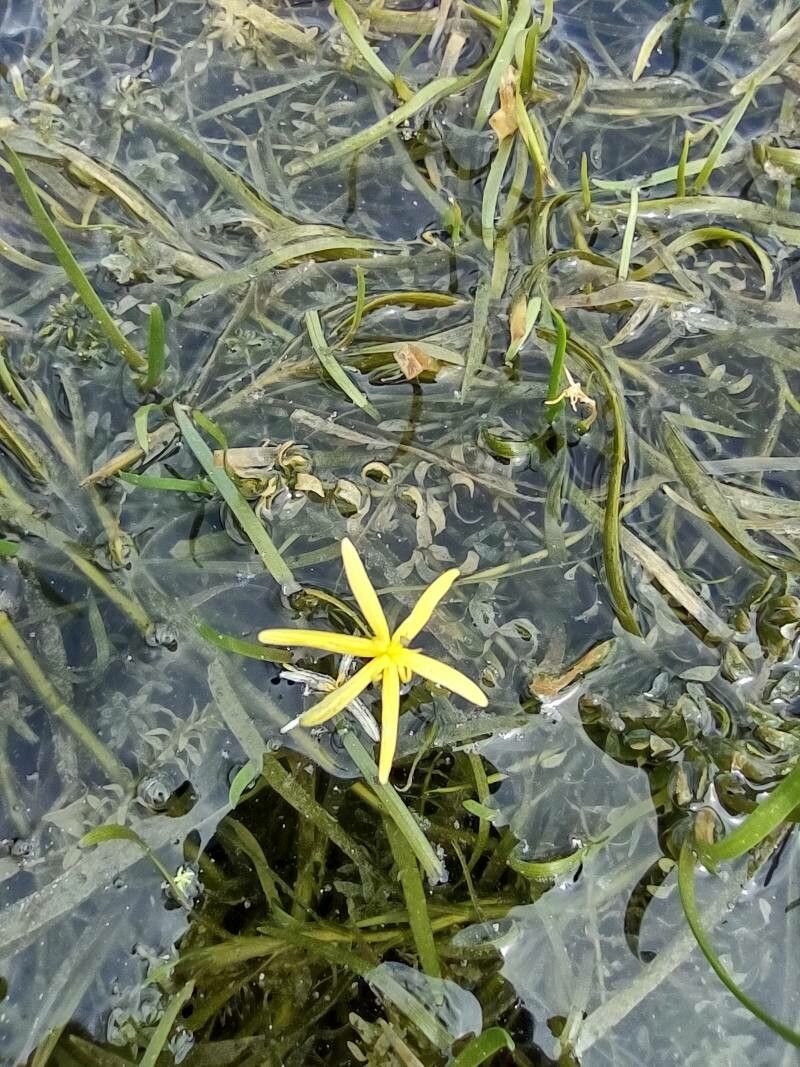
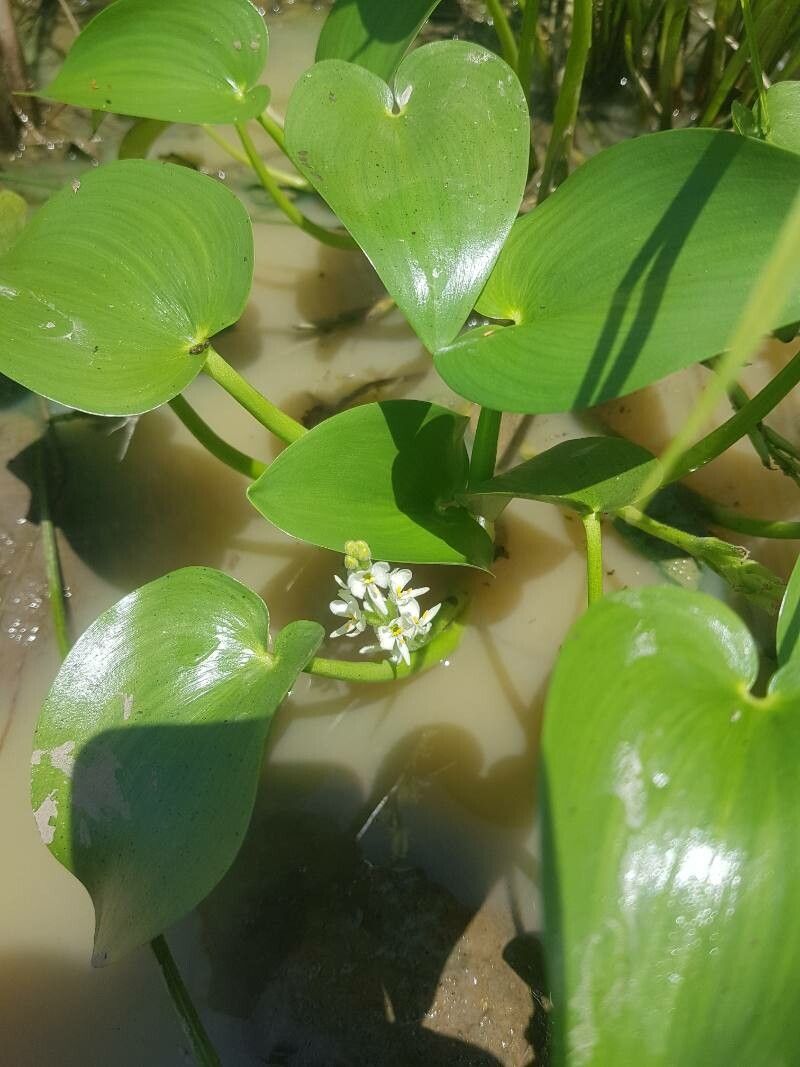
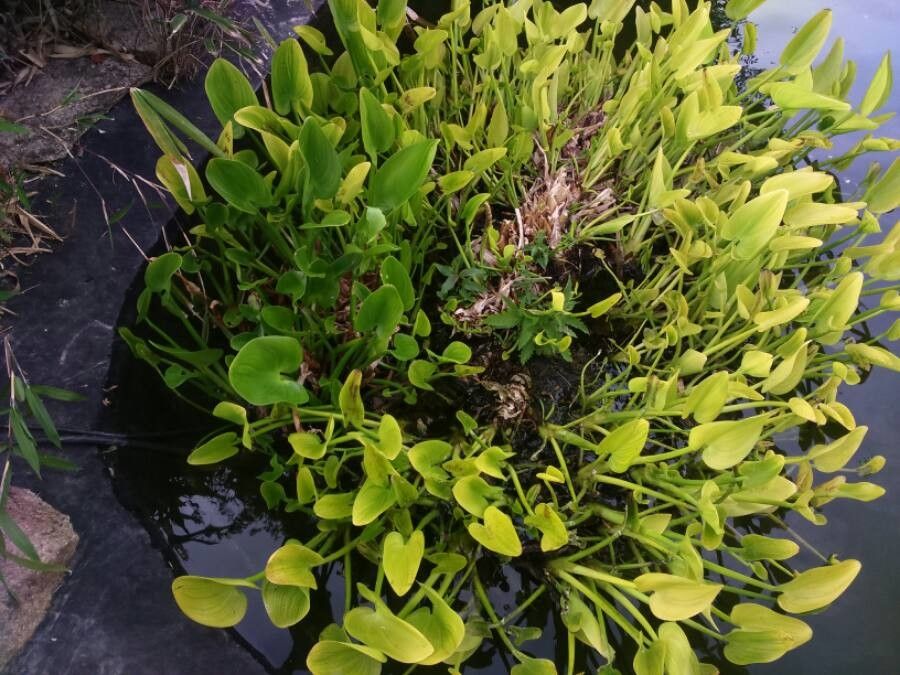
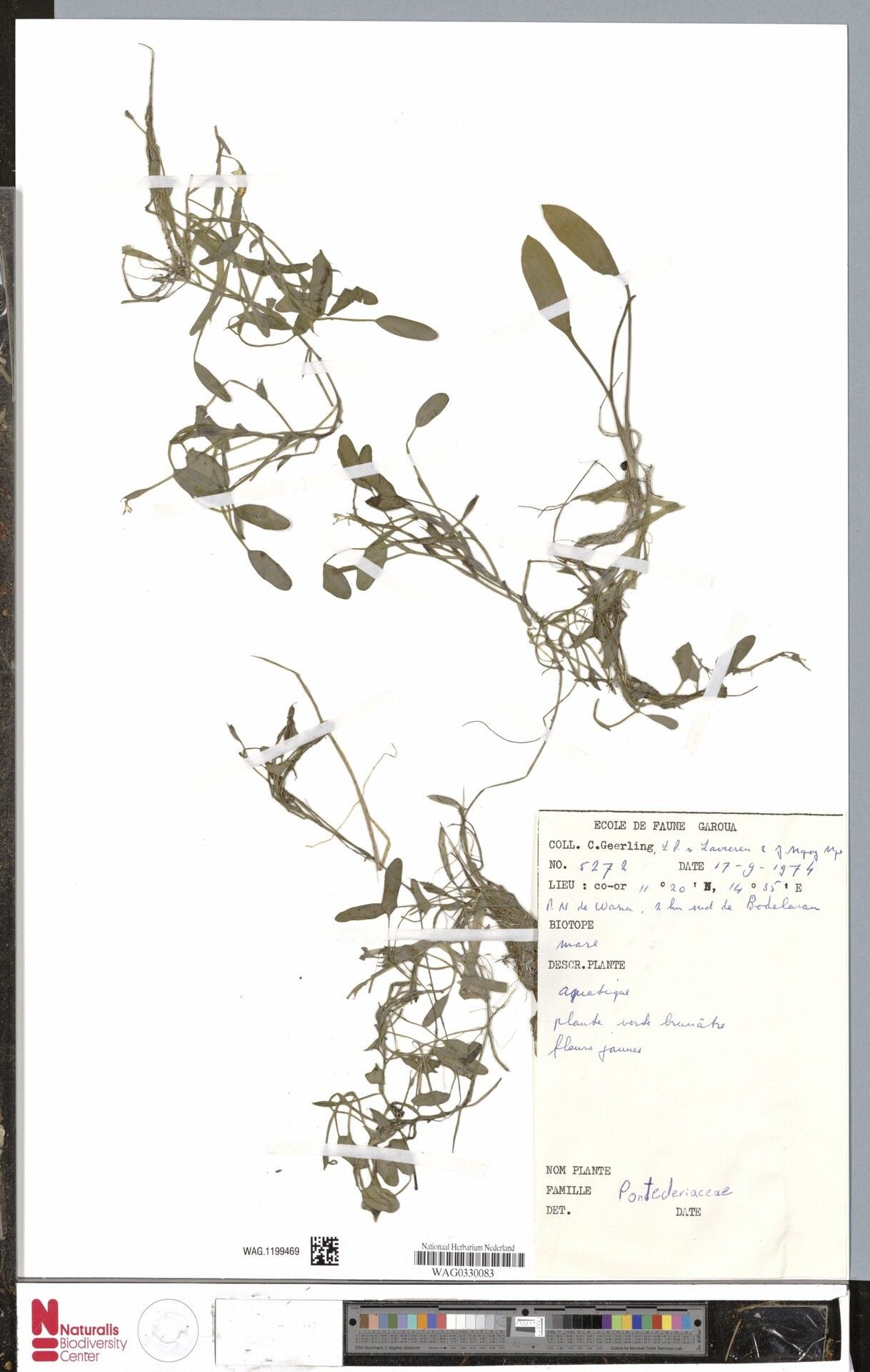
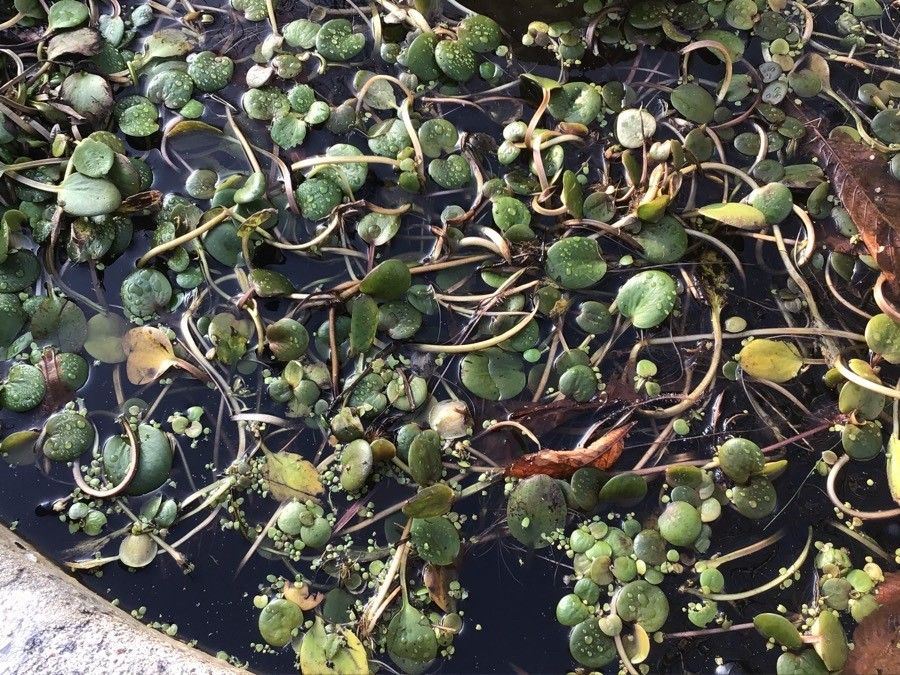
Heteranthera dubia, commonly called water stargrass or grassleaf mudplantain, is a species of aquatic plant in the pickerel-weed family (Pontederiaceae). It is native to North and Central America where it is widespread from Canada to Guatemala. It lives submerged in freshwater such as rivers and lakes. It can be found as deep as 5.5 meters, to as shallow as stranded on the shoreline. It is most abundant in alkaline waters.Heteranthera dubia is a perennial with much variation in its appearance. The leaves are different sizes and shapes across individuals, partly genetic variation and partly response to water conditions, for example, the speed and turbulence of surrounding currents. Submersed individuals also have a different stem and leaf morphology from those that occur partially or completely out of the water. Its inflorescence bears a single short-lived flower that blooms in the morning and wilts in the evening. It has six yellow perianth parts each less than a centimeter long spreading from a tubular throat one to seven centimeters long. There are three long, thick yellow stamens with curling anthers and one yellow style. The fruit is a capsule containing many winged seeds.The plant sometimes has galls in its tissue, which are caused by the parasitic fungus Membranosorus heterantherae.
Grassleaf mudplantain is generally resistant to disease and typically not prone to illness. Still, it can be vulnerable to pests and diseases present in its environment, though such infections are usually mild. Care-wise, the plant needs moderate maintenance. It should be pruned regularly to retain a neat appearance and encourage healthy growth, and fertilizing can help stimulate flowering. This plant is suitable for anyone with outdoor space, like a garden or patio, and does not demand extensive care experience. It may, however, need more attention when cultivated indoors.
How to keep Heteranthera Dubia.
Light
Grassleaf mudplantain is native to habitats with abundant sunlight, such as the shallow margins of ponds and lakes. It prefers full sun, although it can tolerate partial sun.
Water
Grassleaf mudplantain, which originates from aquatic habitats, thrives in moist conditions and prefers high humidity. While it is somewhat drought-tolerant, it is best to water it weekly to mimic its natural environment. As an aquatic plant, grassleaf mudplantain plays an important role in filtering water within its ecosystem.
Temperature
Grassleaf mudplantain can tolerate a wide range of temperatures, but its distribution may still be constrained by various combinations of moisture and heat. It grows best in warm summer conditions with sufficient rainfall or watering. Extended periods of cloudy, rainy weather or prolonged high temperatures raise the chance of Grassleaf mudplantain dying. In winter, adequate protection from cold can improve the plant's survival rate.
Pruning
Grassleaf mudplantain, which features grass-like leaves, benefits from pruning from early to late spring. By removing dead leaves, you can encourage growth, improve air circulation, and prevent the plant from becoming invasive. Use clean, sharp tools to prevent disease and ensure the plant remains healthy and visually appealing throughout the growing season.
Botanical profile.
- Plant Type
- Herb
- Life Cycle
- Annual, Perennial
- Genus
- Heteranthera
- Family
- Pontederiaceae
- Hardiness Zone
- 6-11
- Mature Height
- 3 cm to 5 cm
- Mature Spread
- 20 cm to 49 cm
- Leaf Color
- Light Green, Olive Drab
- Leaf Type
- Semi-evergreen
- Flower Color
- Yellow
- Flower Size
- 0.51 cm to 1.02 cm
- Bloom Time
- Summer, Early fall, Mid fall
- Planting Time
- Summer
- Harvest Time
- Late summer, Fall, Early winter
- Native Area
- Mexico, Guatemala, Cuba
Other names.
Reader questions.
How should I water my Grassleaf mudplantain for the best results?
To water Grassleaf mudplantain, you have a few options. You can use a garden hose with a spray nozzle, a watering can, or any other common watering tool. The plant is not overly particular about how it receives water, so rainwater, tap water, or filtered water will work. However, it's generally best to avoid watering the plant from overhead as this can harm the leaves and flowers and potentially cause disease. Instead, setting up a drip irrigation system is often the most effective method. This system applies water evenly and directly to the soil. For container-grown Grassleaf mudplantain, you can follow a similar approach but change the tools. Use a cup, watering can, or tap to apply water directly to the soil.
How many hours of sunlight does Grassleaf mudplantain need each day to grow well?
To ensure the health of the plants, it is important to provide them with 6 to 8 hours of sunlight each day. In particular, they thrive when exposed to morning light, especially during the summer. The Grassleaf mudplantain requires ample sunlight to flourish, as it aids in the production of food, the development of vibrant blooms, and overall survival.
What should I do if I give my Grassleaf mudplantain plant too much water or too little water?
The solution for underwatering Grassleaf mudplantain is simple. If you notice your plant lacking moisture, start watering it more regularly. Overwatering, on the other hand, can be a serious issue if not caught early. When Grassleaf mudplantain is overwatered, it becomes prone to diseases leading to decline and death. To prevent this, choose a suitable location with ample sunlight to dry the soil and good drainage to avoid waterlogged soil. If you overwater a potted Grassleaf mudplantain, consider transferring it to a new pot with better drainage and loose soil.
What kind of sunlight does Grassleaf mudplantain require?
The Grassleaf mudplantain thrives in full sunlight. To ensure even sun exposure, avoid crowding them together. It's important not to deprive the leaves of sunlight. When planting in pots, place the herbaceous flowers in windows with direct sunlight and make sure they receive full sun throughout the year. Partial or filtered light is not ideal as it may result in weak stems and unhealthy flowers. It's best to always keep the Grassleaf mudplantain exposed to the sun.
How much should I water my Grassleaf mudplantain?
Grassleaf mudplantain should be watered regularly throughout the growing season. In spring, water once a week and adjust to two to three times per week as the season gets warmer. However, watering more than this can harm the plant. Regardless of watering frequency, ensure that the soil remains relatively moist but not soaked. Watering a potted Grassleaf mudplantain is slightly different. Due to faster drying, increase watering to a few times per week, as opposed to once per week for a plant in the ground.
Can sunlight cause harm to plants? How can we shield Grassleaf mudplantain from damage due to sun and heat?
When the temperature rises above 90℉ (32℃), the Grassleaf mudplantain can be damaged by extreme heat, especially if it is exposed to prolonged sunlight. It is recommended to provide some shade from the sun in the afternoon during the summer. Keep in mind that summer sunlight is stronger and lasts 50% longer compared to winter. If the Grassleaf mudplantain is under too much sunlight stress, it is best to keep it well hydrated. Water the plants when the top of the soil is about 2 inches dry and consider moving them indoors if the outdoor temperature is excessively hot, particularly if they are in containers. It is normal for the plant leaves to wilt during the day, but they should recover at night. If the Grassleaf mudplantain continues to droop, it indicates rapid water loss and it should be watered.
How much water does my Grassleaf mudplantain plant need?
Determining how much water to give your Grassleaf mudplantain can be done in a few ways. Some gardeners prefer to feel the soil and water until the first six inches are moist. Alternatively, you can use a set measurement of about two gallons per week, adjusting based on the weather and soil dryness. However, be careful not to overwater by blindly following these guidelines. For container plants, it's best to check the dry layers of soil and moisten them adequately. You can test this by sticking your finger in the soil or looking for excess water draining from the pot.
Should I make sure Grassleaf mudplantain doesn't get too much sun?
The Grassleaf mudplantain thrives in sunlight and some species are even heliotropic. For optimal growth, plant them in south-facing gardens where they can be exposed to the sun from morning to afternoon. However, be mindful that excessive sun exposure can cause sunburn in some plants. To protect them, consider providing shade in the afternoon and midday, such as from a tree or wall. Growing the Grassleaf mudplantain in shady areas is not feasible as the larger flowers require ample energy to grow and bloom. Therefore, it is important to always provide adequate lighting conditions and place them in an area with full sun for the best outcomes.
How can I know if I am giving enough water to my Grassleaf mudplantain?
Avoiding overwatering your Grassleaf mudplantain can be a bit challenging. This is because these plants have deep roots that need to be moistened weekly, but they are also prone to root rot and browning when overwatered. Underwatering is less of a concern for these plants as they can survive for a while without extra watering. However, if you go too long without watering, the plant will start to wilt and develop dry leaves.
What happens if Grassleaf mudplantain doesn't get enough sunlight?
The Grassleaf mudplantain relies on adequate sunlight for its photosynthetic process. If it doesn't get enough sunlight, the stems become long and thin in an attempt to seek more light, resulting in leggy growth. This lack of sunlight also prevents the plant from blooming and producing seeds. Additionally, insufficient sunlight can cause older leaves to die and result in lighter color and smaller growth in new leaves. While the Grassleaf mudplantain thrives in the sun, it can wilt when exposed to excessive heat and ultraviolet light during summer. To protect the plant, consider using a net with a green shade to prevent scorching of leaves and flowers. When indoors, decrease heat with the aid of a fan.
How do I water my Grassleaf mudplantain at different times of the year?
As the seasons progress, the water needs of your Grassleaf mudplantain will also change. In spring, watering once a week should be sufficient. However, as the summer heat sets in, you may need to increase watering to about three times a week, especially for mudplantain grown in containers. Containers tend to dry out faster in warm weather. In autumn, when the temperature drops and the sun is not as intense, your mudplantain may require less water, even though it is still blooming.
Does Grassleaf mudplantain require special sunlight care as it grows?
The Grassleaf mudplantain requires more light when it is growing compared to when it is fully mature. Younger plants need sufficient light, but they may not be ready for sudden exposure to full sunlight, especially if they are raised in a nursery. They tend to be more sensitive to the intense summer sun, so it is best to introduce them to lighting gradually and slowly.