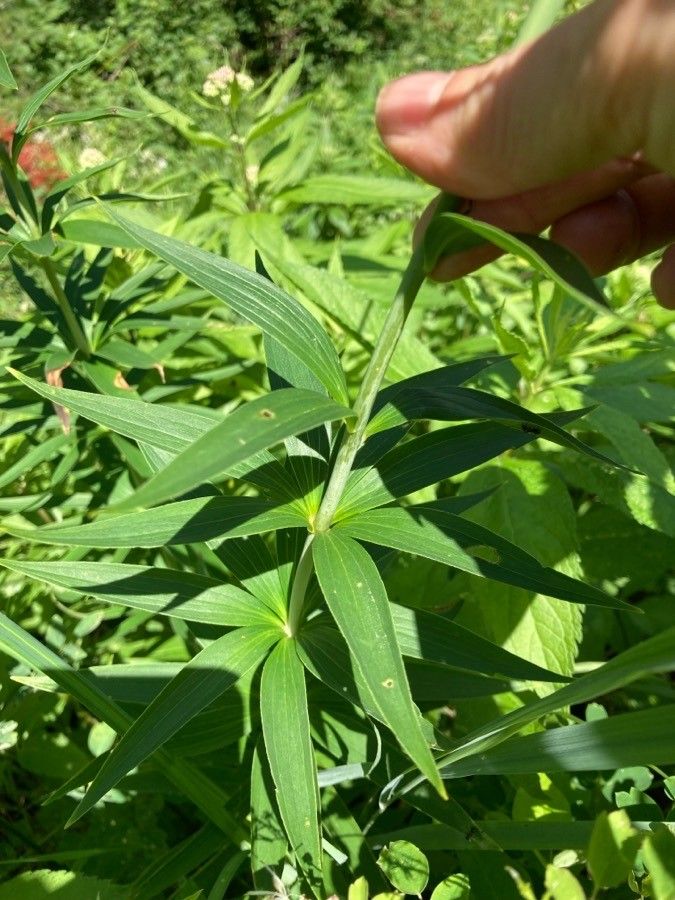
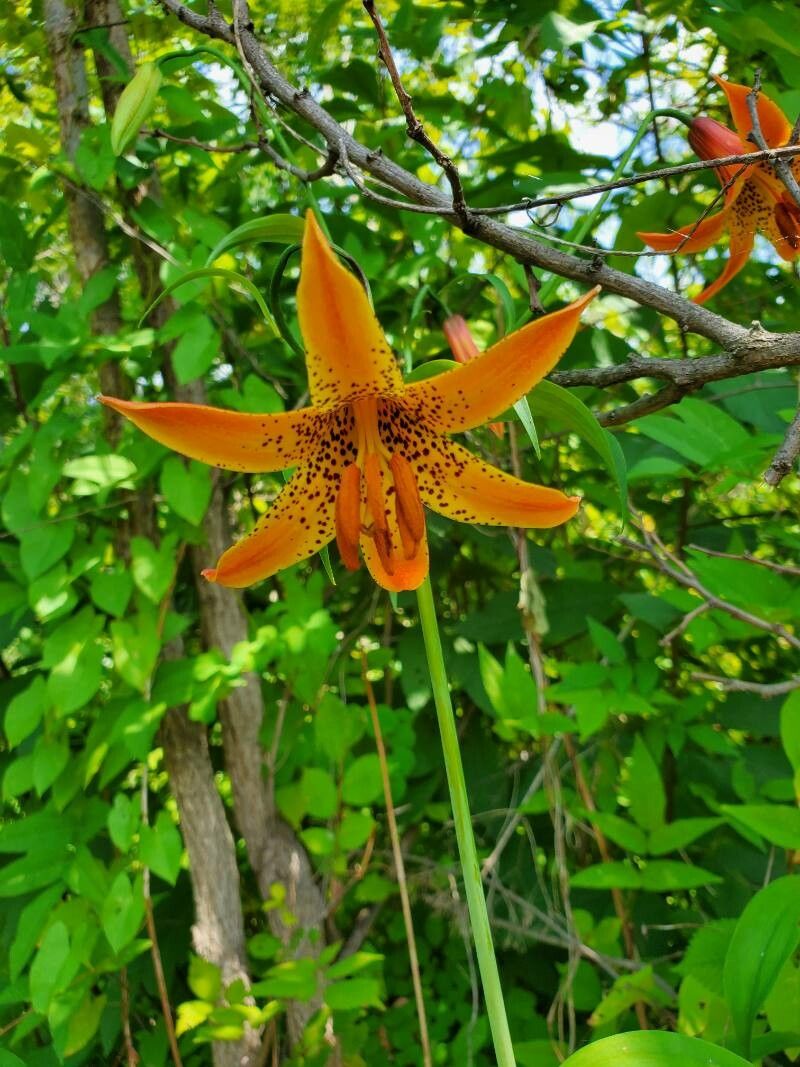
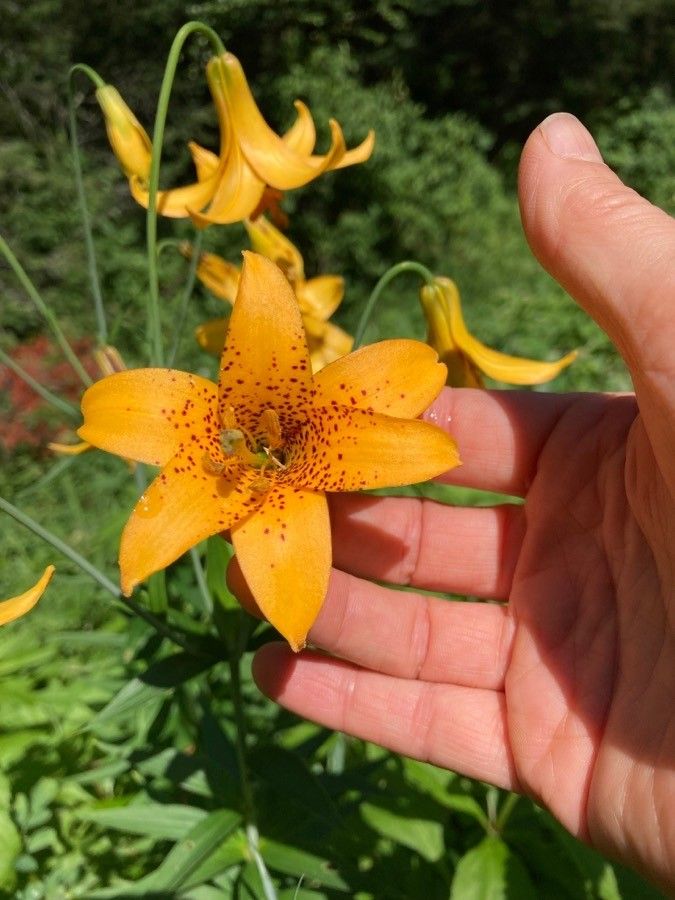
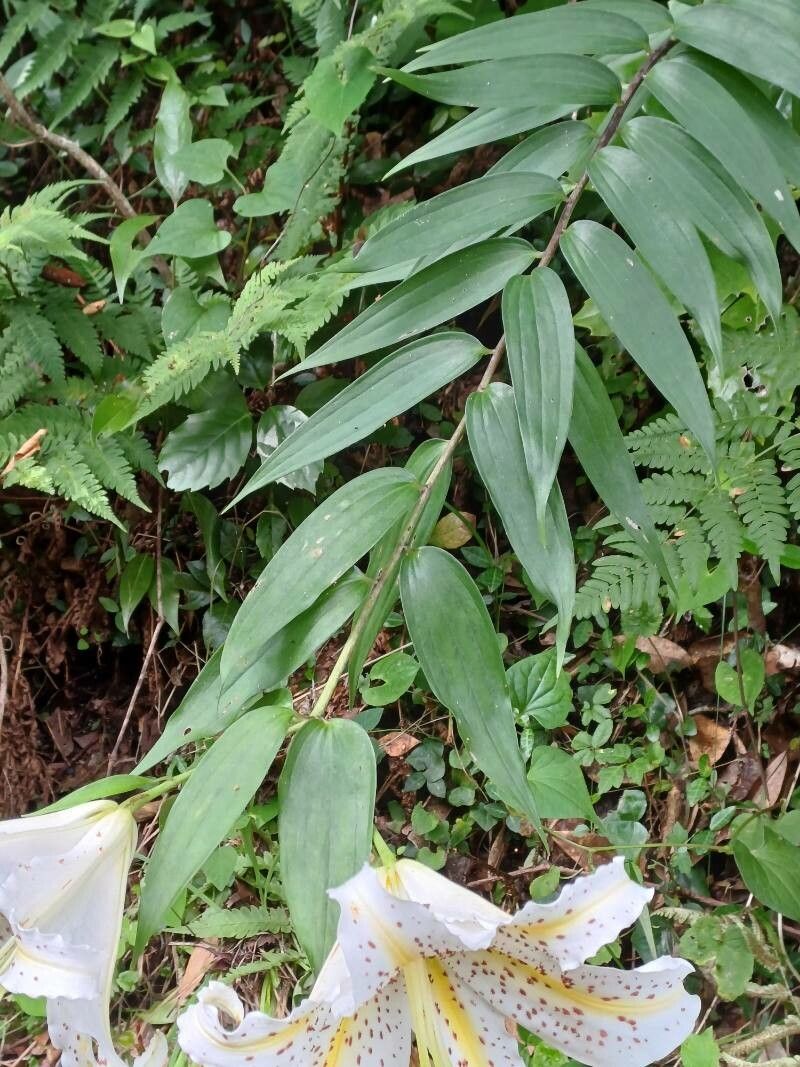
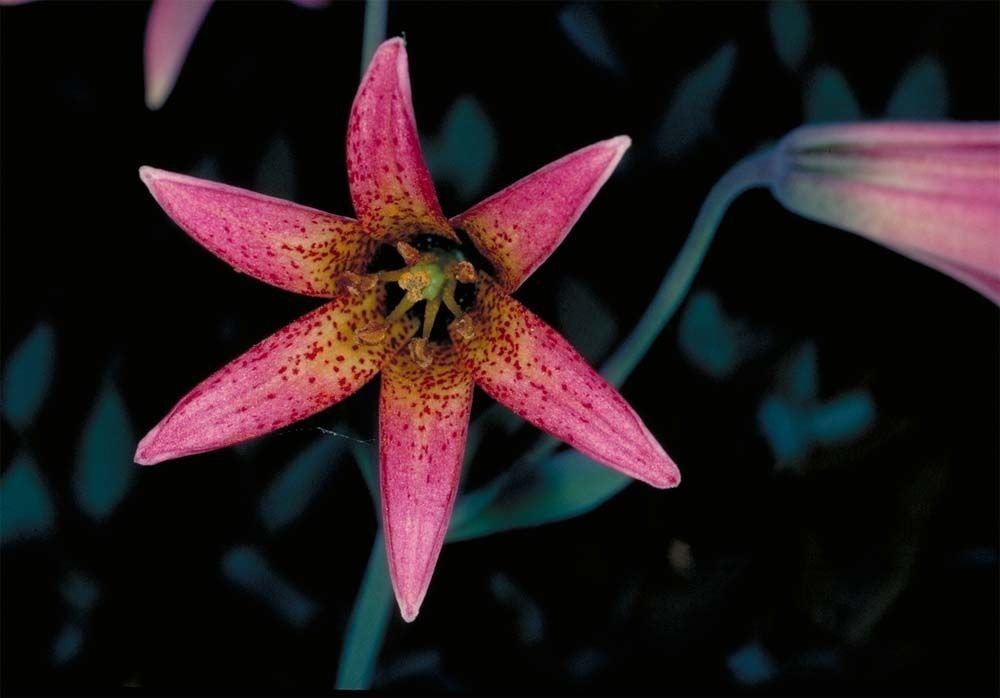
Lilium canadense, commonly called either the Canada lily, wild yellow-lily, or the meadow lily, is a native of eastern North America. Its native range extends from Ontario to Nova Scotia south to Georgia and Alabama. It is most common in New England, the Appalachian Mountains, and the Canadian Maritimes. It is also cultivated as an ornamental in Europe and other places.Flowers emerge in June. They are nodding (hanging downward), yellow, orange or red, often with darker spots. The plant has become less common in urban and suburban areas due to heavy browsing by the white-tailed deer.
The Canada lily is fairly resistant to disease and typically does not suffer from many illnesses. Still, it can be affected by pests and diseases present in its environment, though such problems are generally minor. Regarding care, this plant needs a moderate level of attention. It should be pruned on a regular basis to preserve its appearance and encourage healthy growth. Applying fertilizer can also support better flowering. The Canada lily is well suited for anyone with outdoor areas like a garden or patio and does not demand extensive gardening experience. It may need extra care if kept indoors.
How to keep Lilium Canadense.
Light
The Canada lily prefers continuous sun exposure, needing sunlight throughout the day for optimal growth. It can tolerate situations where sunlight is intermittent, though this may hinder its development. In its natural range, this lily is usually found in places with plentiful sunlight. Both excessive and insufficient sunlight can be harmful to the plant.
Water
The Canada lily is well-suited to moist woodland environments and requires consistently wet conditions to thrive. It is sensitive to drought, so it's important to water it weekly, particularly during its active growing season, to encourage lush growth and vibrant blooms.
Temperature
The Canada lily can tolerate a wide range of temperatures, but its distribution may still be restricted by particular combinations of moisture and heat. It does best in warm summer climates with sufficient rainfall or regular watering. Long periods of cloudy, rainy weather or prolonged high temperatures can raise the risk of the Canada lily dying. In winter, protecting it from cold can increase the plant’s survival rate.
Fertilizer
The best time to fertilize a Canada lily is in early spring, as it comes out of dormancy and begins active growth. Fertilizing supplies essential nutrients for healthy development. Although the Canada lily has relatively low fertilizer needs, feeding it annually can improve its survival and encourage better, longer-lasting blooms.
Pruning
The Canada lily is known for its hanging, bell-shaped flowers and benefits greatly from pruning in early to late spring. Removing dead stalks encourages growth, enhances blooming, improves air circulation, and decreases the risk of disease. Regular pruning helps maintain a neat appearance and optimizes the plant's resource allocation, promoting overall health.
Botanical profile.
- Plant Type
- Herb
- Life Cycle
- Perennial
- Genus
- Lilium
- Family
- Liliaceae
- Hardiness Zone
- 3-9
- Mature Height
- 0.91 m to 1.83 m
- Mature Spread
- 49 cm
- Leaf Color
- Green, Dark Green
- Leaf Type
- Deciduous
- Flower Color
- Orange, Red
- Flower Size
- 5.08 cm to 7.62 cm
- Bloom Time
- Early summer, Mid summer
- Planting Time
- Spring, Summer, Autumn
- Harvest Time
- Late summer, Early fall
Other names.
Reader questions.
What do I do if I give too much or too little water to my Canada lily plant?
The Canada lily is prone to overwatering, which can cause bulb rot. Signs of overwatering include a mushy bulb, floppy stems with spots, droopy flowers, and a yellowed stalk. While yellow leaves at the end of the blooming period are normal, if they turn yellow before blooming, it's a sign of overwatering. Unfortunately, bulb rot cannot be reversed, but if caught early, the affected bulb and soil should be removed and the pot disinfected. Outdoor plants should be relocated. Underwatering is less of an issue, but signs include no blooms, sagging stalks, and browning around the edges of the petals. If underwatered, the plant can tolerate some drought but should be given a good drink without saturating the soil. However, be cautious not to overwater, as it can lead to root rot and fungus. Signs of fungus include spots on the leaves and buds, as well as discoloration and death of the leaf tips.
Which fertilizer should I use for my Canada lily?
Choosing the best fertilizer for a Canada lily is actually quite simple. These plants thrive on a general-purpose garden fertilizer that has equal amounts of nitrogen, phosphorus, and potassium. Look for a fertilizer with a ratio of 10-10-10 or something similar. It's important to avoid fertilizers with high nitrogen content if you're uncertain. Most of the recommended fertilizers for a Canada lily come in a granular form, which makes them easy to apply. Opt for slow-release fertilizers for better results. Additionally, using organic soil amendments like compost can also be beneficial for feeding your Canada lily.
What are the sunlight requirements for the Canada lily?
The Canada lily thrives in conditions where it can bask in the sunlight throughout the day for optimal growth, favoring constant exposure to the sun. While it can tolerate some variation in sunlight exposure, inadequate sunlight may impede its development. Naturally, it is found in environments with abundant sunlight. It's crucial to be mindful of the plant's light needs, as both overexposure and underexposure to sunlight can be detrimental.
How frequently do I need to water my Canada lily plant?
The Canada lily is a hardy plant that doesn't require much attention. It is best grown directly in the ground in the hottest and brightest part of your garden, although it can also be grown in a pot. Since it is a bulb plant, it's important to avoid overwatering as it can cause the bulb to rot. After planting, give the lilies a good watering to encourage growth, and then let them be until shoots start to appear. To ensure optimal moisture levels for the plant, check the soil moisture after new leaves have grown by inserting your finger about 2-3 inches below the soil surface. If it's still wet, there's no need to water the plant. For potted lilies, check the water collection tray for any standing water, as this indicates the plant doesn't need watering. To get a more precise moisture reading, use a moisture sensor inserted about 2-3 inches into the soil and aim for a reading in the middle of the "moist" category. It is recommended to water the Canada lilies once per week.
What will happen if I give my Canada lily too much fertilizer?
The Canada lily doesn't necessarily require a large amount of fertilizer each year. However, if you overfertilize it, you will see the leaves turn brown. Overfertilization is especially common when using fertilizers with high nitrogen content. This can cause the leaves to change color, lose moisture, and curl at the edges. To avoid these issues, many gardeners choose to fertilize their Canada lily only once a year in early spring.
What should I do if natural sunlight is insufficient for my indoor Canada lily?
When natural sunlight is insufficient, especially during winter or in less sunny locations, artificial lighting can be a crucial alternative for your indoor Canada lily. Using artificial lights, such as LED lights that provide specific wavelengths, can support healthier, faster growth. For full sun plants, 30-50W/sq ft is recommended, partial sun plants need 20-30W/sq ft, and full shade plants require 10-20W/sq ft. The artificial light source should be placed about 12-36 inches above the plant, and mimicking the natural daylight duration, most plants will benefit from 8-12 hours of light per day.
How should I change how much I water my Canada lily depending on the conditions?
The Canada lily is a hardy plant that can survive in tough conditions. When planting it outdoors, you can rely on nature to care for it as it doesn't need much water and can withstand droughts. Just make sure the soil has good drainage. However, if you're growing it in a pot, be cautious with watering. Overwatering can lead to bulb rot. Use well-drained soil with added sand or rocks for better drainage. During the growing phase, water the plant about one inch per week to encourage blooming. The amount of watering depends on the humidity and temperature of your area. In hot, dry climates, you may need to water more frequently, while in humid climates, less watering is necessary. Always check the soil moisture level to ensure it's not too wet, as these plants prefer moist, well-drained soil.
Why should I put fertilizer on my Canada lily?
The main structure of the Canada lily is made up mostly of its leaves. Fertilization is an important way to both improve the appearance and function of these leaves. Proper fertilization will result in consistent leaf color and a healthy texture. Fertilization also benefits the roots of the Canada lily. It helps generate new roots and maintain existing ones, allowing the plant to absorb soil nutrients more effectively in the future. So, fertilizing your plant not only keeps it healthy now but also improves its long-term nutrient absorption abilities.
What are some common symptoms of inadequate lighting in Canada lilies?
Canada lilies may exhibit several symptoms when exposed to inadequate lighting, including smaller new leaves compared to the previous ones, leggy or sparse growth, faster leaf drop, halted or no new growth, lighter-colored new leaves indicating a lack of chlorophyll, chlorosis or yellowing of leaves, sunscald which results in damage from intense sunlight exposure, leaf curling as a defense mechanism against extreme sunlight, wilting due to increased water loss, and leaf scorching characterized by brown, dry edges on leaves from excessive sunlight.
When should I fertilize my Canada lily?
When you grow your Canada lily outdoors, it will start growing new leaves in early spring. This is the time to fertilize it. Usually, one application of fertilizer in the spring is enough. But if you want your Canada lily to grow more, you can fertilize it multiple times throughout spring and early summer. In this case, you can feed it about once every month to a month and a half.
How can I address light deficiency issues in Canada lilies?
To combat light deficiency in Canada lilies, you can gradually increase their sunlight exposure by moving them to a sunnier location each week until they obtain at least 6 hours of direct sunlight daily. Using a south-facing window can maximize sunlight exposure. If moving the plant is not feasible, consider supplementing with artificial light, keeping a lamp on for at least 8 hours a day or investing in professional grow lights. For outdoor plants, ensure a gradual adjustment to prevent sunburn. Also, reducing obstructions like pruning trees can help, and for smaller plants, consider transplanting to a sunnier location during their dormant period, ensuring the new site has good drainage.
When is it not a good idea to fertilize my Canada lily?
During late fall and winter, your Canada lily goes into a dormant phase and stops growing. During this time, it's best to avoid fertilizing it. In spring and summer, if you choose to fertilize, start reducing the frequency as summer gets closer because the plant's growth rate slows down. In general, it's not recommended to fertilize during extremely hot weather or when the soil is very dry. Fertilizing in those conditions can cause stress to the Canada lily and make it die earlier.