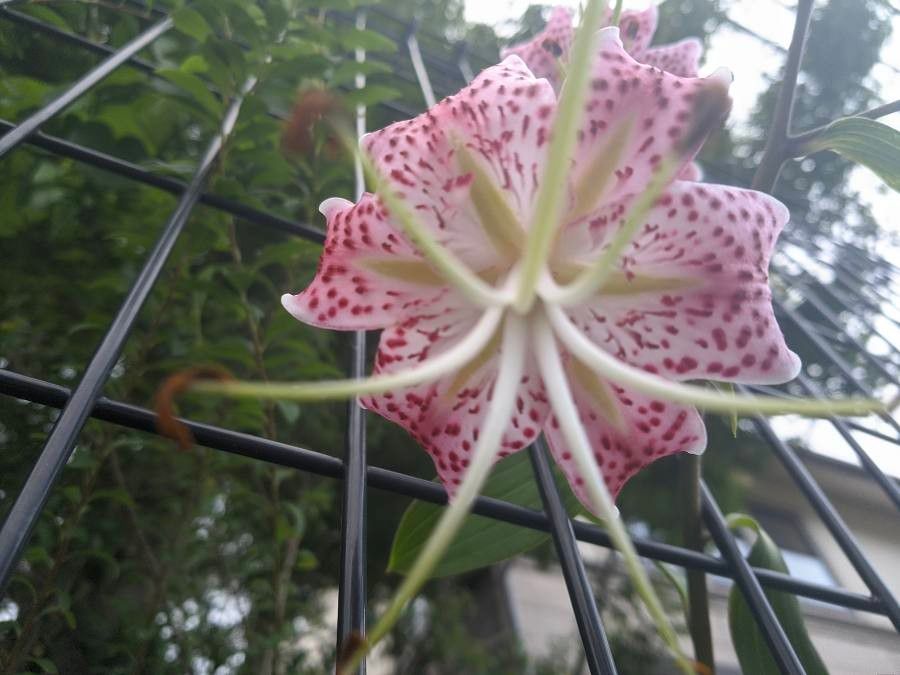
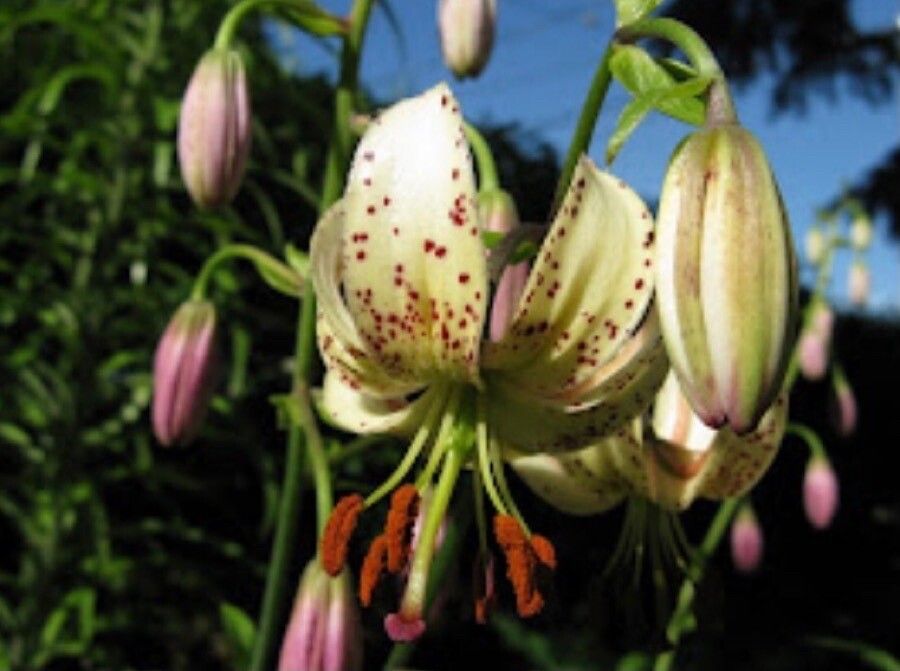
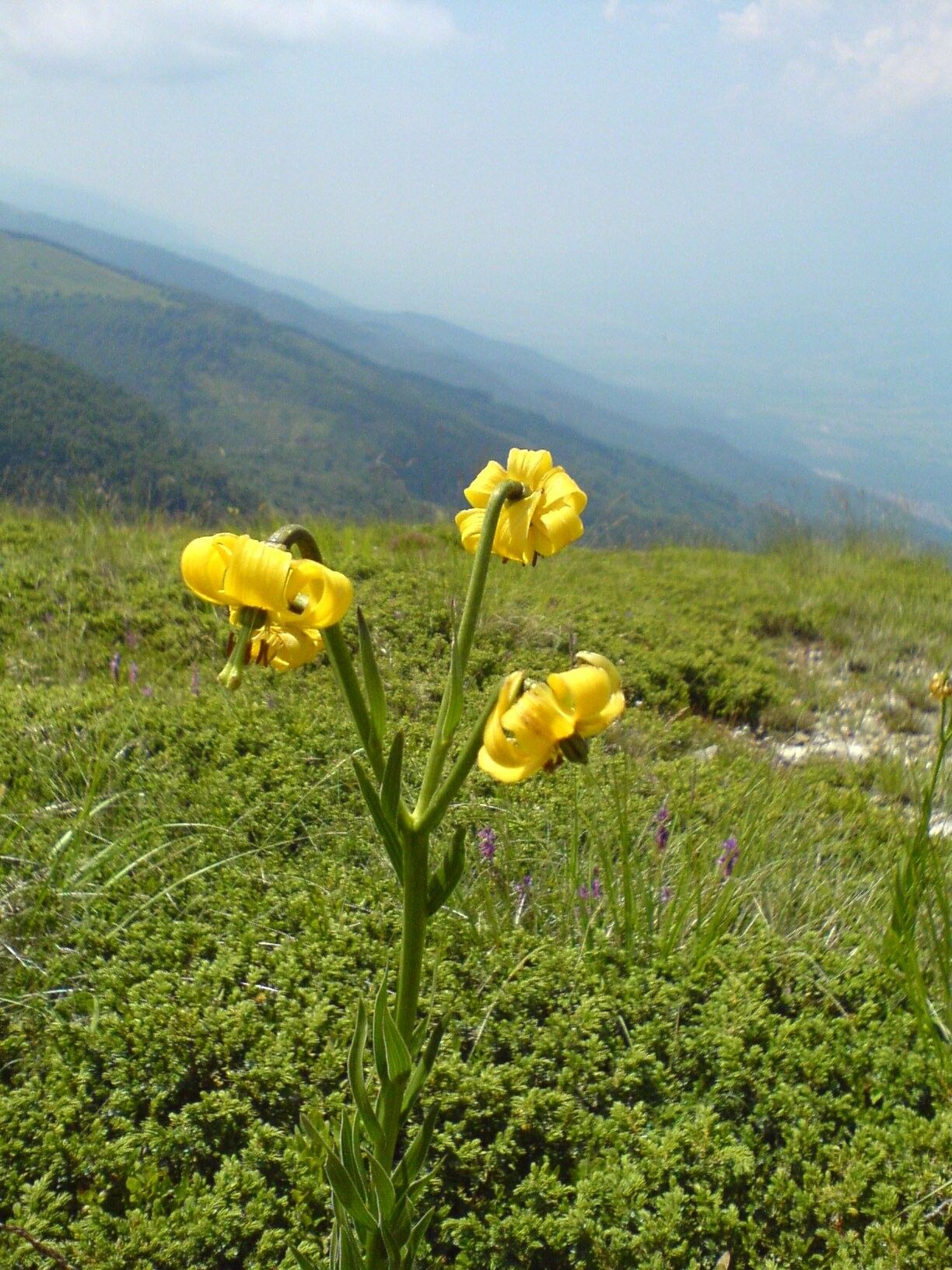
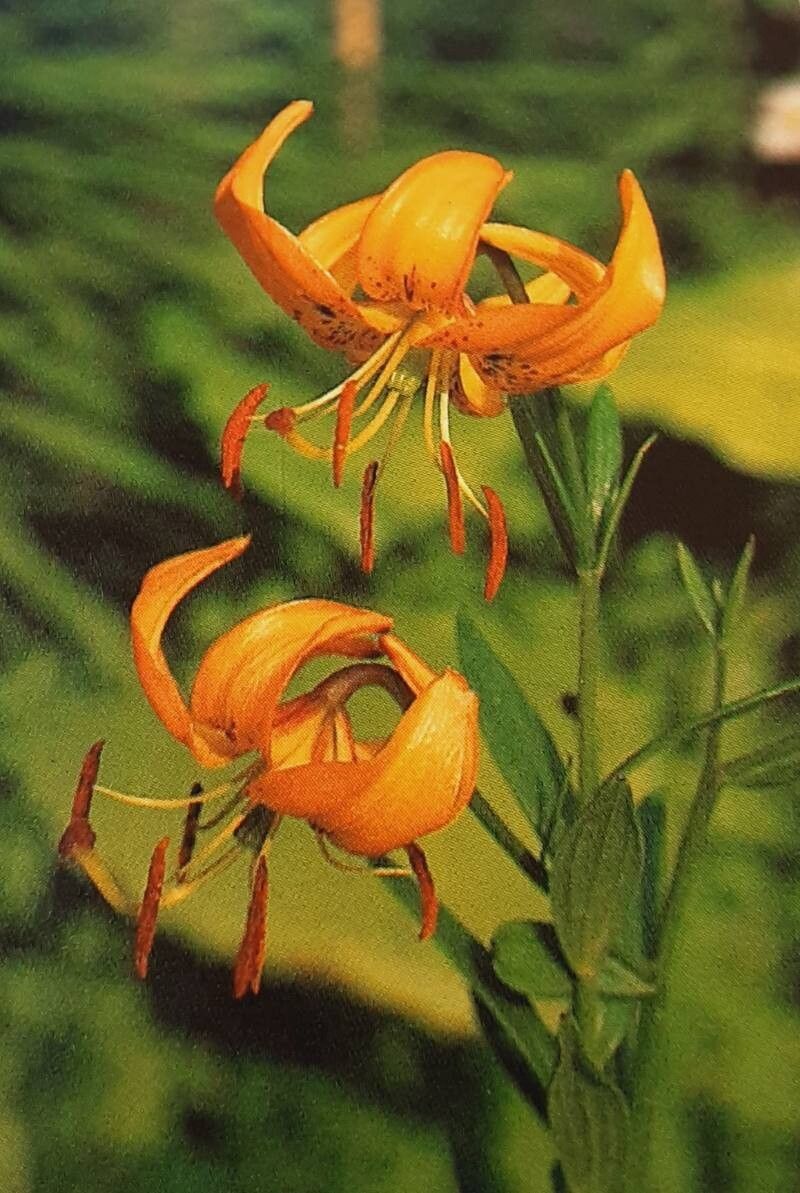
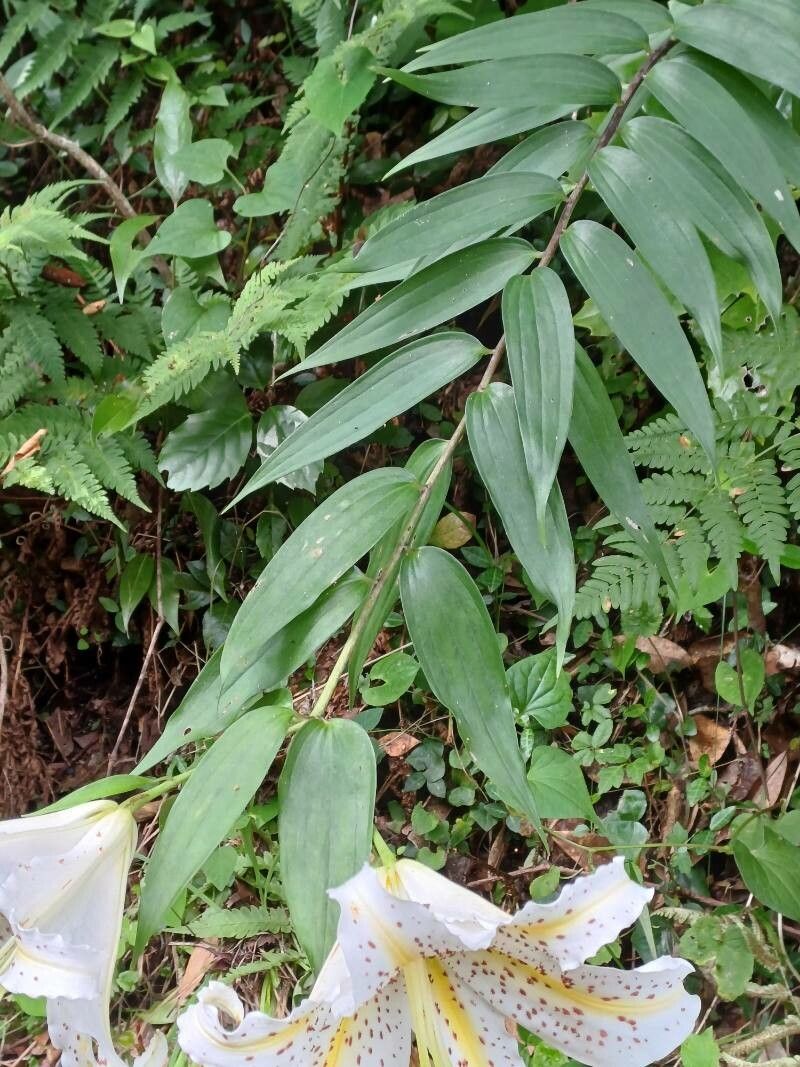
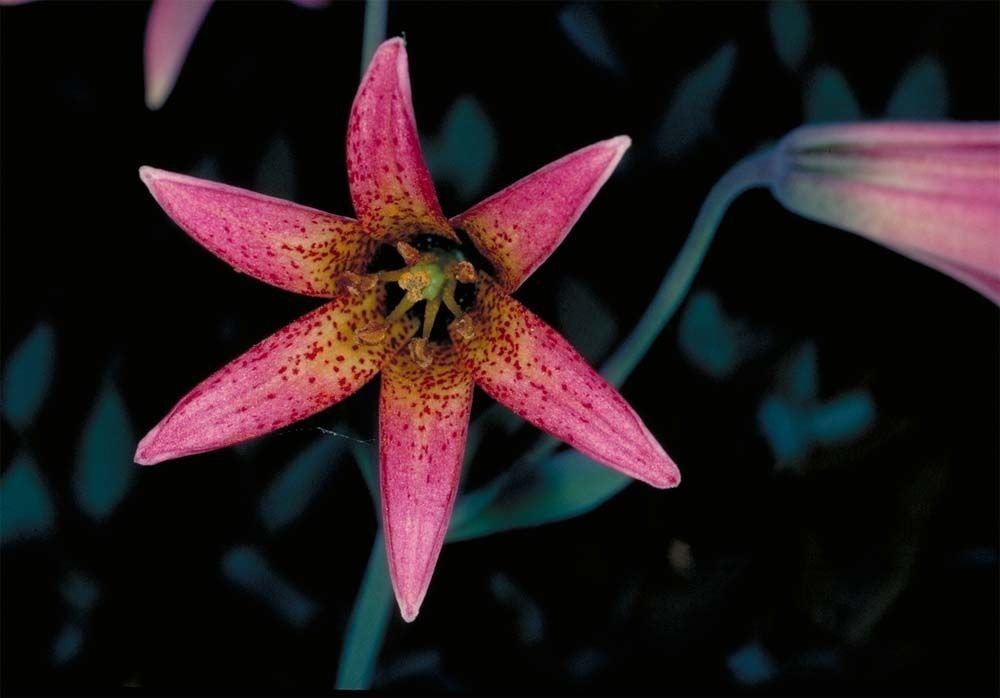
Lilium kelloggii is a species of lily known by the common name Kellogg's lily. It is endemic to the Klamath Mountains of northwestern California and southwestern Oregon, where it grows in forests, including those dominated by redwoods.Lilium kelloggii is a perennial herb known to exceed two meters in height. It produces from a scaly, elongated bulb up to about 7.5 centimeters long. The stem is ringed with dense whorls of up to 40 leaves, each leaf up to 16 centimeters in length. The inflorescence bears up to 27 large, showy, nodding flowers. The fragrant flower is bell-shaped with 6 strongly recurved pink tepals up to 8 centimeters in length. There are 6 stamens with large red anthers up to 1.4 centimeters long and a pistil which may be over 4 centimeters in length. The flowers are pollinated by swallowtails.
Kellogg's lily has good resistance to disease and generally does not tend to get sick. However, it can be vulnerable to pests and diseases present in its environment. These problems are generally mild. Regarding care, the plant needs moderate maintenance. Regular pruning is necessary to keep a neat appearance and encourage healthy growth, and fertilizing can help stimulate flowering. Kellogg's lily is appropriate for anyone with outdoor space, such as a garden or patio, and does not require extensive experience in plant care. It may need more attention if grown indoors.
How to keep Lilium Kelloggii.
Water
Kellogg's lily is a drought-tolerant plant that thrives in moderately moist conditions, preferring a balance of hydration and drainage. It should be watered every 1 to 2 weeks. Typically grown outdoors, the lily flourishes best when the soil moisture mimics its native seasonal rainfall patterns.
Fertilizer
One fertilizer application in spring is typically enough for Kellogg's lily, although repeated feedings can boost growth to its maximum. Feed about every one to one and a half months. Fertilizing improves the leaves' appearance and function, helping maintain even color and a healthy texture. It also promotes root development and nutrient uptake, supporting the plant's long-term health.
Pruning
Kellogg's lily benefits from early spring pruning, which encourages growth and removes any damaged stems. To ensure precise cuts, always use sharp and clean tools, making your cuts just above healthy nodes. Keep heavy pruning to a minimum to support blooming, and regularly trim away wilted foliage to maintain the plant's vitality. Align your care routine with the lily's growth cycle for optimal health.
Botanical profile.
Other names.
Reader questions.
What are the sunlight requirements for Kellogg's lily?
Kellogg's lily, or Lilium kelloggii, thrives in conditions where it can receive adequate sunlight throughout the day. It requires full sun, which is defined as receiving more than 6 hours of sunlight daily, to flourish. However, it can also tolerate partial sun, meaning it can grow well with about 3-6 hours of sunlight. It's important to observe the movement of sunlight through your garden carefully, selecting spots that offer a balanced exposure to light and shade. This consideration will ensure that your Kellogg's lily plants remain healthy and happy.